















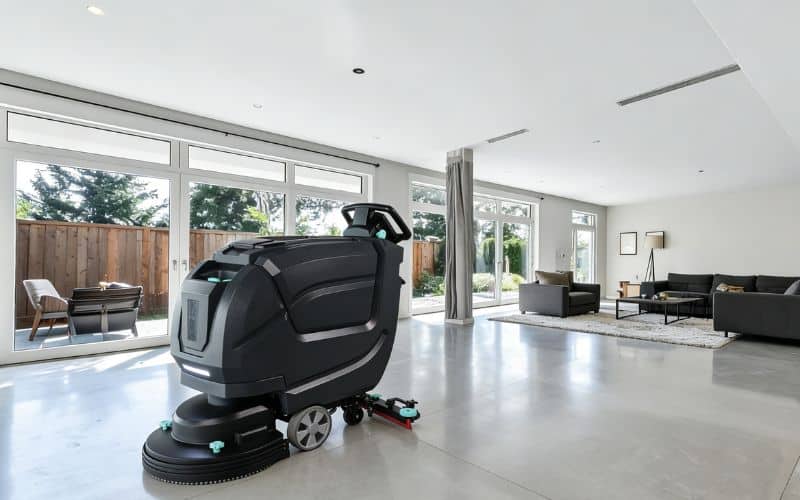
We spent at least a year debating our flooring material for our new home renovation (as you do), where it was a toss-up between tiles, hardwood, vinyl, and polished concrete. I’ll dig into our arguments for each option now and explain the final deciding factors for moving forward with polished concrete floors.
I want to stress that this is a personal and lifestyle choice. None of these are bad options by any means; it’s all about what you prioritize for your home and needs. We looked at everything from traditional warmth to modern durability, weighing up maintenance against aesthetics.
Polished concrete has surged in popularity recently, moving from industrial warehouses into chic residential living rooms and high-end commercial spaces. But is it right for a family home? That was our big question. In this post, I will walk you through exactly how we arrived at this decision, the alternatives we considered, and the practical reality of caring for these floors once they are installed.
Alternatives We Considered
Before settling on concrete, we did our due diligence. We looked at the standard contenders that most homeowners consider when renovating: tiles, hardwood, and vinyl. Each had distinct benefits, making the decision surprisingly difficult.
Tiles
Porcelain and ceramic tiles were initially high on our list. They are incredibly durable, water-resistant, and come in an endless variety of patterns and colors. You can mimic the look of stone or even wood without the associated upkeep. However, the one thing that swayed us away was the grout. No matter how thin the grout lines are, they attract dirt and discoloration over time. Cleaning grout is a chore I simply do not enjoy. Plus, tiles can crack if something heavy is dropped on them, and replacing a single tile without it looking obvious is a nightmare.
Hardwood Flooring
There is no denying the timeless appeal of hardwood. It adds warmth and character that few other materials can match. We loved the idea of wide oak planks running through the house. But we had to be realistic about our lifestyle. We have pets and kids, and the thought of scratching expensive wood floors within the first week gave me anxiety. Hardwood is also susceptible to water damage. In a kitchen or dining area where spills are inevitable, wood requires a level of vigilance we weren’t sure we wanted to commit to. We wanted a floor we could live on, not just look at.
Vinyl Flooring
Luxury Vinyl Plank (LVP) is the budget-friendly darling of the flooring world right now. It’s waterproof, softer underfoot than tile, and relatively easy to install. We seriously considered this for the cost savings alone. However, when we looked at samples alongside real materials, they lacked the depth and authenticity we were craving. While high-end vinyl looks great, you can often tell it’s synthetic by the feel and sound. We also worried about longevity; unlike concrete or wood, which can last a lifetime, vinyl eventually wears out and needs full replacement, making it less sustainable in the long run.
Why We Chose Polished Concrete Floors
After weighing all the pros and cons, polished concrete emerged as the clear winner for us, though it wasn’t a decision made lightly.
First and foremost, the durability is unmatched. We wanted a “forever floor”—something that could withstand heavy foot traffic, furniture dragging, and the occasional dropped pot without flinching. Polished concrete is incredibly hard-wearing. Unlike wood that dents or carpet that stains, concrete is essentially indestructible when treated correctly. The low-maintenance nature was a huge selling point. The idea of having a seamless surface with no grout lines to scrub or planks to refinish was incredibly appealing to us.
Aesthetically, we fell in love with the sleek, modern look. There is something raw and organic about concrete that serves as a perfect neutral canvas for furniture and rugs. It reflects light beautifully, making spaces feel larger and brighter. We also loved that it is customizable. You can choose the level of aggregate exposure (how much stone you see) and the gloss level. We opted for a matte finish with minimal aggregate for a contemporary, industrial-chic vibe that doesn’t feel too “warehouse.”
Cost-effectiveness played a surprising role. Since we already had a concrete slab foundation, polishing it was actually comparable to, or in some cases cheaper than, buying and installing mid-range hardwood or high-end tile. It felt like we were using the house’s existing structure rather than covering it up, which added to the value proposition. It’s an investment that lasts as long as the house does.
We did have concerns about it being cold or hard. To mitigate this, we installed radiant floor heating in key zones, turning the floor into a massive radiator that makes it cozy in winter. As for the hardness, we use area rugs in the living room and bedrooms to add softness where we need it most. It honestly hasn’t been an issue for us comfortably.
How to Care for Polished Concrete Floors
One of the biggest misconceptions about concrete is that you can just ignore it. While it is low-maintenance, it is no-maintenance. You have to treat it right to keep it looking good.
Regular Sealing is Key
Concrete is naturally porous. If you pour red wine on unsealed concrete, it will soak right in. Therefore, a high-quality penetrating sealer is non-negotiable. This protects the floor from within, preventing stains from absorbing. We ensure our floors are professionally inspected and resealed every couple of years. It preserves the sheen and ensures that liquid spills bead up on the surface rather than soaking in.
Daily Cleaning Routine
For day-to-day cleaning, our routine is simple. We use a microfiber dust mop daily to pick up grit and dirt. Sand and dirt act like sandpaper under your shoes, dulling the shine over time, so keeping it dust-free is important. For wet cleaning, we use a pH-neutral cleaner specifically designed for polished concrete. You absolutely cannot use harsh acidic cleaners like vinegar, ammonia, or bleach, as they will etch the surface and dull the polish over time. A simple mop with warm water and the right cleaner keeps them looking pristine.
Dealing with Stains and Spills
While the sealer buys you time, it doesn’t make the floor magic. We try to clean up spills quickly. Acidic substances like lemon juice, tomato sauce, or wine can still etch the surface if left for hours. We learned this the hard way with a lime wedge dropped during a party! However, these little imperfections—often called “patina”—actually blend in quite well with the natural variation of the concrete.
Protective Measures
We also use felt pads on all our furniture legs. Even though concrete is hard, dragging a heavy metal chair leg across it can leave a white scratch mark. We also placed doormats at every entrance to catch dirt before it gets tracked onto the polished surface. It’s a small step that significantly extends the life of the polish.
Would We Choose Polished Concrete Floors Again?
Absolutely. We are obsessed with how our floors look and feel. They anchor the entire design of our home and provide a seamless flow from room to room that other materials can’t match. The way the sunlight hits the floor in the morning is stunning, and cleaning is so quick and satisfying.
We were worried it might feel too industrial or “cold” for a home, but with the right rugs and furniture, it actually feels very grounded and sophisticated. Yes, there are minor hairline cracks that have appeared over time as the house settled. I fixated on them when they first happened, terrified we made a mistake. But now? I hardly even notice them. They add to the material’s character and organic nature. It’s not a plastic floor; it’s real stone and cement, and it behaves like a natural material.
We did have a learning curve with the hardness—dropping a glass means it shatters instantly into a million pieces—but that is a trade-off we are willing to accept for floors that don’t scratch when the dog runs across them. If we were to build another house tomorrow, polished concrete would be the first thing on our spec sheet.
Other Flooring Materials to Consider
There are many flooring materials we didn’t consider because they weren’t stylistically right for our home, but they’re still worth mentioning. For those who like the seamless look of concrete but want more color options or a completely uniform finish, epoxy flooring is a great alternative. This resin coating is applied to concrete, offering high durability and chemical resistance, making it ideal for garages or utility rooms. However, it can sometimes appear more “plastic” compared to polished concrete. For a more eco-friendly and softer option, bamboo or cork flooring is fantastic. These materials are sustainable and provide natural warmth and sound insulation, though they aren’t as indestructible as concrete and can be sensitive to moisture and humidity changes. Another option to consider is modern laminate, which has significantly improved over the years. It offers a durable, budget-friendly wood look and is tougher than vinyl, though it can be prone to water damage at the seams. If budget is a primary concern, laminate is definitely worth exploring.
Conclusion
To summarize, choosing polished concrete was the best decision for our lifestyle. It offered the perfect balance of modern aesthetics, extreme durability, and ease of maintenance that we were looking for. We stopped worrying about scratches and started enjoying living in our home.
However, it is a commitment. You have to be okay with a little patina and natural variation. Proper care, like using pH-neutral cleaners and regular sealing, is essential to protect your investment and keep the floors looking spectacular for decades.
If you are on the fence, I highly recommend visiting a space with polished concrete floors to feel them for yourself. And if you’re ready to take the plunge, contact a professional concrete polisher to discuss your slab’s potential. It might just be the foundation your dream home needs.