







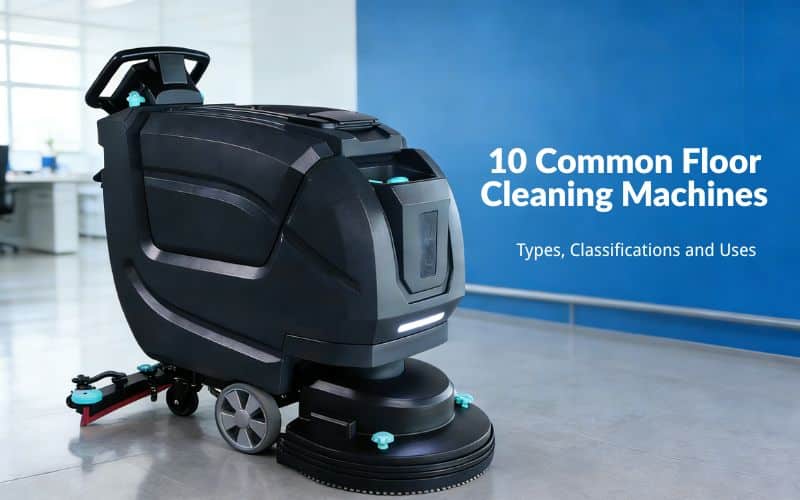
TL;DR: The 10 main types of commercial floor cleaning machines are walk-behind scrubbers, ride-on scrubbers, walk-behind sweepers, ride-on sweepers, sweeper-scrubber combos, floor burnishers, floor buffers, commercial vacuums, carpet extractors, and autonomous robotic scrubbers. The right machine depends on your floor type, facility size, soil level, and cleaning frequency.
Pick the wrong machine, and you’ll spend twice the time getting half the results. Pick the right one, and your cleaning team covers more ground, uses less water, and keeps floors in better condition year-round.
Commercial floor cleaning isn’t one-size-fits-all. A machine built for a 200,000-square-foot warehouse has no business being used in a hotel corridor. A carpet extractor won’t do much for a food processing plant with concrete floors. Every facility has a unique combination of floor types, traffic levels, and soil conditions—and there’s a purpose-built machine designed for each.
This guide breaks down all 10 types of motorized commercial floor cleaning machines, what each one does well, where it falls short, and which facility types it suits best. By the end, you’ll have a clear picture of which equipment belongs in your cleaning operation.
The 10 Types of Commercial Floor Cleaning Machines
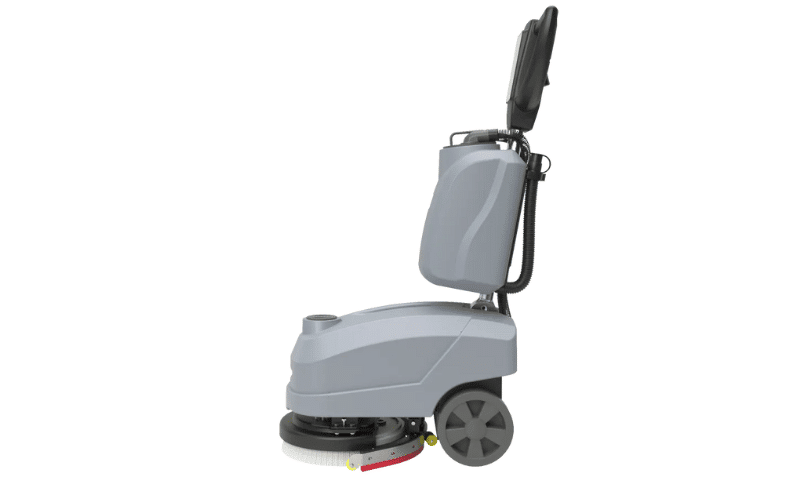
1. Walk-Behind Floor Scrubbers
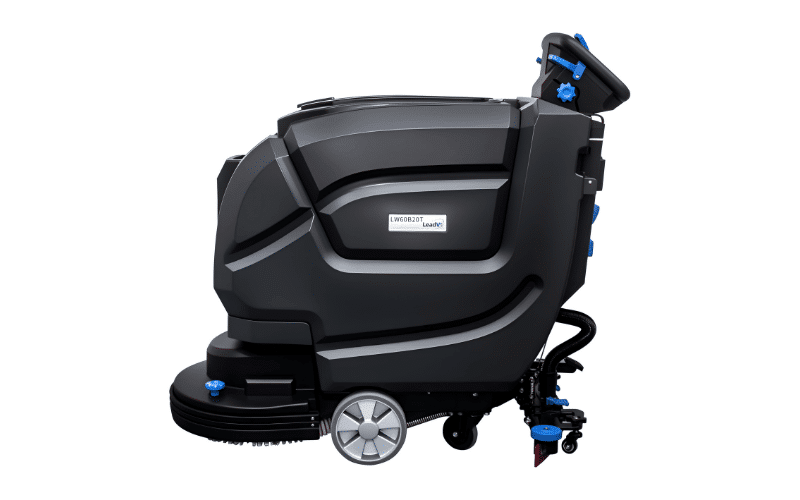
What it does: Walk-behind floor scrubbers dispense a cleaning solution onto the floor, agitate it with a powered scrub brush or pad, then vacuum the dirty water into a recovery tank—all in one pass. The operator walks behind the machine and guides it through the space.
Where it’s used: Retail stores, hospital corridors, school hallways, restrooms, and any medium-sized indoor space with hard flooring.
When to choose it: Walk-behind scrubbers are the go-to machine for facilities between roughly 5,000 and 40,000 square feet. They’re highly maneuverable, making them effective in tight spaces, narrow aisles, and areas with frequent obstacles. LeadV Clean’s walk-behind floor scrubbers offer tank capacities from 45L to 60L and cleaning productivity of up to 3,000m²/h—enough to efficiently clean a full commercial floor.
Where it falls short: Not suited for very large open areas where a ride-on would cover ground much faster. Some models also require pre-sweeping before scrubbing, particularly those with disc brush decks.
2. Ride-On Floor Scrubbers
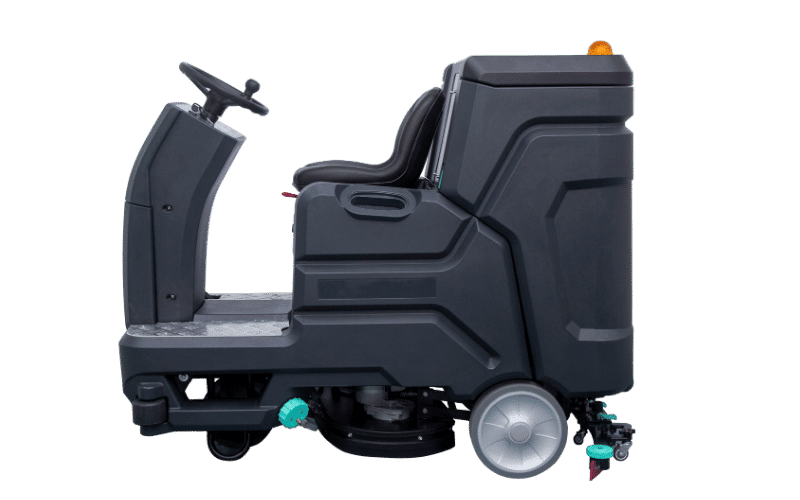
What it does: Ride-on scrubbers perform the same scrub-and-recover function as walk-behind models, but the operator sits or stands on the machine. Larger solution and recovery tanks mean fewer stops to refill or empty, and wider scrub decks cover significantly more floor per hour.
Where it’s used: Warehouses, manufacturing plants, airports, distribution centers, shopping malls, and large retail stores.
When to choose it: If your facility has more than 40,000 square feet of hard flooring, a ride-on scrubber is almost always the better investment. LeadV Clean’s ride-on floor scrubbers handle tank capacities from 75L to 180L and achieve cleaning efficiency of up to 5,500m²/h—making short work of large open spaces that would take a walk-behind unit hours to cover.
Where it falls short: Less maneuverable in tight spaces. The larger footprint makes it unsuitable for narrow corridors, around equipment clusters, or in smaller rooms.
3. Walk-Behind Floor Sweepers
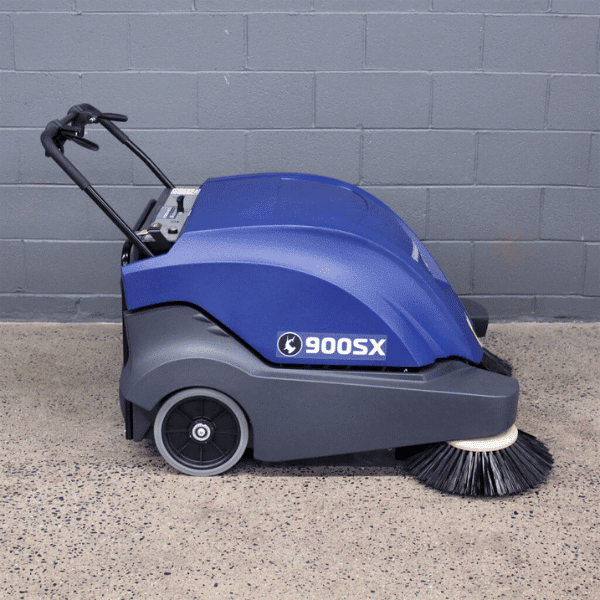
What it does: Walk-behind sweepers use motorized brushes—sometimes combined with a vacuum system—to collect dust, debris, and dry soils from the floor surface into a contained hopper. No water or cleaning solution is involved.
Where it’s used: Retail stores, warehouses, workshops, and any indoor space that regularly accumulates dry debris.
When to choose it: When the primary problem is loose debris rather than ground-in soils. Walk-behind sweepers are fast, simple to operate, and ideal for routine maintenance between deeper cleans. They’re also the right first step before scrubbing—one of the most important practical rules in commercial floor care: always sweep before you scrub. Running a scrubber over loose debris clogs the recovery system and reduces cleaning effectiveness.
Where it falls short: Not designed for wet soils, stains, or deep cleaning. Outdoor use is limited to sheltered or semi-enclosed areas.
4. Ride-On Floor Sweepers
What it does: Ride-on sweepers operate on the same principle as walk-behind models but at a much larger scale. Operators drive the machine across expansive floor areas while brushes and vacuum systems collect debris into large hoppers.
Where it’s used: Warehouses, manufacturing facilities, distribution centers, parking garages, stadiums, and outdoor areas like lots and loading docks.
When to choose it: Large facilities with continuous accumulation of dry debris—think sawdust in a lumber facility, packaging material in a distribution center, or grit in a parking garage. Ride-on sweepers can cover ground quickly, making them essential for pre-sweep routines before scrubbing large areas.
Where it falls short: Overkill for small or medium facilities. Not effective on wet or oily soils, and not suitable for carpet.
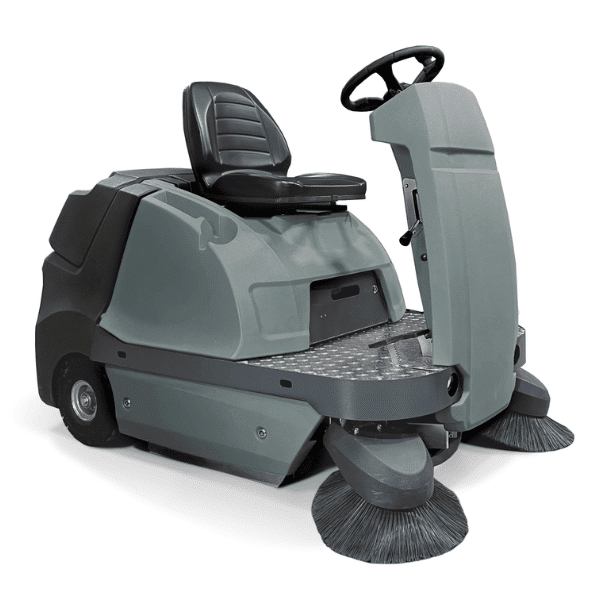
5. Sweeper-Scrubber Combination Machines
What it does: Combination machines integrate sweeping and scrubbing into a single pass. Some models use cylindrical brush decks that simultaneously sweep debris and scrub the floor, while others feature separate sweeping and scrubbing systems within a single unit.
Where it’s used: Food production facilities, warehouses with mixed debris and soils, distribution centers, and industrial environments where time is tight.
When to choose it: When pre-sweeping and scrubbing separately isn’t practical due to time constraints or staffing limitations. These machines save steps and reduce total cleaning time, which makes them particularly valuable in facilities that operate around the clock.
Where it falls short: Complexity cuts both ways. If the sweeping or scrubbing component fails, both functions are down simultaneously. They also tend to carry a higher upfront cost and require more maintenance than a single-function machine.
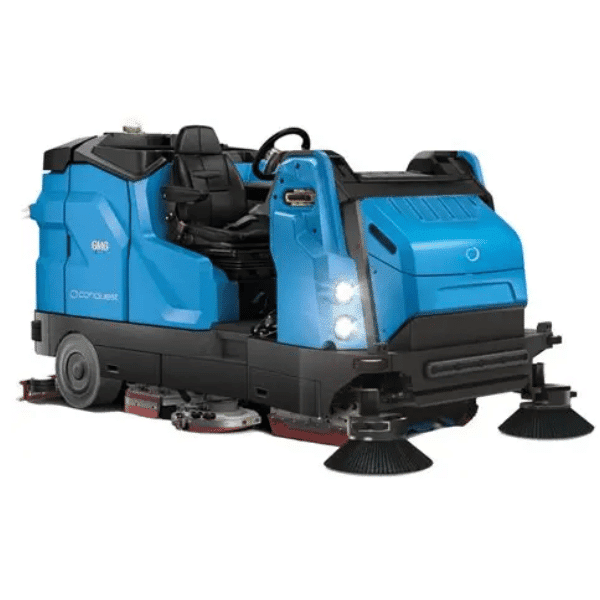
6. Floor Burnishers
What it does: Floor burnishers use high-speed pads—spinning at 1,000 to 3,000 RPM (according to Nilfisk)—to generate heat and friction that hardens and polishes the floor’s finish coating. The result is a high-gloss, mirror-like shine.
Where it’s used: Retail stores, hotel lobbies, healthcare facilities, office buildings, and anywhere a premium floor appearance is expected.
When to choose it: After the floor has been scrubbed and a finish coat has been applied. Burnishing is a finishing step, not a cleaning step. It restores the gloss to waxed or coated hard floors that have dulled from foot traffic. Burnishers are available in walk-behind and ride-on configurations, with propane-powered models typically preferred for large open areas.
Where it falls short: Burnishers only work on hard floors with a finish or coating applied. They do nothing for bare concrete, unfinished surfaces, or carpet. High-speed operation also requires proper pad selection—using the wrong pad can damage the floor surface.
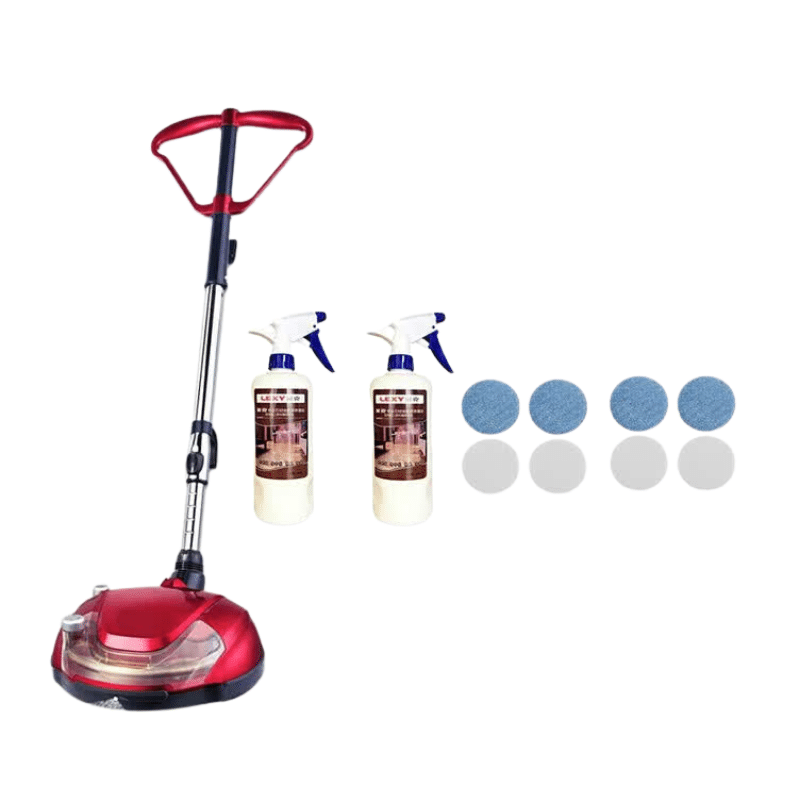
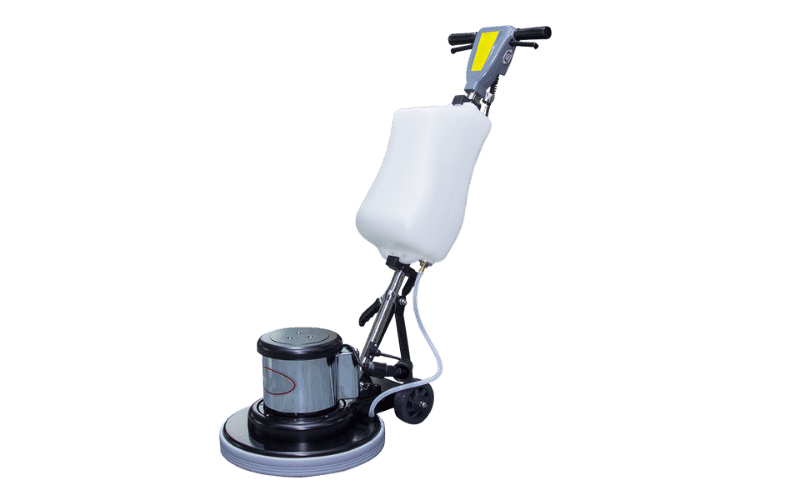
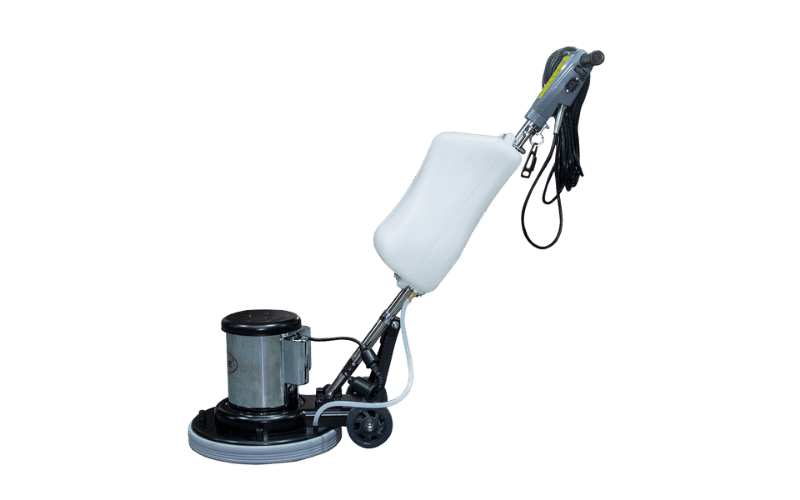
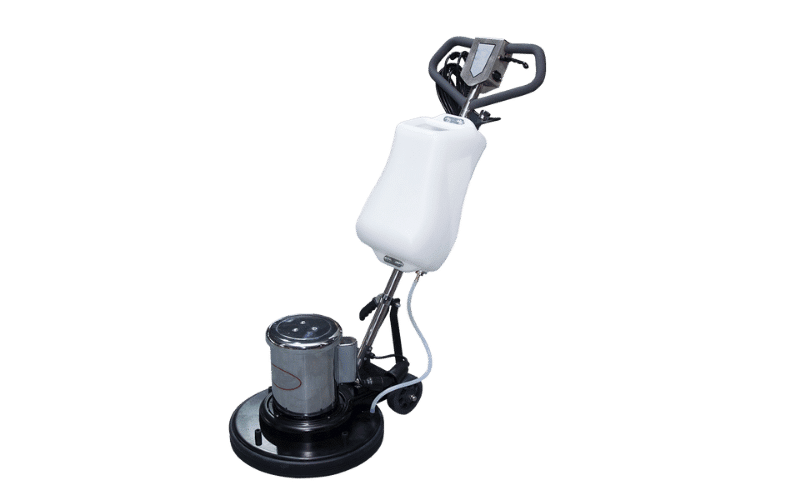
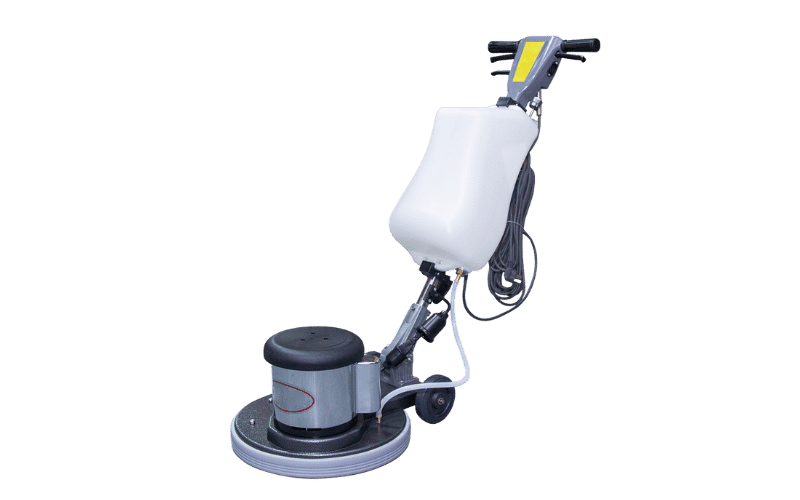
7. Floor Buffers (Single-Disc Machines)
What it does: Floor buffers—sometimes called single-disc machines or low-speed machines—spin pads at 150 to 330 RPM (according to Nilfisk), making them slower and gentler than burnishers. They’re used for scrubbing, stripping old finish, applying wax, and light polishing on a variety of surfaces.
Where it’s used: Hospitals, schools, hotels, and commercial spaces with marble, wood, stone, or vinyl flooring.
When to choose it: When you need a versatile machine for multiple floor-maintenance tasks. Swap the pad type and you can strip old wax, scrub the surface, apply a new coating, or do light polishing—all with the same machine. LeadV Clean’s floor buffers cover 450 to 500m²/h and are suitable for marble, wood, stone, and other surface types.
Where it falls short: Slower than burnishers at achieving high-gloss finishes. Not effective for deep scrubbing of heavy soils, and not appropriate for large open areas where productivity matters more than versatility.
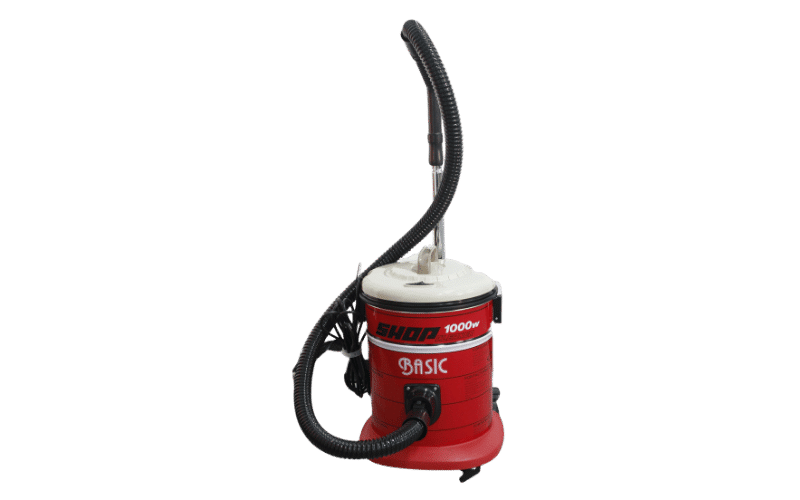
8. Commercial Vacuums
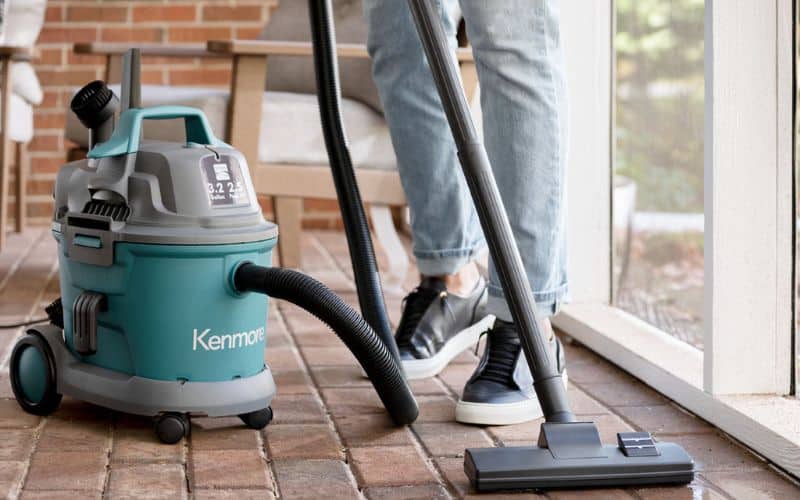
What it does: Commercial-grade vacuums remove dry soils, dust, and debris from carpeted and hard-surface floors. They’re available in several formats: upright, canister, backpack, and wet-dry models—each suited to a different application.
Where it’s used: Hotels, offices, healthcare facilities, schools, airports, and any facility with carpeted areas or spaces requiring regular dust removal.
When to choose it: Backpack vacuums, like the LeadV Clean VC42B (1,200W), are ideal for stairways, tight spaces, and situations where maneuverability matters. Canister models, such as the LeadV Clean VC20 Heavy-Duty Commercial Canister Vacuum (1,000W), offer excellent versatility for both hard and soft floors. Wet-dry vacuums are the right tool for spills, moisture, or oily residues.
Where it falls short: Standard commercial vacuums are not designed for deeply embedded carpet soils or liquid extraction. For heavy-duty carpet cleaning, a carpet extractor is needed.
9. Carpet Extractors
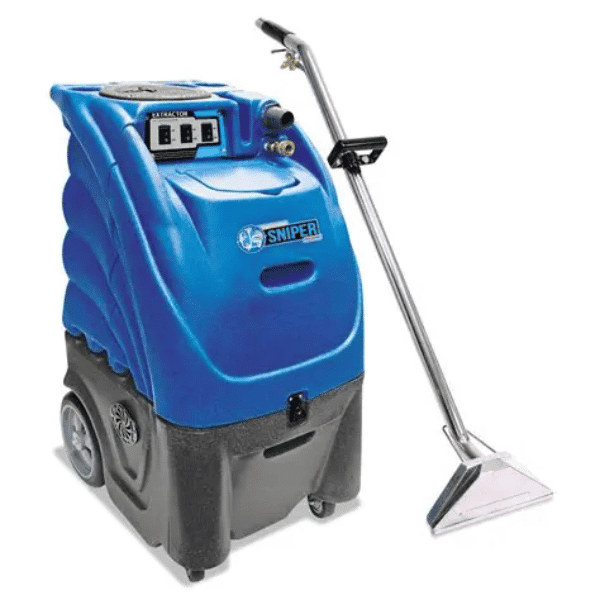
What it does: Carpet extractors inject a water-and-detergent solution deep into the carpet fibers, agitate the soils, then suction up the dirty liquid—leaving carpets clean and significantly drier than older wet-shampoo methods.
Where it’s used: Hotels, convention centers, offices, airports, and any facility with large carpeted areas.
When to choose it: For periodic deep cleaning of carpets, or for spot-cleaning spills and stains between scheduled maintenance cycles. Walk-behind models work well for hallways and mid-sized areas, while ride-on extractors are more efficient in large convention or event spaces. Carpet extractors are also the appropriate response to flood events or significant moisture incidents.
Where it falls short: Only effective on soft flooring. Not suitable for hard surfaces. Carpets also require sufficient drying time after extraction, which can temporarily limit access to cleaned areas.
10. Autonomous Robotic Floor Scrubbers
What it does: Autonomous robotic scrubbers use onboard sensors, cameras, and mapping software to navigate a facility, follow programmed cleaning routes, and scrub floors without direct operator intervention. According to Strategic Market Research, the global robotic floor scrubber market was valued at USD 2.6 billion in 2025 and is projected to reach USD 6.8 billion by 2032.
Where it’s used: Large retail stores, airports, hospitals, warehouses, and any facility with consistent floor layouts and high-frequency cleaning.
When to choose it: When labor costs are a primary concern or when cleaning needs to occur during hours when staff are unavailable. Autonomous scrubbers work most effectively in open, obstacle-free areas with predictable layouts. They’re also valuable in facilities that require consistent, documented cleaning coverage for compliance or hygiene standards.
Where it falls short: Autonomous machines struggle with dynamic environments, heavy debris, complex layouts, and areas that require judgment calls a human operator would handle instinctively. They also require initial programming and regular route maintenance as facility layouts change.

Key Comparisons: Clearing Up Common Confusion
What is the difference between a floor scrubber and a floor sweeper?
A floor sweeper collects loose debris using brushes and a vacuum system—no water involved. A floor scrubber uses water and cleaning solution to remove ground-in soils from hard surfaces. These are complementary tools, not interchangeable ones. Sweep first to remove loose material, then scrub to remove soils. Running a scrubber over unswept debris clogs the recovery tank and reduces the machine’s effectiveness.
When should you choose a walk-behind scrubber over a ride-on scrubber?
Choose a walk-behind scrubber for facilities under approximately 40,000 square feet, or for any area with narrow aisles, tight corners, or frequent obstacles. Ride-on scrubbers become the better option when open floor space is large, cleaning time is limited, or productivity per shift is a priority.
What is the difference between a floor burnisher and a floor buffer?
The main difference is speed. Buffers spin at 150–330 RPM and handle a range of tasks, including stripping, scrubbing, waxing, and light polishing. Burnishers spin at 1,000–3,000 RPM and are purpose-built for generating the heat and friction needed to produce a high-gloss floor finish. Use a buffer for maintenance and preparation; use a burnisher for the final finish step.
How to Choose the Right Machine for Your Facility
Different facilities call for different combinations of equipment. Here’s a quick breakdown by facility type:
- Small retail (under 10,000 sq ft): A small walk-behind scrubber and a commercial vacuum or walk-behind sweeper cover most needs. Add a floor buffer if maintenance of vinyl or tile finishes is required.
- Medium commercial (offices, schools, clinics): A mid-sized walk-behind scrubber handles hard floors; a commercial vacuum or carpet extractor covers carpeted zones. A floor buffer or burnisher rounds out the setup for appearance-sensitive areas.
- Large warehouse or distribution center: A ride-on sweeper for daily debris management, followed by a ride-on scrubber for deeper cleans. High-traffic facilities may benefit from evaluating autonomous robotic scrubbers for overnight cleaning cycles.
- Healthcare facilities: Infection control requirements make scrubbers essential for hard floors. Carpet extractors handle any soft flooring. Commercial vacuums with HEPA filtration are important for airborne particulate management. Autonomous scrubbers may suit overnight cleaning in corridors.
- Hospitality (hotels, resorts): Walk-behind scrubbers for back-of-house and hard flooring; carpet extractors for guest rooms, hallways, and lobbies; floor burnishers to maintain the high-gloss appearance of lobby and event space floors.
- Food processing: Ride-on or walk-behind scrubbers with appropriate chemical resistance are essential for heavy-duty floor cleaning. Wet-dry vacuums handle liquid spills. Sweeper-scrubber combinations are useful where both dry debris and wet soils are present.
- Airports and convention centers: Ride-on scrubbers for large terminal floors; carpet extractors for carpeted concourses and meeting rooms; autonomous robotic scrubbers for overnight or off-peak cleaning cycles where consistent coverage matters most.
Find the Right Cleaning Equipment for Your Facility
Choosing the right commercial floor-cleaning machine comes down to four factors: your floor type, the size of the space, the nature of the soils you’re dealing with, and how often cleaning needs to occur. Get those four right, and the machine almost selects itself.
LeadV Clean offers a full range of professional floor-cleaning equipment—from compact floor scrubbers with 5L to 45L tanks, all the way up to high-capacity ride-on models with tanks up to 180L and cleaning efficiency of up to 5,500 m²/h. All LeadV Clean machines are ISSA- and CE-certified and backed by warranties of up to 2 years or 2,000 hours for larger models.
Not sure which machine is right for your facility? Contact the LeadV Clean team at sales@leadvclean.com to discuss your cleaning requirements and get a customized recommendation.
Frequently Asked Questions
What types of commercial floor cleaning machines are best for large warehouses?
Ride-on floor scrubbers and ride-on floor sweepers are the most effective machines for large warehouses. Ride-on scrubbers from LeadV Clean achieve up to 5,500 m²/h, making them capable of covering very large open floor areas in a single shift. For facilities with both dry debris and wet soils, a sweeper-scrubber combination machine reduces the number of passes required.
Do I need to sweep before using a floor scrubber?
Yes. Always sweep before scrubbing. Loose debris—especially with disc brush scrubbers—can clog the recovery tank and reduce scrubbing effectiveness. Walk-behind or ride-on sweepers should be used as the first step in any scrubbing routine. Cylindrical brush scrubbers have more tolerance for debris, but pre-sweeping still improves results.
What is the best commercial floor-cleaning machine for hospitals or other healthcare facilities?
Walk-behind scrubbers are well-suited for the hard flooring in hallways, patient rooms, and clinical areas. Commercial vacuums with HEPA filtration help manage airborne particulates in sensitive areas. Carpet extractors are appropriate for soft flooring, and autonomous robotic scrubbers may suit overnight cleaning schedules in corridors and common areas with reduced human staffing.
How often should commercial floors be scrubbed?
Frequency depends on traffic volume and facility type. High-traffic facilities like airports, hospitals, and food production plants may require daily scrubbing. Medium-traffic commercial spaces typically schedule scrubbing two to three times per week. Light-traffic facilities—small offices, for example—may find weekly scrubbing sufficient. Sweeping should occur more frequently, often daily or even multiple times per day in high-debris environments.
What is the difference between a walk-behind and a ride-on floor scrubber?
The core cleaning function is identical, but scale and productivity differ significantly. Walk-behind scrubbers cover up to approximately 3,000m²/h (LeadV Clean) and are best suited to small and medium facilities or areas with complex layouts. Ride-on scrubbers cover up to 5,500 m²/h (LeadV Clean) and are the right choice for large open floor areas where speed and capacity are priorities.
Are autonomous robotic floor scrubbers worth the investment?
Autonomous robotic scrubbers offer measurable value in facilities with large, predictable floor layouts and high cleaning frequency—particularly when cleaning must occur during off-hours or when labor costs are high. The global robotic floor scrubber market, valued at USD 2.6 billion in 2025 (Strategic Market Research), reflects growing adoption across retail, logistics, and healthcare. They’re not the right fit for every facility, particularly those with dynamic layouts, heavy debris, or irregular floor plans.
Can a floor buffer be used instead of a floor burnisher?
A floor buffer and a floor burnisher are not interchangeable for finish work. Buffers spin at 150–330 RPM and are better suited to scrubbing, stripping, and light polishing. Burnishers spin at 1,000–3,000 RPM and generate the heat needed to achieve a high-gloss floor finish. For facilities that require a glossy appearance—retail, hospitality, healthcare—a burnisher is the appropriate tool for the final finishing step.