



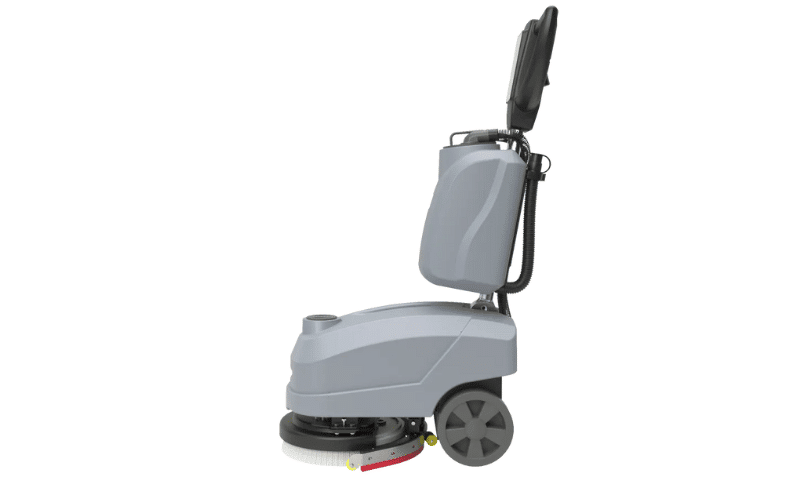

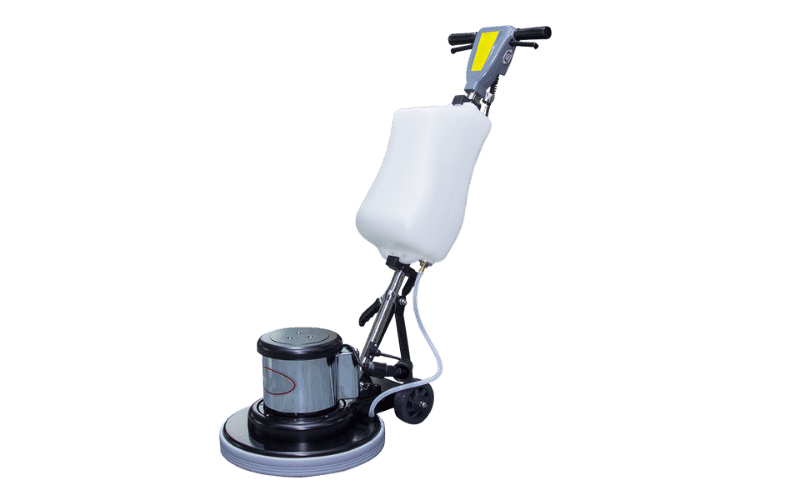
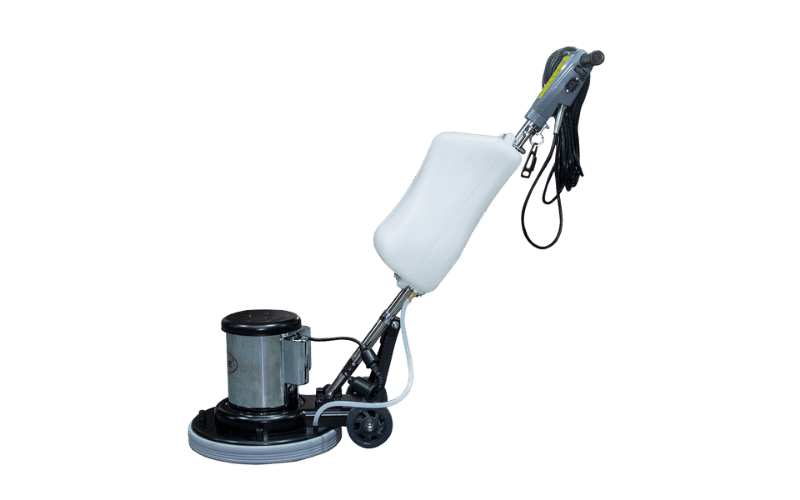
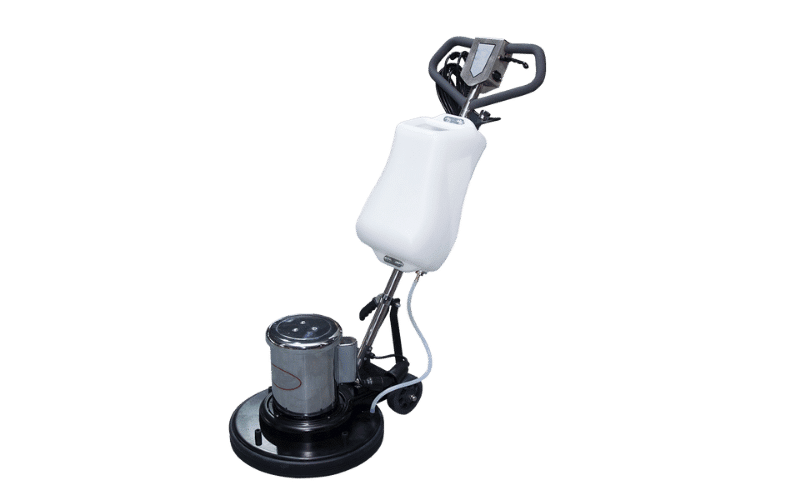



The right floor scrubber battery depends on four core variables—voltage, amp-hour capacity, group size (physical fit), and charger compatibility. For single-shift light-duty operations, AGM lead-acid delivers the best value. For multi-shift or high-utilization facilities, lithium-ion (LiFePO₄) cuts 5-year total cost of ownership by 27–58% compared to lead-acid alternatives.
Replacing a floor scrubber battery sounds straightforward—until you’re staring at a spec sheet full of voltages, amp-hour ratings, BCI group codes, and chemistry acronyms. Pick the wrong battery, and you might end up with a pack that doesn’t physically fit the machine, a charger that permanently damages the cells, or a cycle life so short that you’re replacing the battery every 18 months.
This guide cuts through the confusion. You’ll find a clear breakdown of every battery chemistry used in commercial floor scrubbers today, a six-factor selection framework, common BCI group sizes, total cost-of-ownership data across real-world scenarios, and the mistakes that cost facilities thousands of dollars in avoidable replacements.
Whether you manage a 10,000 sq ft retail location or an 80,000 sq ft distribution center running two shifts, this guide gives you the information to make the right call the first time.
What Battery Types Are Used in Floor Scrubbers?
Floor scrubbers are deep-cycle applications. That means the battery must sustain a moderate discharge rate over a long period—unlike a starter battery, which delivers a short, sharp burst to crank an engine. Four chemistries dominate the market in 2025, each with a different cost profile, maintenance requirement, and operating lifespan.
Flooded Lead-Acid (FLA)
Flooded lead-acid batteries are the oldest and most affordable option on the market. A typical 24V/235Ah FLA pack costs around $480 at street pricing, making the upfront investment accessible for budget-constrained operations.
The tradeoff is maintenance. FLA batteries require regular electrolyte level checks, distilled water refills every 5–10 charge cycles, and a monthly equalization charge at 2.65V per cell. Skip equalization, and you lose roughly 15% capacity within 40 cycles—a measurable hit to shift runtime. Charge time runs 8–12 hours, which rules out opportunity charging during shift breaks. FLA batteries also vent hydrogen gas during charging, meaning OSHA-compliant ventilation is required in any commercial charging area.
At 80% depth of discharge (the typical real-world usage pattern), FLA batteries deliver around 600 cycles before capacity falls below 80% of the original. That translates to roughly 2–4 years of service in daily-use scenarios.
Best for: Single-shift schools, municipalities, churches, and low-frequency operations where the upfront price is the primary constraint and maintenance staff are already trained on lead-acid handling.
AGM (Absorbent Glass Mat)
AGM batteries use the same lead chemistry as FLA, but the electrolyte is absorbed into a glass mat separator. The sealed construction makes them valve-regulated (VRLA) and spill-proof, which is why AGM packs carry a UN2800 non-spillable classification—an advantage in facilities with strict hazardous materials policies.
Compared to FLA, AGM delivers roughly 20% more usable capacity at the same rated Ah. Cycle life is 500–1,200 cycles at 60% depth of discharge, and the charge time drops to about 3 hours to reach 80% state of charge. That charge acceptance rate means AGM can support opportunity charging during shift breaks without the hydrogen-venting risk of FLA.
The performance difference comes at a cost. AGM packs typically run 30% higher than flooded equivalents. Terminal cleaning and monthly charger voltage checks are still required, though the time commitment is far lower than FLA maintenance.
Best for: Retail malls, 2-shift warehouses that need opportunity charging, and operations exporting to regions with strict hazmat transport regulations.
Gel Lead-Acid
Gel batteries suspend the electrolyte in a silica gel matrix, which makes them fully sealed and resistant to vibration damage. They’re maintenance-free in the same sense as AGMs, but they’re more sensitive to high charge currents—overcharging causes permanent gel void formation, which is irreversible.
Runtime per charge on gel batteries is lower than on AGM batteries at equivalent capacity ratings. Lifespan in commercial floor scrubber applications typically falls between 18–24 months under optimal conditions, making gel the shortest-lived lead-acid option. Their price point falls between FLA and AGM.
Best for: Applications where vibration tolerance matters, such as uneven surfaces or rough concrete floors, and where the charging environment can be tightly controlled with a gel-specific charger.
Lithium-Ion (LiFePO₄)
Lithium iron phosphate (LiFePO₄) has become the chemistry of choice for high-utilization floor scrubber operations. The numbers explain why. At 80% depth of discharge, LiFePO₄ batteries deliver 2,000–3,500 charge cycles, compared to 600 cycles for FLA and 1,000 cycles for AGM. According to the 2023 ISSA Equipment Survey, 87% of lead-acid battery users reported runtime degradation of more than 20% after just 18 months of daily use. Only 12% of lithium battery users in the same survey reported comparable degradation at that mark.
The weight advantage is equally significant. A 24V/240Ah LiFePO₄ pack weighs approximately 52 kg, compared to 98 kg for an equivalent AGM pack. That 46 kg reduction decreases operator fatigue on walk-behind units and improves slope performance on ride-on scrubbers.
Charging to 80% state of charge takes 1–2 hours, enabling meaningful opportunity charging during any standard break window. LiFePO₄ also operates at 95–99% charge efficiency, compared with 70–85% for lead-acid, thereby reducing grid electricity consumption by 15–25% per charge cycle.
The upfront cost is the barrier. A 24V LiFePO₄ pack with a compatible charger typically runs $1,500–$3,400, depending on capacity—roughly 2.5–4x the cost of an AGM equivalent. But the total cost of ownership picture shifts dramatically over a 3–5 year horizon, as detailed in the TCO section below.
Best for: Multi-shift airports, hospitals, food processing facilities, large warehouses, and any operation where downtime costs more than $40/hour, and battery maintenance labor is a real expense.
6 Key Factors for Choosing the Right Floor Scrubber Battery
1. Voltage
Voltage is non-negotiable. Installing the wrong voltage destroys the machine’s motor controller. Most commercial floor scrubbers operate on 24V systems, though ride-on scrubbers for large facilities often run at 36V. Small compact units sometimes use 12V. Always check the machine’s nameplate or operator manual before purchasing a replacement.
A 24V system typically uses either two 12V batteries wired in series or a single 24V lithium pack. Machines currently using two 12V batteries can often upgrade to a single 24V LiFePO₄ pack, simplifying the battery bay and reducing weight.
2. Amp-Hour (Ah) Capacity and Runtime Targets
Amp-hour rating determines how long the scrubber runs between charges. A higher Ah number means longer runtime per charge—but only if you account for the chemistry’s actual usable capacity.
Lead-acid batteries should not be discharged below 50% state of charge to avoid sulfation damage. That means a 100 Ah lead-acid pack delivers roughly 50 Ah of usable energy in practice. LiFePO₄ batteries can safely discharge to 10–20% state of charge, so a 100 Ah lithium pack delivers 80–90 Ah of usable energy—effectively 60–80% more real-world runtime at the same nameplate Ah rating.
To size capacity correctly: estimate your facility’s area in square feet, divide by the machine’s rated cleaning coverage per hour, and match the result to the manufacturer’s runtime specification at your expected discharge depth.
3. Group Size and Tray Dimensions
The battery must physically fit the machine’s battery tray. The BCI (Battery Council International) group sizes standardize physical dimensions, which makes cross-referencing possible. Common group sizes for floor scrubbers are covered in detail below. Before ordering any replacement battery, confirm the tray’s internal length, width, and height, and cross-reference against the manufacturer’s group size specification.
4. Charger Compatibility
This is where the most expensive mistakes happen. FLA and AGM batteries use a constant-voltage charger with a current taper. LiFePO₄ batteries require a CC-CV (constant current/constant voltage) charger that communicates with the battery’s built-in Battery Management System (BMS). Using a lead-acid charger on a lithium pack permanently damages the cells through overcharging—damage that is neither covered by warranty nor reversible.
If upgrading from AGM to lithium on an existing machine, budget an additional $300–$600 for a compatible lithium charger. Smart charger brands that integrate with commercial floor scrubbers include Delta-Q IC650, HF-PWR CH7500, and Zivan NG1.
5. Deep-Cycle Requirement
Floor scrubbers need deep-cycle batteries, full stop. Deep-cycle batteries are engineered for repeated discharge to 50–80% depth of discharge and slow-charge recovery. Starting batteries (used in vehicles) deliver high cold-cranking amps for a brief moment and are not designed for the sustained discharge required by floor scrubber operation. Installing a starting battery in a floor scrubber results in rapid cell degradation—typically within weeks.
6. Maintenance Tolerance
FLA batteries require active maintenance: watering every 5–10 cycles, equalization charging monthly, and terminal cleaning weekly. AGM requires terminal checks and monthly charger calibration. LiFePO₄ requires zero maintenance beyond monitoring the BMS indicator.
For facilities with high operator turnover or no dedicated maintenance staff, LiFePO₄ eliminates a significant source of human error that can lead to premature battery failure in lead-acid systems.
Common Battery Group Sizes for Floor Scrubbers
|
Group Size |
Voltage |
Typical Ah |
Common Application |
|---|---|---|---|
|
U1 |
12V |
32–38Ah |
Compact walk-behind scrubbers, small units |
|
Group 27 |
12V |
85–110Ah |
Mid-range walk-behind scrubbers |
|
Group 31 |
12V |
95–130Ah |
Commercial and industrial walk-behind scrubbers (paired in series for 24V) |
|
GC2 |
6V |
200–240Ah |
Heavy ride-on scrubbers (4 batteries in series for 24V) |
U1 batteries suit compact, walk-behind units designed for tight spaces, offices, and retail stores. The low Ah capacity limits runtime to 60–90 minutes per charge in most applications.
Group 27 batteries are common in mid-range walk-behind floor scrubbers. At 85–110Ah, they offer sufficient runtime for facilities in the 10,000–30,000 sq ft range on a single shift.
Group 31 batteries are the workhorse of commercial floor scrubbing. Two Group 31 12V batteries wired in series deliver 24V at 95–130Ah—enough for sustained operation in warehouses and distribution centers. Group 31 LiFePO₄ drop-in replacements are widely available and fit most machines designed for this group size without modification.
GC2 (golf cart) batteries at 6V and 200–240Ah are used in series configurations on heavy ride-on scrubbers that need maximum capacity for large-area coverage. Four GC2 batteries wired in series produce a 24V system with substantial Ah reserves. These are the largest and heaviest lead-acid options—an area where lithium’s weight advantage is most pronounced.
Which Battery Type Is Right for Your Operation?
Rather than a one-size-fits-all answer, the right chemistry depends on three measurable variables: cleaning frequency (hours per week), facility size, and number of daily shifts.
- Choose flooded lead-acid when cleaning frequency falls below 10 hours per week, the hard upfront budget cap is below $2,000 for the complete machine, and maintenance staff with lead-acid training are already on payroll.
- Choose AGM when the facility runs 1–2 shifts, opportunity charging during breaks is operationally useful, and an acid smell or hydrogen venting is unacceptable (retail environments, food-adjacent areas, facilities without ventilated charging rooms).
- Choose LiFePO₄ lithium when cleaning frequency exceeds 200 charge cycles per year, multi-shift operation makes fast charging a productivity requirement, OSHA ventilation compliance for lead-acid adds installation cost, or total cost of ownership over 3–5 years is the procurement metric—not day-one price.
Total Cost of Ownership: What Battery Replacement Really Costs
Upfront battery price is rarely the real cost. The full equation includes replacement frequency, maintenance labor, electricity, and downtime. The following scenarios use mid-range AGM versus mid-range LiFePO₄ pricing at 2025 U.S. rates, with labor at $25/hour fully loaded.
Small retail store (10,000 sq ft, single shift, 5 years): AGM lead-acid totals approximately $2,370 over five years; LiFePO₄ totals approximately $2,540. In this scenario, lithium and AGM are cost-equivalent—lithium delivers the same economics with zero maintenance burden.
Medium warehouse (30,000 sq ft, single shift, 5 years): AGM totals approximately $4,580; LiFePO₄ totals approximately $3,320. Lithium saves $1,260 over five years—a 27% reduction—and pays back its price premium in roughly 22 months.
Large multi-shift facility (80,000 sq ft, two shifts, 5 years): AGM totals approximately $10,300 (including three replacement packs, a backup pack to cover long charge times, maintenance, acid spills, and downtime). LiFePO₄ totals approximately $4,350. Lithium saves $5,950 over five years—a 58% reduction—recovering its premium in approximately 11 months.
The hidden costs that most procurement calculations miss: battery-related cleaning delays cost $40–$120 per incident in labor and lost productivity, with multi-shift lead-acid operations experiencing 8–20 such incidents per year. Acid spill cleanup runs $200–$800 per incident. Flooded lead-acid water maintenance requires 4–6 staff-hours per year. Each of these line items disappears with LiFePO₄.
Common Mistakes When Choosing a Floor Scrubber Battery
- Buying by upfront price alone. A $480 FLA pack that requires two replacements over five years and accumulates $400 in maintenance labor costs far more than the sticker suggests. Run a 5-year TCO before finalizing any battery purchase.
- Using the wrong charger after upgrading. Using an AGM-rated charger on a LiFePO₄ pack permanently overcharges the cells within a few cycles. Always purchase a chemistry-matched charger when switching battery types.
- Ignoring physical dimensions. Two batteries can share identical voltage and Ah ratings but have completely different BCI group sizes. A Group 31 and a Group 27 are both commonly rated 12V/100Ah but differ by nearly an inch in each dimension. Measure the battery tray before ordering.
- Using a starting battery instead of a deep-cycle battery. Starting batteries are designed for a single, brief high-current burst. Floor scrubbers discharge slowly and repeatedly. A starting battery installed in a scrubber typically fails within weeks.
- Running lead-acid below 50% discharge. Every discharge below 50% on a lead-acid battery accelerates sulfation and shortens cycle life. If operators regularly run the machine until it cuts out, FLA and AGM packs will fail far earlier than their rated lifespan.
- Skipping equalization on FLA batteries. Skipping the monthly 3-hour equalization charge at 2.65V/cell results in a 15% capacity loss after just 40 cycles—a measurable drop in runtime in the first two months of use.
- Buying no-name lithium packs without BMS verification. Lithium packs without active cell balancing (at least 100 mA active balancing, not just 50 mA passive) have shown an 8% capacity fade within six months in lab testing. Require UN38.3, IEC 62619, and IP54 certifications as a minimum procurement standard.
- Not accounting for charger replacement cost in lithium upgrades. Retrofitting an existing lead-acid fleet to lithium requires a new lithium-rated charger for each machine. Budget $300–$600 per charger, or that cost will appear as a surprise line item.
Frequently Asked Questions
What is the most common battery voltage for floor scrubbers?
Most commercial walk-behind floor scrubbers use a 24V battery system, typically achieved by wiring two 12V batteries in series. Larger ride-on scrubbers often operate at 36V. Compact units may use 12V. Always confirm voltage from the machine’s nameplate before purchasing a replacement.
How long does a floor scrubber battery last?
Battery lifespan depends on chemistry and usage frequency. Flooded lead-acid batteries last 2–4 years (300–600 cycles at 80% DoD). AGM lead-acid batteries last 3–5 years (500–1,200 cycles). LiFePO₄ lithium batteries last 5–10 years (1,500–3,500 cycles). According to the 2023 ISSA Equipment Survey, 87% of lead-acid users reported runtime degradation of more than 20% after just 18 months of daily use.
Can I replace a lead-acid floor scrubber battery with a lithium battery?
A lithium retrofit is often possible but requires a lithium-specific charger (300–600 USD), a compatible BMS, and confirmation that the machine’s motor controller accepts lithium voltage curves. Most retrofits cost 60–80% of the price of a new lithium scrubber. For many facilities, purchasing a new lithium-configured machine is more cost-effective than retrofitting an existing lead-acid unit.
What does deep-cycle mean for floor scrubber batteries?
Deep-cycle batteries are engineered to discharge slowly to 50–80% of their capacity and then recharge fully, repeatedly. Floor scrubbers need deep-cycle batteries because they draw a sustained, moderate current over hours of operation. Starter batteries—designed for a brief high-current burst to start an engine—fail rapidly in floor scrubber applications.
What BCI group size do most commercial floor scrubbers use?
Group 31 (12V, 95–130Ah) is the most common group size for commercial walk-behind floor scrubbers in warehouses and industrial environments. Two Group 31 batteries wired in series deliver the 24V system most commercial scrubbers require. Ride-on scrubbers often use GC2 (6V, 200–240Ah) batteries in a four-battery series configuration.
How does temperature affect floor scrubber battery performance?
Cold temperatures reduce capacity for all chemistries. Lead-acid batteries lose 30–50% of capacity at 0°F (−18°C). LiFePO₄ batteries lose 15–20% at the same temperature and recover full capacity once warmed. For refrigerated warehouses, cold storage facilities, or outdoor applications, LiFePO₄ is the more reliable choice.
Is AGM really maintenance-free?
AGM batteries require no water refills and generate no hydrogen gas during normal charging. However, AGM is not completely maintenance-free—terminals should be cleaned, and charger voltage should be calibrated monthly. Skipping terminal maintenance leads to the buildup of connection resistance, which reduces effective capacity over time.
Make Your Next Battery Purchase Count
Choosing the right floor scrubber battery isn’t a minor procurement decision. The wrong chemistry—or the wrong group size, voltage, or charger—translates directly into premature replacements, unplanned downtime, and maintenance costs that compound over years of operation.
The framework is straightforward: confirm your machine’s voltage and tray dimensions first, then select chemistry based on your cleaning frequency and shift structure. Single-shift light-duty operations can optimize for day-one cost with AGM. Multi-shift, high-utilization facilities almost universally recover the lithium premium within two years through eliminated maintenance, faster charging, and extended cycle life.
If you’re unsure which battery configuration suits your fleet—or which LeadV floor scrubber model is right for your facility—contact Leadv Cleaning Solutions directly. The team can match you with the right machine spec and battery configuration for your cleaning environment, whether you’re managing a single compact unit or procuring equipment for a multi-site operation.
Reach the Leadv Cleaning Solutions team at sales@leadvclean.com or via WhatsApp at +86 136 0003 0742, or request a quote directly at leadvclean.com.