







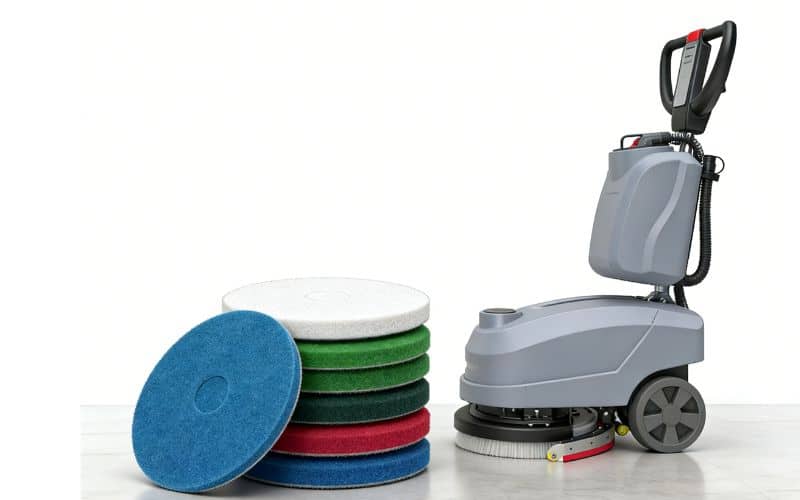
Floor machine pads come in various types and colors and aren’t just round, fibrous discs. They can be costly, prone to tearing at inconvenient times, and lead to poor floor finishes if misused. However, when maintained properly, floor machine pads can help reduce chemical consumption, enhance facility appearance, and boost productivity. Our comprehensive floor machine pad guide, compiled by our cleaning specialists, will help you keep your floor care program productive. It all starts with the pads. We’ll cover everything from understanding basic pad types to getting the maximum life out of your pads. If you’re looking for cost-reduction recommendations, we have that, too. Let’s dive in!
Types of Floor Machine Pads
Chances are, you have dealt with floor pads before. However, if you are new to floor maintenance or want to learn more about different types of floor machine pads, you are in the right place. There are several types of floor pads, each offering unique benefits and suited to specific cleaning tasks. Typically, machines are designed for a particular pad size and type. Here’s a quick overview: If you want a more in-depth look at the characteristics of floor pads, keep reading!
STRIPPING PADS
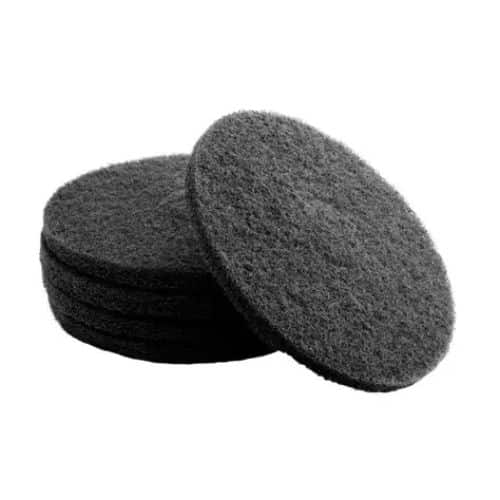
Stripping pads (usually black or brown) are formed by aggressive synthetic fibers and heavy-duty resin. The fibers are abrasive and best suited for completely removing old finish, sealer, and wax from floors.
SCRUBBING PADS
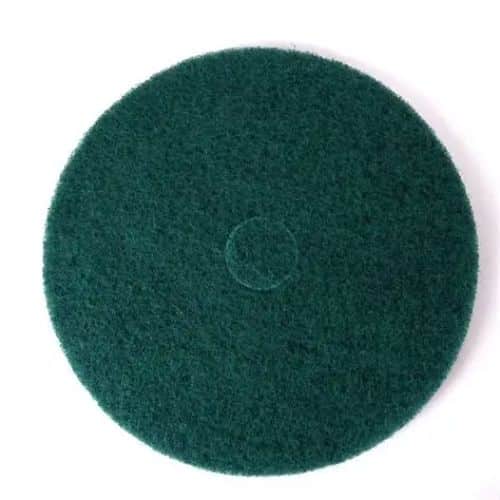
Scrubbing pads are similar to stripping pads but are less aggressive. They are made of blue or green fibers. These pads are great for deep cleaning, removing heavy scuff marks, and preparing floors for recoating without completely removing the base finish.
BUFFING PADS
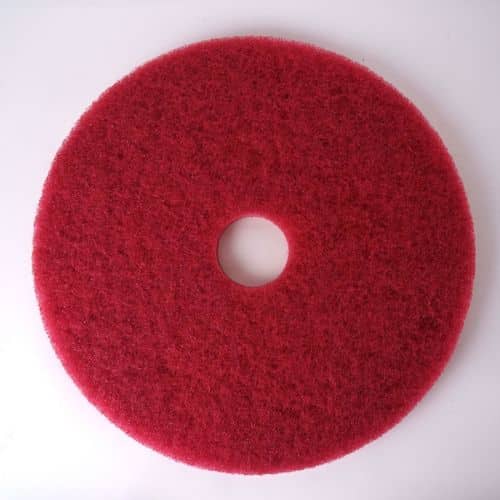
Buffing pads, often red, are made of soft, durable fibers. These qualities make them ideal for daily cleaning and spray buffing to remove light scuffs and restore shine.
POLISHING PADS
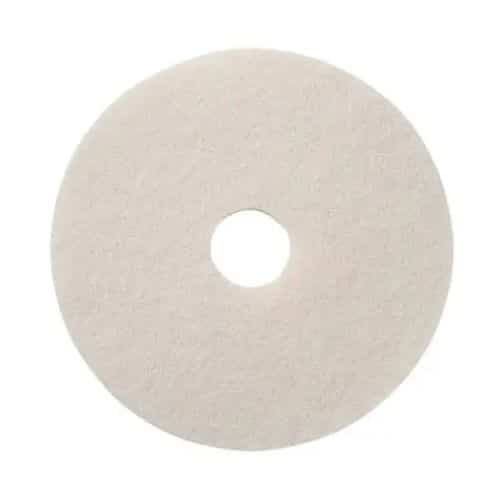
Polishing pads (white or yellow) are soft and non-abrasive. They combine fine fibers to create a high-gloss “wet look” finish. Polishing pads generally have a longer lifespan than stripping pads and should be used only on dry, clean floors. These pads will wear down from heavy use on rough surfaces, so consider buffing them if your application requires soil removal.
SPECIALTY/NON-MARKING PADS
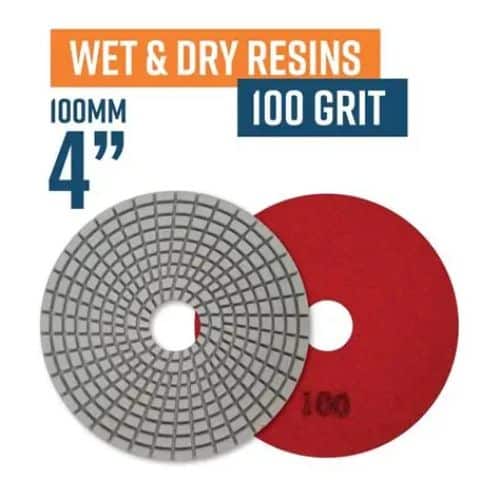
Specialty resins and natural fibers form pads well-suited to unique floors, such as stone or concrete. They are available for burnishers and auto-scrubbers. These specialized pads have a limited lifespan and tend to cost more, so they require careful selection based on the floor type.
Floor Machine Pad Comparison Charts
Each floor pad type has its benefits and drawbacks. Maybe you’re wondering which is better: scrubbing vs. stripping pads. Well, that’ll hinge on your cleaning goal. The ideal pad depends on the floor condition, how long you need the pads to last, and what you are willing to pay. See the pad comparison charts below to get a snapshot of the advantages and disadvantages of each type.
STRIPPING VS. SCRUBBING PADS
| Pad Type | Heavy Soil | Old Wax Removal | Daily Cleaning | Surface Scuffs | Lifespan | Aggressiveness | Cost |
|---|---|---|---|---|---|---|---|
| Stripping | ✓ | ✓ | No | No | Low | High | $ |
| Scrubbing | ✓ | No | ✓ | ✓ | Medium | Medium | $ |
BUFFING VS. POLISHING PADS
| Pad Type | Heavy Soil | Old Wax Removal | Daily Cleaning | Surface Scuffs | Lifespan | Aggressiveness | Cost |
|---|---|---|---|---|---|---|---|
| Buffing | No | No | ✓ | ✓ | Long | Low | $ |
| Polishing | No | No | No | No | Long | Very Low | $ |
What Are Floor Machine Pads Made Of?
Floor machine pads are crafted from polyester or nylon resins and may incorporate abrasive minerals or natural hair. Certain specialty pads even contain diamond particles. The content of a pad varies depending on your floor type. Fortunately, we have broken down this information to clarify what your floor pad is made of.
WHAT ARE SYNTHETIC PADS MADE OF?
Synthetic pads are manufactured from a nonwoven web of nylon or polyester fibers, coated with resin and abrasives. Unless they are polishing pads, they will contain mineral grit, which causes the scrubbing action. Meanwhile, polishing pads are made of – you guessed it – fine soft synthetic fibers along with gentle binders.
WHAT ARE NATURAL HAIR PADS MADE OF?
Natural hair pads are designed to prioritize heat generation for burnishing. They begin with a blend of synthetic fibers for structure and continue with hog hair. Next comes the binder, which holds the matrix together. If these pads are used wet, they might smell, so they are mostly for dry work. Also, there is a natural texture to aid gloss development. Finally, the face – the wearable part of the pad – is made of this blended compound.
WHAT ARE ECO PADS MADE OF?
Eco-friendly variations are made from a blend of recycled PET plastic bottles, water-based resins, and special additives, with harsh chemicals removed to reduce environmental impact.
How To Identify Floor Pad Sizes
First, let’s start with the basics. Whether you are the machine operator or the facility manager. A basic understanding of floor pads is essential to staying productive and efficient. The basic components of your floor pads are:
- Diameter – The width of the pad from edge to edge.
- Center Hole – The cutout in the middle (usually 3.25 inches).
- Thickness – The loft of the fiber web.
READING PAD SIZES
You can find your floor pad size on the box or label. If you do not see the size, check the machine’s deck size or call your local janitorial supplier with the model. They should be able to tell you the pad size for your model machine. Be aware that the pad size is usually the same as the machine deck size. For example, a 20-inch machine takes a 20-inch pad. Sizes are noted as the Diameter. An example would be 20″. Generally, your machine will have a recommended size, and you cannot purchase a different size because it must fit the driver. Check your machine’s manual and with your local dealer for appropriate pad sizes.
HOW TO MEASURE FLOOR PADS
You can measure your floor pad size by using your average tape measure. Remember, for pads, you need to measure the outer diameter.
- Measure the outer diameter, and picture the pad as a compass with the north at the top. Make sure you’re placing the tape measure at the center of the pad and running the tape measure east to west.
- Check that the center hole remains centered in the pad to ensure it fits.
- Measure the pad’s thickness and position the tape measure along the edge to ensure it still has enough loft for use.
How To Choose The Right Floor Machine Pad
Consider your application, machine speed, and floor finish when choosing a pad type. At our facility, we are often asked: “Can you put a stripping pad on a high-speed burnisher?” Your machine’s speed and motor are generally designed for a specific task (usually scrubbing or polishing), so it is best to check with your local dealer and the machine manual before using a pad type other than the recommended one. You can often switch from red buffing to white polishing, but you can rarely go from a stripping pad to a polishing pad on the same machine without changing the process. When it’s time to replace the pads, ensure you have the correct color for the job.
PAD RECOMMENDATIONS FOR YOUR APPLICATION
Different applications require different machines and, therefore, pad types. We have outlined some applications below with our recommendations. Check with your supplier to confirm that our recommendations suit your situation.
GENERAL CLEANING APPLICATIONS
Indoor applications with light soil on the floor surface are best suited for Red Buffing pads. In this environment, red pads last longer and are more versatile, with improved scuff removal.
HEAVY DUTY & RESTORATION APPLICATIONS
Restoration and strip-out applications generally use Black or Brown stripping pads because they provide better abrasion and greater removal of old wax layers.
HIGH GLOSS APPLICATIONS
Burnishing and other applications that frequently use high-speed machines will often use Natural Hair or White pads. High-speed machines primarily use these pads because they enhance the floor’s expected shine and increase heat generation to harden the wax.
TEXTURED FLOORS
Uneven floors or environments with consistently grouted tiles typically use microfiber pads or brushes since they provide increased reach into grout lines.
OILY FLOORS
If your environment has standing oil or grease, consider using heavy-duty scrubbing pads to cut through the oil and reduce clogging.
SENSITIVE APPLICATIONS
Sensitive applications, such as soft stone or linoleum, require white polishing pads because standard aggressive pads contain coarse grit that scratches the surface during use, causing permanent damage.
PAD STANDARDS FOR YOUR INDUSTRY
Your industry may also be a deciding factor. Check the industries below to see which pad type is commonly used in that application. These industry standards may change depending on the specific floor finish. Check with your pad dealer to confirm the best option for your situation. For professional-grade floor care advice, consider giving our seasoned pros a shout.
How Long Should Floor Machine Pads Last?
How long floor pads last depends on five factors: Let’s go through each one.
- Usage
- Pad Type
- Floor Conditions
- Operating Pressure
- Operator Behavior
USAGE
The square footage you cover with your floor pads makes a huge difference. If you use your machine for 10,000 sq ft a week, the pads will likely last longer than if you were doing 50,000 sq ft a week.
PAD TYPE
Some pad types are naturally more prone to wear and tear than others. Stripping pads typically wear out faster than polishing pads. Plus, they can get clogged with wax, which requires flipping or replacement. Be sure to carefully monitor the pad thickness to get the most out of your stripping pads. Lower thickness means less contact with the floor surface and less exposure to unevenness. In contrast, natural hair pads have a different life cycle: they are heat-generating tools that wear down gradually. When it comes to scrubbing pads, blue pads typically have a similar lifespan to red pads, depending on the soil.
FLOOR CONDITIONS
The abrasiveness of the floor surface can limit your pads’ life. The best-case scenario for a long floor pad life is smooth VCT or polished concrete. Surfaces with a lot of lippage or grout lines will shorten your pad life, too. Running over transition strips isn’t a good idea. Not only does it tear your pads, but it’s not safe for machine operation. Avoiding rough edges can be challenging.
OPERATING PRESSURE
Your general machine setup and operating pressure can shorten the life of your floor pads. Something as simple as pad pressure can be an issue. Excessive pressure can cause the pad to heat up, melting the fibers and wearing them out. It’s not just the pressure that can affect your pad conditions, but also the chemicals you use. Harsh strippers soften the pad fibers.
OPERATOR BEHAVIOR
Your machine operator’s driving habits affect the life of your pads. Hitting baseboards, quick starts on dry floors, and not rinsing all reduce the life of your floor pads. If you’re zipping around the hallway, hitting corners, it’ll take a toll on your pads.
Getting The Most Out Of Your Floor Machine Pads
A pad in good condition will increase your machine’s efficiency, improve productivity, and reduce operator fatigue. Additionally, maximizing pad performance means a better bottom line and a safer workplace. So, how can you keep your pads in good condition? It starts with operator education, but also depends on your pad type and maintenance.
OPERATOR EDUCATION
Poor operator habits are an influential cause of reduced pad life. These basic reminders for operators can increase workplace safety and extend the pad’s lifespan. Operators should not:
- Run pads dry (unless specified).
- Leave pads on the machine after use.
- Run over debris.
- Hit baseboards.
- Use clogged pads.
PROPER CLEANING
You should rinse your floor pads after each use. However, if that is not possible, try to check daily. You can find the accumulated wax or soil in the fiber web. Rinse your pads often because dried sludge destroys the fiber elasticity. Dried wax hardens the pad. This issue is a daily responsibility, not just a seasonal concern. Why does cleaning matter? Clogged pads lead to poor cleaning, which can cause slippery floors. Dirty pads can cause dullness, which causes downtime and labor loss. Cleaning pads is an easy way to avoid more serious problems.
Winter Recommendations For Floor Machine Pads
Winter brings challenges for floor maintenance. The salt and ice that melt in colder temperatures cause hazy conditions and reduced finish life. Frequent rinsing is often the primary defense against salt residue, but it isn’t your only option. Salt accumulation is a major concern as white residue accumulates. You can damage the finish more easily than you might expect. When compared with summer dirt, salt is much more abrasive – even when dissolved – which makes sufficient rinsing even more essential when operating your machine in winter conditions