



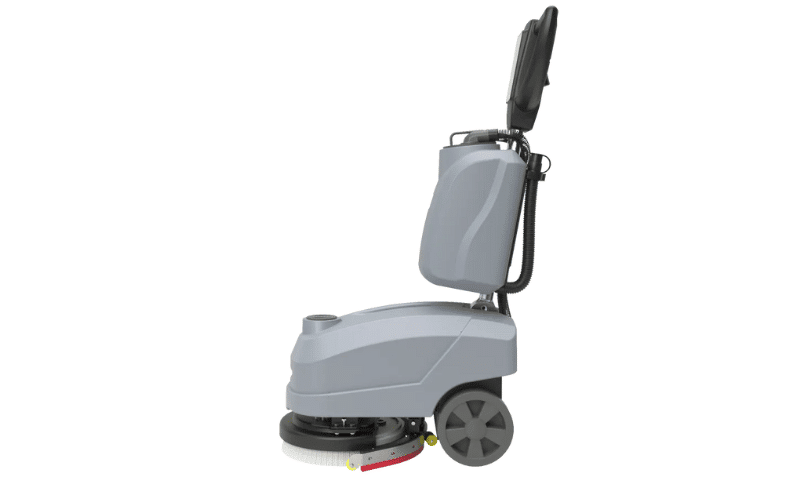

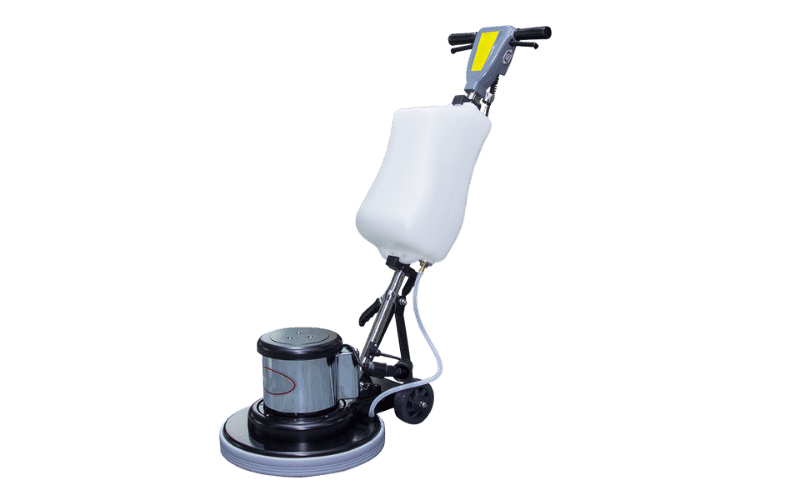
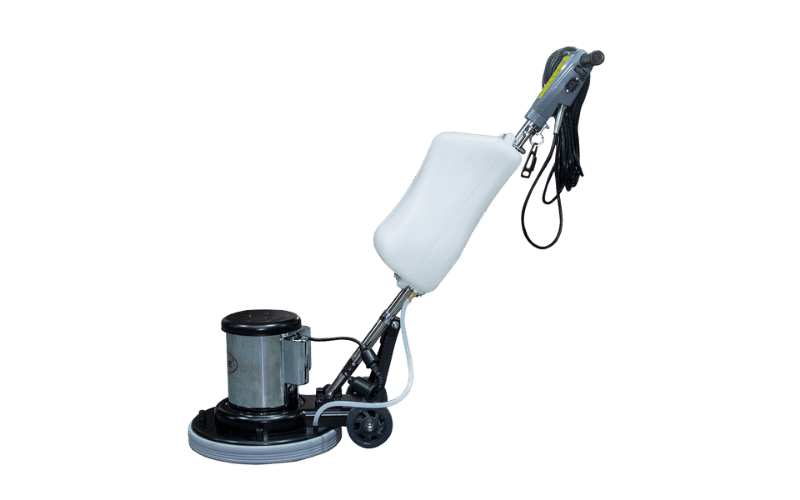
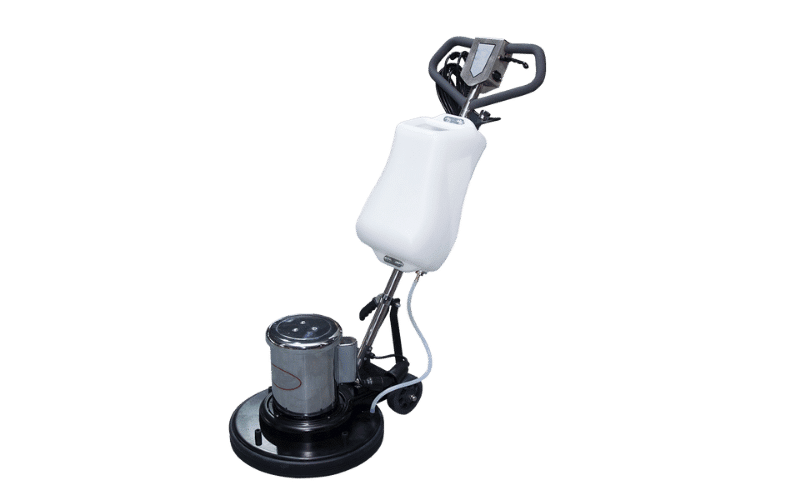



Floor buffers and concrete polishers look alike from across a room — both have a round spinning head, an upright handle, and a motor driving a disc against the floor. On the job, they perform fundamentally different tasks, and choosing the wrong machine can lead to wasted time, poor results, or floor damage that’s hard to reverse.
The core distinction is that a buffer maintains the finish already on your floor. A concrete polisher works directly on the floor surface. One is a maintenance tool. The other is a surface-refinishing machine. Keep that in mind, and most purchasing decisions become straightforward.
This guide explains how each machine works, how they compare across the factors that matter most, and how to choose the right one for your facility. Here’s what you’ll learn:
- What a floor buffer and a concrete polisher are actually built to do
- How they differ in speed, tooling, weight, dust control, and cost
- Which surfaces does each machine belong to
- How to match the right machine to your floors and maintenance schedule
What Is a Floor Buffer?
A floor buffer is a low-speed machine designed for routine hard-floor maintenance. Most operate between 150 and 350 RPM — slow enough to clean and shine a finished surface without cutting into it. The FM302 floor machine, for example, runs at 180 RPM, a range well suited to regular commercial floor care.
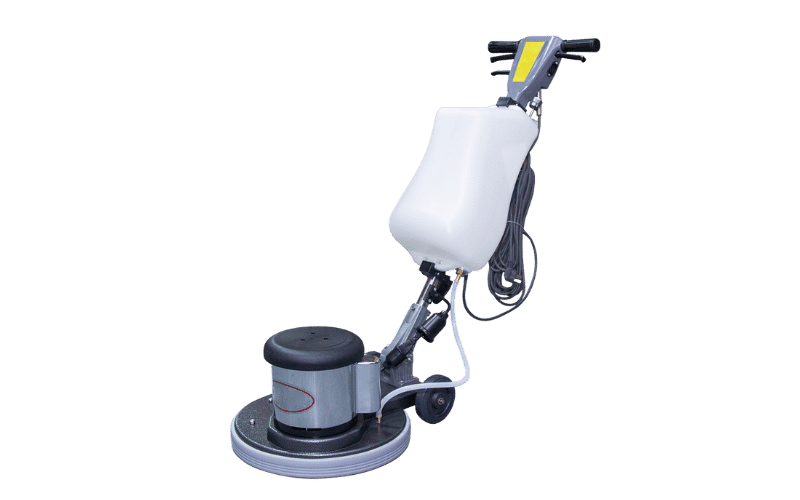
Buffers handle tasks like:
- Scrubbing dirt and grime from finished floors
- Stripping old wax before a recoat
- Applying and buffing wax to restore shine
- Light polishing to bring back surface gloss
- Crystallization treatments on stone and sealed surfaces
These machines work on the topical layer — the finish, wax, or coating on your floor — not the underlying material. That’s what makes them appropriate for surfaces that can’t handle heavy grinding equipment.
The appeal of a buffer lies in its versatility. Swap the pad or brush, and one machine moves between scrubbing, waxing, and polishing. Well-designed units are also easy to handle. The FM302 uses an eccentric center of gravity for improved maneuverability, helping operators guide it across open commercial floors and around fixtures with minimal effort.
Floor buffers are standard in facilities with large areas of finished flooring. Shopping malls, hospitals, office buildings, and schools rely on them to keep vinyl tile, stone, and waxed floors clean and consistently presentable.
What Is a Concrete Polisher?
A concrete polisher is a heavier, specialized machine built for working the concrete slab itself — not the finish on top of it. It grinds, refines, and polishes raw or prepared concrete into a smoother, more durable surface.
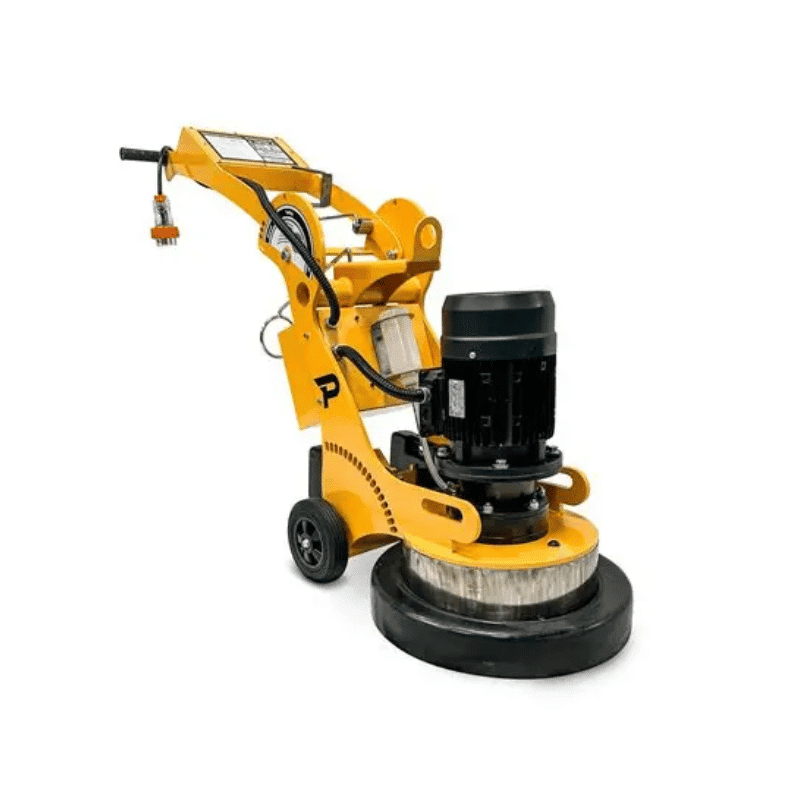
While a buffer uses soft pads that gently contact the surface, a concrete polisher typically uses planetary grinding heads fitted with diamond abrasives. The process runs in stages:
- Coarse metal-bond diamonds remove coatings, level the slab, and expose the aggregate
- Mid-range resin pads smooth out the scratch pattern from the previous step
- Fine resin pads progressively refine the surface to the desired finish level
Skipping a stage typically leaves visible scratches in the final result. This is true surface preparation — not maintenance.
Because grinding concrete creates significant friction and resistance, concrete polishers are heavier than buffers and draw more power. Larger units often require a 240-volt or three-phase electrical supply to maintain adequate torque under load. They’re specialist tools for specialist work, commonly used in:
- Warehouses and distribution centers
- Manufacturing plants and industrial facilities
- Retail environments with exposed concrete floors
- Construction and renovation projects
A note on dust: dry grinding releases fine silica-containing particulates — a recognized occupational health hazard. When dry polishing, a high-capacity HEPA-rated vacuum is standard practice, not an optional add-on. Wet polishing suppresses airborne dust with water but generates a slurry that must be properly collected and disposed of. Floor buffers, which use pads, chemicals, and sometimes water, carry a much lower risk of dust exposure.
Side-by-Side Comparison
|
Factor |
Floor Buffer |
Concrete Polisher |
|---|---|---|
|
Primary job |
Maintaining finished floors: cleaning, waxing, polishing, crystallization |
Grinding and polishing concrete from a raw or prepared surface |
|
Tooling |
Soft pads and brushes |
Diamond metal-bond and resin abrasive pads |
|
Typical speed |
Low (around 150–350 RPM) |
Varies by stage; planetary head action |
|
Works on |
Finished hard floors — VCT, stone, terrazzo, sealed concrete |
Raw, coated, or previously prepared concrete slabs |
|
Weight and portability |
Lighter; typically manageable by one person |
Heavy; may require ramps, a lift gate, or two people |
|
Power requirements |
Standard commercial power |
Higher draw; sometimes 240V or three-phase |
|
Dust control |
Lower concern; works with pads and chemicals |
Greater concern with dry grinding; HEPA vacuum strongly recommended |
|
Investment level |
Lower upfront cost; inexpensive consumables |
Higher upfront cost; multi-grit diamond tooling adds ongoing expense |
|
Best setting |
Malls, hospitals, offices, schools |
Warehouses, plants, construction, and renovation sites |
In short, a buffer maintains the finish layer. A concrete polisher works from the concrete up.
Which Machine Should You Choose?
A few questions point you in the right direction.
Are You Maintaining a Finish or Refinishing a Surface?
This is the most important question. If your floors already have a finish — wax, sealer, or coating — and you need to keep them clean and looking their best on a regular schedule, a floor buffer is the right tool. If you’re working with bare, damaged, or coated concrete that needs grinding and a fresh surface, a concrete polisher is the right tool for the job.
Many commercial facilities with finished floors rarely, if ever, need a concrete polisher.
What Kind of Floors Do You Have?
Buffers suit a range of finished hard floors: vinyl composition tile (VCT), polished stone, terrazzo, linoleum, finished hardwood, and sealed concrete. Concrete polishers are designed for concrete slabs. Applying heavy grinding equipment to thin or delicate tile carries a real risk of cracking, chipping, or grinding through the surface.
One area of overlap worth noting: once a slab has been polished and sealed, a buffer with a soft pad can maintain that coating and restore shine between refinishing cycles. In that role, the buffer maintains the finish — it doesn’t grind the concrete.
What Does Your Schedule and Setting Look Like?
For regular upkeep in commercial settings, a buffer is the practical fit. It’s lighter, easier to operate, and designed for frequent use across finished surfaces. A concrete polisher is better suited to periodic refinishing than to routine maintenance.
What Are the Operational Costs?
Floor buffers have lower upfront costs, and their pads and brushes are inexpensive consumables. Concrete polishers require a larger initial investment, and the multiple-grit stages of diamond tooling needed for a proper finish add meaningful ongoing expenses. Labor time also differs significantly: a buffer pass over a large area is relatively quick, while concrete polishing involves multiple sequential stages that take considerably longer per square foot.
If routine floor maintenance is your primary need, a buffer typically delivers strong value. A concrete polisher makes economic sense when grinding and refinishing is a consistent part of your work scope.
Frequently Asked Questions
Can a floor buffer polish concrete?
A buffer can clean and maintain a concrete floor that already has a finish or sealer, and it can apply or buff out a coating. It cannot grind raw concrete or build a true polished-concrete finish from scratch — that requires a concrete polisher with diamond tooling.
Is a concrete polisher just a stronger floor buffer?
No. They’re designed for fundamentally different jobs. A concrete polisher grinds and refines the concrete slab using planetary heads and diamond abrasives. A buffer maintains finished floors using pads and brushes at low speed. One transforms a surface; the other keeps an existing surface in good condition.
Is a floor burnisher the same as a floor buffer?
Not exactly. A buffer runs at low speed (around 150–350 RPM) and handles cleaning, stripping, and light polishing. A burnisher runs at much higher speeds — often 1,500 to 3,000 RPM — to produce a high-gloss finish on waxed floors. Related machines, different speeds, different applications.
What speed does the FM302 run at?
The FM302 operates at 180 RPM, which is suitable for cleaning, waxing, polishing, and crystallization on finished commercial floors.
Which machine is better for a hospital, office, or school?
For facilities with finished hard floors, a floor buffer is the better fit. These settings call for regular, reliable upkeep of an existing finish, which is precisely what a low-speed buffer is designed to handle.
Do I need both machines?
Only if your work covers both jobs. Facilities focused on maintaining finished floors typically need just a buffer. A concrete polisher becomes relevant when grinding or surface refinishing is part of your regular scope.
What surfaces can a floor buffer handle?
Buffers work well on finished hard floors, including VCT, sealed concrete, polished stone, and terrazzo. With the right pad or brush, one machine handles cleaning, waxing, polishing, and crystallization across these surface types.
Do concrete polishers require special dust control?
When dry polishing, yes. Dry concrete grinding releases fine silica-containing dust, a recognized occupational health concern. A HEPA-rated vacuum is strongly recommended to reduce airborne exposure during dry grinding. Wet polishing suppresses dust with water but produces a slurry that must be properly managed and disposed of. Either way, dust control should be built into the job plan.
Choosing the Right Machine for Your Floors
The decision usually comes down to one question: Are you maintaining a finish or refinishing a surface?
A floor buffer is the right tool for keeping finished commercial floors clean, waxed, and polished on a regular schedule. It’s lighter, simpler, and less expensive to operate — and well suited to frequent use across a wide range of finished hard surfaces. The FM302 combines cleaning, waxing, polishing, and crystallization in a single versatile unit, designed for facilities such as malls, hospitals, offices, and schools.
A concrete polisher is a heavier, higher-investment machine for grinding and refinishing concrete slabs. It fits warehouses, industrial facilities, and construction projects where the concrete itself needs surface work — not settings where the goal is maintaining an existing finish.
Match the machine to the job to protect your floors, equipment, and budget.
Want help finding the right floor machine for your facility? Explore LeadV’s floor-machine lineup and contact our team to discuss your surfaces, space, and maintenance goals.