



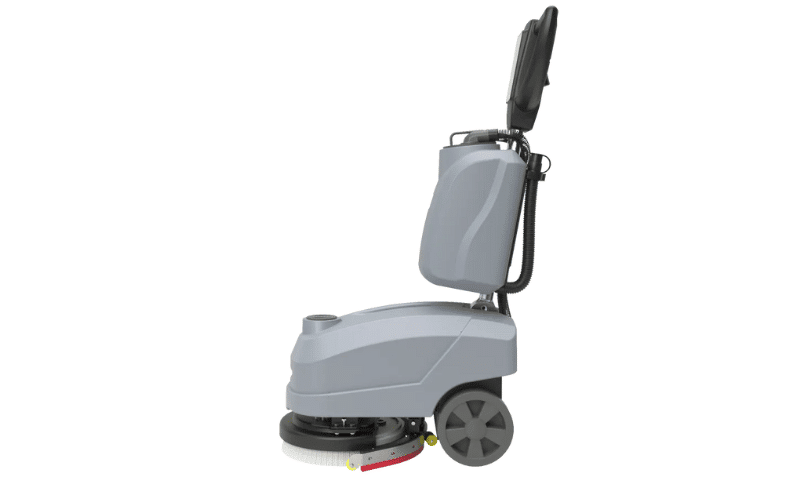

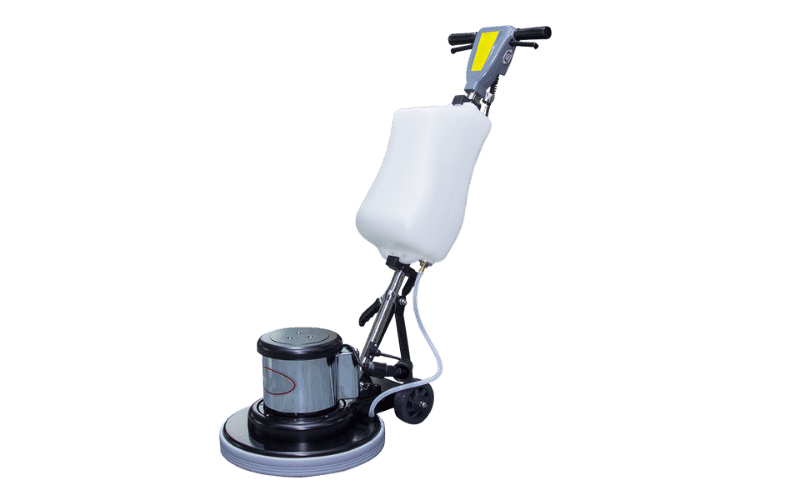
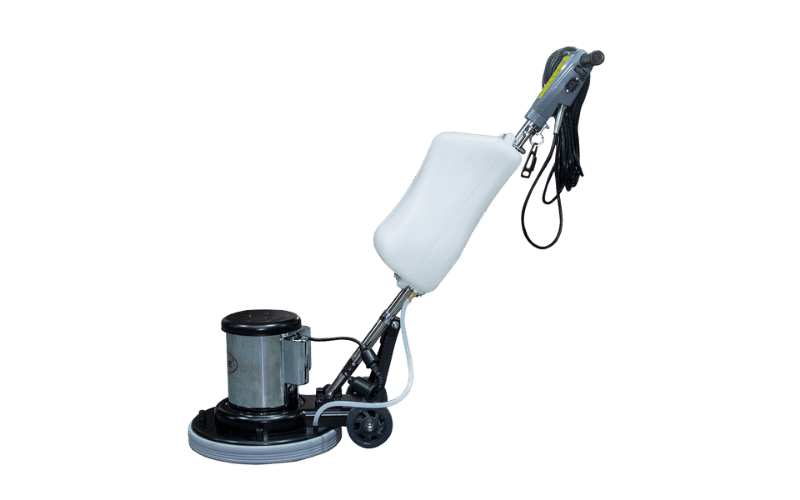
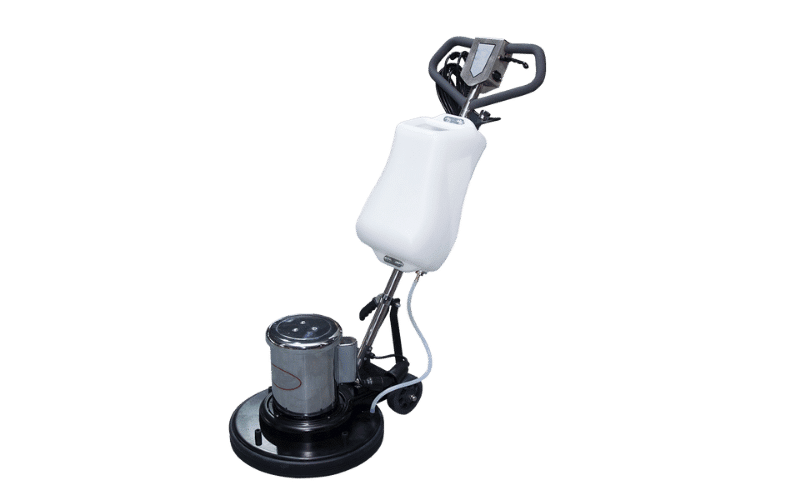



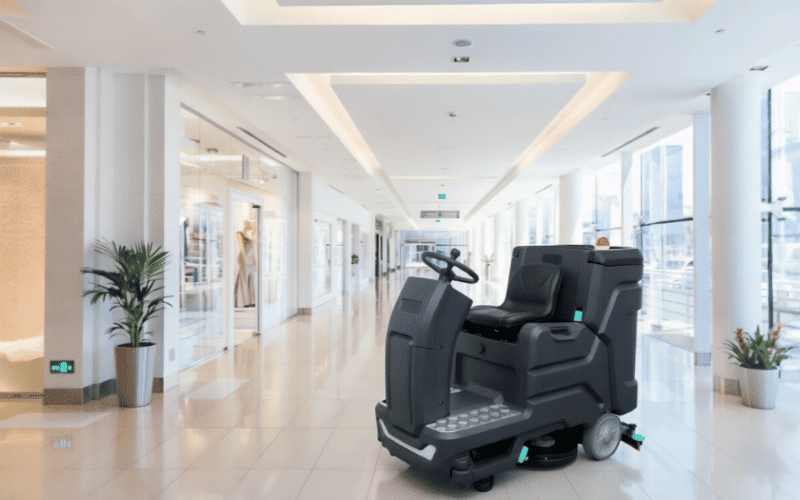
Buying the wrong ride-on floor scrubber is an expensive mistake. The machine ties up capital, sits idle, or simply won’t fit through your back-room door. The scrubber is rarely the problem. The match between the machine and the facility is. This guide gives you a practical framework to get that match right the first time.
A ride-on floor scrubber lets one operator sit, drive, and clean thousands of square feet in a single pass. That cuts fatigue and finishes large floors faster than any walk-behind. But “faster” only matters when the machine fits your floors, your schedule, and your budget.
This guide is written for facility managers, operations leads, and procurement teams who want a clear, honest framework rather than a sales pitch. By the end, you’ll know how to size a machine to your space, choose the right scrubbing technology, weigh battery and cost tradeoffs, and evaluate any unit before you sign.
Key takeaways:
- Ride-on scrubbers are well-suited to large, open floors where productivity and runtime matter most.
- Facility size, floor type, and total cost of ownership should drive your choice more than the upfront price.
- A demo on your own floors tells you more than any spec sheet.
Assess Your Facility Before You Shop
Spec sheets mean nothing until you measure your own floors. The machine should fit the building, not the other way around. Work through these four steps before you compare a single brand.
- Measure total square footage. Add up every area you clean daily, not just the open floor. This number indicates how much coverage the machine needs to deliver within your cleaning window.
- Find your bottlenecks. Walk the route an operator would actually drive and note the tight spots: narrow aisles, doorways, checkout lanes, and turns around fixed equipment. A 32-inch deck is useless if your tightest doorway measures 34 inches with hardware sticking out.
- Check for ramps and inclines. Loading docks, parking decks, and split-level floors all demand motor power. Smaller riders often have low-grade ratings and will stall or creep on steep slopes. Confirm a machine’s maximum grade before you buy if your route includes any incline.
- Identify your floor type. Polished concrete, sealed tile, epoxy, and rubber all respond differently to brushes and pads. Know your surface so you can match the right deck and accessories later.
In practice: a 20-minute walk with a tape measure tells you more than any brochure.
What Is a Ride-On Floor Scrubber?
A ride-on floor scrubber is a machine that the operator drives while seated, using a steering wheel and pedals. In a single pass, it applies cleaning solution, scrubs the floor with rotating brushes or pads, and vacuums up dirty water through a rear squeegee.
Most commercial ride-on scrubbers are battery-powered. Some specialized models use other power sources for specific industrial settings, but battery units are the standard for indoor commercial work.
The main advantage over a walk-behind is coverage. Because the operator rides rather than walks, the machine carries larger tanks, runs a wider scrub deck, and cleans more square footage per hour. This reduces operator fatigue on long shifts and lowers labor costs on large floors. A single operator can clean tens of thousands of square feet per hour, which helps offset the higher purchase price over time.
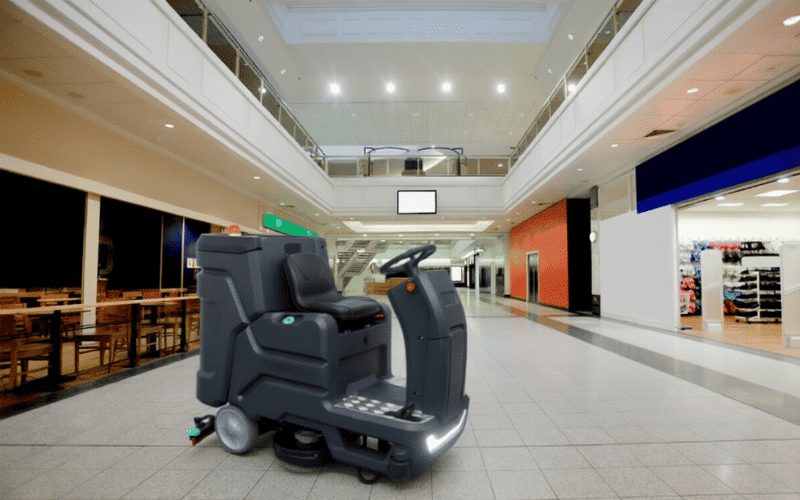
Ride-on scrubbers make the most sense in large, open environments: distribution centers, warehouses, airports, supermarkets, and similar facilities. They’re a poor fit for tight, cluttered spaces, where a wider turning radius becomes a liability.
Key Characteristics
Modern ride-on scrubbers share several features that define their performance. Not every model includes all of them, but understanding these traits helps you compare units more clearly.
- Wide cleaning paths: A wider scrub deck covers more area per pass—the core efficiency advantage of a ride-on.
- Strong vacuum recovery: A capable recovery system effectively extracts dirty water, leaving floors dry enough for safe foot traffic shortly after cleaning.
- Adjustable water and solution flow: Operators can control the amount of solution dispensed, reducing waste on lightly soiled areas.
- Ergonomic seating and controls: Adjustable seating and steering protect operators during long shifts and reduce strain.
- High-capacity tanks: Larger solution and recovery tanks mean fewer stops to refill and dump, so more of the shift is spent on actual cleaning.
- Efficiency features: Water-saving modes, solution metering, and eco settings lower consumable costs and reduce environmental impact.
Types of Ride-On Scrubbers
Ride-on scrubbers fall into four broad categories. Each suits a different facility size and cleaning challenge.
Compact Models
Compact ride-ons offer the smallest footprint in the category, roughly comparable to a large walk-behind but with seated operation. They’re the most affordable and most maneuverable ride-on option, making them well-suited to grocery aisles, school hallways, and mid-size retail floors where space is limited but a rider still saves time.
Typical settings: small retail showrooms, community centers, standard grocery stores.
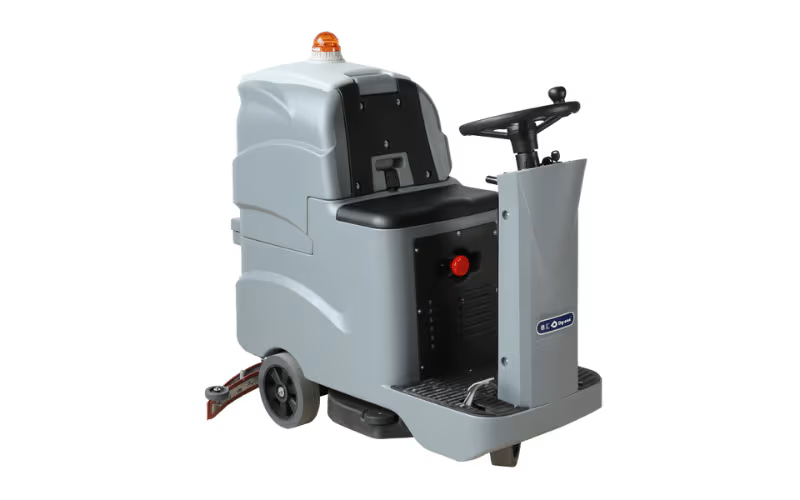
RS75 Compact Ride on Scrubber 3,000m²h
- Model: RS75
- Operation Type: Ride-on
- Cleaning Path: 20 inches
- Solution Tank Capacity: 70 L
- Recovery Tank Capacity: 75 L
Mid-Size Models
Mid-size models strike a versatile middle ground for standard commercial spaces. They carry larger tanks and wider decks than compact units, which speeds up cleaning and offers more battery capacity for longer shifts.
Typical settings: automotive dealerships, regional distribution warehouses, large educational campuses.
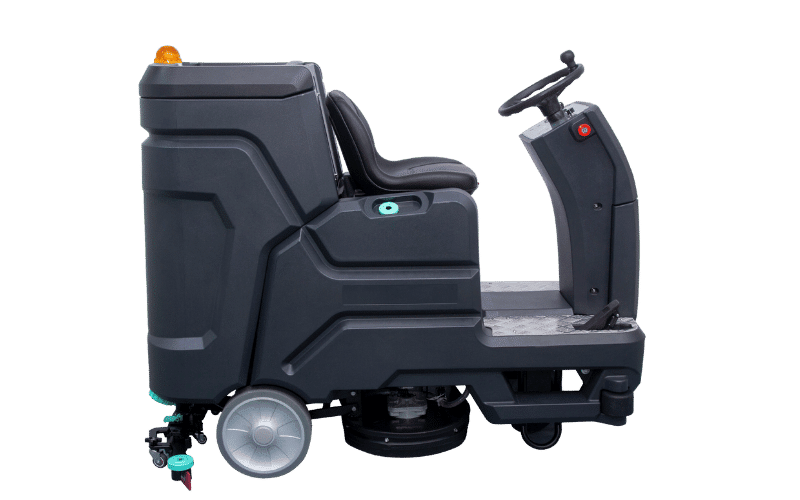
LR130 Ride-on Scrubber Mid-size
- Model: LR130
- Operation Type: Ride-on
- Working Width: 760 mm
- Solution Tank Capacity: 120 L
- Recovery Tank Capacity: 130 L
Industrial Models
Industrial models are built for the largest and most demanding floors. They offer the widest cleaning paths, the highest tank capacities, and reinforced frames for heavy daily use—suited to removing built-up grease, tire marks, and heavy soil from expansive surfaces.
Typical settings: large logistics centers, aircraft hangars, manufacturing plants.
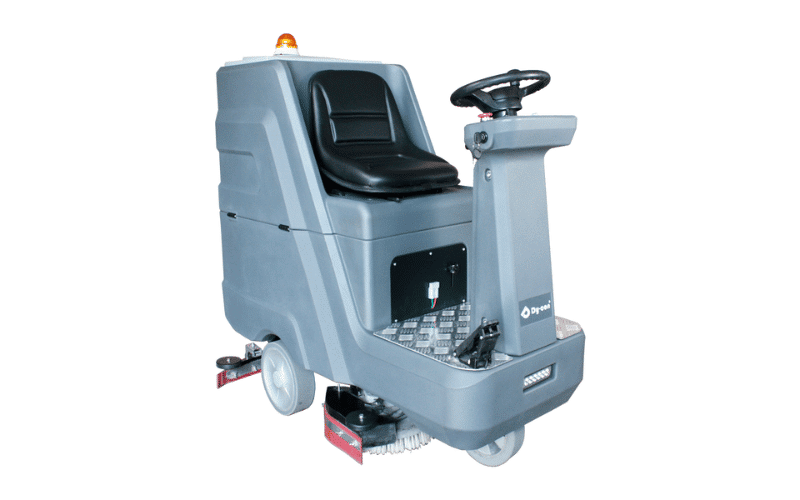
RS140 Ultra Ride-On Machine Scrubber For Working In Large Industrial Areas
- Model: RS140
- Operation Type: Ride-On
- Cleaning Path: 34 inches
- Solution Tank Capacity: 130L
- Recovery Tank Capacity: 140L
Specialty Models
Specialty ride-ons are tailored to specific floor types or operating conditions. Some include explosion-proof components for use in volatile environments. Others use cylindrical brushes designed to scrub and sweep grouted tile in a single pass.
Typical settings: grain-handling facilities, chemical-processing plants, outdoor pedestrian areas.
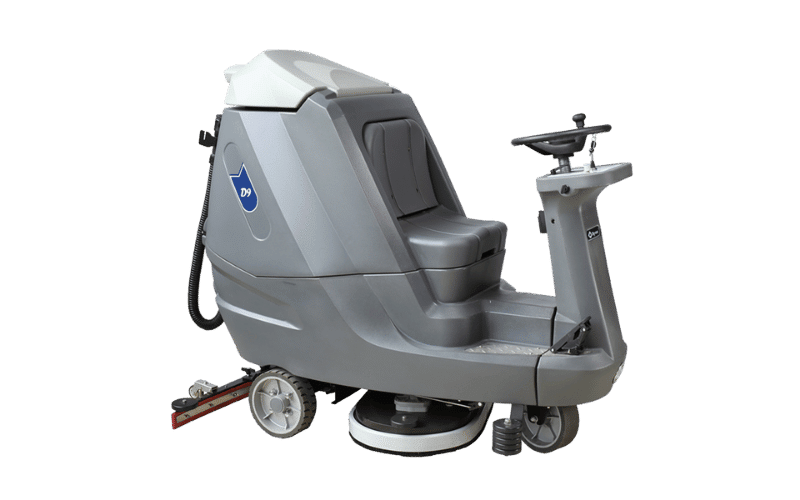
RS180 Ride-On Auto Scrubber with 180L Tank
- Model: RS180
- Operation Type: Ride-On
- Cleaning Path: 36 inches
- Solution Tank Capacity: 150L
- Recovery Tank Capacity: 180L
Side-by-Side Comparison
The table below summarizes how the four types typically compare. Exact figures vary by model and manufacturer, so treat these as general ranges.
| Factor | Compact | Mid-Size | Industrial | Specialty |
|---|---|---|---|---|
| Cleaning width | 20–28 in | 28–36 in | 36–55+ in | Varies by application |
| Tank capacity | 20–30 gal | 30–50 gal | 50–90+ gal | Varies |
| Productivity/hr | ~25,000–40,000 sq ft | ~40,000–70,000 sq ft | ~70,000–120,000+ sq ft | Varies |
| Maneuverability | High | Moderate | Lower; needs open space | Depends on design |
| Best for | Tight commercial floors | Standard commercial floors | Large industrial floors | Specialized environments |
| Relative cost | Lowest | Moderate | Highest | Varies, often premium |
Choosing the Right Scrubbing Technology
Once you know your space and floors, you can choose the deck that matches your dirt. The scrubbing system drives your results, so it’s worth getting right.
Disc Brush Systems
Disc brushes are the standard choice and the most versatile. They spin flat against the floor and handle general dirt on finished concrete, tile, and most sealed surfaces. If your floors are smooth and your soil is everyday grime, a disc system delivers solid results at the lowest maintenance cost.
Cylindrical Brush Systems
Cylindrical brushes roll like a barrel using a wet-sweeping motion. They scrub and pick up small debris simultaneously, so you can often skip the pre-sweep step. These work best on textured or grouted floors where dirt collects in low spots, saving an entire task in warehouses with fine debris on the floor.
Orbital Scrubbing Heads
Orbital heads vibrate rapidly and apply even pressure across the pad. Their main advantage is stripping old floor finish with little or no harsh chemicals—ideal for chemical-sensitive sites and finish-renewal jobs. They also use less water, so cleanup is faster.
Whatever deck you choose, match pad pressure to the floor material. Too much downforce can scratch delicate coatings or wear polished surfaces. Too little leaves stubborn stains behind. Look for a machine that lets you adjust pressure easily so you can dial it in for each surface.
Battery Types and Power Options
The battery determines how long you can clean, how much upkeep you face, and where you can safely charge. Here’s how the main options compare.
- Lead-acid (flooded): The most affordable option and still widely used. The catch is regular maintenance—checking and topping off water—plus a ventilated charging area, since they off-gas during charging. Neglect the water checks, and you’ll significantly shorten battery life.
- AGM: A sealed, maintenance-free type with no watering and no risk of spills. This makes AGM a safer pick for food-grade or clean-room environments. They cost more than flooded batteries but eliminate the upkeep.
- Lithium-ion: The longest runtime and most flexible option. They support opportunity charging, so your crew can plug in during a break without harming battery life. The upfront cost is highest, but the runtime and extended lifespan often pay back over time—especially in multi-shift operations.
Whatever chemistry you choose, check the charging time against your shift schedule. A battery that needs eight hours to recharge won’t be ready for a second shift. If you run long hours, plan for fast charging, opportunity charging, or a spare battery.
Tank Capacity and Water Management
Tanks determine how long you clean between stops. Undersize them and your operator spends half the shift at the drain rather than on the floor.
The solution tank holds clean water and chemicals. A larger tank extends runtime before a refill, which matters most on large open floors. The recovery tank holds dirty water pulled back from the floor—and it needs to be just as easy to drain and rinse.
Pay particular attention to access to the recovery tank. If it’s awkward to reach or clean, sludge accumulates fast, and the machine will start to smell. A smooth interior with a low, accessible drain hose saves real time and protects your investment.
Two additional features make a meaningful difference over time:
- Eco-mode: Reduces water and chemical use on lighter soil, cutting consumable costs across the year. On a machine used daily, those savings compound quickly.
- Automatic tank rinsing: Some higher-end units flush their own recovery tank at the end of a shift. If enforcing daily cleaning routines is a challenge, this feature handles it automatically.
Operator Safety and Comfort
Your operator spends hours on this machine. Comfort and safety directly affect productivity and consistency.
Start with the operator station. Adjustable seats and steering columns accommodate different body types and prevent strain. A sore back at hour two leads to a slower, less thorough job by hour four.
In busy spaces, safety features matter just as much. Look for:
- High-visibility lights and backup alarms to alert pedestrians and forklift operators
- Simple, intuitive control panels that reduce training time and operator error
- Transparent recovery tank lids so the driver can monitor water levels without stopping
These details separate a machine your crew actually wants to use from one they work around.
What to Consider When Buying
The right machine depends on your facility, not on which model has the longest feature list. Work through these factors before you shop.
Facility Size
Square footage is the biggest driver. Large, uninterrupted floors benefit from wider decks and bigger tanks. Smaller or segmented spaces point toward compact models. Oversized tank capacity is wasted capacity if your facility doesn’t need it.
Cleaning Path and Schedule Math
The cleaning path width determines whether you finish on time. A wider deck covers more ground per pass but struggles in tight spaces. Choose the widest path your floor plan can actually support.
Run the numbers: 80,000 square feet in a three-hour window means you need a machine that realistically covers around 27,000 square feet per hour—accounting for turns and refills. Don’t rely on a brochure’s peak figure; real-world coverage runs lower.
Ramp and Incline Ratings
If your route includes loading docks, parking decks, or split levels, confirm the machine’s maximum grade rating before you shortlist it. Compact models often have lower ratings and may stall on steep inclines. This single spec can eliminate an otherwise suitable machine.
Floor Type
Ride-on scrubbers handle most hard floors: concrete, sealed tile, vinyl, terrazzo, and epoxy. The difference is in brush pressure and accessory options. Heavier machines apply more downward pressure on textured concrete or heavy soil. A lighter touch and the right pad protect polished or delicate surfaces. Always confirm brush and pad availability for your specific flooring.
Battery and Runtime
Match runtime to shift length. A machine rated for four hours won’t cover an eight-hour shift without a battery swap or fast charger. Lithium batteries cost more upfront but charge faster and last longer than lead-acid alternatives—often the better value in high-use operations.
Budget and Total Cost of Ownership
Base your decision on the total cost of ownership, not just the purchase price. Over a typical five-year span, costs include the machine, batteries, consumables, maintenance, and repairs.
The figures below are illustrative industry ranges, not quotes. Actual costs depend on usage hours, floor conditions, local labor and energy rates, and maintenance practices. Use them as a planning baseline only.
| Machine Type | Typical Purchase Price | Estimated 5-Year TCO |
|---|---|---|
| Compact | $8,000–$12,000 | $13,000–$18,000 |
| Mid-Size | $13,000–$20,000 | $20,000–$28,000 |
| Industrial | $25,000–$40,000+ | $40,000–$55,000+ |
These TCO estimates cover equipment, batteries, consumables, and routine maintenance. They do not include labor, which is often the highest ongoing cost. Add your own labor projections based on cleaning hours and wage rates to compare options fairly.
When assessing upkeep, check three things: the cost of wear items such as squeegee blades, brushes, and pads; how easily your team can access the motor, pumps, and filters for routine service; and whether transporting the machine between buildings requires a trailer or ramp system.
Brand and Warranty
Budget brands sometimes cut costs by skipping safety systems or offering limited warranty coverage. Choose established manufacturers, read warranty terms carefully, and confirm parts availability and local service support before you commit. Reliable components reduce downtime; responsive support reduces the cost of it.
Manual vs Automatic
Manual control systems—levers for brush pressure and water flow—are still available on budget-friendly models. They carry a lower purchase price and use simple mechanical parts that in-house staff can often service themselves.
Automatic machines manage water flow and brush speed through onboard controls, typically with a single operator setting. By regulating solution output, they reduce waste and limit operator error. They also simplify onboarding, which matters when staff turnover is high.
Both types clean floors effectively. The right choice comes down to your budget and your team’s capabilities. If training consistency and reduced error are priorities, automatic controls pay for themselves. If upfront cost and straightforward in-house repair are more important, a manual model is a sound option.
New vs Used
Both new and used machines deserve consideration, depending on your budget and risk tolerance.
Buying new provides the latest technology, fresh batteries, and full manufacturer warranty coverage. It’s the lower-risk choice when consistent uptime is critical.
Buying refurbished or used can deliver strong value. Commercial scrubbers depreciate quickly in the first few years, so a well-maintained older unit can save thousands. The key is documentation. Avoid machines with very high operating hours or no maintenance history. Pay close attention to battery condition and vacuum motor wear—these are the most common failure points.
If a seller refuses an independent inspection, walk away. Before buying used, inspect the tanks for cracks, check the vacuum hoses, and test the battery capacity. Those checks prevent the most costly surprises.
How to Test Drive a Ride-On Scrubber
You won’t fully understand a machine until you operate it, and the most useful evaluation happens on your own floors—not in a showroom.
Ask the dealer to bring the machine to your facility. Run it across your actual surfaces, including uneven concrete or ramps if they’re part of your route. During the demo:
- Check how the machine accelerates, corners, and recovers water in your narrowest aisles.
- Sit in the operator’s seat long enough to judge comfort, steering weight, and control layout.
- Test the turning radius around tight corners and watch how the squeegee tracks behind the unit.
- Observe drying performance. The floor should be walkable right behind the machine. A wet trail indicates a squeegee or vacuum issue—and a slip-and-fall risk.
- Have the dealer walk you through changing brushes and draining the recovery tank.
This hands-on evaluation confirms whether the machine fits your actual workflow before you commit.
Common Buying Mistakes
A few predictable errors catch buyers off guard. Watch for these:
- Skipping the site survey: A machine that won’t clear your doorways or aisles is an expensive lesson. Measure your space before you shortlist anything.
- Focusing on monthly payment: Negotiate on the total purchase price, not the financing terms. A low monthly figure can mask a high total cost.
- Skipping the on-site demo: Thirty minutes on your own floors reveals far more than any spec sheet. Don’t commit without it.
- Ignoring the service network: A low price means little if repairs take days or the nearest technician is far away. Confirm service coverage and response times in writing.
Frequently Asked Questions
How much square footage justifies a ride-on scrubber?
Facilities with large open floors of roughly 40,000 square feet or more typically see the strongest return. Below that threshold, a compact ride-on or a walk-behind may serve better, depending on the layout.
How long do ride-on scrubber batteries last per charge?
Plan on three to five hours of runtime, depending on battery type and workload. Lithium batteries typically run longer and recharge faster than lead-acid options.
What is the average lifespan of a ride-on scrubber?
With consistent maintenance, expect seven to ten years of service. Daily care, proper battery handling, and timely repairs push you toward the longer end.
Can I use a ride-on scrubber on polished concrete floors?
Yes. The key is matching the pad and pressure to the finish. Use a non-abrasive pad and moderate downforce to clean the surface without dulling the shine.
How often do squeegee blades need to be replaced?
Most blades need to be rotated or replaced every few months, depending on the floors and runtime. Streaking or a wet trail behind the machine signals a worn edge that needs attention.
Do ride-on scrubbers require a special cleaning chemical?
Not usually. Most run well on standard neutral floor cleaners. Always follow the manufacturer’s guidance—high-foaming or harsh chemicals can damage pumps and void your warranty.
Are there ride-on models that fit through standard doorways?
Yes. Compact ride-ons are designed to fit through standard doorways while offering seated operation. They trade some tank capacity for a smaller footprint.
Can ride-on scrubbers handle ramps and inclines?
Most handle moderate grades, but each model has a maximum rating. Check that spec if your site includes loading docks or parking structures.
Is manual or automatic better for high staff turnover?
Automatic models simplify training and reduce operator error, making them a better fit when you’re frequently onboarding new staff.
Final Recommendation
A ride-on floor scrubber is the right choice when you clean large, open floors and need to control labor costs without sacrificing results. The best machine is the one matched to your square footage, floor type, cleaning window, and budget—not the one with the longest feature list.
Before you buy, take four steps:
- Measure your facility and map floor layout, doorways, aisles, and ramps.
- Time your cleaning window and calculate the realistic coverage rate you need.
- Calculate the total cost of ownership over five years, including labor, and present that analysis to your stakeholders.
- Request an on-site demo to evaluate the machine on your actual floors before committing.
Start by measuring your floors and timing your cleaning window this week. Those two numbers are the foundation for every smart choice that follows.