







I’ve spent years around battery-powered floor scrubbers, and I can tell you that the battery is the heart of the machine. Pick the wrong one, and you’ll fight short runtimes, dead packs, and replacement bills that sting. Pick the right one and the machine just works.
The trouble is, “lead acid battery” covers a lot of ground. There are several types, and they’re built for very different jobs. Use a starting battery where you need a deep cycle, and you’ll burn through it in months.
So let’s clear up the confusion. This guide walks through how these batteries work, the main types you’ll run into, and how to choose the right one for your needs.
How Lead Acid Batteries Work
At its core, a lead-acid battery is simple. You’ve got lead plates sitting in a bath of electrolyte, which is a mix of water and sulfuric acid. That combination stores and releases electrical energy.
Here’s the part that makes it useful: the chemical reaction is reversible. When the battery discharges, the acid reacts with the lead plates, producing electricity. When you charge it, you reverse that reaction and reset the battery for the next round. Discharge, charge, repeat.
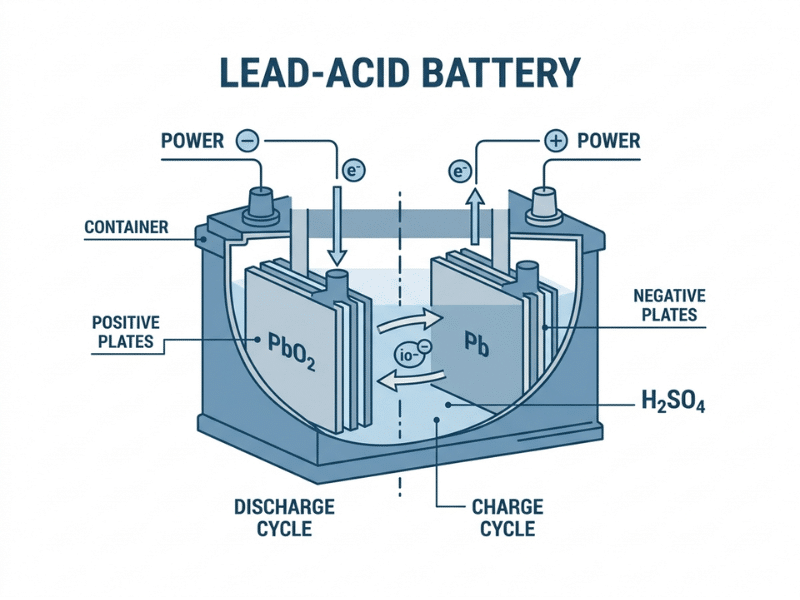
This technology has been around for over 150 years, and it’s still one of the most reliable and affordable ways to store energy. That’s why you’ll find it in everything from cars to forklifts to floor scrubbers.
Every lead-acid battery shares the same basic parts:
- A container that holds everything and keeps the acid sealed in
- Positive plates coated with lead dioxide
- Negative plates made of sponge lead
- Electrolyte, the liquid or gel acid mix that carries the charge
Change how those plates are built and how the electrolyte is held, and you get the different battery types we’ll cover next.
SLI Batteries
SLI stands for Starting, Lighting, and Ignition. If you’ve ever turned a key and started a car, you’ve used one.
These batteries are built for one main job: deliver a big burst of current for a short time. That huge jolt is what cranks an engine to life. Once the engine runs, the alternator takes over, and the battery goes back to resting.
To pull off that big burst, SLI batteries use many thin plates. More plates mean more surface area, and more surface area means more power delivered fast.
You’ll find SLI batteries in:
- Cars and trucks
- Motorcycles
- Lawnmowers and small engines
Here’s the catch, and it’s a big one. SLI batteries are not built for deep discharging. They’re designed to deliver a quick burst and then recharge right away. Drain one down low repeatedly, and it’ll fail fast. That’s exactly why you don’t want one running a floor scrubber, which needs steady power over a full shift.
Deep Cycle Batteries
Deep-cycle batteries are the opposite of SLI. Instead of one big burst, they deliver steady power over a long period. They’re built to be drained down and recharged, over and over, without breaking down.
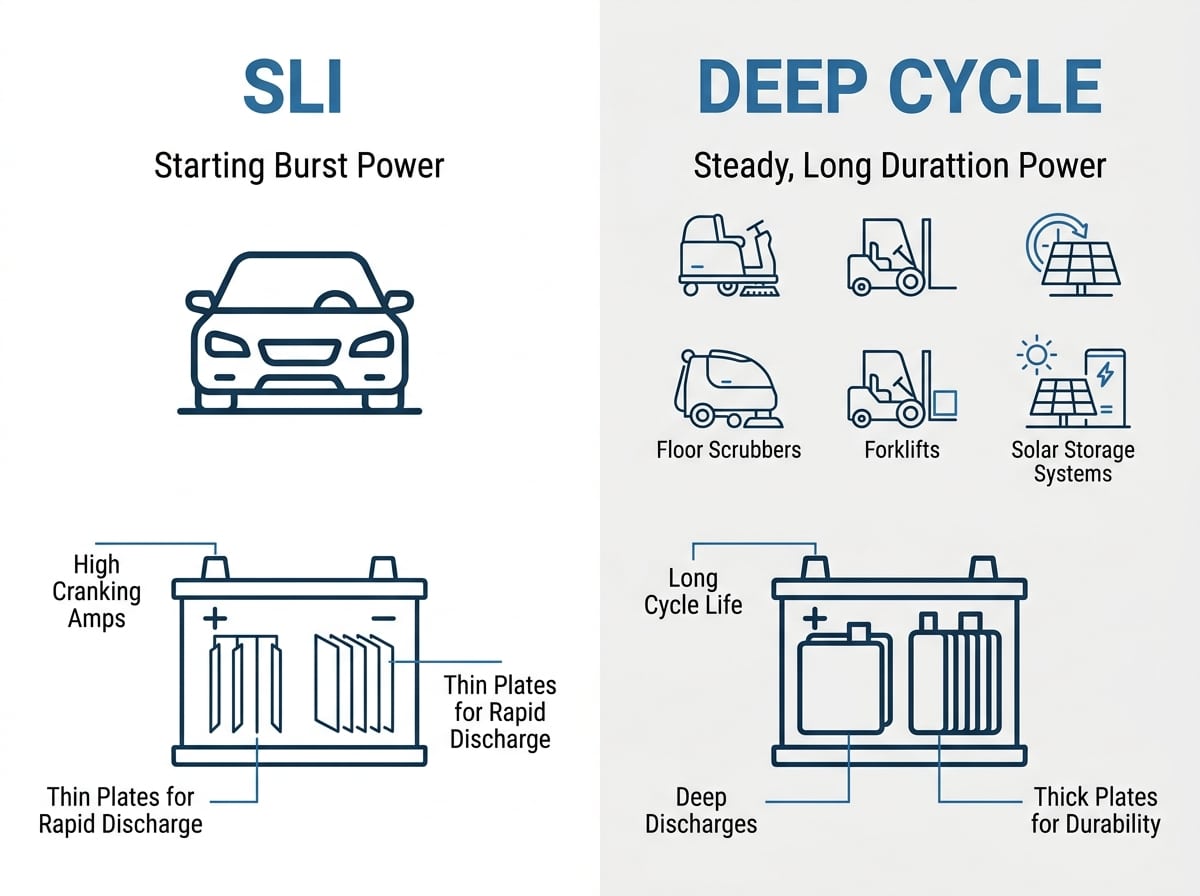
The secret is in the plates. Deep-cycle batteries use thicker, heavier lead plates that withstand the corrosion that comes with long, deep discharge cycles. Those thick plates are why they last so much longer under heavy, repeated use.
You’ll find deep-cycle batteries powering:
- Floor scrubbers and floor sweepers
- Forklifts and golf carts
- Solar energy storage systems
- RVs and marine equipment
Want to see the difference in numbers? A standard car battery might handle a few dozen deep discharges before it gives up. A quality deep-cycle battery can handle hundreds, sometimes well over a thousand, depending on how deeply you drain it each time.
That’s the whole reason floor scrubbers run on deep-cycle batteries. They need dependable power for hours, day after day, and a starting battery just can’t take that abuse.
Flooded Lead Acid (FLA) Batteries
Flooded lead-acid is the original wet-cell design, and it’s still going strong. In an FLA battery, the lead plates sit fully submerged in liquid electrolyte. Simple, proven, and affordable.
The trade-off is maintenance. These batteries lose water during charging, so you have to check the fluid levels and top them off with distilled water on a regular schedule. Skip that, and the plates dry out, which kills the battery.
There’s a safety angle too. While charging, FLA batteries release hydrogen and oxygen gas. That means you need proper ventilation in your charging area. Both SLI and flooded batteries vent gas this way, so don’t charge them in a sealed closet.
So why do people still choose flooded batteries? A few solid reasons:
- Lower purchase price than sealed types
- They tolerate overcharging better than AGM or Gel
- Long, proven track record in heavy-duty use
For many floor scrubber fleets, a flooded deep-cycle battery is the workhorse choice. It costs less up front, and as long as your crew keeps up with watering, it delivers great value.
Valve Regulated Lead Acid (VRLA) Batteries
VRLA batteries solve the biggest headache of flooded batteries: maintenance. These are sealed batteries that never need water added. Once they leave the factory, you don’t open them up.
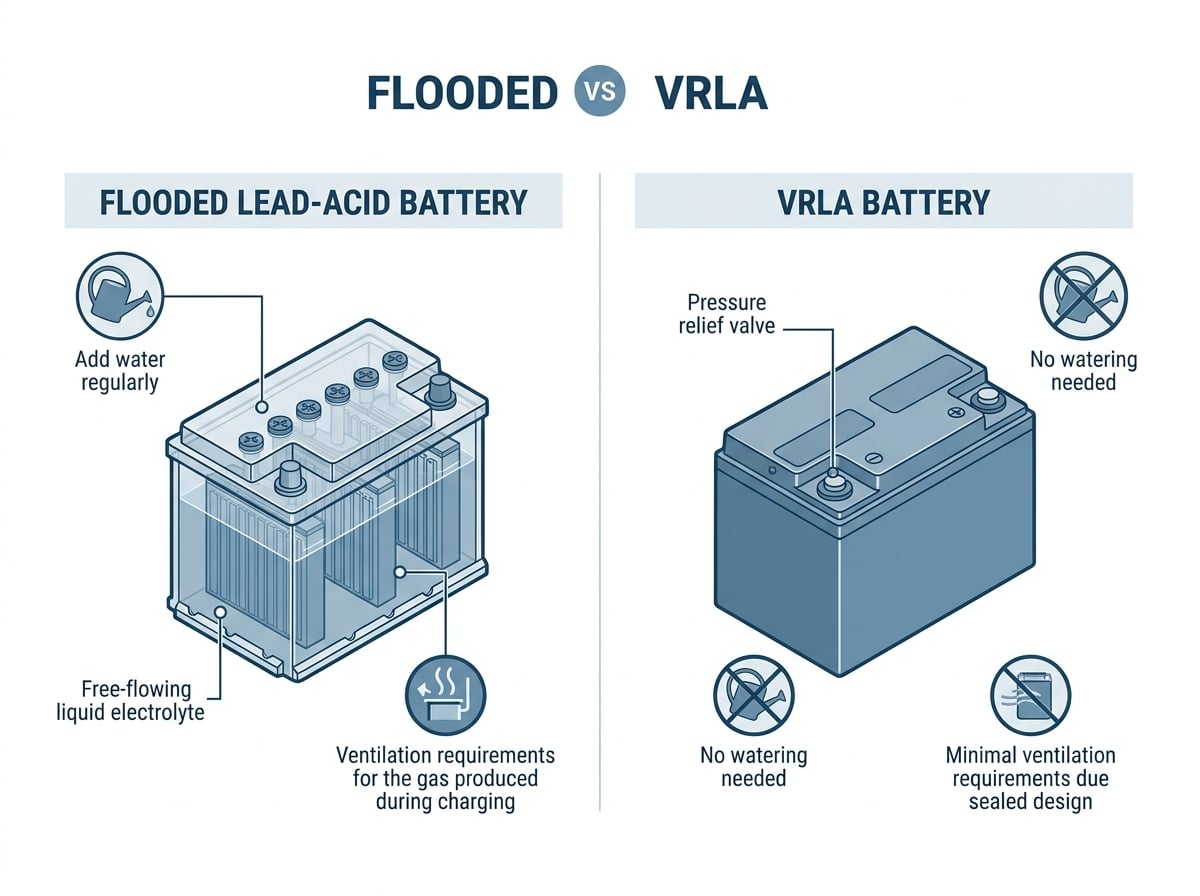
So, how do they handle the gas that floods the vents of batteries? They use a one-way pressure relief valve. The battery stays sealed and airtight under normal use, but if internal pressure builds up too high, the valve releases just enough to keep things safe. Inside, the battery recombines most of the gas back into water, so it doesn’t lose fluid.
VRLA isn’t one single design. It’s an umbrella term for two main technologies:
- Absorbed Glass Mat (AGM)
- Gel
We’ll dig into both below.
The big advantage here is safety and flexibility. Because they don’t leak or spray acid, VRLA batteries are safe to use in enclosed spaces and can often be mounted in different positions. For machines and rooms with tight ventilation, that matters a lot.
AGM Batteries
AGM stands for Absorbed Glass Mat, and the name describes exactly how it works. Inside, a thin fiberglass mat soaks up the sulfuric acid like a sponge and holds it right against the plates. There’s no free-flowing liquid sloshing around.
That tight, packed construction gives AGM batteries a real edge: they’re highly resistant to vibration and shock. Bump them, jostle them, run them over rough floors, and they hold up. For equipment that takes a beating, that toughness pays off.
AGM batteries bring a few more strengths to the table:
- Faster charging than standard flooded batteries
- Higher power density, so you get more punch in the same size
- Zero watering and very low maintenance
You’ll find AGM batteries in:
- High-end motorcycles
- Stop-start systems in modern cars
- Backup power for data centers
- Floor scrubbers where low maintenance is a priority
The downside is cost. AGM batteries deliver more upfront than flooded ones. But for buyers who want to skip the watering routine and don’t mind paying more, they’re a strong pick.
Gel Batteries
Gel batteries take a different approach to sealing in the acid. Manufacturers add silica to the electrolyte, which turns the liquid acid into a thick paste or gel. That gel stays put and won’t spill, even if the case is cracked.
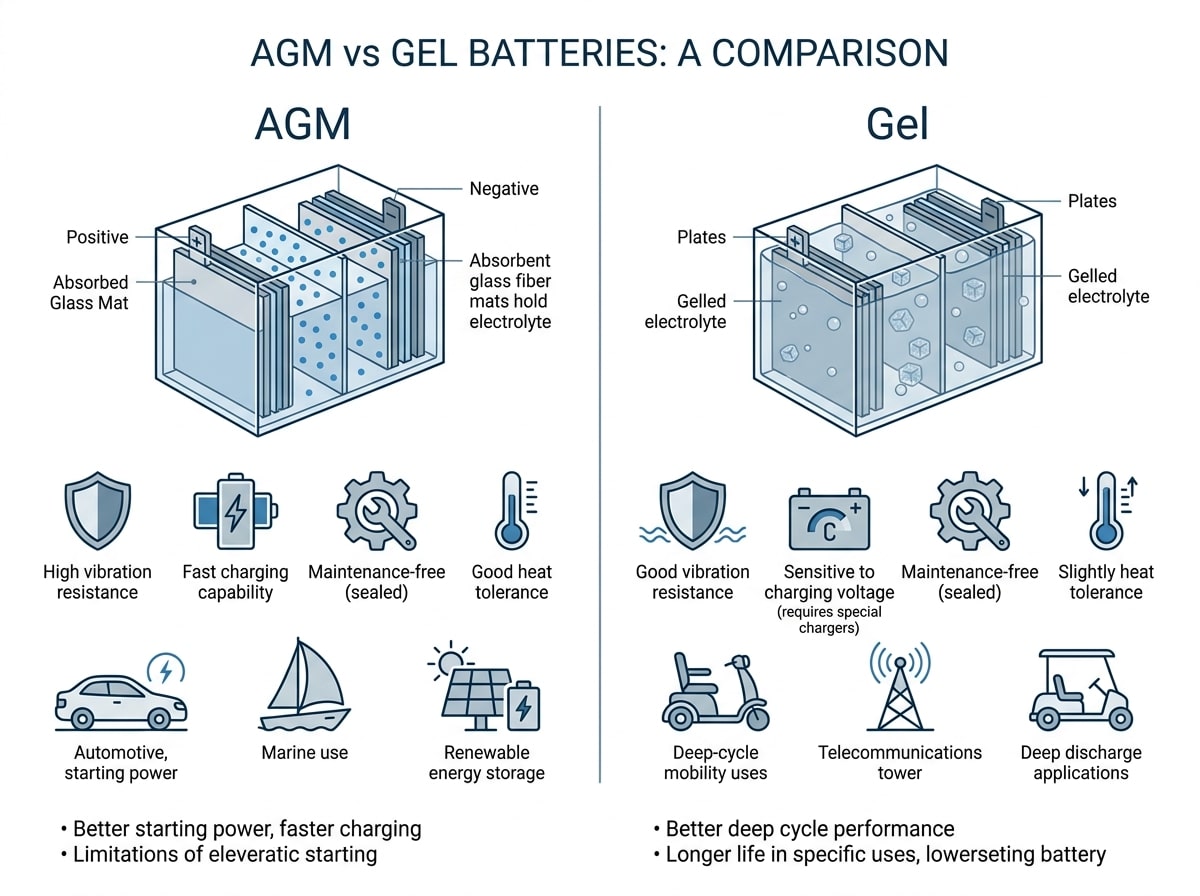
Gel batteries really shine in durability. They hold up exceptionally well in hot climates and handle deep discharges gracefully. If you’re running equipment in high heat or draining batteries down hard on a regular basis, gel is worth a look.
But gel comes with one important rule: charging voltage matters. Push too much voltage into a gel battery, and you can damage the gel itself, creating pockets and dead spots. You need a charger set specifically for gel chemistry. Get this wrong, and you’ll ruin an expensive battery fast.
Common uses for gel batteries include:
- Electric wheelchairs and mobility scooters
- Medical devices
- Remote telecommunications equipment
- Some specialty floor care machines
Think of gel as the specialist. It’s tough and reliable in the right conditions, but it demands the right charger to stay healthy.
Selecting the Right Battery for Your Needs
Choosing the right battery comes down to matching the type to the job. Here’s how I’d think it through.
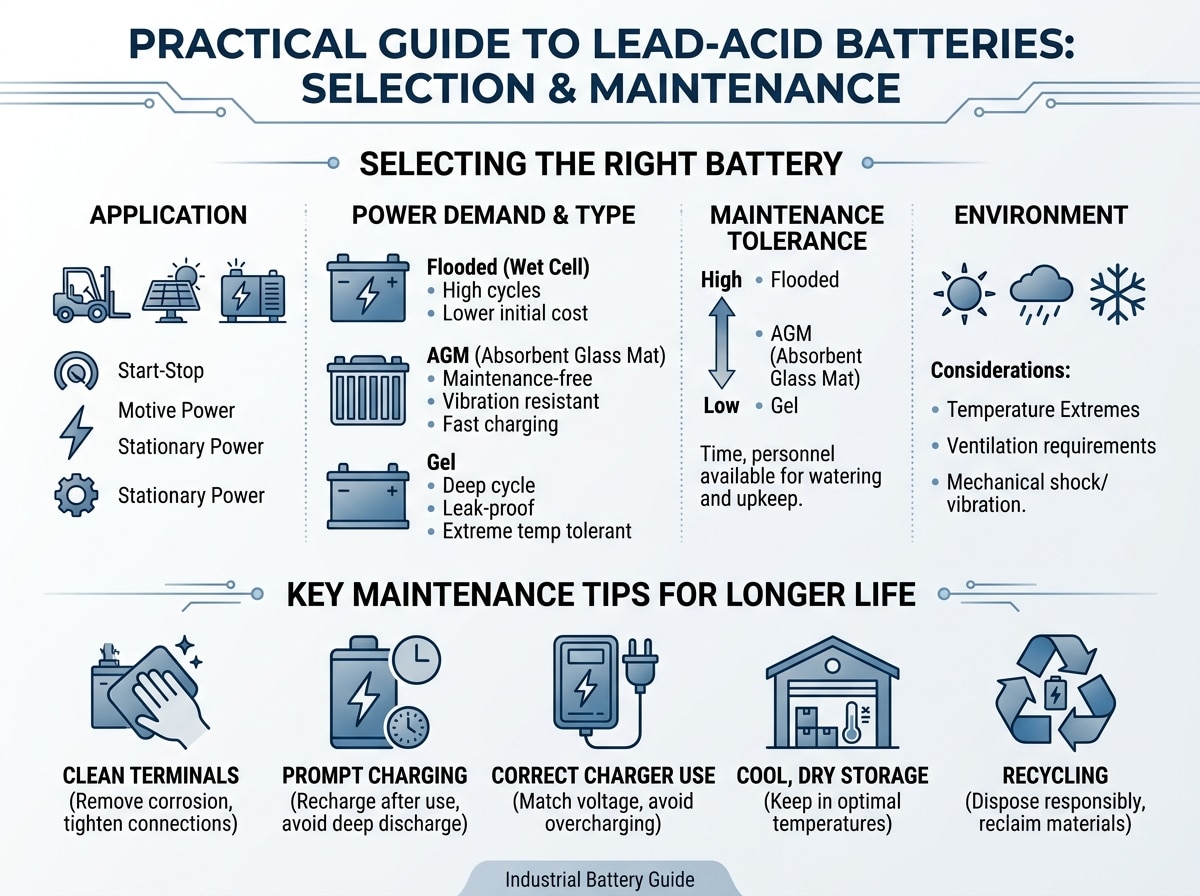
- Weigh cost against convenience. Flooded batteries cost less up front, but you pay in maintenance time, watering, checking levels, and keeping records. AGM and Gel cost more but run nearly maintenance-free. Decide whether you’d rather save money or save labor.
- Match the battery to the demand. Need a quick burst to start an engine? That’s SLI territory. Need steady power for hours, like a floor scrubber running a full shift? You want a deep-cycle battery every time.
- Factor in the environment. Hot conditions favor gel’s heat tolerance. Tight, poorly ventilated spaces favor sealed VRLA types that don’t vent much gas. Cramped equipment may need a specific size or a battery that you can mount in different positions.
- Check the manufacturer’s specs. Before you buy, check the depth-of-discharge rating and the cycle life. Those two numbers tell you how hard you can drain the battery and how many cycles it’ll last. They’re the real measure of whether a battery fits your workload.
The bottom line: figure out your power need first, then your maintenance tolerance, then your environment. That order points you to the right type nearly every time.
Common Lead Acid Battery Questions
What is the average lifespan of a lead-acid battery?
It depends on the type and how you treat it. A car SLI battery often lasts three to five years. A well-maintained deep-cycle battery in a floor scrubber can last several years and hundreds of charge cycles. Good charging habits and proper maintenance make a huge difference.
Can I use a car battery for my solar panel system?
You shouldn’t. A car battery is an SLI battery, built for quick bursts, not the slow, deep discharges a solar system demands. It would wear out fast. Use a deep-cycle battery designed for steady, repeated discharge instead.
Why do flooded lead-acid batteries need to be upright?
Because the electrolyte is a free-flowing liquid. Tip a flooded battery, and the acid can leak out through the vent caps, which is both dangerous and damaging. Sealed VRLA types like AGM and Gel don’t have this problem since the acid is locked in place.
Is an AGM battery worth the extra cost over a standard wet cell?
It can be. If you value zero watering, faster charging, and better vibration resistance, AGM earns its higher price. If you’re watching the budget and don’t mind regular maintenance, a flooded battery still delivers great value. It comes down to your priorities.
How do I know if my battery is a deep-cycle or a starting battery?
Check the label first. Starting batteries usually list cranking amps (CA or CCA), while deep cycle batteries list amp-hours (Ah) or reserve capacity. Many also state their type right on the case. When in doubt, look up the model number.
Are lead-acid batteries recyclable?
Absolutely, and they’re one of the most recycled products around. The lead, plastic, and acid can nearly all be recovered and reused. Never toss one in the trash. Take old batteries to an authorized recycling center or your battery retailer.
Taking Care of Your Battery Investment
A good battery is an investment, and a little care goes a long way toward protecting it. These habits apply whether you’re running a single machine or a whole fleet.
- Keep the terminals clean. Corrosion on the terminals weakens the connection and robs you of power. Wipe off any white, crusty buildup and keep the contacts clean for a solid connection.
- Charge promptly after use. Leaving a battery sitting discharged causes permanent damage through a process called sulfation. Plug it in soon after the job, not days later.
- Use a smart charger matched to your battery. Modern chargers sense the battery’s state and adjust automatically, which prevents overcharging. Make sure the charger matches your chemistry, especially for gel batteries that need precise voltage.
- Store batteries cool and dry. Heat speeds up self-discharge and shortens life. A cool, dry spot keeps a stored battery healthier longer.
- Recycle old units responsibly. Lead and acid are hazardous but highly recoverable. Take spent batteries to an authorized recycling center every time.
Get these basics right, and you’ll squeeze far more life out of every battery you own. In the floor scrubber world, the difference between a battery that lasts one year and one that lasts five usually comes down to exactly these habits.