







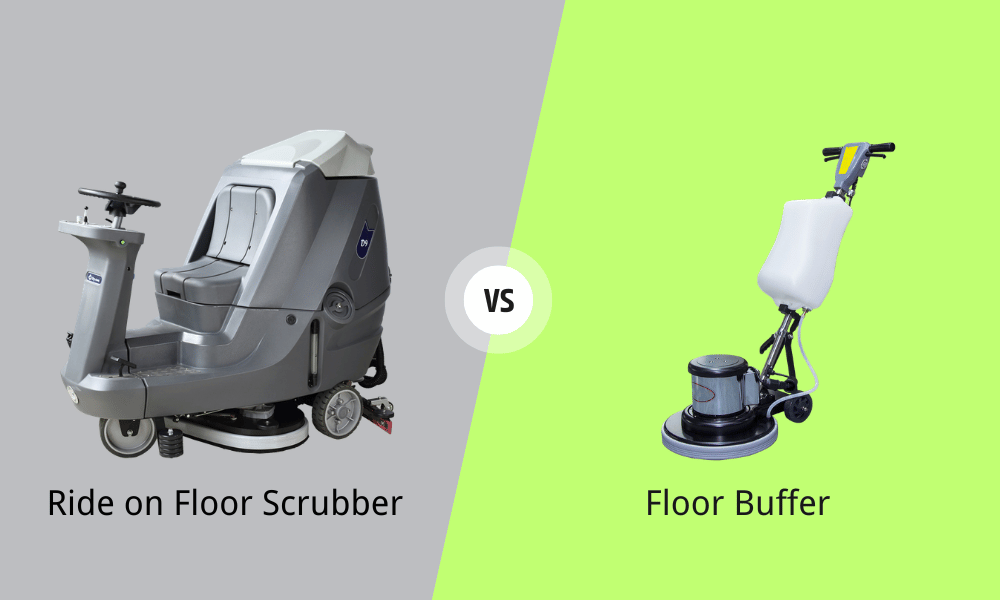
Floor scrubbers and floor buffers are easy to mix up. Both are large, motorized machines that work at floor level. But they do opposite jobs. One removes dirt. The other restores shine. Use the wrong machine and you’ll either polish floors that were never properly cleaned, or waste time buffing floors that needed a scrubber first.
This guide explains how each machine works, where it fits, and how to decide which one you actually need. It’s written for facility managers, procurement teams, and cleaning contractors who want a clear, practical comparison rather than a sales pitch. By the end, you’ll know how to match the right equipment to your floors.
Key takeaways:
- Scrubbers clean and dry dirty floors in a single pass; buffers and burnishers polish and maintain already-clean ones.
- The two machines do different jobs and are not interchangeable.
- Many commercial facilities need both, used at different stages of the cleaning cycle.
What Is a Floor Scrubber?
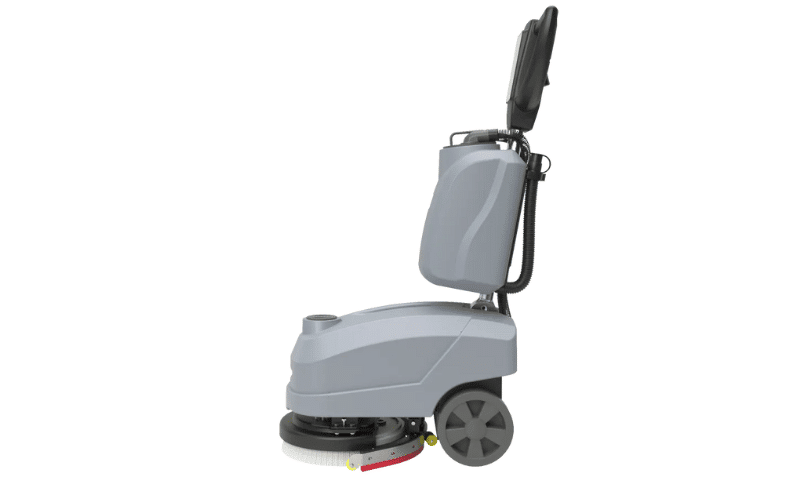
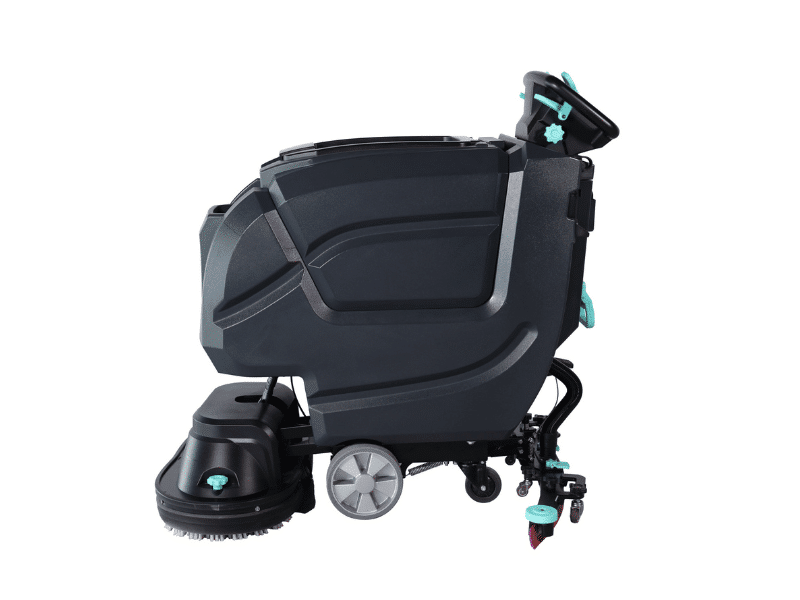
A floor scrubber washes and dries hard floors in one pass. It dispenses cleaning solution, scrubs the surface with rotating brushes or pads to loosen dirt and grime, then vacuums the dirty water back up through a rear squeegee into a recovery tank.
That three-step process — apply, agitate, recover — defines what a scrubber is. It carries two tanks: one for clean water and chemicals, one for the dirty water it pulls back off the floor. The squeegee and vacuum leave the surface clean and dry enough for foot traffic shortly after.
Scrubbers handle heavy soil, grease, and buildup in warehouses, supermarkets, schools, and distribution centers. They come as walk-behind units for medium-sized spaces and ride-on units for large open floors. The job is always the same: remove what’s on the floor and leave it clean.
What Is a Floor Buffer?
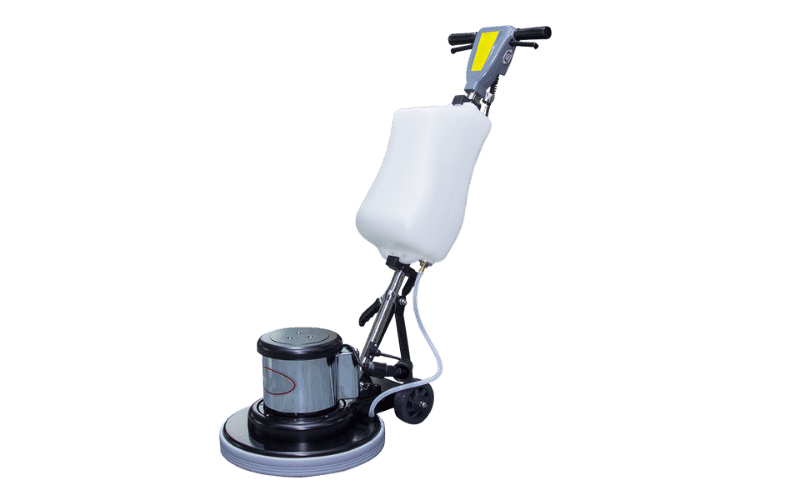
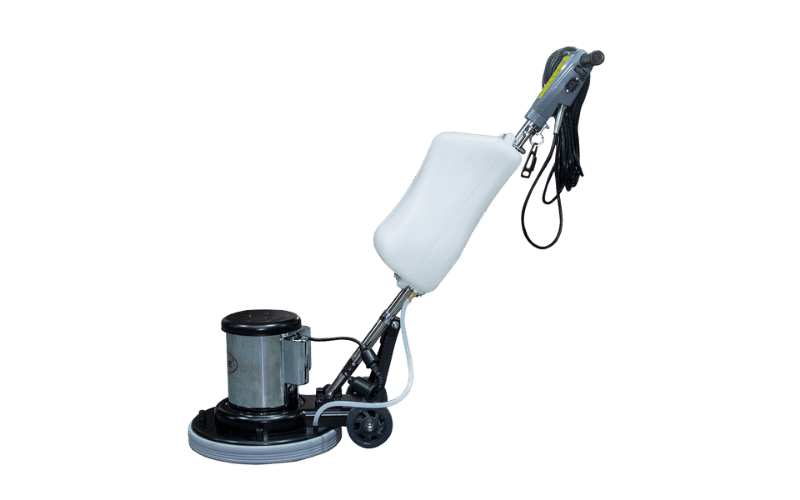
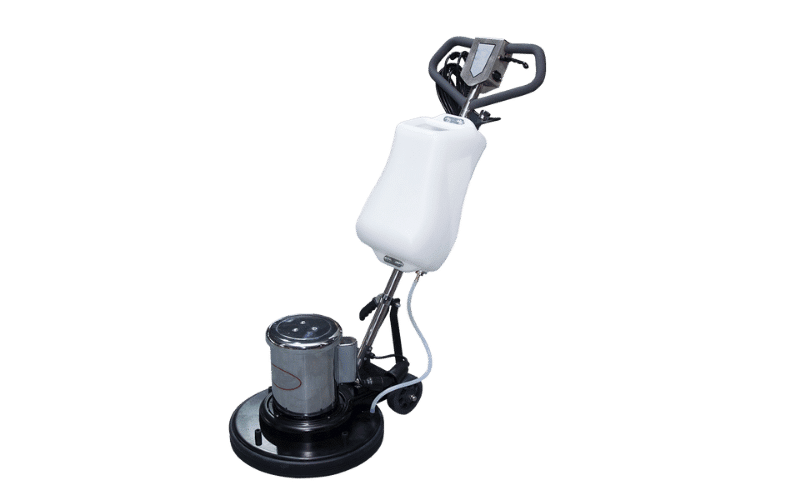
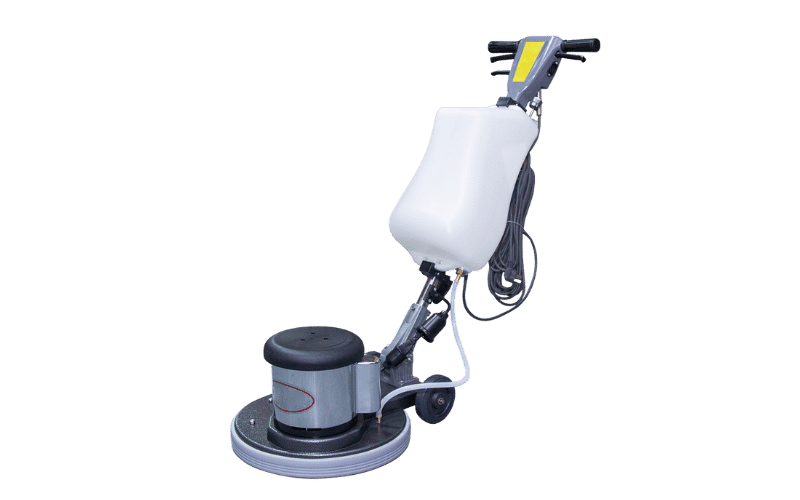
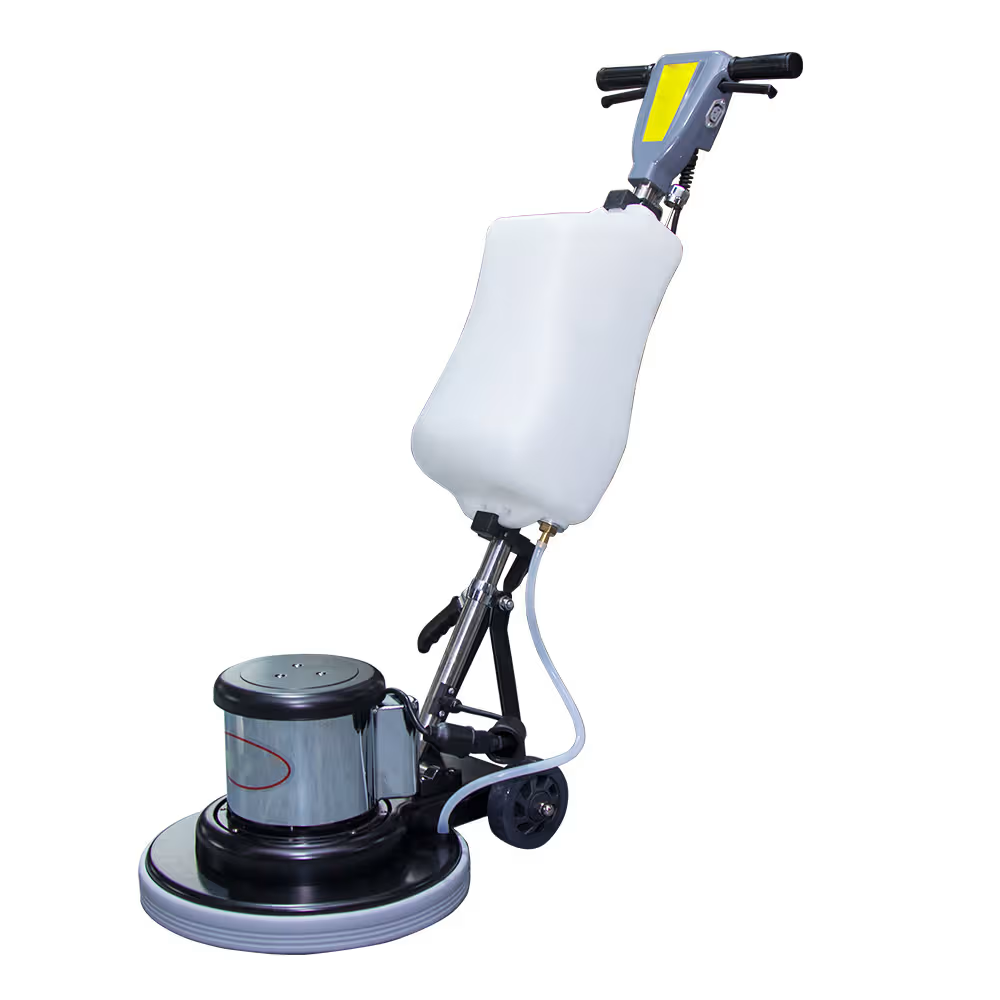
A floor buffer — also called a floor machine, single-disc machine, or polisher — restores and maintains a floor’s appearance rather than washing it. It uses a rotating pad or brush to polish, buff, or strip the surface, smoothing out scuffs and restoring gloss on hard floors such as vinyl composition tile (VCT), terrazzo, and marble.
The distinction is worth stating clearly: a buffer is not a scrubber. It has no solution tank, no recovery tank, and no squeegee. Most buffers run dry or with a light mist of spray buffing solution. A buffer can’t lift heavy soil or remove standing grime. The floor has to be clean before one goes to work.
Low-speed buffers (around 175 RPM) are versatile workhorses — good for stripping old finish, prepping floors, and general floor machine tasks. Higher-speed machines push into burnishing territory, which brings us to an important distinction.
Buffer vs Burnisher: The Speed Difference
These two terms get used interchangeably, but they describe different machines with different results.
- Buffer (low-speed): Runs at roughly 175-350 RPM. Versatile for stripping, prep work, and light polishing. It’s the machine crews reach for when they need a reliable, all-around floor tool.
- Burnisher (high-speed): Runs from around 1,000 to over 3,000 RPM. That speed generates heat and friction that melts floor finish into a hard, reflective “wet look” gloss.
Both are dry machines with no water recovery systems. If you want a mirror-like shine on VCT or polished concrete, a burnisher is what you need. For stripping, prep, or light polishing, a low-speed buffer handles it.
Side-by-Side Comparison
The table below shows how the two machine types compare across the factors that matter most for purchasing decisions. These are general ranges; exact specs vary by model and manufacturer.
| Factor | Floor Scrubber | Floor Buffer / Burnisher |
|---|---|---|
| Primary function | Wash and dry dirty floors | Polish, buff, or restore clean floors |
| Water usage | Solution tank + recovery tank | Dry or light mist only |
| Squeegee/vacuum | Yes — recovers dirty water | No water recovery system |
| Typical RPM | ~150–250 RPM | Buffer ~175–350; burnisher ~1,000–3,000+ |
| Floor condition required | Works on dirty, soiled, and greasy floors | Needs a clean floor to start |
| Best for | Soil and grime removal | Gloss restoration and maintenance |
| Typical facilities | Warehouses, grocery stores, schools | Lobbies, hallways, retail showrooms |
| End result | Clean, dry floor | Smooth, high-gloss finish |
Scrubbing and Polishing Technology
Both machine families offer different deck and drive options. The right choice depends on your floor type and the kind of soil you’re dealing with.
Scrubber decks:
- Disc brushes: The most common and versatile option. They handle general dirt on smooth, sealed floors and cost the least to maintain.
- Cylindrical brushes: Roll like a barrel and sweep up small debris while scrubbing, often eliminating the pre-sweep step. They work best on textured or grouted surfaces where dirt settles in low spots.
- Orbital heads: Vibrate at high speed and apply even pressure across the pad. They can strip old finishes with little or no harsh chemicals and use less water than standard scrub decks.
Buffer and burnisher drives:
- Single-disc (low-speed) machines: One large rotating pad for stripping, prep work, and light polishing.
- High-speed burnishers: Purpose-built for one job — producing a high-gloss finish through speed and friction.
Whichever machine you use, match the pad or brush to your floor material. Too much pressure on a polished surface causes scratches; too little leaves the job unfinished.
Which One Do You Need?
Start with one question: Is your floor dirty, or just dull?
- Dirty floor: You need a scrubber. No amount of buffing compensates for soil that hasn’t been removed first.
- Clean but dull floor: You need a buffer or burnisher to bring back the finish.
- Both, regularly: Most commercial facilities with hard floors need both machines working at different stages.
Here’s how that plays out by facility type:
- Warehouses and distribution centers: Scrubbers are the priority. Concrete floors accumulate dust, grease, and tire marks that only scrubbing can lift. Burnishing is secondary unless a clean, bright appearance is part of the facility standard.
- Retail stores and showrooms: Usually need both. A compact scrubber handles daily cleaning, while a burnisher keeps VCT or polished floors looking sharp for customers.
- Schools and universities: Scrubbers cover the daily workload across cafeterias, gyms, and hallways. Buffers and burnishers come out for finish restoration, typically during breaks when the building is empty.
- Lobbies and building entrances: Appearance is the priority. A buffer or burnisher maintains the high-gloss look; pair it with a small scrubber or daily mopping to keep the surface clean between polish runs.
- Hospitals and healthcare facilities: Scrubbers handle sanitation and soil removal, where contaminated water recovery matters. Burnishers maintain the bright finish that signals a well-kept environment to patients and staff.
Can One Machine Do Both?
Not effectively — and it’s worth understanding why.
A scrubber is built to manage water: dispense it, scrub with it, and recover it. A buffer or burnisher is built to apply friction to a dry surface. Those are different mechanical tasks, and a machine optimized for one rarely performs the other well.
Some combination machines and certain scrubbers can perform light burnishing after cleaning. Similarly, some buffers accept scrub-pad attachments, though without a water recovery system, they can’t replicate what a scrubber does. These hybrids suit facilities with modest demands or limited storage space.
For most operations, dedicated machines deliver better results. A scrubber cleans more thoroughly, and a burnisher shines more effectively, than any compromise machine trying to split the difference. If your facility has large hard floors and high cleanliness standards, plan for two machines.
Frequently Asked Questions
Should I use a scrubber or buffer on VCT floors?
Both are at different stages. Scrub the VCT first to remove soil, then use a burnisher to bring up the gloss. VCT is one of the most common surfaces for high-speed burnishing because it accepts floor finish well and responds strongly to heat and friction.
What about concrete floors?
For routine cleaning, a scrubber is the right tool. It removes dust, grease, and tire marks that build up on industrial and warehouse surfaces. Polished concrete can be maintained with a burnisher and the right pad, but unlike VCT, it doesn’t rely on a wax finish coat. Match the pad to the polish level and follow the manufacturer’s guidance for your specific concrete finish.
Do I really need both machines?
If your floors get dirty and you want them to shine, yes. Scrubbing without buffing leaves floors clean but flat-looking. Buffing without scrubbing just smears dirt around and traps it under the finish. Most commercial facilities with hard-surface floors run both machines on different schedules.
Can a scrubber replace a buffer?
No. A scrubber cleans effectively but won’t produce a high-gloss finish. Some combination units offer light burnishing, but they don’t match the performance of a dedicated burnisher. If appearance matters, you’ll still need a buffer or burnisher.
Can a buffer replace a scrubber?
No. A buffer has no water recovery system. Running one over a soiled floor doesn’t remove dirt — it polishes it in. Always clean first with a scrubber, then buff once the surface is dry and clean.
Which machine is easier to maintain?
Buffers, generally. With no tanks, pumps, squeegees, or vacuum motors, there’s less to clean and fewer parts that wear out. Scrubbers require daily attention — empty and rinse the recovery tank, check the squeegee blade, clean the brushes — or performance drops quickly. Factor routine upkeep into your total cost of ownership.
Is a burnisher the same as a buffer?
Related, but not the same. Both are dry machines with no water tanks, but a burnisher runs at much higher speeds — typically 1,500 to 3,000 RPM — to generate the heat that produces a reflective, wet-look gloss. A low-speed buffer is the more versatile option, suited to stripping, prep, and general floor work.
Which machine should a small retail shop start with?
It depends on your floors and how they’re used. If foot traffic and spills are the main issue, start with a compact scrubber. If the floors stay relatively clean and appearance is the priority, a buffer or burnisher may be enough. Many shops add the second machine once the first proves its value.
Final Recommendation
The decision comes down to what your floors actually need — not which machine has the longest feature list. If your floors get dirty, a scrubber is the foundation. If they’re clean but losing their finish, a buffer or burnisher restores it. For most commercial facilities with hard-surface floors, both machines earn their place.
Before you buy, work through three steps. Assess your floor type and how it gets soiled. Decide whether your priority is cleaning, appearance, or both. Then match the machine — and the right pad or brush — to that goal. That groundwork takes less than an hour and is worth far more than any spec sheet comparison.