







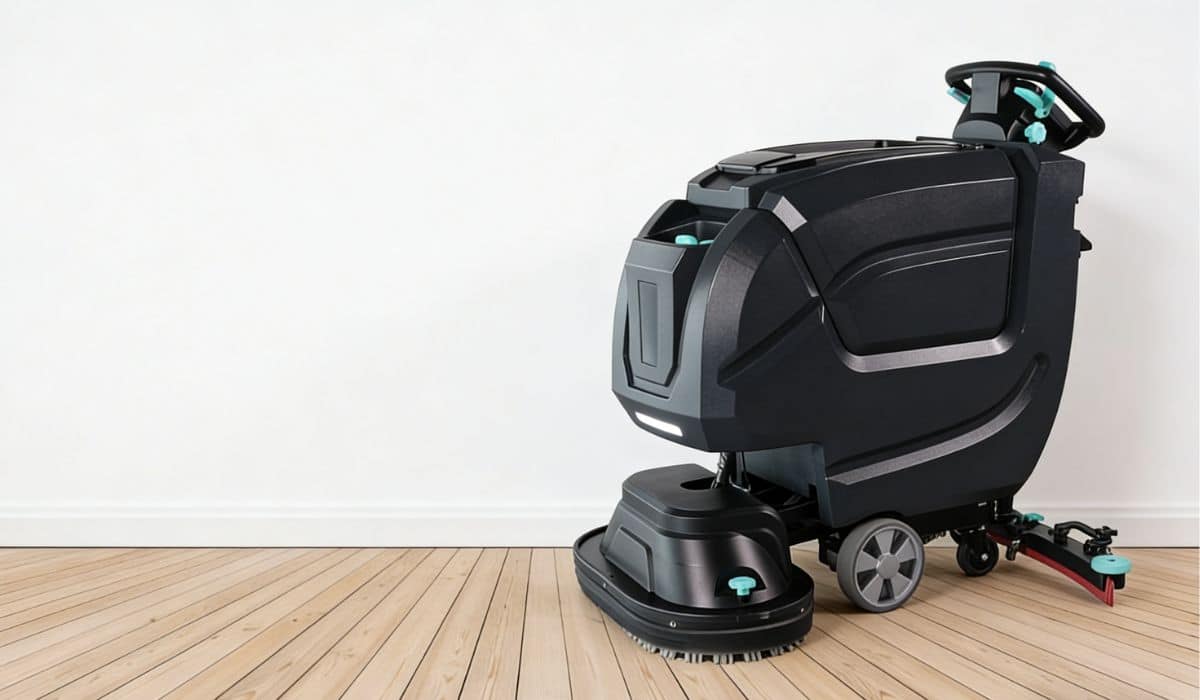
Choosing the right floor scrubber is one of the most consequential decisions you will make when upgrading your commercial cleaning arsenal. Make the right choice, and you will have a machine that cleans efficiently, scales with your facility’s needs, and holds up to years of daily use. Make the wrong choice, and you may find yourself dealing with constant breakdowns, poor cleaning performance, cramped storage spaces, and a frustrating replacement process down the line.
The market for commercial floor scrubbers is vast, spanning compact walk-behind units designed for tight retail spaces to massive ride-on behemoths built for sprawling industrial warehouses. Brands like Tennant, Nilfisk, Karcher, and Hako each bring their own engineering philosophies and product lines to the table. Sifting through the options without a clear framework can easily leave facility managers feeling overwhelmed and unsure of where to allocate their budget.
This guide walks you through the most important factors to consider—size, performance requirements, maintenance and storage, key features, brand reputation, alternative equipment, and where to actually buy—so you can make a confident, informed decision. Whether you are outfitting a small boutique, maintaining a hospital wing, or speccing out equipment for a massive logistics center, understanding these considerations will save you time, money, and headaches.
What Size Floor Scrubber Should You Get?
Size is the foundation of every floor scrubber purchase. Before you think about battery types, brush pressure, or telemetrics, you need to know what form factor you are working with. This single decision shapes everything else about your cleaning operation, from how long it takes to clean a room to who is qualified to operate the machine.
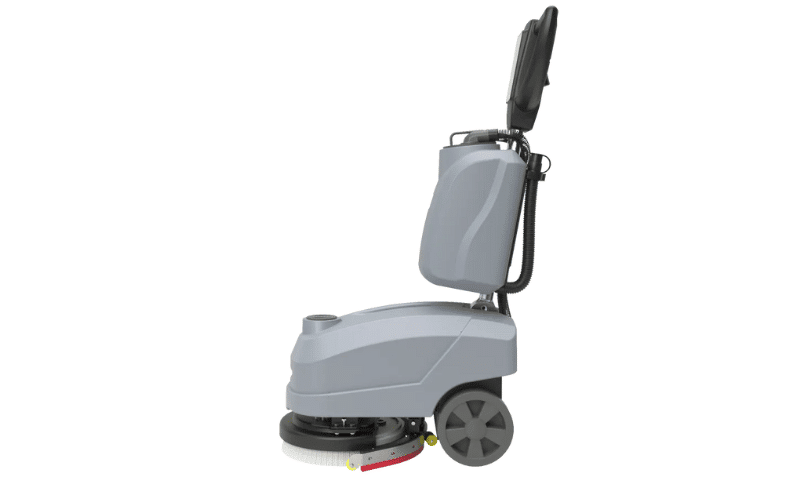
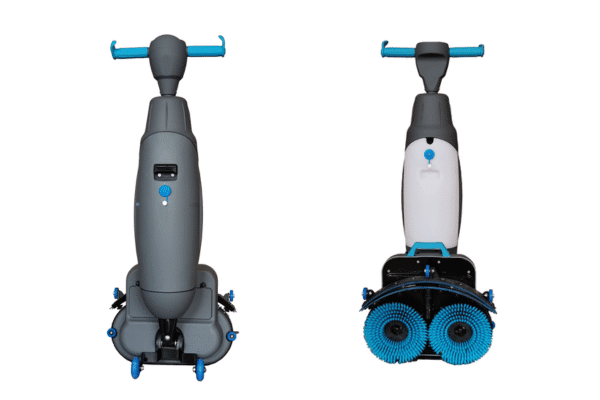
Floor scrubbers generally fall into three primary size categories based on their operational design: upright, walk-behind, and ride-on. Upright scrubbers are the slimmest option available. They are ideal for high-density spaces where floor space is limited, and maneuverability is critical—think crowded classrooms, small cafes, or retail aisles. An upright scrubber can navigate tight corners and fit under obstacles, replacing the traditional mop-and-bucket with mechanized efficiency. However, their cleaning path is narrow, typically 12 to 15 inches wide, and their solution tanks hold very little water. This means operators will spend a significant amount of time emptying and refilling the machine when cleaning a large area.
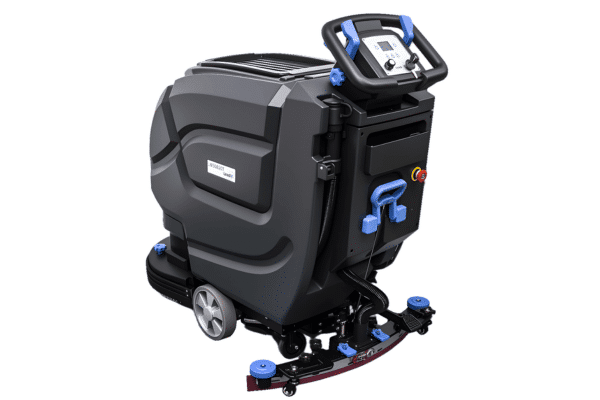
Walk-behind scrubbers strike a balance that makes them one of the most popular choices across commercial and institutional environments. With cleaning paths typically ranging from 17 to 36 inches, a walk-behind unit can cover a substantial amount of ground while still navigating standard doorways and moderate aisles. The operator walks behind the machine, guiding it as the motorized brushes and traction drive propel it forward. For most general-purpose cleaning workloads—grocery stores, hospital corridors, school gymnasiums, and mid-sized manufacturing floors—a walk-behind scrubber offers a sensible combination of productivity and flexibility. The solution and recovery tanks are considerably larger than those on upright models, allowing for longer cleaning intervals between dumps and refills.
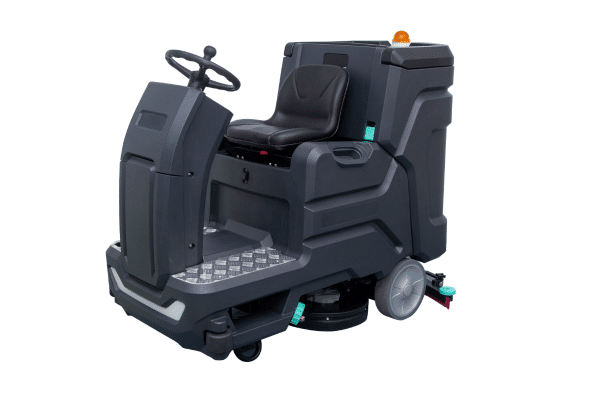
Ride-on scrubbers are where productivity opens up considerably. Designed for maximum efficiency in massive spaces, these machines allow the operator to sit comfortably on the unit and steer it like a small vehicle. If you are cleaning an airport terminal, a large shopping mall, or a sprawling distribution center, a ride-on scrubber is often the minimum you will want. These units boast cleaning paths that can exceed 40 inches and carry massive solution tanks, drastically reducing downtime. Some vendors even offer micro-rider scrubbers designed to fit through standard doors, giving you the ergonomic benefits and speed of a ride-on machine in a slightly more compact footprint.
Beyond the machine’s physical dimensions, you must also carefully consider the cleaning path width. A wider cleaning path means fewer passes required to clean a hallway, directly reducing labor costs. However, a machine that is too wide will struggle to clean narrow aisles, check-out lanes, or congested warehouse floors. You have to measure your narrowest choke points and ensure the scrubber you select can comfortably pass through them.
The right size ultimately depends on your specific facility requirements. For a single-purpose task in a tight area, an upright scrubber does the job efficiently. For general commercial spaces, step up to a walk-behind unit. If your workloads involve massive square footage and high labor costs, a ride-on scrubber should be your starting point, not your fallback. One practical tip: if you are unsure about two sizes, closely evaluate your labor budget. A larger machine costs more upfront but requires fewer labor hours to complete the job.
How to Navigate Performance
Once you have settled on a size, the next major consideration is performance infrastructure—specifically, how your scrubber handles power delivery, brush pressure, and suction capabilities. These factors determine how effectively your machine removes stubborn grime and leaves the floor safe and dry.
Power supply is where floor scrubbers differ most dramatically. The primary power options are battery, corded electric, and internal combustion (usually propane). Corded electric scrubbers provide continuous power, so you never have to worry about a battery dying mid-shift. They are generally lighter and less expensive. However, the cord limits maneuverability and introduces a significant tripping hazard, rendering them unsuitable for cleaning during business hours or in highly congested areas. Battery-powered scrubbers offer total freedom of movement, making them the standard for most modern facilities. You have to manage charging cycles and eventually replace the batteries, but the operational flexibility usually outweighs the maintenance costs. Propane scrubbers are reserved almost exclusively for heavy industrial environments or massive outdoor spaces, providing unmatched power and runtime without the need for electrical charging stations, though they require strict ventilation protocols due to emissions.
Brush pressure and RPM (revolutions per minute) determine the machine’s mechanical scrubbing power. Heavy industrial soils, grease, and tire marks require significant downward pressure and aggressive brush speeds to break apart. High-end floor scrubbers allow the operator to dynamically adjust brush pressure, applying extra force to heavily soiled areas and reducing it for routine maintenance on delicate flooring. If your facility deals with tough industrial grime, you need a machine that can deliver high downward pressure. Conversely, if you are maintaining polished concrete or luxury vinyl tile, standard pressure is sufficient and helps prevent damage to the floor.
Suction power is equally critical to the performance of a floor scrubber. The machine’s vacuum system, working in tandem with the squeegee assembly, recovers dirty water and leaves the floor completely dry. A scrubber with inadequate suction will leave dangerous, slippery water trails, increasing the risk of slip-and-fall accidents. High-performance scrubbers feature powerful vacuum motors and precision-engineered squeegee blades that conform to uneven floors, ensuring total water recovery even on tight turns.
When evaluating performance, you must match the machine’s capabilities to your specific flooring types. Some scrubbers use disc brushes, which are excellent for smooth floors and heavy scrubbing. Others use cylindrical brushes, which spin on a horizontal axis and can sweep up small debris while scrubbing, eliminating the need to pre-sweep the floor. Choosing the right brush style and performance specifications ensures your floors are cleaned efficiently without causing unnecessary wear to the machine or the flooring material.
How Much Maintenance and Storage Do Floor Scrubbers Require?
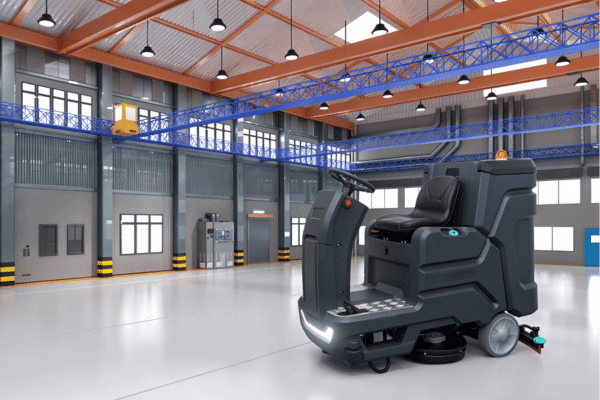
Maintenance requirements and storage logistics are closely tied to your equipment selection. Upgrading to a complex machine without a plan for daily upkeep will quickly lead to poor cleaning results and expensive repair bills.
Routine maintenance is the lifeblood of any floor scrubber. At the end of every shift, operators must drain and rinse the recovery tank to prevent sludge buildup and foul odors. The squeegee blades must be wiped down and inspected for tears; a damaged squeegee directly compromises water recovery. Brushes or pads need to be removed, rinsed, and hung to dry to prevent bacterial growth. When selecting a machine, evaluate how easily these components can be accessed. Machines designed with yellow touchpoints—indicating the parts the operator needs to interact with daily—significantly simplify the training process and improve compliance with daily maintenance routines.
Battery care requires specific attention if you opt for a battery-powered model. Traditional lead-acid batteries demand regular watering and equalization charges to maintain their lifespan. Neglecting this maintenance drastically reduces the battery’s capacity and requires premature, costly replacements. Many modern scrubbers offer sealed AGM (Absorbent Glass Mat) or lithium-ion batteries. These alternatives are completely maintenance-free and can often handle opportunity charging (plugging the machine in for short bursts during breaks), making them highly desirable for facilities with multiple shifts or limited maintenance personnel.
Storage capacity is a logistical hurdle that catches many buyers off guard. A walk-behind scrubber occupies a significant amount of space in a janitor’s closet, and a ride-on machine requires a dedicated parking area, preferably near a floor drain and a high-voltage charging outlet. You must measure your available storage space before purchasing. The machine needs to be stored in a climate-controlled, secure environment to protect the electronics and prevent the water in the lines from freezing during the winter months.
Long-term maintenance involves replacing wear parts such as squeegees, brushes, and vacuum motors. Choose a machine with tool-free access to these components. If an operator has to find a wrench just to flip a squeegee blade, the task is likely to be ignored. Accessible, straightforward maintenance designs keep the machine running optimally and reduce your reliance on expensive service technicians for basic upkeep.
What Kind of Features Are Best?
Build features might seem like luxury add-ons, but they have real implications for durability, chemical usage, and fleet management. The technology integrated into modern floor scrubbers has evolved dramatically, offering tools that lower operating costs and improve sustainability.
Chemical reduction systems are among the most valuable features available on premium scrubbers. Traditional machines mix water and detergent in the main tank, often leading to overuse of expensive chemicals and leaving a sticky residue on the floor. Advanced systems dynamically inject the precise amount of concentrated chemical directly into the water line right before it hits the brush. This ensures perfect dilution rates, significantly reduces chemical spending, and allows the operator to switch between heavy-duty detergent and plain water with the flip of a switch. Some brands even offer electrically converted water systems that clean effectively without any added daily chemicals.
Telemetrics and fleet management software represent a massive leap in commercial cleaning technology. For organizations managing multiple machines across different sites, telemetrics provides real-time data on machine usage, battery health, and impact events. If a scrubber crashes into a wall, the software alerts the facility manager. If a machine sits unused for three days, the dashboard highlights the inefficiency. This data allows management to optimize their fleet, enforce accountability among operators, and predict maintenance needs before a breakdown occurs.
Noise reduction technology is crucial for facilities operating during business hours. Hospitals, schools, and retail stores cannot tolerate the deafening roar of a standard industrial vacuum motor. Many modern scrubbers feature quiet modes that reduce the decibel levels of the vacuum and brush motors, allowing operators to clean near patients, students, or shoppers without causing a disruption.
The building materials dictate the machine’s longevity. The tanks are typically made of thick, roto-molded polyethylene, which resists cracking and denting even in harsh environments. The frame and brush decks should be constructed of heavy-duty steel or cast aluminum to withstand the inevitable collisions with racking, walls, and door frames. When evaluating a machine, inspect the quality of the casters, the thickness of the squeegee assembly, and the rigidity of the control handles. Robust construction ensures the machine will survive the rigors of daily commercial use.
What Are the Top Floor Scrubber Brands?
Brand matters immensely in the commercial cleaning space. Floor scrubbers involve tight tolerances, specialized motors, and long operational lifespans. Build quality, parts availability, and localized vendor support are genuine differentiators that separate reliable investments from costly mistakes.
Tennant is arguably the most prominent name in the floor scrubber market. The company designs and manufactures an incredibly wide range of machines, from compact micro-scrubbers to massive street sweepers. One of Tennant’s biggest strengths is its proprietary technology, such as the ec-H2O NanoClean system, which electrically converts water into a highly effective cleaning solution without added chemicals. Tennant machines are used extensively in enterprise retail, healthcare, and high-performance industrial facilities. The trade-off is price. Tennant equipment tends to cost more than equivalents from other brands, though the build quality, extensive service network, and resale value typically justify the premium.
Nilfisk represents a massive global presence with a strong reputation in the commercial and industrial cleaning space. Their scrubbers are known for intuitive controls, robust suction, and sensible interior layouts. Nilfisk products are highly popular in contract cleaning applications, institutional environments, and logistics centers. The Advance line—Nilfisk’s primary brand in North America—offers excellent value, providing rugged construction and smart technology integrations. Nilfisk’s service network is vast, ensuring you can get replacement squeegees or a service technician relatively quickly in most major markets.
Karcher occupies a slightly different part of the market, known for its distinctive yellow branding and a deep history in pressure-washing technology that translates well to floor care. Karcher targets a wide range of users with highly maneuverable, innovative designs. Their scrubber-dryers often feature unique steering mechanisms and compact profiles, making them incredibly agile in tight spaces. Karcher machines are widely favored in Europe and have a growing, dedicated following globally among users seeking ergonomic designs and efficient water use.
Hako is another major player, particularly renowned for heavy-duty industrial machines and municipal cleaning equipment. Their Scrubmaster line is built for punishing environments where durability is the absolute top priority. Hako machines often feature heavy steel components and aggressive scrubbing profiles suitable for removing impacted grease and manufacturing debris.
Beyond these major players, notable mentions include Taski (known for exceptional water recovery and ergonomic designs) and Clarke (a reliable, budget-conscious brand favored by schools and small businesses). Each has its niche, and it is vital to research the presence of local service technicians for whatever brand you choose. A great machine is useless if you cannot get a technician to fix it when it breaks down.
Can You Use Alternative Cleaning Equipment?
Floor scrubbers are the standard for a reason—they wash, scrub, and dry floors in a single efficient pass. But they are not the only option, and depending on your specific situation and budget, an alternative might actually serve your facility better.
Automatic floor sweepers are a practical alternative for environments that deal primarily with dry dust and bulk debris rather than sticky spills or muddy footprints. Warehouses, parking garages, and large manufacturing floors often utilize ride-on sweepers to control dust without the complexity of managing water tanks and squeegees. Sweepers use heavy-duty brooms and powerful dust-control vacuums to clean massive areas rapidly. The limitation is obvious: they do not wash the floor. If you need to remove grease or sanitize a surface, a sweeper will not suffice.
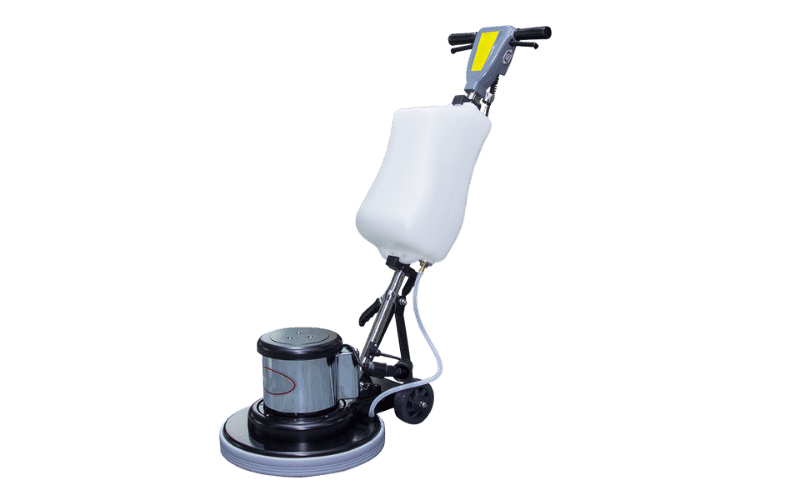
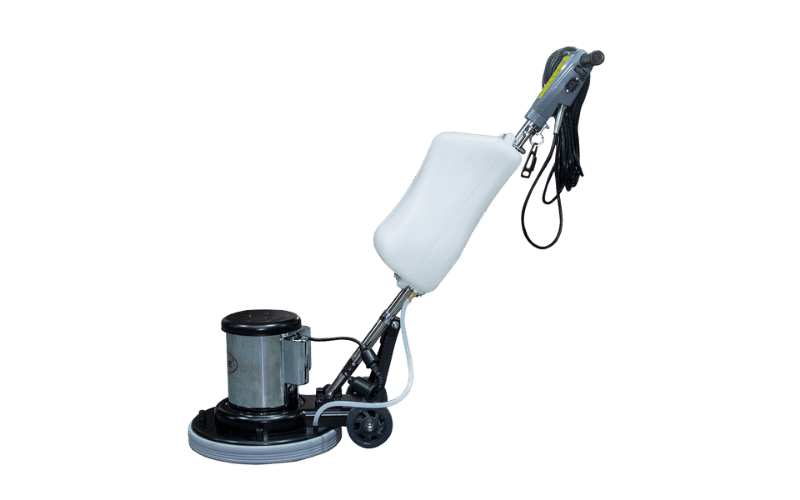
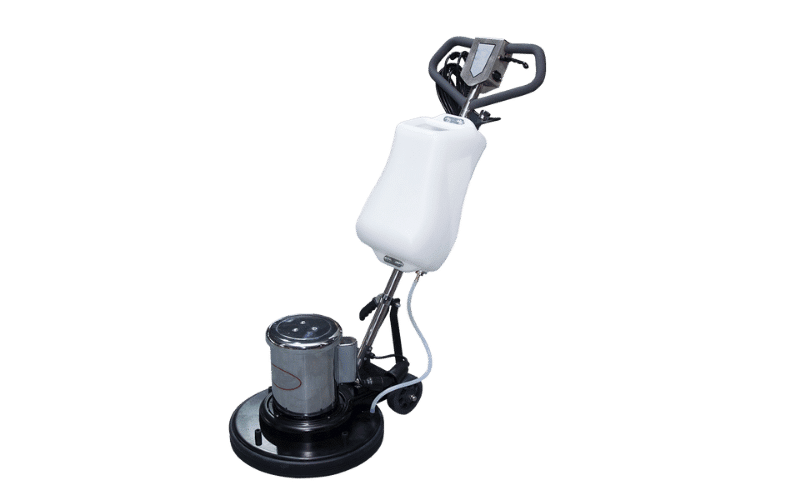
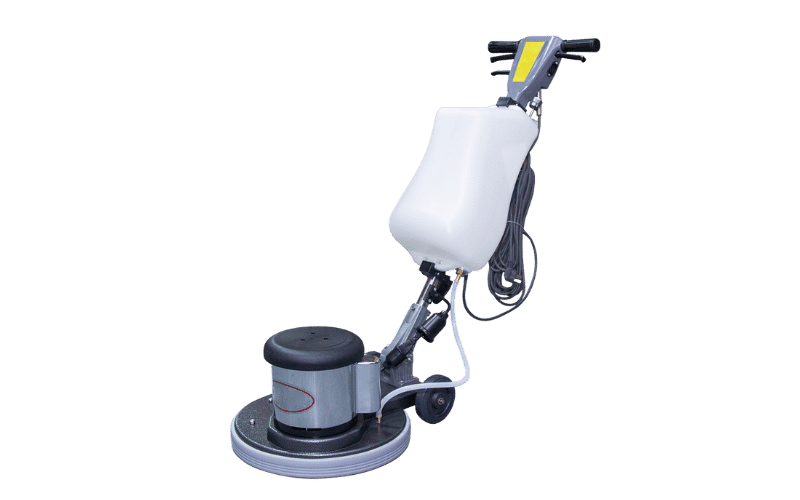
Floor buffers and burnishers represent another specialized category. Buffers operate at lower speeds (around 175-300 RPM) and are used for stripping floor finish, deep scrubbing, or spray buffing. Burnishers operate at ultra-high speeds (1500-2500 RPM) and are designed specifically to heat and polish floor finish to a high-gloss shine. Neither of these machines applies water or recovers it; they require an operator to mop up the slurry afterward. They are maintenance tools for finished floors, not daily cleaning machines.
The traditional mop and bucket remains the ultimate alternative. For highly congested areas, stairwells, or small restrooms, manual mopping is often faster and more practical than maneuvering a mechanized scrubber. However, mopping pushes dirty water around the floor, leaving it wet and posing a slip hazard. For anything larger than a small breakroom, relying entirely on a mop and bucket is incredibly labor-intensive and results in a lower standard of cleanliness than a mechanized scrubber.
When choosing among these alternatives and a traditional floor scrubber, weigh the primary soil type (wet vs. dry), the facility’s square footage, and the required standard of cleanliness. For long-term, commercial-grade sanitation and floor care, a proper floor scrubber remains the most reliable and scalable solution.
Where to Buy Floor Scrubbers
Knowing what machine you want is only half the equation. Buying from the right source ensures you get authentic hardware, reliable warranty support, adequate operator training, and access to replacement parts when you inevitably need them.
Local janitorial supply distributors are generally the best option for purchasing commercial floor scrubbers. Buying through a local distributor ensures you receive expert advice tailored to your specific facility. These distributors often send a representative to your site to survey your floors, measure your aisles, and demonstrate the equipment in your actual environment before you buy. Crucially, local distributors usually employ their own certified service technicians and stock common wear parts. When a machine breaks down, you have a direct, local contact to facilitate a rapid repair.
Manufacturer direct purchasing is an option for enterprise-level organizations buying large fleets of machines. Companies purchasing dozens of scrubbers for national retail chains or massive logistics networks deal directly with brands like Tennant or Nilfisk to negotiate volume pricing and national service contracts. For a single facility buying one or two machines, direct purchasing is rarely available or advantageous.
Online industrial retailers provide a convenient way to quickly compare prices and specifications across multiple brands. Websites like Global Industrial or specialized floor-care outlets offer extensive catalogs of machines that can be shipped directly to your loading dock. The downside to buying online is the lack of localized support. You will not get an on-site demonstration, and you will be entirely responsible for uncrating the machine, training your staff, and finding a local repair service authorized to perform warranty work.
The used and refurbished market is worth considering if you are outfitting a facility on a strict budget. Floor scrubbers are built to last, and a well-maintained, refurbished Tennant or Advance machine can offer years of reliable service for a fraction of the cost of a new unit. When buying used, look for reputable dealers who completely rebuild the machines, replace wear items, install new batteries, and offer a short-term warranty. Buying a used machine directly from another business “as-is” carries significant risk, as repairing a neglected vacuum motor or replacing a dead battery pack will quickly erase any initial cost savings.
Make the Right Choice
Choosing a floor scrubber involves far more than picking a recognized brand and placing an order. Size dictates what fits inside your facility and how much labor you consume during cleaning shifts. Performance requirements determine the brush pressure and battery capacity your machine must support. Maintenance and storage needs shape how your team interacts with the equipment daily. Key features influence chemical usage and fleet tracking. Brand selection impacts parts availability, and where you buy determines the quality of your ongoing support.
Work through each of these considerations methodically before committing to a machine. Establish your physical constraints, evaluate your flooring types, and assess your maintenance capabilities. The upfront research time is a minor investment relative to the operational value of a well-chosen floor scrubber that keeps your facility safe, clean, and efficient for years to come.