







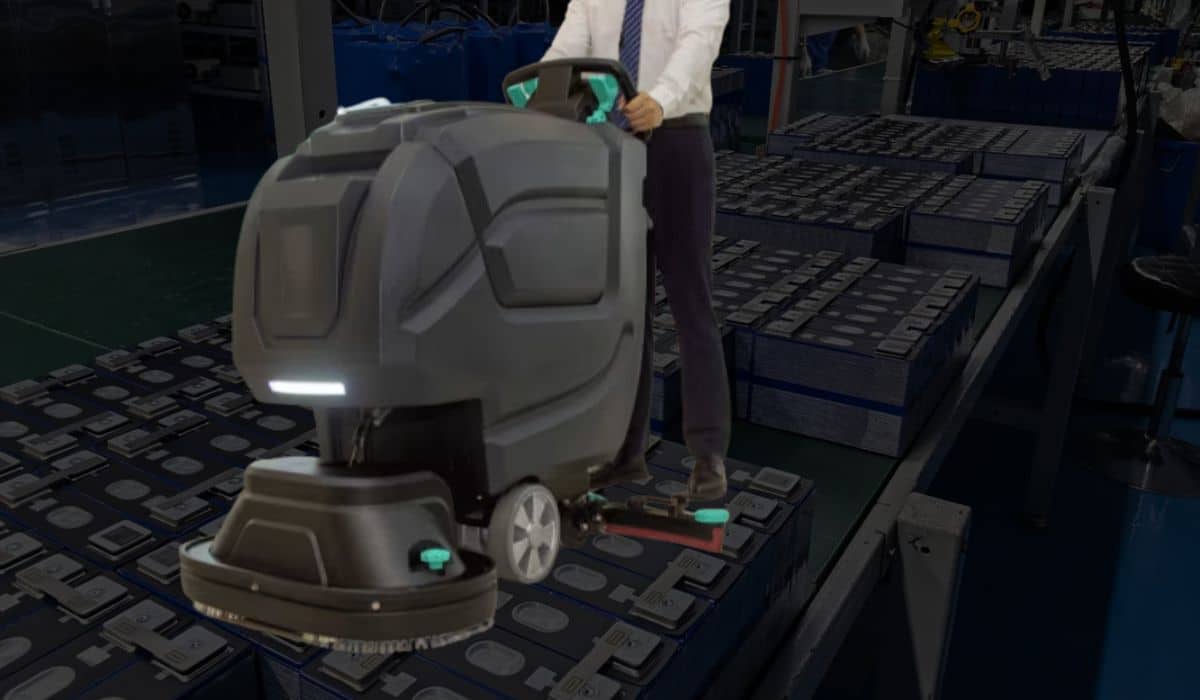
Should you choose a lithium-ion battery or a lead-acid battery to power your floor cleaning machines? This article will help you make an informed decision.
If you are a facilities manager or business owner who relies on floor scrubbers and sweepers to maintain your premises, the type of battery you choose will have a major impact on your company’s overall efficiency. This holds true whether you have just one machine or an entire fleet. Depending on the type of battery a business chooses for its floor cleaning equipment, significant time and money could be saved over the long run. The right battery enhances cleaning performance, reduces downtime, and ultimately contributes to a cleaner, safer environment.
This guide will walk you through the different types of batteries for floor cleaning machines, their key differences, their price ranges, and how these options affect the overall efficiency of your daily cleaning operations. We will explore everything from lifespan and maintenance to charging and safety, providing a comprehensive comparison to ensure you select the best power source for your needs.
Battery Types: Lead-Acid vs. Lithium-Ion
After determining which battery size is compatible with your floor cleaning machine, the next important consideration is battery chemistry: lithium-ion versus lead-acid.
Electric floor cleaning machines, such as auto scrubbers and ride-on sweepers, are generally powered by one of these two main types of batteries:
- Lead-acid
- Lithium-ion
While corded electric models exist, battery-powered machines offer unparalleled freedom and flexibility, making them the standard for commercial cleaning. The technology behind each of these battery types differs greatly, and therefore, has a different impact on the machine’s performance and your operational efficiency.
Lead-acid batteries are the traditional power source for floor cleaning equipment. They are bulky, liquid-filled units that generate electricity through a chemical reaction between lead plates and sulfuric acid. This technology dates back to the 19th century and requires regular maintenance, including refilling the units with distilled water to sustain the electricity-generating chemical process. Their significant weight and maintenance requirements have long been hallmarks of this conventional option. In contrast, lithium-ion batteries are a much newer technology, first commercialized in the early 1990s. For the cleaning industry, lithium iron phosphate (LFP) is a popular and stable chemistry. Lithium-ion batteries for floor machines are more compact and energy-dense than their lead-acid counterparts. The cells are completely sealed, eliminating the need for any water maintenance and making them a cleaner, more convenient choice.
The primary differences between these two batteries have significant operational implications. Lead-acid batteries have a lower energy density, meaning they are heavier and bulkier for the same amount of power. They also require a strict maintenance schedule, including watering, cleaning, and equalization charges, to prevent damage and maximize their lifespan. This often involves dedicated, well-ventilated charging rooms and specialized handling procedures. Lithium-ion batteries, however, boast a higher energy density, providing more power in a smaller, lighter package. Their sealed, maintenance-free design eliminates the daily upkeep associated with lead-acid batteries. They can be charged more quickly and conveniently (a practice known as opportunity charging) without negatively affecting their lifespan, resulting in less downtime and greater productivity for your cleaning staff. While the initial investment for lithium-ion is higher, the operational advantages in maintenance, performance, and longevity often lead to a lower total cost of ownership.
Battery Lifespan and Maintenance
Like any business asset, batteries for floor cleaning machines represent a recurring cost. The type of battery a company uses in its equipment determines how often it needs to be replaced. Lead-acid and lithium-ion batteries have distinctly different lifespans. On average, a lead-acid battery provides 1,000 to 1,500 charge cycles, whereas a lithium-ion battery can deliver 3,000 or more cycles. These figures are estimates and can vary based on how well the batteries are maintained and used. A lithium-ion battery for a floor scrubber needs to be replaced far less frequently, which is a major driver for facility managers to prefer them over conventional lead-acid batteries, which must be replaced more often, incurring repeated purchase and labor costs.
Both lithium-ion and lead-acid batteries must be properly cared for to perform at their full potential. Their service life will diminish if proper maintenance is not carried out. To maximize service life and overall capacity, certain measures should be taken for both battery types. However, lead-acid batteries require significantly more care and attention than their lithium-ion counterparts.
Lead-acid batteries for floor cleaning machines require:
- Equalizing (Cell Balancing): The traditional technology for lead-acid batteries often leads to a state in which the acid and water inside become stratified, with the acid concentrating near the bottom. This condition forms sulfate crystals on the battery plates, weakening their ability to hold a charge. An equalization charge is a controlled overcharge that breaks up these crystals. However, if the battery has been neglected for too long, the damage may be irreversible.
- Temperature Control: Lead-acid batteries must be operated, charged, and stored within a specific temperature range to avoid a shortened working life. They generate considerable heat during charging, which necessitates a temperature-controlled, well-ventilated space to prevent overheating and hazardous gas buildup.
- Fluid Level Management: These units must be checked regularly—about once every 10 charging cycles—to ensure they have enough water. The lead plates must always be submerged.
Lithium-ion batteries are much less demanding in terms of maintenance. They feature an integrated Battery Management System (BMS) that automatically handles cell balancing. They also function well across a much wider temperature range, making environmental control less of a concern. Most importantly, their sealed design means they never require fluid level checks or watering, completely eliminating this time-consuming and hazardous task.
| Maintenance Task | Lead-Acid | Lithium-Ion |
|---|---|---|
| Equalizing | Every 5-10 charges | Happens automatically |
| Temperature Control | Requires temp-controlled space | Much higher temperature limit |
| Fluid Levels | Top off water every 10 cycles | Sealed units, never needs watering |
Battery Sizes and Compatibility
When it comes to electric floor cleaning equipment, battery specifications are not one-size-fits-all. Battery weight, dimensions, and voltage vary substantially depending on the type and size of the machine they are powering.
Generally, battery packs for floor cleaning machines are chosen based on the equipment model and its intended application. For different types of electric floor scrubbers and sweepers, there are typically three main voltage options:
- 24V battery
- 36V battery
- 48V battery
A 24V battery system is appropriate for smaller cleaning equipment, such as:
- Walk-behind micro-scrubbers
- Small walk-behind scrubbers
- Compact sweepers
Meanwhile, 36V batteries are designed for medium-to-large-sized electric equipment, like:
- Large walk-behind scrubbers
- Ride-on scrubbers
- Mid-size industrial sweepers
The 48V batteries are typically reserved for the largest and most powerful electric cleaning machines, such as:
- Large industrial ride-on scrubber-sweepers
The physical size and weight of the battery are critical for compatibility and performance. The battery compartment of a floor machine is designed for a specific size and weight range. An incorrectly sized battery may not fit, while a battery that is too light or too heavy can affect the machine’s center of gravity, impacting its stability, maneuverability, and even the pressure applied by the scrub deck. For instance, walk-behind scrubbers rely on a certain battery weight to ensure proper pad or brush pressure for effective cleaning. Using a lighter lithium-ion battery often requires manufacturers to adjust the machine’s design or add ballast to maintain optimal performance. Always consult the machine manufacturer’s specifications to ensure you choose a battery with the correct voltage, dimensions, and weight for safe and effective operation.
Charging and Efficiency
How a floor cleaning machine’s battery is recharged has a major effect on how efficiently a cleaning operation can run, especially considering any requirements for a dedicated charging station.
As the newer of the two technologies, lithium-ion batteries offer a faster, more flexible, and less complicated charging process. Let’s take a look at how charging differs between these two battery types for floor cleaning machines:
| Feature | Lead-Acid | Lithium-Ion |
|---|---|---|
| Charging Time | 8 Hours | 1-2 Hours |
| Cool-Down Period | 8 Hours | Not needed |
| Charging Method | Removed from the machine, placed in a special charging room | Plugged directly into the charger with the battery in the machine |
| Safe Discharge | Down to 30-50% capacity | Down to 20% capacity |
| Opportunity Charge | Yes* (severely affects battery lifespan) | Yes (no negative impact) |
Lithium-ion batteries can be opportunity-charged during operator breaks or downtime without waiting for a full discharge, and they do not need to be recharged to 100% capacity each time. Lead-acid batteries, conversely, must not be disconnected from their charger until they have reached full capacity. Interrupting the charge cycle or opportunity charging a lead-acid battery will lead to sulfation and significantly reduce its lifespan. Moreover, failing to charge either battery type correctly will cause it to deteriorate over time, with lead-acid units having much stricter guidelines for the required charging technique.
The physical location of your battery charging system is a much bigger consideration for lead-acid batteries. They have specific charging station requirements that lithium-ion packs do not. Lithium-ion batteries can be plugged straight into a charger without being removed from the floor machine. No additional actions are needed for a simple recharge. With lead-acid batteries, however, the units must be removed from the vehicle—often using a cart or lift—and placed onto a separate charger. For operations with multiple machines, this requires a dedicated room with multiple chargers and space for batteries to cool down after charging. This process involves employees regularly swapping heavy batteries, a time-consuming task that detracts from productive cleaning time.
Lead-acid batteries require a dedicated, well-ventilated charging space with temperature control. This is because they can get very hot while charging and produce flammable and harmful fumes, such as hydrogen gas. A lithium-ion battery for a floor machine does not need a separate room, does not require a cool-down period, and eliminates the need for spare batteries. When a machine’s battery is low, it can simply be plugged in during a break and be ready to continue its shift, maximizing uptime and operational efficiency.
Safety Considerations
With powerful chemicals involved, safety is of the utmost importance when handling batteries for floor cleaning machines. One of these types clearly offers a safety advantage for a typical workplace. Let’s examine lithium-ion vs. lead-acid batteries in terms of safety for cleaning operations.
Lead-acid battery safety risks:
- Spills: The highly corrosive sulfuric acid within these batteries can spill, especially since the units need to be watered about once a week. If this maintenance is not performed safely, employees are at risk of chemical burns. This risk necessitates a nearby chemical washing station, adding cost and complexity to the facility.
- Overheating: These batteries get incredibly hot while charging and can release an explosive gas mixture after reaching peak charge. This makes proper ventilation and temperature control critical for safety in the charging area.
- Dangerous Gases: If lead-acid batteries are overcharged, they can release hazardous gases, primarily hydrogen. In a poorly ventilated room, this creates an extremely hazardous and potentially explosive situation. This off-gassing process is a normal part of the charging cycle but requires careful management.
- Weight and Handling: Lead-acid batteries are extremely heavy. The process of swapping them requires specialized equipment and training to prevent crushing injuries or musculoskeletal strain on employees.
Lithium-ion batteries are completely sealed, so there is no potential for acid spills, corrosion, or any sort of chemical contamination in the workplace. Their chemistry and integrated Battery Management System (BMS) provide multiple layers of protection. The BMS constantly monitors temperature, voltage, and current to prevent overheating, overcharging, and over-discharging, which are the primary causes of battery failure.
Tips for safe battery handling and storage include:
- Always wear appropriate Personal Protective Equipment (PPE), including acid-resistant gloves and safety glasses, when handling or maintaining lead-acid batteries.
- Ensure charging areas, especially for lead-acid batteries, are well-ventilated to disperse hydrogen gas. Post “No Smoking” and “No Open Flames” signs.
- Use proper lifting devices or carts to move heavy lead-acid batteries; never attempt to lift them manually.
- Keep a spill containment and neutralization kit available wherever lead-acid batteries are handled or charged.
- For lithium-ion batteries, use only the charger specified by the manufacturer to ensure compatibility and safety.
- Avoid exposing any battery to extreme temperatures or physical damage, as this can create safety hazards.
By design, lithium-ion technology eliminates many of the inherent risks associated with lead-acid batteries, creating a safer operational environment for cleaning staff.
Cost and Total Cost of Ownership
On the surface, a lead-acid battery may seem like a better investment than a lithium-ion battery for your floor cleaning machine. That would be true if you only looked at the initial purchase price. However, when prudent managers take a closer look at the total cost of ownership of lead-acid and lithium-ion batteries, they see a very different picture.
Let’s take a look at purchasing a battery for a floor scrubber and delve deeper into the numbers to see the real cost of ownership over its lifespan.
(These numbers are used as an estimate, and actual prices may vary. They are for demonstration purposes only.)
The following return on investment calculation is based on a 5-year period for a single-floor scrubber used in a single-shift operation:
If an operation considers only the initial battery purchase price, it would see savings when purchasing a lead-acid battery. However, when operating costs (labor for maintenance and battery swaps) and energy costs are factored into the total, the overall savings for the lithium-ion battery become significant. Over a 5-year period, an operation might replace its lead-acid battery 2-3 times, while the lithium-ion battery lasts the entire duration. The cumulative cost of replacement lead-acid batteries, coupled with weekly maintenance labor and higher electricity bills due to charging inefficiency, quickly surpasses the higher upfront cost of a single lithium-ion battery.
The total savings per machine can be substantial. For a facility with a fleet of cleaning machines, these savings multiply, leading to a significant positive impact on the operational budget over five years. The primary drivers for these savings are the elimination of maintenance labor, reduced energy consumption, and the avoidance of purchasing multiple replacement batteries. For many managers concerned with productivity and budget, the zero-maintenance and high-efficiency nature of lithium-ion batteries makes the switch from lead-acid an easy financial decision. The investment pays for itself through lower operational expenses and increased uptime, delivering a clear and compelling return.
FAQs: Choosing the Best Battery for Floor Cleaning Machines
Here are answers to some common questions about choosing the right battery for your floor cleaning machines.
Which battery type lasts longer?
Lithium-ion batteries for floor cleaning machines typically last 3,000 or more charge cycles, while their lead-acid counterparts last between 1,000 and 1,500 cycles. This means a single lithium-ion battery can outlast two or three lead-acid batteries, making it a better long-term investment.
Which is better for multi-shift operations?
Lithium-ion batteries are ideal for multi-shift operations. Their ability to be quickly charged during breaks eliminates the need for time-consuming battery swaps between shifts. A single machine can run continuously, whereas a lead-acid-powered machine would require a spare battery and a time-consuming swap, causing significant downtime.
What are the maintenance differences?
Lithium-ion batteries are virtually maintenance-free as they are sealed and have an automatic management system. Lead-acid batteries require regular, hands-on maintenance, including watering, cleaning terminals, and applying equalization charges to prevent permanent damage and preserve capacity.
How do charging times compare?
A lithium-ion battery can be fully charged in 1-2 hours, while a lead-acid battery requires an 8-hour charge cycle followed by an 8-hour cool-down period. This 16-hour turnaround for lead-acid makes lithium-ion’s rapid charging a major advantage for productivity.
Which battery type is safer?
Lithium-ion batteries are inherently safer. Their sealed design eliminates the risk of acid spills and exposure to corrosive materials. They also do not produce flammable hydrogen gas during charging, removing the explosion hazard associated with lead-acid batteries.
What is the total cost of ownership for each?
Although a lead-acid battery has a lower initial purchase price, a lithium-ion battery offers a significantly lower total cost of ownership. This is achieved through major savings in energy, maintenance labor, replacement battery costs, and the elimination of downtime for battery swaps.
Conclusion
Choosing the right battery for your floor cleaning machines is a critical decision that extends far beyond the initial purchase. It directly influences your operational efficiency, labor costs, safety protocols, and long-term budget. While traditional lead-acid batteries have served the industry for decades, their drawbacks—including extensive maintenance, long charging cycles, safety hazards, and shorter lifespans—are becoming increasingly apparent in modern, fast-paced environments.
Lithium-ion technology represents a clear step forward. With its maintenance-free design, rapid and flexible charging, superior safety profile, and significantly longer service life, it addresses nearly every shortcoming of its lead-acid predecessor. The ability to opportunity charge empowers cleaning crews to maximize uptime, while the sealed construction eliminates hazardous tasks like watering and acid handling. Though the upfront cost is higher, the return on investment through reduced operational expenses and enhanced productivity makes a compelling financial case.
As you evaluate your needs, consider your machine type, daily usage patterns, and operational budget. For demanding, multi-shift applications or any operation looking to boost efficiency and safety, lithium-ion is the superior choice. As battery technology continues to advance, embracing these modern power solutions will be key to staying competitive and maintaining pristine facilities with maximum efficiency.