



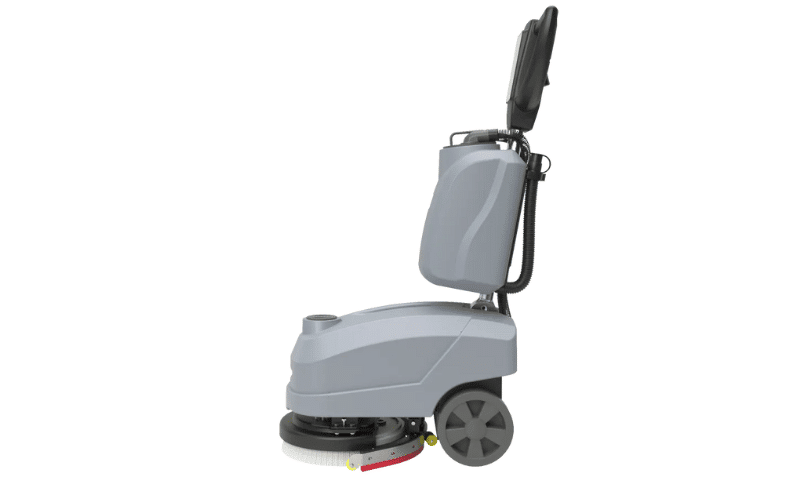

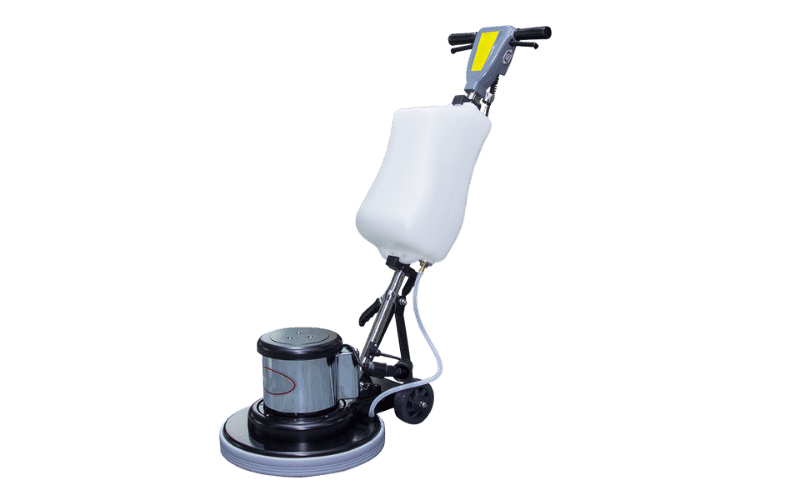
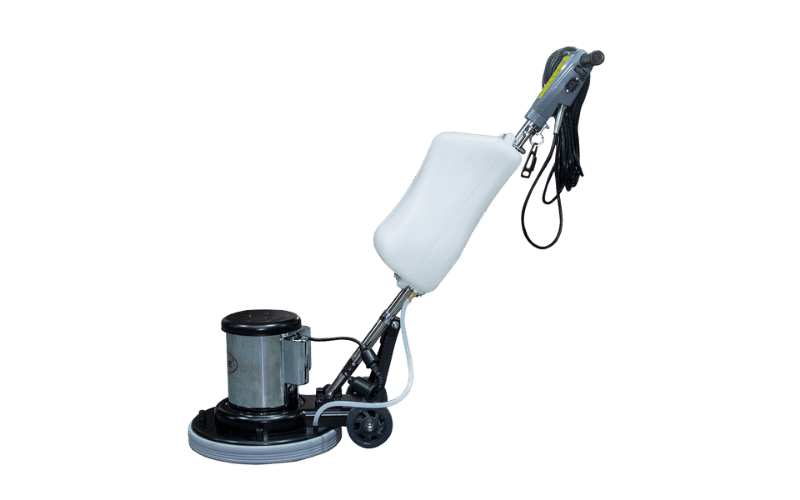
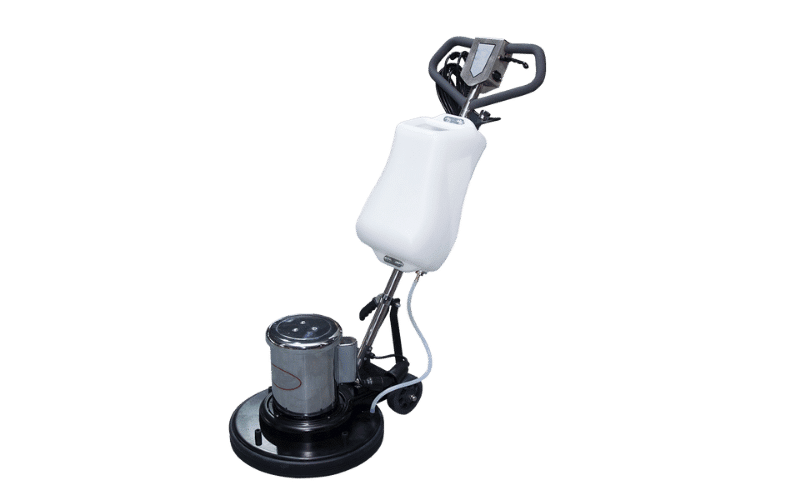



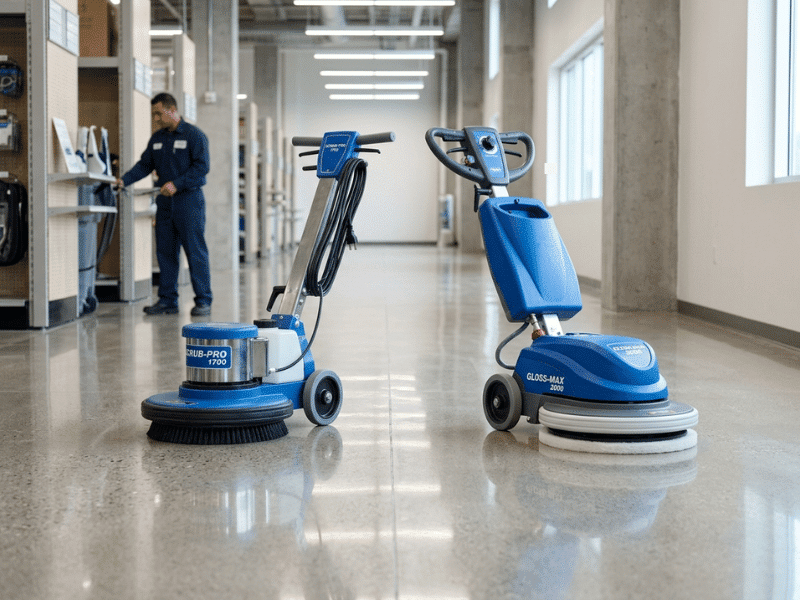
I’ve spent many years around floor machines, from small walk-behind units to the big propane burnishers that eat up retail aisles. And one question comes up over and over from facility managers: what’s the difference between a buffer and a burnisher, and which one do I actually need?
Here’s the short version. Both machines spin a pad on your floor. But that’s where the similarity ends.
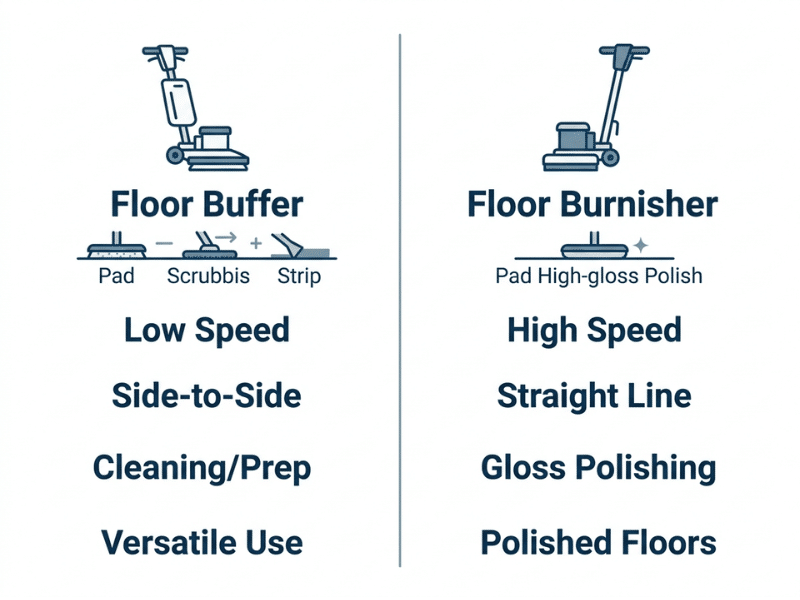
A buffer runs slowly and does the dirty work: cleaning, scrubbing, stripping, and light polishing. A burnisher runs fast and does one thing extremely well: it polishes a finished floor to a high, glossy shine.
Mix them up and you’ll either waste money or wreck a floor. So let’s break down how each one works, where it shines, and how to pick the right tool for your building.
How Floor Buffers Work
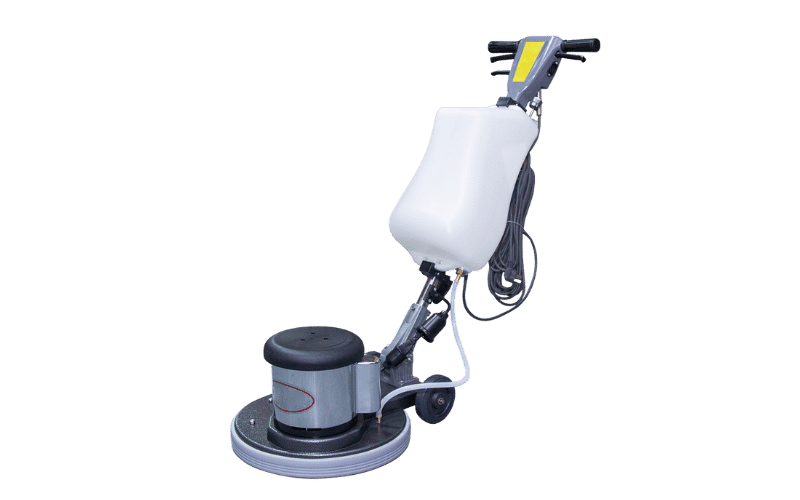
A floor buffer is the workhorse of the bunch. It runs at low speed, usually somewhere between 175 and 350 RPM. That slow spin is exactly what makes it so flexible.
You guide a buffer with a side-to-side motion. The pad pulls the machine left, you ease it back right, and you work your way across the floor. It takes a little practice and some arm strength, but most people get the hang of it fast.
A buffer does a lot more than polish. Depending on the pad and chemical you use, the same machine can:
- Scrub away built-up grime
- Strip off old floor finish
- Bonnet-clean carpet
- Apply a light shine
That versatility comes down to the pad. Lighter-colored pads (white, red) handle cleaning and light buffing. Darker, aggressive pads (brown, black) are best for stripping and heavy scrubbing. Same machine, very different results.
The takeaway: a buffer is your cleaning and prep tool. It’s not built for mirror-gloss shine.
Pros and Cons of Using a Floor Buffer
A buffer earns its spot in almost every floor-care closet. But it has clear limits too.
Pros:
- Versatile. One machine covers scrubbing, stripping, bonneting, and light polishing.
- Forgiving. The slow speed makes it safer for newer operators. Mistakes rarely cause permanent damage.
- Affordable. Lower price tag and a shorter learning curve than a burnisher.
- Does the cleaning burnisher can’t? It preps the floor, plain and simple.
Cons:
- No real gloss. You won’t get that “wet look” finish out of a buffer. It’s not designed for it.
- Slow on big floors. Covering a large open area takes time at low RPM.
- Tiring. That side-to-side handling wears you out on long jobs.
Think of a buffer as the dependable utility player. It does a lot of jobs well, but high-gloss shine isn’t one of them.
How Floor Burnishers Work
A burnisher is a different beast. It runs fast, typically 1,500 to 3,000 RPM, and it’s built for one purpose: shine.
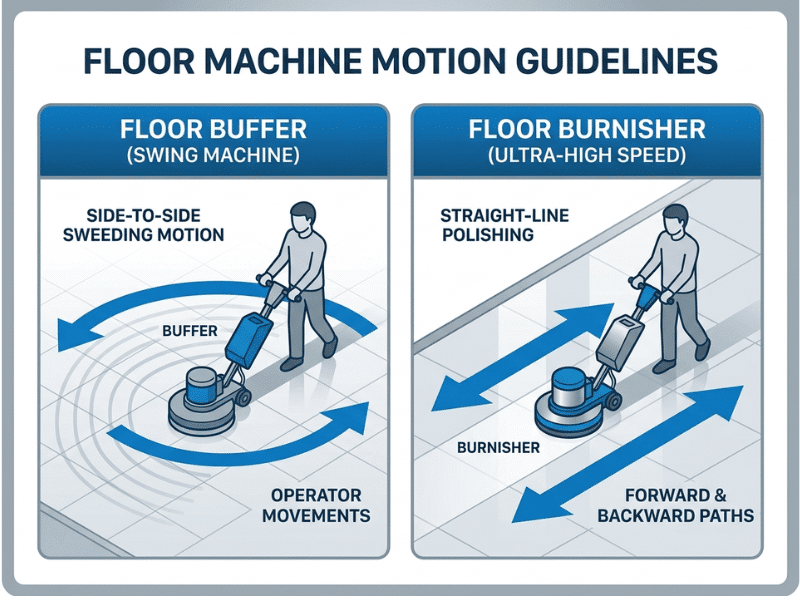
Instead of the side-to-side dance, a burnisher moves in a straight line, kind of like pushing a lawnmower. Most of the machine’s weight rides on the rear wheels, not down on the pad, so it glides smoothly across the floor.
Here’s the part that surprises people. A burnisher polishes with heat. The pad spins so fast it generates friction, and that friction warms and slightly melts the top layer of floor finish. As it cools, that layer hardens into a smooth, glassy surface. That’s where the mirror glow comes from.
Burnishers come in a few flavors, depending on your space:
- Corded electric for smaller areas near outlets
- Battery for cord-free runs in open spaces
- Propane for big square footage where you need power and range
The takeaway: a burnisher polishes a clean, finished floor. It’s not meant to clean a dirty one.
Pros and Cons of Using a Floor Burnisher
A burnisher delivers results a buffer simply can’t match. But it asks more of you in skill, cost, and care.
Pros:
- Fast over big areas. It’s perfect for long hallways, retail aisles, and wide-open floors.
- Stunning finish. You get a deep, durable, high-gloss shine.
- Great for daily upkeep. It restores the sheen without stripping the finish, so floors stay sharp.
Cons:
- It can “burn” the floor. Stay in one spot too long, and the heat damages the finish. Careless turns can also scuff baseboards.
- Costs more. Higher upfront price, plus specialized high-speed pads.
- Needs a trained hand. And it needs a clean, properly prepped floor to work right. Burnish a dirty floor, and you’ll just lock the dirt into a shiny shell.
A burnisher is a specialist. Used right, nothing beats it for shine. Used incorrectly, it’s an expensive way to ruin a finish.
Pad Selection and RPM: How They Shape Your Results
People obsess over the machine and forget the pad. That’s a mistake. The pad and the speed matter just as much as the unit you’re pushing.
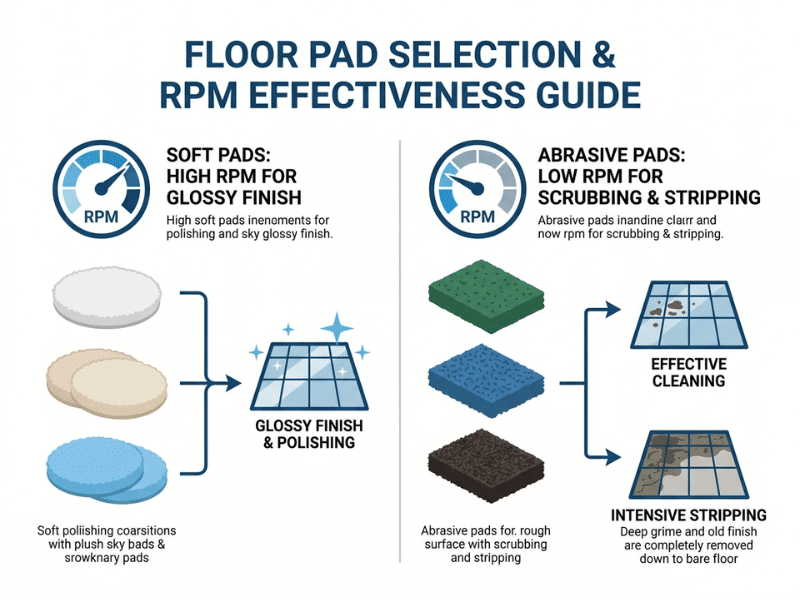
Here’s the simple logic:
- Soft pads at high RPM build gloss without removing finish. That’s burnisher work.
- Abrasive pads at low RPM clean, scrub, or strip. That’s buffer work.
Match the pad to the job. Stripping calls for an aggressive pad. General cleaning calls for something mild. Polishing calls for a soft, finish-friendly pad rated for high speed.
And don’t ignore the manufacturer’s guidance on RPM and pad type. Run the wrong pad at the wrong speed, and you can scratch a floor, leave swirl marks, or build up a cloudy haze of melted finish in minutes.
Quick rule of thumb: the right machine with the wrong pad still gives you a bad floor.
Key Comparison Factors for Maintenance Teams
When you’re deciding between these machines, look past the spec sheet. Here’s what actually matters day-to-day.
Floor prep. A burnisher needs a clean, level, fully cured surface before it touches the floor. A buffer can do that on its own. That’s a big practical difference.
Floor type. VCT and sealed hard floors respond beautifully to burnishing. Marble and polished concrete have their own pad and speed requirements. Porous or delicate floors need real caution, or you skip the burnisher entirely.
Cleaning vs. polishing. This one trips people up. You clean before you burnish. But you can clean with a buffer. One preps, one shines.
Long-term costs. Don’t just compare purchase price. Factor in pad replacement, chemical use, and your power source. Propane fuel and high-speed pads add up.
Facility size. Big, flat, open floors yield a strong return on investment for a burnisher. Smaller or oddly shaped spaces tend to favor a buffer’s flexibility.
Using Both Machines in a Complete Floor Maintenance Program
Here’s something I tell managers all the time: these machines aren’t rivals. They’re stages in one system.
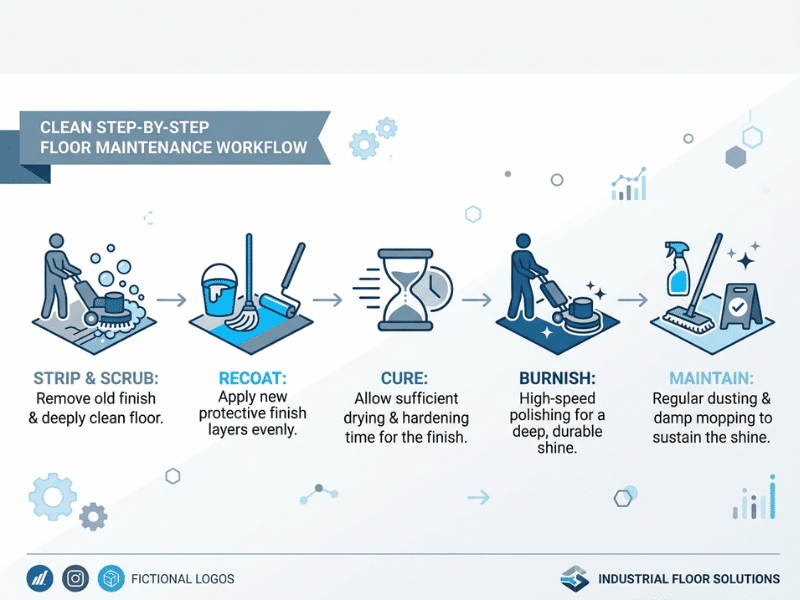
A proper floor care cycle usually goes like this:
- Strip and scrub the old finish with a buffer.
- Recoat the floor with a fresh finish.
- Let it cure fully. Don’t rush this part.
- Burnish to bring up the gloss, then keep burnishing regularly to maintain it.
The order isn’t optional. Burnish an uncured floor, and the heat ruins the soft finish. Burnish a dirty floor, and you trap that grit under a shiny layer. Either way, you’re redoing the work.
Throw a floor scrubber into the mix for heavy daily cleaning, and you’ve got a full program. The buffer preps, the scrubber cleans, the burnisher polishes.
Most well-run facilities own both a buffer and a burnisher. They’re not picking one over the other. They’re using each for what it does best.
Selecting the Right Tool by Floor Type and Facility
So which machine belongs in your building? Run through this quick check.
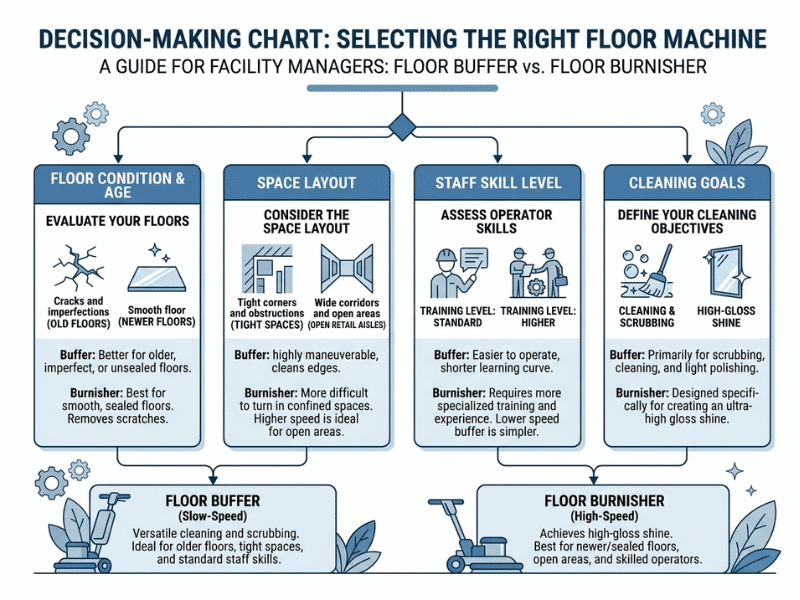
Lean toward a buffer if:
- Your floors are older or have imperfections
- You’re working in tight or irregular spaces
- Your staff skill level is mixed
- Your main need is cleaning and stripping
Lean toward a burnisher if:
- Your floors are modern, flat, and resilient
- You’ve got big open areas like corridors or retail aisles
- High gloss is the goal
- You already have a solid cleaning routine in place
A manager’s checklist before you buy:
- What’s the floor material and finish?
- How big is the space?
- What’s your staff’s skill level?
- Do you have storage room for another machine?
- How often do you need to maintain the shine?
If you’re running a full strip-and-wax cycle and you want regular gloss, you’ll want both.
Operator Safety, Training, and Common Mistakes
These machines are powerful, and a high-speed burnisher demands respect. A little training goes a long way.
Safety basics: Wear proper PPE. Keep firm control of the machine. Schedule floor work so people aren’t walking across freshly stripped or wet surfaces. Slip-and-fall risk is real.
Training matters. Your operators should know how to operate each machine, select the right pad, and choose the appropriate cleaning solution. Ten minutes of guidance beats a damaged floor.
Mistakes I see all the time:
- Burnishing a dirty or uncured floor
- Using the wrong pad or RPM for the task
- Treating one machine like it can do every job
- Ignoring the manufacturer’s specs for the flooring material
Tie it all together with regular machine maintenance. Clean your pads, check your wheels and pad drivers, and follow the service schedule. Good technique and good upkeep protect both the floor and the equipment.
FAQs
Can I use a buffer to strip floor wax?
Yes. With an aggressive stripping pad and the right chemical, a low-speed buffer is the standard tool for stripping old wax and finish. That’s one of its core jobs.
Is a burnisher too fast for wooden floors?
Usually, yes. The high RPM and heat can damage many wood finishes. Always check the manufacturer’s specs for your specific flooring before burnishing wood, and when in doubt, don’t.
Do I need to apply a specific finish or wax before burnishing?
You need a floor finish that’s rated for burnishing. Not every finish handles the heat and speed. Apply a burnishable finish, let it cure fully, then bring out the burnisher.
Why does my floor look cloudy after using a buffer?
Cloudiness usually means leftover chemical residue, a dirty pad, or a finish that wasn’t fully cleaned or rinsed. Go back over it with a clean pad and proper rinsing, and check that the previous coat had time to cure.
What’s the difference between a high-speed buffer and a burnisher?
It’s mostly speed and motion. A high-speed buffer runs faster than a standard buffer but still works side by side. A burnisher runs much faster, moves in a straight line, and uses heat to create a true high-gloss shine.
How often should I burnish floors in a high-traffic area?
It depends on traffic, but high-traffic spaces often get burnished daily or several times a week to keep the shine up. Lower-traffic areas can stretch to weekly. Watch the floor and let the gloss tell you.
Final Recommendations for Professional Floor Care
Here’s the bottom line. The choice comes down to your goal: deep cleaning or aesthetic shine.
If you need to clean, scrub, and strip, start with a buffer. It’s versatile, forgiving, and affordable. If your floors are already in good shape and you want them gleaming, that’s burnisher territory.
Whatever you choose, check the manufacturer’s specs for your specific flooring before you pick a pad or set a speed. That one habit prevents most floor disasters.
My usual advice to managers: start with a buffer for general maintenance, then add a burnisher once gloss becomes a priority. Train your staff to use the right machine, pad, and speed for each task.
Get that right, and you won’t have to choose between a buffer and a burnisher. You’ll be using both, each for exactly what it does best.