







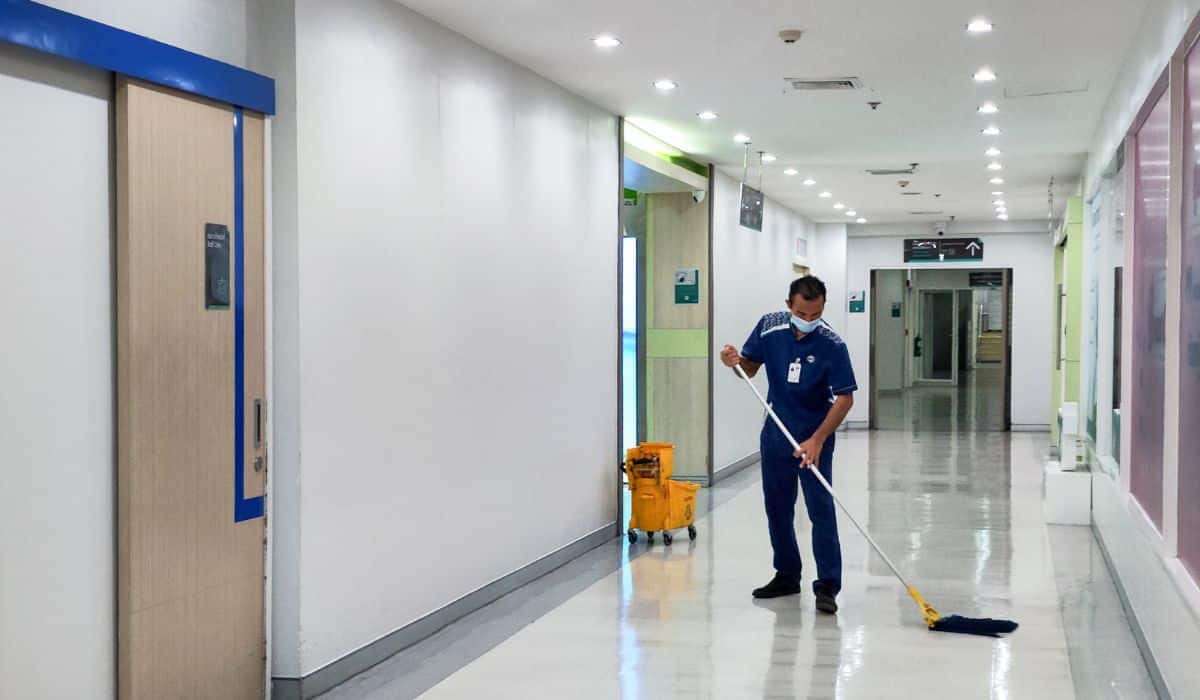
A nurse calls for a stat room turnover. The floor’s still wet from the last cleaning, the next admission is waiting in the hall, and your housekeeping cart is stuck behind a 200-pound scrubber that can’t fit through the doorway. Moments like that decide whether your floor-care plan actually works.
After two decades around healthcare floor care, I can tell you the mop-versus-machine debate never really settles. And it shouldn’t. The right tool changes with the room, the staff, and the task in front of you.
So the real question isn’t “which one is better?” It’s “which tool fits this space, this floor, and this team?” The best-run facilities I’ve seen use both. This guide shows you how to match each tool to the right zone, weigh the real trade-offs, and build a plan that holds up on a busy shift.
Here’s what you’ll walk away with:
- A clear, honest comparison of traditional mops and mop machines
- A zone-by-zone framework for picking the right tool
- The infection-control details that separate a good plan from a risky one
Why Floor-Care Method Matters in Healthcare
Floor care in a hospital isn’t housekeeping. It’s part of your infection-control program, your slip-and-fall prevention, and your labor budget all at once.
A wet patient-room floor delays the next admission. A poorly cleaned corridor moves contaminants instead of removing them. A loud machine running at 2 a.m. disturbs recovering patients. Your method shapes every one of those outcomes.
Before you buy anything, get clear on six decision criteria:
- Cleaning consistency — How repeatable are the results?
- Infection control — Does it limit cross-contamination?
- Labor — How much staff time and effort does it take?
- Cost — What’s the real price over the years, not just the sticker?
- Noise — Will it disturb patients or quiet zones?
- Drying time — How fast can the floor reopen to traffic?
No single tool wins on all six. Keep them in mind as you read.
What Traditional Mops Do Well
A traditional mop is simple: a mop head, a handle, and a bucket of solution. Staff dips, wring, and push. You’ll see three types in healthcare:
- String mops — The classic cotton head. Cheap, but they hold dirty water and dry slowly.
- Flat mops — A flat frame with a removable pad. Easier to control and quicker to swap.
- Microfiber mops — Flat frames with microfiber pads. They grab fine soil and microbes far better than old cotton heads.
Their real strengths:
- Low upfront cost. A mop and bucket cost a fraction of what a machine costs.
- Almost no training. Staff can use one well within minutes.
- Maneuverability. They reach corners, edges, and spots under fixtures that machines can’t.
- Instant readiness. No charging, no startup. Grab it and go for spills.
- No mechanical failure points. Nothing breaks down mid-shift.
The single best upgrade here is switching to microfiber. Used with a fresh pad per room and proper laundering, microfiber removes more soil and bacteria than string mops ever did. Many infection-control teams favor it for exactly that reason.
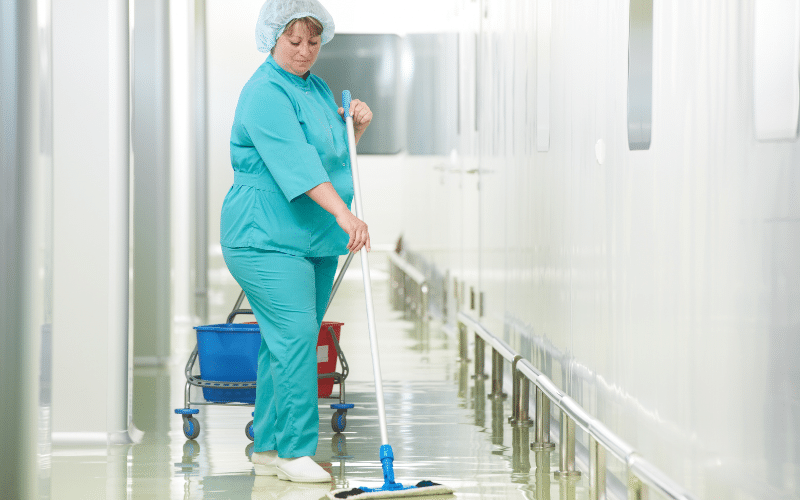
Where they fall short: Results depend heavily on technique. The old “dip and re-dip” habit can spread contaminants if staff don’t change water and pads often enough. Manual mopping also wears people down over large areas, leaves floors wet longer, and produces uneven results between operators.
Traditional mops win in small spaces, spill response, and tight budgets — but only with disciplined protocols.
What Mop Machines Bring to the Table
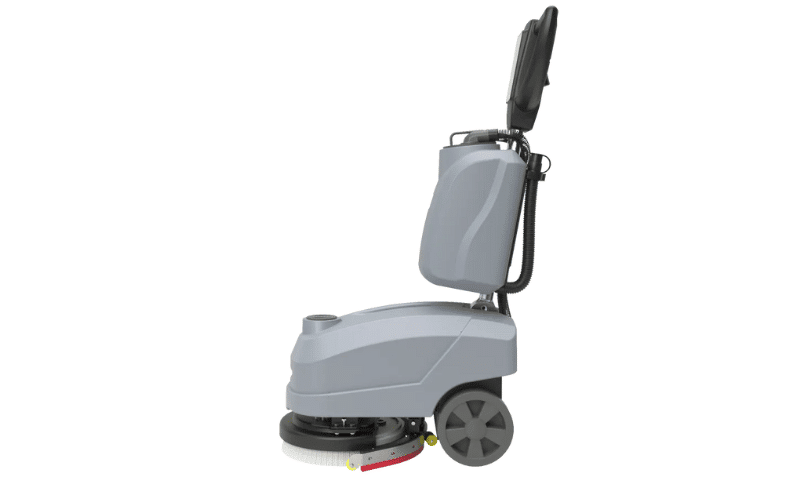
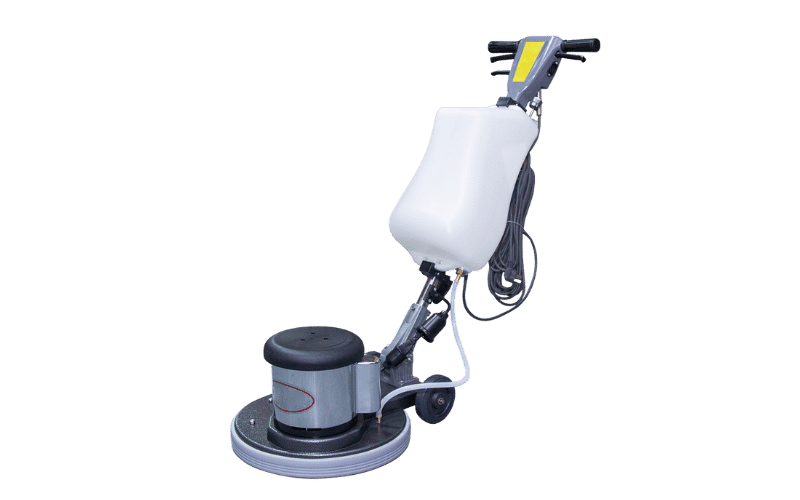
Automated mop machines, usually called auto scrubbers, combine three steps into one pass. They dispense fresh solution, scrub with brushes or pads, and immediately vacuum the dirty water into a separate recovery tank. The floor is nearly dry behind the machine.
That last part matters in healthcare. Because the machine lays down a clean solution and draws up the soiled water immediately, it sharply reduces the risk of cross-contamination associated with re-dipping a mop. It also dispenses a measured amount of solution, so results stay consistent from one operator to the next.
You’ll mostly see two forms:
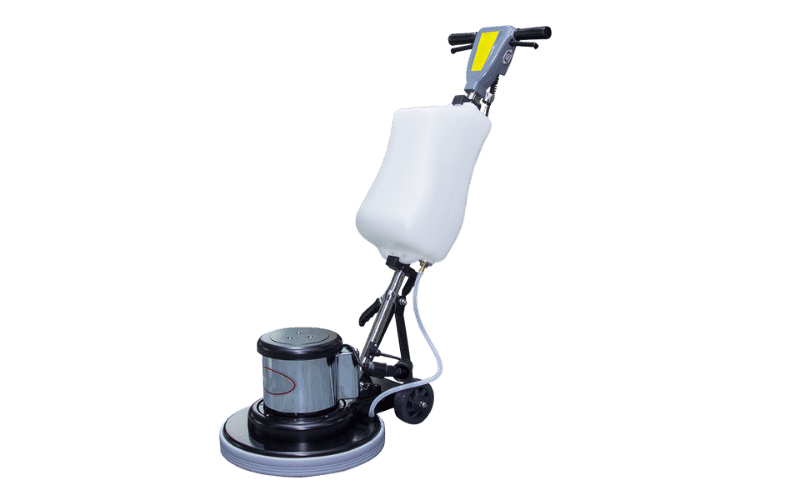
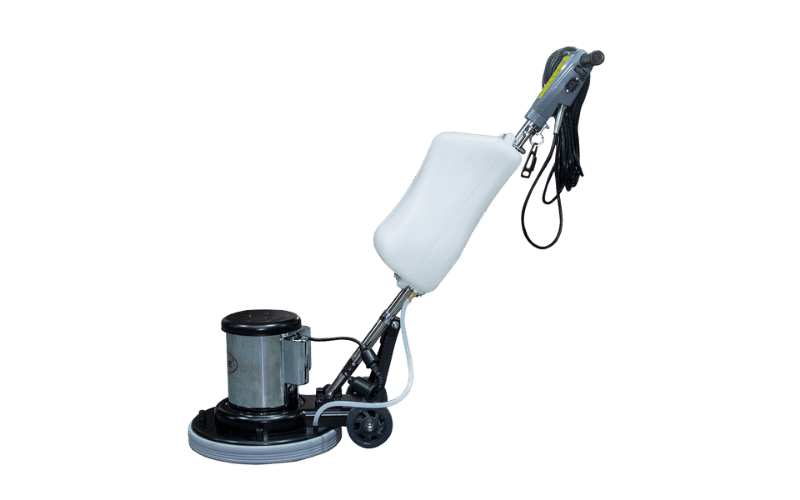
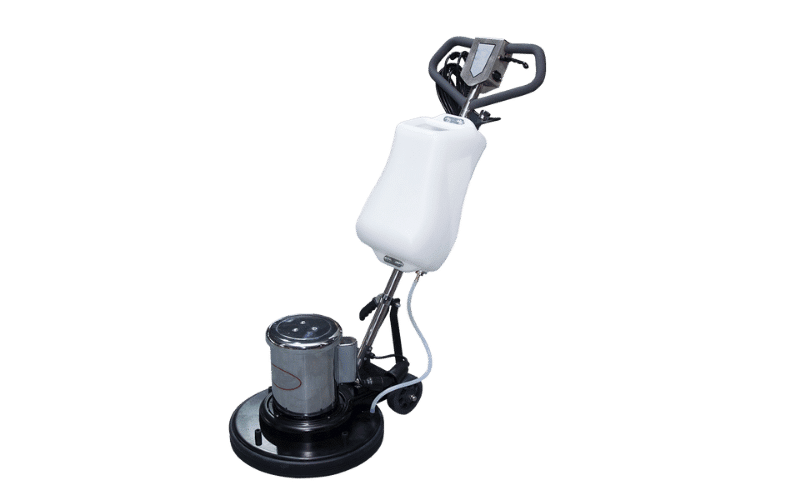
- Walk-behind scrubbers — larger units that wash, scrub, and recover in a single pass over large floors.
- Compact powered units — Smaller machines built for tighter routes and lighter daily care.
Where they earn their keep:
- Large open areas. Corridors, lobbies, and waiting rooms get cleaned fast.
- Consistent results. Less reliance on individual technique.
- Faster drying. Vacuum recovery reopens floors sooner, cutting slip risk.
- Lower long-term labor costs. One operator covers far more square footage per hour.
Higher-end models add water recycling, robotic navigation, and usage logs that help prove protocol compliance during audits.


View Products: WS05 Mini Floor Scrubber 1,200m²/h
The honest limitations: Any advisor who calls a machine a cure-all is selling, not advising. The downsides are real — high capital cost, ongoing maintenance on brushes and squeegees, battery charging and downtime, storage space, noise near patient areas, and poor reach in tight, fixture-heavy rooms.
Machines deliver speed, consistency, and hygiene on big floors — but they cost more, need upkeep, and can’t go everywhere.
Side-by-Side Comparison
| Factor | Traditional Mops | Mop Machines |
|---|---|---|
| Cleaning consistency | Varies by operator and technique | Consistent, measured results across large floors |
| Infection control | Strong with microfiber + per-room pads; weak with shared dirty water | Strong by design; fresh solution down, dirty water recovered |
| Labor | High effort over large areas | One pass covers wide routes; less strain |
| Cost | Low upfront; higher labor cost over time | High upfront; pays off only with enough use |
| Noise | Quiet — good near patients and overnight | Louder — a concern in patient and quiet zones |
| Drying time | Floors stay wet longer; higher slip risk | Near-dry behind the machine; reopens sooner |
The pattern is clear. Machines win on scale and speed. Mops win on reach, control, quiet, and cost in small spaces. Neither wins everywhere.
Matching the Tool to the Healthcare Zone
The smartest plan isn’t one tool for the whole building. It’s mapping each zone to the right tool.
Patient Rooms
Small, frequently cleaned, and high stakes for infection control. A flat microfiber mop with a fresh pad per room is usually the better fit. It’s quiet, maneuvers around beds and furniture, and supports a one-room-one-pad protocol that limits cross-contamination. Machines are often too loud and too bulky here.
Corridors and Open Areas
Long hallways, lobbies, and waiting rooms are where auto scrubbers pay off. The square footage justifies the machine; faster drying reduces slip risk in heavy traffic, and consistent results are easier to achieve. This is the classic case for mechanization.
Operating Rooms and Procedure Areas
ORs demand strict, validated cleaning between cases and during terminal cleaning. Most facilities rely on microfiber flat mops with rigorous, documented protocols here, because the process must be repeatable and verifiable. Some larger surgical suites add compact scrubbers for terminal cleaning, but validated procedure and maneuverability usually drive the choice.
Restrooms
Tight, fixture-heavy, and a hotspot for contamination. Traditional or flat mops handle the corners and the area around toilets that machines can’t reach. Color-code these tools for restroom use only — it’s one of the simplest and most powerful cross-contamination controls you can implement.
Small Clinics and Exam Rooms
Like patient rooms, these favor manual tools. They’re too small to justify a machine, cleaned often, and need quick turnover between patients. A flat microfiber system is fast, quiet, and effective. In most standalone clinics, a machine never earns its keep.
Quick recap: Machines for big open floors. Microfiber manual tools for small, tight, quiet, or infection-critical spaces — and color-code by zone everywhere.
A Simple Zone-by-Zone Decision Framework
Run any space through these six questions, and the right tool usually becomes obvious:
- How big is the area? Large and open → lean machine. Small or tight → lean manual.
- Can a machine physically reach the floor? Lots of corners, fixtures, or stalls → manual.
- How fast must the floor dry? Need it dry quickly in traffic → machine.
- What does infection control require here? Validated per-room protocol → microfiber. Open-area consistency with logging → machine.
- Do you have staff, storage, and a maintenance plan for a machine? No → reconsider, or choose a compact unit.
- What’s the multi-year cost? Add up labor, consumables, charging, and upkeep before deciding.
Run each major zone through these questions, and most facilities land on the same answer: machines for the big floors, microfiber for everything else.
Selection Checklist
Before you commit to any purchase, confirm:
- Facility size — More open square footage tilts toward machines.
- Floor type — Check the manufacturer’s care instructions; some surfaces can’t withstand moisture or pressure.
- Traffic level — High traffic rewards fast drying and steady throughput.
- Infection-control protocols — Validated processes may favor microfiber in critical zones.
- Labor availability — Short-staffed teams achieve greater reach per worker with a machine.
- Training burden — Mops need little. Machines need operators who’ll maintain them.
- Storage and charging — Confirm space and a charging spot before you buy.
- Total cost of ownership — Look past the sticker over three to five years.
That last point is where most decisions go wrong. A machine’s price tag is only the start. A mop’s low cost hides ongoing labor. Compare the full picture, not day one.
Common Mistakes to Avoid
- Buying one tool for the whole building. Different zones have different needs.
- Skipping color-coding. Sharing tools across restrooms and patient areas invites cross-contamination.
- Reusing dirty microfiber pads. One pad per room or zone — never carry a soiled pad into a clean space.
- Ignoring maintenance plans. An unmaintained scrubber underperforms a good mop.
- Judging on price alone. Both the cheapest and the priciest option can be the wrong call.
- Underestimating training. A machine is only as good as the operator running and cleaning it.
Frequently Asked Questions
What’s the difference between a traditional mop and a mop machine?
A traditional mop is a manual tool you push and wring by hand. A mop machine is powered — it dispenses solution, scrubs, and usually vacuums up the dirty water in one pass. Machines clean large floors faster and more consistently. Mops handle small, detailed, or obstructed spaces better.
Are mop machines better than traditional mops for hospitals?
Not always. Machines excel in large, high-traffic areas like corridors and lobbies. Mops still win in patient rooms, restrooms, and tight spaces. Most hospitals need both.
When is a traditional mop the better choice?
For small rooms, tight corners, quick spill response, and any space packed with furniture or fixtures. They’re also better when a floor needs careful moisture control.
Do mop machines reduce cross-contamination?
They can, since they lay down a fresh solution and recover the dirty water instead of leaving it on the floor. But process matters more than equipment. A microfiber mop with fresh pads and good bucket discipline can match a machine in small rooms.
Which option is more cost-effective for a small clinic?
Usually, traditional microfiber mops. A small clinic rarely cleans enough floor area to justify the cost and upkeep of a machine.
Which method works best for patient rooms?
Flat microfiber mops, in most cases. They provide moisture control, reach around furniture, stay quiet, and support a one-pad-per-room protocol.
Do mop machines work on all healthcare floor types?
No. Always check the floor manufacturer’s care directions first. Some sealed or sensitive surfaces can’t handle the moisture or scrubbing pressure.
How often should pads or mop heads be replaced?
Swap microfiber pads between rooms or zones — never reuse a dirty pad across areas. Replace worn pads and heads on a set schedule based on use and wear.
What training do staff need to run a mop machine?
It depends on the unit. Compact machines need only basic instruction. Larger scrubbers require more time for operation, charging, and maintenance. Assigning a few dedicated operators cuts errors fast.
Can a facility use both traditional mops and mop machines?
Yes, and most should. A mixed, zone-based approach gives you cleaner floors and smarter use of labor than forcing one tool to do everything.
The Bottom Line
Traditional mops and mop machines both belong in healthcare. Manual microfiber tools win in small, tight, quiet, and infection-critical spaces, plus quick spill response. Auto scrubbers win across large open floors where speed, consistency, and fast drying matter most.
The right answer for your facility is almost always a thoughtful combination — chosen zone by zone and weighed against your real costs, staffing, and infection-control needs. Map your spaces, run them through the framework, and let each tool do what it does best.
If you’d like a second set of eyes on your plan, our team is happy to walk your facility’s zones with you and suggest the right mix of equipment for your space, budget, and protocols. No pressure — just practical guidance whenever you’re ready to talk it through.