







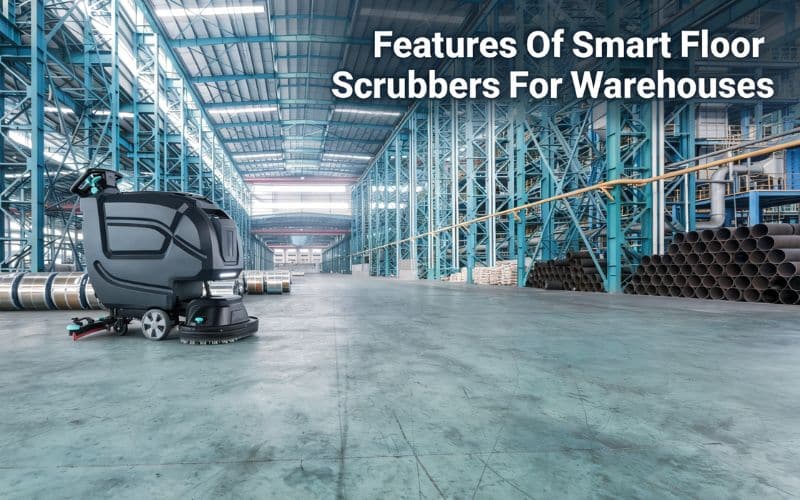
Warehouses pose some of the biggest cleaning challenges—literally. The average warehouse has more than doubled in size since the early 2000s, as businesses strive to fulfill more orders more quickly. These big, busy facilities don’t operate on a 9-to-5 schedule, so work can’t come to a grinding halt to make way for floor cleaning. Not only is time at a premium, but so are workers. The ongoing labor shortage is straining staff and forcing warehouses to find creative ways to make the most of the labor hours they have.
Automation has long been a popular solution in the warehousing sector, and today, smart floor scrubbers are providing facilities with a powerful solution to their biggest cleaning challenges. More and more warehouse operations are leveraging autonomous cleaning machines to work smarter, not harder—driving efficient cleaning while freeing up human employees to focus on other core business functions.
What Are Smart Floor Scrubbers?
Smart floor scrubbers are autonomous mobile robots (AMRs) designed to automate cleaning large floor areas. Unlike traditional, manually operated scrubbers, these intelligent machines use a combination of sensors, artificial intelligence, and software to navigate and clean spaces with minimal human intervention. They are not just automated; they are integrated. Smart scrubbers can connect with warehouse management systems (WMS), allowing them to operate in sync with the flow of a busy facility.
This level of automation allows them to handle routine cleaning schedules independently, even during off-hours or alongside human workers. Their primary role is to deliver consistent, reliable, and efficient cleaning, ensuring warehouse floors remain safe and presentable without consuming valuable labor hours. By taking on the repetitive task of scrubbing, they transform floor care from a manual chore into a streamlined, data-driven process.
How Do Smart Floor Scrubbers Work?
Smart floor scrubbers use a combination of machine learning, robotics, and advanced sensors to navigate complex warehouse environments. Unlike older Autonomous Guided Vehicles (AGVs) that require magnetic tape or fixed sensors to follow a set path, these AMRs use technologies such as LiDAR and 3D cameras to create a digital map of the facility. An operator “teaches” the machine a cleaning route just once, and the scrubber’s AI memorizes it.
From there, the machine operates independently. As it cleans, its sensors continuously scan the environment for obstacles like pallets, forklifts, or people. When an obstacle is detected, the AI calculates a new path to steer around it and then seamlessly returns to its original route. This ability to adapt in real-time is what sets AMR technology apart. Routes can be easily changed without restructuring any hardware, a significant advantage for dynamic warehouses where layouts frequently change. This intelligent navigation ensures that cleaning and regular operations can coexist without disrupting each other.
Key Features of Smart Floor Scrubbers
Smart floor scrubbers all include features that prevent issues and keep them operating safely and efficiently. For example:
- Obstacle Detection and Avoidance: This enables a smart scrubber to operate without collisions. Using a suite of sensors, the machine detects obstacles in its path and takes appropriate action to navigate around them, ensuring the safety of workers and equipment.
- Onboard Processing Power: If the facility’s network connection becomes unstable, the scrubber needs a secondary system with powerful onboard processing. This way, it can continue to clean its programmed route even if it loses its connection to the cloud.
- Smart Interfaces: Any data the scrubber collects can be sent to a management system, requiring a smart interface. This allows for seamless integration with warehouse management platforms for scheduling and reporting.
- Advanced Cleaning Mechanisms: These machines are equipped with high-performance brushes or pads and intelligent water-saving technology that adjusts solution flow based on speed, ensuring a deep clean with maximum efficiency.
- Cloud Connectivity: Data collected by the machine, such as area cleaned and time taken, is automatically uploaded to a cloud drive. This data can be turned into insightful analytics reports for facility managers.
- Labor Efficiency: By automating the time-consuming task of floor scrubbing, these machines free up human workers, allowing them to be redeployed to higher-value responsibilities that require human problem-solving skills.
Applications of Smart Floor Scrubbers in Warehouses
So far, we’ve mostly been discussing their automated nature, but smart floor scrubbers have many practical applications within a warehouse, including:
- Routine Cleaning: Smart scrubbers are ideal for maintaining cleanliness in high-traffic aisles, loading docks, and staging areas. They can be scheduled to run overnight or during quiet periods to ensure floors are consistently clean without disrupting operations.
- Spill Management: While not fully autonomous for spot cleaning, a smart scrubber can be quickly deployed to a spill area by a worker to efficiently clean and dry the floor, much faster than manual methods.
- Dust Control: Warehouses generate significant dust from cardboard, pallets, and products. The scrubbing action of these machines captures fine dust that sweeping misses, improving air quality and protecting sensitive inventory.
- Safety Enhancements: Autonomous floor scrubbers keep floors consistently clean and dry, which can significantly reduce the risk of slip-and-fall injuries for workers. Cleaner floors also reduce the likelihood of products being damaged from moisture or being dropped on a slippery surface.
How Smart Floor Scrubbers Improve Warehouse Efficiency
Managing a large warehouse floor can be time-consuming, which is why manual cleaning is often performed less often than needed. Because of the time and labor required, managers try to minimize how often floors are scrubbed. Smart scrubbers address this directly by automating the entire process. They operate without a dedicated driver, immediately freeing up labor hours.
This automation leads to significant time savings and a reduction in labor costs. The machine can clean vast areas faster and more consistently than a human operator, who is prone to fatigue and distraction. By keeping the floor clean, smart scrubbers also reduce wear and tear on material-handling equipment, such as forklifts, whose wheels can be damaged by floor debris. This combination of speed, consistency, and labor reallocation makes warehouse operations more efficient and cost-effective.
Addressing Labor Shortages with Smart Floor Scrubbers
Like many other autonomous technologies in warehouses, AMR floor scrubbers can handle what is a pretty monotonous, repetitive task for a human employee. With the ongoing labor shortage, it’s difficult to find and retain staff for these roles. By automating floor cleaning, warehouses can redeploy their existing staff to higher-value, more engaging responsibilities, such as inventory management, quality control, or machine supervision.
This shift helps employees feel more empowered and supported in their professional development. Instead of being tied to a scrubber for an entire shift, staff can be re-skilled to manage the AMR technology or focus on tasks that require critical thinking. This not only boosts job satisfaction but also aids in retention—a critical goal for nearly every business struggling with staffing.
The Future of Smart Floor Scrubbers in Warehouses
While there are still some hesitations about adopting them fully, smart floor scrubbers are poised to be the future of warehouse cleaning. Able to perform their tasks competently and save people from tedious work, the potential for these AMRs to become commonplace is clear. Future advancements will likely include improved AI for more complex navigation, better battery technology for longer runtimes, and deeper integration with other robotic systems within a facility, creating a fully connected and autonomous warehouse environment.
Conclusion
Smart floor scrubbers are an essential tool for modern warehouse cleaning, offering efficiency, convenience, and long-term benefits. They address key challenges such as facility size, labor shortages, and operational safety. By investing in autonomous cleaning technology, warehouse managers can ensure superior results with minimal human effort. This enables a proactive approach to facility maintenance, enhancing property value, improving safety, and freeing up staff to drive the bottom line. Smart scrubbers are the ideal solution for keeping today’s massive warehouses clean and competitive.