







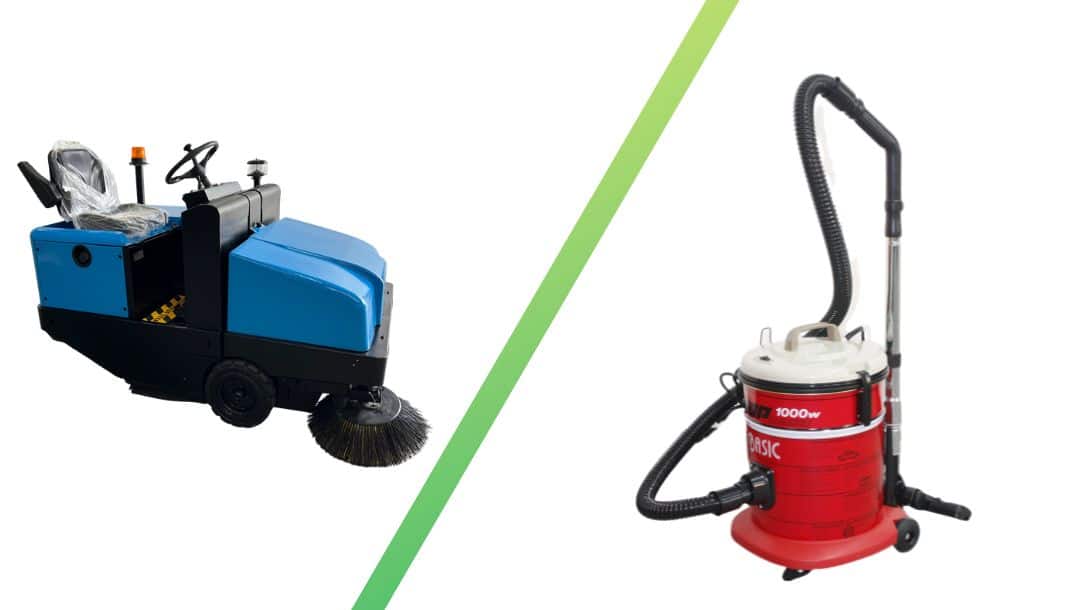
Know the difference between commercial sweepers and vacuum cleaners to better inform your choice between these essential cleaning tools.
The drive to optimize facility maintenance gives managers many options, but makes selecting the best equipment a bit more complex. Where a custodian may have once decided between a simple broom and a standard shop vac, now there’s the added consideration of ride-on capabilities, filtration levels, and debris management.
Two such cleaning options—commercial floor sweepers and industrial vacuum cleaners—overlap significantly but are suited to different uses and environments. Understanding the differences can help you make the choice that’s best for your facility’s needs.
Commercial Floor Sweepers Explained
While more and more machines handle general cleaning, commercial floor sweepers go for bulk, using mechanical power to throw debris into a hopper that must be emptied to keep cleaning. Sometimes referred to as industrial sweepers, they use one or two rotating side brushes that direct dirt into a central cylindrical broom, sweeping it off the floor.
The main operational advantage of a sweeper is its ability to handle large, bulky debris in expansive areas where a vacuum would clog. In almost all cases, they drastically reduce the time required to clean warehouses, parking lots, and manufacturing floors, depending on the type of debris, which can range from leaves and wood chips to metal shavings and beverage cans. Crucially, when such heavy-duty debris is removed mechanically, the floor is prepared for downstream scrubbing or polishing. On the technical side, a sweeper relies on mechanical agitation rather than pure suction, providing aggressive cleaning action that results in rapid debris removal. They are also generally faster to operate over large square footage.
That said, sweepers are often physically larger, and a ride-on model further increases the footprint, making them comparatively tough to maneuver in tight office aisles (which they aren’t designed for). They can also be more maintenance-intensive for brush replacement. This is mostly a consideration for those cleaning mixed environments, because a sweeper’s brushes are effective on hard floors and low-pile carpet but lack the deep-cleaning suction needed for plush textiles or for extracting fine, hazardous dust without specialized dust-control kits.
There’s also the environmental aspect of dust control to consider: many sweepers use a vacuum fan to filter airborne dust generated by the broom, but these systems may not meet the HEPA filtration standards of dedicated vacuums.
Commercial Vacuum Cleaners Explained
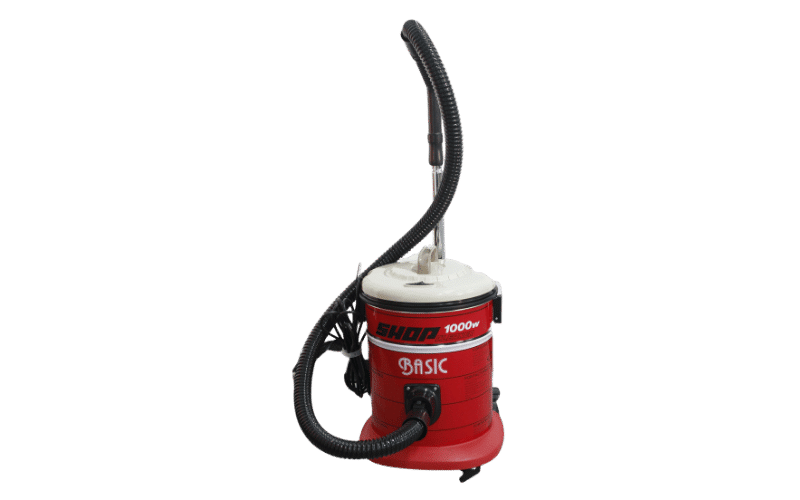
Commercial vacuum cleaners are sometimes considered the gold standard for hygiene, featuring powerful suction motors and advanced filtration systems that capture dust, allergens, and fine particulates that sweepers might miss. The machine relies on high-velocity airflow to lift dirt from surfaces and trap it in a bag or canister, ensuring pollutants are removed from the environment.
But the reliance on airflow and filtration makes for a specific set of strengths and weaknesses. Most commercial vacuums excel in indoor environments such as offices, hotels, and retail spaces, where fine dust and carpet care are priorities. They use specialized attachments to clean upholstery, crevices, and overhead vents. They provide deep cleaning for textile surfaces that mechanical sweeping alone cannot achieve.
Compared to sweepers, vacuums generally have narrower cleaning paths and lower tolerance for large debris, which can easily clog hoses and damage motors, so the operational speed in a warehouse setting is comparatively lower. However, they remain essential for air quality. There are variations on that theme, chief among them the wide-area vacuum, which adds a wider cleaning head to bridge the gap between spot cleaning and large-area coverage.
Deciding Between a Sweeper and a Vacuum Cleaner
Sweepers, especially the ride-on sort, are a great option for those managing industrial spaces, outdoor areas, or facilities with heavy debris loads. A sweeper lets you tackle bulky trash, wood scraps, and gravel rapidly, keeping your hard floors safe and passable without constantly stopping to unclog a hose. If you manage a manufacturing plant or a parking garage, a durable sweeper will give you the heavy-duty performance you need while being faster and more robust than a traditional vacuum.
When you’re ready to focus on indoor air quality and carpet maintenance, the array of commercial vacuum cleaners offers options that are hygiene-minded and detail-oriented, as well as models that handle wet/dry applications. Choice can be overwhelming, but there’s a specific tool for every cleaning challenge in maintaining your facility.