














I’ve spent years around floor scrubbers and the floors they clean, and polished concrete is one of the most misunderstood surfaces out there. People see that glossy, durable finish and assume it takes care of itself. It doesn’t.
The good news? Keeping polished concrete looking great isn’t hard. It just takes the right routine and a few simple habits. Get those down, and your floor stays bright for years.
Here’s how to clean polished concrete the right way, from daily upkeep to deep cleaning and long-term care.
The Basics of Polished Concrete Maintenance
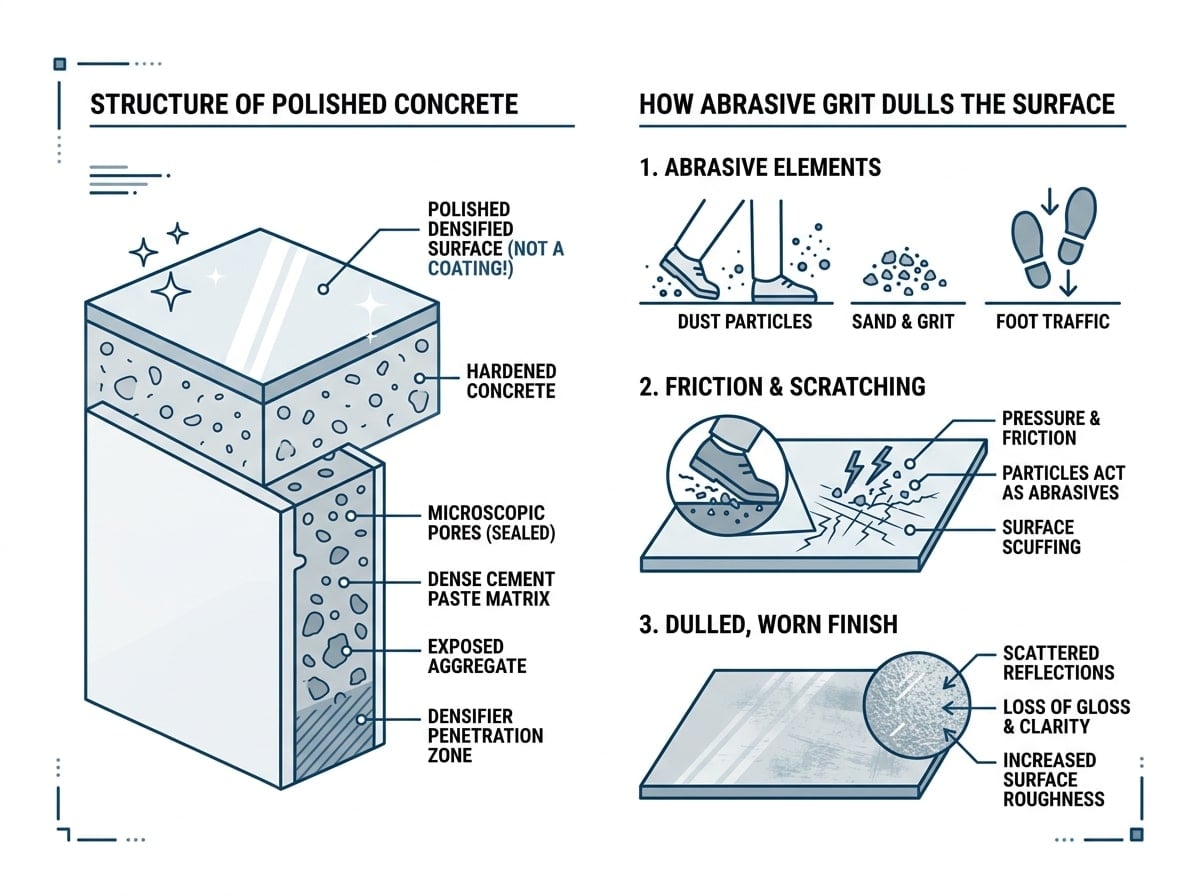
Polished concrete isn’t just concrete with a coat of shine on top. It’s a dense, hardened surface created by mechanically grinding the concrete with progressively finer diamond tools, followed by treatment with chemical densifiers that harden the surface from within. The result is a tight, glossy floor that’s part of the slab itself, not a coating sitting on top of it.
That makes it tough. But tough isn’t the same as maintenance-free, and that’s where people get into trouble.
Here’s what dulls a polished floor: grit. Every bit of sand, dust, and tracked-in dirt acts like sandpaper under foot traffic. As people walk across the floor, they grind those tiny abrasive particles into the surface. Over time, that constant scratching wears down the shine, especially in walkways and entrances.
So the goal of cleaning is simple. You want to remove the abrasive grit before it scratches the finish, and clean up spills before they stain, all without using anything that etches or damages the surface.
Keep that goal in mind, and the rest of this guide makes sense.
Essential Tools and Supplies for the Job
You don’t need a closet full of gear to maintain polished concrete. You need the right few things, used consistently.
Here’s the basic kit:
- A microfiber dust mop for daily dry mopping. Microfiber grabs and holds fine dust and grit rather than pushing them around.
- A soft-bristled broom for corners and spots that the dust mop misses.
- A microfiber wet mop for damp cleaning. Microfiber pads rinse clean and don’t leave lint behind.
- A pH-neutral cleaner formulated for polished concrete.
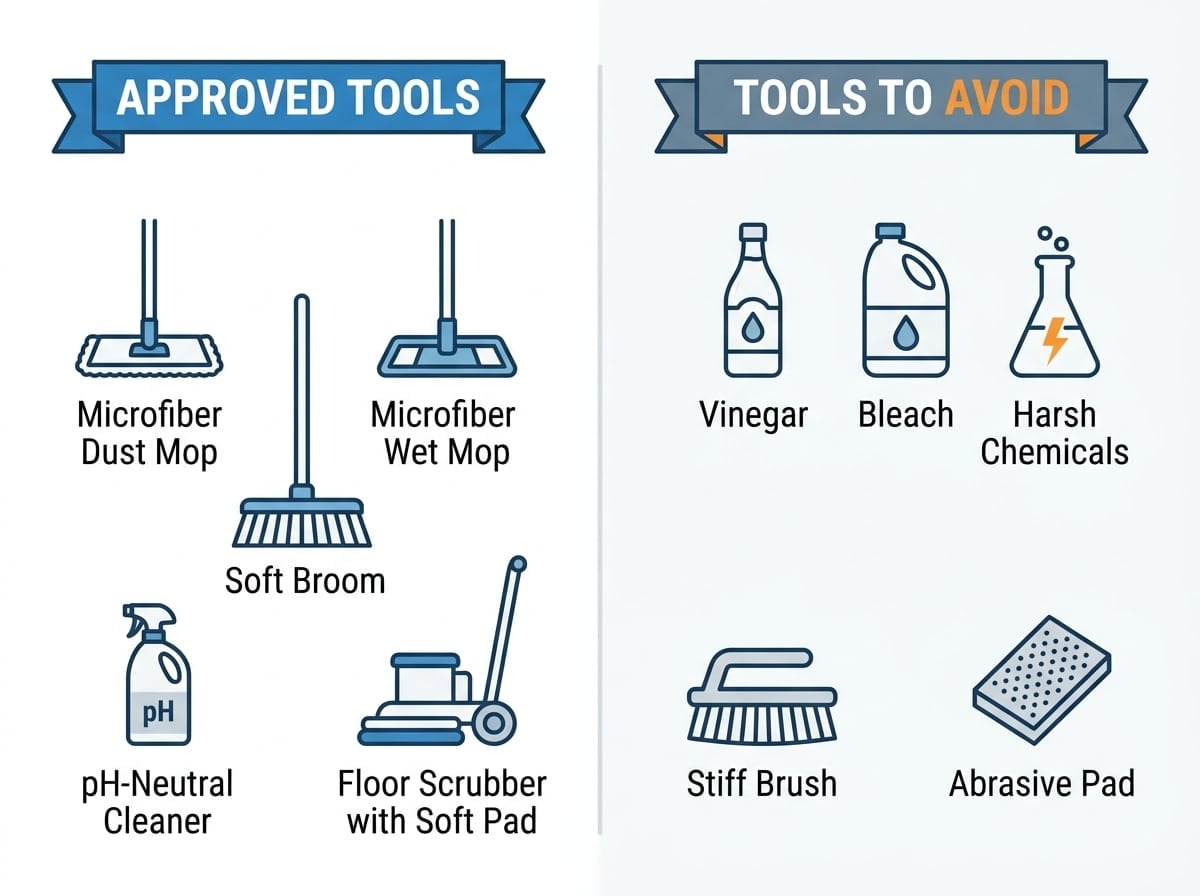
That cleaner is the part people get wrong most often. Use only a pH-neutral cleaner. These are gentle enough to clean without attacking the surface.
Stay away from harsh chemicals. Bleach, vinegar, ammonia, and acidic or alkaline cleaners all damage polished concrete. They react with the surface, eat at the densified finish, and leave you with dull, etched spots that don’t buff out. Once that damage is done, it’s done.
When to Bring in a Floor Scrubber
For large spaces, a mop and bucket will wear you out and won’t clean nearly as well. That’s where an automatic floor scrubber earns its keep.
A scrubber lays down clean pH-neutral solution, scrubs the floor with a pad or soft brush, and vacuums the dirty water back up in one pass. For big residential floors, retail spaces, warehouses, and commercial buildings, it’s the best tool for the job. You get a deeper, more consistent clean with a fraction of the effort, and the floor’s nearly dry behind you.
A Step-by-Step Guide for Daily and Weekly Cleaning
Maintaining polished concrete comes down to two routines: a quick daily dry mop and a regular wet clean. Here’s how to do both right.
Dry Mop Every Day
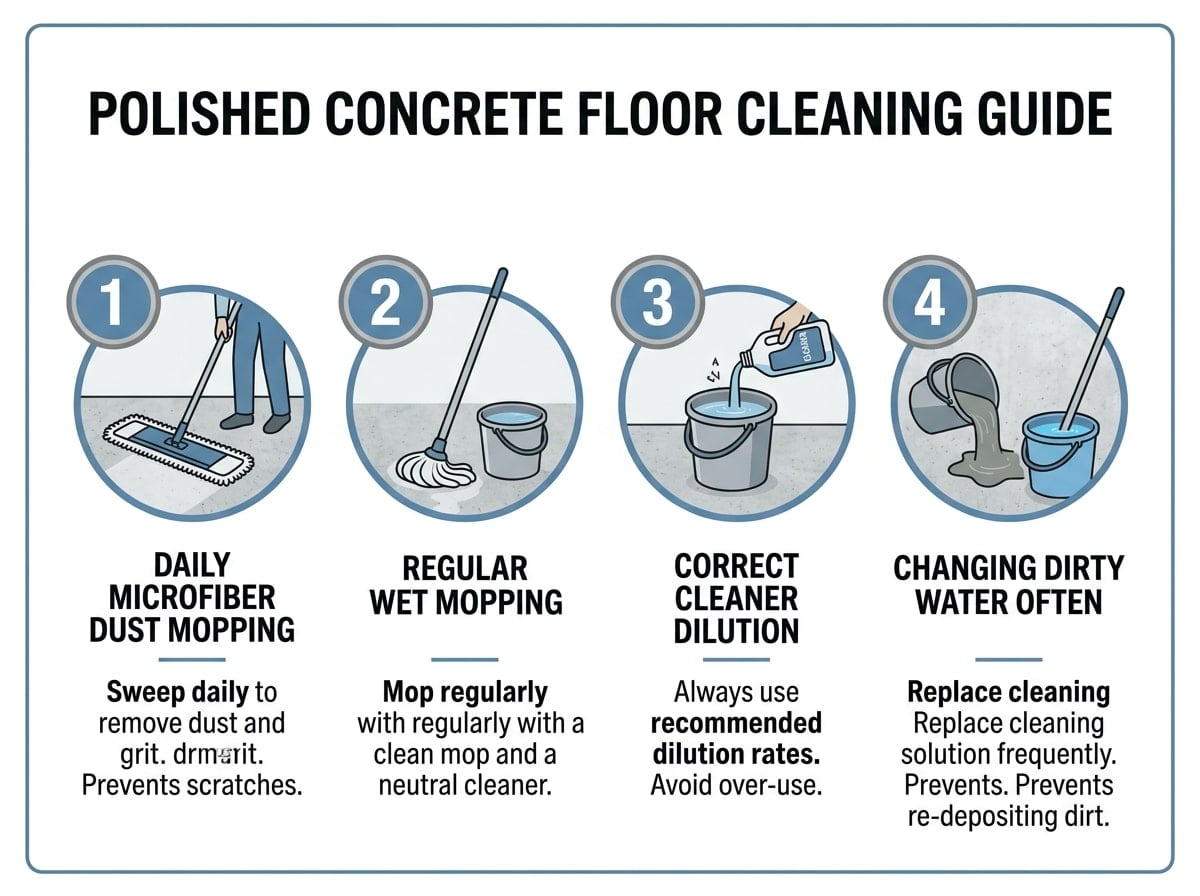
This is your most important habit. Run a microfiber dust mop over the floor every single day, more often in high-traffic areas.
Why daily? Because that’s how you stay ahead of the grit. Dust, sand, and fine debris scratch the resin and stone surfaces. Sweep them up before foot traffic grinds them in, and you protect the shine. Skip it, and you’re slowly sanding your own floor.
Work in long, straight passes and keep the mop on the floor so you don’t kick dust back into the air.
Wet Mop Regularly
Dry mopping handles the grit, but you still need to wash away the film and grime that builds up. Wet mop on a regular schedule, weekly for most homes, daily or several times a week for busy commercial floors.
Use a two-bucket system or a clean microfiber pad. With two buckets, one holds your clean cleaning solution, and the other is for wringing out the dirty water. You dip the mop in the clean bucket, mop it, then wring it into the dirty bucket. That keeps you from dunking a filthy mop back into your clean solution and smearing dirty slurry across the floor.
If you’re using a single microfiber pad instead, swap it out for a fresh one as soon as it loads up with dirt.
Get the Dilution Right
Mix your pH-neutral cleaner exactly to the label’s ratio. More soap does not mean a cleaner floor.
In fact, too much soap works against you. It leaves a sticky residue that dries into a dull, hazy film and actually attracts more dirt. When in doubt, go a little lighter on the soap, not heavier.
Change the Water Often
Dirty mop water is just dirt suspended in liquid. Mop with it, and you’re spreading that grime right back across the floor, leaving streaks and haze as it dries.
Change your water the moment it looks cloudy. On a big floor, that might mean refilling several times. It feels like extra work, but it’s the difference between a clean floor and a streaky one.
Deep Cleaning and Removing Stubborn Stains
Daily and weekly cleaning handles the routine. But spills and embedded dirt need a stronger approach.
Handle Spills Immediately
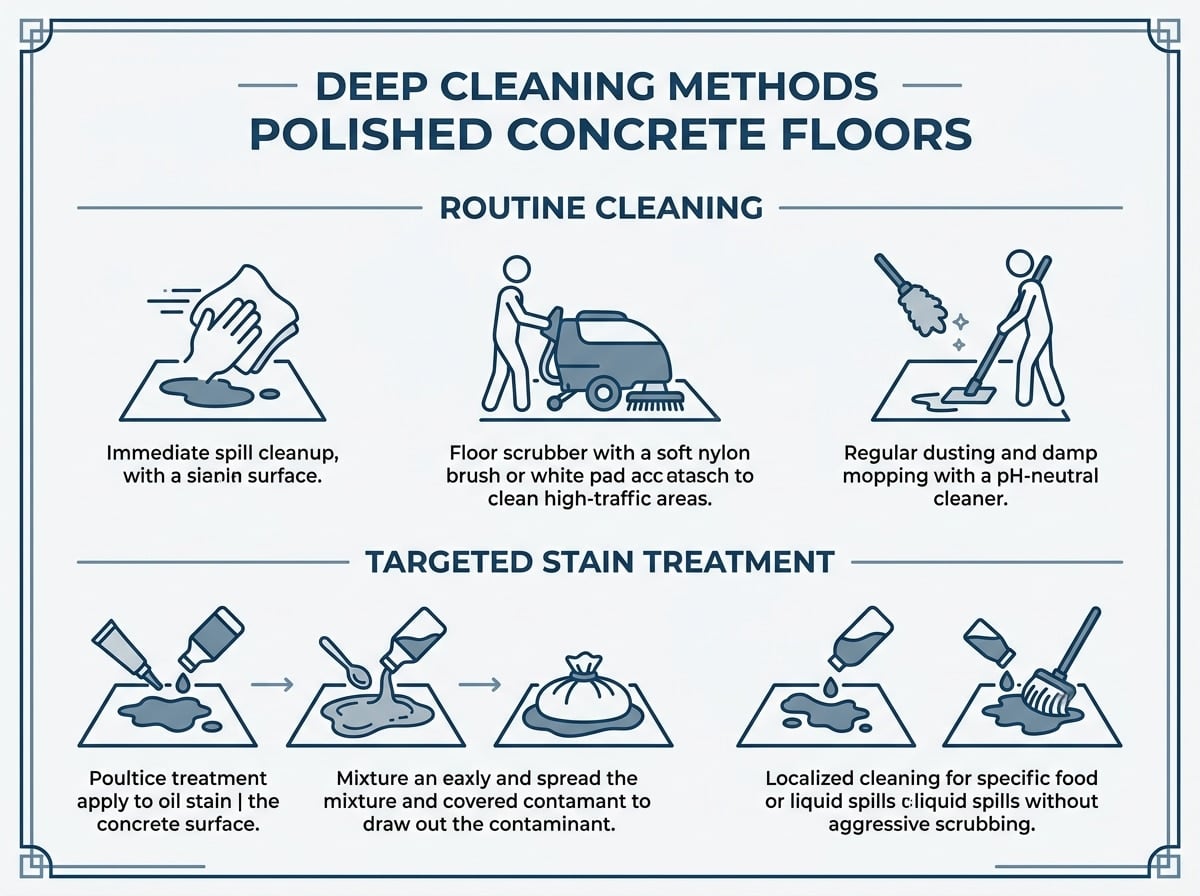
Polished concrete is dense, but it’s not bulletproof. Acidic or oily spills, such as wine, juice, coffee, and oil, can etch or stain the surface if they sit.
The rule: wipe up spills right away. The longer a spill sits, the deeper it penetrates the surface, and the more likely you’ll end up with a permanent stain or a dull “ghost” mark where the finish has been etched. Blot it, wipe it with your pH-neutral cleaner, and you’ll usually catch it before it does any harm.
Deep Clean High-Traffic Areas
Over time, dirt works its way into the microscopic pores of even a tight, polished surface, especially in walkways and entrances. A regular mop can’t pull it back out.
This is another job for a floor scrubber. Run it over high-traffic zones with a soft nylon brush or a non-abrasive white pad. That combination scrubs deep into the surface and lifts embedded grime without scratching or dulling the finish. Stay away from aggressive pads or stiff brushes here, since those do more harm than good on polished concrete.
Use a Poultice for Oil Stains
Deep-set oil stains are stubborn because the oil soaks down into the surface where a mop can’t reach. For those, you need a poultice.
A poultice is an absorbent powder you mix into a paste and spread over the stain. As it dries, it pulls the oil up and out of the concrete. Cover it, let it sit per the product directions, then scrape it off and rinse. It takes patience, but it draws out stains nothing else can touch.
Common Mistakes That Ruin Concrete Shine
I’ve seen good floors ruined by a few simple mistakes. Here’s what to avoid.
- Acidic cleaners. This is the big one. Citrus-based soaps, vinegar, and other acidic products react with the calcium in concrete, etching the surface. They eat away the very thing that gives the floor its shine. Stick to pH-neutral, always.
- Stiff brushes and scouring pads. Aggressive bristles and abrasive pads leave swirl marks and scratches you can see under any light. On polished concrete, soft is the only way to go.
- Letting water air dry. When you let cleaning water dry on its own, the minerals in it leave behind spots and streaks on the glossy finish. If your floor isn’t drying clean, dry it with a clean microfiber pad or use a scrubber that vacuums the water up as it goes.
- Wax and floor finishes. Don’t wax polished concrete. Wax products build up on the surface, then flake off, yellow, and trap dirt. They also hide the natural shine you paid for. Polished concrete gets its gloss from the surface itself, not from a coating, so let it shine on its own.
Long-Term Care and Restoration
Daily care keeps the floor clean, but a polished concrete floor also needs occasional attention to keep its deep gloss over the years.
Burnishing
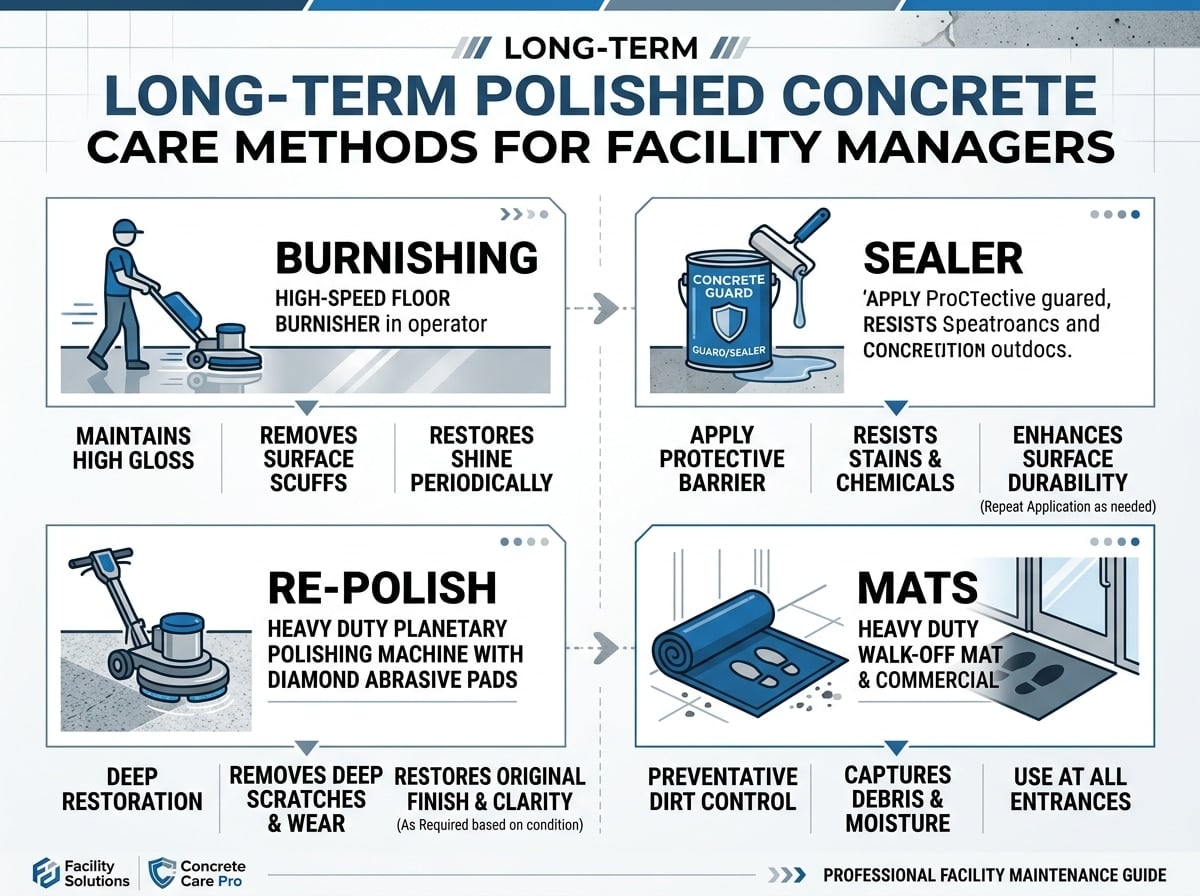
High-speed burnishing brings back that bright, glassy shine. A burnisher runs a soft pad at high speed across the floor, and the friction generates heat that polishes the surface back to a high gloss. For commercial floors, burnishing every few months keeps the shine sharp. Lighter-traffic floors need it less often.
Concrete Guard or Sealer
Polished concrete often carries a protective treatment, sometimes called a concrete guard or sealer, that helps resist stains and wear. That barrier wears down over time, especially in busy areas. Reapplying a specialized polished concrete guard refreshes the protection and helps the floor repel spills. How often depends on traffic, so watch how quickly water stops beading on the surface.
Professional Re-Polishing
Even with great upkeep, a polished floor eventually loses some of its depth in the heaviest traffic lanes. Depending on how much foot traffic the floor sees, plan on a professional re-polishing every five to ten years. The pros re-grind and re-polish the worn areas, and the floor comes back looking close to new.
Polished Concrete Cleaning FAQs
What is the best type of soap for polished concrete?
A pH-neutral cleaner made for polished concrete is your best choice. It cleans well without etching or dulling the surface. Avoid anything acidic or alkaline, and skip general-purpose cleaners unless the label confirms they’re pH-neutral and safe for concrete.
Can I use a steam mop on my concrete floors?
It’s best to avoid it. The heat and moisture from a steam mop can, over time, affect the densifier and any surface treatment, and the high temperature isn’t worth the risk on a polished surface. Stick to a damp microfiber mop with pH-neutral cleaner instead.
How often should I use a floor scrubber on commercial concrete?
It depends on traffic. Busy commercial floors often get scrubbed daily or several times a week to stay ahead of embedded dirt. Lower-traffic spaces can stretch to weekly. Let the floor tell you: when the shine dulls, or grime builds up, it’s time.
Will vinegar damage the finish of my polished floor?
Yes. Vinegar is acidic, and acid reacts with the calcium in concrete, etching the surface. That leaves dull, rough spots that don’t buff out. Never use vinegar on polished concrete. Use a pH-neutral cleaner every time.
How do I fix a dull spot on my concrete floor?
It depends on the cause. A hazy spot caused by soap residue or hard water often clears with a proper pH-neutral wash and a clean rinse. A dull spot from etching or wear usually needs burnishing, and more serious damage may require a professional to re-polish that area.
Is it safe to use a vacuum on polished concrete?
Yes, as long as it won’t scratch the floor. Use a vacuum with soft wheels and a brush or hard-floor setting, and make sure no grit is trapped in the head. A vacuum is a great way to pull up fine dust, especially in corners and along edges.
Keeping Your Floors Bright and Durable
Here’s the bottom line after years of caring for these floors: consistency beats everything.
Daily dust mopping is your number one defense. That simple habit removes the grit that does the most damage, and it matters far more than any fancy chemical or deep clean. Stay on top of it, and you’re winning most of the battle.
In fact, consistency matters more than strength. A gentle, pH-neutral routine used regularly protects your floor far better than occasional heavy-duty cleaning with harsh products that can damage the surface.
Keep an eye on your wear zones, too. Entryways, hallways, and main walkways take the most traffic and dull first. Check them regularly so you can catch wear early and burnish or treat those spots before they get bad.
And stop the grit at the door. Put walk-off mats at every entrance. Most of the abrasive dirt that scratches your floor walks in on people’s shoes. Good mats catch it before it ever reaches the concrete, which means less scratching and less cleaning for you.
Do these few things consistently, and your polished concrete will stay bright, smooth, and durable for years.