







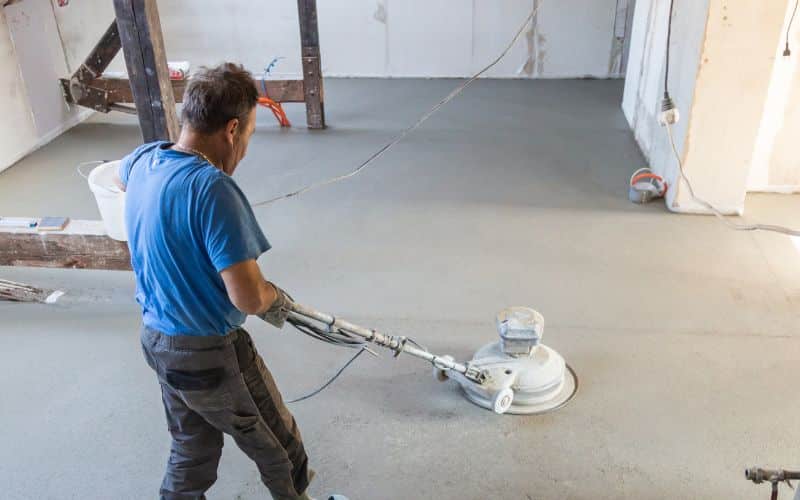
With over a decade of experience in reviewing construction and renovation equipment, here is my comprehensive rundown of what to consider before pulling the trigger on a new machine. All products featured in our guides are rigorously tested by industry experts. Choosing the right equipment used to be relatively straightforward when options were limited to a few heavy-duty, unwieldy machines. However, the rapidly growing demand for concrete polishers across the commercial construction, residential flooring, and specialized renovation industries has dramatically expanded the market. Today, you have an incredible array of options. There are massive, ride-on machines that prioritize sheer performance and coverage area at all costs, and others that home in on compact portability, budget-friendly pricing, or intricate edge-work design. That immense breadth of choice means that selecting a concrete polisher in today’s market is no longer a simple task. While choosing an option from a top-rated equipment list is a good starting point, you might still not end up with a machine perfectly suited to your specific project requirements.
Having tested countless concrete polishers over a decade of reviewing industrial tools, I will break down every critical element of these expensive machines to lead you in the right direction. This guide is designed to navigate you through the complexities of the decision-making process, ensuring you understand exactly what to look for before making a significant investment. We will cover all the key considerations, including the physical size of the machinery, nuanced performance metrics, required power, and the advanced features available on modern units. Furthermore, we will delve into the types of surfaces and finishes you can achieve, explore the unique offerings of the industry’s top manufacturing brands, and evaluate the pros and cons of using non-specialized tools versus dedicated polishing equipment. By the end of this comprehensive breakdown, you will be equipped with the expert knowledge needed to choose a concrete polisher that precisely aligns with your operational needs, budget constraints, and long-term business goals.
What Size Concrete Polisher Should You Get?
This is the best place to start when shopping for a new concrete polisher, as the machine’s physical footprint dictates its overall utility. When we talk about the “sizes” of these robust machines, we usually compare the grinding width and overall operational footprint, which directly affect their usability and suitability for different types of projects. You will commonly see three primary size categories among major manufacturing brands: handheld models, walk-behind units, and large ride-on polishers. Hand-held polishers are typically used for countertops, tight corners, and intricate vertical surfaces where larger machines simply cannot reach. Walk-behind polishers represent the vast majority of the market, offering a balance of maneuverability and surface coverage that suits both residential basements and mid-sized commercial spaces. Ride-on polishers, conversely, are colossal machines designed exclusively for massive industrial warehouses and expansive retail floors, where minimizing labor time over thousands of square feet is the primary objective. Choosing the right size fundamentally determines how efficiently your crew can complete a job and whether the machine can even physically access the designated work environment.
Walk-behind concrete polishers in the medium size range generally serve as the happy medium for the vast majority of contractors and flooring professionals. Though they are substantial machines that require proper training to operate safely, they provide the powerful grinding hardware enough physical weight and downward pressure to effectively cut through tough concrete surfaces. Having a moderately sized grinding path, typically ranging from twenty to thirty inches, is certainly not a bad thing when you need to balance speed with spatial flexibility. These medium-sized polishers are incredibly versatile, capable of handling a two-car residential garage just as competently as a local grocery store renovation. They offer the necessary torque and rotational force to drive diamond abrasives deeply into the slab, ensuring a consistent scratch pattern without being so overwhelmingly large that they cannot fit through standard commercial doorways. For most growing concrete polishing businesses, investing in a reliable, medium-sized walk-behind unit offers the highest return on investment, as it can be deployed across the widest possible variety of everyday job sites with minimal logistical complications.
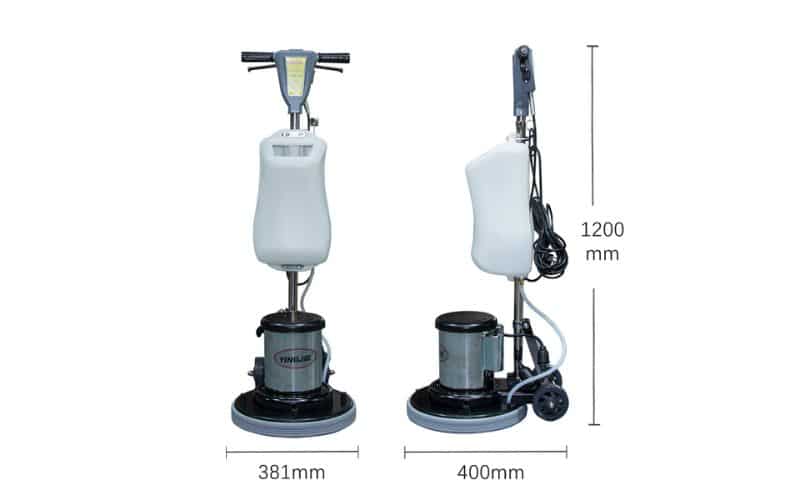
On the smaller end of the spectrum, compact and highly portable concrete polishers offer incredible benefits for projects characterized by small spaces, intricate layouts, and essential edge work. These hand-held or highly compact walk-behind units are specifically engineered to tackle the exact areas that larger machines inevitably miss. Even if you operate a massive industrial polisher for the bulk of the floor, you will always need a compact machine to meticulously grind and polish within inches of the walls, around structural columns, and underneath permanent fixtures. These lightweight polishers are exceptionally easy to transport in standard utility vehicles, requiring minimal effort to load and unload and no specialized ramps or heavy-duty trailers. Furthermore, their lower weight profiles make them the perfect solution for multi-story residential projects or historic building renovations where the subfloor’s structural integrity cannot safely support the crushing weight of a heavier industrial machine. Their agility and precision ensure that the final polished floor looks entirely uniform, seamlessly blending the main floor area with the delicate perimeter edges.
Conversely, large, heavy-duty ride-on polishers offer distinct, unmatched advantages for strictly industrial applications and large-scale commercial projects. These behemoths are simply too large for standard residential doorways, too heavy to transport comfortably without a dedicated flatbed truck, and often quite challenging to maneuver in anything but wide-open space. These are concrete polishers primarily intended for use in large distribution centers, airplane hangars, and sprawling wholesale retail environments. Why buy them? Well, if your business plans to mostly bid on and execute jobs that exceed tens of thousands of square feet, you will absolutely need the extra heft and dual-head efficiency that only a ride-on machine can provide. The enormous grinding width provides unparalleled real estate coverage per pass, drastically reducing the total man-hours required to complete a monumental project. While the upfront capital investment is exceptionally high, the operational efficiency, reduced operator fatigue, and rapid job completion times make these heavy-duty machines indispensable for elite industrial flooring contractors.
How to Navigate Performance
There is a massive amount to consider when evaluating machine performance, but the absolute best place to start is by examining the motor power and available speed settings. A high-quality concrete polisher requires a heavy-duty, continuously rated motor to handle demanding, multi-stage grinding tasks, and typically that means choosing between high-voltage single-phase and three-phase power systems. The rotational speed of the planetary heads, measured in RPM, combined with the motor’s raw torque, determines how effectively the machine fractures the concrete surface and refines it to a smooth finish. The ability to easily adjust these speed settings is crucial, as different stages of the polishing process require vastly different rotational dynamics. Aggressive initial grinding requires tremendous torque at lower speeds to remove old coatings and level the slab, while the final high-gloss resin polishing stages necessitate significantly higher speeds with a lighter touch to generate the friction and heat needed for that mirror-like shine.
Equally critical to the machine’s motor power is understanding the complex role of polishing pad compatibility and the various grit levels in dictating overall performance. Your concrete polisher is only as effective as the abrasive tooling attached to the bottom of its grinding heads. Performance scales step by step based on the precise sequence of metal-bonded and resin-bonded diamond pads you utilize throughout the progression. Starting with coarse, low-grit metal pads, such as 16- or 30-grit, the machine aggressively profiles the concrete and exposes the underlying aggregate. As you progress incrementally up the grit scale, moving all the way to a three-thousand-grit resin pad, the polisher meticulously removes the microscopic scratch patterns left by the previous step. It is vitally important to ensure that the polisher you choose uses a universal or widely supported magnetic tooling plate, allowing you to easily swap out abrasives from different brands and styles without being permanently locked into a single proprietary ecosystem that might limit your finishing capabilities.
Another highly significant factor that drastically influences job-site performance is the integration and efficiency of the polisher’s dust-collection system. Concrete grinding produces an astronomical volume of highly dangerous, microscopic silica dust that poses severe health risks to operators and anyone in the immediate vicinity. High-performance polishers are engineered with advanced, tightly sealed floating shrouds and dedicated vacuum ports that capture nearly 100% of airborne particulates directly at the source. Maintaining a clean and demonstrably safe work environment is not just a matter of regulatory compliance; it directly affects the efficiency of the grinding process. If the abrasive pads are constantly floating on a thick layer of uncollected concrete dust, they cannot effectively engage the slab’s hard surface, resulting in incredibly slow production rates and rapid, uneven wear on your expensive diamond tooling. Therefore, pairing your polisher with an equally capable, high-end HEPA-filtered vacuum system is essential for optimal performance.
Addressing the physical impact of machine weight and its precise balance is also fundamental to understanding maneuverability and overall polishing efficiency. In the realm of concrete grinding, friction is the mechanism of action, generated by downward pressure. However, a machine that is simply heavy without proper balance will be a total nightmare to operate, pulling violently to one side and causing intense operator fatigue within minutes. The best-performing concrete polishers feature an incredibly well-engineered center of gravity, often with adjustable weight kits that let the operator independently add or remove downward pressure on the grinding heads as needed. This sophisticated balance ensures that the machine glides smoothly across the concrete surface, maintaining consistent contact and generating a perfectly even scratch pattern. Proper weight distribution drastically improves the user’s ergonomic experience while preventing abrasive tooling from gouging or severely damaging the floor during complex directional changes.
Finally, one must carefully consider the overarching importance of sheer durability and premium build quality for reliable, long-term performance. Concrete polishing is an inherently violent, high-vibration process that will quickly destroy any machine constructed with inferior cast metals, cheap plastic components, or unsealed bearings. Investing in a polisher built with heavy-duty steel frames, aircraft-grade aluminum gearboxes, and robust, dustproof electrical enclosures ensures your equipment will withstand the grueling daily abuse of commercial construction sites. This rugged dependability minimizes costly downtime and expensive repairs, keeping your crew productive and your business highly profitable for years to come.
How Much Power and Features Do Concrete Polishers Need?
When configuring your equipment loadout, understanding the precise relationship among motor wattage, electrical requirements, and revolutions per minute (RPM) is essential for effectively executing different polishing tasks. Concrete polishers require a significant continuous electrical draw to maintain torque when pushed hard against a dense slab. Smaller handheld units might run perfectly fine on standard 120-volt household circuits, drawing a modest amount of power. However, serious walk-behind and ride-on machines almost exclusively require heavy-duty 240-volt or even 480-volt three-phase power supplies. This massive influx of electricity is what allows the heavy motors to maintain optimal RPMs without bogging down or overheating when the diamond pads bite deeply into the concrete. Insufficient power leads directly to stalled motors, tripped breakers, and incredibly inconsistent grinding patterns. Understanding your typical job site’s electrical infrastructure is critical; if you frequently work in residential areas without access to three-phase power, purchasing a massive industrial polisher will force you to rely on expensive, loud, and cumbersome portable generators to keep the machine running.
Highlighting the profound benefits of variable-speed controls is also vital when discussing the features necessary for precision concrete work. In the past, older concrete grinders operated at a single, static speed, which severely limited their versatility across the different phases of a complex polishing job. Modern, high-quality polishers feature advanced variable frequency drives (VFDs) that allow the operator to seamlessly dial the rotational speed up or down with incredible precision. This feature is absolutely mandatory for achieving professional-grade results. When you are performing aggressive coating removal with heavily aggressive metal bonds, running the machine at a lower speed prevents the tooling from glazing over and overheating. Conversely, when you transition to the final resin polishing stages, cranking the RPMs up significantly allows you to generate the optimal surface friction required to melt the chemical densifiers and pop a brilliant, long-lasting shine. Variable speed transforms a blunt grinding instrument into a highly refined finishing tool.
Discussing advanced operational features, such as integrated water-fed systems and sophisticated digital monitoring displays, further illuminates what sets basic grinders apart from premium polishers. While dry polishing is incredibly common, the ability to seamlessly switch to wet polishing is a massive advantage when dealing with exceptionally hard concrete or in environments where airborne dust must be mitigated to zero. High-end polishers frequently feature onboard water tanks or direct hose connections that precisely meter water directly onto the grinding heads, cooling the diamonds and creating a manageable slurry. Additionally, the inclusion of smart LED indicators, digital readouts, and touchscreen interfaces enables operators to monitor critical performance metrics in real time. These advanced displays can show current power draw, precise head RPM, machine operating hours, and even alert the user to potential maintenance issues before they result in catastrophic equipment failure, ensuring maximum uptime and efficiency.
Finally, addressing the crucial role of ergonomic design principles and advanced noise-reduction features is critical for maintaining user comfort and ensuring job-site safety during long shifts. Operating a heavy-duty concrete polisher for eight to ten hours a day is physically grueling work that can easily lead to severe fatigue, repetitive strain injuries, and hearing damage if the equipment is poorly designed. Manufacturers have increasingly prioritized features like fully adjustable, vibration-dampened handle grips that isolate the operator’s hands from the harsh shaking of the planetary gearboxes. Furthermore, premium machines are engineered with precision-cut gears and sound-insulating motor housings that significantly reduce the screeching, high-decibel noise typically associated with grinding concrete. These seemingly minor ergonomic and acoustic improvements dramatically enhance the overall user experience, allowing contractors to work safely, comfortably, and productively for extended periods without compromising their long-term health or situational awareness.
What Kind of Surface and Finish Is Best?
Do not underestimate the importance of fully understanding the specific concrete surface you are dealing with, as this directly dictates the type of polisher and methodology you must employ. Unless you plan to exclusively work on freshly poured, perfectly leveled, and tightly controlled architectural slabs, you will undoubtedly encounter a wide variety of challenging concrete conditions. The compatibility of your chosen polisher with different concrete surfaces—ranging from brand-new, extremely hard troweled floors to decades-old, incredibly soft, and deteriorating basements—is paramount. Soft, old concrete is highly abrasive and will eat through diamond tooling at an astonishing rate if you do not use hard-bonded metal pads and a machine capable of very light, delicate passes. Conversely, extremely hard, newly cured concrete requires soft-bonded tooling and heavy, aggressive machinery to effectively scratch the surface. Recognizing these drastic variations in surface density and hardness is the first step in determining the proper equipment setup to achieve a successful, long-lasting polish.
Selecting the right progression of polishing pads is essential for achieving the specific finish your client desires, whether that is a subtle matte appearance, a high-gloss reflection, or a specialized textured grip. The finish is not determined merely by the machine itself, but by the exact sequence of abrasives you run beneath it. If a client requests a low-maintenance, industrial matte finish, you might only process the floor up to a 200-grit or 400-grit resin pad, leaving a clean, smooth surface with a soft, diffused light reflection. However, if the goal is a premium, mirror-like glossy finish comparable to polished marble, you will need to meticulously work your way up to a 1500-grit or even 3000-grit diamond pad. Each consecutive step mathematically removes the microscopic scratches of the previous step. Skipping a grit level or using subpar polishing pads will inevitably result in a cloudy, visually unappealing finish, regardless of how powerful or expensive your concrete polisher is.
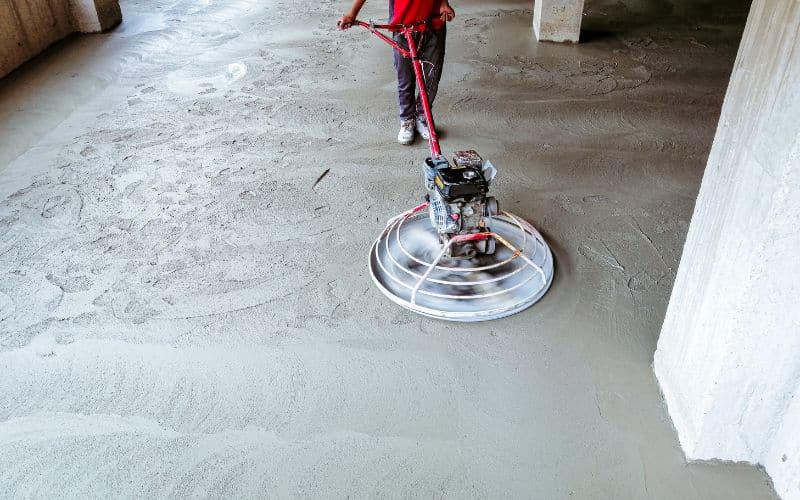
Explaining how existing surface conditions, such as deep structural cracks, extensive spalling, or severe unevenness, affect the choice of a polisher is also deeply critical. A highly sophisticated planetary polisher is designed to follow the general contours of a floor, but it cannot miraculously fix deep gouges or massive height discrepancies on its own. If you regularly tackle heavily damaged floors, you need a heavy-duty machine with robust, active planetary action that aggressively cuts down high spots, leveling the slab before the polishing process even begins. Furthermore, surface imperfections dictate your prep work; deep cracks must be meticulously routed, cleaned, and filled with specialized polyurea or epoxy joint fillers before running the polisher over them. Running a lightweight, passive-drive machine over severely uneven, cracked concrete will only cause the machine to bounce uncontrollably, damage the tooling, and leave a completely unacceptable, wavy finish that highlights rather than hides the floor’s structural flaws.
Lastly, addressing the vital role of polishing techniques—specifically, the ongoing debate between wet and dry polishing—is crucial to achieving the desired finish. Wet polishing uses water to cool the diamond tooling and suppress dust, extending pad life and often allowing a slightly deeper, more aggressive initial cut on extremely hard surfaces. It produces a thick concrete slurry that must be meticulously managed and disposed of, which can be a massive logistical headache on finished interior job sites. Dry polishing, on the other hand, relies heavily on high-powered HEPA vacuums to immediately extract dust, allowing the operator to constantly see the scratch pattern and keep the work area impeccably clean. Modern resin pad technology has advanced to the point where high-gloss finishes are easily achievable using strictly dry techniques, which is why it has become the standard for most commercial retail spaces. Choosing between these techniques dramatically influences your equipment needs and your final surface results.
What Are the Top Concrete Polisher Brands?
There was a time not so long ago when the concrete polishing industry was highly fragmented, with only a few specialized companies dominating the heavy-duty landscape. That has dramatically changed over the years, but well-known heritage brands like Husqvarna still maintain a massive and highly respected presence. Husqvarna is globally recognized for its uncompromising reputation regarding rugged durability, relentless performance, and extensive dealer support networks. It offers an incredible range of devices across its PG line, featuring models designed for everything from tight residential garages up to massive, remote-controlled industrial warehouses. Husqvarna machines rarely feature the flashiest aesthetics, but they are built like absolute tanks and consistently offer top-tier, predictable performance day in and day out. Because they focus so heavily on robust engineering rather than gimmicks, their polishers often have incredibly strong gearboxes and heavily sealed motor components that easily survive the harshest, dust-choked construction environments imaginable.
To fill the massive demand in the middle of the spectrum, mid-range brands like HTC (now part of the Husqvarna family but maintaining its unique design ethos) and Lavina offer an incredible balance of affordability, innovative features, and professional-grade quality. These brands have gained tremendous ground by providing contractors with highly capable planetary grinders that do not carry the astronomical price tags of top-tier flagship models. Lavina, in particular, is highly regarded for its easy-to-use magnetic tooling systems and incredibly smooth-running, belt-driven planetary heads. These mid-range options frequently incorporate excellent variable speed controls, integrated water systems, and collapsible frames for easier transport. They are essentially the perfect workhorse machines for mid-sized flooring contractors who require reliable, daily-use polishers capable of achieving high-gloss, mirror finishes without a massive, business-altering upfront capital investment.
Mentioning budget-friendly, highly specialized options like Klindex or heavily discounted entry-level brands is important for contractors handling small-scale, highly specific, or strictly residential projects. While you will not find many new, high-performance industrial machines for under a few thousand dollars, brands targeting the entry-level market provide highly capable single-disc or smaller planetary polishers that excel in tight spaces. These budget-friendly options are fantastic for businesses that only occasionally offer concrete polishing as an add-on service, rather than their primary source of revenue. One quirk of some cheaper, entry-level polishers is that they may lack the sheer weight and aggressive downward pressure required for rapid, deep grinding, meaning the operator will have to make slower, more deliberate passes. Still, there are a few viable options for startups or DIY-focused contractors looking to navigate the complex world of concrete surface preparation without incurring crippling equipment debt.
Finally, one must address the rapidly emerging brands and the exciting technological innovations currently sweeping through the concrete polishing industry. We are beginning to see highly advanced, automated, and even fully autonomous robotic concrete polishers entering the high-end commercial space, designed to dramatically reduce operator fatigue and labor costs on massive, multi-acre distribution centers. Emerging manufacturers are pushing the boundaries with advanced battery-powered polishers that completely eliminate the need for dangerous, cumbersome high-voltage extension cords trailing across the job site. Furthermore, there is a massive push toward advanced IoT (Internet of Things) integration, where machines actively transmit real-time performance data, tooling wear metrics, and maintenance alerts directly to a contractor’s smartphone. While these cutting-edge, technology-heavy brands might command a premium price right now, they represent the undeniable future of the industry, pushing the boundaries of what is possible in concrete surface refinement and operational efficiency.
Using Non-Specialized Tools for Polishing
While there is an entire, highly developed ecosystem of heavy-duty equipment specifically marketed to professional concrete polishers, that absolutely does not mean you cannot, in theory, process concrete surfaces with other, more general tools. Laptops have gaming counterparts; similarly, the construction world has standard angle grinders and floor buffers that can be retrofitted to handle basic polishing tasks. Angle grinders equipped with diamond cup wheels and variable-speed settings are incredibly versatile tools that every contractor already owns. They possess the necessary RPMs to cut concrete and can be highly effective for very small areas, tight corners, or vertical surface grinding where a massive planetary machine could never physically fit. If you simply need to smooth out a small, rough patch on a residential patio or polish a custom-poured concrete kitchen countertop, a standard seven-inch variable-speed grinder paired with the correct sequence of specialized diamond resin pads is a highly logical and effective choice.
However, if you are bidding on a dedicated flooring project, I would strongly caution against relying on non-specialized tools, as their profound limitations in achieving professional-grade, uniform finishes will quickly become apparent. Standard floor buffers or heavily modified single-disc sanders simply lack the heavy downward pressure, the active planetary rotational dynamics, or the sheer motor torque required to effectively flatten and consistently polish a hard concrete slab. You will not get the perfectly flat, wave-free surface profile that a dedicated multi-head planetary polisher provides, and you will almost certainly struggle to achieve the brilliant, high-gloss clarity required by paying clients. If you are a professional contractor aiming to deliver a flawless, mirror-like architectural floor that commands top-tier pricing, utilizing retrofitted, non-specialized equipment is a massive mistake. These tools are simply not engineered to maintain the precise, consistent friction and cutting power required for large-scale, high-end resin polishing stages.
Despite these significant technical limitations, one must actively discuss the undeniable cost-effectiveness of using existing grinders and buffers for small, localized repairs or highly constrained DIY projects. Purchasing a dedicated, professional-grade walk-behind concrete polisher requires an upfront investment of several thousand, if not tens of thousands, of dollars. For a homeowner looking to spruce up a tiny basement utility room, or a general contractor who only needs to prep a two-foot section of floor for tile adhesion, dropping that kind of cash is wildly impractical. Using a standard variable-speed hand grinder with a relatively inexpensive aftermarket dust shroud and a basic set of diamond pads can easily accomplish the mission at a fraction of the cost. It is a highly economical approach, provided the operator understands that the process will be physically exhausting, incredibly time-consuming, and that the final visual result will likely lack the pristine, glass-like consistency of a professionally polished surface.
Lastly, one must seriously address the high risk of severe damage to both concrete surfaces and the tools themselves when relying heavily on non-specialized equipment. Standard hand grinders and janitorial floor buffers are generally not designed with the heavy-duty, dust-sealed bearings and thermal overload protections necessary to survive the extreme, fine-particulate environment of dry concrete grinding. Running these tools hard on a dense slab can easily overheat their internal motors, melting components and completely destroying the tool within hours. Furthermore, because single-disc grinders lack the stabilizing, counter-rotating planetary action of specialized polishers, they are notoriously difficult to control. They can easily bite hard into the concrete, violently kicking back against the operator or rapidly gouging a deep, crescent-shaped trench into the floor that is nearly impossible to fix without pouring specialized self-leveling cement. The risks of ruining a client’s floor and burning up your standard power tools are exceptionally high.
Where to Buy Concrete Polishers
Buying directly from the original equipment manufacturer is almost always the safest and most reliable way to go, whether you are dealing with industry giants like Husqvarna, HTC, Lavina, or any other premium brand. Purchasing directly from the source guarantees you receive a brand-new, non-counterfeit machine with the latest software updates and factory-calibrated components. More importantly, establishing a direct purchasing relationship with the manufacturer provides you with unparalleled access to their dedicated warranty support, technical troubleshooting teams, and massive inventories of proprietary replacement parts. When your expensive polisher inevitably breaks down in the middle of a critical, time-sensitive commercial project, having a direct line to the manufacturer’s engineering team can be the difference between a minor logistical hiccup and a catastrophic, contract-losing delay. They also frequently offer comprehensive operator training programs and certification courses that are invaluable for new contractors entering the highly competitive concrete finishing space.
If you need equipment immediately and cannot wait for freight shipping, trusted commercial retailers and specialized construction supply houses, such as Home Depot Pro, Lowe’s Contractor Services, and regional concrete supply chains, offer a wide selection of mid-range polishers. These brick-and-mortar locations are incredibly convenient, allowing you to physically inspect the machine, check the ergonomic handle heights, and evaluate the overall build quality before committing to a massive purchase. They also do an excellent job of strictly weeding out unproven, extremely low-quality brands from their storefronts, ensuring that the equipment you buy meets basic commercial safety and performance standards. Furthermore, these trusted retailers frequently offer extremely flexible, short-term equipment rental programs. This is a massive advantage, allowing you to thoroughly test a specific polisher’s capabilities on an actual job site and get a proper, hands-on feel for the machine before dropping a massive wad of cash on a permanent acquisition.
Discussing the massive online marketplace is equally important, though you must weigh the pros and cons of purchasing complex industrial equipment from massive online platforms like Amazon, eBay, or direct-from-overseas industrial websites. The primary advantage here is cost; you can frequently find incredibly aggressive pricing, deep discounts on older models, or highly affordable, lesser-known brands that undercut the major manufacturers by thousands of dollars. However, I advise you to tread very carefully in this territory. Searching for heavy-duty concrete polishers on these sprawling platforms can easily lead you to some seemingly cheap, off-brand machines that you absolutely should not buy. These heavily discounted units often lack the required electrical safety certifications, feature incredibly weak, underpowered motors, and offer absolutely zero post-purchase technical support. If a cheap, imported gearbox shatters on day two, you will likely find it entirely impossible to source replacement parts, turning your “budget” polisher into a massive, useless paperweight.
Lastly, if you do decide to go with third-party or online purchasing, make absolutely sure to thoroughly check verified user reviews, required electrical certifications, and the seller’s return policies before buying anything. On massive online platforms, you must actively watch out for generic, white-labeled machines that falsely claim commercial-grade performance despite severely lacking the heavy-duty discrete components required for actual concrete work. Always double-check the seller’s credentials to ensure you are buying from a certified distributor rather than a random liquidator. Buying a refurbished or “renewed” machine can save you a tremendous amount of capital, but only if it comes with a legally binding, ironclad warranty guaranteeing the integrity of the motor and gearboxes. Take the time to diligently research the exact model, verify the availability of compatible diamond tooling, and fully understand the logistical realities of returning a massive, four-hundred-pound piece of industrial machinery if it arrives defective.