







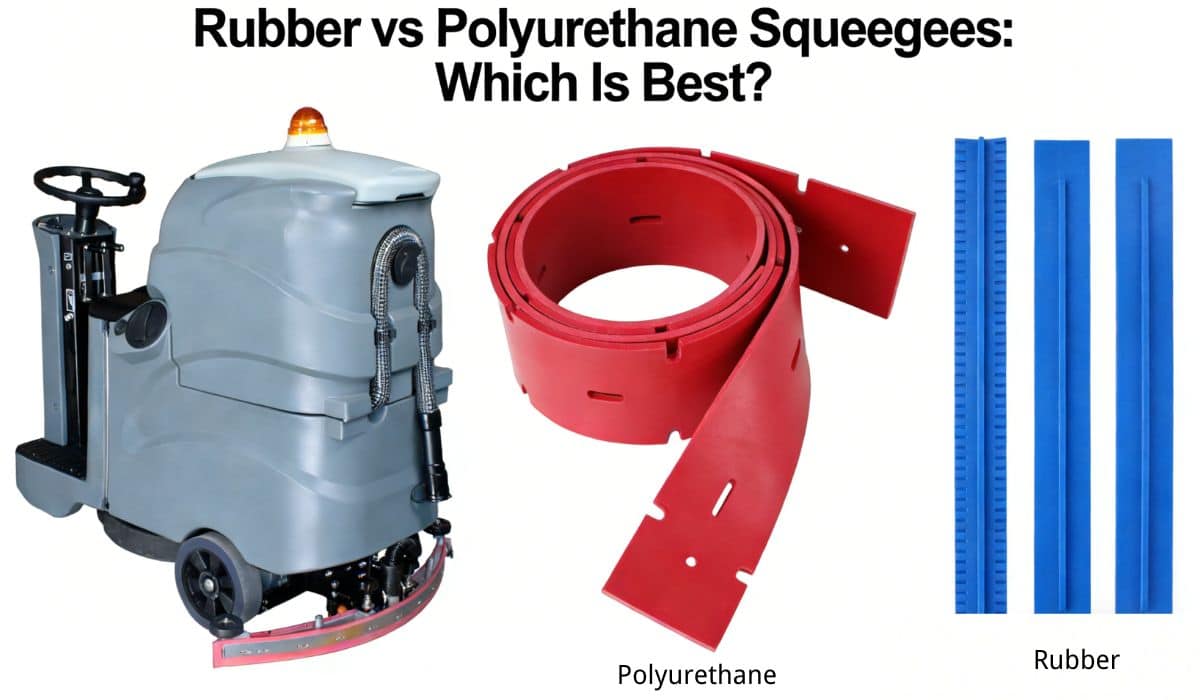
Choosing the right floor scrubber squeegee type is crucial for effective floor cleaning. In this guide, we’ll explore the strengths and weaknesses of rubber and polyurethane squeegees. By understanding these options, you’ll be able to pick the ideal squeegee for your specific needs. Let’s dive in and find the best fit for your cleaning tasks.
Looking for durable, high-performance floor scrubber squeegees? Leadv offers premium polyurethane squeegees designed to extend your machine’s life and protect surfaces from damage. Buy directly from the manufacturer for the best pricing, with bulk discounts available for large orders.
Our squeegees are easy to install, customizable, and provide superior abrasion resistance, making them ideal for both commercial and industrial applications. Whether you need a squeegee for light maintenance or heavy-duty use, we have options to fit every need. Ready to upgrade? View our pricing or buy online today. If you need assistance, our expert team is here to help.
Understanding Floor Scrubber Squeegee Materials
When it comes to floor scrubber squeegees, the material you choose can significantly impact their performance and longevity. Different materials cater to unique operational needs, emphasizing versatility and effectiveness in various environments. Choosing the right material for retail spaces, warehouses, or high-traffic facilities ensures optimal liquid recovery and floor drying.
The main materials used for floor scrubber squeegees include rubber (often natural gum or Linatex) and polyurethane. Each of these materials has distinct characteristics that make it suitable for specific applications. These differences help you select the best squeegee, promoting efficient floor drying while minimizing damage to the flooring surface.
Here are the details on these materials.
Rubber Squeegee Blades
Rubber squeegee blades are favored for their flexibility and ability to create a tight seal on uneven surfaces during floor cleaning. These blades are made from a blend of natural rubber and styrene-butadiene rubber (SBR), enhancing their durability and performance. Rubber blades are particularly suitable for smooth, tiled floors and other environments where a perfect seal is important.
However, rubber blades do have some limitations. They do not resist chemicals or oils as effectively as polyurethane, which can cause them to swell or degrade prematurely. Additionally, using rubber blades on rough concrete may cause them to wear faster.
However, rubber squeegees excel on uneven surfaces by flexing into grout lines instead of skipping over them, thereby reducing water trails. The rubber squeegee edge is particularly effective in this regard.
Polyurethane Squeegee Blades
Polyurethane squeegee blades offer a balance of chemical resistance and durability, making them suitable for a variety of floor conditions. These blades are more durable than gum rubber but may not seal as tightly on extremely uneven floors as softer rubber. Polyurethane squeegees resist oil and harsh chemicals better than rubber alternatives, making them a preferred choice in industrial settings.
While polyurethane blades don’t flex as easily as soft gum rubber, they provide significant advantages in terms of longevity and resistance to abrasion. Though the most expensive, polyurethane squeegee blades offer unique benefits, such as preventing chemical degradation and maintaining their shape.
Investing in polyurethane blades can lead to long-term savings due to their longer lifespan and reduced need for frequent replacements.
Choosing the Right Thickness for Your Needs
Selecting the correct thickness for your floor scrubber squeegee is crucial for ensuring both performance and durability across various applications. The thickness of the squeegee affects its ability to wipe surfaces dry and withstand friction, which is a key factor in the longevity of the cleaning edge.
Different cleaning tasks require different squeegee thicknesses. For light-duty applications such as cleaning smooth retail floors, thinner squeegees are sufficient and prevent surface drag. Standard and commercial uses typically need a medium thickness for durability and effectiveness. Heavy-duty cleaning, on the other hand, demands the thickest squeegees to withstand rough concrete.
Let’s explore these needs in more detail.
Light Work Applications (Small Scrubbers, Compact Units)
Squeegees with a thickness of 1/8 inch are typically recommended for light-duty tasks. These squeegees are ideal for cleaning small retail spaces and hallways, where blade demands are lower. For effective water recovery in light work applications, selecting the appropriate squeegee thickness ensures efficiency and prevents excessive friction.
Standard and Commercial Use (Walk-Behinds, Ride-Ons)
For standard and commercial use, squeegees 3/16 to 1/4 inch thick provide an optimal balance of durability and performance. This thickness range strikes a balance between flexibility and durability for everyday commercial use, enhancing floor-drying effectiveness while ensuring the squeegee remains durable under typical commercial workloads.
Heavy-Duty Cleaning (For Industrial Facilities, Warehouses)
For heavy-duty cleaning, a thickness of 3/8 inch or more is recommended to ensure maximum strength and resilience against rough floors. Using a thicker squeegee provides enhanced durability, making it ideal for heavy-duty cleaning tasks where the blade must withstand abrasive debris and oils. These thicker blades are less likely to tear or deform under heavy drag, ensuring reliability during tough operations.
Ultimately, the correct squeegee thickness is vital for durability and effectiveness in heavy-duty tasks. Opting for a thicker cutting edge maximizes durability and effectiveness under tough conditions, making it perfect for heavy-duty cleaning.
Installation and Maintenance Tips
Proper installation and maintenance of floor scrubber squeegees are essential for their effective operation and longevity. Regularly inspecting squeegee blades for wear can prolong their lifespan and maintain optimal water recovery. Additionally, cleaning squeegee blades after each use helps prevent debris buildup and streaking.
Proper adjustment of the squeegee angle is crucial for maximizing efficiency and reducing wear on the blade edges. Flushing the vacuum hose and checking suction power annually ensures the proper functioning of the scrubber’s recovery system. Keeping the squeegee assembly clean and tight is also essential to prevent vacuum leaks.
Here’s a deeper look into the installation process and maintenance best practices.
Installation Process
Properly installing squeegee blades can greatly improve their effectiveness. Start by gathering the necessary tools, including wrenches or screwdrivers, depending on your assembly. Loosen the retaining knobs or clamps to remove the old blade from the squeegee tool.
For the new Leadv squeegee, align the slots on the blade with the pins on the assembly, ensuring the ribbed side is oriented correctly, then tighten the clamps.
Maintenance Best Practices
Regular maintenance is key to extending the lifespan of your floor scrubber squeegees. Rotating the squeegee to use all four edges helps prevent uneven wear and extend its lifespan. Regular inspections of the wiping edge ensure it remains sharp and effective against water and spills. Routinely cleaning the squeegee tool can prevent streak marks during operation.
Polyurethane squeegees reduce the need for frequent changes, minimizing downtime and maintenance costs. Signs that indicate blade wear include visible tears, rounded edges, or a significant reduction in water pickup. Flipping or replacing the squeegee when the edge becomes rounded is recommended to maintain cleaning efficiency.
Benefits of Polyurethane Squeegees
Polyurethane squeegees offer several benefits, making them a popular choice for various industrial and commercial applications, particularly in auto scrubbers, ride-on machines, and other cleaning equipment. Here are some key advantages:
- Durability and Longevity
Polyurethane squeegees are highly durable, providing longer wear life than traditional materials like gum rubber. They are designed to withstand harsh chemicals, oils, and rough surfaces, reducing the need for replacement and maintenance costs. - Oil Resistance
Unlike natural rubber, polyurethane resists swelling when exposed to oils, greases, and solvents. This makes polyurethane squeegees ideal for automotive shops or industrial kitchens where oils are frequently present. - Surface Protection
Polyurethane is tough yet flexible, ensuring that surfaces such as epoxy, polished concrete, and vinyl remain intact during use. This characteristic is particularly important for sensitive or high-value floors that require careful maintenance. - Chemical Resistance
Unlike rubber squeegees, polyurethane does not degrade or become brittle when exposed to harsh cleaning detergents, making it suitable for operations involving strong stripping agents or disinfectants. - Flexibility and Customization
Polyurethane squeegees can be customized for durometer (hardness), thickness, and profile to suit specific applications and equipment needs. This flexibility allows for optimized performance in various conditions, such as textured tiles or smooth concrete. - Impact Absorption
The material’s structure allows polyurethane squeegees to absorb minor impacts from floor joints, maintaining a constant seal. This also improves suction performance and lowers the risk of leaving water trails. - Efficiency in Liquid Recovery
Polyurethane edges effectively clear water, sludge, and chemical residue while maintaining consistent contact with the surface. They offer superior wiping capabilities compared to worn rubber edges without causing drag. - Ease of Installation and Replacement
These squeegees are often designed for easy installation, allowing for quick swaps and minimal downtime. Their dimensional stability ensures they fit perfectly into the squeegee assembly every time.
Comparing Cost and Performance
When choosing floor scrubber squeegees, it’s essential to balance cost and performance. Higher upfront costs for premium materials often result in lower long-term expenses due to reduced maintenance and replacement frequency.
Investing in high-quality squeegee materials can lead to fewer replacements, ultimately saving money over time. Durable polyurethane squeegees are commonly chosen for industrial settings because they offer a balance of performance and longevity.
Here’s a deeper comparison of initial investment, longevity, and performance metrics across different materials.
Initial Investment vs. Longevity
Understanding the materials used for floor squeegees, such as gum rubber and polyurethane, is crucial for comparing investment costs and longevity. While gum rubber squeegees are generally more affordable up front, they may lead to higher long-term costs due to their higher replacement frequency and sensitivity to chemicals.
In contrast, polyurethane squeegees, though initially priced higher, offer excellent longevity and chemical resistance, reducing overall costs.
Performance Metrics
Different squeegee materials have different wiping efficiencies, which affect their overall effectiveness in floor drying. Materials like premium polyurethane often outperform lower-quality rubber in chemical resistance and durability during cleaning.
Polyurethane squeegees are effective at resisting abrasion on rough floors, maintaining a sharp edge during operation, and preventing oil absorption, which can be a concern with rubber edges.
Environmental Impact of Squeegee Materials
The environmental impact of floor scrubber squeegees is an important consideration. Squeegees made from materials like rubber and polyurethane can often be recycled, but proper disposal methods should be followed to minimize environmental harm. Selecting eco-friendly squeegees can significantly reduce their ecological footprint and promote sustainable practices in facility maintenance.
Choosing squeegees made from durable materials that require less frequent replacement helps reduce waste generation over time. Making informed choices about squeegee materials can significantly contribute to environmental conservation efforts during your facility’s cleaning routine.
Common Issues and Troubleshooting
Even the best floor scrubber squeegees can encounter issues. Worn rubber edges, for instance, can leave streaks on sensitive surfaces and generate poor suction compared to fresh polyurethane. Regular inspections of squeegee components are vital for identifying potential issues before they affect cleaning quality. Ensuring compatibility with the specific machine’s assembly is also crucial for effective squeegee installation.
Matching squeegee material with floor types ensures optimal performance and minimizes water trails. Using a precise installation method ensures perfect alignment, enhancing water recovery performance.
Here are more details on common wear-and-tear issues and the importance of surface compatibility.
Wear and Tear
Floor scrubber squeegees typically wear down after consistent use, requiring replacement to maintain optimal performance. Regular checks of squeegee performance are crucial for determining when replacements are necessary.
Signs of blade wear include visible tears, waviness, or a significant reduction in floor dryness.
Surface Compatibility
Matching squeegee materials with floor surfaces ensures optimal performance and minimizes surface or blade damage. Ensuring compatibility with various floor textures is essential for effective liquid removal.
The right polyurethane squeegee for a specific surface type can improve efficiency and reduce maintenance costs, especially for rough industrial floors.
Table: Thickness, Width, and Length Options
| THICKNESS | WIDTH | LENGTH | PRICE (36″) | PRICE (48″) | PRICE (60″) | PRICE (72″) |
|---|---|---|---|---|---|---|
| 1/8″ | 2″ | Custom | $45.50 | $58.20 | $72.40 | $88.90 |
| 1/8″ | 3″ | Custom | $52.80 | $66.50 | $84.20 | $98.40 |
| 3/16″ | 2″ | Custom | $58.90 | $74.80 | $92.60 | $112.30 |
| 3/16″ | 3″ | Custom | $65.40 | $82.10 | $105.40 | $128.50 |
| 1/4″ | 3″ | Custom | $78.20 | $98.50 | $124.80 | $148.20 |
| 1/4″ | 4″ | Custom | $89.50 | $115.60 | $142.90 | $168.40 |
| 3/8″ | 3″ | Custom | $95.80 | $122.40 | $154.20 | $182.60 |
| 3/8″ | 4″ | Custom | $112.50 | $145.80 | $178.50 | $215.30 |
Upgrade Your Floor Scrubber Today—Explore Leadv’s Durable, High-Performance Squeegees!
Ready to upgrade your floor cleaning equipment? At Leadv, we offer high-quality polyurethane floor scrubber squeegees that are durable, chemically resistant, and protect surfaces. Whether you’re managing retail, commercial, or industrial cleaning tasks, our customizable squeegees provide superior performance in any environment. Order directly from us to enjoy the best prices, bulk discounts, and fast shipping. Need help finding the perfect fit? Contact our expert team today for advice and to get the right squeegee for your floor-cleaning needs.