







Streaky floors, machines that wear out early, and constant re-cleaning all cost you time and money. The frustrating part? Most of these problems trace back to a handful of operator errors that are completely avoidable. This guide is for facility managers, cleaning crew leads, and operators who want consistent, streak-free results and longer equipment life.
To use a commercial floor scrubber, clear loose debris, fill the solution tank with water and low-foam detergent, install the correct pad or brush, then clean in slow, overlapping passes starting from the far end of the room. For professional results, match settings to floor type and soil level, and empty both tanks after every use.
Here’s what you’ll learn:
- How to choose and size the right machine for your facility
- Safety and prep checklists you can run in minutes
- A pad and brush selection matrix by floor type and soil level
- Proven scrubbing technique, including the double scrub method
- Scenario-specific settings for warehouses, hospitals, kitchens, and more
- A tiered maintenance schedule and a fast troubleshooting table
How Does a Commercial Floor Scrubber Work?
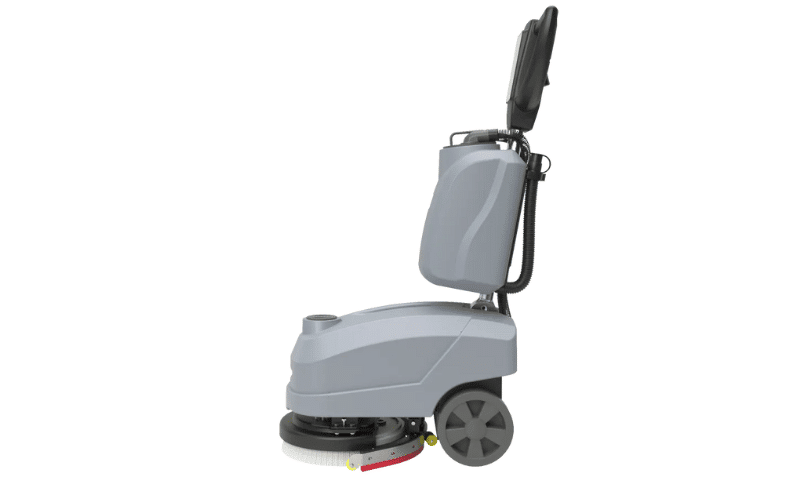
A commercial floor scrubber cleans and dries the floor in a single pass. The machine dispenses a controlled mix of water and detergent, rotates brushes or pads to loosen dirt, and then a rear squeegee pulls the dirty water into a recovery tank.
The payoff is a floor that’s scrubbed clean and largely dry as you move — no mop bucket, no standing water, and far less labor than traditional mopping.
Nearly every machine uses two separate tanks: a solution tank for clean water and detergent, and a recovery tank for the dirty water you pick up. Keeping both clean and properly managed is the foundation of good performance.
Choosing the Right Commercial Floor Scrubber for Your Facility
Before technique matters, the machine has to fit the job. Three decisions do most of the heavy lifting.
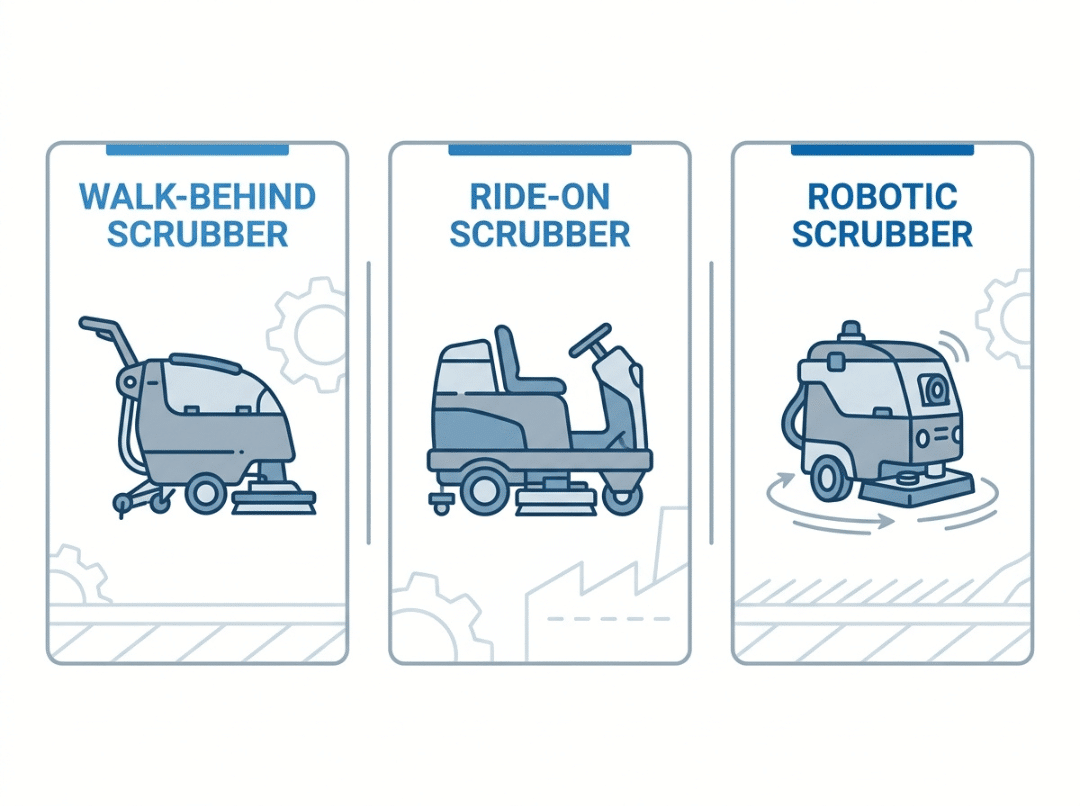
Walk-Behind vs. Ride-On vs. Robotic Scrubbers
The walk-behind vs. ride-on scrubber question usually comes down to facility size and shift length.
- Walk-behind scrubbers suit small to medium spaces — offices, retail floors, schools, and healthcare corridors. They’re maneuverable, affordable, and handle tight turns well.
- Ride-on and stand-on scrubbers cover ground faster and reduce operator fatigue on long shifts. They’re the right call for warehouses, airports, and large floors above roughly 40,000 sq ft.
- Robotic scrubbers clean large, open areas with minimal supervision, often running overnight in shopping centers and logistics hubs.
Disc vs. Cylindrical vs. Orbital Scrub Decks
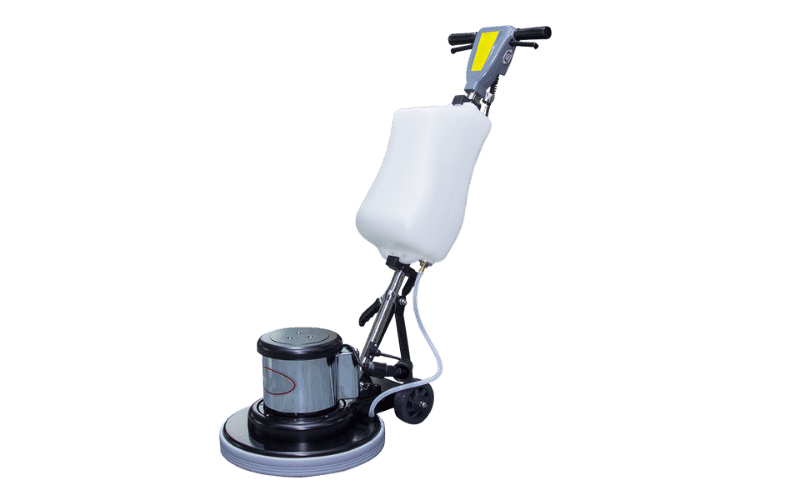
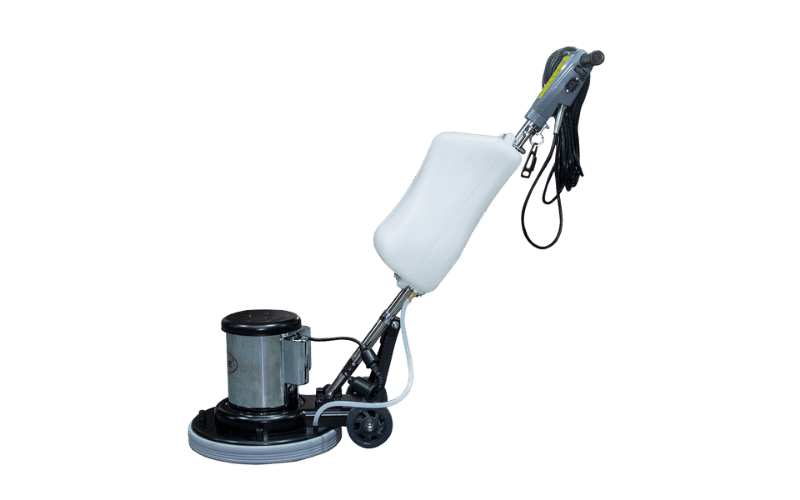
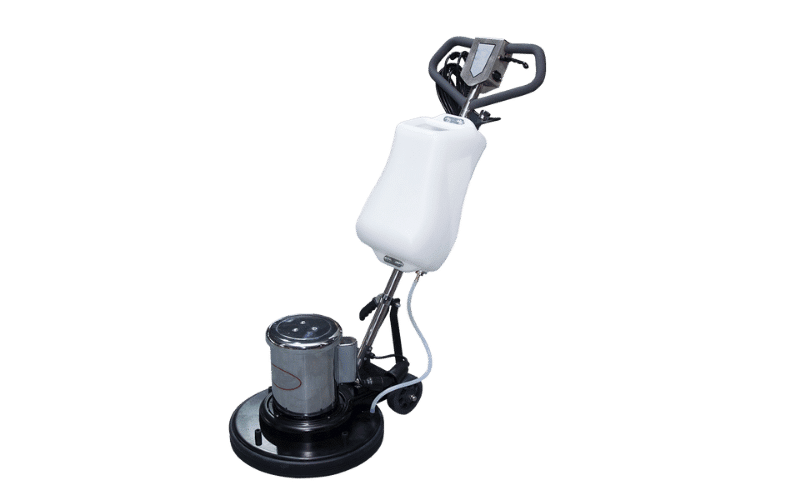
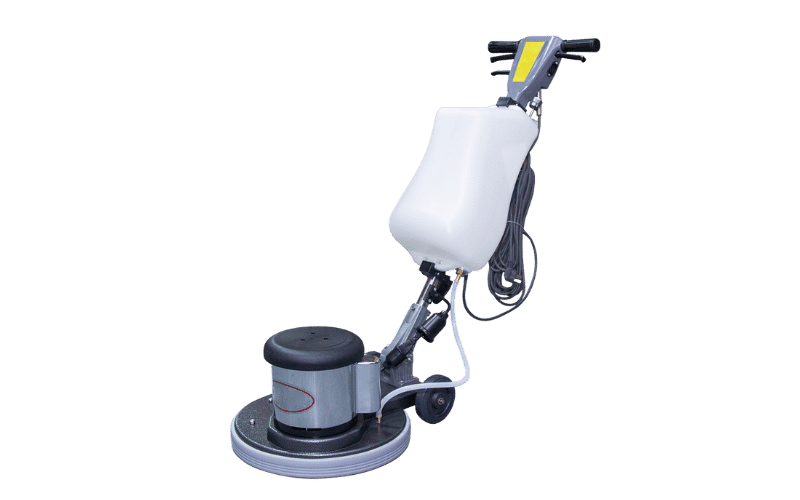
- Disc (pad) decks apply firm, even pressure on flat surfaces like VCT, sealed concrete, and terrazzo. They’re cheap to maintain and let you swap pad types quickly, but they can’t sweep — clear debris first.
- Cylindrical decks sweep and scrub at the same time, which makes them ideal for textured or grouted surfaces. Maintenance runs higher, but you save a sweeping step.
- Orbital scrubbers use high-speed orbital motion to lift tough grime while using less water. Their compact build works well in tight spaces.
Battery vs. Corded
Battery machines dominate commercial settings because they move freely and eliminate cord hazards. Corded models can work for small fixed areas, but they limit range and create trip risks. For most facilities, battery is the practical choice — just charge fully before each shift.
Quick Sizing Guide by Square Footage
Size up when your budget allows. Wider cleaning paths cut labor time dramatically.
|
Facility Size |
Recommended Cleaning Path |
Machine Class |
|---|---|---|
|
Under 10,000 sq ft |
13″–17″ |
Micro / compact walk-behind |
|
10,000–20,000 sq ft |
17″–20″ |
Standard walk-behind |
|
20,000–40,000 sq ft |
20″–24″ |
Walk-behind with traction drive |
|
40,000–80,000 sq ft |
24″–28″ |
Stand-on or small ride-on |
|
Above 80,000 sq ft |
26″–36″ |
Ride-on |
Right-size the machine first. A larger path saves hours every week.
Safety Pre-Checks Before You Start
Skipping pre-operation checks is one of the fastest ways to damage equipment or cause an accident. Run this list before every session.
Pre-Operation Safety Checklist
- Clear loose debris by sweeping or vacuuming first
- Post wet floor warning signs around the work area
- Inspect the machine — wheels, hoses, squeegee, brush or pad
- Confirm the battery is charged (or the cord is secure)
- Disconnect the charger from the wall and stow the cord
- Verify the emergency stop works and know where it is
- Wear non-slip footwear
Site Awareness in Occupied Facilities
If people are around, plan your route to keep bystanders clear of the cleaning path. Schedule heavy jobs during low-traffic windows, and keep signage visible until the floor is fully dry. Battery scrubbers produce no exhaust, so they’re safe indoors in occupied buildings.
Preparing the Cleaning Solution and Equipment
Filling the Solution Tank Correctly
With the machine off and the charger disconnected, fill the solution tank with water and a low-foam detergent. Always follow the manufacturer’s dilution ratio for your floor type. Too concentrated leaves residue; too diluted drops cleaning power.
Avoid high-foam or household cleaners. Excess foam blocks the vacuum system, cuts water pickup, and leaves a soapy film behind.
|
Soil Level |
Dilution Guidance |
|---|---|
|
Light / maintenance |
Weakest recommended ratio on the label |
|
Medium |
Mid-range ratio |
|
Heavy / built-up |
Strongest recommended ratio (never exceed label max) |
Inspecting and Installing Pads, Brushes, and the Squeegee
Before you attach anything, check each part:
- Squeegee blades: Look for nicks, tears, or uneven wear. A damaged squeegee is the leading cause of streaking, so replace blades before they fail.
- Brushes or pads: Check for uneven wear or embedded grit. Rotate pads to use both sides and extend their life.
- Assembly: Attach the squeegee securely and adjust the tilt for full floor contact, then install the brush deck or pad driver per your machine’s instructions.
Prep quality decides finish quality. Most streaks start right here.
Which Pad or Brush Should You Use?
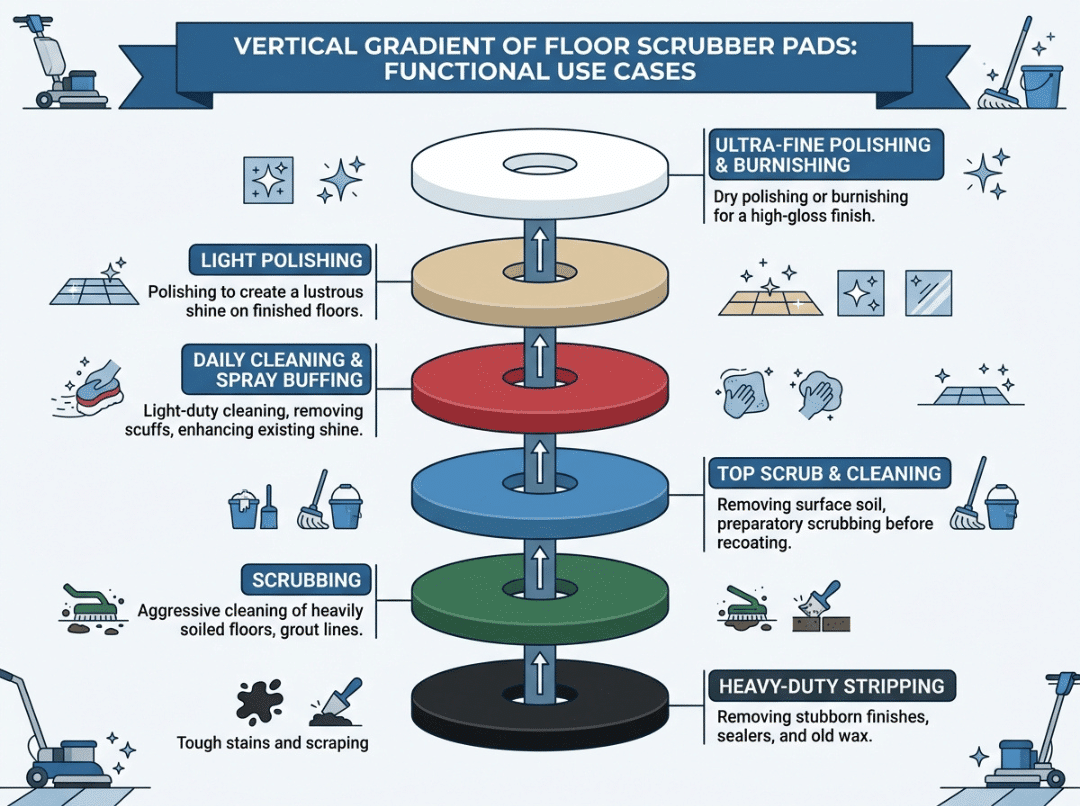
For disc machines, pad choice sets your cleaning intensity. The core rule: dark pads cut, light pads polish.
Pad Color Chart by Task
|
Pad Color |
Use Case |
|---|---|
|
Black / Brown / Purple |
Aggressive stripping of old finish |
|
Green |
Heavy-duty scrubbing and light stripping |
|
Blue |
Medium-soil scrubbing |
|
Red |
Routine cleaning, light soil, spray buffing |
|
Tan / Beige |
Polishing hard finishes |
|
White / Pink |
Delicate polishing on sensitive surfaces |
Good floor scrubber pad selection also depends on the floor itself. Use the matrix below to match the pad to both surface and soil level.
Pad/Brush Selection by Floor Type and Soil Level
|
Floor Type |
Light Soil |
Medium Soil |
Heavy Soil |
Watch Out |
|---|---|---|---|---|
|
VCT (waxed/finished) |
Red pad |
Red pad |
Blue pad |
Never use black/green pads — they strip the finish |
|
Sealed concrete |
Red pad |
Blue pad |
Green pad |
High pressure can dull the seal over time |
|
Epoxy-coated |
Red pad |
Blue pad |
Blue pad |
Avoid aggressive pads that scratch the coating |
|
Terrazzo |
White/red pad |
Red pad |
Blue pad |
Use a diamond pad for polishing/restoration |
|
Ceramic/grouted tile |
Cylindrical soft brush |
Cylindrical medium brush |
Cylindrical stiff brush |
Cylindrical deck scrubs grout lines better than pads |
Match the pad to the task, not to whatever is closest at hand. Black pads on waxed VCT strip the finish entirely, while a red pad on heavily soiled concrete barely makes a dent.
How to Operate a Floor Scrubber for Professional Results
Adjusting Brush Pressure, Water Flow, and Speed
Dial in your settings before you start moving.
|
Soil Level |
Brush Pressure |
Water Flow |
Travel Speed |
|---|---|---|---|
|
Light |
Low |
Low |
Moderate |
|
Medium |
Medium |
Medium |
Moderate |
|
Heavy |
High |
High |
Slow |
Higher brush pressure improves agitation but drains battery faster and wears pads sooner, so don’t max it out by default.
Step-by-Step Scrubbing Technique
- Start at the farthest point from the exit and work toward it, so you never drive over cleaned floor.
- Lower the brush deck and squeegee using the machine controls.
- Activate cleaning mode and begin moving in a straight line.
- Overlap each pass by 2–3 inches to avoid dry strips between paths.
- Hold a steady, controlled pace. Moving too fast cuts dwell time and cleaning power.
- Monitor the solution tank so you never run the brushes dry.
- Check the recovery tank periodically — an overfull tank kills suction.
The Double Scrub Method for Heavy Soil
For grease, compacted dirt, or heavy traffic residue, the double scrub method delivers a deeper clean:
- First pass: Lower the brush deck but keep the squeegee raised. This lays down solution and agitates the soil while giving the detergent time to work.
- Second pass: Lower both the deck and squeegee to scrub and recover the loosened soil.
This approach shines in commercial kitchens, loading docks, and anywhere dirt has built up.
How Fast Should You Walk Behind a Scrubber?
Slower than most operators think. A simple rule of thumb: if water is still visible in the squeegee’s wake, you’re moving at about the right speed. If the floor looks dry too quickly, slow down — you’re outrunning the cleaning action.
Takeaway: Slow, overlapping passes with the right settings beat speed every time.
Scenario-Based Operation Guidance
The “right” setup shifts with the environment. Here’s how to adapt.
Warehouses and Distribution Centers
Large open runs favor ride-on machines with wide decks. Pre-sweep for pallet debris and dust, use sealed-concrete-friendly settings, and run straight, long passes to maximize coverage per battery cycle.
Hospitals and Healthcare Corridors
Prioritize quiet operation and fast drying to keep corridors safe and open. Use a compact or micro walk-behind for tight rooms, keep bystanders clear, and follow facility disinfection protocols with an approved low-foam detergent.
Commercial Kitchens
Grease is the enemy here. Use the double scrub method with a degreasing low-foam detergent and a cylindrical deck to reach textured, non-slip tile. Rinse tanks thoroughly afterward to prevent grease buildup and odor.
Retail and Supermarkets
Overnight or robotic runs keep sales floors clear during hours. Prioritize fast drying so you can reopen quickly, and use a red pad for routine maintenance to protect a high-gloss finish.
Schools and Educational Facilities
Schedule around class hours and keep students clear of wet zones. VCT is common, so stick to red or blue pads and avoid aggressive pressure that strips the finish.
Quick Scenario Reference
|
Facility |
Machine |
Pad / Brush |
Method |
Key Priority |
|---|---|---|---|---|
|
Warehouse |
Ride-on |
Green/blue pad |
Single |
Coverage speed |
|
Hospital |
Compact walk-behind |
Red pad |
Single |
Quiet, fast drying |
|
Kitchen |
Walk-behind, cylindrical |
Stiff brush |
Double |
Grease removal |
|
Retail |
Robotic / ride-on |
Red pad |
Single |
Fast reopen |
|
School |
Walk-behind |
Red/blue pad |
Single |
VCT protection |
Common Floor Scrubber Mistakes to Avoid
Even seasoned operators slip into these habits. Each has a quick fix.
- Not sweeping first → Clogs the machine and scratches the floor. Always pre-sweep.
- Using high-foam detergent → Kills suction. Switch to a low-foam formula made for scrubbers.
- Moving too fast → Sacrifices cleaning contact. Slow down in soiled areas.
- Ignoring the recovery tank → A full tank stops pickup. Check it mid-job.
- Running the solution tank dry → Wears brushes fast. Watch the level.
- Skipping squeegee inspection → The number-one cause of a floor scrubber leaving streaks. Inspect after every use.
- Leaving dirty water in the recovery tank → Breeds odor and corrosion. Empty it every time.
- Storing without charging → Leaves you short next shift. Plug in after use.
Top Mistakes New Operators Make
When training a new crew member, flag these five first:
- Moving too fast
- Failing to overlap passes
- Choosing the wrong pad
- Ignoring squeegee wear
- Letting the recovery tank overfill
Post-Use Maintenance Schedule
Consistent care extends machine life. A well-maintained scrubber typically lasts around 7 years — and up to 10 with disciplined upkeep. Good floor scrubber maintenance follows a tiered rhythm.
After Every Use (Daily)
- Empty and rinse the recovery tank
- Clean and inspect the squeegee blades
- Rinse pads and rotate to even wear
- Leave the recovery tank door open to air dry
- Plug in the charger for the next shift
Weekly
- Inspect and rotate or replace squeegee blades
- Clean the vacuum hose and check for blockages
- Check brush and pad wear
- Wipe down the exterior and hose connections
Monthly
- Check battery health and clean terminals
- Inspect seals and hoses for cracks
- Deep-clean both tanks
- Review overall machine condition
Maintenance Schedule at a Glance
|
Task |
Frequency |
Why It Matters |
|---|---|---|
|
Empty/rinse recovery tank |
Daily |
Prevents odor and corrosion |
|
Inspect squeegee blades |
Daily |
Stops streaking early |
|
Clean vacuum hose |
Weekly |
Maintains suction |
|
Rotate/replace pads |
Weekly |
Even wear, better results |
|
Clean battery terminals |
Monthly |
Protects runtime and lifespan |
|
Deep-clean tanks |
Monthly |
Prevents buildup and bacteria |
Floor Scrubber Troubleshooting Guide
Work through symptoms in order — most problems have a simple fix.
|
Symptom |
Likely Cause |
Fix |
|---|---|---|
|
Leaving streaks |
Worn or dirty squeegee blade; moving too fast |
Clean or replace the blade; check tilt; slow down |
|
Not picking up water |
Damaged blade, full recovery tank, hose blockage, vacuum motor fault |
Check in that order — most fixes are the blade or tank |
|
Poor cleaning results |
Pad too light; wrong dilution; low pressure |
Match pad to soil; correct dilution; raise pressure |
|
Short battery runtime |
Not fully charged; pressure too high; aging battery |
Charge fully; lower pressure; replace old batteries |
|
Foaming / soapy film |
High-foam or household detergent |
Switch to low-foam; flush the solution tank |
|
Odor from tank |
Dirty water left standing |
Empty and rinse; air-dry with the door open |
Frequently Asked Questions
Can you use a floor scrubber without sweeping first?
No. Floor scrubbers aren’t built to handle loose debris. Skipping the sweep clogs the machine, scratches the floor, and shortens brush life. Always sweep or vacuum first.
What’s the best pad for concrete floors?
For routine cleaning on sealed concrete, a red pad works well. Step up to a blue pad for medium soil and a green pad for heavy soil. Avoid overly aggressive pads that can dull the sealer.
Should you double scrub greasy floors?
Yes. Greasy floors — especially in kitchens — respond well to the double scrub method. The first pass lays down solution and lets the detergent dwell, and the second pass scrubs and recovers the loosened grease.
How often should squeegee blades be replaced?
Inspect blades after every use and rotate them regularly. Replace them when you see consistent streaking that cleaning doesn’t fix, visible tears or cracks, or a blade that no longer makes full floor contact.
What speed gives the best cleaning results?
Move slowly enough that a thin film of water stays visible in the squeegee’s wake. If the floor dries almost instantly behind you, you’re moving too fast and losing cleaning contact.
How long does it take to clean 10,000 sq ft?
A walk-behind with a 20″ path covers roughly 10,000–15,000 sq ft per hour in normal conditions. Ride-on models with wider decks reach 20,000–40,000 sq ft per hour. Heavy soil or double scrubbing lowers those numbers.
Can a floor scrubber be used on all floor types?
Most work on hard surfaces like VCT, polished concrete, sealed hardwood, ceramic tile, terrazzo, and epoxy. Natural stone may need a diamond pad. Floor scrubbers are not suitable for carpet.
What’s the difference between a floor scrubber and a buffer?
A buffer (or burnisher) polishes a floor’s finish at high speed without dispensing water. A scrubber uses water, detergent, and rotating pads or brushes to actively clean and remove embedded dirt. They’re used at different stages of a floor care program.
Get Professional Results Every Time
The formula is simple: the right machine, correct settings for your floor and soil level, and consistent maintenance. Nail those three and you’ll get professional, streak-free results while your equipment lasts years longer.
Here’s a good next step — download our free operator and maintenance checklist so your whole crew follows the same routine on every shift. If you’d rather get a machine matched to your building, request a facility-specific recommendation and we’ll help you size the right scrubber for your floors, layout, and traffic.