







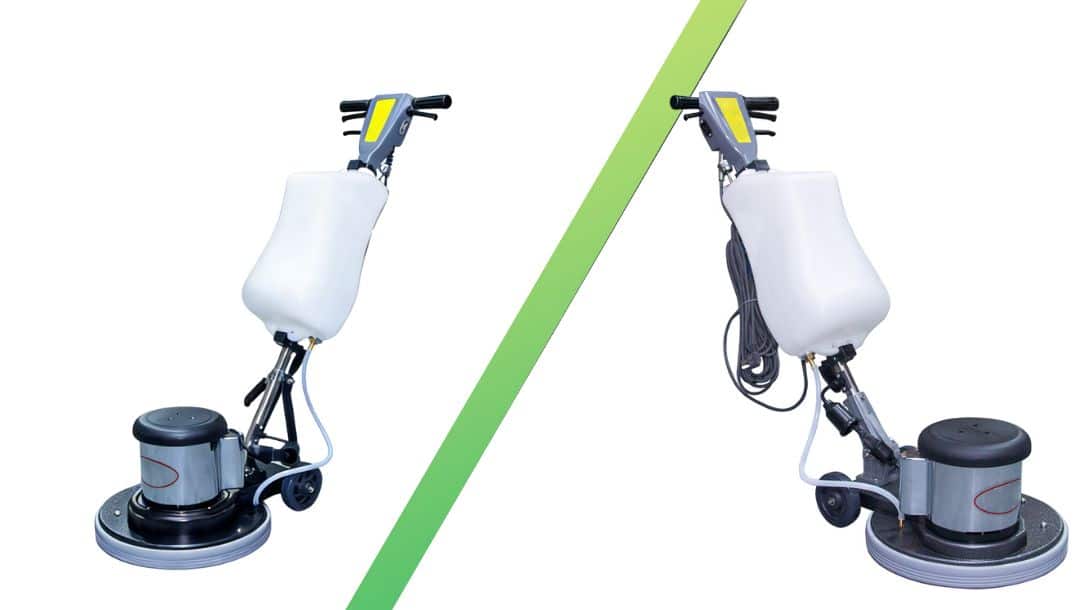
Know the difference between buffers and burnishers to better inform your choice for professional floor care.
The move toward more efficient and effective floor maintenance gives facility managers lots of options, but makes selecting the best one for their needs a bit more complex. Where a cleaning professional may have once decided between a simple mop and a bucket, now there’s the added consideration of motors, pad speeds, and chemical compatibility.
Two such professional floor care machines—buffers and burnishers—share some appearance but are suited to very different uses and produce different results. Understanding the differences can help you make the choice that’s best for your floor maintenance program.
Buffers Explained
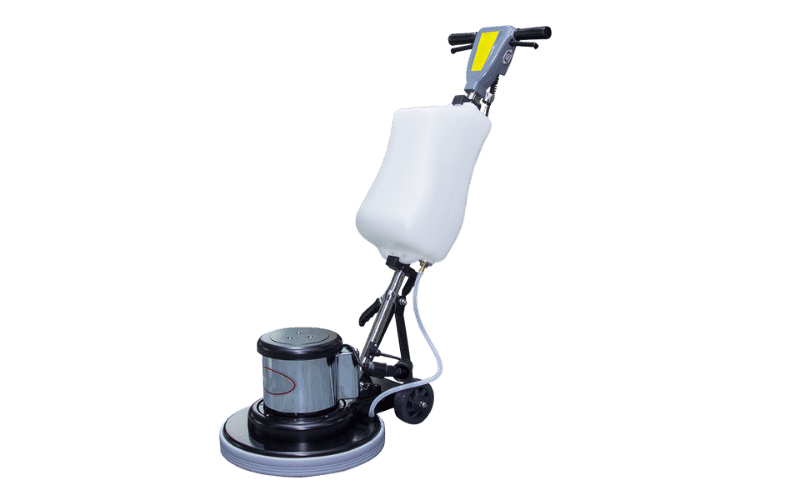
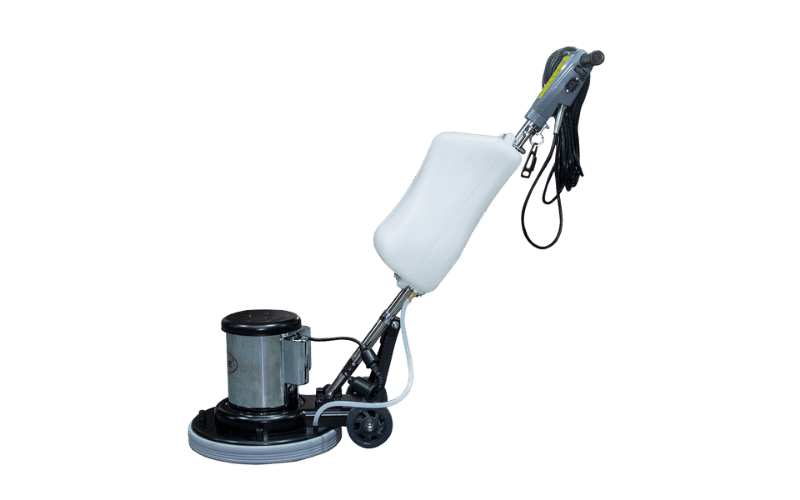
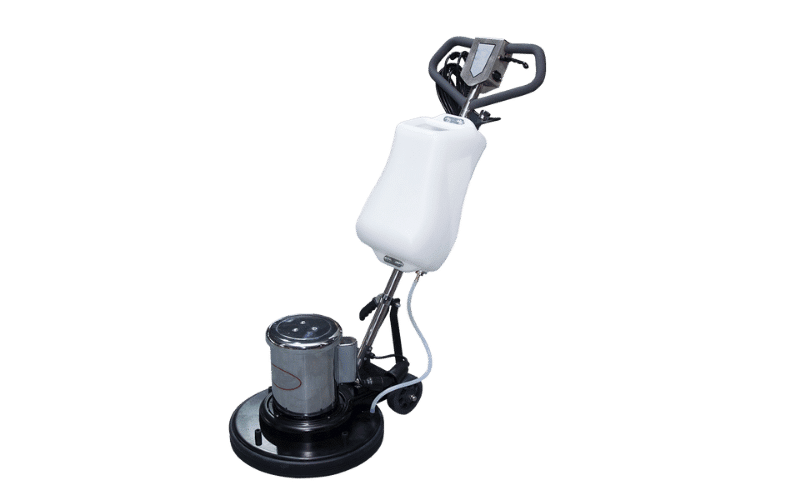
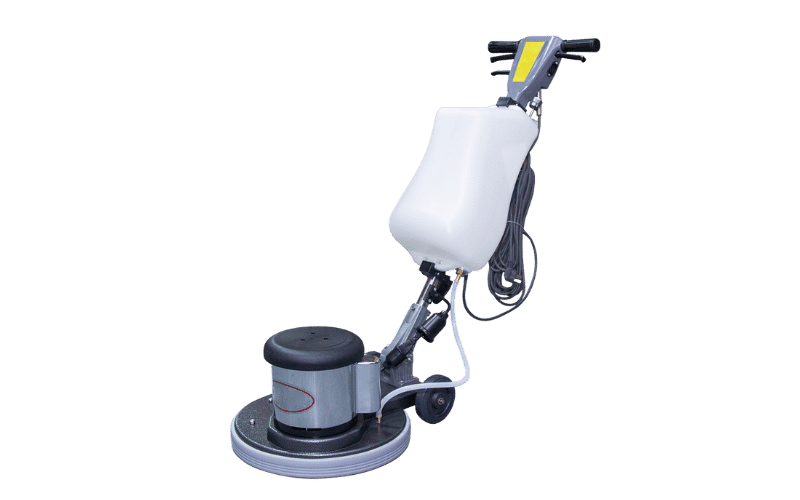
Buffers remain the traditional workhorse of floor care, offering versatility and reliability for a variety of essential tasks. Often referred to as swing machines or floor polishers, buffers are powered by a standard electrical outlet and feature a motor that rotates a pad at low speeds to treat floor surfaces. Their design and operation make them ideal for heavy-duty cleaning and restorative floor work.
A buffer is built for versatility, with its main components including a heavy-duty motor, a handle with operator controls, and a large, circular pad driver. Different types of pads can be mounted on the driver, allowing the machine to adapt to various tasks. The buffer’s weight is centered over the pad, ensuring consistent pressure during operation. This design allows buffers to handle tough jobs effectively by operating at slower speeds (175–400 RPM), preventing excessive heat and protecting the floor surface.
Buffers work by rotating the floor pad at low speeds while the operator guides the machine in a side-to-side swinging motion. This controlled movement ensures even coverage across the floor, while the combination of the pad’s abrasive texture, the chemical solution applied, and the machine’s weight effectively removes dirt, scuffs, and old finishes.
The primary use of buffers is stripping old wax and finish from floors, a critical step before recoating. Equipped with an aggressive stripping pad and chemical stripper, buffers can quickly dissolve and remove layers of worn-out finish. They are also used for deep scrubbing with less abrasive pads and general cleaning solutions, making them suitable for a variety of cleaning tasks. Additionally, buffers can perform spray buffing to remove scuffs and produce a low-gloss shine, making them an indispensable tool for restorative floor care.
Buffers are a foundational machine in floor maintenance, offering a balance of power, precision, and adaptability to meet the demands of both residential and commercial cleaning tasks.
Burnishers Explained
Burnishers are often regarded as specialists in floor care, designed to create a high-gloss, mirror-like finish. Unlike buffers, which are versatile machines for various tasks, burnishers focus solely on polishing floors to achieve a “wet look.” They use a high-speed motor to spin a soft pad, generating friction and heat that melt and harden the top layer of the floor finish into a durable, glossy surface.
A burnisher is built for high-speed performance, with key components including a powerful motor that operates at 1,500-2,500 RPM, a flexible pad driver, and a handle for operator guidance. Many models are equipped with dust-control systems to capture the fine powder generated during polishing. Designed to move in a straight line, burnishers often feature automatic or floating pad-pressure adjustments to ensure smooth operation and consistent results.
The high-speed operation of a burnisher generates significant friction and heat, which momentarily melts the top layer of the floor finish. This process smooths out microscopic scratches and hardens the surface, leaving behind a brilliant, glossy finish. Unlike buffers, which move side to side, burnishers operate in a forward-and-backward motion, similar to mowing a lawn. This straight-line movement ensures even polishing and a consistent shine across the floor.
Burnishers are used exclusively for polishing and are the final step in a comprehensive floor care program. After a floor has been stripped, sealed, finished, and cleaned, burnishing is performed to maintain its appearance. Depending on foot traffic levels, this maintenance task can be performed daily or weekly to keep floors looking their best. However, burnishers are not designed for stripping or scrubbing, as their high speed could damage both the pad and the floor surface.
By focusing on polishing, burnishers play a critical role in maintaining the aesthetic appeal and durability of hard floors, making them an essential tool for high-traffic commercial spaces and facilities.
Deciding Between a Buffer and a Burnisher
Choosing between a buffer and a burnisher depends on your floor care needs, budget, and desired floor appearance. Buffers are versatile machines designed for multiple deep-cleaning tasks, making them an excellent foundational tool for facilities that prioritize restorative maintenance. They are ideal for stripping, scrubbing, and light polishing, making them a practical choice for smaller facilities or those with limited budgets. If your floors do not require a high-gloss “wet look” finish, a buffer offers the flexibility and cost-effectiveness needed for essential maintenance.
On the other hand, burnishers are specialized machines designed to maintain a consistent, high-gloss shine. They are perfect for facilities where appearance is a top priority, such as high-end retail stores, corporate lobbies, hospitals, and supermarkets. Burnishers excel in restoring the “wet look” finish on floors that see heavy foot traffic, ensuring they remain polished and professional. However, burnishers are not designed for deep cleaning or stripping tasks; they are best used as part of a comprehensive floor care program that includes regular stripping and finishing.
For facilities focused on versatility and affordability, a buffer is the most practical choice. It is particularly suited for schools, small retail spaces, and offices that require periodic restorative work. Conversely, if maintaining a premium aesthetic is your primary goal, investing in a burnisher will ensure your floors always look their best. By understanding each machine’s strengths, you can select the one that best aligns with your maintenance goals and facility needs.