




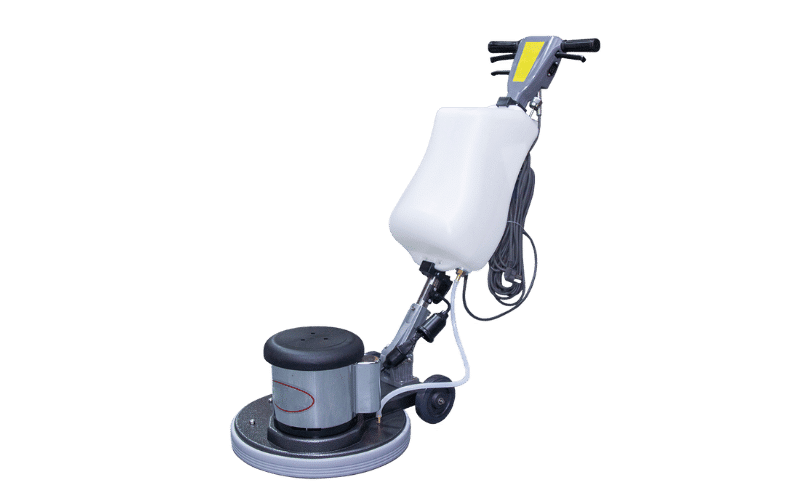
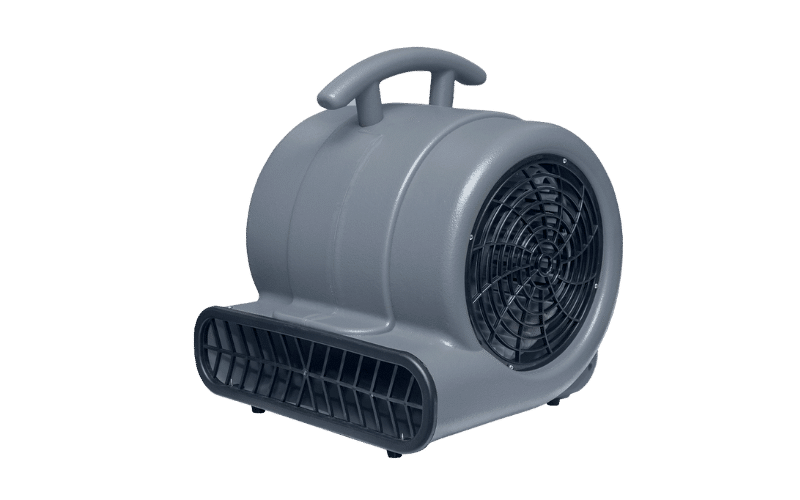


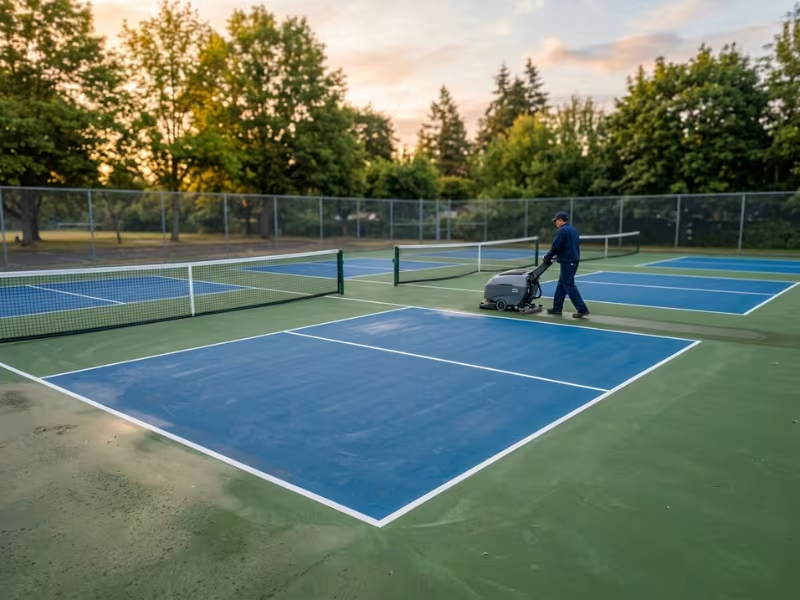
The best pickleball court cleaning equipment depends on facility size. Single courts do fine with a soft-bristle broom, a leaf blower, and a pH-neutral cleaner. Indoor facilities benefit from a commercial vacuum for fine dust control. Multi-court facilities get the most value from a walk-behind floor scrubber with soft-bristle brush heads, which covers a full court far faster than hand-scrubbing while protecting the acrylic coating.
Cleaning a single backyard pickleball court and maintaining a ten-court municipal complex are two entirely different jobs. One takes a broom and twenty minutes. The other takes a recurring schedule, dedicated labor hours, and equipment that can cover thousands of square meters without wearing down the acrylic coating in the process.
Picking the wrong tool for the job either wastes money on equipment a facility doesn’t need, or costs far more in labor hours than a facility manager budgeted for. A parks department running six outdoor courts doesn’t need the same setup as a club with two indoor courts and no algae problem to speak of.
This guide breaks down the full range of pickleball court cleaning equipment — from manual tools to commercial vacuums to walk-behind floor scrubbers — and explains which option fits which facility size. For the broader maintenance routine this equipment supports, our pickleball court maintenance guide covers cleaning frequency, seasonal care, and the mistakes that shorten a court’s lifespan.
What Equipment Do You Need to Clean a Pickleball Court?
Every pickleball court, regardless of size, needs equipment that handles three tasks: dry debris removal, wet cleaning, and rinsing. How that equipment scales depends almost entirely on how many courts a facility manages and whether they’re indoors or outdoors.
A single backyard court can get by with a broom, a hose, and a bottle of pH-neutral cleaner. A facility running six outdoor courts needs something that covers ground faster, since hand-scrubbing six courts on a weekly schedule becomes a full-time job rather than routine maintenance. Indoor facilities add a specific need that outdoor courts don’t face as often: fine dust that settles into corners without wind or rain to clear it.
The acrylic coating used on most dedicated pickleball courts is thin and sensitive to abrasive tools, no matter the facility size. That constraint shapes equipment selection as much as square footage does. A machine built for stripping concrete floors in a warehouse isn’t automatically safe for a pickleball court, even if it covers ground quickly.
Manual Tools: Brooms, Blowers, and Mops
For single courts and backyard setups, manual tools remain the most cost-effective option.
A soft-bristle push broom handles the first step of any cleaning routine: clearing leaves, dirt, and grit before any liquid touches the surface. Skipping this step risks scratching the coating once the court gets wet, since loose debris acts like sandpaper under a broom or scrubber.
Leaf blowers serve outdoor courts particularly well, especially in fall when leaf drop accelerates and daily sweeping becomes impractical. A cordless or gas-powered blower clears a court in minutes without the physical effort that broom work requires over a large surface.
Non-abrasive mops or soft squeegees handle wet cleaning and rinse removal on smaller courts. A squeegee pushes standing water toward drainage points after rinsing, which matters more than it sounds — leftover water accelerates algae growth and, in colder climates, worsens freeze-thaw cracking over winter.
These tools are sufficient for single courts with light to moderate use. The limitation shows up once a facility manages two or more courts on a recurring schedule: manual tools simply can’t cover that much ground without turning cleaning into a labor bottleneck.
What Commercial Vacuums Work Best for Indoor Pickleball Courts?
Indoor and covered courts face a cleaning challenge that outdoor courts don’t: fine dust and grit that settles into corners without wind or rain to disperse it. A broom moves this debris around rather than fully removing it, and leftover dust creates traction issues during fast lateral movements.
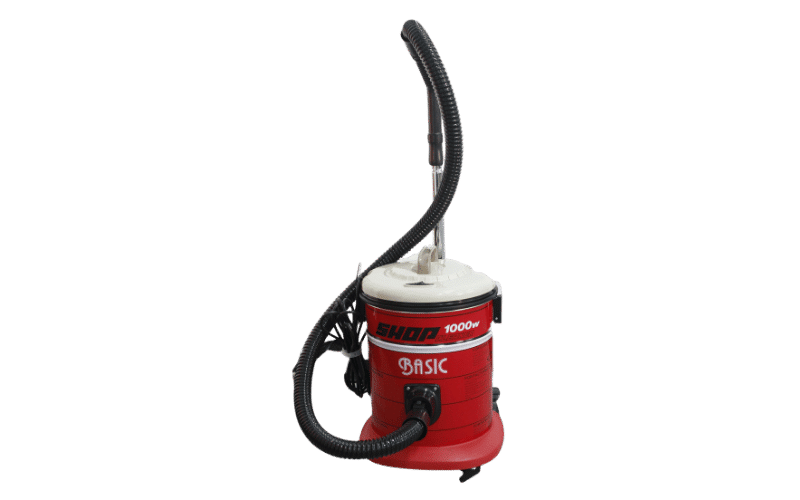
A commercial vacuum designed for hard flooring solves this more thoroughly. Two models illustrate the range available depending on facility layout:
The VC20 Heavy-Duty Commercial Canister Vacuum runs on a 1,000W motor and suits facilities that prefer a stationary or wheeled unit moved between courts. It’s a practical fit for smaller indoor facilities or clubs with one or two covered courts where a canister design doesn’t need to travel far between cleaning sessions.
The VC42B Lightweight Vacuum Backpack offers a different approach for larger or multi-court indoor facilities. Its 1,200W motor pairs with five-layer filtration and an ergonomic harness, which matters when staff are covering multiple courts in a single shift. A backpack design eliminates the need to drag a canister unit between courts, and the five-layer filtration keeps fine dust from recirculating into the air — a detail worth considering for any indoor facility where air quality affects player comfort during back-to-back sessions.

Choose a canister vacuum if a facility has one or two covered courts in a fixed layout. Choose a backpack model if staff need to move quickly between multiple courts without repositioning a wheeled unit each time.
Why Are Walk-Behind Floor Scrubbers the Best Choice for Larger Facilities?
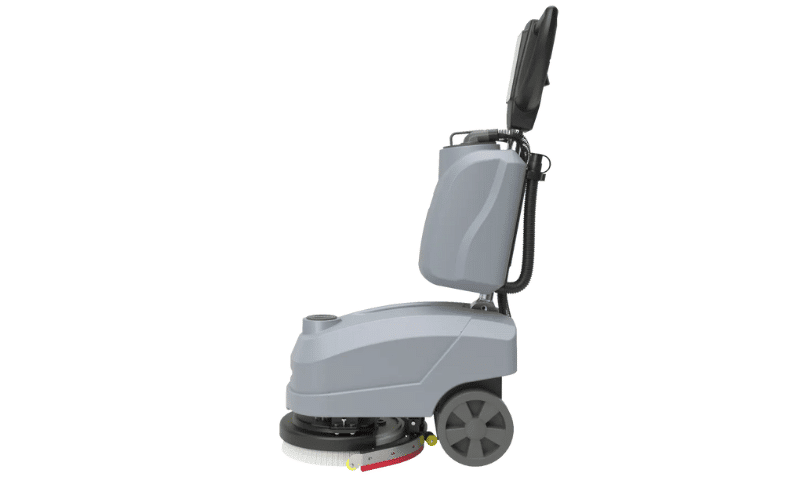
Hand-scrubbing works fine for one court. It stops working once a facility manages three or more courts on a recurring cleaning schedule, since the labor hours required scale directly with court count. A walk-behind floor scrubber fitted with soft-bristle brush heads solves this by covering a full court in a fraction of the time manual scrubbing takes, while applying consistent brush pressure across the entire surface.
That consistency matters as much as the speed. Uneven hand scrubbing is a common cause of patchy wear on high-traffic courts—press harder in one section, lighter in another, and the coating wears unevenly over months of repeated cleaning. A machine with adjustable, consistent brush pressure removes that variable entirely.
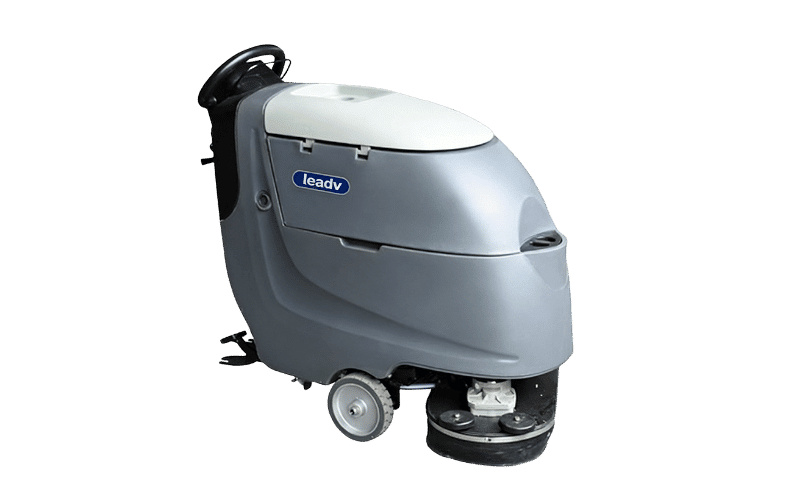
Two models from LeadV’s walk-behind scrubber range illustrate how capacity scales with facility size:
The WS60B26T is built with dual 13-inch brushes and a 60L recovery tank, delivering cleaning productivity of up to 2,600 m²/h. That throughput makes it a strong fit for parks departments and multi-court complexes running six or more courts on a weekly schedule, where covering ground quickly determines whether the cleaning crew finishes before courts reopen for play.
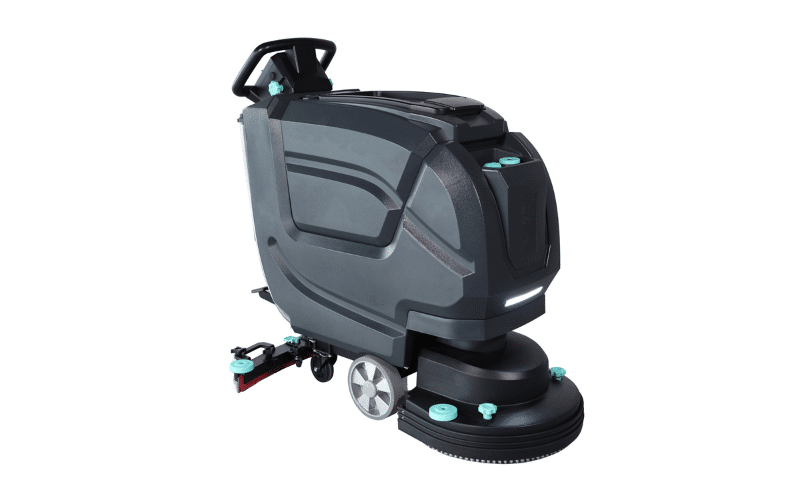
The LW60B20 offers a more compact footprint with a 500mm cleaning width and a 60L solution tank, suited to facilities managing two to four courts that don’t need the dual-brush throughput of a larger unit. Its smaller profile also maneuvers more easily around court perimeters and tight corners near fencing or seating areas.
Both models carry LeadV’s standard warranty terms: larger scrubber models like the WS60B26T come with coverage up to 2 years or 2,000 hours, whichever comes first, while smaller models like the LW60B20 carry up to 1 year or 2,000 hours. These units run as quietly as 60 dB(A), which matters for indoor facilities or courts near other active spaces where a loud machine would disrupt ongoing play.
Choose a walk-behind scrubber over manual tools if a facility is cleaning three or more courts weekly and labor hours have become the limiting factor. Choose the higher-capacity WS60B26T over the compact LW60B20 if the facility manages six or more courts and speed matters more than maneuverability in tight spaces.
Pickleball Court Cleaning Equipment Comparison Table
|
Equipment |
Best For |
Coverage Speed |
Surface Risk |
|---|---|---|---|
|
Soft-bristle broom |
Single backyard courts, light debris |
Slow (manual) |
Low |
|
Leaf blower |
Outdoor courts, dry debris removal |
Fast (dry only) |
Minimal |
|
Commercial canister vacuum (e.g., VC20) |
Indoor courts, fixed layout, 1–2 courts |
Moderate |
Minimal |
|
Vacuum backpack (e.g., VC42B) |
Indoor multi-court facilities, mobile cleaning |
Moderate–fast |
Minimal |
|
Compact walk-behind scrubber (e.g., LW60B20) |
2–4 courts, tighter spaces |
Fast (up to 2,000 m²/h) |
Low (with soft brushes) |
|
Dual-brush walk-behind scrubber (e.g., WS60B26T) |
5+ courts, recurring schedules |
Fast (up to 2,600 m²/h) |
Low (with soft brushes) |
|
High-PSI pressure washer |
Not recommended for routine cleaning |
Fast |
Severe |
High-PSI pressure washing appears in this table for a reason: it’s often the first tool facility managers consider, and the one most likely to cause lasting damage. Settings above 1,500–2,000 PSI can strip the acrylic coating and fade line paint, and routine cleaning is rarely worth that risk. For a full breakdown of when pressure washing is acceptable and when it isn’t, see our guide on whether you can pressure wash a pickleball court.
How Do You Choose the Right Cleaning Equipment by Facility Size?
Facility size is the single biggest factor in equipment selection, more than budget or indoor versus outdoor setup. Use the following as a starting point:
Single court (backyard or private): A soft-bristle broom, a garden hose with a low-pressure nozzle, and a pH-neutral cleaner cover nearly every cleaning need. A leaf blower adds convenience for outdoor courts with nearby trees.
2–4 courts (small clubs, community facilities): Manual tools start to strain available labor at this scale. A compact walk-behind scrubber like the LW60B20 reduces cleaning time significantly without the footprint or cost of a larger dual-brush unit. Indoor facilities in this range should add a canister vacuum for dust control between full washes.
5+ courts (parks departments, commercial multi-court complexes): A dual-brush walk-behind scrubber like the WS60B26T becomes the more practical investment, since its higher throughput keeps pace with a weekly or biweekly cleaning schedule across many courts. Indoor facilities at this scale typically benefit from a vacuum backpack like the VC42B, since staff can move between courts without repositioning a wheeled unit.
Indoor vs. outdoor: Indoor facilities should prioritize vacuum equipment for dust control regardless of court count, since indoor dust doesn’t clear on its own the way outdoor debris does with wind and rain. Outdoor facilities should prioritize debris-removal tools—blowers and brooms—as the first line of defense before wet cleaning even begins.
What Should You Look for When Buying Pickleball Court Cleaning Equipment?
A few specifications matter more than others when comparing equipment options for acrylic court surfaces.
Soft-bristle brush heads. Any scrubber used on a pickleball court needs brush heads designed for coated surfaces, not the stiffer brushes built for concrete or tile. Abrasive brushes scratch the coating and create rough patches that trap dirt and algae over time.
Adjustable brush pressure. Consistent, controllable pressure prevents uneven wear from inconsistent hand scrubbing. This is one of the clearest advantages a machine offers over manual cleaning on larger courts.
Tank capacity relative to court count. A 60L solution tank, found on both the WS60B26T and LW60B20, covers more ground between refills than smaller units, which matters when a crew is cleaning multiple courts in a single session without stopping to refill.
Warranty terms. LeadV’s larger scrubber models carry coverage for up to 2 years or 2,000 hours, while smaller models carry up to 1 year or 2,000 hours, whichever comes first. For a facility making a multi-year equipment investment, warranty length is a reasonable proxy for how much daily use a machine is built to withstand.
Noise level. Noise levels as low as 60 dB(A) matter most for indoor facilities or courts near other active spaces, where a louder machine disrupts nearby play during cleaning hours.
Filtration quality for vacuums. Five-layer filtration, as found on the VC42B, keeps fine dust from recirculating into the air rather than just relocating it — a detail that affects indoor air quality more than vacuum specs typically get credit for.
Equip Your Courts for the Long Haul
The right pickleball court cleaning equipment isn’t about buying the most powerful machine available. It’s about matching equipment to facility size: a broom and blower for a backyard court, a vacuum for indoor dust control, and a walk-behind scrubber once court count turns hand-scrubbing into a labor problem.
Whatever equipment a facility chooses, the same principle holds across every size and setup: soft-bristle tools and pH-neutral products protect the acrylic coating, while stiff brushes and high-PSI pressure washing shorten its lifespan. For a complete maintenance picture beyond equipment selection, revisit our pickleball court maintenance guide or follow our step-by-step process for cleaning a court without damaging the surface. If you already use a pressure washer, our guide on pressure-washing risks and alternatives is worth a look before the next cleaning cycle.
Frequently Asked Questions
What equipment is best for cleaning a single backyard pickleball court?
A soft-bristled push broom, a garden hose with a low-pressure nozzle, and a diluted pH-neutral cleaner cover most routine cleaning needs for a single court. A leaf blower is a useful addition for outdoor courts near trees.
Do I need a walk-behind floor scrubber for a small facility?
Facilities with one or two courts typically don’t need a walk-behind scrubber, since manual tools cover the workload without a major time penalty. Facilities managing three or more courts on a recurring schedule generally see enough labor savings to justify the investment.
What’s the difference between the WS60B26T and LW60B20 walk-behind scrubbers?
The WS60B26T uses dual 13-inch brushes and cleans up to 2,600 m²/h, making it better suited to larger facilities with five or more courts. The LW60B20 offers a more compact 500mm cleaning width and suits facilities with two to four courts where maneuverability matters more than maximum throughput.
Can I use a regular shop vacuum instead of a commercial vacuum on an indoor court?
A standard shop vacuum can remove some debris, but commercial vacuums built for hard flooring, like the VC20 or VC42B, offer stronger suction and better filtration designed for repeated daily use across larger surfaces. Multi-layer filtration also reduces fine dust recirculating into indoor air, which matters more in enclosed facilities.
Is pressure washing included as recommended equipment for pickleball courts?
No. High-PSI pressure washing carries a serious risk of stripping the acrylic coating and fading line paint, so it’s not recommended for routine cleaning. It’s generally reserved for pre-resurfacing prep or cases where a coating manufacturer explicitly approves specific PSI settings.
How long do walk-behind floor scrubbers typically last?
LeadV’s larger scrubber models, such as the WS60B26T, carry a warranty of up to 2 years or 2,000 hours, while smaller models like the LW60B20 carry up to 1 year or 2,000 hours, whichever comes first. Actual service life often extends beyond the warranty period with regular maintenance and soft-bristle brush replacement.