







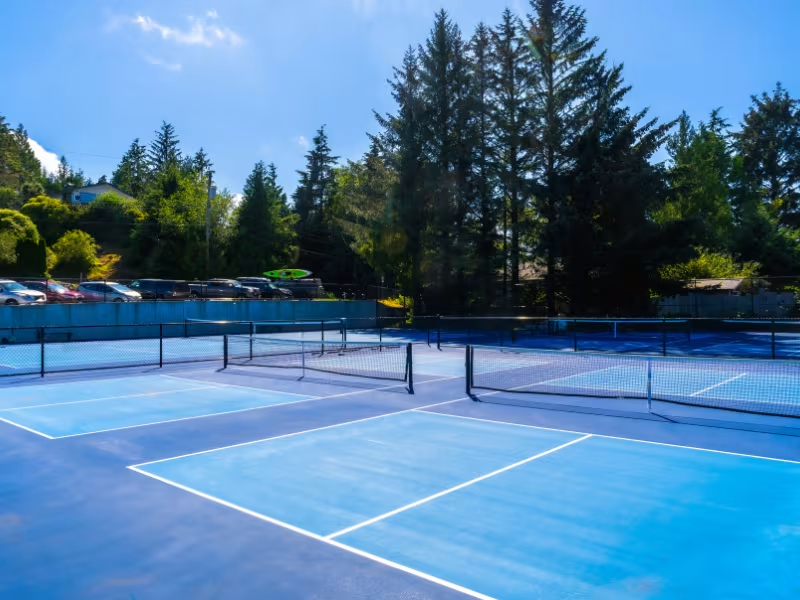
Yes, you can pressure wash a pickleball court, but it’s rarely the safest choice. High-PSI settings above 1,500–2,000 PSI can strip the acrylic coating, fade line paint, and force water into seams and cracks. Pressure washing is only recommended before resurfacing or when a coating manufacturer explicitly approves it. For routine cleaning, a soft-bristle scrub with a pH-neutral cleaner protects the surface far better.
A pressure washer feels like the obvious tool for a dirty outdoor court. It’s fast, it blasts away grime on contact, and most homeowners already have one sitting in the garage. But acrylic sport surfacing isn’t built like a driveway or a patio, and the same water pressure that strips algae off concrete can just as easily strip the coating that keeps a pickleball court playable.
This guide breaks down exactly why pressure washing poses a risk to acrylic courts, the narrow situations where it’s actually acceptable, a PSI risk reference you can use before touching the trigger, and the safer alternatives that most facility managers and court owners turn to instead. If you’re building out a full maintenance routine rather than troubleshooting a single cleaning decision, our pickleball court maintenance guide covers the bigger picture.
Why Pressure Washing Damages Pickleball Courts
Acrylic sport surfacing is engineered to be thin, textured, and UV-resistant — not to withstand concentrated blasts of high-pressure water. Understanding the coating’s structure makes it obvious why pressure washers cause more harm than good in most situations.
Acrylic Coatings Are Thin by Design
A pickleball court’s color and texture come from multiple thin acrylic layers applied over a concrete or asphalt base. Each layer is only as strong as its bond to the one beneath it. High-pressure water doesn’t just clean the surface — it can peel back these layers entirely, especially on courts that are already a few years into their lifecycle and have thinner coating remaining.
Water Gets Into Cracks and Seams
Even a court in good condition has seams, expansion joints, and the occasional hairline crack. Pressure washing forces water into these gaps at a volume and force that normal rain never would. Once trapped beneath the coating, that water can accelerate delamination and, in colder climates, worsen freeze-thaw cracking during winter months.
Uneven Wear and Streaking
Pressure washers clean unevenly by nature. Holding the nozzle a few inches closer in one spot, or lingering half a second longer, can strip more coating in that area than the rest of the court. The result is visible streaking or patchy color — a cosmetic problem that often signals deeper coating loss underneath.
Line Paint Damage
Painted lines are typically a thinner application than the surrounding playing surface, which makes them the first casualty of high-pressure cleaning. Faded or patchy lines don’t just look bad; they create legitimate disputes over boundary calls during play.
When Is Pressure Washing a Pickleball Court Acceptable?
Despite these risks, pressure washing isn’t universally off-limits. A handful of specific scenarios make it a reasonable, even useful, tool.
Before Resurfacing
If a court is already scheduled for a full resurfacing project, pressure washing can strip old, failing coating and prepare the base for new acrylic layers. In this context, aggressive cleaning isn’t a liability — it’s part of the prep work.
Severe Buildup on a Court Already Due for Resurfacing
A court with years of embedded algae, oxidation, or grime buildup that’s already nearing the end of its coating lifespan may tolerate pressure washing better than a newer surface, since there’s less intact coating left to lose. This is a judgment call best made alongside a surfacing contractor, not a default assumption.
When the Coating Manufacturer Approves It
Some acrylic coating manufacturers publish specific PSI and nozzle guidelines for their products. If documentation exists approving pressure washing at a defined pressure range, following those exact specifications is safer than guessing. Absent that documentation, it’s best to assume pressure washing carries real risk.
Pressure Washing PSI Risk Guide
PSI (pounds per square inch) is the single biggest variable in whether pressure washing helps or harms a pickleball court. The table below outlines general risk levels by pressure range, based on the acrylic coating guidance covered throughout this topic cluster.
|
PSI Range |
Risk Level |
Likely Outcome |
|---|---|---|
|
Under 1,000 PSI |
Low |
Generally considered safer, closer to a strong rinse than aggressive cleaning |
|
1,000–1,500 PSI |
Moderate |
Can be acceptable with a wide fan tip and distance, but still carries risk around seams and lines |
|
1,500–2,000 PSI |
High |
Threshold where coating damage and line fading become likely without manufacturer approval |
|
Above 2,000 PSI |
Severe |
Can strip acrylic coating layers and force water into cracks; not recommended for routine use |
These ranges aren’t a guarantee of safety at the lower end — nozzle type, distance from the surface, and the court’s existing condition all affect outcomes. Choose the lowest PSI setting that accomplishes the task if pressure washing is unavoidable, and favor a wide-angle nozzle held at a consistent distance over a narrow, concentrated stream.
Best Practices If You Must Pressure Wash
If circumstances genuinely call for pressure washing — pre-resurfacing prep, manufacturer approval, or a court beyond saving through gentler methods — a few precautions reduce the damage:
- Stay at or below 1,500 PSI unless a coating manufacturer specifies otherwise.
- Use a wide fan-spray nozzle, not a narrow jet or turbo nozzle, to distribute pressure across a broader area.
- Keep the nozzle moving at a consistent distance from the surface rather than holding it in one spot.
- Avoid direct spray on line paint and seams, since these areas are the most vulnerable to stripping.
- Test an inconspicuous section first to gauge how the coating responds before covering the full court.
- Allow full drying time afterward, just as you would with any wet cleaning method, before players return.
Safer Alternatives to Pressure Washing
For the vast majority of cleaning needs, a pressure washer isn’t necessary at all. These alternatives clean just as effectively without the coating risk.
Soft-Brush Scrubbing With pH-Neutral Cleaner
A soft-bristle brush paired with a diluted, pH-neutral cleaner lifts dirt, algae, and grime without reacting with the acrylic binder the way bleach or high-pressure water does. This remains the gold standard for routine pickleball court cleaning. For a full step-by-step breakdown of products, tools, and technique, see our companion guide on how to clean a pickleball court without damaging the surface.
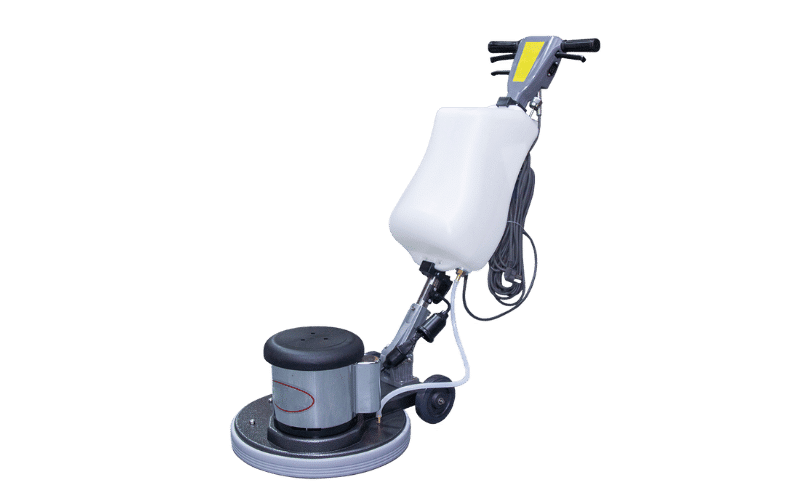
Walk-Behind Floor Scrubbers
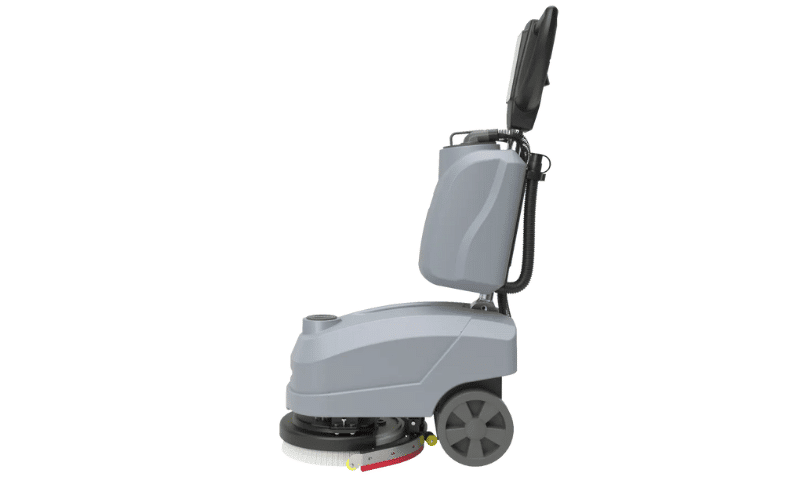
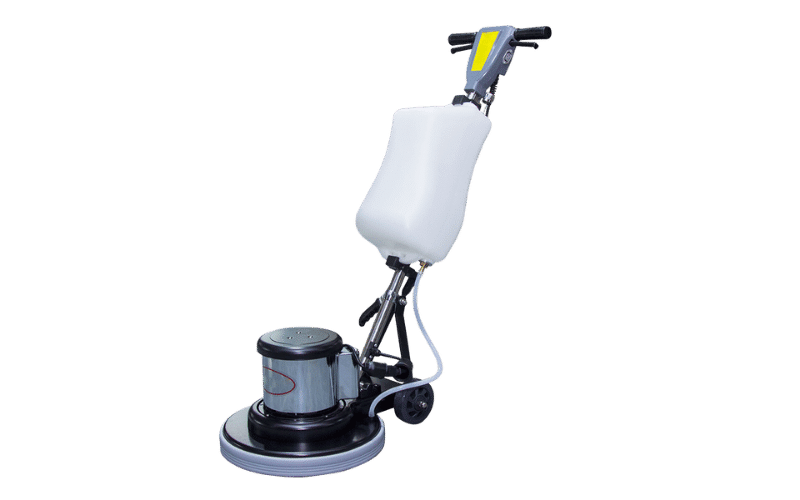
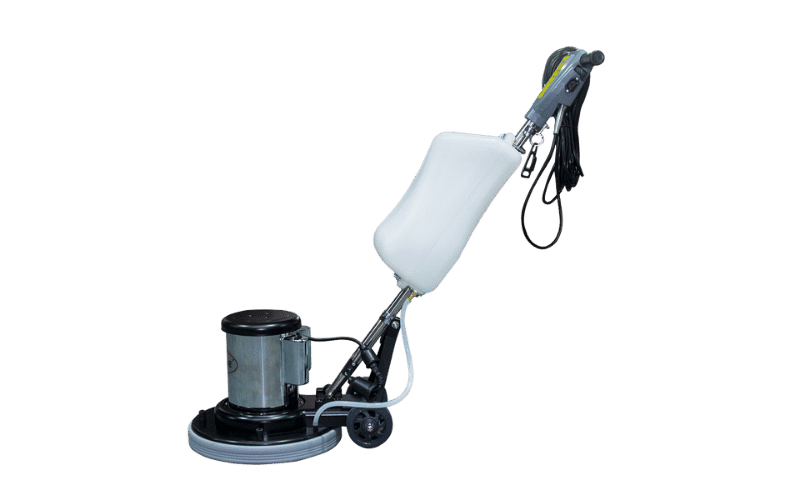
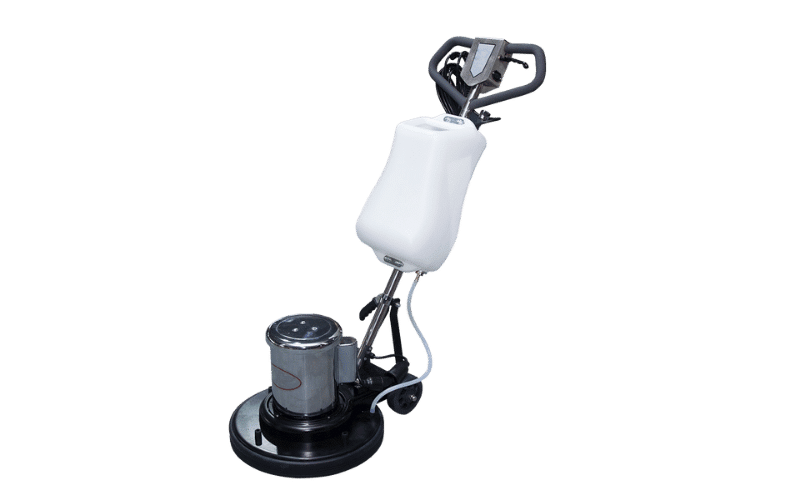
For facilities managing multiple courts, hand-scrubbing becomes a labor bottleneck fast. A walk-behind floor scrubber fitted with soft-bristle brush heads applies consistent, controlled pressure across an entire court in a fraction of the time manual scrubbing takes. Models like LeadV’s WS60B26T, built with dual 13-inch brushes and a 60L recovery tank, can clean up to 2,600 m²/h — a specification that scales naturally to parks departments and multi-court complexes running on a recurring cleaning schedule.
Blowers and Vacuums for Dry Debris
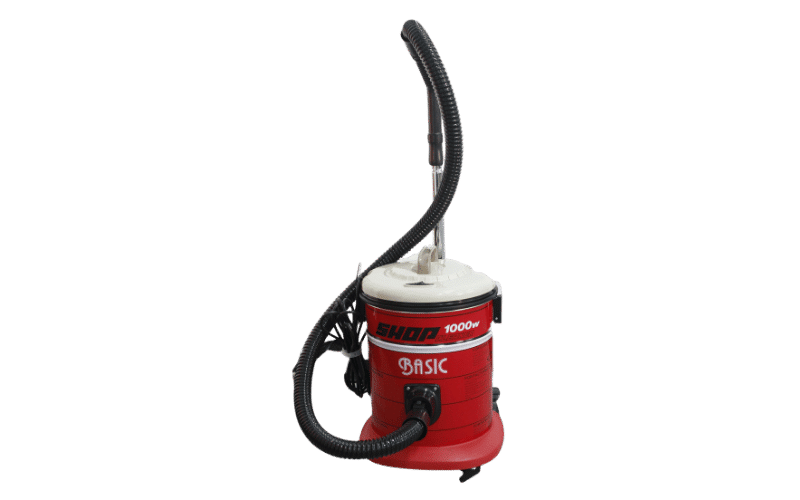
Not every cleaning step involves water. Leaves, dirt, and grit should come off the court before any liquid touches the surface, since loose debris can scratch the coating once it’s wet. Outdoor courts typically do well with a leaf blower, while indoor or covered courts benefit from a commercial vacuum designed for hard flooring, which pulls fine dust out of corners more thoroughly than a broom without introducing moisture beforehand.
Pressure Washing vs. Safer Alternatives Comparison
|
Method |
Coating Risk |
Best For |
Speed |
|---|---|---|---|
|
High-PSI pressure washer |
Severe |
Pre-resurfacing prep only |
Fast |
|
Soft-brush scrubbing (manual) |
Low |
Single or backyard courts |
Slow |
|
Walk-behind floor scrubber |
Low (with soft brushes) |
Multi-court facilities |
Fast |
|
Leaf blower / vacuum |
Minimal |
Dry debris removal |
Fast |
Signs Pressure Washing Has Already Damaged Your Court
If a pressure washer has already been used on your court, a few warning signs indicate the coating took real damage:
- Patchy or faded color, especially in streaks that follow the pattern of a spray nozzle
- A rougher or thinner-feeling texture compared to unaffected areas of the court
- Line paint that looks washed out or uneven compared to the rest of the markings
- Small cracks or bubbling in areas that were previously smooth
- Water pooling in new spots that didn’t collect water before, suggesting the surface profile has changed
Catching these signs early matters. A court showing early coating stress can sometimes be addressed with a touch-up coat, while one with widespread flaking or cracking may be looking at a full resurfacing timeline sooner than planned.
Protect the Coating, Skip the Shortcut
Pressure washing feels like the fastest route to a clean court, but speed comes at the cost of the acrylic coating in nearly every routine cleaning scenario. Reserve it for pre-resurfacing prep or cases with explicit manufacturer approval, and lean on soft-bristle scrubbing, pH-neutral cleaners, and the right equipment for everything else.
For the complete maintenance picture — cleaning frequency, seasonal care, and equipment selection — revisit our pickleball court maintenance guide. And if you’re comparing tools for a multi-court facility, our breakdown of the best equipment for pickleball court cleaning covers which scrubbers and vacuums fit which facility size.
Frequently Asked Questions
Can you pressure wash a pickleball court safely?
Pressure washing carries real risk to acrylic coatings, particularly above 1,500–2,000 PSI. It’s only considered safe practice before resurfacing, on courts already scheduled for a coating replacement, or when a coating manufacturer explicitly approves specific pressure settings.
What PSI is safe for cleaning a pickleball court?
Pressure under 1,000 PSI carries lower risk, while anything above 1,500–2,000 PSI significantly increases the chance of stripping the coating or fading line paint. Even at lower pressures, a wide fan nozzle and consistent distance from the surface matter as much as the PSI number itself.
What should I use instead of a pressure washer on a pickleball court?
A soft-bristle brush with a diluted, pH-neutral cleaner is the safest routine cleaning method. For larger facilities, a walk-behind floor scrubber with soft-bristle brush heads covers more ground without the coating risk a pressure washer introduces.
How do I know if pressure washing has damaged my court?
Look for patchy or streaked color, a rougher surface texture, faded line paint, small cracks, or new areas where water pools after rain. These signs typically indicate the acrylic coating has thinned or lifted in that section.
Will pressure washing void my court’s warranty?
Many acrylic coating manufacturers specify approved cleaning methods in their warranty documentation, and pressure washing outside those guidelines can void coverage. Check the original coating manufacturer’s documentation before pressure washing any court still under warranty.
Is it ever okay to pressure wash before resurfacing a court?
Yes. Pressure washing is commonly used to strip old, failing coating and prepare the base before new acrylic layers are applied. In this context, the aggressive cleaning that would damage an intact court becomes a useful part of surface prep.