



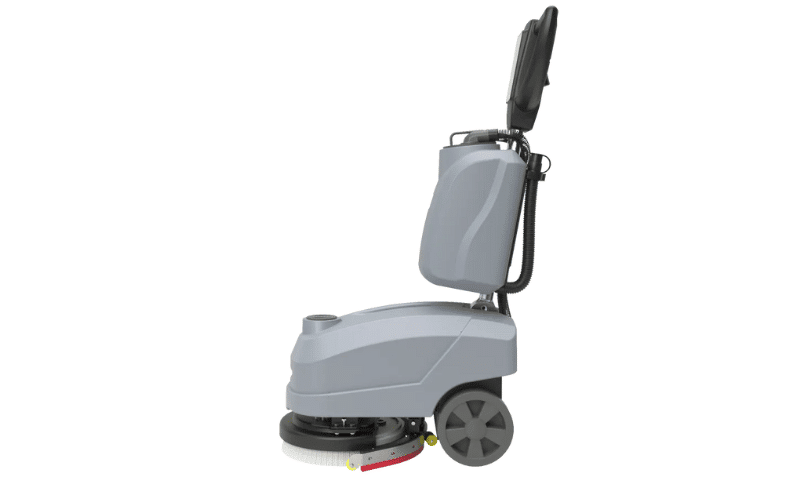

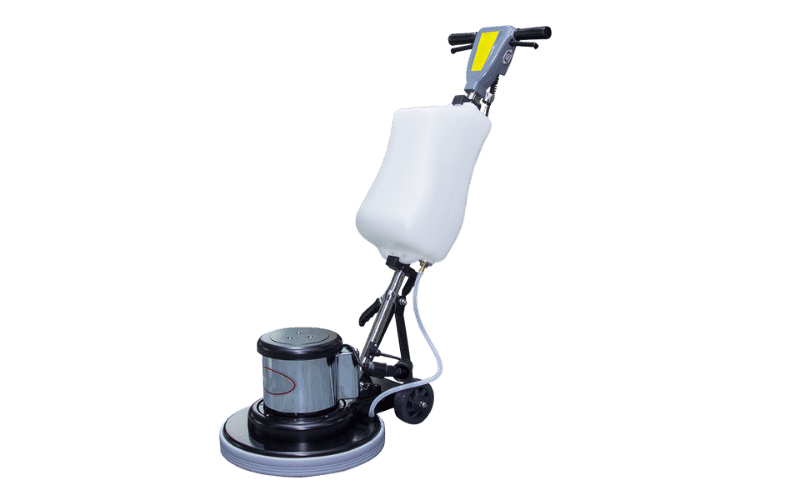
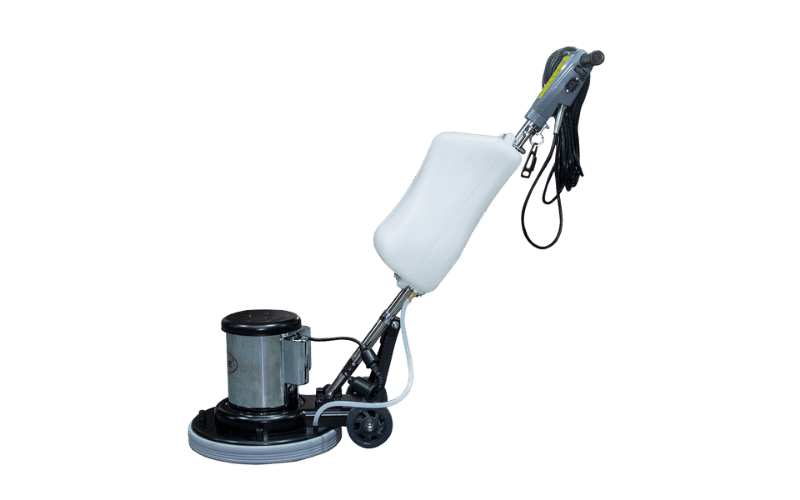
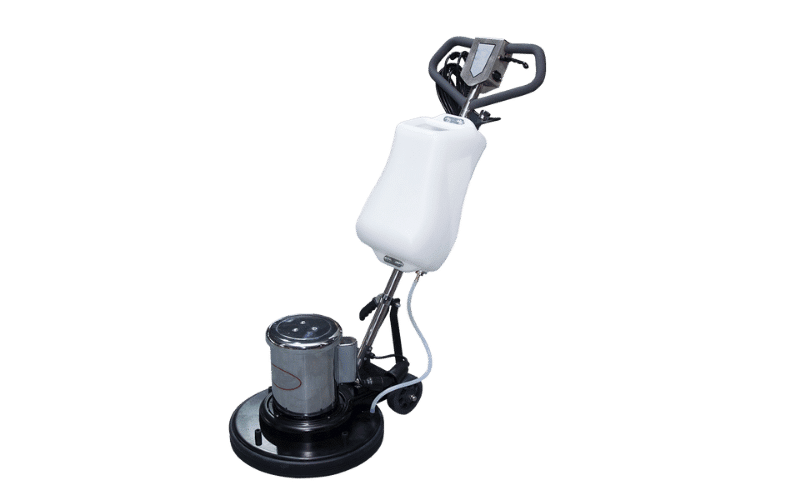
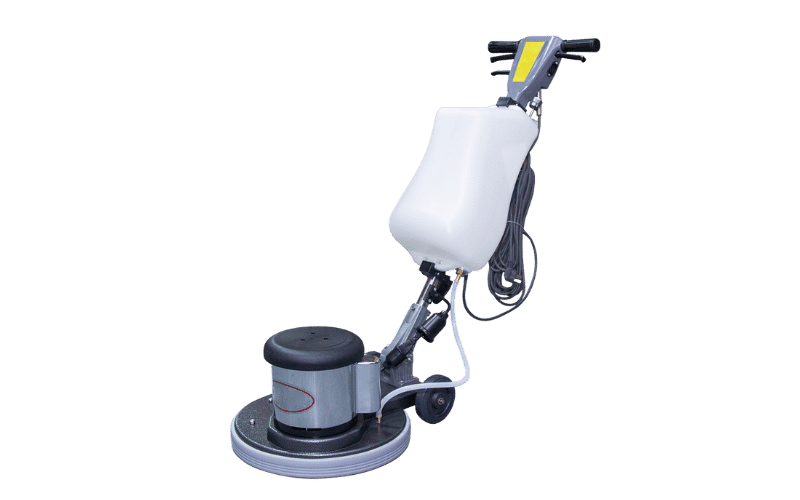



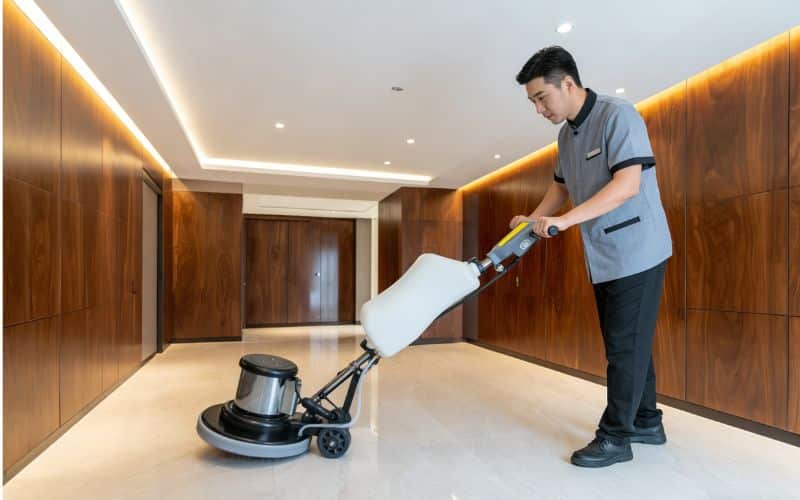
One of the best things about using specialized cleaning equipment is how efficiently it handles its intended job. Floor buffers are the perfect example. Their specialized rotating features enable you to clean, polish, and restore hard floors in even the most heavily trafficked lobbies and hallways.
If you’re thinking about putting a floor buffer to work for you, here are a few things you should know.
1. They can extend flooring life.
When it comes to hard flooring, the main goal of facilities team members and building service contractors is to keep floors shiny while extending their life. Floor buffers help accomplish that all at once. By removing surface scuffs and smoothing the wax finish, you can extend the time between costly stripping and refinishing. And it’s not just about appearance. Dirt, grit, and scratches that can find their way into the wax layers, especially in high-traffic areas, are damaging to the floor’s chances of a long life. Buffing re-condenses the finish, creating a harder, more durable barrier against daily wear and tear.
2. They have specializations.
Want something for scrubbing? There’s a style. Want something that produces a high-gloss “wet look”? There’s a style. There are two primary types of floor machines. The standard “swing machine” or side-to-side buffer is maneuverable and great for scrubbing, stripping, or cleaning smaller areas. Cool, right? But this style doesn’t generate the heat needed for a mirror-like shine. For a high-gloss finish, you’ll need a high-speed burnisher that rotates faster to polish the floor efficiently. Burnishers are generally straight-line machines that cover large hallways quickly but lack the versatility for heavy-duty scrubbing tasks that standard buffers offer.
3. They have different motor types.
Floor buffers generally come with motors defined by their RPM (revolutions per minute) and horsepower. Motor speed is the critical factor that determines the machine’s function. Standard buffers typically operate at 175 RPM, which is perfect for scrubbing or stripping floors because it provides high torque. Think about how buffers operate—friction is used to clean or polish. For a high-gloss shine, look for dual-speed motors or burnishers that run at 1,500 RPM or higher. Increased speed means more heat generation, which accelerates the floor finish. You have a choice about what works best for you and the type of facility you manage or own. High-speed motors also generally require specific pads to handle the friction without burning the floor.
4. They work well with others.
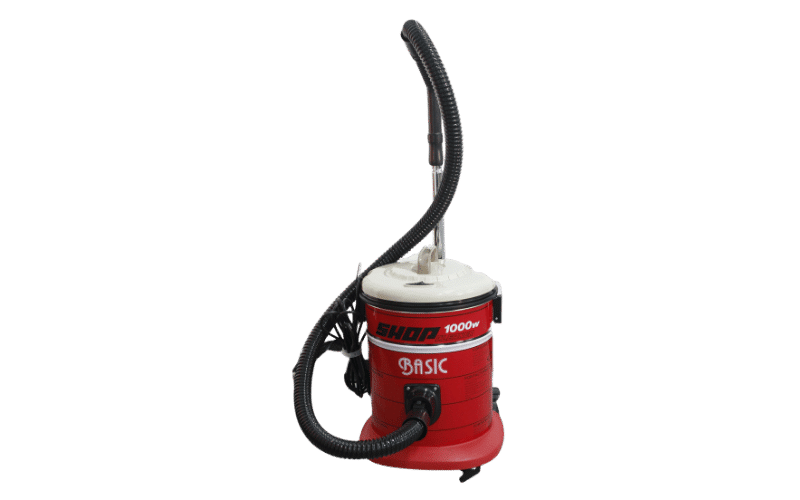
You can improve your floor buffer’s performance by pairing it with other equipment. For instance, we were just mentioning friction and finish. Regardless of how much shine you get from your low- or high-speed motor, your floor needs to be free of debris first. A dust mop or vacuum is a perfect partner for preparing the floor before using a buffer. The less grit on the floor, the better. And there’s a step you can take before buffing that helps, too: Cleaning with an auto scrubber. It’s easy to fall into the trap of thinking that you don’t need to do much prep—after all, you’re about to polish the floor. But removing all the dirt before using the buffer reduces the risk of grinding scratches into the finish and increases the chance of a brilliant, streak-free shine.
When it comes to removing scuffs from hard floors, keeping them glossy, and extending their life, a floor buffer is a great tool to have.