



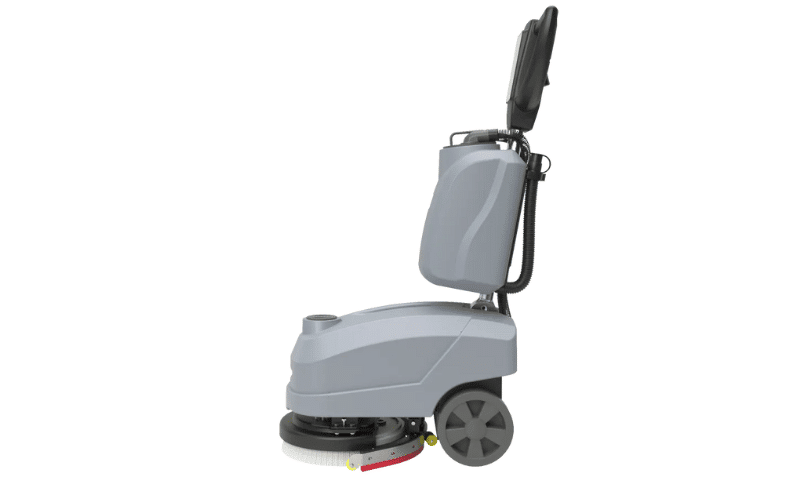

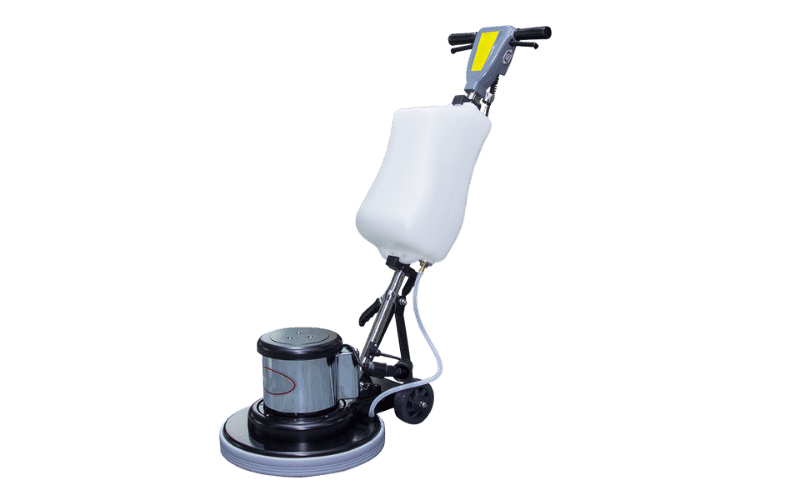
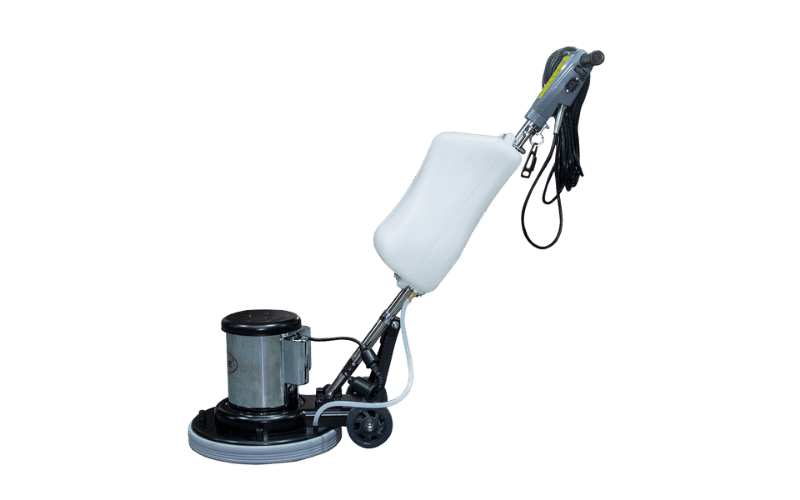
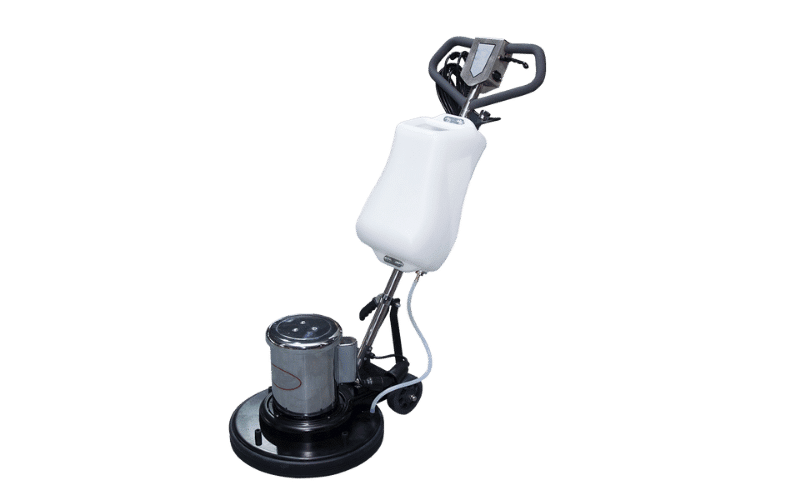



Most floor scrubber rental problems start before the machine is even turned on. Someone rents a 32-inch walk-behind and discovers on-site that it won’t fit through a 30-inch doorway. Someone else books a full-day rental for a space that would have taken three hours. Both situations cost money that didn’t need to be spent.
Getting the rental right means choosing the right source, the right machine, and understanding what the job actually demands. This guide works through all three.
Where to Rent a Floor Scrubber
Floor scrubbers are available from national equipment chains, local tool-rental shops, and janitorial supply companies. The right source depends on the scale of your job, whether you need delivery, and how specialized the machine needs to be.
Daily rental rates run from $75 to $250, depending on machine size. A small walk-behind starts at the low end; large ride-on units sit at the top. That figure, however, doesn’t include delivery, consumables, or the deposit hold — more on that shortly.
National Equipment Chains
The major chains are the most accessible starting point. They offer predictable terms, online reservations, and locations in most markets.
|
Rental Source |
Best For |
Machine Types |
Delivery |
Reserve Online? |
|---|---|---|---|---|
|
Home Depot |
Retail, restaurants, small commercial |
Walk-behind (consumer-grade) |
Limited |
Yes |
|
Lowe’s |
Small DIY or light commercial jobs |
Walk-behind (select stores only) |
Limited |
Call first |
|
Sunbelt Rentals |
Warehouses, construction cleanup, industrial |
Heavy-duty walk-behind & ride-on |
Yes |
Yes |
|
United Rentals |
Broadest range, specialized or large jobs |
Walk-behind, stand-on, ride-on, polishers |
Yes |
Yes |
|
Herc Rentals |
Large commercial buildings, no-transport jobs |
Pro-grade ride-on |
Yes, incl. pickup |
Yes |
- Home Depot is the right call for straightforward jobs in retail spaces, restaurants, and mid-size commercial floors. Rental blocks are flexible — 4-hour minimum, full day, weekly, or monthly — and the machines are designed to be user-friendly. If the job involves heavy industrial floors or large open square footage, their consumer-grade inventory will likely fall short.
- Lowe’s rental availability varies significantly by location. Not every store carries floor scrubbers. Before making plans around Lowe’s, call the local store directly to confirm what’s in stock.
- Sunbelt Rentals serves the commercial and construction segment. Their machines are built for demanding jobs — post-construction cleanup, industrial floors, large distribution centers. If you need serious cleaning power and possibly delivery, Sunbelt is worth a call.
- United Rentals carries the widest variety of floor care equipment available through a national chain: walk-behind machines from 14.5-inch paths up to 32 inches, stand-on units, ride-ons with cleaning paths up to 69 inches, and floor polishers for stripping applications. They stock trusted brands including Tennant, Clarke, and Windsor, with power options spanning battery, electric, propane, gas, and diesel. For large, complex, or specialized jobs, United is typically the strongest national option.
- Herc Rentals is particularly useful when transport is a constraint. Ride-on scrubbers can weigh several hundred to several thousand pounds — far beyond what a standard pickup can handle. Herc offers delivery and pickup on large units, which removes a logistics problem that catches many renters off guard.
Local and Specialty Sources
National chains aren’t always the best fit. Local tool-rental shops often carry machines at lower daily rates, and staff tend to spend more time helping customers choose correctly. A quick search for “tool rental” or “equipment rental” in your city will surface options the major chains don’t compete with directly.
Janitorial supply companies are underused by most renters. These businesses deal exclusively in floor care, and many rent out their demo units. The practical advantage is expertise: the staff know which machine works on which floor, which chemicals to use, and what mistakes to avoid. They can steer you away from a bad choice in ways a general equipment desk can’t.
Regional floor-maintenance specialists operate similarly. Their inventory is narrower but deeper, and they often have access to machines that don’t appear in general rental catalogs.
Before booking anything, get at least two quotes — one from a national chain and one from a local or specialty source. The price difference is often meaningful, and the local option frequently comes with better guidance.
Which Machine Is Right for Your Job
The wrong machine leaves the job half-done or undone. A machine too wide won’t access the space. A machine too small takes three times as long. A machine with the wrong scrub head damages the finish. Matching the equipment to the job is as important as finding a place to rent it.

Corded, Battery Walk-Behind, or Ride-On
- Corded electric scrubbers are the right tool for small rooms with reliable outlet access. Runtime is unlimited, but the cord constrains your range and creates a tripping hazard. Best suited to confined areas like storage rooms, smaller retail floors, or restrooms.
- Battery walk-behind scrubbers remove the cord problem and handle tight spaces well — hallways, narrow aisles, spaces with multiple obstacles. The constraint is runtime. On a larger job, you may need to stop and recharge mid-floor, which adds time. Confirm the battery capacity against your estimated cleaning time before you leave the rental counter.
- Ride-on scrubbers make sense when the floor is large and open. A wide cleaning path — typically 40 to 69 inches — covers ground much faster than any walk-behind. If an operator is covering an entire shift on foot behind a walk-behind, a ride-on pays for the difference in fatigue and labor time. The trade-off is maneuverability: tight turns, cluttered floors, and narrow doorways are problems.
Disc vs. Orbital Scrub Heads
Standard disc scrubbers use rotating pads suitable for routine cleaning on most hard floors. They’re the right choice for general-purpose jobs.
Orbital scrubbers operate with a tight, vibrating pattern rather than a spinning disc. They use less water and fewer chemicals, and they excel at stripping old floor finish. If the job involves wax removal or heavy floor restoration, an orbital head is the better tool.
Matching Machine to Space
|
Space Type |
Recommended Machine |
Key Reason |
|---|---|---|
|
Retail store |
Battery walk-behind (17–20″) |
Navigates aisles, quiet, no cord to manage |
|
Warehouse |
Ride-on (40″+ path) |
Covers large open area efficiently |
|
School hallway |
Compact battery walk-behind |
Handles tight turns and doorway constraints |
|
Gym |
Ride-on or wide walk-behind |
Large span, non-abrasive pads protect surface |
|
Hospital or clinic |
Compact battery, low-noise model |
Quiet operation, maneuverable in tight zones |
|
Post-construction cleanup |
Heavy-duty walk-behind + orbital head |
Handles grit, debris, and finish stripping |
|
Narrow aisles or storerooms |
Compact corded or small battery unit |
Tight clearance, short runtime acceptable |
Measure the doorways before you reserve anything. This is the single most common rental mistake. A machine rated for your square footage does you no good if it can’t enter the room. Check every doorway and tight turn the machine will need to navigate.
What a Floor Scrubber Rental Actually Costs
The quoted daily rate is only one part of the total bill. Several additional costs are easy to miss until the final invoice.
|
Cost Component |
Typical Range |
What to Know |
|---|---|---|
|
Daily rate |
$75–$250 |
Varies by machine size and type |
|
Half-day (4-hour) rate |
~50–65% of daily rate |
Worth asking for on smaller jobs |
|
Pads, brushes, cleaning solution |
$15–$60+ |
Almost never included in the rental |
|
Delivery and pickup |
$50–$150+ |
Standard for ride-ons and heavy units |
|
Security deposit hold |
$100–$500+ |
Refundable, but confirm the amount upfront |
|
Dirty return / cleaning fee |
Up to $200 |
Avoidable — rinse tanks before return |
Ask for the all-in figure before committing. The daily rate alone understates the real cost, sometimes by a significant margin. On a ride-on rental that also requires delivery, consumables, and a large deposit hold, the gap between the rate card and the final bill can exceed $300.
These are planning ranges. Actual pricing varies by region, provider, and machine model. Confirm numbers with the rental source before you book.
If the job is small and straightforward, ask specifically about a half-day or 4-hour rate. Many shops offer it, and many customers don’t ask.
Common Mistakes That Waste Money
Most rental problems are predictable. These are the ones that come up most often.
Booking without measuring doorways. A 32-inch machine fails at a 30-inch door. Always measure the narrowest point the machine must pass through, including internal doorways, elevator entries, and any tight turns.
Underestimating battery runtime. A battery walk-behind with a two-hour runtime won’t clean a 20,000 sq ft floor in a single charge. If the job is large, either choose a corded machine, book a ride-on, or confirm there’s time and access to recharge mid-job.
Choosing the wrong scrub pad. Standard black stripping pads used on an unfinished concrete floor can scratch. Soft pads used on a waxed floor won’t clean effectively. Ask the rental counter what pad is appropriate for your floor type and what you’re trying to achieve.
Not accounting for delivery on large units. A ride-on scrubber can exceed 1,000 pounds. Loading one into a standard pickup is not possible. If the job is remote or large, build delivery and pickup fees into the budget from the start.
Skipping the water and drain check. Floor scrubbers need a water source to fill the solution tank and a drain to empty the recovery tank. On a big job, you’ll do this multiple times. If neither is accessible in the work area, the rental becomes much harder to operate efficiently.
Paying for 24 hours when four would do. Many jobs can be completed in a half-day block. Confirm the cleaning time realistically — account for setup and tank refills — and ask whether a shorter rental block is available.
Returning the machine dirty. Most rental companies charge a cleaning fee of up to $200 for machines returned with dirty recovery tanks or clogged brushes. Rinse everything before drop-off.
Before the Job Starts: What to Do First
A few preparation steps before pickup prevent the most common on-site problems.
- Sweep or dust mop the entire floor. Debris left on the floor clogs the vacuum system and jams the brushes. The scrubber is not designed to handle large loose material.
- Confirm doorway measurements. Every doorway the machine must pass through, not just the main entrance.
- Locate the water source and floor drain. Both will be needed more than once on any substantial job.
- Get a machine walkthrough at pickup. Ask the rental agent to demonstrate the controls. Five minutes of instruction prevents most operational errors.
- Document existing damage before you leave. Walk around the machine with the rental agent and note any pre-existing wear. This protects you from being charged for damage that wasn’t yours.
Renting vs. Buying: Where the Break-Even Is
Renting makes sense when the job is occasional. Buying makes sense when the machine runs regularly. The question is where that line sits.
|
Annual Usage |
Recommendation |
Reasoning |
|---|---|---|
|
1–10 days/year |
Rent |
No storage, maintenance, or capital outlay |
|
10–25 days/year |
Compare both options |
Factor in consumables, delivery, and ownership costs |
|
25+ days/year |
Buying likely makes more sense |
Cumulative rental costs typically exceed purchase price |
|
Multiple sites or locations |
Depends |
Weigh transport logistics and maintenance overhead |
Organizations that clean in-house on a weekly basis are usually better served by ownership. Those doing a seasonal deep clean, a move-out, or a one-off restoration job are better off renting.
If ownership is the direction, the machine selection criteria are different from a rental decision — size, durability, warranty, and service access all carry more weight. Our floor scrubber buying guide covers that in detail.
Floor Scrubber Rental FAQ
How much does it cost to rent a floor scrubber for a day?
Daily rates typically run $75 to $250. Small walk-behind machines sit at the lower end; large ride-ons sit at the top. Add consumables, potential delivery fees, and a refundable deposit hold to reach the actual out-of-pocket cost.
What size floor scrubber do I need for 10,000 sq ft?
A wide walk-behind in the 26–32 inch range or a small ride-on is appropriate for 10,000 sq ft. A 28-inch machine at typical operating speed clears that area in well under an hour. For open floors larger than that, a ride-on is worth the upgrade to reduce operator fatigue.
Is it cheaper to rent a floor scrubber or hire a cleaning company?
For a single job where you can supply the labor, renting is usually cheaper. Professional cleaning services cost more per visit but include expertise and equipment. If no one on-site is available or willing to operate the machine, the comparison shifts.
Can you use a floor scrubber on epoxy floors?
Yes. Epoxy is well-suited to machine scrubbing. Use a non-abrasive pad and a neutral, low-foam cleaner to avoid dulling the finish. Sealed concrete and most hard tile clean up well under similar conditions.
Will a floor scrubber work on hardwood or laminate?
Standard machines use enough water to damage unsealed wood or laminate. Sealed hardwood may tolerate a low-moisture machine, but this should be verified against the floor manufacturer’s guidance. Test a small area before committing to the full floor.
Do rental companies provide pads, brushes, or detergent?
Rarely. Most rentals require the customer to supply pads and cleaning solution separately. Many machines require a low-foam formula to protect the vacuum motor. Confirm requirements at pickup.
Do I need a special license to operate a ride-on floor scrubber?
No formal license is required for most commercial ride-on scrubbers. However, the rental company will expect you to demonstrate basic operating competency, and some facilities have their own internal requirements. Always request a walkthrough at pickup.
How do I transport a large floor scrubber without a trailer?
You usually can’t, and you shouldn’t try. Ride-on units can exceed 1,000 pounds. Use the rental company’s delivery service for any machine that can’t be safely loaded into a vehicle. Delivery fees are predictable; equipment damage from an attempted self-transport is not.
How long does it take to clean a warehouse with a ride-on scrubber?
A ride-on with a 40-inch or wider path covers 40,000 to 60,000 sq ft per hour on open floor. A 50,000 sq ft warehouse will typically take one to two hours of scrub time, not counting setup and tank refills. Heavy racking, narrow aisles, and obstacles reduce that rate considerably.
What happens if the machine breaks down during the rental?
Contact the rental company immediately. Reputable shops will troubleshoot by phone, swap the unit, or adjust charges for a confirmed equipment failure. Do not attempt repairs on your own — that typically voids the rental agreement and may create liability for damage.
Can I use a floor scrubber to strip old wax?
Yes, with the right configuration. An orbital scrubber fitted with aggressive stripping pads and an appropriate stripping solution will lift old wax effectively. Plan to rinse and neutralize the floor afterward before applying any new finish coat.
How far in advance should I reserve a rental?
At least 48 hours in advance, longer during busy periods or if you need a specific machine type. Popular units — particularly ride-ons — can be booked out quickly. Confirming early also gives you time to arrange delivery logistics if needed.
Final Guidance
The decision of where to rent a floor scrubber matters less than the decision of which machine to rent for which job. Most rental problems trace back to a mismatch between equipment and environment — wrong size, wrong scrub head, wrong power type, or a logistical detail that wasn’t checked.
Start with the space: measure it, note the floor type, identify the doorways. Then choose a machine that fits those constraints. Then choose a rental source that stocks what you need and can deliver it if necessary. Get the all-in quote before committing.
For large or specialized jobs where the machine selection isn’t obvious, reach out to our team before booking. Getting the equipment right the first time is faster and cheaper than correcting a mistake mid-job. If you’re weighing a longer-term need, the floor scrubber buying guide walks through what ownership actually costs compared to ongoing rental.