






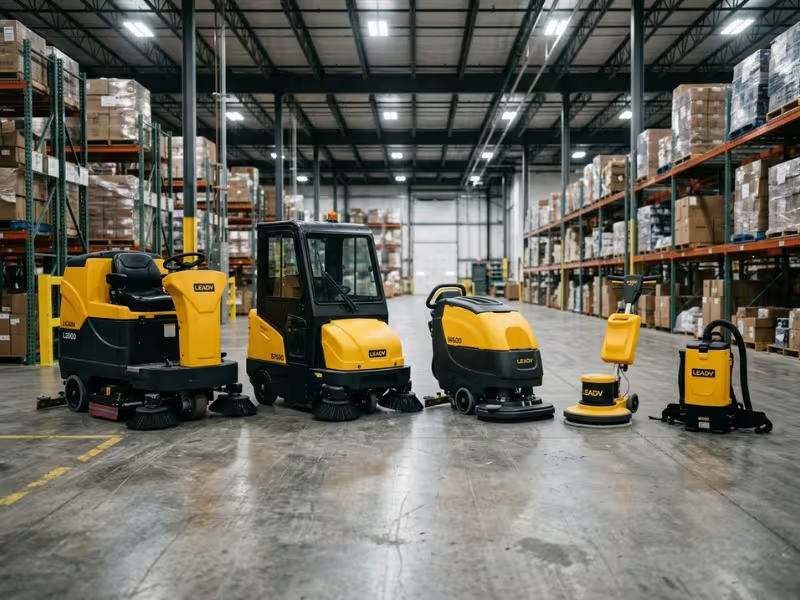
Commercial floor cleaning machines fall into six functional categories — sweepers, floor scrubbers, industrial vacuums, single-disc floor machines, carpet cleaning machines, and combination sweeper-scrubbers — available in walk-behind, ride-on, and robotic formats. The right choice depends on floor type, facility size, soil type, and operational constraints like aisle width and drying time, not just the specs on a sales sheet.
A warehouse manager buys a ride-on scrubber rated for 5,500 m²/h, only to discover it won’t fit through the narrow racking aisles where most of the dust actually collects. A hospital facilities director picks a scrubber with excellent cleaning output, but the floor stays wet for 40 minutes in a corridor that can’t be closed off, creating a slip hazard during shift change.
These aren’t hypothetical failures. They’re two of the most common mistakes buyers make when shopping for commercial and industrial floor cleaning equipment: focusing on a single headline spec while ignoring the operating conditions the machine will actually face.
This guide breaks down the major types of floor cleaning machines by function and by operating format, explains how to compare them against your facility’s real-world constraints, and highlights the mistakes that lead buyers astray. You’ll also find industry-specific guidance for warehouses, manufacturing plants, retail spaces, healthcare facilities, schools, and public venues, plus a step-by-step framework to narrow your options. This guide focuses on commercial and industrial hard-floor cleaning equipment, with carpet cleaning machines included in the broader floor care category.
Types of Floor Cleaning Machines by Function
Floor cleaning machines are built to solve different problems: dry debris versus wet soil, delicate finishes versus heavy industrial grime, hard floors versus carpet. Knowing what each machine class is actually designed to do is the first step toward narrowing your options.
Sweepers
Sweepers collect dry debris — dust, sand, pallet residue, paper, and other loose material — using rotating brushes that funnel waste into a hopper. No water, no cleaning solution. Just fast, low-maintenance debris pickup.
Buyers choose sweepers when the primary soil load is dry, and they need high-speed cleanup across large floor areas, like warehouse aisles or loading docks. A sweeper outperforms a scrubber when the floor isn’t dirty in the chemical sense—it’s just covered in dust, grit, or packaging debris that needs to be cleared quickly between shifts.
Sweepers fall short, though, if the facility also deals with grease, spills, or embedded grime, since sweeping alone won’t lift those soils. The first spec to check is hopper capacity relative to debris volume—a sweeper that needs constant emptying defeats the productivity advantage it’s meant to deliver.
Scrubber Dryers (Floor Scrubbers)
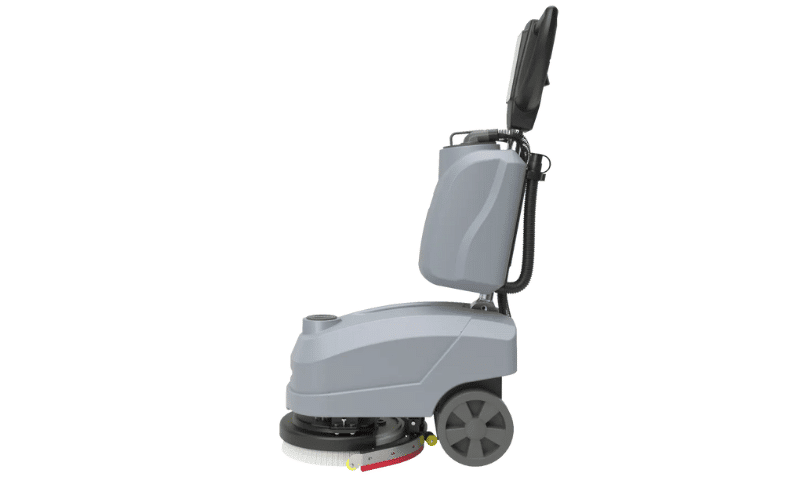
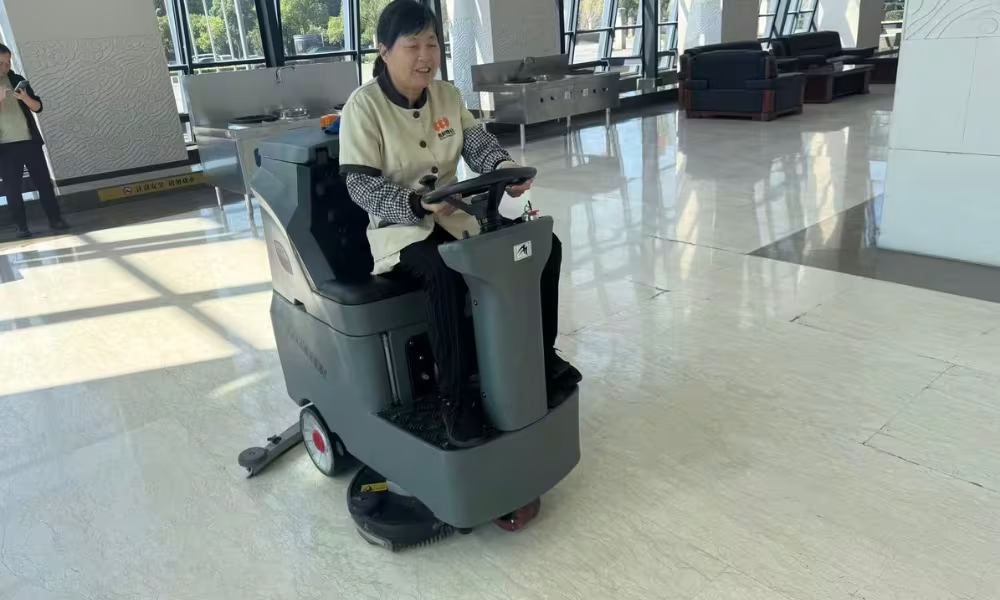
Scrubber dryers, more commonly called floor scrubbers, pair a rotating brush or pad with a water-and-detergent solution to lift embedded soil, then recover the dirty water with a squeegee and vacuum system so the floor dries almost immediately. This guide uses “floor scrubber” consistently from here on to refer to this class of machines.
Floor scrubbers earn their place when floors need genuine chemical cleaning, not just debris removal — grease in a manufacturing plant, tracked-in soil at a retail entrance, or bacterial contamination risk in a healthcare corridor. They beat sweepers when drying time and hygiene matter, because the scrub-and-recover cycle removes soil a dry sweep would leave behind.
Pay close attention to solution tank capacity, cleaning width, and water recovery efficiency. A machine that cleans well but leaves streaks of residual water creates the exact slip hazard scrubbers exist to eliminate.
Commercial/Industrial Vacuums
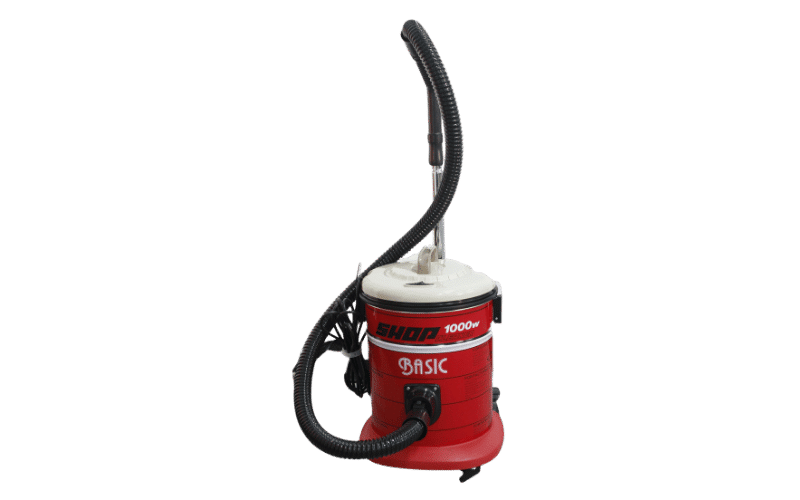
Industrial vacuums remove dry debris, fine dust, and, in some wet-rated models, liquid spills, using high-powered suction rather than brushing. The category spans everything from backpack units for tight spaces to large canister and wide-area models for industrial floors—a lightweight unit like the VC42B vacuum backpack is one example built for this kind of mobility.

Fine particulate matter—concrete dust, drywall debris, allergens in carpeted environments—needs to be captured rather than pushed around, especially in facilities with air quality requirements. That’s where vacuums shine. They outperform sweepers in enclosed spaces or around sensitive equipment, since they don’t redistribute dust into the air the way brush-based sweeping can.
Vacuums won’t replace scrubbing on floors with embedded or sticky soil. Suction alone can’t lift grime that’s bonded to the surface.
Single-Disc Floor Machines
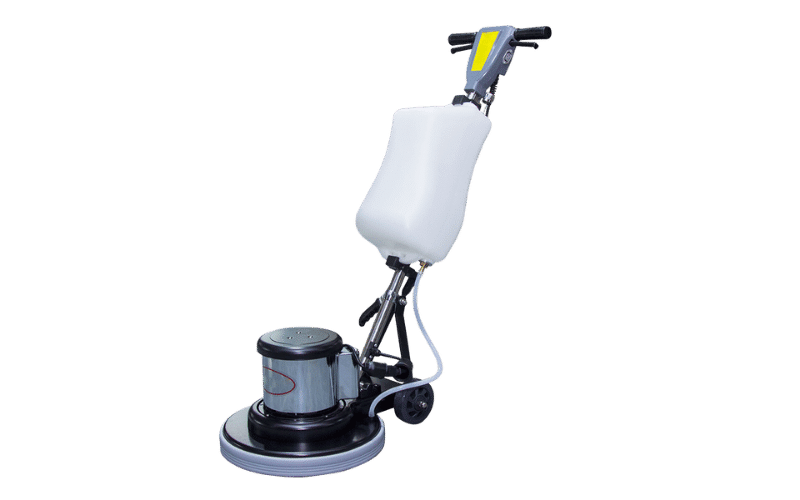
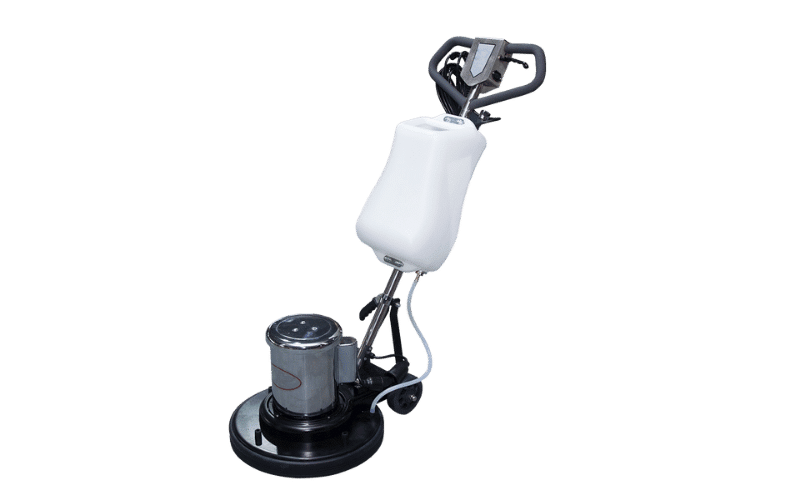
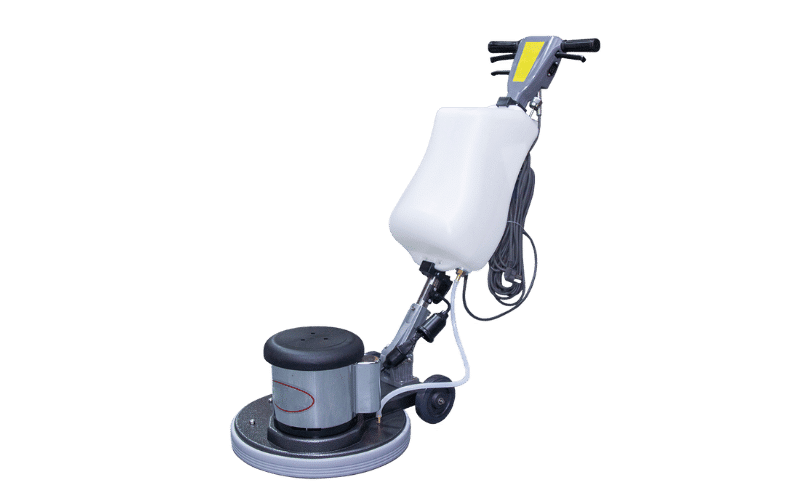
Single-disc floor machines use one rotating pad or brush, and depending on the attachment, the same base unit can scrub, strip, polish, or burnish a floor. That versatility is why the category covers far more ground than “polisher” implies — add an aggressive pad, and it strips; swap in a high-speed polishing pad, and it burnishes; fit a softer brush, and it becomes a light scrubber. LEADV’s floor buffer lineup, including the FM205, reflects this flexibility.
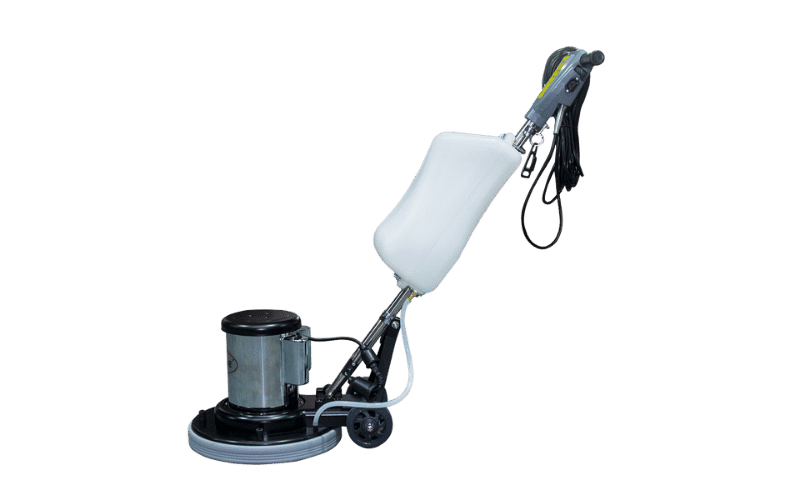
These machines are for finish-related tasks rather than soil removal: restoring shine to terrazzo, stripping old wax before resealing, or burnishing VCT flooring to a high gloss. They’re a poor fit as a primary daily cleaning tool because they don’t recover water or collect debris like a scrubber or sweeper. Think finishing tool, not cleaning system.
Watch disc speed (RPM), since stripping and burnishing require very different rotational speeds to get the intended result.
Carpet Cleaning Machines
Carpet cleaning machines fall under the broader floor care category, even though most buyers researching “floor cleaning machines” focus on hard-floor equipment like scrubbers and sweepers. Carpet extractors inject a cleaning solution into carpet fibers and immediately extract it along with dissolved soil, in either walk-behind or portable formats.
Facilities with mixed flooring—carpeted lobbies or offices alongside hard-floor production or retail areas—need a solution that won’t damage fibers like hard-floor scrubbing equipment would, and carpet extraction fits there. Watch dwell time against extraction speed: carpet that stays too wet too long risks mold growth and odor.
Combination Sweeper-Scrubbers
Combination sweeper-scrubbers integrate a sweeping mechanism and a scrubbing system into a single machine, aiming to handle both debris pickup and wet cleaning in one pass.
Think of this category as a hybrid or compromise option rather than a mainstream choice. Combination units make sense when floor space, budget, or operator headcount makes running two dedicated machines impractical — for instance, in a mid-sized facility that can’t justify both a sweeper and a scrubber. But combination machines generally underperform dedicated sweepers and scrubbers in heavy-duty settings because combining two functions into one chassis usually means smaller hoppers, smaller tanks, or a reduced cleaning width than single-purpose equipment. They’re a reasonable fit for lighter-duty, mixed-soil environments, but not for high-volume industrial operations.
Types of Floor Cleaning Machines by Operating Format
Beyond function, floor cleaning machines are also categorized by how they’re operated, and this distinction often matters as much as the cleaning method itself.
Walk-Behind Floor Cleaners
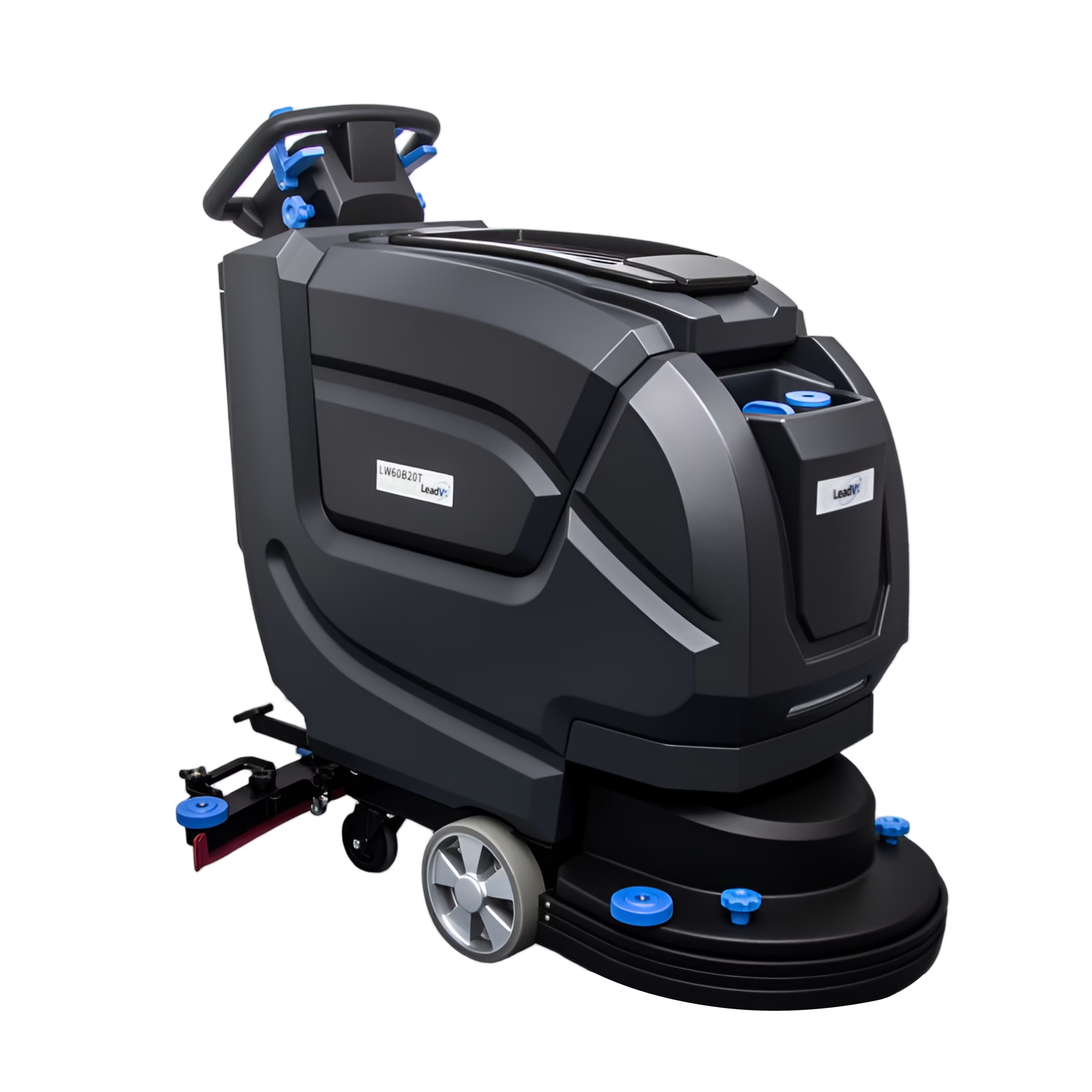
Operators push or guide walk-behind machines, which are typically sized for small to mid-sized areas with moderate productivity requirements, generally up to around 3,000 m²/h depending on the model. LEADV’s walk-behind floor scrubber line, including battery-powered models like the LW60B20T, fits this category.
When maneuverability matters more than raw output — tight retail aisles, classroom corridors, facilities with frequent obstacles — walk-behind is the default choice. These units outperform ride-on machines in confined spaces and cost less upfront, so they’re the go-to for small- to mid-sized facilities. They struggle, though, on very large open floor plans, where operator fatigue and limited tank capacity make ride-on equipment far more efficient per labor-hour.
Ride-On Scrubbers
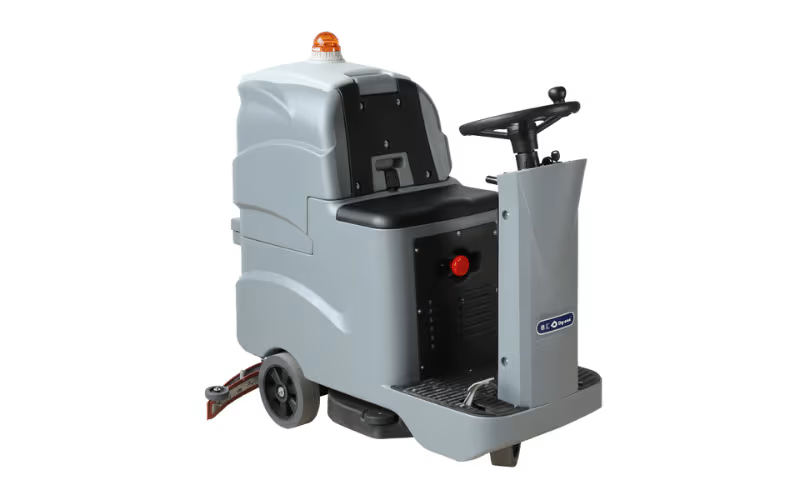
Ride-on scrubbers seat the operator on the machine and are built for large, continuous floor areas, with productivity rates that can reach 5,500 m²/h or more in high-capacity models. LEADV’s ride-on floor scrubber range spans this spectrum, from the compact RS75 at 3,000 m²/h to the high-output LR130, which reaches that 5,500 m²/h mark with a 120L solution tank.
Facility size is the deciding factor here. Once walk-behind cleaning becomes impractical from a labor standpoint — large warehouses, distribution centers, big-box retail floors — ride-on scrubbers take over. They outperform walk-behind units when the floor plan has wide, unobstructed aisles that let the machine’s larger turning radius operate efficiently. But in facilities with narrow aisles, tight corners, or frequent fixed obstacles, that same footprint becomes a liability. Models like the RS140 split the difference with dual brushes and a 130L tank for large industrial areas that still demand some maneuverability.
Robotic Cleaning Machines
Robotic floor scrubbers operate autonomously, using sensors and mapping software to clean predefined areas without a human operator actively steering the machine.
Labor availability is usually the deciding factor. When labor’s a persistent constraint, or when consistent, repeatable cleaning schedules matter more than adaptability, robotic machines make sense—think large, predictable floor plans like big-box retail, airport terminals, or distribution centers with stable layouts. They’re not built to replace human-operated equipment in facilities with constantly changing layouts, heavy obstacle density, or irregular floor plans, since remapping and troubleshooting can offset the labor savings.
Understanding these categories is the foundation of a good decision, but it’s only the foundation. The right machine for your facility depends on matching these types to operational realities—the physical layout you’re cleaning, the soil you’re removing, the labor you have available, and the budget you’re working within. That’s where the real decision-making happens.
How to Compare Floor Cleaning Machines
Choosing between machine types means weighing several interconnected factors. It helps to group them into four practical categories.
The physical environment is usually the first filter, since it determines which machines can operate in your space. Facility size and floor plan determine whether a ride-on scrubber can deliver its productivity advantage, or whether its turning radius will constantly collide with racking, shelving, or doorways. Aisle width is a frequent blind spot — a machine rated for high throughput is useless if it can’t physically fit down the aisles where cleaning is needed most. Floor type matters just as much: concrete, VCT, epoxy, terrazzo, and carpet each respond differently to brush pressure, pad aggressiveness, and moisture exposure, and the wrong pairing can damage a finish instead of restoring it.
Soil type and cleaning objectives shape the function you need, not just the format. Dry debris calls for sweeping or vacuuming; embedded grease, tracked-in soil, or bacterial contamination calls for scrubbing. Cleaning frequency also matters — a facility that cleans daily can use lighter, faster equipment, while one that cleans weekly may need a machine that can lift more heavily embedded soil in a single pass.
Labor and runtime considerations cover who will operate the machine and for how long. Operator skill level affects whether a ride-on scrubber, which requires more training, is realistic, or whether a simpler walk-behind or robotic unit fits the workforce better. Battery and power type determine shift coverage — a facility running multiple shifts needs to evaluate battery runtime and charging windows carefully, since a machine that dies mid-shift creates more disruption than it solves. Noise level also matters in occupied environments, especially when cleaning happens during active hours rather than overnight.
Total economics and compliance round out the comparison. Maintenance requirements and drying time both carry hidden costs: a machine that leaves floors wet for 30–40 minutes can create liability in high-traffic or public areas, while one with complex maintenance needs can rack up service costs over its lifespan. Total cost of ownership — purchase price plus consumables, parts, labor, and downtime — is typically a more accurate comparison point than sticker price alone, especially for machines expected to run 2,000+ hours per year.
Common Mistakes When Choosing a Floor Cleaning Machine
Even experienced facility managers fall into predictable traps when selecting floor cleaning equipment.
- Choosing by machine size rather than aisle width. A machine’s cleaning path width and productivity rating mean nothing if it can’t navigate your facility’s aisles, doorways, and corners. Measure your tightest regular turning point before shopping by spec sheet.
- Confusing sweeping with scrubbing. These solve different problems. A facility with embedded grease or tracked-in soil won’t see results from a sweeper, no matter how large its hopper is, because sweeping doesn’t involve water, detergent, or agitation.
- Ignoring drying time. In occupied spaces — hospital corridors, school hallways, retail floors during business hours — a scrubber that leaves floors wet for an extended period creates a slip hazard and operational bottleneck, even if its cleaning performance is excellent.
- Underestimating battery runtime. Multi-shift facilities often discover too late that a machine’s battery can’t cover a full shift without a mid-cycle charge, which disrupts the cleaning schedule and offsets productivity gains.
- Buying one machine for every task. Combination sweeper-scrubbers and other all-in-one units can seem efficient on paper, but they generally underperform dedicated machines in heavy-duty settings. For facilities with genuinely diverse cleaning needs, two purpose-built machines often outperform one compromise machine.
Which Machine Is Right for Your Industry or Facility Type
Warehouses & Logistics Centers
Warehouses typically combine wide-open floor areas with narrow racking aisles, so the right equipment is often not one machine but two: a ride-on scrubber for open areas and a compact walk-behind or sweeper for tight aisles. Pallet dust and packaging debris make sweeping or vacuuming a near-constant need, while dock areas see tracked-in dirt, oil, and moisture that call for scrubbing. Multi-shift operations should prioritize battery runtime and charging logistics, since a machine that can’t complete a full shift creates scheduling friction across teams. LEADV’s warehouses and industrial facilities solutions page covers this pairing in more detail.
Manufacturing Plants
Manufacturing floors often deal with grease, metal shavings, coolant residue, and other industrial soils that require scrubbing, not just sweeping. Floor type varies widely — sealed concrete, epoxy coatings, or anti-static flooring near sensitive equipment — so chemical and pad compatibility is a critical spec to confirm before purchase. Noise level can also matter in plants running continuous shifts, where cleaning happens alongside active production.
Retail & Supermarkets
Retail environments must balance cleaning performance with customer experience, so drying time and noise level matter most during business hours. High foot traffic at entrances and checkout areas quickly tracks in dirt and moisture, often requiring more frequent spot-scrubbing than a single scheduled pass can address. Maneuverability around displays, shelving, and checkout lanes generally favors walk-behind or robotic machines over ride-on units—LEADV’s retail and supermarkets page breaks down which formats work best in these layouts.
Hospitals & Healthcare Facilities
Healthcare facilities require quiet operation for daytime cleaning near patient areas, immediate or near-immediate drying to prevent slip hazards, and chemical compatibility with infection-control protocols. Cleaning around medical equipment, beds, and mobile carts demands strong maneuverability, often favoring compact walk-behind scrubbers over larger ride-on models. Because hygiene compliance is non-negotiable in these environments, evaluate equipment for water recovery performance. See LEADV’s healthcare and educational facilities page for more on compliant equipment choices.
Schools & Public Buildings
Schools generally clean during off-hours, allowing more flexibility for drying time but still requiring efficient coverage of large hallways and cafeterias within a limited overnight or weekend window. Budget constraints are common in this sector, so total cost of ownership—not just upfront price— is an important part of the evaluation. Durability also matters given the high foot traffic and frequent spills typical of school environments.
Airports, Stations & Large Public Venues
Large public venues combine enormous floor areas with near-continuous foot traffic, which makes high-productivity ride-on scrubbers or robotic units a common fit for predictable, open layouts like terminal concourses. Because these spaces rarely close for cleaning, fast drying time and strong water recovery are essential to avoid slip hazards in heavily trafficked zones. In stable, predictable layouts, robotic cleaning machines can effectively supplement human-operated equipment by covering repetitive routes while staff focus on spot-cleaning and incident response.
Step-by-Step Guide to Choosing the Right Floor Cleaning Machine
- Map your floor plan and measure constraints. Identify your narrowest regular aisle, doorway, and turning point, since this determines which machine formats are even viable.
- Identify your floor type and soil type. Confirm whether you’re dealing with dry debris, embedded grime, grease, or a mix, and check which machine functions and chemicals are compatible with your flooring material.
- Estimate your required cleaning rate. Compare square footage with your available cleaning window to determine whether a walk-behind machine can keep pace, or you need a ride-on unit.
- Evaluate your labor and shift structure. Consider operator availability, skill level, and whether multi-shift battery runtime matters.
- Check drying time against occupancy. If you can’t close off the space during cleaning, prioritize machines with strong water recovery and fast drying.
- Calculate total cost of ownership. Weigh purchase price against maintenance, consumables, and expected service life, rather than comparing sticker prices alone.
- Shortlist machine types and formats, then request demonstrations. Narrow down to two or three candidates based on the criteria above, and test them in your actual facility conditions before committing.
Choose the Right Equipment for Your Facility
Selecting the right floor cleaning machine isn’t about finding the model with the highest productivity rating or the longest feature list. It’s about matching the machine type and format to your facility’s specific constraints —floor type, aisle width, debris profile, shift schedule, and drying-time requirements.
Start by mapping those operating conditions using the framework above. Once you know your constraints, choosing between a sweeper, scrubber, vacuum, or buffer—and between walk-behind, ride-on, or robotic—becomes far more straightforward than a spec sheet alone suggests.
LEADV builds this range: ride-on scrubbers for large open floor plans, walk-behind scrubbers and compact models for tighter spaces, floor buffers for finish work, and industrial vacuums for dry debris and fine dust—all engineered for commercial and industrial environments. If you’ve mapped your facility’s constraints and want help translating them into the right machine class, reach out to LEADV’s team for a tailored recommendation.
Frequently Asked Questions
What’s the difference between a floor scrubber and a sweeper?
A floor scrubber uses water, detergent, and a rotating brush or pad to chemically lift embedded soil, then recovers the dirty water with a squeegee and vacuum system. A sweeper uses rotating brushes to collect dry debris into a hopper without any water or chemical cleaning. Scrubbers are built for soil removal and hygiene; sweepers are built for fast pickup of dry debris.
How much does an industrial floor cleaning machine cost?
Pricing varies significantly by machine type and format — compact walk-behind scrubbers typically cost less than large ride-on units, and sweepers and vacuums fall across a range depending on capacity and features. Total cost of ownership, including maintenance, consumables, and service life, is generally a more useful comparison point than upfront price alone.
Is a ride-on scrubber worth it for a small facility?
Generally not. Ride-on scrubbers are designed for large, open floor areas where their higher productivity rate and larger tank capacity justify the investment. In small facilities, a walk-behind scrubber usually delivers comparable results with better maneuverability and a lower upfront cost.
Can one machine handle both carpet and hard floors?
Not effectively. Carpet cleaning machines use extraction methods designed for fiber flooring, while hard-floor scrubbers use brushes and pads that can damage carpet. Facilities with mixed flooring typically need separate equipment for each floor type.
Are robotic cleaning machines a good fit for every facility?
No. Robotic cleaning machines perform best in large, predictable floor plans with stable layouts, such as big-box retail or airport terminals. They aren’t designed to replace human-operated equipment in facilities with frequently changing layouts, high obstacle density, or irregular floor plans.
What size facility needs a ride-on scrubber?
There’s no fixed square-footage threshold, but ride-on scrubbers generally become cost-effective once a facility’s floor area makes walk-behind cleaning impractical from a labor-hours standpoint — commonly large warehouses, distribution centers, and big-box retail spaces with wide, unobstructed aisles.
Can a floor scrubber replace manual mopping?
In most commercial and industrial settings, yes, since scrubbers clean and dry floors far faster and more consistently than manual mopping. However, scrubbers generally cannot replace manual cleaning entirely in tight spaces, corners, or areas the machine can’t reach, where manual touch-up is still typically required.
How long do battery-powered floor cleaning machines run?
Runtime varies by machine size, battery type, and usage intensity, but multi-shift facilities should always confirm runtime against their actual shift length and charging windows before purchasing, since a machine that can’t complete a full shift creates scheduling disruptions.
Are robotic floor scrubbers worth the investment?
They can be, especially for facilities with labor shortages and large, stable floor plans that let the machine run consistent, repeatable routes. The investment is less justified in facilities with frequently changing layouts or high obstacle density, where remapping and manual troubleshooting can offset labor savings.