







Keeping large floor areas clean is a real challenge for any facility. Manual mopping takes hours, leaves streaks, and often can’t keep up with high-traffic spaces. A ride-on floor scrubber-dryer solves this problem by combining scrubbing, water recovery, and drying into a single pass. This guide covers everything you need to know, from how these machines work to how to keep them running at their best.
What Is a Ride-On Floor Scrubber?
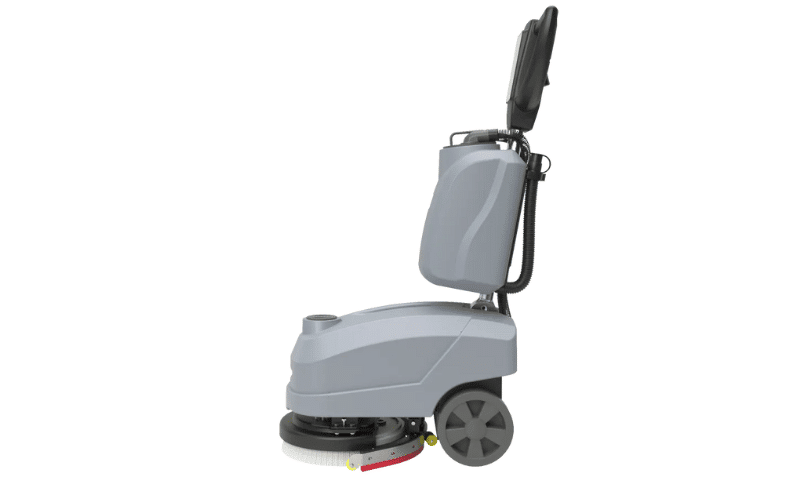
A ride-on floor scrubber-dryer is a commercial cleaning machine built for large indoor spaces. The operator sits and drives the unit, much like a small vehicle, while rotating brushes scrub the floor and a rear squeegee vacuums up the dirty water. In one continuous motion, the floor is washed, rinsed, and left dry.
These machines consist of three main systems: a drive system, a cleaning system, and an electrical system. They handle hard floors with ease, including tile, marble, epoxy resin, terrazzo, concrete, polished stone, and non-slip surfaces. Modern electric models offer industrial-grade durability, intuitive driving controls, and automatic scrub-and-dry functions.
You’ll find ride-on scrubbers hard at work in:
- Warehouses and distribution centers
- Manufacturing plants and factory floors
- Shopping malls and supermarkets
- Hospitals, schools, and hotels
- Airports, train stations, and transit terminals
- Exhibition halls and large public venues
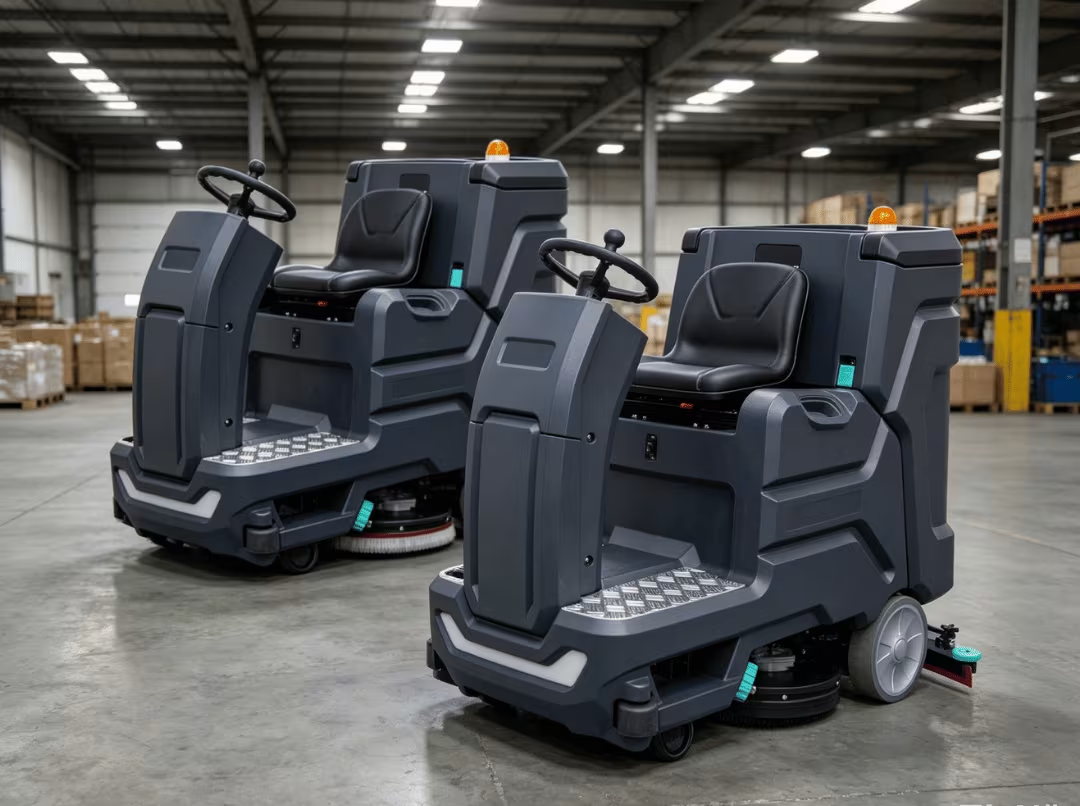
Most quality units meet CE and ISO safety certifications, giving buyers confidence in both performance and compliance.
History and Evolution
Floor scrubbing technology has come a long way since the late 19th century. The first floor cleaning machine, created by Alfred Kärcher in 1899, established the basic working principle still used today: rotating brushes paired with a water tank.
In the early 20th century, the invention of the electric motor accelerated progress. Powered brushes scrubbed floors faster, and the addition of vacuum-based water recovery meant machines could clean and dry in a single step.
By the mid-1900s, growing demand pushed manufacturers to innovate further. More efficient brush heads, stronger motors, and smarter control systems expanded the range of jobs these machines could handle.
The 21st century brought a new wave of intelligence. High-end commercial scrubbers now feature advanced navigation and obstacle avoidance, allowing them to plan cleaning routes and steer around objects on their own. Smart sensors automatically adjust scrubbing pressure and suction. Eco-friendly design has also become a priority, with built-in recyclable materials and energy-saving technology.
The industry has moved from push-behind models to ride-on units, and now toward fully autonomous machines. During the 2026 Spring Festival travel season,
Key Features
Ride-on floor scrubbers pack several practical advantages into one machine:
- All-in-one scrub and dry. Front-mounted dual brush disks or pads lift stubborn grease, grime, dirty water, and mud. A curved rear squeegee vacuums up the wastewater, leaving floors dry and residue-free.
- Wide surface compatibility. Works on epoxy, terrazzo, tile, marble, concrete, non-slip flooring, and more.
- Broad application range. Ideal for factories, offices, warehouses, retail stores, hospitals, schools, and transit terminals.
- Simple, automated operation. Fully automatic driving controls raise and lower the scrub deck and squeegee. The learning curve is short.
- Agile maneuvering. Tight turning cleans corners with no missed spots, and the controls stay light and responsive.
- Quiet, battery-powered performance. Electric operation runs silently, saves energy, and produces no secondary pollution.
- Tool-free maintenance. Brush disks and squeegee blades can be swapped without tools.
How It Works
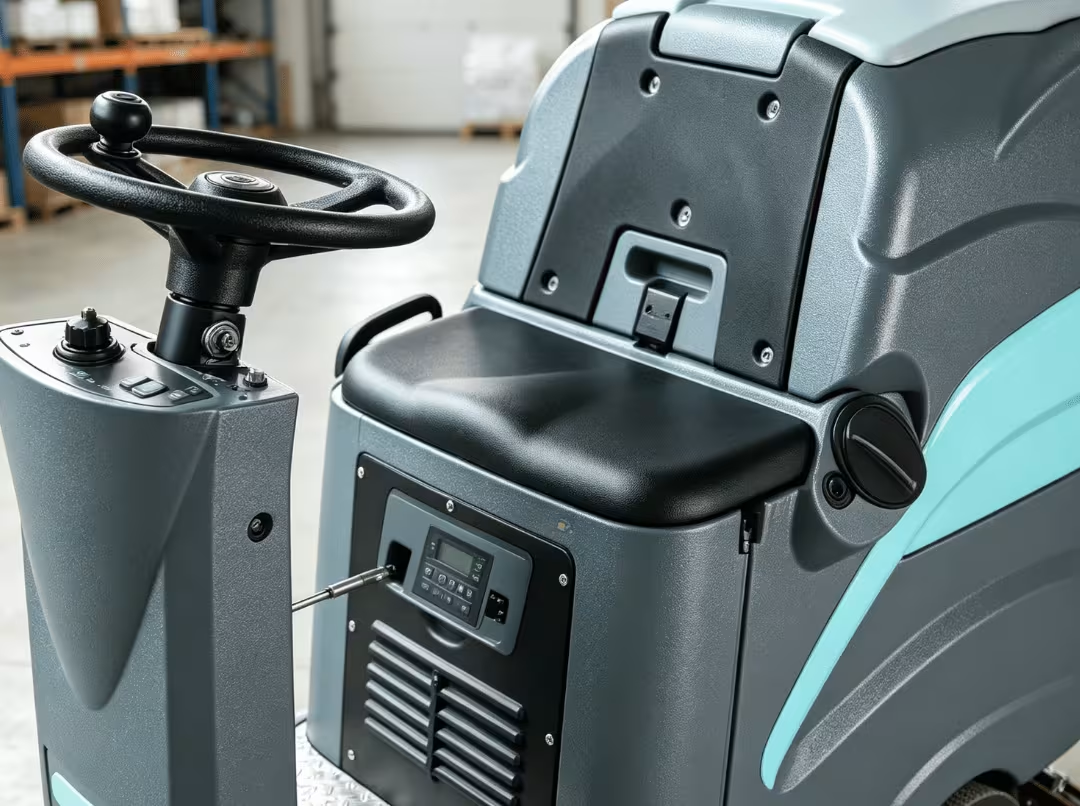
A ride-on scrubber relies on three coordinated systems.
The drive system includes the drive motor, wheels, and chassis. Together they provide movement and keep the machine stable during operation.
The cleaning system is where the real work happens. It consists of a clean water tank, a recovery tank for wastewater, a brush disk driven by a scrub motor, a squeegee that hugs the floor to collect water, and the supply and recovery hoses that connect everything.
The electrical system covers the power source, the control panel with its display and buttons, and the circuit board that manages power and functions across the machine.
The cleaning process combines physical scrubbing, liquid cleaning, and vacuum recovery. Here’s the typical sequence:
- Prepare. Fill the clean water tank with water or cleaning solution and empty the recovery tank.
- Scrub. The scrub motor spins the brush disk at high speed. The bristles physically loosen and lift dirt from the floor.
- Recover. The vacuum motor creates negative pressure inside the recovery tank. The squeegee, pressed tight against the floor, gathers the dirty water and pulls it through the recovery hose into the tank.
- Adjust as needed. From the control panel, the operator fine-tunes brush pressure, travel speed, and water flow in real time.
- Finish. Switch off the power, empty and rinse both tanks, then clean the brush disk and squeegee.
Key Technologies
Today’s ride-on scrubbers benefit from several advanced technologies.
Automatic brush change and maintenance. Automated brush-mounting systems use coordinated drive, positioning, and locking mechanisms to attach or release brush disks quickly, without manual effort.
Intelligent and autonomous operation. Select high-end models can run without a driver, following preset routes to clean on their own. Navigation and obstacle-avoidance systems plan efficient cleaning paths and steer clear of objects in the way.
Efficient cleaning and control systems. Integrated scrub-and-dry systems complete cleaning and water recovery in one pass. Some machines include automatic CIP (clean-in-place) systems that reduce downtime by self-cleaning without disassembly. Cold-water cleaning technology suits temperature-sensitive environments such as food processing plants.
Human-machine interaction. Digital control panels and intuitive interfaces let operators adjust cleaning parameters precisely and navigate with ease.
These developments reflect a broader industry shift toward greener, digital, and smarter industrial cleaning equipment.
Maintenance Guide
Regular upkeep keeps your scrubber reliable and extends its working life. Because these machines run on water, they need simple attention every day or after each cleaning job.
Daily Cleaning and Exterior Care
After every use, wipe down the body with a dry cloth to remove wastewater, dust, and leftover cleaning solution. Corrosive residue left in place can age the housing over time. Pay special attention to the squeegee and brush disk, where grime collects easily and can clog the suction inlet or slow the brush. Check the exterior for cracks or damage, and repair or replace parts promptly to keep moisture out of the internal circuits.
Routine Maintenance Steps
- Empty and rinse the recovery tank. During use, the machine collects a muddy water mixture that builds up and produces bad odors. Rinse the tank with running water regularly.
- Empty the clean water tank, especially when you won’t be cleaning daily. Standing water becomes a breeding ground for bacteria. Rinse the intake filter with running water too, since sediment can weaken suction.
- Check the squeegee. Make sure it’s clean, and rinse the blades and suction inlet with running water if needed.
- Inspect wear weekly. Check the brush disk and squeegee for wear. Highly abrasive floors and heavy downward pressure wear these parts faster. Under normal conditions, replace the brush disk after about 50 hours of use. Replace or flip the squeegee blade after about 30 hours (as long as one of its four edges is still usable).
- Check the suction filter regularly. Small debris can block the filter and reduce water flow during cleaning.
- Clean the squeegee hose. Even a partial blockage weakens suction.
Wheels: Every month, inspect the drive wheels and steering wheels for wear. Good tire grip prevents slipping and steering problems.
Battery care: Keep the battery surface clean and dry. Check the terminals regularly for looseness or corrosion. If you spot white crystalline buildup, sand it off and apply conductive grease.
Storage and Long-Term Care
When storing the machine for an extended period, drain both the clean water and recovery tanks completely so residual liquid can’t corrode them. Park the unit in a dry, well-ventilated indoor space, out of direct sunlight and away from damp conditions that could short the circuits. If the machine sits idle for more than a month, run it for 10 minutes once a month to keep the battery active and prevent capacity loss from deep discharge.
Common Troubleshooting
Most problems are simple to solve when the machine matches its working environment. Issues often arise when a scrubber is pushed beyond its technical limits or used on jobs it wasn’t designed for. Here are the most common situations and how to fix them.
Not Enough Water Reaching the Brush
- Check that the water valve is open.
- Check the water level in the clean water tank.
- Check that the water filter is clean (if fitted).
- Check whether the hose feeding water to the brush is blocked.
Incomplete Cleaning
Inspect the brush disk for wear and replace it when needed. Replace the brush once the bristles fall below 15 mm in length, using another disk of the same specification. For heavily soiled floors, use a special-purpose brush disk supplied for those conditions.
Poor Squeegee Suction
- Check that the squeegee blades are clean and free of solid debris.
- Replace worn or damaged blades. Adjust the squeegee angle. For correct operation, set the squeegee height based on blade wear. During cleaning, the rear blade should bend backward about 5 mm along its length.
- Check that the suction hose is properly connected to the recovery tank inlet.
- Remove the squeegee unit and clean it.
- Check that the vacuum motor switch is on.
- Check the adjustment of the squeegee wheels.
Too Much Foam
Check whether you’re using a foaming cleaning agent. If needed, add a low-foam defoamer to the recovery tank. Remember: heavily soiled floors naturally create more foam, so dilute the cleaning solution when grime is heavy.
Read More: 12 Common Floor Scrubber Problems and How to Fix Them
Choosing the Right Ride-On Scrubber
A ride-on floor scrubber-dryer is an investment in efficiency, safety, and consistent results. Whether you manage a busy warehouse, a sprawling shopping mall, or a spotless hospital corridor, the right machine cuts labor costs and delivers dependable, streak-free floors day after day.
When comparing models, look for CE and ISO certification, an ergonomic operator station, tool-free brush and squeegee changes, and battery performance that matches your daily coverage needs. With proper care and routine maintenance, a quality ride-on scrubber will serve your facility reliably for years.