







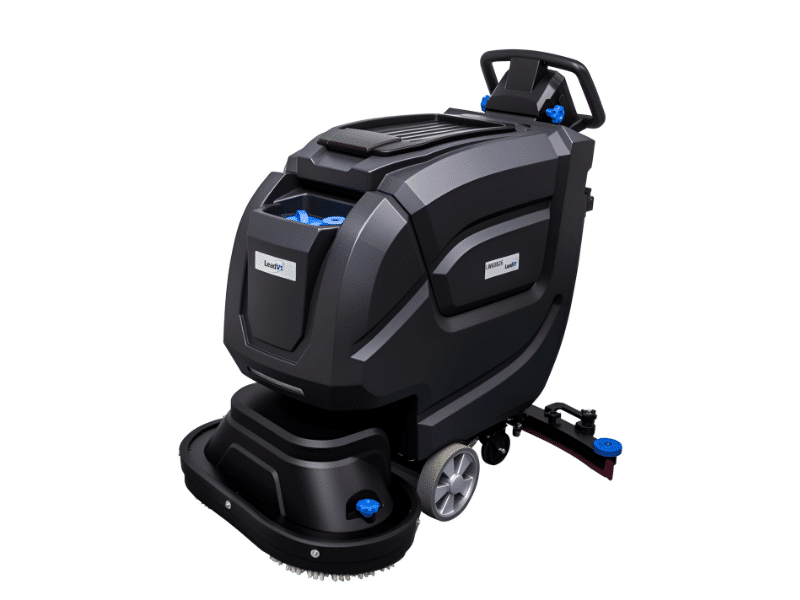
Clean floors are never just about appearance. For most facilities, they affect slip-and-fall safety, regulatory compliance, equipment longevity, and the labor hours your team spends every single day. That makes the choice between an industrial vs commercial floor scrubber a genuine business decision, not a routine equipment purchase. Pick a machine that’s too small for a large warehouse, and you’ll burn through labor hours and still leave grime behind. Choose an oversized unit for a tight retail aisle, and you’ve overspent on power, storage, and maintenance you didn’t need. The right scrubber matches your space, your workload, and your budget.
In this guide, we’ll break down the key differences between industrial and commercial floor scrubbers, weigh the pros and cons of each, compare costs, and walk through real-world use cases. You’ll also find the main buying factors, common mistakes to avoid, and a clear framework for choosing. Whether you manage a single site or a multi-location portfolio, this comparison is built to help you decide with confidence.
Industrial vs Commercial Floor Scrubber: What’s the Real Difference?
Both machines perform the same fundamental job: they mechanically scrub hard floors and collect the dirty water, leaving surfaces clean and dry. The difference lies in scale and intensity. A commercial floor scrubber is built for lighter, routine upkeep in mid-traffic spaces—think retail stores, offices, clinics, and schools where floors need daily maintenance but conditions stay relatively predictable. An industrial floor scrubber, by contrast, is engineered for heavy debris, large areas, and demanding environments such as warehouses and factories. It’s the difference between a machine that keeps a clean space tidy and one that tackles tough, continuous workloads.
The decision isn’t only about size, though. It also involves runtime, tank capacity, build durability, and total operating cost over the life of the machine. A scrubber that runs out of water halfway through a shift, or wears down under heavy grit, will cost you more than its sticker price suggests. Picking the right machine ultimately depends on four things: your facility size, floor type, soil load, and budget. Keep those in mind as we define each option in detail.
What Is a Commercial Floor Scrubber?
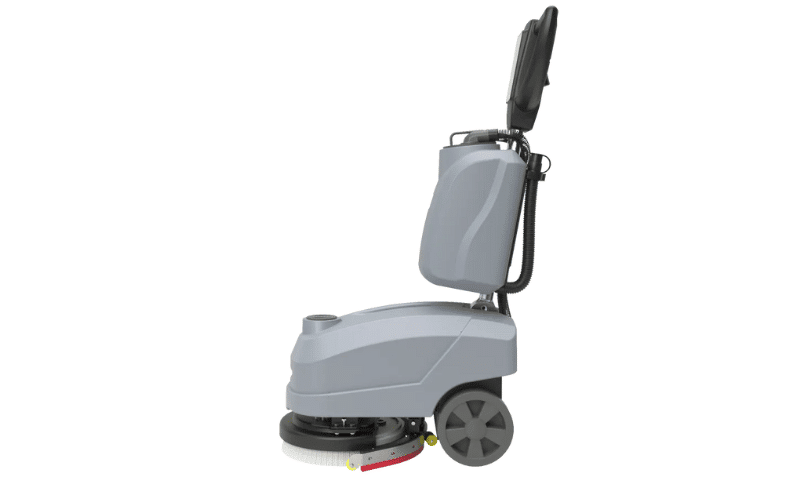
A commercial floor scrubber is a machine designed for routine cleaning in small- to medium-sized facilities such as retail stores, schools, offices, clinics, and restaurants. These units typically come as walk-behind or compact stand-on models, and they’re built around maneuverability, ease of use, and a lower upfront cost. Because they’re meant for daily maintenance rather than punishing conditions, they’re lighter, simpler to operate, and easy to fit into busy environments where people are moving around. For many businesses, a commercial scrubber delivers exactly the level of cleaning they need without the expense or bulk of heavier equipment.
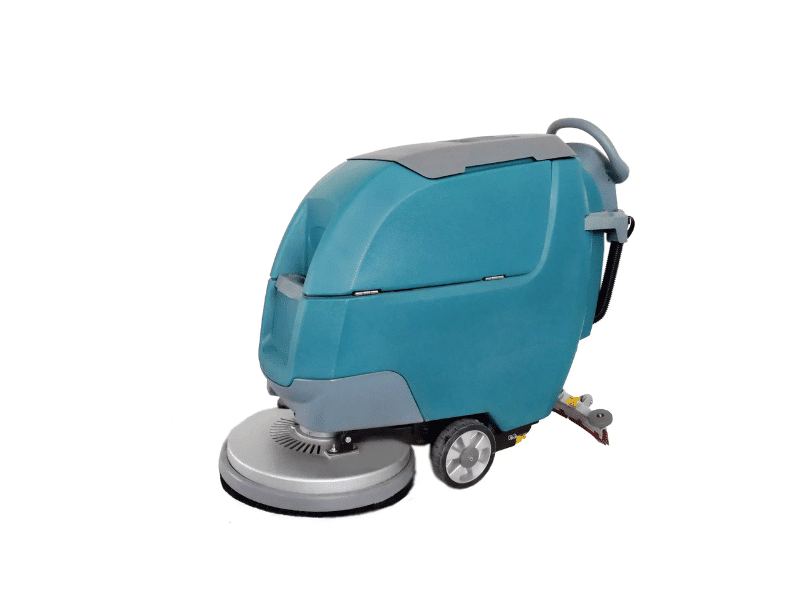
Key Features of Commercial Floor Scrubbers
Commercial scrubbers share a set of traits that make them ideal for everyday cleaning in tighter, populated spaces:
- Compact, maneuverable design for tight or busy spaces. Their smaller frame allows them to navigate narrow aisles, around displays, and through doorways with ease, making them practical for stores and offices.
- Smaller solution and recovery tanks for shorter cleaning cycles. Tank sizes suit moderate areas, keeping the machine light and agile but requiring more frequent refills on bigger jobs.
- Lower power draw and simpler operation. They consume less energy and run on straightforward controls that most staff can learn quickly.
- Affordable, upfront, and easy operator training. A lower price point and shallow learning curve reduce both the purchase and onboarding burden.
- Best for daily maintenance cleaning. They shine at keeping already-clean floors consistently presentable.
What Is an Industrial Floor Scrubber?
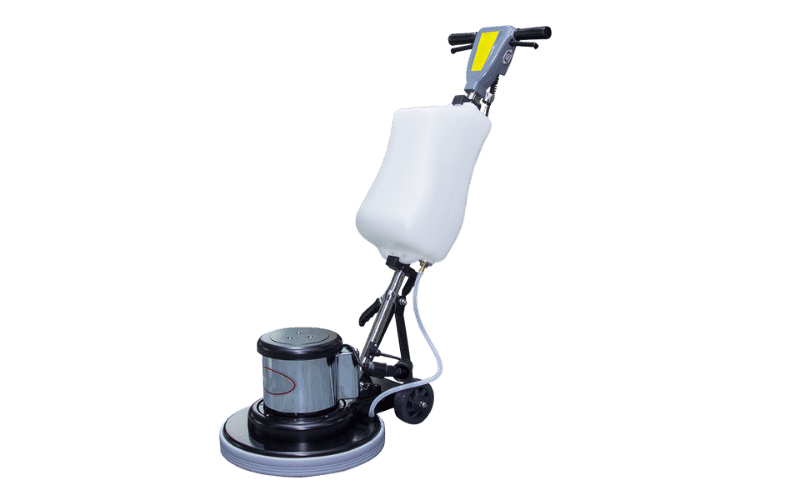
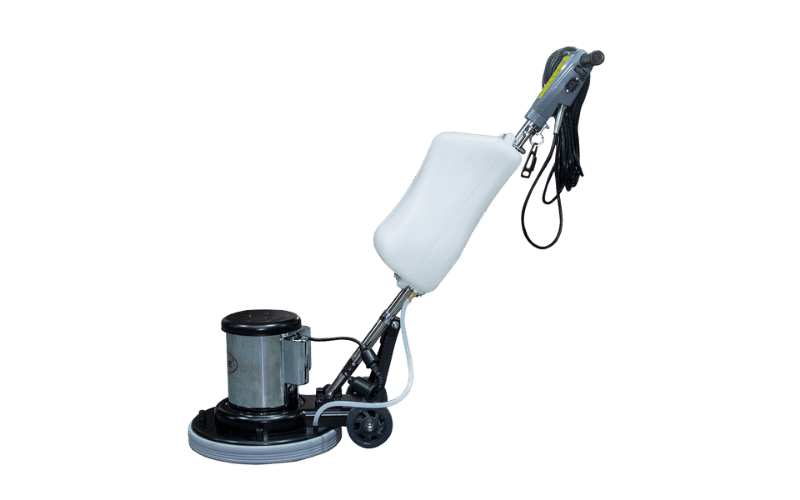
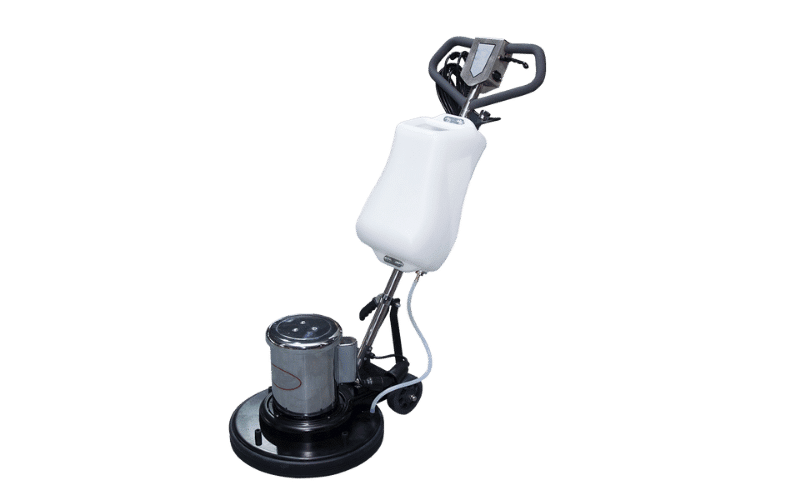
An industrial floor scrubber is a heavy-duty machine built for large areas, harsh conditions, and demanding soil loads in places like warehouses, factories, distribution centers, and large hospitals. These units often come as large walk-behind or ride-on models, and they’re designed with coverage, runtime, durability, and productivity in mind. While a commercial machine handles routine upkeep, an industrial scrubber is built to power through grease, grit, and large volumes of debris across thousands of square feet. For operations that clean big spaces under tough conditions, this is the class of equipment that keeps productivity high and downtime low.
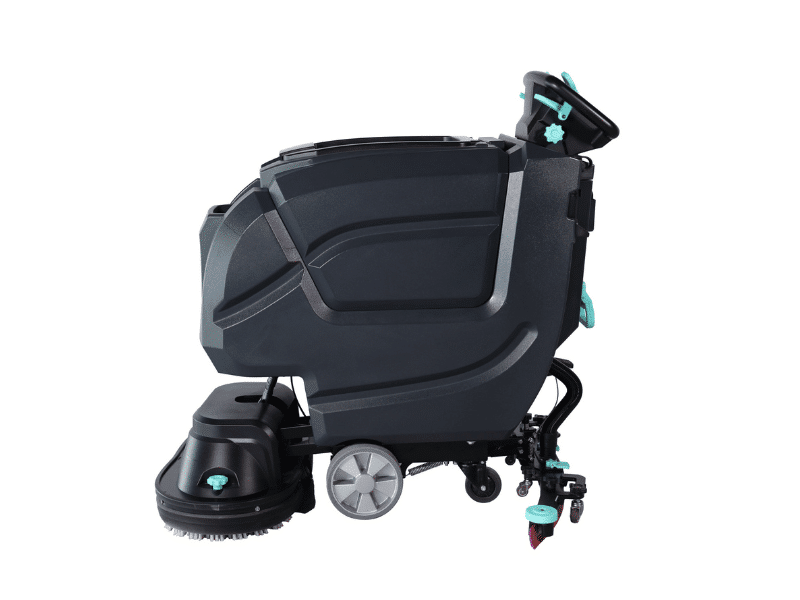
Key Features of Industrial Floor Scrubbers
Industrial scrubbers are defined by features that prioritize scale and strength over compactness:
- Larger cleaning path and high coverage per hour. A wider scrubbing deck covers more ground per pass, dramatically cutting the time needed for large facilities.
- Bigger tanks and longer runtime between refills. Generous solution and recovery tanks let operators clean longer without stopping, which matters on extended shifts.
- Rugged build for tough debris and continuous use. Heavier construction and stronger components withstand grit, moisture, and round-the-clock operation.
- Higher power and stronger scrubbing pressure. More motor strength and downward pressure remove stubborn, ground-in soil that lighter machines leave behind.
- Best for heavy-duty, large-scale cleaning. They’re purpose-built for the most demanding environments.
Key Differences Between Industrial and Commercial Floor Scrubbers
The clearest way to compare the two is to examine the factors that affect daily operations and costs. Each one influences how well a machine fits your facility, so weigh them against your real conditions rather than the spec sheet alone.
Cleaning Capacity and Coverage
The biggest separator is scale. Commercial scrubbers have narrower cleaning paths and smaller tanks, making them well-suited to moderate areas with frequent refills. Industrial scrubbers offer wide cleaning paths and large tanks, covering far more square footage per hour. If you’re cleaning a sprawling warehouse, that coverage difference translates directly into fewer labor hours and faster turnaround.
Build Durability and Power
Commercial machines use lighter materials and modest motors tuned for routine cleaning. Industrial machines are built ruggedly, with stronger motors, heavier frames, and higher scrubbing pressure that tolerate heavy debris and continuous shifts. In a factory with grit and grease, that durability prevents premature wear—while in a clean office, it’s simply more machine than you need.
Maneuverability and Footprint
Commercial scrubbers excel in tight, busy spaces, slipping around displays, desks, and foot traffic with ease. Industrial scrubbers, especially ride-on models, need open room to operate and adequate storage when idle. Matching footprint to your layout matters: a large machine in a cramped space becomes a liability rather than an asset.
Comparison Table
Here’s an at-a-glance summary of how the two machine classes stack up across the factors that matter most.
| Factor | Commercial Floor Scrubber | Industrial Floor Scrubber |
|---|---|---|
| Coverage per hour | Lower | Higher |
| Tank size | Smaller | Larger |
| Durability | Moderate | Rugged |
| Power | Lower | Higher |
| Footprint | Compact | Large |
| Best use | Daily upkeep, mid-traffic | Heavy-duty, large-scale |
Pros and Cons of Commercial Floor Scrubbers
Commercial scrubbers win on cost and agility, making them a smart fit for smaller spaces and daily upkeep. Their main tradeoff is limited capacity, so it’s worth weighing both sides before you commit.
Advantages
- Lower upfront and operating costs. They carry a smaller price tag and use less energy and fewer consumables, which keeps both purchase and running costs manageable for tighter budgets.
- Easy to maneuver and store. Their compact frame moves easily through busy spaces and tucks away in a closet or small storeroom when the job is done.
- Simple operation and quick training. Straightforward controls mean staff can learn to run them in minutes, reducing onboarding time and operator errors.
- Ideal for daily, lighter cleaning. They keep mid-traffic floors consistently clean without overspending on power you won’t use.
Disadvantages
- Limited coverage and runtime for large spaces. Smaller tanks and narrower paths mean more frequent refills and slower progress, making them inefficient for very large areas and long shifts.
- Less durable under heavy debris or continuous use. Lighter construction isn’t built for grit, grease, or round-the-clock operation, so demanding conditions wear them out faster.
Pros and Cons of Industrial Floor Scrubbers
Industrial scrubbers deliver power and productivity, but they cost more and need more space. Understanding the tradeoff helps you decide whether the investment pays off for your operation.
Advantages
- High coverage and productivity per hour. Wide cleaning paths and ride-on options clean large areas fast, cutting labor hours and freeing staff for other work.
- Rugged durability for tough environments. Heavy-duty construction withstands grit, moisture, and continuous shifts, delivering a longer service life in demanding settings.
- Long runtime for large facilities. Bigger tanks mean fewer stops to refill and empty, keeping operators productive throughout extended cleaning sessions.
- Strong scrubbing for heavy soil loads. Higher pressure and power remove ground-in dirt and stubborn buildup that lighter machines can’t touch.
Disadvantages
- Higher upfront and maintenance costs. A higher purchase price, plus more involved servicing and parts, raises both the initial outlay and the long-term spending you’ll need to budget for.
- Larger footprint and more operator training. Their size demands dedicated storage and an open operating room, and ride-on models require more thorough operator training to run safely.
Cost Comparison: Industrial vs Commercial Floor Scrubbers
Purchase price is only part of the picture. The real cost of a floor scrubber includes energy, consumables, maintenance, and labor over the machine’s full life. A cheaper unit that demands more labor hours or breaks down sooner can cost more in the long run than a pricier, more efficient machine. Thinking in terms of total cost of ownership leads to smarter decisions.
Upfront Purchase Cost
Commercial scrubbers sit at the lower end of the price range, reflecting their lighter build and smaller capacity. Industrial scrubbers cost significantly more, especially ride-on models, because of their size, power, and rugged components. The main price drivers are cleaning path width, tank capacity, build quality, and added features.
Operating and Maintenance Cost
Day-to-day costs differ, too. Industrial machines use more energy and larger volumes of consumables, and their parts and servicing tend to cost more. Commercial machines are cheaper to run and maintain but may need replacement sooner under heavy use. Factor in parts availability and service support for both.
Labor and Productivity Savings
This is where a higher price can pay for itself. An industrial scrubber’s greater coverage cleans large areas in a fraction of the time, substantially reducing labor hours. For big facilities, those savings often offset the higher purchase price within a reasonable period, improving overall return on investment.
Use Cases: Which Scrubber Fits Your Facility?
The right machine depends on your facility type, floor size, and soil load. Here’s how the choice typically breaks down across common settings, so you can match the equipment to your conditions.
Warehouses and Factories
These environments demand extensive coverage, rugged durability, and the ability to handle heavy debris like dust, grit, and grease. An industrial floor scrubber is almost always the right call here, delivering the power and runtime needed to clean expansive floors efficiently.
Retail Chains and Supermarkets
Retail spaces prioritize maneuverability, quiet operation, and mid-size coverage that won’t disrupt shoppers. A commercial scrubber—or a lighter industrial model for larger stores—usually fits best, keeping aisles clean without getting in the way.
Hospitals and Schools
Hygiene, quiet daytime operation, and easy maneuverability matter most in these settings. Commercial scrubbers are generally well-suited to corridors, classrooms, and patient areas, where compact, low-noise machines clean effectively around people throughout the day.
Property Managers and Multi-Site Teams
These buyers value versatility, fleet consistency, and lifecycle cost across multiple locations. The right choice depends on each site’s size, but standardizing on a flexible mix of machines simplifies training, servicing, and budgeting.
Placement and Floor-Type Snapshot
Use this quick reference to match your facility and floor type to the recommended machine class.
| Facility / Floor Type | Recommended Machine |
|---|---|
| Large warehouse, concrete | Industrial |
| Factory, heavy debris | Industrial |
| Supermarket, tile | Commercial or light industrial |
| Office or clinic, smooth floors | Commercial |
| School corridors | Commercial |
Key Factors to Consider Before Buying
Matching the machine to your real conditions prevents costly mistakes and ensures the scrubber earns its keep. Run through these factors before you make a decision.
Buying Factors Checklist
- Facility size and square footage to clean. The total area you clean each day drives the cleaning path and tank size you need. Larger spaces favor wider paths and bigger tanks to keep labor hours and refill stops under control.
- Floor type and soil load. Smooth sealed floors with light dirt suit commercial machines, while rough concrete with heavy grit or grease calls for industrial scrubbing power and durability.
- Power source: battery, cord, or fuel. Battery models offer cordless freedom, corded units run continuously without recharging, and fuel-powered machines suit large outdoor or industrial spaces. Match the source to your layout.
- Runtime and tank capacity needs. Longer shifts and larger areas require more runtime and larger tanks, so the machine can complete jobs without constant interruptions for refueling or recharging.
- Storage space and maneuverability. Consider where the machine lives when idle and how easily it moves through your space. Compact units store and navigate better in tight facilities.
- Future scaling and multi-site needs. Think beyond today. If you plan to grow or add locations, choose equipment that fits your longer-term cleaning and fleet strategy.
Common Mistakes to Avoid
Avoiding a few common errors saves money and protects productivity. These missteps trip up many first-time buyers, so keep them in mind as you evaluate options.
Mistakes Checklist
- Buying oversized or undersized for the space. A machine that’s too big wastes money and struggles in tight areas, while one that’s too small leaves work undone and drains labor hours. Match capacity to your actual square footage.
- Ignoring floor type and soil load. A scrubber that suits smooth floors may fail on rough concrete or heavy grease. Assess your real surface and soil conditions before choosing.
- Focusing only on the upfront price, not the total cost. The cheapest machine can become the most expensive once energy, maintenance, and labor are counted. Always weigh lifetime cost.
- Overlooking operator training and ergonomics. A machine that your staff finds awkward or hard to learn gets used less and breaks more. Comfort and simplicity matter for daily use.
- Forgetting service, parts, and warranty support. Downtime is costly when a machine sits idle waiting for repairs. Confirm that parts are readily available, service is responsive, and the warranty offers solid coverage before you buy, so your investment stays productive.
How to Choose the Right Floor Scrubber for Your Business
Knowing how to choose a floor scrubber comes down to bringing size, soil load, cost, and scaling into one clear decision process. Follow these steps to turn the comparison into a confident purchase.
Step-by-Step Selection Framework
- Assess square footage and floor type. Measure the area you clean daily and identify your surfaces, since both shape the machine class you need.
- Estimate soil load and frequency. Gauge how dirty floors get and how often they need cleaning to determine the scrubbing power required.
- Set your budget and total cost of ownership. Look beyond the sticker price to energy, consumables, maintenance, and labor over the machine’s life.
- Choose your machine class. Use your size and soil findings to decide between commercial and industrial.
- Confirm runtime and storage fit. Make sure the runtime suits your shifts and the machine fits your storage and maneuvering space.
- Plan service and training. Arrange operator training and a service plan to keep the machine productive.
Working With a Trusted Supplier
The right supplier reduces risk at every step. Look for hands-on demos, a strong service network, ready availability of parts, clear warranty coverage, and fleet support if you manage multiple sites. A reliable partner helps you size correctly and keeps your equipment running for years.
Summing Up
The core distinction is simple: a commercial floor scrubber is designed for lighter, daily cleaning in smaller and mid-traffic spaces, while an industrial floor scrubber handles large, demanding environments with heavy soil loads. The best choice always comes back to matching the machine to your facility size, floor type, and soil load—and weighing the total cost of ownership rather than the upfront price alone. A slightly higher investment in the right machine often pays off through lower labor costs and a longer service life.
By facility type, warehouses and factories are lean industrial, while retail, schools, and clinics usually suit commercial machines. Before you commit, verify the runtime, service support, and scaling needs that match your operation. If you’re unsure which class fits best, request a demo or consult a specialist who can assess your space and recommend the right solution for your business.