



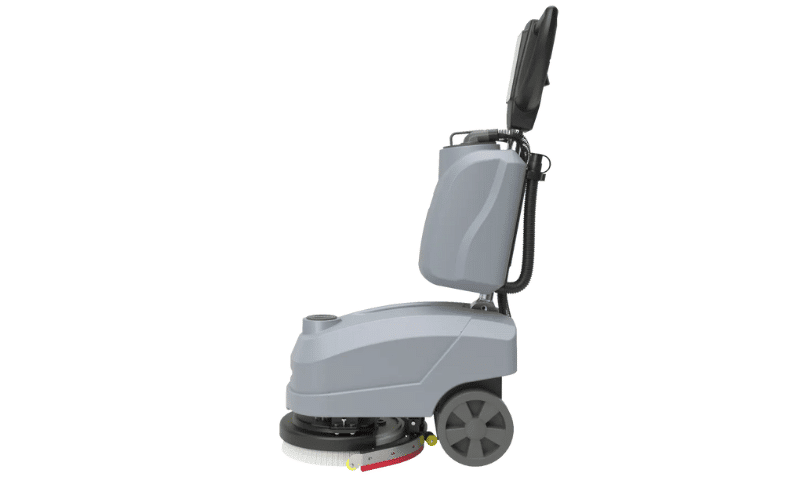

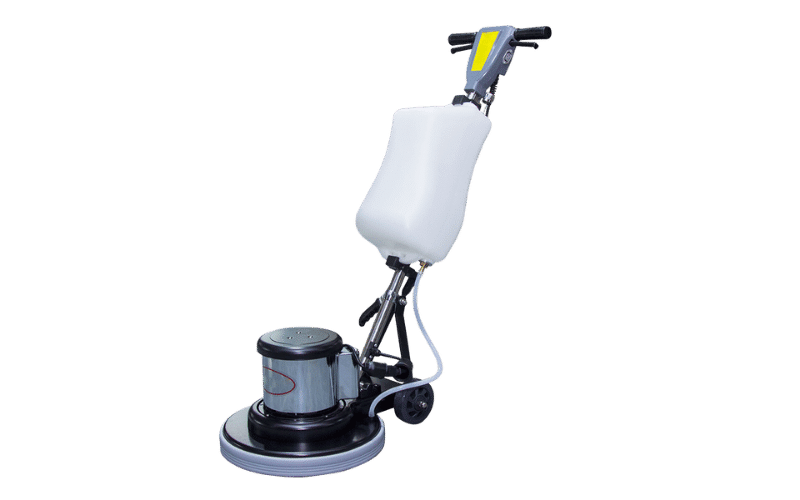
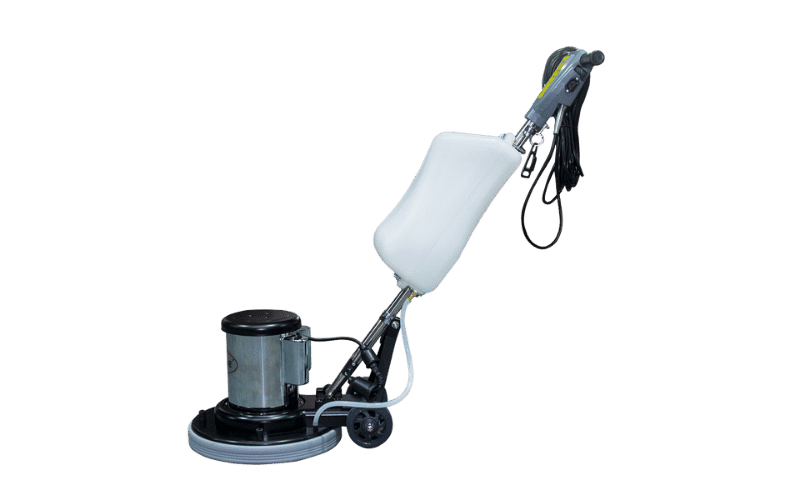
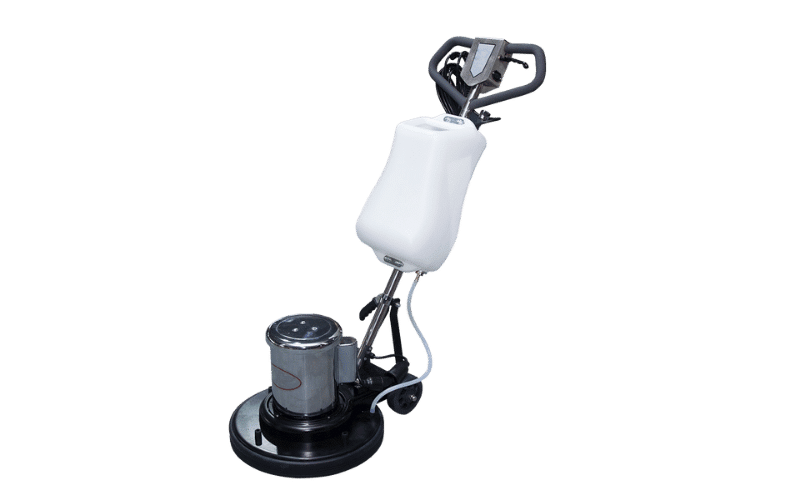



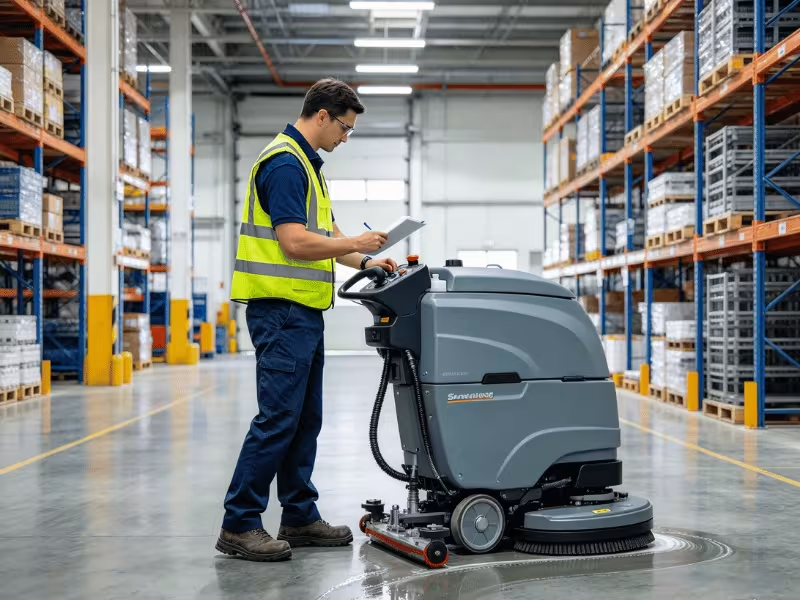
A commercial floor scrubber can serve your facility for eight years or more. Over that time, the brand you pick affects labor hours, cleaning quality, repair bills, and how often your team falls back on mops. Even so, most buyers start with a “best brands” list built on visibility rather than field performance.
This guide is for facility managers, cleaning company owners, and operations leads who need to compare brands with evidence. It works whether you’re choosing a walk-behind floor scrubber for a retail chain or a ride-on floor scrubber for a distribution center. You’ll learn how to judge machine fit, verify parts and service, assess dealers, and calculate total cost of ownership before you sign anything.
The method uses four dimensions:
- Machine performance in your real conditions
- Parts availability and service response
- Vendor and dealer behavior
- Total cost of ownership (TCO) over five years
By the end, you’ll have three tools: a structured demo checklist, a five-year TCO formula, and a weighted scorecard. Together, they let you compare any brand fairly, whatever your budget or facility type. If you’re weighing walk-behind floor scrubbers against ride-on floor scrubbers, the same process applies.
Why Brand Rankings Fall Short
Rankings are a useful starting point but a poor final decision tool.
To get a broad view of the market first, use our list of the top 50 floor scrubber brands to build your longlist. Just keep in mind that a longlist is research, not a decision. The real work begins when you test each name against your floors, your shifts, and your support needs.
Here’s where rankings break down.
- They recycle the same sources. Many ranked lists pull from the same review sites, press releases, and sponsored placements. A brand’s position often reflects its marketing budget more than how its machines hold up after 3,000 operating hours.
- They ignore distributor gaps. A brand at the top of a global list may have no authorized dealer within 200 miles of your building. When a vacuum motor fails, that distance can turn a same-day fix into a two-week outage.
- They ignore the variables that drive results. Fleet size, floor type, shift length, and operator skill shape outcomes far more than the logo. A scrubber that performs well on sealed concrete in a single-shift warehouse may struggle on grouted tile in a hospital that cleans around the clock.
- They assume one price. Pricing varies by dealer, region, and order volume. The same model can carry quotes 15–20% apart in two cities. A single “best value” label misleads most buyers.
- Brand recognition doesn’t equal local support. A famous name doesn’t guarantee that brushes, squeegee blades, or a control board are sitting on a shelf near you.
In short, rankings answer “Who is well known?” Your evaluation has to answer a different question: “Who will keep this machine running in my building?”
The Four Dimensions That Actually Predict Satisfaction
Buyers who stay happy with a scrubber purchase almost always checked four things before signing. Use this table as your map for the rest of the guide.
|
Dimension |
What to Check |
Why It Matters |
|---|---|---|
|
Machine performance |
Floor fit, runtime under load, water recovery, turning space |
A machine that looks strong on a spec sheet can fail on your route |
|
Parts & service |
Local stock, written lead times, response windows, loaner units |
Downtime often costs more than the price gap between brands |
|
Vendor behavior |
Dealer depth, training, transparency, contract terms |
The dealer shapes your day-to-day ownership experience |
|
Total cost of ownership |
Consumables, batteries, labor, repairs, resale |
The lowest invoice rarely means the lowest cost |
Each dimension gets its own section below. After that, a weighted scorecard ties them together.
Dimension 1 – Machine Performance in Real Conditions
Match the Machine to Your Floor and Facility
Start with your building, not the brand. Write down these conditions before you request a single quote:
- Floor type. Sealed concrete, VCT, epoxy, ceramic tile, and mixed surfaces react differently to brush pressure and water flow. Epoxy can scuff under aggressive pads. Grouted tile needs bristle brushes that reach into the grout lines instead of riding over them.
- Area and layout. Walk-behind units suit tight aisles, small footprints, and areas under roughly 20,000 square feet. Ride-on units suit open warehouses and long, straight runs where operator fatigue becomes a factor.
- Obstacle density. Racking, pallets, displays, and foot traffic make turning radius and sightlines more important than cleaning width.
- Soil type. Tire marks and hydraulic oil in a factory call for different pressure and chemistry than dust and drink spills in a supermarket.
- Cleaning chemistry. Some floors need low-foam detergents or exact dilution ratios. Check for adjustable solution flow or an onboard dosing system.
- Access points. Measure doorway widths, elevator dimensions and weight limits, ramp angles, and the distance to your charging area.
Many buyers miss one point here: you often think you’re comparing brands when you’re really comparing machine classes. A compact walk-behind from Brand A and a mid-size ride-on from Brand B aren’t true rivals. They solve different problems. Settle the machine class first, then compare brands within that class. For smaller rooms or crowded spaces, start with compact floor scrubbers before looking at larger platforms.
Compare Specs That Affect Operating Cost
Spec sheets list dozens of numbers. These are the ones that change your labor hours and running costs.
Tank capacity and runtime per charge. Every mid-shift refill or recharge costs labor time. If your route takes three hours and the machine delivers 90 minutes of real runtime, you’re building in at least one stop per shift. Ask for runtime with brushes down and the vacuum running, not the best-case figure at the lowest setting.
Brush and pad pressure settings. Too much pressure wears floors and burns through pads. Too little leaves soil behind. Adjustable down pressure lets one machine handle both light daily cleaning and heavier restorative work.
Squeegee design and blade material. The squeegee decides how dry the floor is at the end of a pass. Compare curved and straight designs, blade materials such as gum rubber, linatex, and polyurethane, and whether blades can be flipped to use all four edges. Four usable edges can double the time between blade purchases.
Water recovery on turns and edges. Many machines pick up well on straight runs but leave trails on tight turns or along walls. This matters for slip safety and for how the floor looks to customers and patients.
Battery type. Lead-acid (wet), AGM, and lithium-ion differ in charge time, lifespan, maintenance, and upfront cost. Wet lead-acid costs least upfront but needs regular watering and a full charge cycle. Lithium-ion supports opportunity charging during breaks and needs no watering, but costs more at purchase.
Noise level. In hospitals, schools, hotels, and offices that clean during the day, the decibel rating decides whether you can run the machine during operating hours at all. Ask for the measured rating, and listen to it in your own space.
Run a Structured Demo
A demo is the best way to compare brands, but only if it’s fair.
A fair demo means every machine runs the same route, on the same floor type, under similar soil conditions, with the same operator briefing. Without that, you’re comparing salespeople, not scrubbers.
Ask for the demo on your floor, during your shift, with your own operators at the controls. A showroom demo on a clean, freshly sealed floor tells you almost nothing about Tuesday night in your loading bay.
Demo checklist:
- Tested on your actual floor type and typical soil level
- Same route length and layout for every machine
- Coverage rate measured in square feet per hour and compared with your current method
- Water recovery checked on straight runs, tight turns, and along edges
- Floor dryness checked two minutes after the pass
- Doorway, elevator, and ramp clearance confirmed
- Charging location and power supply confirmed
- Operator onboarding time recorded (minutes until confident, unassisted use)
- Daily maintenance steps timed: draining, rinsing tanks, cleaning the squeegee and filters
- Noise level noted in sensitive areas
- Operator feedback on comfort, visibility, and controls written down
- Before-and-after photos taken, with open questions logged
Record results on one shared sheet. When procurement, operations, and maintenance review the decision later, everyone will see the same evidence instead of competing memories.
Dimension 2 – Parts Availability and Service Response
Common Wear Parts and Lead Times
Every scrubber wears out the same core parts. What separates brands is how fast and how cheaply you can replace them.
Ask the dealer which parts wear or fail most often on the exact model you’re quoting. The usual list includes:
- Squeegee blades
- Brushes and pad drivers
- Recovery and solution hoses
- Vacuum motors
- Drive motors (on traction-drive models)
- Batteries
- Control boards
For each part, get three answers in writing:
- Where is it stocked? Locally, at a regional warehouse, or only at the factory?
- What’s the normal lead time? Hours, days, or weeks?
- Is it proprietary? Some manufacturers design parts that only they can supply. That narrows your options and usually raises the price.
Here’s a simple test. Ask the dealer to quote a squeegee blade set and a vacuum motor while you’re on the call. A dealer with a working parts system can usually answer within minutes. A dealer who needs a week to reply is telling you how your first repair will go.
Local Service Network
Map the distance from your facility to the nearest authorized service center. Then ask:
- Do you offer on-site repairs, or must we bring the machine to you?
- What’s your average response time? Ask for emergency breakdown calls and routine maintenance visits separately, since dealers often quote the faster figure.
- Will you commit to that response window in a written service agreement?
- Do you provide loaner units during repairs that take longer than two or three days?
Ask for two or three current customers nearby and call them. One direct question tells you most of what you need: “The last time your machine broke down, how long until it was running again?”
If you run a single machine, this section matters most. With one scrubber, any breakdown stops all machine cleaning until it’s fixed.
Manufacturer Track Record
The dealer handles your daily experience, but the manufacturer decides long-term support. Check these points:
- Time in the floor scrubber business. How long has the brand built scrubbers, and does it still support models from ten years ago?
- Parts obsolescence policy. How many years after a model is discontinued will parts stay available? Get a number, such as seven or ten years, not a general reassurance.
- Documentation. Ask for the operator manual, parts diagram, and maintenance schedule before you buy. Brands that share these freely are usually easier to own.
- Warranty terms. Read the exclusions, labor coverage, and claim process, not just the headline warranty length.
- References from similar facilities. Ask about their worst repair experience, not just their best day.
Dimension 3 – Vendor and Dealer Behavior
Evaluate the Dealer as Its Own Entity
Two dealers selling the same brand can deliver completely different service. Treat the dealer as a separate decision from the machine.
Ask:
- How long has the dealership been in business?
- How many service technicians do you employ, and are they factory-trained on this brand?
- How many machines do you service each month?
- Do you provide operator training at delivery, and is it included in the price?
- Do you offer preventive maintenance contracts? What do they cover, and how often do technicians visit?
Pay attention to how the sales rep opens the conversation. A strong rep asks about your floors, shift patterns, soil load, and current frustrations before naming a model. A rep who leads with a price sheet is moving inventory, not solving your problem.
Contract Terms to Review
Read the contract before you sign, not after the first repair. Focus on these terms:
- Warranty length by component. Frames, motors, batteries, and labor often carry different terms. A “three-year warranty” might cover the frame for three years, the motors for two, and the battery for one.
- Parts-only versus parts-and-labor coverage. On many repair visits, labor and travel cost more than the part itself.
- Service level agreements. Response windows written into the contract, not promised over the phone.
- Lease versus purchase terms. Check buyout options, end-of-term condition rules, and any limits on annual usage hours.
- Return or exchange policy. Know what happens if the machine doesn’t perform the way it did in the demo.
Red Flags in the Sales Process
Slow down, or walk away, if you see any of these:
- Pressure to buy without a demo on your floor
- Vague answers about parts pricing or lead times
- No local service presence, only a toll-free number
- Warranty terms explained verbally but missing from the written quote
- Online reviews that cluster around delivery day and say nothing about year two or three
Dimension 4 – Total Cost of Ownership Over Five Years
Build a Five-Year Cost Model
The invoice price is the most visible number and often the least important. Use one formula for every brand you compare:
Five-year TCO = purchase or lease cost + consumables + battery replacements + routine maintenance labor + out-of-warranty repairs + downtime cost − resale value
Here’s what belongs in each line:
|
Cost Line |
What to Include |
|---|---|
|
Purchase or lease |
Machine price, charger, freight, setup, training |
|
Consumables |
Brushes, pads, squeegee blades, hoses, filters, detergent |
|
Battery replacements |
Number of battery sets needed over five years and their cost |
|
Maintenance labor |
Daily cleaning, weekly checks, and operator time spent charging and refilling |
|
Repairs |
Out-of-warranty parts and labor, based on what references told you |
|
Downtime |
Labor hours spent on backup methods, such as mopping, while the machine is down |
|
Resale value |
Expected trade-in or resale price at year five |
Estimating downtime cost. Most buyers skip this line because it feels hard to measure. A simple estimate works: expected days down per year × extra labor hours per day on backup cleaning × your loaded hourly labor rate. If a breakdown means two people mop for four hours each, that’s eight labor hours per day the machine is out.
Use the same route frequency and the same five-year horizon for every candidate. The model doesn’t need perfect precision. Its value comes from putting each brand’s assumptions side by side so your team can challenge them before the purchase order goes out.
An illustrative example: Machine X costs $1,500 less than Machine Y. But Machine X runs on batteries that need replacing every two years at $1,100 per set, while Machine Y’s batteries last about four years. Over five years, Machine X needs two replacements and Machine Y needs one, which closes $1,100 of the gap. Add three extra days of downtime per year because the nearest parts warehouse is farther away, at eight labor hours per day and $25 per hour, and Machine X picks up another $3,000 over five years. The “cheaper” machine now costs more.
Depreciation and Resale Value
Some brands hold their value better than others, usually because parts stay available and buyers in the used market recognize the name.
Ask the dealer what a five-year-old unit of this model typically sells for. Check used equipment listings for the same model to confirm. Then subtract that figure in your TCO model. A higher upfront price can still win on net cost if the machine lasts longer and resells for more.
A Weighted Scorecard You Can Reuse
Now bring it all together. A weighted scorecard turns your research into a clear decision built on your priorities, not a magazine’s.
How to build it:
- List the criteria that matter most for your facility.
- Give each one a weight based on its impact. Weights must total 100%.
- Score each brand from 1 (poor) to 5 (excellent) on every criterion, using your demo notes, reference calls, and TCO model.
- Multiply each score by its weight and add up the results.
Sample scorecard:
|
Criteria |
Weight |
Brand A |
Brand B |
Brand C |
|---|---|---|---|---|
|
Machine fit for floor type and layout |
25% |
4 |
5 |
3 |
|
Parts availability and lead time |
20% |
3 |
4 |
2 |
|
Dealer service response and proximity |
20% |
5 |
3 |
2 |
|
Five-year total cost of ownership |
25% |
4 |
3 |
5 |
|
Operator comfort and training time |
10% |
4 |
4 |
3 |
|
Weighted total |
100% |
4.00 |
3.80 |
3.10 |
Look at what the numbers reveal. Brand C has the best five-year cost on paper, but weak parts access and dealer support pull it to last place. Brand B scores highest on machine fit, yet Brand A edges ahead because its local service is much stronger.
Adjust the weights to fit your situation. A single-machine facility might raise dealer service to 30%. A cleaning contractor running mixed sites might raise machine fit. Whatever you choose, set the weights before you see any quotes, so price doesn’t quietly reshape your priorities. Keep the scorecard on file, and future purchases will stay consistent across budget cycles and staff changes.
Common Objections and How to Handle Them
“The biggest brand must be the safest choice.”
Size helps, but local support decides your experience. A large brand with a weak dealer in your area can deliver slower repairs than a smaller brand with a strong local partner.
“The cheapest machine saves money.”
A lower upfront price can hide higher parts costs, shorter battery life, or no nearby service. The example in the TCO section shows how fast a $1,500 saving can disappear.
“Demos are too much hassle.”
A two-day demo costs far less than an eight-year mistake. If a dealer won’t arrange one on your floor, treat that refusal as part of your evaluation.
“Lithium-ion costs too much upfront.”
Run the battery math before ruling it out. Fewer replacements, no watering, and charging during breaks can offset the higher price over five years, especially on multi-shift routes.
“We only have one machine, so downtime doesn’t matter much.”
The reverse is true. With one machine, a single breakdown halts all machine cleaning. That makes service response your top criterion, not a minor one.
How to Research Brands Without Relying on Rankings
Rankings are one input. These sources give you stronger evidence:
- Talk to peers. Facility managers at similar buildings, industry associations, and local facility groups can tell you what ownership looks like in year three.
- Ask independent service technicians. They know which brands rarely come in for major repairs and which ones keep them busy.
- Request parts diagrams and maintenance intervals before purchase. These show how complex the machine is and how often wear parts need replacing.
- Compare parts pricing on dealer websites. Price a squeegee blade set and a brush set for each brand to gauge long-term running costs.
- Visit a dealer’s service bay. Look at what’s waiting for repair and ask why. You’ll get a candid view no brochure offers.
- Read reviews for patterns. Focus on comments about the second and third year of ownership, not delivery day.
- Collect documents for the exact configuration. Request the current product sheet, operator manual, warranty terms, and part numbers for the model you’re quoting. Note revision dates so you know the information is current.
FAQs
How do I compare floor scrubber brands when prices vary by dealer?
Ask every dealer to quote the identical configuration, including charger, batteries, freight, and training, so you’re comparing like for like. Then feed each quote into your five-year TCO model. A higher quote with stronger service terms often costs less overall.
What’s the most important factor when choosing a floor scrubber brand?
For most buyers, it’s local parts and service support. Even well-built machines break down occasionally, and repair speed decides how much each failure costs you.
How long should a commercial floor scrubber last?
With consistent maintenance, many commercial scrubbers stay in service for five to ten years. Daily run hours, floor conditions, operator care, and continued parts availability all affect where a machine lands in that range.
Are low-cost floor scrubber brands worth considering for small facilities?
Yes, as long as the machine fits your floor and you can confirm parts access and a reachable service option. For a single small site, a reliable local dealer matters more than a premium badge.
How do I check parts availability before buying a floor scrubber?
Ask for written lead times on common wear parts and where they’re stocked. Then confirm with references how long their most recent parts order actually took to arrive.
Should I buy a floor scrubber or lease one?
Leasing spreads the cost and often bundles maintenance, which helps cash flow and budgeting. Buying usually costs less over a long service life. Model both options over the same five-year horizon, including buyout terms, before deciding.
What warranty terms should I look for in a floor scrubber?
Look for coverage broken out by component, clear labor terms, a defined claims process, and response times in writing. Batteries, brushes, and squeegees are often classed as wear items, so check how they’re treated.
Do lithium-ion batteries change how I should evaluate scrubber brands?
Yes. Confirm whether lithium-ion is a factory option or a retrofit, check charger compatibility, and compare battery warranty length and replacement cost across brands. Factory-integrated systems are usually easier to support.
How many service centers should a floor scrubber brand have near me?
There’s no fixed number. What matters is that at least one authorized provider can reach your site within the downtime window your operation can tolerate, and will commit to it in writing.
Conclusion: Build Your Scorecard Before You Call a Dealer
Rankings tell you which brands exist. They can’t tell you which one fits your floors, your shifts, and your support needs. That answer comes from four dimensions:
- Machine fit on your real floor and route
- Parts and service you can verify in hours and days
- Dealer behavior before, during, and after the sale
- Total cost of ownership over five years
Start by setting your scorecard weights. Then run a structured demo on your own floor with your own operators. Before you sign, ask for references from facilities that have owned the machine for at least three years, and ask them about repair history and parts wait times.
Your next step: build your longlist with our guide to the top 50 floor scrubber brands, then run each candidate through the four dimensions above. Most buyers can narrow a long list to three serious finalists within a week.
If Leadv is on your shortlist, we’ll give you the evidence this guide asks for: exact machine configurations, current product sheets, operator manuals, warranty terms, and spare part references. Browse our walk-behind floor scrubbers, ride-on floor scrubbers, and compact floor scrubbers, or contact the Leadv team to request a quote and the documents you need to score us fairly against any other brand.
For a deeper breakdown of labor, batteries, repairs, and downtime, see our floor scrubber total cost of ownership guide.