



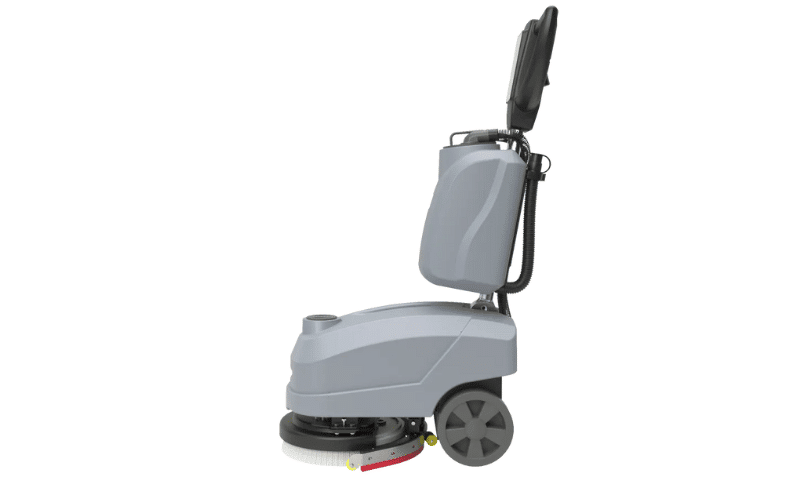

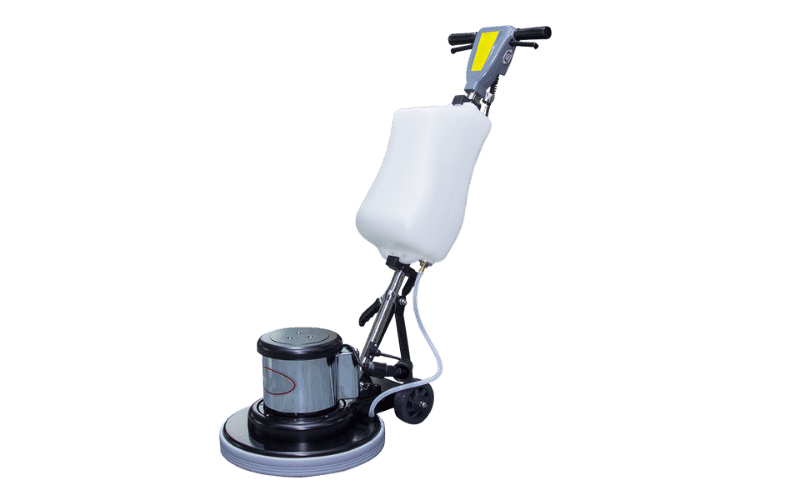
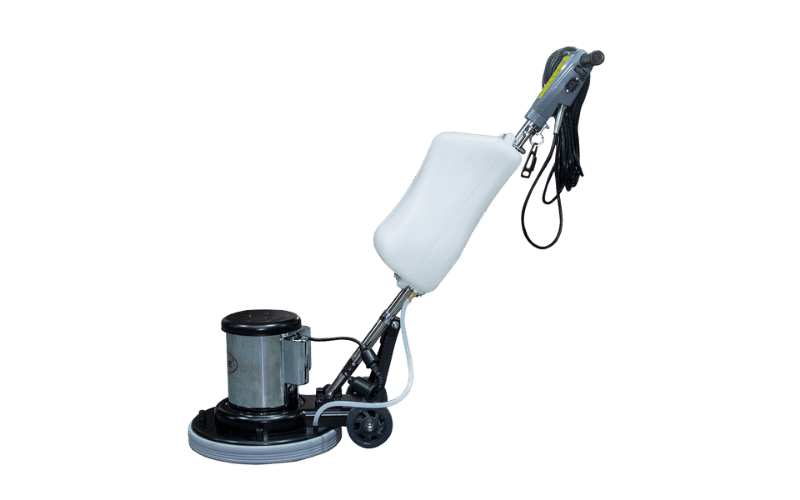
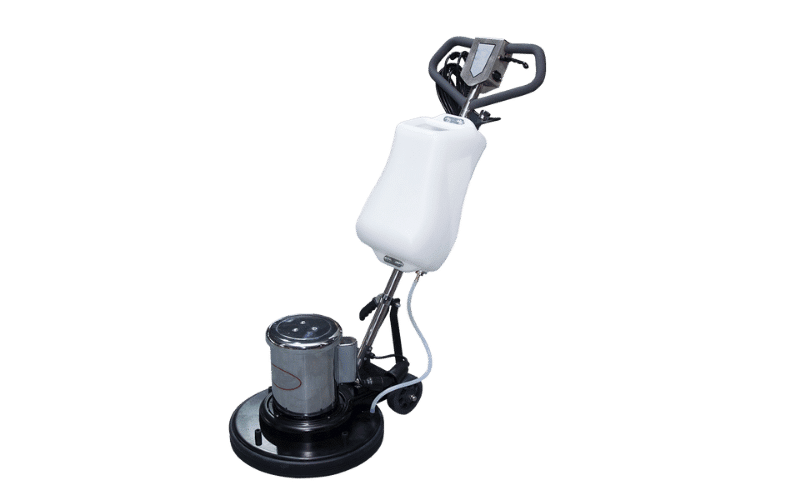



Walk into most janitorial closets, and you’ll find at least one round rotary machine sitting under a stack of pads. Ask three people what it does, and you’ll get three different answers. That confusion is exactly why floors end up dull, hazed, or stripped down to bare tile too soon. Buffers and burnishers look similar, sit next to each other in the supply catalog, and even share some pads — but they do fundamentally different jobs.
If you’re deciding what to buy, or trying to figure out why your floors never quite hit that glass-like shine, this guide sorts it out. We’ll cover what each machine actually does, how they compare head-to-head, and how to pick the right one based on your floors, traffic, and budget.
What a Floor Buffer Actually Does
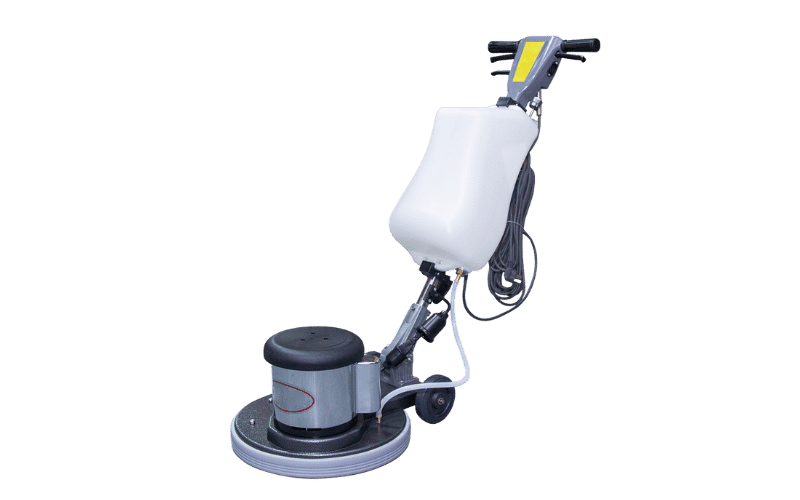
A floor buffer is your everyday workhorse. It runs at low to mid speed — roughly 175 to 1,500 RPM — and uses a rotating pad or brush to apply cleaning and abrasive action across the surface. The key detail: it does its work through mechanical scrubbing, not heat. The pad spins fast enough to lift dirt and old finish, but it doesn’t generate the friction heat that changes the finish layer itself.
That makes the buffer a genuine multi-tasker. A single machine handles daily surface cleaning, spray buffing, deep scrubbing, stripping old wax, and laying down fresh finish coats. Swap the pad and you change the job:
- Red pads for light polishing and spray buffing
- Blue pads for general scrubbing
- Black pads for aggressive stripping of old finish
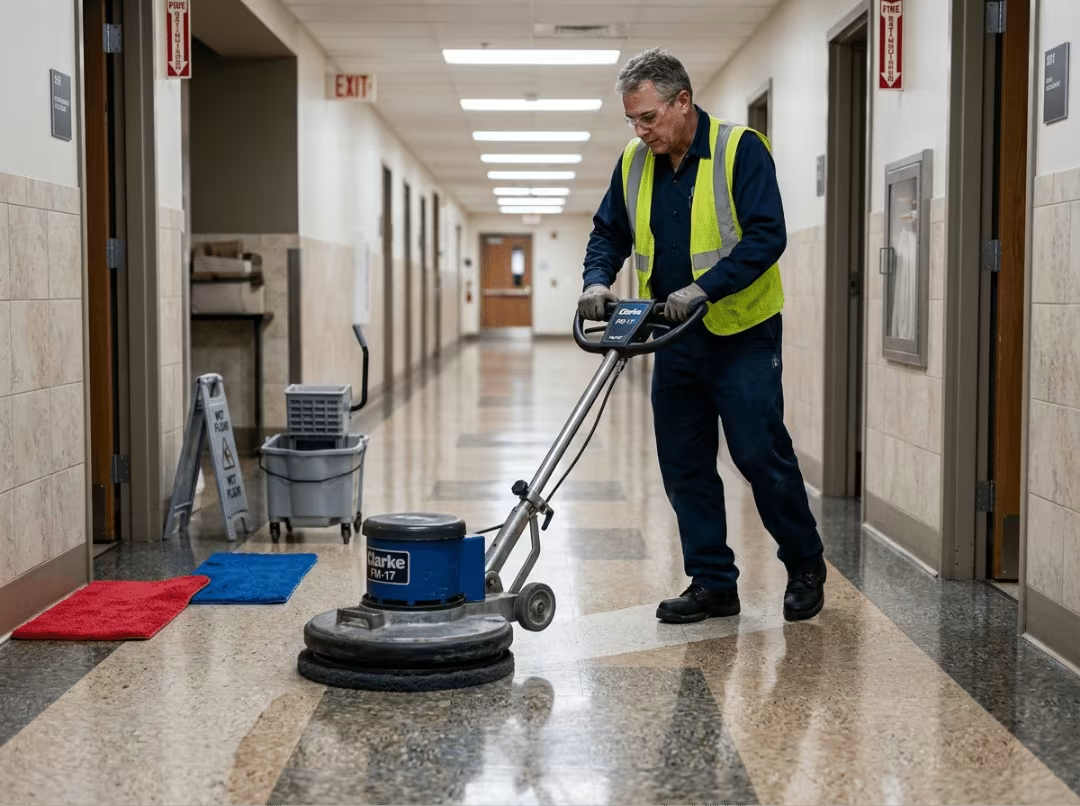
It runs safely on the floors you’ll find in most commercial buildings — vinyl composition tile (VCT), linoleum, terrazzo, sealed concrete, and many finished wood surfaces. If a floor prep or maintenance task doesn’t involve high-gloss finishing, a floor buffer probably covers it.
One thing worth clearing up early: a buffer is not a scrubber, and neither one is a mop. If you’re also weighing wet scrubbing into the mix, the differences are laid out in our breakdown of floor scrubber vs floor buffer.
What a Burnisher Does Differently
A burnisher is a specialist. It spins much faster — typically 1,500 to over 3,000 RPM — and that speed is the whole point. At those RPMs, the pad generates friction heat that softens the top layer of an existing finish and fuses it into a smooth, dense surface. The result is that deep, wet-look, high-gloss shine you see in polished retail entrances and hospital corridors.
Here’s the part people miss: burnishing is not a cleaning step. It’s a finishing step. The machine doesn’t remove dirt or strip old wax — it polishes a floor that’s already clean and already coated. Run a burnisher over a dirty floor and you just heat-set the grime into the finish.
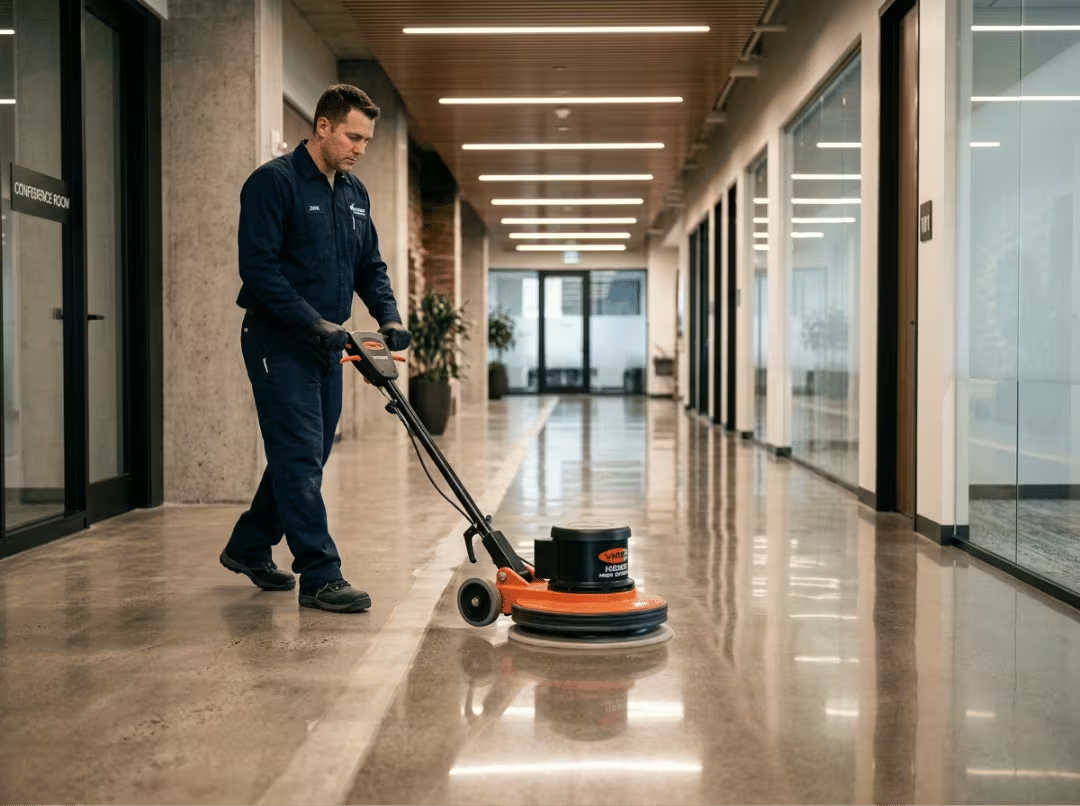
That’s also why the condition of the floor matters so much. A burnisher needs a healthy finish layer to work on. Take it across a bare or worn-down floor, and you’ll scorch, haze, or gouge the surface instead of shining it. Check the finish first, every time.
Burnishers come in electric, battery, and propane versions. Corded electric models suit smaller rooms. Battery and propane units are popular in large open spaces — big-box retail, warehouses, and long corridors — where dragging a cord around is a headache.
Buffer vs Burnisher: The Side-by-Side
The specs matter, but only in terms of what they mean for the floor in front of you.
Speed and What You See
Speed is the dividing line. The buffer’s lower RPM cleans, strips, and preps — it moves dirt and finish around and off the floor. The burnisher’s high RPM melts and rehardens the finish into a mirror finish.
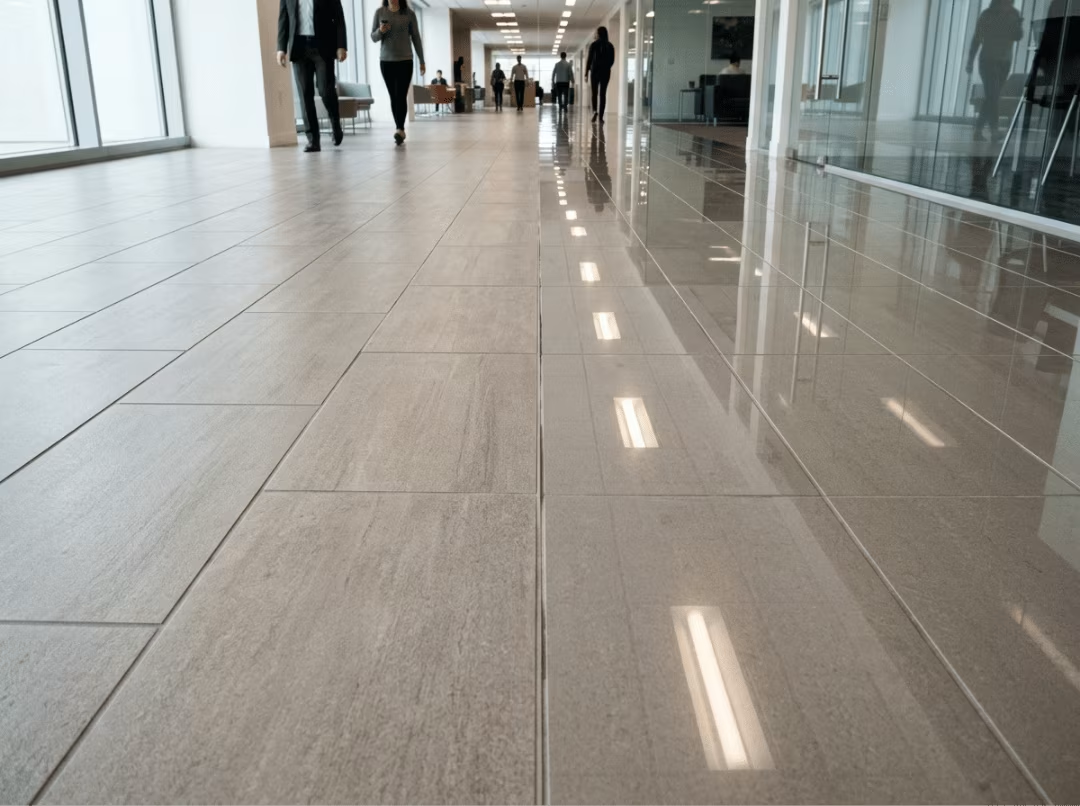
After a buffer pass, you get a clean, uniform floor with a soft satin look. After a burnisher pass, that same floor turns reflective — you can read overhead lights in it. One cleans the floor. The other makes it glow.
Skill Level
Buffers are forgiving. Keep the machine moving, hold an even pass, and a new operator gets acceptable results in a shift or two. Burnishers demand a steadier hand. Linger too long in one spot and the heat burns or hazes the finish, leaving a permanent mark. If you rotate staff often, that training gap is a real cost — a buffer tolerates learning curves, a burnisher punishes them.
Noise, Dust, and Mess
Buffers run quieter, especially with wet pads and cleaning solution. Burnishers are loud, and the high-speed dry polishing throws off fine dust. That’s why serious burnishers include dust collection — a built-in vacuum skirt or dust bag — and why crews wear hearing protection on long runs. Plan for both if you’re going the burnisher route.
Pad and Maintenance Costs
Buffer pads last longer and cost less to replace. Burnisher pads wear faster and usually cost more per pad, which adds up in a high-production operation. Both machines need the same basic care: swap pads before they’re worn out, keep the drive plate clean so the pads seat evenly, and check the motor venting to prevent overheating.
How to Choose for Your Facility
Skip the spec-sheet arguments and start with three questions: What are my floors made of? What condition is the finish in? And what am I actually trying to accomplish?
Start With Your Floor Type
Not every floor can take high-speed heat. Soft or porous surfaces — unsealed wood, some rubber flooring — aren’t safe to burnish; the friction heat damages them. Hard, resilient surfaces like VCT and terrazzo are ideal for both machines, depending on the task. Sealed concrete handles both well too.
A quick field rule: if the floor holds a finish, it can probably be burnished. If you’re not sure, test a small out-of-the-way corner before you commit the whole room. That five-minute test tells you more than any product listing.
Match the Machine to the Goal
This is where it gets simple:
- Routine cleaning and light maintenance? The buffer is your daily tool.
- Restoring gloss on a floor that already has a solid finish? The burnisher is the only thing that delivers it.
- Doing a full refinish? You need both — and in a specific order.
The Workflow: They Work as a Team
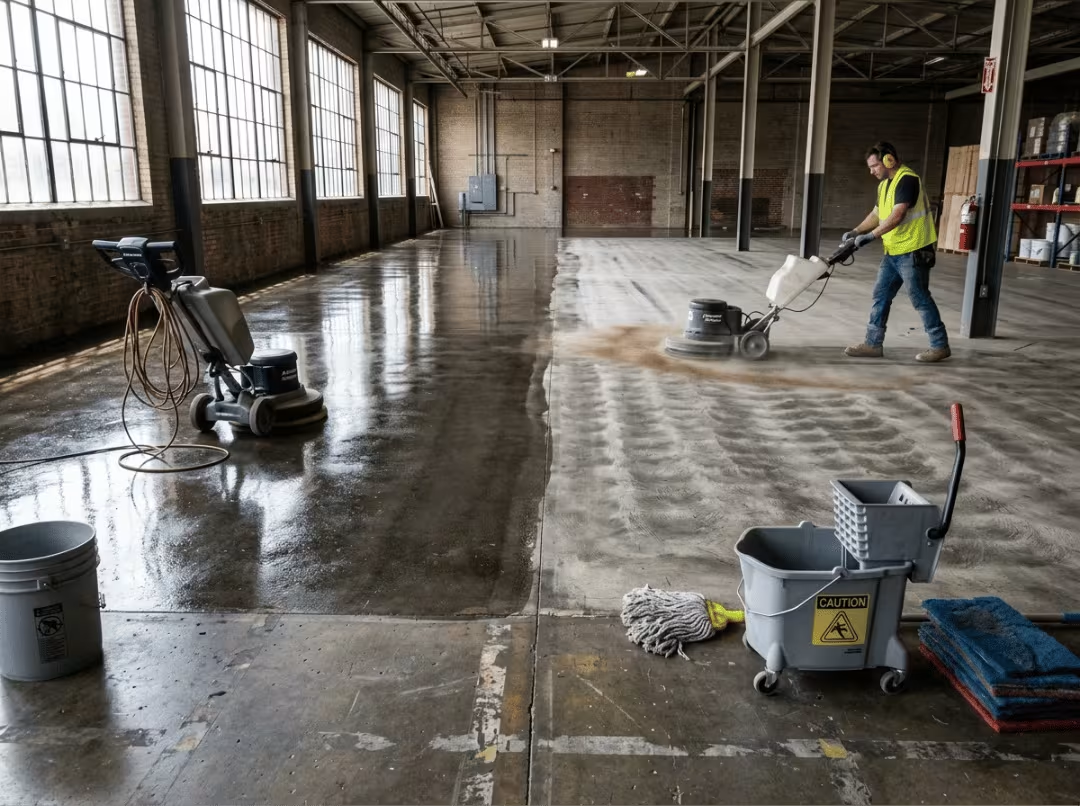
For a floor that’s due for a full refresh, the two machines run in sequence. Use the buffer with a black pad to strip the old finish. Clean and rinse. Lay down your new finish coats. Once those coats have cured, bring in the buffer again to apply and smooth the finish — then finish the job with the burnisher to set that final high-gloss shine.
Buffer preps and applies. Burnisher perfects. That’s the relationship. They’re not competitors; they’re two stages of the same process.
Factor In Traffic
Traffic decides how often you’ll reach for the burnisher. High-traffic lobbies, entrances, and main corridors lose their shine fast and need frequent gloss touch-ups — in those zones, a burnisher earns its keep quickly. This is why polished-floor programs are so common in retail and supermarket settings, where a bright, reflective entrance shapes the customer’s first impression. Low-traffic back areas can get by on periodic buffing alone; burnishing them is effort spent where nobody notices.

One-time trade-off worth knowing: burnishing a large floor takes fewer passes than buffing it, but each pass demands more control. You cover ground faster and mess it up faster.
Budget and Operating Costs
Entry-level buffers cost less than entry-level burnishers, so if budget is tight and gloss isn’t the priority, the buffer is the easier first purchase. But the sticker price is only part of the math.
Factor in pad replacement — burnisher pads wear faster and cost more, which shows up every month in a busy facility. Factor in labor and skill — burnishing takes longer to learn, but a well-maintained gloss lasts longer and can stretch out the interval between full strip-and-recoat jobs, which are the most expensive, labor-heavy tasks on the calendar.
Then there’s power. Corded electric machines are cheapest to run and fine for smaller rooms. Battery and propane burnishers cost more upfront but handle large open spaces without cord management slowing the crew down. For a big facility, that productivity gain usually outweighs the higher purchase price.
Frequently Asked Questions
Can you use a burnisher on any type of floor?
No. It needs a hard floor with a durable finish layer, such as VCT or terrazzo. Soft, porous, or unsealed floors can be scorched or gouged by the high-speed heat. Test a small area if you’re unsure.
Is a buffer enough to get a high-gloss finish?
A buffer produces a clean, satin look, but it can’t create the deep wet-look shine a burnisher delivers. For true high gloss, you need the friction heat of a burnisher.
How often should a commercial floor be burnished?
It depends on traffic. High-traffic lobbies and corridors may need burnishing weekly or several times a week. Low-traffic areas might only need it monthly, if at all.
Does burnishing strip the floor finish?
No. Burnishing polishes and hardens the existing finish — it doesn’t remove it. Stripping is a buffer job done with an aggressive pad and stripping solution.
Can a buffer double as a burnisher if I change the pad?
Not really. The limitation is RPM, not the pad. A standard buffer doesn’t spin fast enough to generate the friction heat that creates a high-gloss shine. Some combination swing machines accept high-speed drivers, but a dedicated buffer can’t reach burnisher speeds.
Do I need a dust collection system on a burnisher?
For anything beyond occasional use, yes. High-speed dry polishing kicks up fine dust. A built-in vacuum or dust bag keeps the air cleaner and protects both the operator and nearby surfaces.
Which machine is better for a small cleaning business?
Start with a buffer. It handles cleaning, scrubbing, stripping, and finish application — the bulk of daily work. Add a burnisher once you’re taking on clients who want a consistent high-gloss shine.
Making the Right Call
The choice comes down to the job you do most often. If your work is daily cleaning, stripping, and applying finish, a buffer covers nearly all of it. If your work is producing and maintaining a high-gloss shine on floors that already hold a solid finish, a burnisher is the only tool that gets you there.
Before you buy either one, check two things: what your floors are made of and the condition of the current finish. Then test both machines on a small corner. That quick trial will tell you more than any spec comparison. A buffer and a burnisher aren’t interchangeable — but they work as a team, and most facilities that care about their floors eventually own both.