







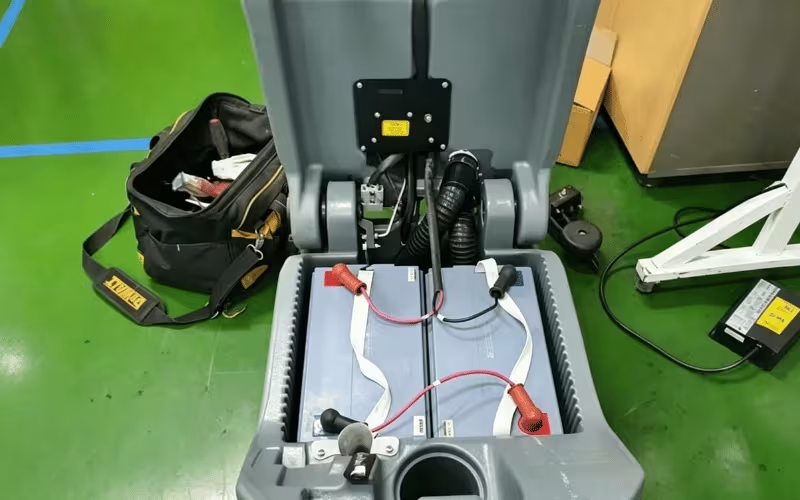
Understanding the exact voltage and current requirements of floor scrubber chargers is absolutely essential for maintaining the efficient, reliable operation of your commercial cleaning equipment. Proper technical knowledge ensures that your specific batteries always receive the correct amount of power, actively preventing costly damage and extending the machine’s overall lifespan. When facility managers and cleaning operators grasp these vital technical specifications, they can easily avoid unexpected mechanical failures, ensure maximum daily uptime, and keep their maintenance routines running smoothly.
This comprehensive article will break down the typical voltage and current specifications of floor scrubber chargers, helping users optimize their equipment use across all commercial applications. We will explore the specific electrical ranges required for different machine sizes, clarify complex technical terminology, and provide highly practical tips for accurately calculating and significantly reducing your charging costs. By mastering these key details, you can make informed purchasing decisions, significantly improve your daily cleaning efficiency, and protect your substantial financial investment in high-quality floor-care machinery.
How Much Voltage and Current Do Floor Scrubber Chargers Use?
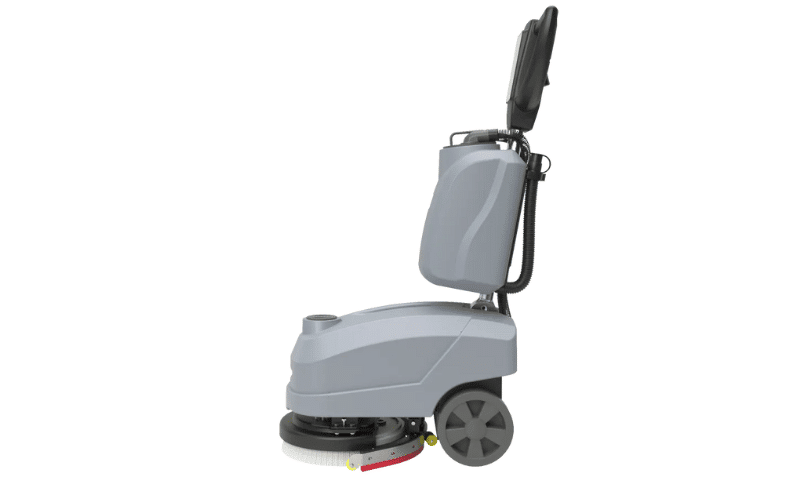
The typical voltage and current ranges for floor scrubber chargers vary significantly depending on the specific size, make, and operational type of the commercial cleaning machine you operate daily. For compact walk-behind floor scrubbers designed specifically for small retail spaces and tight hallways, chargers typically operate at 24V, drawing a modest continuous current of around 10A to 15A. Mid-sized industrial scrubbers, which handle larger open areas like busy grocery stores or sprawling office buildings, usually require 36V chargers rated at 20A-25A to efficiently replenish their larger battery banks. Finally, massive ride-on floor scrubbers used in sprawling warehouses and logistics centers demand highly robust 48V chargers capable of delivering up to 30A of continuous current. Matching the charger’s output voltage and current to the machine’s battery specifications is mandatory, as underpowered chargers fail to deliver a full charge, while overpowered units can dangerously overheat and permanently destroy the battery cells.
Several critical factors directly influence the precise voltage and current requirements for powering your floor scrubber chargers effectively and safely. The total battery capacity, accurately measured in amp-hours (Ah), is the primary determining factor; massive batteries naturally require significantly higher currents to fully recharge within a practical timeframe. The overall size and weight of the machine also play a major role, as heavier ride-on scrubbers require densely packed battery arrays that naturally demand robust 36V or 48V electrical systems to operate properly. Additionally, your specific daily usage frequency heavily impacts charging requirements. If your facility runs multiple consecutive heavy-cleaning shifts, you will absolutely require a high-current charger capable of rapidly restoring battery power between demanding uses. Conversely, machines used only for light, occasional daily maintenance can easily rely on slower, lower-current chargers, effectively balancing your practical operational needs with the specific electrical demands of your commercial cleaning environment.
Understanding the exact energy consumption of a typical floor scrubber charger over time helps you accurately predict operational expenses and manage facility budgets. For example, a standard 24V, 20A charger pulls roughly 480 watts of raw power. If you actively charge your machine for 6 hours daily, it consumes approximately 2.88 kilowatt-hours (kWh) of electricity. Over a standard five-day commercial workweek, this amounts to roughly 14.4 kWh. Extrapolating this average usage over an entire month, the charger will consume approximately 60 kWh. Tracking these precise consumption metrics allows facility managers to budget effectively and optimize their long-term commercial cleaning operations.
Understanding Electrical Terms: Voltage, Current, and More
Напряжение (В)
Voltage is the fundamental electrical pressure that drives current through the charging cables and directly into the batteries. It acts much like intense water pressure pushing through a specialized plumbing pipe. In commercial floor scrubber operation, maintaining the exact voltage is vital for safety and performance. Applying insufficient voltage completely prevents the battery from reaching a full charge, while excessive voltage can easily boil the battery acid, causing severe, irreversible mechanical damage and creating dangerous workplace hazards.
Current (A)
Current, measured in amperes (amps), represents the actual flow rate of electricity continuously moving through the charging circuit. A higher current rating means electrons flow much faster, allowing the advanced charger to replenish large commercial batteries in a significantly shorter time. However, pushing higher currents naturally generates substantially more internal heat within the delicate battery cells. Operators must carefully balance rapid charging capabilities with proper heat management to actively prevent premature battery degradation and sudden mechanical failure.
Wattage (W)
Wattage is easily calculated as the product of voltage and current, serving as the ultimate measure of the total power consumed by the charger at any given moment. By multiplying volts by amps, facility managers can instantly determine exactly how much raw electrical power the machine continuously requires. Understanding the total maximum wattage is absolutely critical to ensuring your facility’s electrical breakers can safely and effectively handle the high load during nightly charging sessions.
Kilowatt-Hours (kWh)
Kilowatt-hours are the universal standard metric for measuring total electrical energy consumption over a defined period of time. This particular measurement is absolutely critical because regional utility companies use it to calculate your monthly commercial electricity costs. A kilowatt-hour equals 1,000 watts of power sustained for 1 hour. By carefully tracking the total kWh consumed by your floor scrubber chargers, you can easily forecast high utility costs and identify valuable opportunities to aggressively improve your overall energy efficiency.
How Much Does It Cost to Charge a Floor Scrubber?
Electricity Rates and Usage
The total financial cost of powering your floor scrubber chargers depends entirely on your local commercial electricity rates and the machine’s overall daily power consumption. Utility providers charge a specific monetary rate per kilowatt-hour (kWh) of electricity consumed. To accurately determine your expenses, you must actively identify exactly how many watts your charger pulls and how many hours it runs daily. If you operate in a region with exceptionally high utility rates, running powerful 48V chargers for massive ride-on scrubbers will naturally result in much higher operating costs than smaller facilities using compact 24V machines with significantly lower power demands.
Example Cost Calculation
Providing a sample mathematical calculation makes it incredibly easy to accurately project your monthly and yearly commercial charging costs. Assume your floor scrubber charger consumes exactly 3 kWh of electricity per daily charging session, and your local utility rate is roughly 15 cents per kWh. This means each full charge costs approximately 45 cents. If you use the machine exactly twenty days a month, your total monthly cost equals exactly $9. Over the course of a calendar year, this specific charging routine costs roughly $108. While this individual cost seems modest, facilities operating entire fleets of heavy-duty scrubbers will experience significantly higher cumulative annual utility expenses.
Cost-Saving Tips
Implementing incredibly smart charging habits allows you to dramatically reduce the heavy utility costs associated with your floor scrubber chargers. One of the most effective strategies is to charge your machines only during off-peak electricity hours, typically late at night when utility rates are heavily discounted. Additionally, investing heavily in modern, highly energy-efficient smart chargers actively prevents wasteful overcharging by automatically shutting off once the battery reaches peak capacity. Routinely cleaning dirty battery terminals and ensuring the cables remain in excellent physical condition also improves electrical transfer efficiency, helping you get the maximum financial value from every kilowatt-hour purchased.
Frequently Asked Questions About Floor Scrubber Chargers
What is the best time to charge a floor scrubber?
The absolute best time to charge a commercial floor scrubber is strictly during off-peak electricity hours, typically late overnight. This incredibly smart practice significantly reduces heavy utility costs and ensures the machine is fully powered, perfectly maintained, and fully ready for use when your heavy operational cleaning hours begin.
How do I choose the right charger for my floor scrubber?
Choosing the absolutely correct charger requires meticulously matching the charger’s specific voltage and current specifications directly to the battery’s requirements. You must always consult your equipment manual to verify these exact electrical numbers, as using an incompatible charger can severely damage the batteries or present a massive, dangerous fire hazard.
How can I extend the lifespan of my floor scrubber charger?
You can easily extend the functional lifespan of your floor scrubber charger by strictly avoiding wasteful overcharging and keeping the entire charging unit meticulously clean. Always store the charger in a dry, cool, well-ventilated place, and regularly inspect the electrical cables for any signs of dangerous fraying or severe physical damage.
Заключение
In conclusion, thoroughly understanding the specific voltage and current requirements of your floor scrubber chargers is absolutely critical for maximizing cleaning performance and actively minimizing costly mechanical failures. By familiarizing yourself with key electrical terms, accurately calculating your daily energy consumption, and implementing proactive maintenance routines, you can significantly reduce your annual utility expenses. We strongly encourage all facility managers and commercial cleaning operators to carefully select the right charger for their specific operational needs. By deeply optimizing your daily charging practices, you ensure your expensive commercial equipment remains highly efficient, perfectly safe, and fully operational for many years to come.