







I’ve spent years around floor scrubbers, from small upright units in coffee shops to big ride-on machines covering warehouse floors. And the same thing surprises people every time: how much cleaner a floor gets when you stop pushing dirty water around with a mop. This guide breaks down what these machines are, how they work, and how to pick the right one for your space.
By the end, you’ll understand the machine types, the brushes and pads, the real benefits over mopping, and how to choose a scrubber that fits your floors and your budget.
What Is a Floor Scrubber?
A floor scrubber is a machine that does the job of a mop and bucket, only far better. Instead of dragging dirty water across the floor, it cleans hard surfaces in one efficient pass.
Here’s the basic idea. The machine lays down clean water and cleaning solution, scrubs the floor with brushes or pads, and then vacuums the dirty water right back up. Three actions, one machine, one pass.
The big payoff is a floor that’s clean and nearly dry the moment the machine rolls by. No long stretch of slick, wet floor for people to slip on, and no waiting around for it to air dry.
Scrubbers come in all sizes. Small upright units are ideal for homes and tight rooms. Massive ride-on models clean warehouses and airports. Whatever the scale, the core function stays the same.
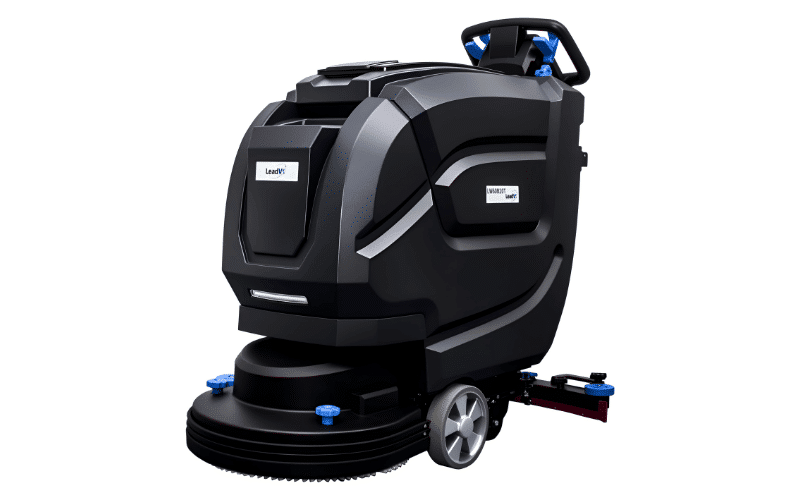
How a Floor Scrubber Works
Every scrubber, big or small, runs on the same three-stage process: wetting, agitation, and recovery. Once you understand those three steps, you understand the machine.
- Stage one is wetting. The solution tank holds clean water mixed with detergent. As you run the machine, it dispenses that solution onto the floor in a controlled amount, just enough to do the job without flooding the surface.
- Stage two is agitation. Motorized brushes or floor pads spin or vibrate against the floor, breaking up dirt, grease, and grime that a mop would just smear around. This scrubbing action is what actually lifts soil off the surface.
- Stage three is recovery. A squeegee at the back of the machine wipes the dirty water into a path, and a vacuum system sucks it up into a separate recovery tank.
That separation matters more than anything else. Clean water and dirty water never mix. You’re always scrubbing with fresh solution, never recycling the filth you just picked up. That’s the single biggest reason a scrubber beats a mop.
Common Types of Floor Scrubbing Machines
The right machine depends entirely on your space. Here’s how the main types stack up.
Upright Scrubbers
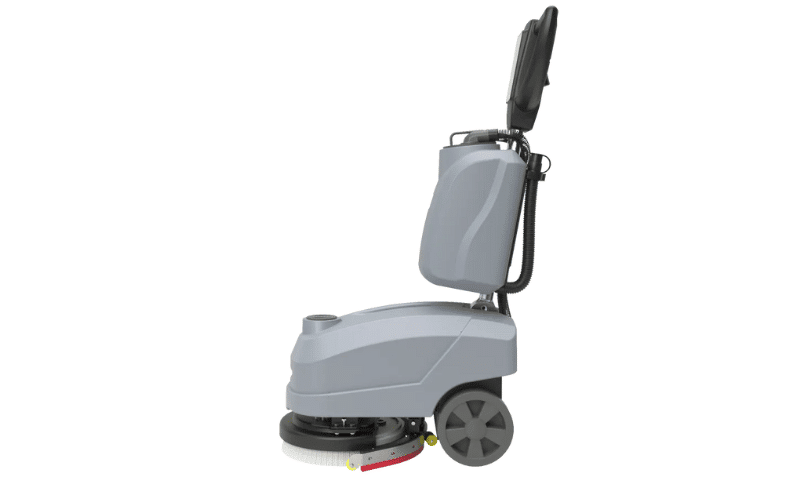
These look like heavy-duty vacuum cleaners and work well in small rooms and tight spaces. They’re light, easy to store, and great for quick jobs in homes, small shops, or break rooms.
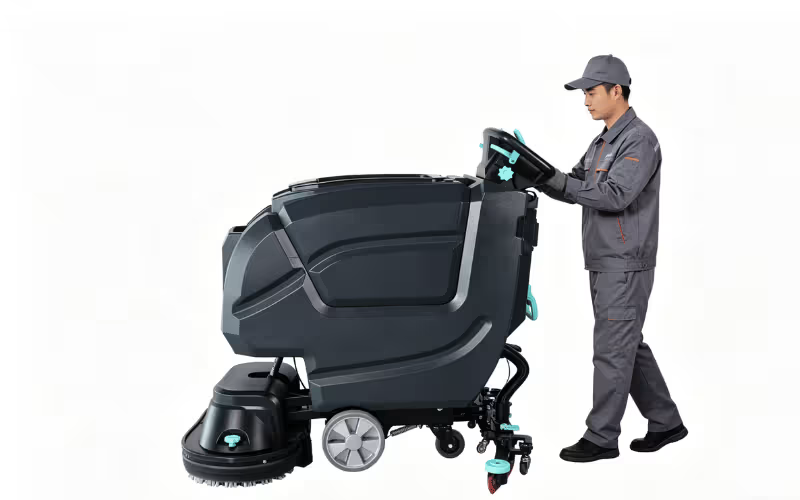
Walk-Behind Scrubbers
With a walk-behind, the operator guides the machine from the rear, steering it across the floor. These are the workhorses for retail stores, restaurants, schools, and mid-size commercial spaces. Maneuverable enough for aisles, big enough to cover real square footage.
Ride-On Scrubbers
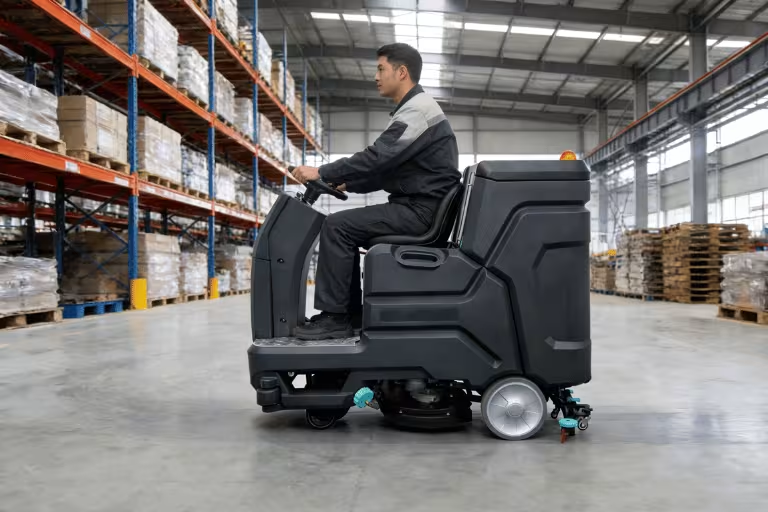
Ride-on machines are built for large spaces such as malls, airports, and large warehouses. The operator drives it like a small vehicle, covering huge areas fast with far less fatigue. A simple rule: if your operator walks miles during a shift, consider a ride-on.
Robotic Scrubbers
Autonomous scrubbers clean predetermined paths without a driver. They’re a growing option for large facilities that want to free up staff for other work. You set the route, and the machine handles repetitive open-floor cleaning on its own.
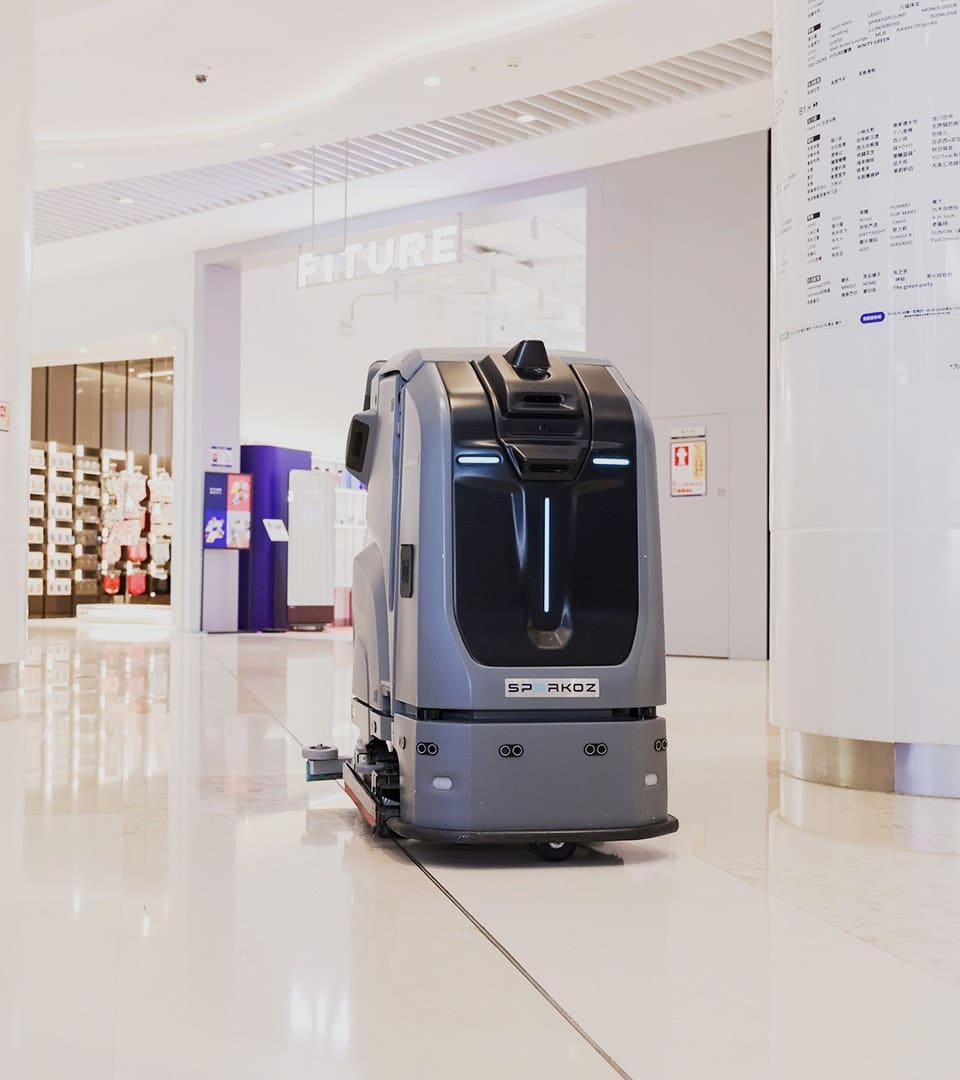
Image source: https://www.consolidatedsystem.com.sg/tn70-robot-floor-scrubber-autoscrubber-autonomous.html
Battery vs. Corded
Power source comes down to space and runtime. Corded electric models give you unlimited runtime but limit your range and add a cord to trip over. Battery-powered cordless units roam freely with no cord, but you’re capped by the charge per session. For larger spaces, battery is usually the way to go.
Comparing Brush Types and Floor Pads
People obsess over the machine and forget the brushes and pads. That’s a mistake because the scrub head determines how well the floor actually gets cleaned.
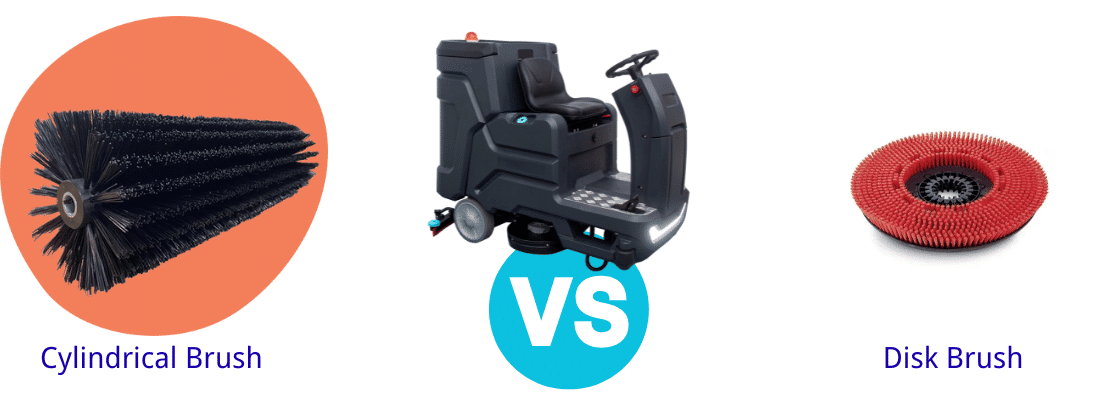
Disc vs. Cylindrical Brushes
Disc brushes spin flat against the floor and handle general cleaning on smooth surfaces well. They’re the standard choice for most everyday scrubbing.
Cylindrical brushes roll like a paint roller and handle textured or grouted floors better. A nice bonus: many of them sweep up small bits of debris while they scrub, so you do two jobs in one pass.
Orbital Scrubbers
Orbital machines use vibrating rectangular pads instead of spinning brushes. That motion is excellent for stripping old floor finishes or for deep cleaning, often using less water and fewer chemicals than other methods.
Pad Colors and Hardness
Floor pads follow a rough color code, from soft to aggressive:
- White and red pads are soft. Use them for polishing and light cleaning.
- Blue and green pads are medium. Good for scrubbing and heavier soil.
- Brown and black pads are aggressive. These are your stripping pads.
Color codes vary a little by brand, so check the packaging. The rule of thumb: lighter pads are gentle, darker pads cut harder. Pick the least aggressive pad that gets the job done.
Benefits of Using a Floor Scrubber Over a Mop
A scrubber isn’t just a fancy mop. It delivers results a mop simply can’t match. Here’s where it wins.
- It’s more hygienic. A scrubber never reuses dirty water. A mop turns its bucket gray in minutes, then spreads that grime around. A scrubber scrubs with a fresh solution every pass.
- It saves time and labor. One person on a walk-behind cleans a large area in a fraction of the time a mop takes. On big jobs, that difference is enormous.
- It leaves floors dry and safe. Because it vacuums as it goes, the floor is nearly dry behind you. That cuts slip-and-fall risk way down.
- It’s easier on your crew. No more wringing out heavy, soaked mops all day. The machine does the hard physical work.
- It protects your floors. Properly removing grit and grime keeps the flooring looking better and lasting longer.
The key takeaway: for anything bigger than a small room, a scrubber gives you a cleaner, safer floor with less effort.
Where to Use a Floor Scrubber
Scrubbers shine on hard, sealed floors. Match the machine to the surface, and you’ll get great results.
Compatible floor types include:
- Polished concrete
- Tile and grout
- Vinyl and VCT
- Sealed hardwood (with a low-moisture setup)
Plenty of industries lean on these machines every day. Healthcare facilities need them for hygiene. Retail stores use them to keep floors presentable. Manufacturing plants and warehouses rely on them for big, dirty floors. They also handle specialized jobs well, like cleaning gym floors or scrubbing narrow school hallways.
But know the limits. Don’t use a floor scrubber on carpet, rugs, or unsealed wood. The water will damage raw wood and soak into carpet, and these machines aren’t built for soft surfaces. When in doubt, check the floor manufacturer’s guidance first.
Maintenance and Care for Long-Lasting Performance
How you treat the machine after the job decides how long it lasts. Skip the upkeep, and you’ll get odors, weak suction, and early breakdowns. A few habits prevent most problems.
- Empty and rinse the recovery tank after every use. Dirty water left sitting overnight breeds bacteria and creates a smell that’s hard to get rid of. A quick rinse prevents it.
- Clean the squeegee blades. Wipe them down and clear off any grit. A dirty or nicked squeegee leaves streaks and water trails every time.
- Maintain the batteries on cordless units. Follow the charging routine for your battery type, and don’t let batteries sit dead. Good battery care extends their life by years.
- Check the brushes for tangles. Hair, string, and debris wrap around brushes and can stall the motor. Pull them off regularly.
- Use low-sudsing chemicals. This one’s critical. High-foaming soaps like dish soap can get pulled into the vacuum motor and damage it. Always use a low-foam cleaner made for auto scrubbers.
FAQs
What is the difference between a floor scrubber and a floor buffer?
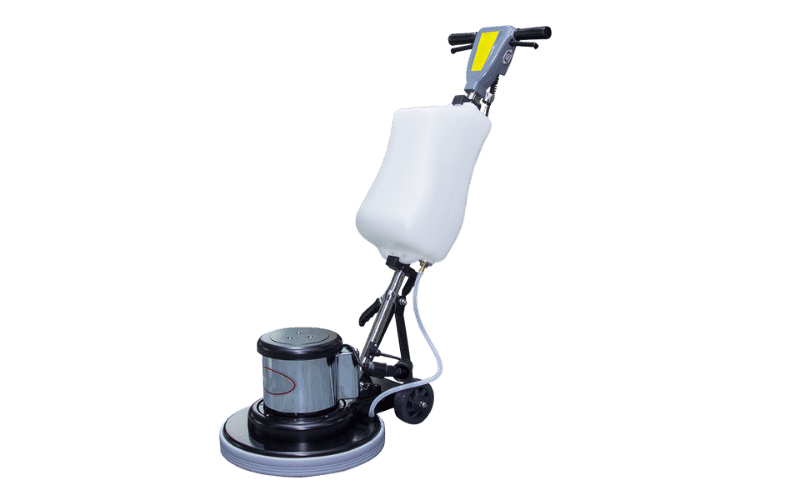
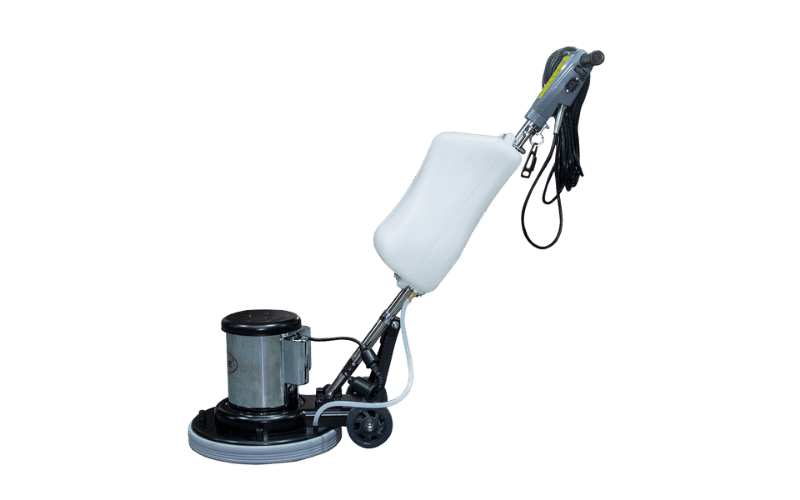
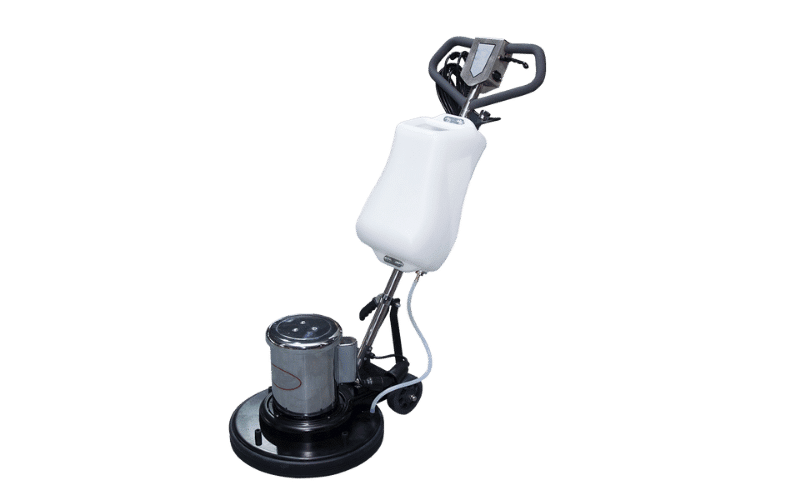
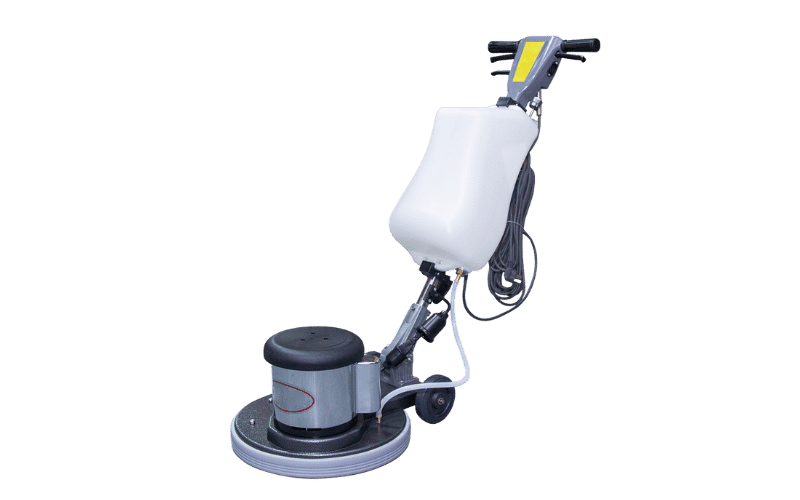
A scrubber cleans by laying down a solution, scrubbing, and vacuuming up the dirty water in one pass. A buffer runs a single pad to clean, polish, or strip, but it doesn’t recover water. In short, a scrubber cleans and dries; a buffer mostly polishes and preps.
Can I use a floor scrubber on hardwood floors?
On sealed hardwood, yes, with a low-moisture setup and the right pad. On unsealed or raw wood, no. Water can seep into the seams and warp the floor. Always check the manufacturer’s guidance and test a small area first.
Do I need a special soap for my floor scrubbing machine?
Yes. Use a low-sudsing cleaner formulated for auto scrubbers. High-foaming soaps create foam that gets sucked into the vacuum motor and can damage it. The right chemical protects both your floor and your machine.
How long do floor scrubber brushes usually last?
It depends on use and floor type, but inspect them regularly. Replace brushes when the bristles look worn down or splayed out, and pads when they’re thin or no longer cleaning well. Heavy daily use wears them faster than occasional cleaning.
Is it better to buy or rent a floor scrubber for a one-time project?
For a single deep clean, a move-out, or a one-off job, renting almost always makes more sense. You skip the purchase cost, storage, and maintenance. Buy only if you’ll use the machine regularly enough to justify owning it.
How much water does a typical floor scrubber use?
Far less than you’d expect, and far less than mopping. These machines meter out a controlled amount of solution and immediately recover most of it. The exact usage varies by tank size and flow setting, but efficient water use is one of their built-in advantages.
Choosing the Right Machine for Your Space
Picking the right scrubber comes down to matching the machine to your building. Get this right, and the job gets easier every day.
Start with your tightest spot. Match the machine width to the narrowest doorway or aisle it has to pass through. A 32-inch scrubber does you no good if it can’t fit through a 30-inch door, so measure before you commit.
Next, look at the total square footage. Smaller spaces favor a walk-behind for maneuverability. Big open floors favor a ride-on for speed and reduced fatigue. Be honest about how much ground your crew has to cover.
Before you buy, check local parts and repair availability. A great machine is useless if you wait weeks for a squeegee blade or a service call. A nearby dealer who stocks parts is worth a lot.
Finally, test different brush pressures against your actual soil levels. A lightly soiled office needs far less pressure than a greasy factory floor. Dial in the setting that cleans well without wasting water or wearing pads too fast.
Your next step: measure your narrowest doorway, estimate your total square footage, then talk to a local dealer about machines that fit both. That single conversation will save you from buying the wrong size.