







Most warehouse injuries and slowdowns don’t trace back to bad equipment or undertrained staff. They trace back to floors, docks, and rack aisles that nobody ever treated as part of the operation. A skid mark near a pick aisle becomes a slip. Dust on a beam clogs a scanner. A puddle at a dock door becomes a near miss that nobody reports until it’s an actual incident.
If you manage a warehouse and cleaning still feels like a side task, this guide will change how you think about it. We’ll skip the generic “cleanliness matters” framing and focus on what actually drives results: which areas deserve your first attention, how to decide between manual tools and industrial scrubbers, and how to build a schedule your team can actually keep running past the first month.
Warehouse Cleaning Is an Operations Problem, Not a Housekeeping One
A dirty warehouse bleeds money in ways that never show up on a cleaning invoice.
Slips, trips, and falls are among the most common warehouse injuries — and most of them start on floors that are wet, oily, or gritty. Dust buildup interferes with sensors, forklift mechanisms, and overhead equipment. Grimy labels slow every pick because workers have to double-check barcodes. Dusty, damaged packaging drives returns and rework.
There’s also a compliance reality you can’t afford to ignore. OSHA’s walking-working surfaces standard (29 CFR 1910.22) requires workplaces to stay clean, orderly, and sanitary. Housekeeping is a documented compliance duty — not a preference — and poor housekeeping regularly appears in citation reports.
The mindset shift worth making early: you’re not cleaning so the facility looks presentable. You’re cleaning to cut incidents, reduce unplanned stoppages, and keep throughput stable.
Start With the Zones That Create the Most Risk
Don’t try to clean everything equally. Identify what’s creating safety incidents and slowing your operation, then work outward from there.
Floors and Traffic Lanes: Your Highest Priority
Floors take the most abuse and cause the most downstream problems. Concrete is porous, so dust, oil, and moisture work into the surface and stay there. The fastest-dirtying spots are predictable: dock approaches, pick aisles, staging lanes, and pedestrian walkways. These need the most frequent attention.
You’ll usually know a floor is hurting your operation before anyone formally reports it. Watch for these signals:
- Workers visibly slowing down or stepping carefully through certain aisles
- Tire marks and dust returning within a day of sweeping
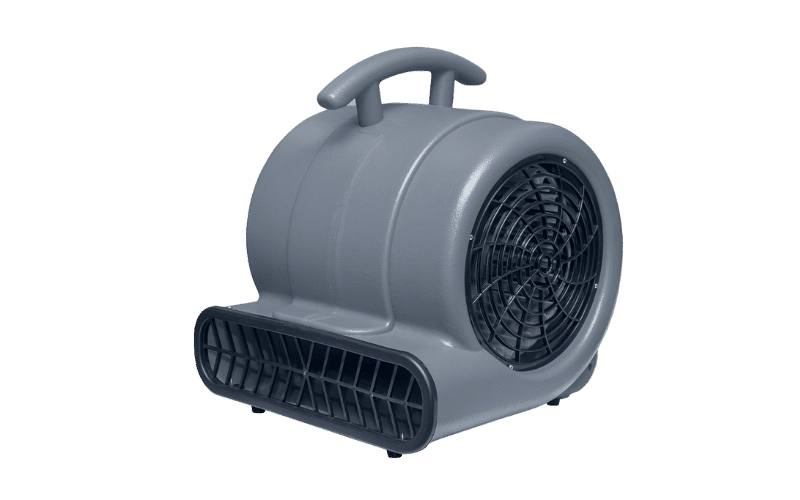
- Standing water or oil spreading past its original spot
- Slick patches near dock doors or battery charging stations
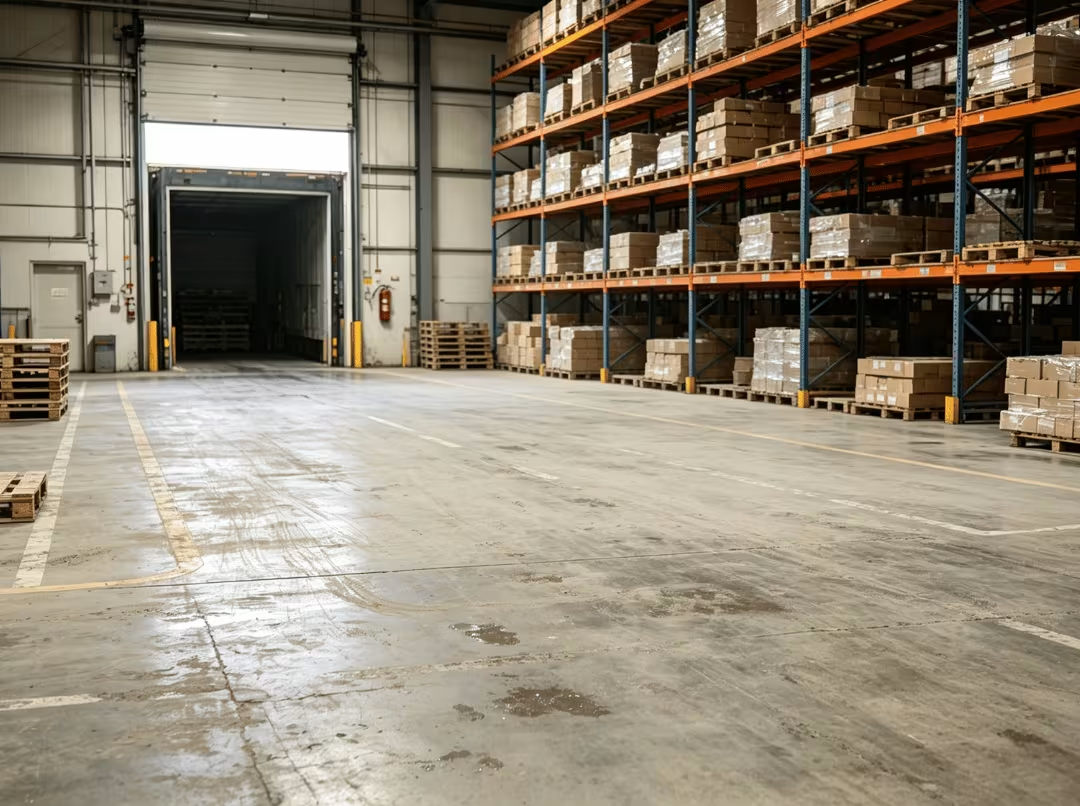
Dry sweeping alone won’t fix any of this. A broom lifts loose debris but pushes fine dust back into the air, where it resettles on floors and product. Wet scrubbing pulls embedded grime out of the concrete and leaves a surface that genuinely stays cleaner longer. A tight sealer or epoxy coating helps too — it makes floors far easier to scrub and far less likely to hold stains.
Put your highest-traffic lanes on a daily machine-scrubbing schedule. Everything else can run on a longer cycle.
Loading Docks: The Pollution Source You Keep Bringing Inside
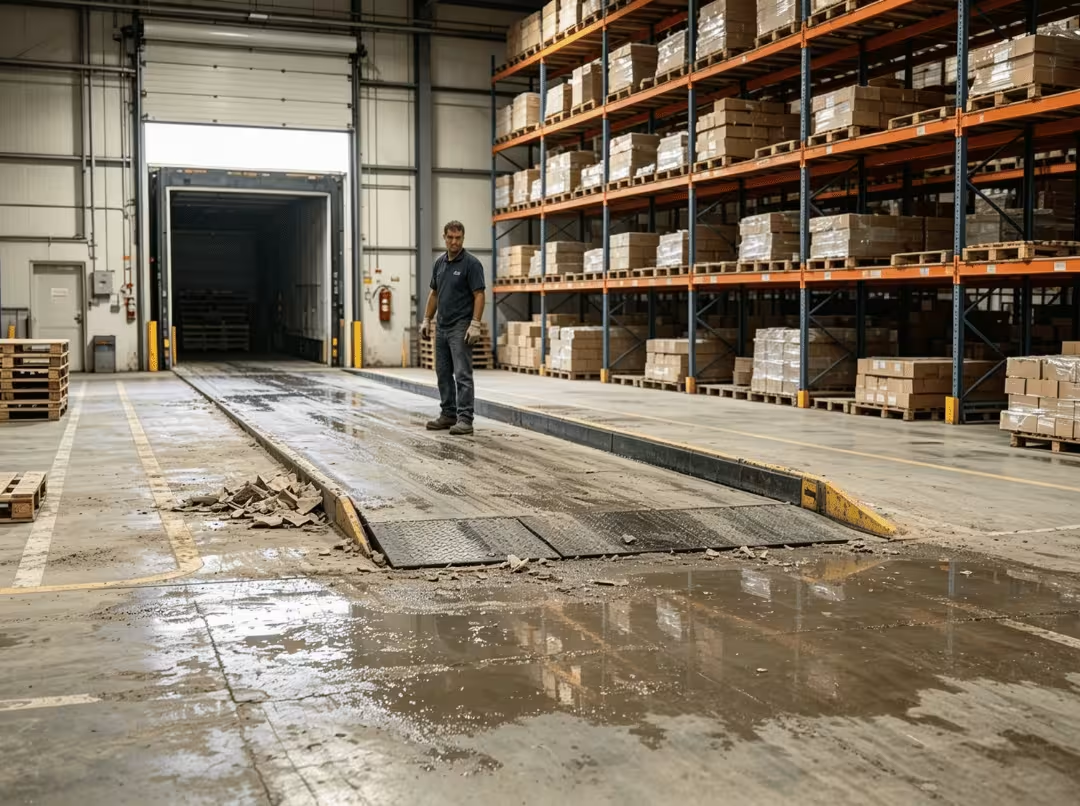
Docks are where the outside world gets dragged in. Every trailer unload brings tire marks, rainwater, wind-blown debris, and pallet scraps. If you don’t clean dock areas aggressively, that contamination migrates straight into your pick aisles and onto your stored product.
Think of the dock as a filter. Let it get clogged, and everything downstream suffers.
Door tracks, dock levelers, and bumper seals also need regular attention — not just when they fail. Grease and grit accumulate quietly, then a leveler sticks or a seal tears during peak season exactly when you can’t afford downtime. A weekly wipe-down costs minutes. A failed leveler costs far more.
Rack Aisles and Elevated Dust Zones
Dust settles where nobody looks: rack beams, pallet tops, ductwork, light fixtures, and the dead zone behind the last pallet in a bay. It’s easy to overlook because it’s out of the line of sight.
It’s also a real operational risk. Elevated dust triggers allergy symptoms, attracts pests, and eventually falls onto stored goods. When a barcode scanner or sensor starts misreading, dust on a nearby surface is often the first thing worth checking.
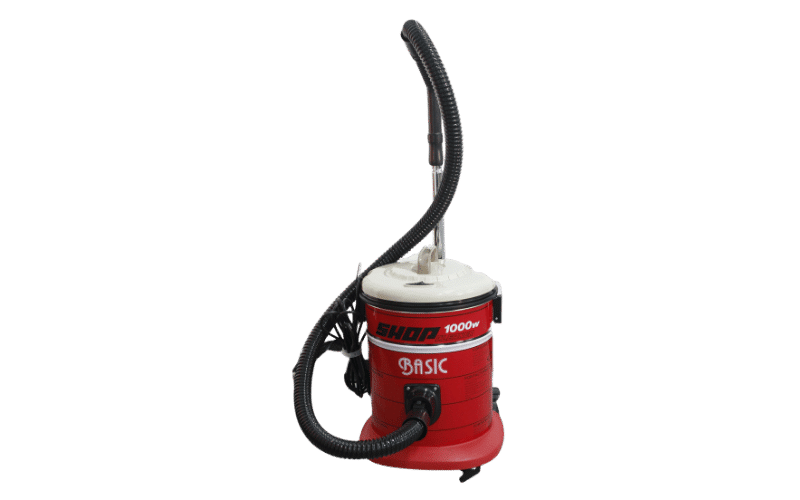
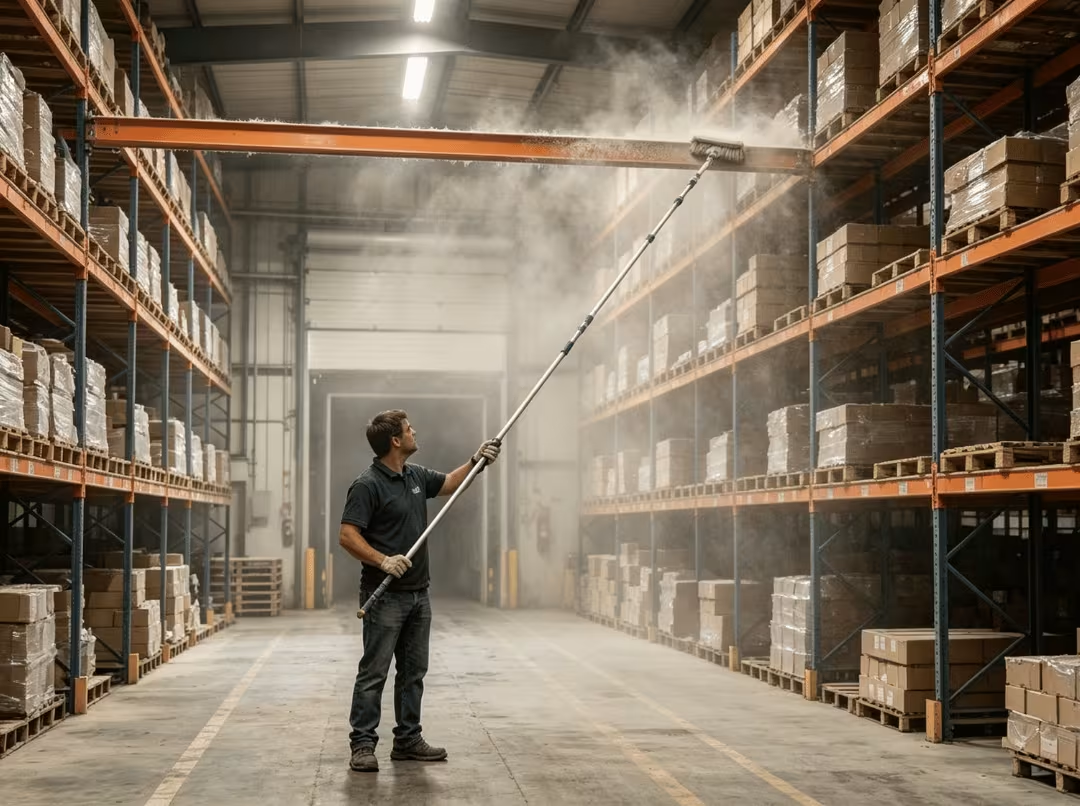
Two rules apply here. First, workers should never climb racks to clean — use long-reach dusters or reacher tools from the ground. Second, skip compressed air for blowing dust off beams. It doesn’t remove the dust; it redirects it into the air and back onto your product. HEPA vacuums and long-reach tools capture it instead.
Support Spaces: Address Them, But Don’t Over-Invest
Breakrooms, restrooms, offices, and entryways still matter, but they don’t deserve equal weight in your plan. Keep touchpoints sanitized, use lined and lidded trash bins to control odors and pests, and stay on top of restroom hygiene.
One support element consistently punches above its weight: walk-off mats. Scrape, brush, and footfall mats at every entry point trap grit before it ever reaches your rack aisles. Clean them as often as you clean your floors — they’re your first line of defense against tracked-in contamination.
Choose the Right Cleaning Method Before You Choose a Machine
The most common cleaning waste isn’t a dirty floor — it’s the wrong tool being used on it. Match your method to your footprint, soil load, and available cleaning window before you look at equipment specs.
When Manual Cleaning Is the Right Call
Brooms, dust mops, squeegees, handheld dusters, and microfiber cloths cover daily spot work effectively. They belong in small parts rooms, narrow corners, quick spill response, and detail work between deeper cleans.
Use color-coded cloths and mops to separate zones — restroom tools should never cross into breakroom counters. That one habit stops cross-contamination without adding complexity.
Where manual cleaning fails is scale. On a large concrete floor, hand mopping may save money but eats up labor hours and leaves streaks and chemical residue. If your crew spends most of a shift pushing water around, you’ve outgrown manual methods.
When a Floor Scrubber Becomes the Right Investment
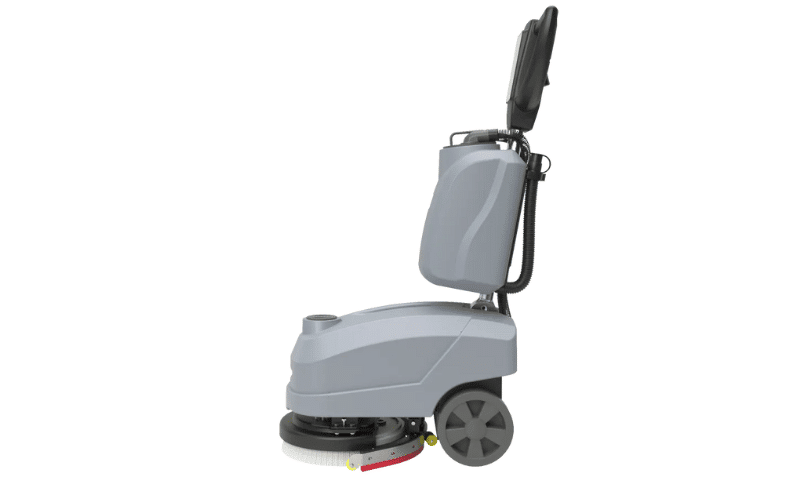
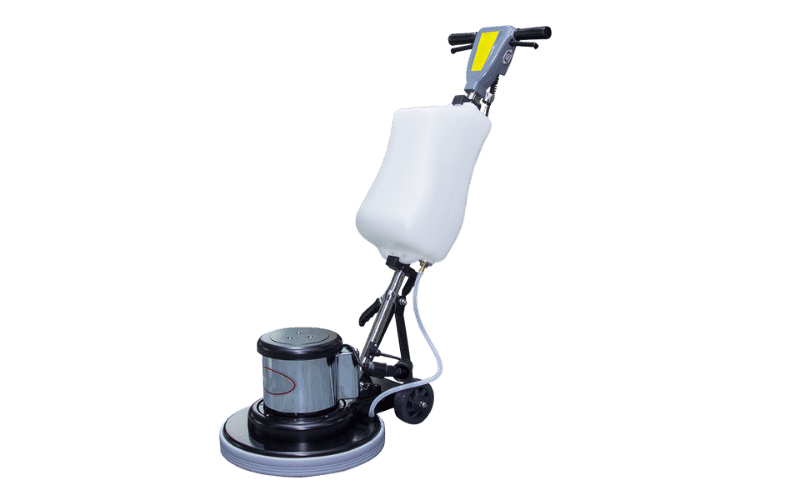
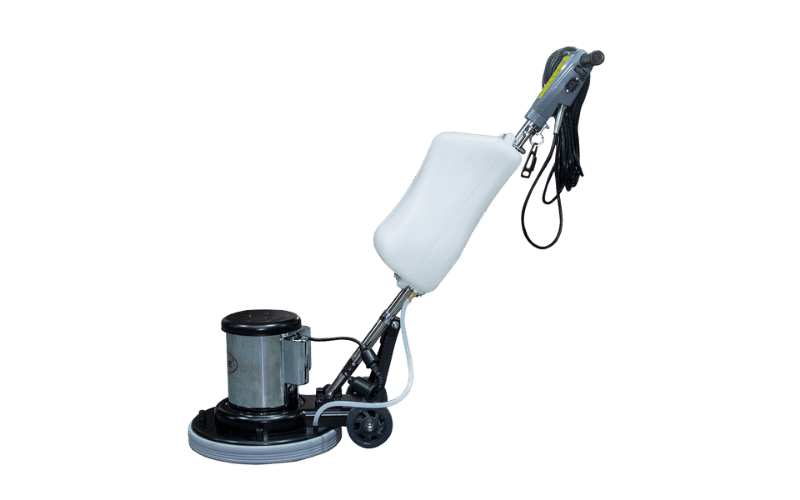
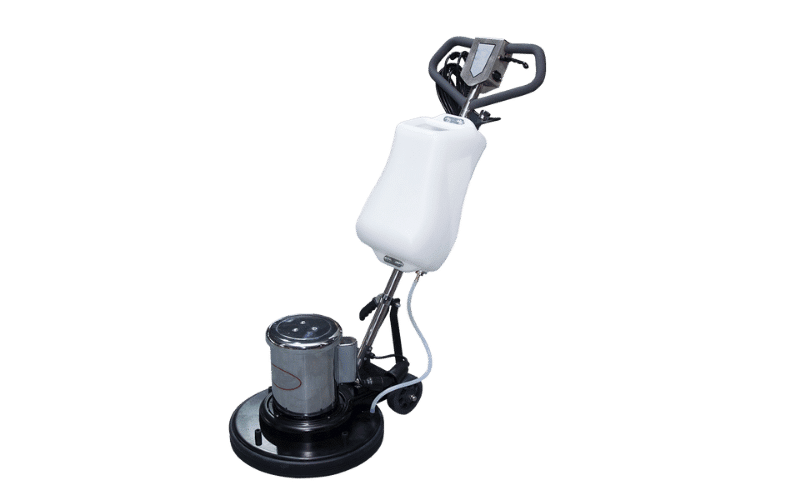
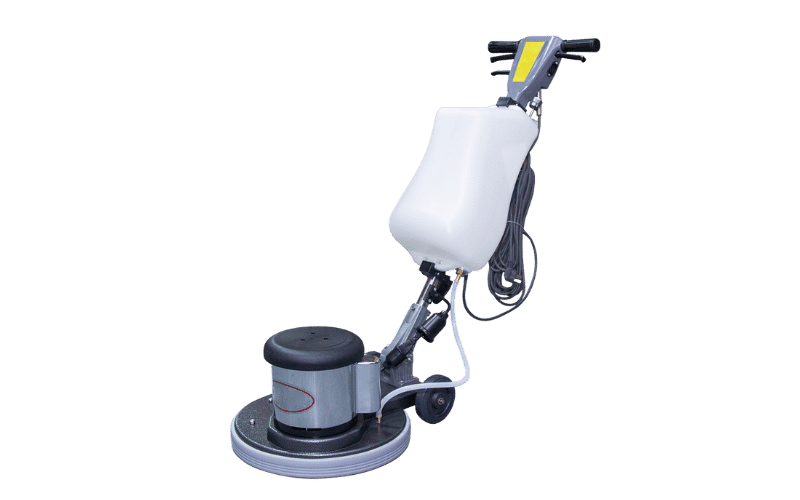
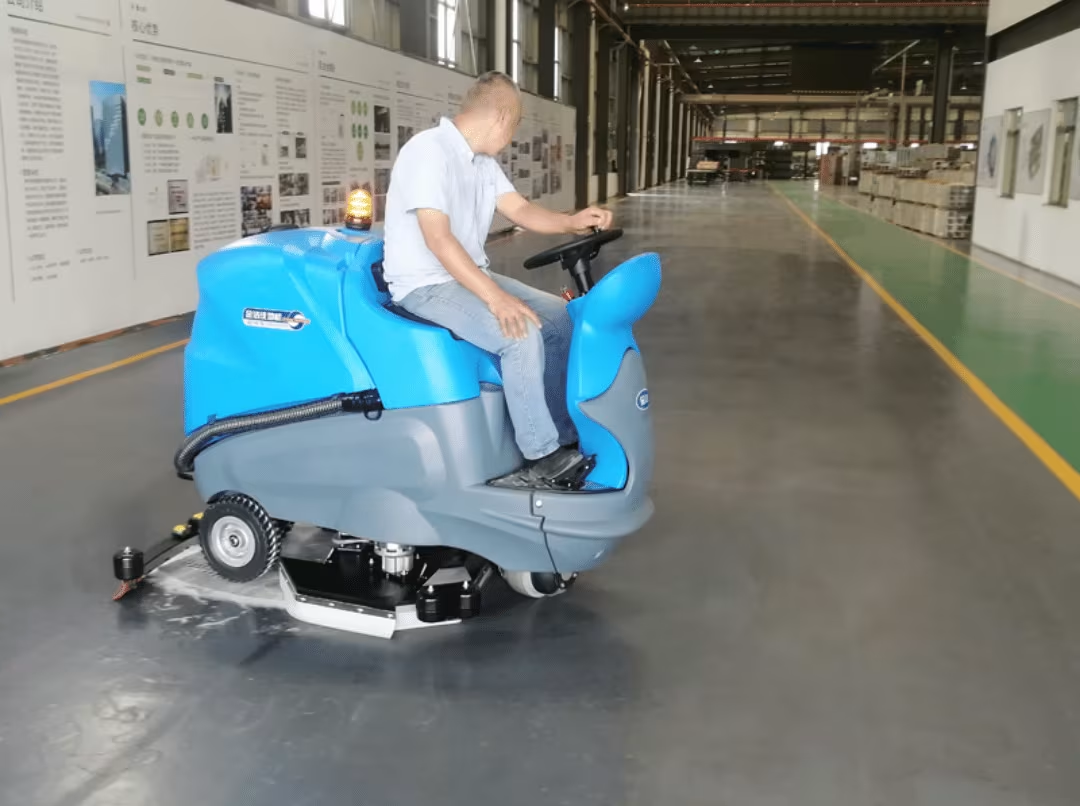
An industrial floor scrubber turns what would otherwise be a multi-hour floor cleaning job into a fast, single-pass operation — and leaves floors dry enough to walk on almost immediately. That’s why it’s the workhorse of any serious warehouse cleaning program.
You’ve hit the threshold where a scrubber makes clear sense when you see several of these:
- Square footage that manual methods can’t cover within your shift window
- High-traffic lanes requiring daily attention
- Oil, grease, or tire marks that a mop won’t lift
- A short overnight or shift-change cleaning window
- Floors that stay wet too long and create ongoing slip risk
The payoff shows up fast: cleaner concrete, less airborne dust, and floors that don’t revert to their dirty state by the following afternoon.
Walk-Behind vs. Ride-On: How to Choose
This choice comes down to your facility’s layout, not the machine’s horsepower.
Walk-behind scrubbers are the better fit when your footprint is smaller, aisles are tight, or the floor has frequent obstacles and turns. They maneuver into spaces a ride-on simply can’t reach.
Ride-on scrubbers make sense when you’re covering wide, open areas and want to reduce operator fatigue during long runs. On large floors, they cover more ground faster and keep the operator in better shape throughout the shift.
When you’re evaluating machines, resist the temptation to compare spec sheets. Instead, test them in your own aisles and judge on what actually matters day-to-day:
- Can it turn cleanly into and out of your tightest aisle?
- How long does one tank run before you need to refill?
- How quickly can floor traffic resume after a pass?
- Can a typical operator learn to run it without extended training?
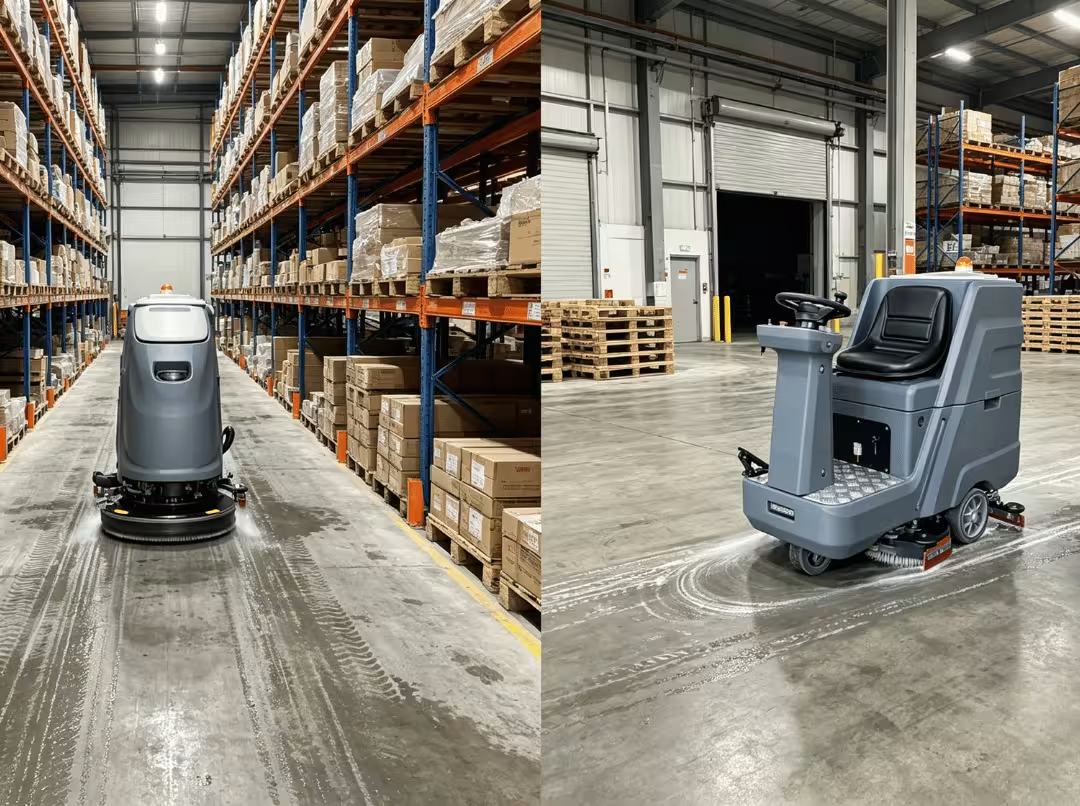
A machine that performs impressively in a showroom but can’t clear your rack uprights or fit your shift window is money wasted.
Robotic Scrubbers: Where They Earn Their Place — and Where They Don’t
Robotic scrubbers do their best work on long, predictable routes: straight rack aisles, dock aprons, and open staging areas. Using sensors, lidar, and safety bumpers, they can navigate around workers, forklifts, and rack uprights — which means they can run during breaks or overnight without adding traffic conflict.
Their real value lies in taking over the repetitive routes that crews consistently skip under pressure. That frees your people for the detail cleaning that machines can’t do.
Be realistic about the constraints. Robots struggle where paths change constantly, temporary obstacles appear unpredictably, or clutter varies by shift. They won’t replace a deep-cleaning cycle, and they don’t handle edges or corners well.
Think of a robot as a reliable way to keep your main routes consistently clean between manual sessions — not a full substitute for a trained cleaning crew.
High-Dust and Chemical Control Tools Worth Having
Round out your setup with long-reach dusters, HEPA vacuums, and lint-free wipes for rack beams, ducts, and pallet tops. For chemicals, match the product to the surface: alkaline degreasers for oily concrete, neutral-pH cleaners for sealed floors, and disinfectants for restrooms and breakrooms.
Use proportioned dispensing systems so your staff doesn’t have to guess at dilution. The wrong concentration wastes chemical, damages floor coatings, and can leave surfaces sticky or slick — which makes them both dirtier and more hazardous over time.
Build a Cleaning Schedule Around Traffic, Soil Load, and Risk
A schedule built on “clean it when it looks bad” will always lag behind the problem. Build yours on three variables instead: traffic (how many people and vehicles), soil load (how quickly an area gets dirty), and risk (what happens operationally if it’s neglected). Then layer in one dynamic trigger: weather and seasonal volume peaks.
This logic tells you why certain zones deserve daily attention while others can wait a month. High-traffic, high-risk dock lanes need daily scrubbing. Low-traffic storage corners don’t.
Daily: Control What Spreads Fastest
- Sweep or machine-scrub pick aisles, dock paths, and main walkways during breaks or at shift end
- Clean spills the moment they happen — waiting for a scheduled round compounds the risk
- Empty trash and wipe breakroom tables and counters
- Inspect entry mats and clear grit or moisture at doorways
Weekly: Remove Buildup Before It Affects Operations
- Deep-clean dock plates, door tracks, and the concrete around loading bays
- Dust rack beams at and below eye level
- Wipe down hand trucks, pallet jacks, and shared barcode scanners
- Deep-sanitize restrooms and breakrooms, including appliances and vending machines
Monthly and Quarterly: Reset the Facility
- Deep-scrub sealed or coated floors to pull out embedded grime; reapply floor finish only if your floor system requires it
- Clean high rack beams, pallet tops, and the space behind the last pallet in each bay
- Wash interior windows, light fixtures, vent grilles, and dock doors
- Sweep drive aisles, parking lots, and dock aprons to reduce how much gets tracked inside
Let Conditions Adjust Your Frequency
Winter salt and deicers call for more frequent mat and floor cleaning. Spring pollen and wind noticeably increase the dust load. Rainy seasons bring more moisture into dock areas. Peak-season volume means more traffic everywhere and faster soiling across the board. Build these seasonal adjustments into your schedule rather than reacting to them after the fact.
Cleaning Safety: Spills, Chemicals, and What OSHA Actually Expects
Cleaning is physical work involving hazardous materials. A program that doesn’t account for that trades one type of risk for another.
Start with spill response. Keep spill kits near docks, battery charging areas, and any fueling station — stocked with absorbent socks, pads, neutralizers, and warning cones. Train staff to contain a spill immediately, cordon it off, and select the right absorbent for the liquid type: oil, solvent, or water-based.
Handle chemicals with the same rigor you’d apply to anything else on the floor. Store incompatible chemicals separately — acids away from bleach, solvents away from oxidizers — in secondary containment trays. Make Safety Data Sheets available for every cleaning chemical in a binder or digital system, and verify that all staff know where to find them.
Protect the people doing the work. Require goggles, chemical-resistant gloves, and slip-resistant footwear when handling concentrates or running heavy equipment. Ventilate during intensive cleaning sessions by opening dock doors or running exhaust fans when using strong solvents, strippers, or disinfectants.
None of this is bureaucratic overhead. It’s what prevents a routine cleaning shift from becoming an incident report — and it’s exactly what OSHA inspectors look for when they audit housekeeping programs.
Turn Cleaning Into a System, Not a Weekly Fire Drill
The gap between a clean warehouse and one that stays clean is a system: clear ownership, consistent training, accountability tools, and a small number of metrics that you actually review.
Decide Who Owns the Work
Three models are realistic for most warehouses:
- In-house crew: They know your building and your operation, but managing schedules, training, and equipment takes time and budget.
- Contracted janitorial service: They arrive with staff and machines, but require clear performance specs and active supervision.
- Hybrid: In-house staff handles daily spot work and spill response; contractors run overnight deep cleaning and floor maintenance.
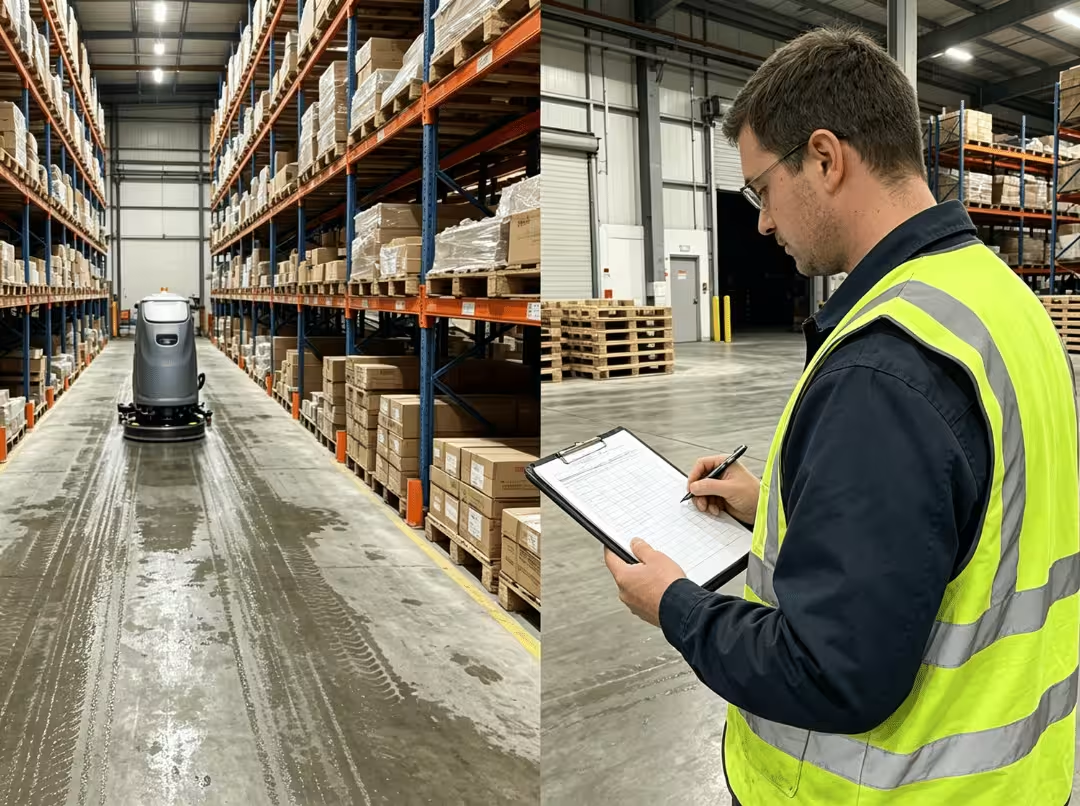
The hybrid model suits many warehouses because it keeps daily control in-house while offloading the heavy, repetitive jobs that internal teams tend to deprioritize under pressure.
Train for Consistency, Not Just Task Completion
Cover machine operation, chemical dilution, PPE requirements, spill containment, and forklift traffic awareness — including high-visibility vests and staying out of blind spots.
Before anyone works unsupervised, have them demonstrate they can change scrubber pads, empty tanks, and clear a blocked squeegee. Post a photo reference of what “clean” looks like in each zone, so your team has a shared visual standard rather than each person interpreting the goal differently.
Build Accountability With Checklists and Walkthroughs
Use a zone-by-zone checklist with a sign-off line for every task, so nothing quietly falls through after a long shift. Run a brief morning walkthrough with the shift lead to catch problems while they’re still cheap to fix.
Track the Metrics That Connect Cleaning to Outcomes
Skip the elaborate dashboards. Focus on the numbers that actually tell you whether your program is working:
- Slips, trips, and spills reported per month
- Near-misses in traffic lanes and dock areas
- Floor condition scored by zone (a 1–5 scale is sufficient)
- Labor hours relative to square footage cleaned
Have supervisors run a scored audit separately from the daily task checklist, photograph recurring problem areas, and bring those findings into the next safety meeting. Zones that keep failing tell you exactly where to adjust frequency or change your approach.
What Good Warehouse Cleaning Actually Produces
A solid warehouse cleaning program isn’t the one that covers the most tasks on paper — it’s the one your team can actually sustain through peak season, staff turnover, and operational pressure.
Start where the risk is highest: floors, dock approaches, and traffic lanes. Choose your cleaning method based on your footprint, soil load, and available cleaning window — not based on which machine looks most impressive. Lock in a schedule built around traffic and risk, then support it with ownership, training, and accountability structures.
When that’s working, “clean” stops being a visual judgment call. It becomes a measurable operational condition — safer, faster, and with less rework. That’s the result worth building toward.
For warehouses specifically, the right mix of equipment — from walk-behind scrubbers for tight aisles to ride-on models for open floor plans — makes the difference between a cleaning program that keeps pace and one that’s always catching up. You can explore cleaning solutions designed specifically for warehouses and industrial facilities to match equipment to your environment.
Frequently Asked Questions
How often should warehouse floors be cleaned?
High-traffic lanes near docks and pick aisles should be swept or machine-scrubbed daily, ideally during breaks or at shift change. Lower-traffic areas can run on a weekly or monthly cycle, adjusted based on how quickly they accumulate soil.
Is a robotic scrubber worth the investment for a warehouse?
It’s worth considering if you have long, repetitive routes — straight rack aisles, open staging areas — that your crew consistently skips under pressure. It’s not a strong fit for spaces with frequent layout changes or high variability in obstacles, and it won’t replace a scheduled deep-cleaning cycle.
Walk-behind or ride-on scrubber — which should I choose?
Walk-behind for smaller footprints, tight aisles, and obstacle-heavy floors. Ride-on for large, open areas where coverage speed and operator endurance matter. Always test your shortlisted models in your actual aisles before committing.
Does OSHA require warehouses to maintain a cleaning program?
Yes. OSHA’s walking-working surfaces standard (29 CFR 1910.22) requires workplaces to remain clean, orderly, and sanitary. Housekeeping is a documented compliance requirement, and failure to meet it consistently appears in inspection citation reports.
Should compressed air be used to remove dust from high racks?
No. Compressed air displaces dust into the air column and redeposits it on floors and product below. Use HEPA vacuums and long-reach dusters, which actually capture the dust. And ensure workers never climb rack structures to clean — use ground-level tools designed for elevated reach.