







A warehouse floor takes more abuse in a single week than most retail floors see in a year. Forklift traffic grinds grit into the concrete, hydraulic fluid leaves slick patches near the docks, and dust drifts down from racking that hasn’t been touched since the building opened. Left alone, that buildup becomes a real operational problem: slips and falls, failed safety audits, worn-out equipment, and damaged inventory.
Cleaning a facility this size isn’t a janitorial afterthought. It’s an operations job with safety, compliance, and cost implications. The trick is knowing where to spend your effort and how to match the right method and machine to each part of the building. This guide walks through a zone-by-zone approach any warehouse manager or facility lead can put to work, with the most attention paid to the areas that make or break your results.
Why a Clean Warehouse Is an Operational Priority
Before the how, it helps to be clear on the why, because it shapes where you focus.
Safety comes first. Slips, trips, and falls rank among the most common warehouse injuries, and most of them trace back to housekeeping — a spill nobody contained, debris in a walkway, or a dusty floor that hides a hazard. Clear aisles and clean surfaces cut those incidents directly.
Compliance follows close behind. OSHA housekeeping standards expect clear aisles, accessible exits, and proper waste storage. Fire codes care about combustible dust and blocked egress paths. A tidy facility isn’t just easier to inspect — it passes.
Equipment lasts longer. Dust and grime are abrasive. They work into forklift bearings, conveyor rollers, and HVAC intakes, causing premature wear and unplanned breakdowns. Every hour of cleaning you invest tends to buy back more than an hour of downtime avoided.
Product stays intact. Food, pharmaceuticals, electronics, and textiles are all vulnerable to dust, pests, and moisture. A contamination event can cost far more than the cleaning that would have prevented it.
The softer benefits are real too — a clean site lifts morale and makes a stronger impression on clients and auditors. But the four points above are what justify the budget.
Understand What Makes a Warehouse Hard to Clean
A warehouse breaks the usual cleaning rules in a few specific ways, and each one drives a decision later in this guide.
- Scale. You may be dealing with hundreds of thousands of square feet. Flat surfaces extend well beyond the floor — racking, mezzanines, dock equipment — and manual methods simply can’t keep up.
- Constant motion. Forklifts, pallet jacks, and order pickers stir up dust all day and track in dirt from trailers and the yard. Cleaning is never “done”; it’s a cycle.
- The vertical dimension. Dust settles on the tops of pallet racks, beams, and stored goods, far above the reach of any push broom.
- Live operations. Most sites run at least one shift, so cleaning happens during off-peak hours or in cordoned-off zones.
- Temperature extremes. Cold storage adds ice, condensation, and different chemical needs. Dry summer docks pull in heat, dust, and insects.
Keep these in mind. They explain why a small facility and a high-bay distribution center need very different equipment and schedules.
Divide the Facility Into Cleaning Zones
Trying to clean a warehouse as one big space is how areas get neglected. Break it into zones, each with its own tasks and frequency. The three that deserve the most attention are the docks, the racking, and the pick-pack areas.
Receiving and Shipping Docks
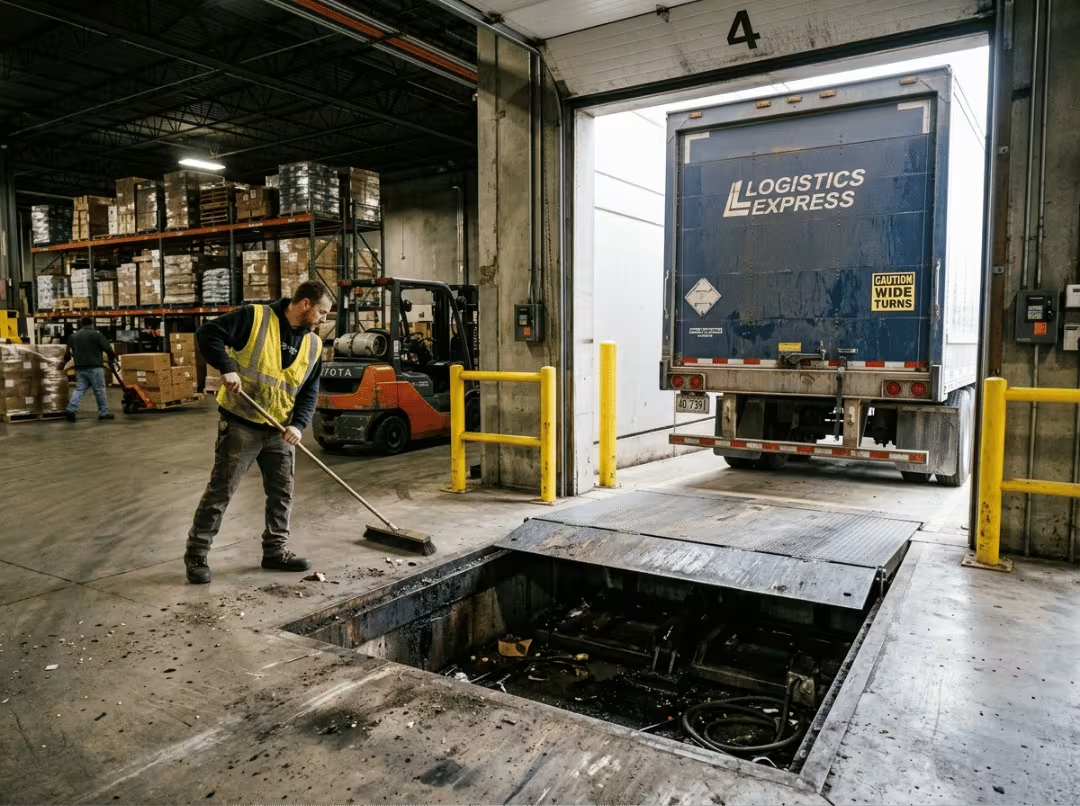
This is your dirtiest, highest-traffic zone. Trailers back in, goods move constantly, and dock levelers, pit areas, and bumpers collect grease, grime, and debris. Water and pests ride in from outside on trailer floors.
Handle it daily: sweep the dock floor, clear the pits of litter and spilled product, and wipe down dock leveler surfaces. Hydraulic levelers leak over time, leaving a slick residue right where people walk — stay on top of it. Check bay door tracks periodically, since built-up grease there ruins the seal and lets in weather and pests. For inbound and outbound trailers, a quick sweep-out protects the product from contamination.
Storage and Racking Areas
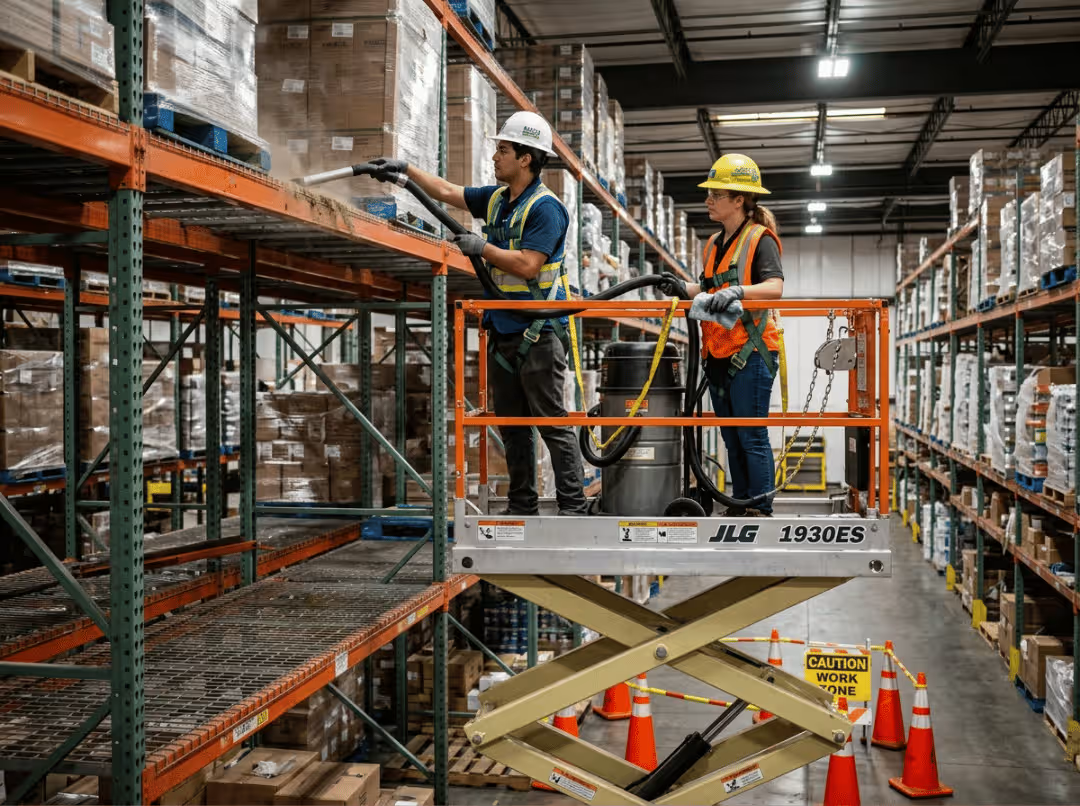
High-bay racking is the most neglected zone in almost every warehouse, and the most dangerous when ignored. Dust builds on beams, uprights, and the tops of pallets, then eventually drifts down onto products and workers. Heavy combustible dust can even interfere with sprinkler performance.
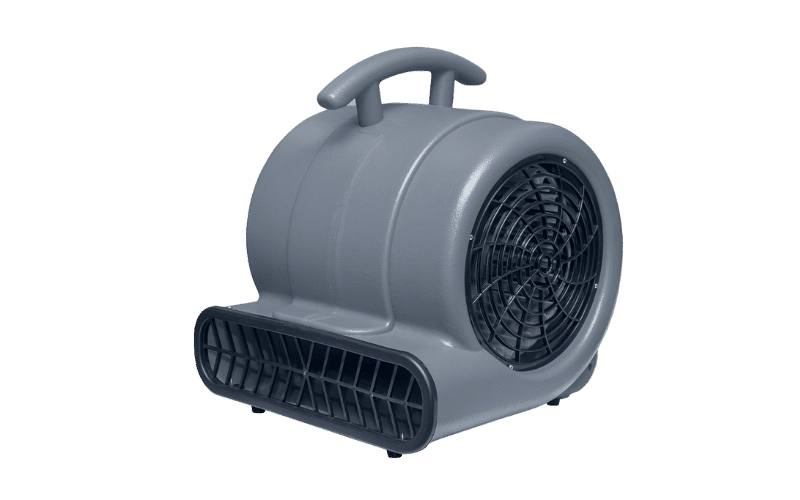
Cleaning at height means treating it as a fall-protection job, not a dusting job. Use scissor or boom lifts, work in two-person teams, cordon off the floor below, and follow your fall-protection rules to the letter. Air blowers and industrial vacuums with extension wands do most of the work — knock dust down and capture it rather than just moving it around. When cleaning pallets and stored goods, go gentle so you don’t tear packaging or damage product.
Pick, Pack, and Order Fulfillment Areas
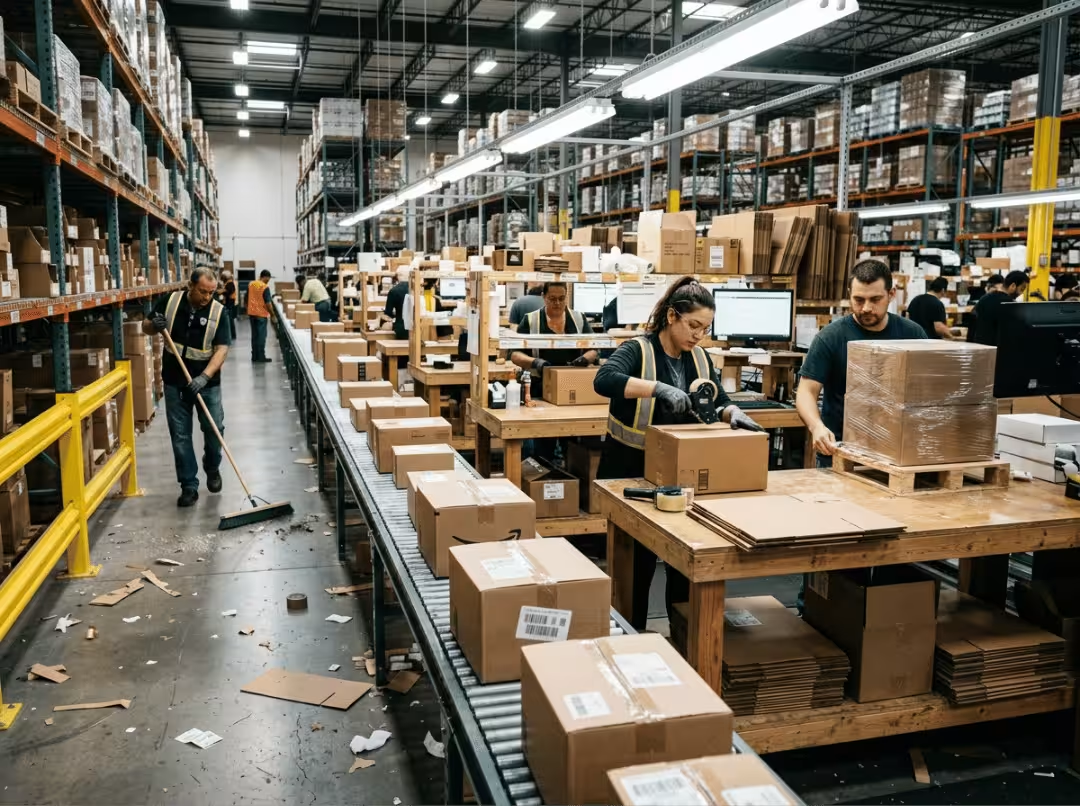
These zones see constant foot traffic and carton movement, so cardboard dust, shrink-wrap fragments, and tape scraps pile up fast. Sweep daily and wipe conveyor rails, workstations, and packing tables on a regular cycle. In compact fulfillment aisles, keeping exits and emergency paths clear isn’t optional — a stack of empty cartons in the wrong spot is both a trip hazard and a code violation.
Equipment Bays and the Rest
Forklifts and other equipment need cleaning from tires to control panels; debris in lift mechanisms causes premature wear. Battery-charging rooms and maintenance shops call for special handling of acid residue and metal shavings.
Break rooms and restrooms need a firm daily standard — empty trash, wipe surfaces, sanitize restrooms, and restock supplies — because a dirty break room signals to staff that nobody’s paying attention. A simple checklist a supervisor signs off each shift keeps it honest.
Exterior areas matter mainly because they feed dirt into the docks. Keep the yard, ramps, and trailer storage swept, and wash the dumpster and compactor pad regularly to control pests and odors.
Floor Cleaning: Where Most of Your Effort Should Go
The floor is the single largest surface, the one auditors notice first, and the one most tied to safety. Get this right and everything else is easier.
Sweeping vs. Scrubbing — Know the Difference
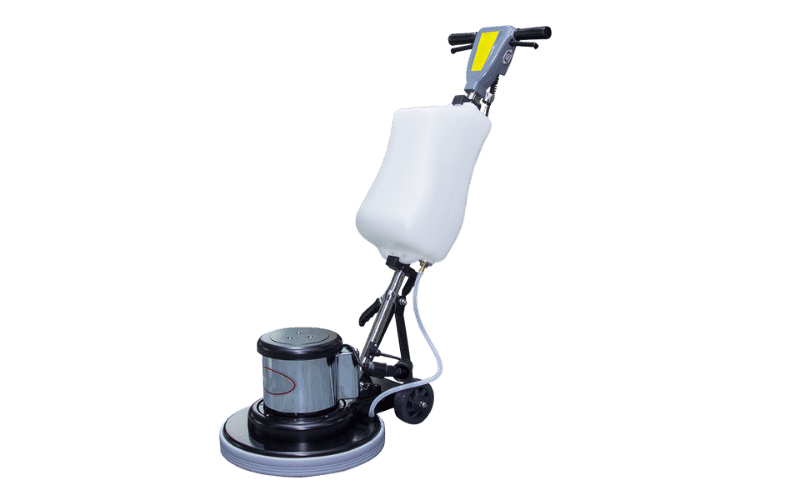
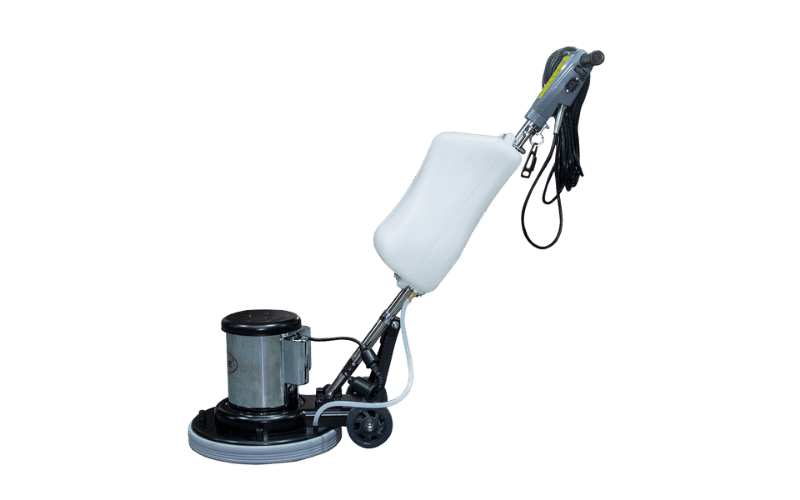
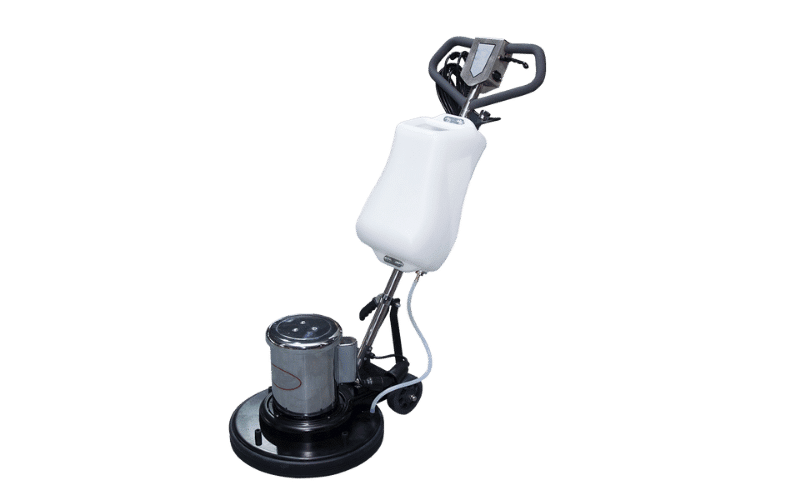
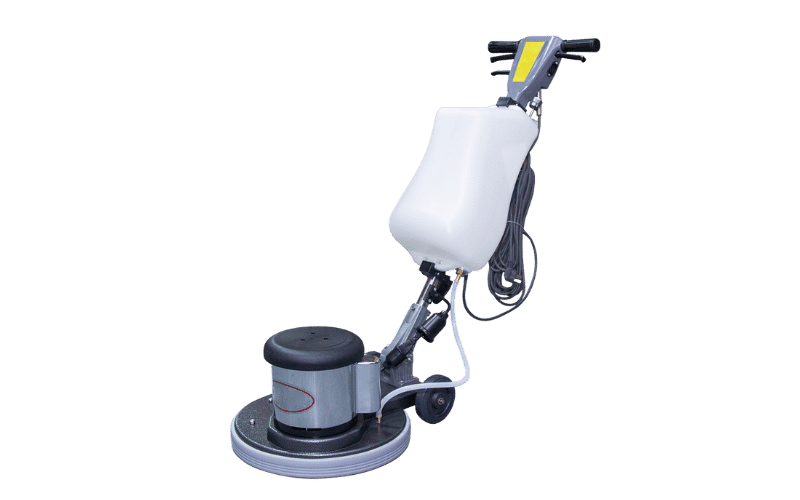
These are not interchangeable. Sweeping removes loose debris — dust, cardboard bits, grit. Scrubbing uses water, detergent, and a rotating brush or pad to lift embedded grime, oil, and tire marks, then vacuums the dirty solution back up. Sweeping alone leaves a floor that looks passable but stays slick with fine oily film. On a working warehouse floor, you need both: sweep to clear the loose material, then scrub to actually clean the surface.
How to Choose Between a Ride-On and a Walk-Behind Scrubber
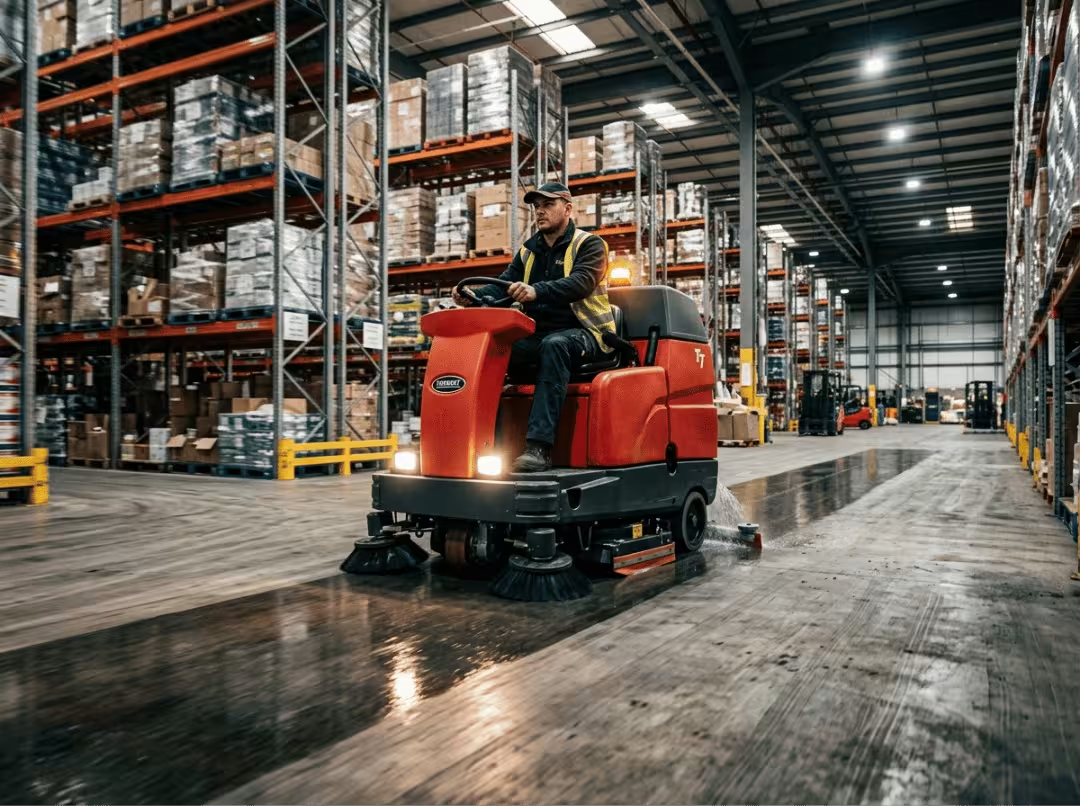
This is the decision that drives your cleaning speed and labor cost more than any other. It comes down to floor area, aisle width, and layout.
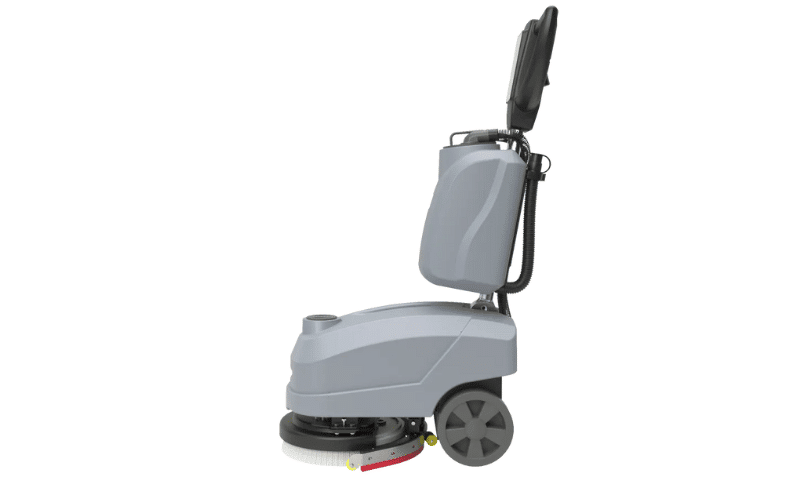
Walk-behind scrubbers are the right call for smaller facilities, tight aisles, and congested zones — pick-pack areas, spaces around racking, and buildings under roughly 30,000–40,000 sq ft. They’re maneuverable, cost less, and get into corners a rider can’t. Walk-behind floor scrubbers with cleaning widths in the 20–26 inch range cover open stretches efficiently while still fitting standard aisles.
Ride-on scrubbers earn their keep in large, open facilities with wide aisles and long runs — distribution centers, big-box storage, and anything above roughly 40,000–50,000 sq ft. A single operator can cover far more ground per hour, which is exactly what you need when you’re scrubbing tens of thousands of square feet on a tight overnight window. Ride-on floor scrubbers with wider decks and large solution tanks can move at several thousand square meters an hour, so the labor savings add up quickly.
A simple rule: if your aisles are narrow and your square footage is modest, go walk-behind. If your aisles are wide and your square footage is large, a rider pays for itself in labor. Many mid-size sites keep a compact walk-behind for tight zones and a rider for the main floor. If you want help matching machines to your building, a supplier that focuses on warehouse and industrial facility cleaning solutions can size the equipment against your actual layout.
Concrete vs. Coated Floors
Bare and sealed concrete is durable but porous, so it holds oil and dust. Use pH-neutral detergents for routine scrubbing and a dedicated degreaser on oil spots. A dust-mop treatment between scrubs keeps fine dust from resuspending into the air and back onto racking.
Epoxy and urethane-coated floors look great and clean easily, but the coating is the thing you’re protecting. Skip abrasive pads and harsh chemicals — they dull and scratch the finish. Stick to soft brushes or non-abrasive pads and pH-neutral cleaners. Aggressive scrubbing might get one stubborn stain out, but it shortens the life of a coating that costs a fortune to reapply.
Spill Response
Oil, hydraulic fluid, and chemical spills are safety events, not mopping tasks. The sequence is contain first, absorb second, clean last. Keep spill kits with the right absorbents staged near the docks and equipment bays where spills actually happen. Don’t drag a dry mop through hydraulic fluid — you’ll smear a slip hazard across ten more feet of floor. Contain the spread, apply absorbent, remove the saturated material as directed for that fluid, then degrease and rinse the area.
Choosing the Right Equipment and Supplies
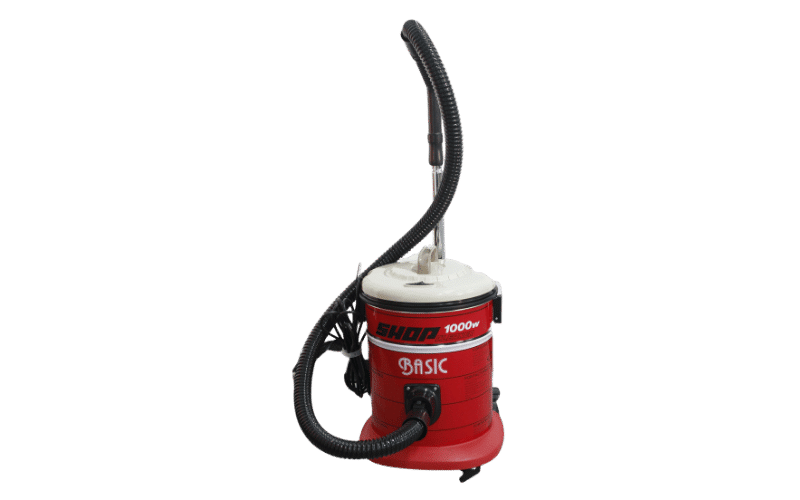
Beyond scrubbers, a working warehouse kit usually includes an industrial vacuum for fine dust and debris, a pressure washer for docks and dumpster pads, and air blowers for knocking dust off racking. Match the machine to the job the same way you matched the scrubber: consider floor square footage, ceiling height, and aisle width before you buy.
On chemicals, favor pH-neutral, biodegradable products for routine work. They’re gentler on floors, coatings, and equipment, and safer for staff. Use concentrated cleaners with an accurate dilution system — the right ratio controls both cost and safety, since over-diluting wastes labor and over-concentrating can damage surfaces and leave residue. Keep purpose-built products on hand for coated floors and for heavy grease, rather than forcing one general cleaner to do everything.
On staffing, most facilities land on a hybrid model: a small in-house crew handles daily tasks and fast spill response because they know the building’s quirks, while a professional service brings the large rider scrubbers and lift crews for periodic deep cleans. It’s usually cheaper and more reliable than trying to own every piece of specialized equipment yourself.
A Practical Cleaning Schedule
Frequency is what separates a facility that stays clean from one that gets deep-cleaned twice a year and looks rough the rest of the time. Assign the right cadence to each task.
Daily
- Sweep and spot-clean floors in all traffic zones
- Empty trash and clear dock pits
- Wipe down dock levelers
- Clean and restock restrooms and break rooms
- Contain and clean any spills immediately
Weekly
- Scrub high-traffic floors with an automatic scrubber
- Wash dock areas and bay pits
- Wipe workstation surfaces in pick-pack zones
- Walk the storage aisles and tidy anything out of place
Monthly
- Scrub the full floor surface, not just the busy lanes
- Wash walls and light fixtures near work areas
- Clean battery rooms and maintenance bays
- Service the trash compactor pad
Quarterly and Annual
- Deep-clean high racking, mezzanines, overhead beams, and HVAC intake surfaces
- Pair the deep clean with a safety inspection — it’s the ideal time to catch loose racking bolts, damaged dock seals, and worn fall-protection anchors while the lifts are already out
Document each zone’s tasks, tools, chemicals, and required safety gear, then have a supervisor sign off each shift. Train staff not just on cleaning but on running the equipment — changing scrubber brushes, refilling solution tanks, draining wastewater — and on chemical safety, including reading safety data sheets and knowing what to do after a spill. Audit each zone on a rotation using a simple, scored checklist so your standards stay measurable, and give employees a quick way to flag a fresh oil leak or spill so it gets handled before someone slips.
Frequently Asked Questions
How often should a warehouse floor be deep cleaned?
Scrub high-traffic lanes weekly and the full floor monthly. Reserve a full deep clean — including racking and overhead surfaces — for quarterly or, at minimum, annual service. Facilities with heavy forklift traffic or food and pharma products should lean toward the more frequent end.
What’s the difference between sweeping and scrubbing?
Sweeping removes loose debris. Scrubbing uses water, detergent, and a brush or pad to lift embedded grime and oil, then vacuums the solution back up. A working floor needs both — sweep first, then scrub.
Can warehouse cleaning be done while operations are running?
Yes, with planning. Most cleaning happens during off-peak hours or in cordoned-off zones. Wet-floor signage, blocked-off aisles, and coordination with forklift traffic keep it safe. Cleaning at height, though, should happen when the area below can be fully cleared.
What products are safe for epoxy-coated floors?
Stick to pH-neutral cleaners and soft, non-abrasive pads or brushes. Avoid harsh solvents and abrasive pads — they dull and scratch the coating you’re paying to protect.
How do you safely clean dust off high racking and pallets?
Treat it as a fall-protection task. Use scissor or boom lifts with two-person teams, cordon off the floor below, and use air blowers and vacuums with extension wands to capture dust rather than scatter it.
Should a warehouse use eco-friendly cleaning chemicals?
For routine work, yes. pH-neutral, biodegradable products are gentler on floors, coatings, and staff, and they simplify disposal. Keep dedicated degreasers on hand for the heavy jobs they can’t handle.
Which is better, a ride-on or a walk-behind scrubber?
It depends on size and layout. Walk-behind units suit smaller facilities and tight aisles. Ride-on units win in large, open buildings with wide aisles, where one operator covers far more ground per hour. Big sites often use both.
What’s the safest way to handle a hydraulic fluid or oil spill?
Contain first, absorb second, clean last. Ring the spill to stop it spreading, apply the correct absorbent, remove the saturated material properly, then degrease and rinse. Never drag a dry mop through it.
Putting It Into Practice
A clean warehouse isn’t a project you finish — it’s a cycle that protects your people, your equipment, and your inventory. The system is straightforward: divide the facility into zones, assign the right frequency to each, put the strongest effort into floors and racking, match your machines to your building’s size and aisle width, train the team on documented procedures, and audit with checklists so standards stay measurable.
Start by walking the building and scoring the current state of each zone. Set a weekly and monthly calendar, confirm you’ve got the right scrubber for your square footage and aisles, and get the crew trained on the standards before the next shift begins. That’s the difference between a warehouse that always looks clean and one that only looks clean the week after a deep clean.