



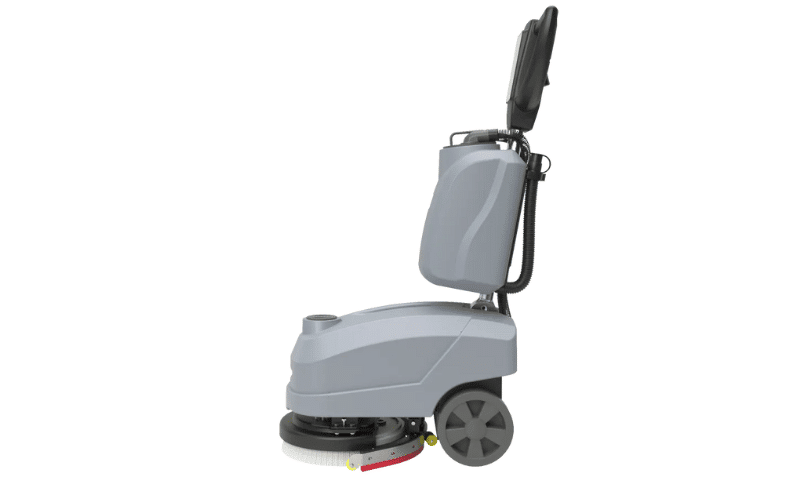

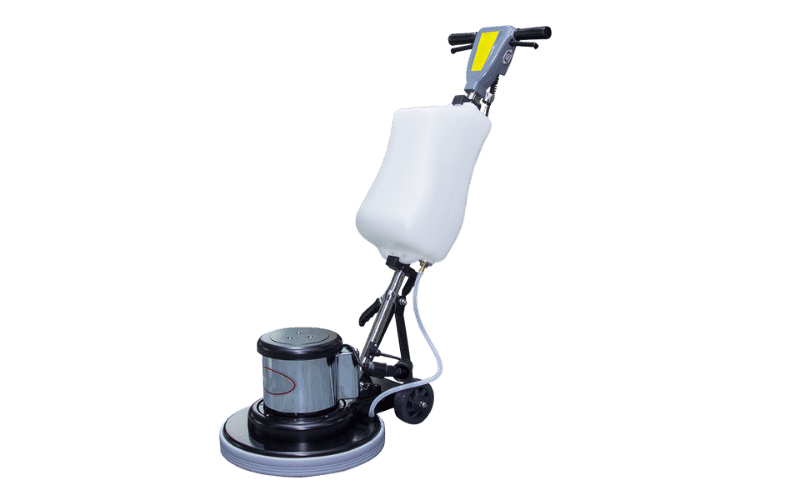
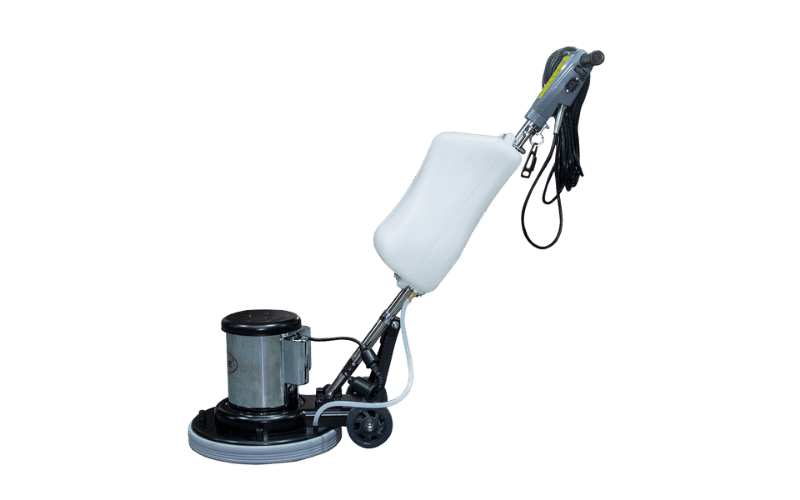
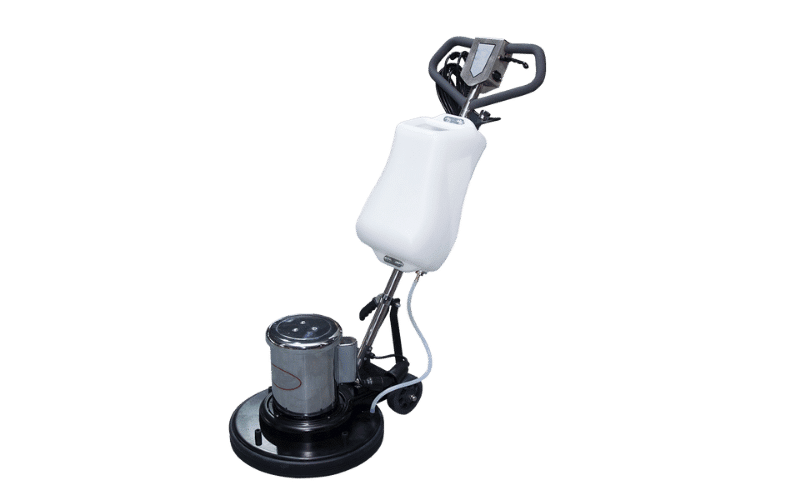



In a traction drive vs brush drive floor scrubber comparison, traction drive is self-propelled and uses a dedicated drive motor to move the machine forward and backward, making it the better fit for large floors, ramps, frequent transport, and long shifts. Brush drive (pad-assist) uses the spinning brush to pull the machine forward with a light push, which suits small spaces, light-duty cleaning, and tighter budgets. The right choice comes down to your facility size, how often you move the machine, and how long your operators clean each day.
The rest of this guide walks through how each system works, the key differences, the buying decisions that actually matter, and a scenario table that tells you which drive type fits your facility.
What Is a Traction Drive Floor Scrubber?
A traction drive floor scrubber, also called a self-propelled floor scrubber, moves itself so the operator never has to push it. The propulsion comes from a drive system that’s completely separate from the scrub brushes.
Three components do the work:
- A drive motor powers the machine’s movement.
- A transaxle transfers that power to the wheels.
- A control board manages powered forward and reverse motion.
Because propulsion is independent of the scrubbing action, the machine rolls under its own power whether or not the brushes are spinning. For the operator, that means adjustable speed control for tight corners and open aisles, powered movement in both directions, and far less physical effort across a long shift. On big jobs, that reduced effort turns into steadier cleaning and more consistent output from the first hour to the last.
What Is a Brush Drive Floor Scrubber?
A brush drive floor scrubber, sometimes called a pad-assist machine, uses the scrub brush or pad driver itself to pull the machine forward. There’s no separate drive motor, so the system is simpler and has fewer parts to service.
Here’s how it works:
- The brush or pad driver sits at a slight angle, so its rotation naturally tugs the machine forward.
- A light initial push starts the motion.
- With no transaxle, drive motor, or dedicated control board, the machine stays lighter and cheaper to build.
Once the brush is spinning, walking the machine forward takes little effort. The catch is reverse: brush drive offers no powered reverse assist, so backing up and repositioning is entirely manual. When you lift the brush off the floor, the machine free-rolls on its wheels, which makes it easy to move between rooms or wheel onto a lift. That reverse limitation is a real decision factor, especially on routes with lots of turning and repositioning, where the manual effort adds up fast.
Traction Drive vs Brush Drive: What Are the Key Differences?
Both systems clean floors well. The difference is in how the machine moves, how much effort it takes to run, and what it costs over its life. Here’s the side-by-side view.
|
Factor |
Traction Drive |
Brush Drive (Pad-Assist) |
|---|---|---|
|
Propulsion |
Powered drive motor and wheels |
Angled brush pulls the machine |
|
Reverse assist |
Powered forward and reverse |
Forward only, no powered reverse |
|
Operator effort |
Low, less fatigue |
Higher over long shifts |
|
Ramp and trailer loading |
Easier, drives up ramps |
Harder, mostly manual |
|
Productivity |
Covers more floor per shift |
Best for smaller areas |
|
Typical machine size |
Often 20 inches and up |
Common on entry-level ~20 inch |
|
Upfront cost |
Higher (control board, motor, transaxle) |
Lower |
|
Maintenance |
More drive components to service |
Simpler drive system |
Two factors carry the most weight here: how often you transport the machine and how much floor you cover per shift. If you load onto ramps or clean large areas daily, traction drive earns its price. If the space is small and the machine mostly stays put, brush drive keeps things simple and affordable. Everything else in this guide is really about weighing those two variables against your budget.
Which Drive System Is Better for Small Spaces?
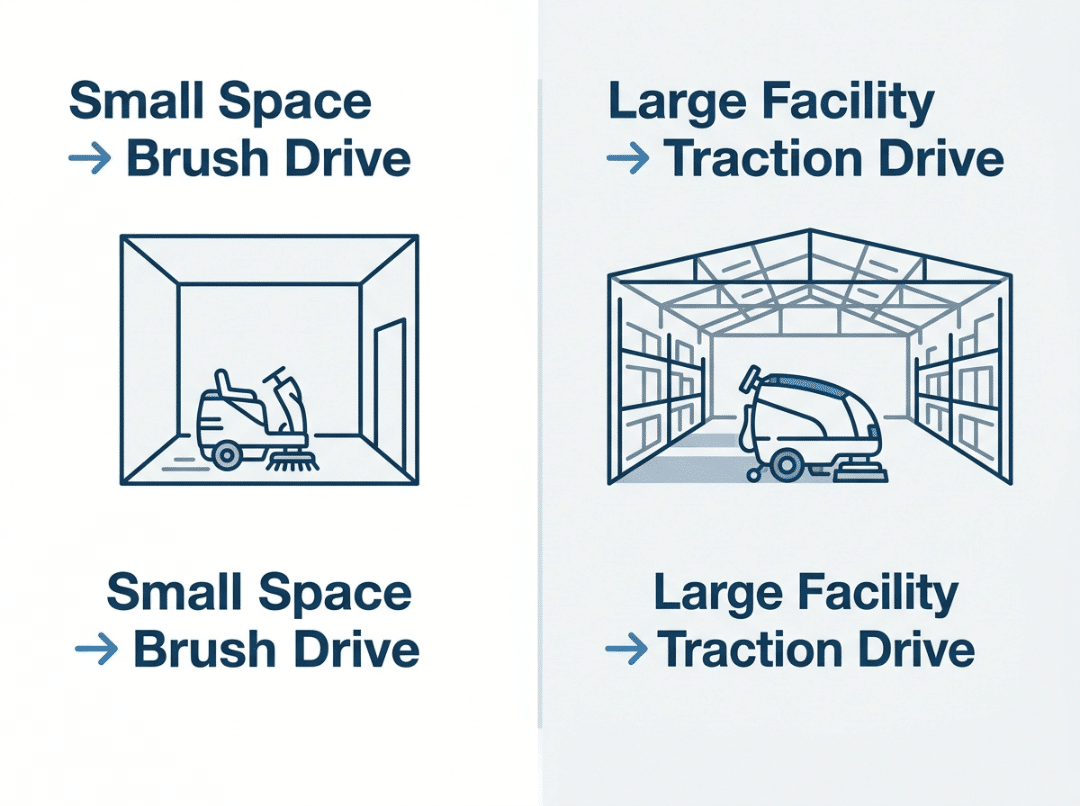
For compact rooms and light-traffic areas, brush drive is usually enough. When the cleaning path is short and turns are frequent, powered propulsion adds little value, so paying extra for a drive motor rarely pays back.
The main win is cost. You get effective cleaning without the price of a control board and transaxle you won’t fully use. A small retail floor, a café, a clinic waiting room, or a single-room office all fall comfortably into brush drive territory.
There’s one exception worth flagging: if that small space still involves ramps, a loading dock, or moving the machine between floors, lean toward traction drive. Square footage isn’t the only factor. Transport matters just as much.
Which Drive System Is Better for Large Facilities?
For warehouses, big-box retail, distribution centers, and other large floors, traction drive is the clear fit. When operators cover long distances every shift, self-propelled movement keeps them both productive and comfortable.
The payoffs are concrete:
- More floor covered per shift, because the machine does the pushing instead of the person.
- Speed control that handles wide-open aisles and tight turns without switching machines.
- Reduced operator fatigue on multi-hour routes, which keeps the pace and cleaning quality consistent from start to finish.
Across a full shift in a large facility, the productivity gain and operator comfort add up quickly, and they’re exactly what a brush drive machine can’t deliver at scale.
Which Drive System Is Better for Ramps and Transport?
This is where the two systems clearly split. If you load your scrubber onto vans or trailers, the drive system decides how easy that job is every single day.
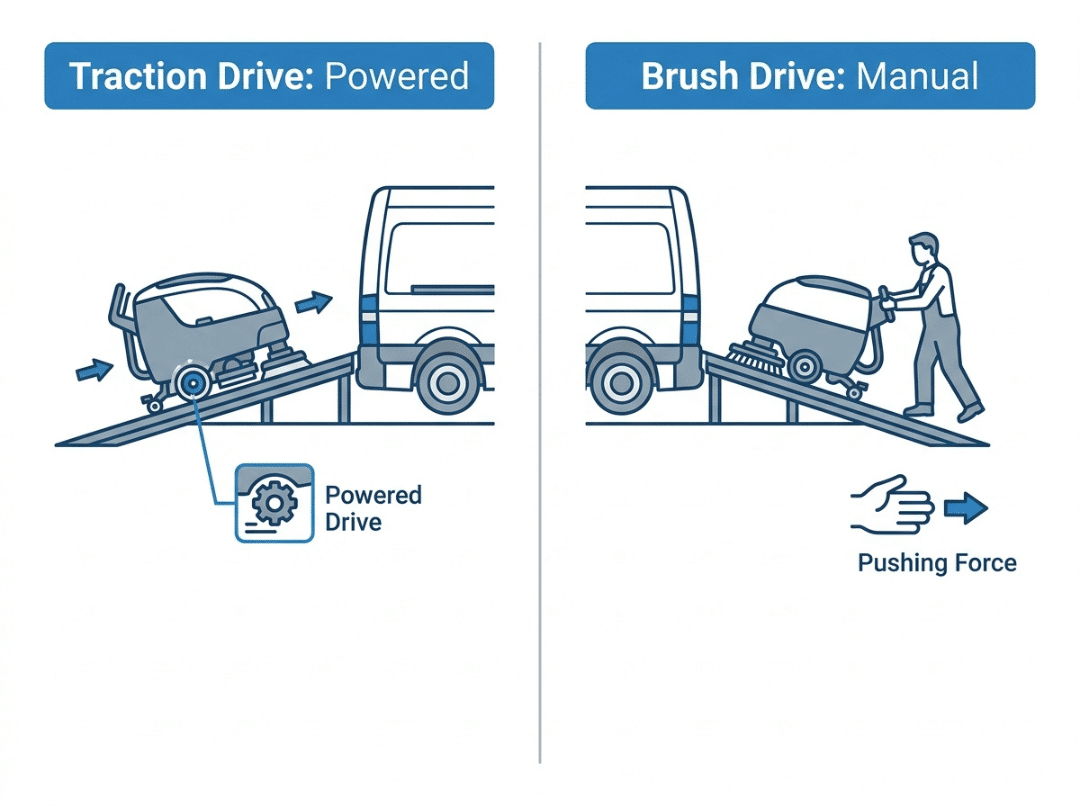
- Traction drive drives itself up ramps, and powered reverse helps with precise positioning once it’s loaded. Daily transport becomes far less of a chore.
- Brush drive free-rolls easily for manual transport when the brush is lifted, but it offers no powered ramp assist. Getting it up an incline is a manual push every time.
The rule of thumb: if you transport the machine often or deal with ramps and inclines regularly, choose traction drive. If transport is occasional and mostly across flat ground, brush drive’s free-rolling wheels handle it just fine.
Is Traction Drive Worth the Extra Cost?
Traction drive costs more because it adds a drive motor, transaxle, and control board that brush drive skips. Whether that extra cost is worth it depends less on the sticker price and more on your total cost of ownership over the machine’s life.
Look past the purchase price and traction drive pays back in three ways:
- Labor time saved. A self-propelled machine covers more floor per hour, so a large area gets cleaned in fewer labor hours.
- Operator comfort and output. Less pushing means less fatigue, and a fresh operator keeps a steadier pace through hour four than a tired one does.
- Lower turnover strain. Physically easier equipment is easier to staff and keep running on demanding routes.
Traction drive is worth the extra cost when several of these apply:
- Large or high-traffic floors to cover each shift
- Long operator shifts where fatigue starts to affect output
- Frequent loading onto ramps, vans, or trailers
- Sloped or multi-level facilities
- Productivity and a consistent pace are priorities
When the job checks these boxes, the productivity and comfort gains typically outweigh the higher upfront price well before the machine’s life is over.
When Is a Brush Drive Floor Scrubber Enough?
You don’t need to spend more than your facility requires, and brush drive is often exactly enough. It’s the smart choice when most of these are true:
- The cleaning area is relatively small.
- The machine rarely needs to be transported.
- Budget is a primary constraint.
- Cleaning is light to moderate duty.
- There are no ramps or frequent loading involved.
In these conditions, a brush drive machine gives you effective cleaning without charging you for propulsion features you’d rarely use. Spending up for traction drive here is paying for capability that sits idle. The honest answer for a small, low-transport space is that brush drive does the job and keeps your money where it belongs.
What’s the Most Common Buying Mistake?
The single most common mistake is choosing a drive system by upfront price alone. It cuts both ways, and both directions cost money.
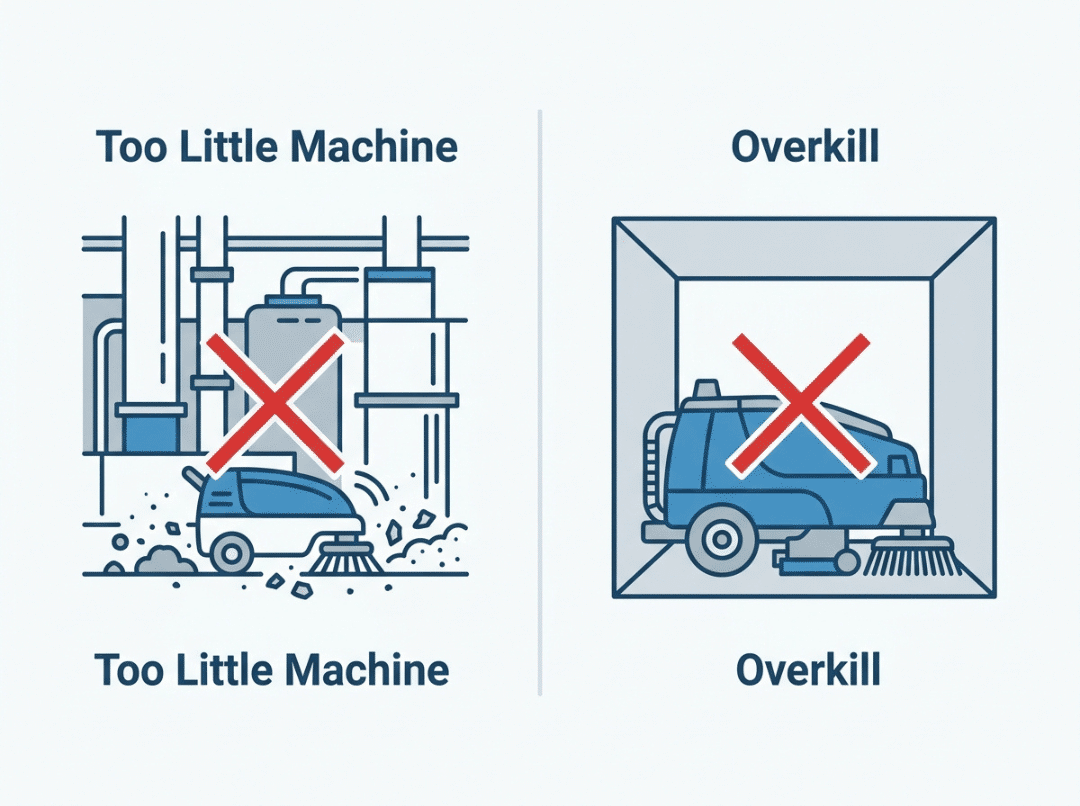
Buying a brush drive to save money, then regretting it. A buyer picks the cheaper machine for a large facility or a route with frequent transport. Within weeks, operators are worn out from pushing and manually loading, cleaning takes longer than planned, and the labor cost quietly erases the upfront savings. This is a false economy: the low price tag hides a higher operating cost.
Buying traction drive when it’s overkill. The opposite happens too. A buyer over-specs a self-propelled machine for a small, single-room space that rarely moves. The extra drive components add cost and give back little, because the productivity and transport advantages never get used.
Who tends to buy wrong? Facilities that shop on specs and price instead of matching the machine to their actual routine. The fix is simple: decide based on area size, transport frequency, and shift length first, then let budget refine the choice within that range, not override it.
Which Drive System Should You Choose? Quick Recommendation by Facility
Everything above comes down to matching the drive system to your setup. Use this table to find your situation and the reasoning behind the recommendation.
|
Situation |
Better Choice |
Why |
|---|---|---|
|
Small, light-duty space (office, café, clinic) |
Brush drive |
Lower cost, powered propulsion adds little value |
|
Warehouse, distribution center, big-box retail |
Traction drive |
Covers more floor, keeps pace over long routes |
|
Frequent ramp or trailer loading |
Traction drive |
Drives up ramps, powered reverse aids positioning |
|
Tight budget, minimal transport |
Brush drive |
Lowest upfront price, enough assist for the job |
|
Long operator shifts |
Traction drive |
Reduces fatigue, protects output late in the shift |
|
Sloped or multi-level facility |
Traction drive |
Powered movement handles inclines safely |
|
Occasional light cleaning, single room |
Brush drive |
Simple, affordable, easy to move when needed |
Find the row that matches your facility, and you have a defensible answer in seconds. If two rows apply, weight the one tied to transport or shift length, since those drive the biggest long-term cost difference.
Frequently Asked Questions
Is traction drive better than brush drive?
Neither is universally better. Traction drive suits large areas, ramps, and long shifts, while brush drive suits smaller spaces and tighter budgets. The right choice depends on your facility size, transport needs, and how often you clean.
Are brush drive floor scrubbers harder to use?
They take a little more effort because you push to start the motion and there’s no powered reverse. For small areas and light-duty cleaning, though, most operators find them easy and practical to run.
Do traction drive floor scrubbers cost more?
Yes. Traction drive machines add a control board, drive motor, and transaxle, which raises the upfront price. Many buyers find the productivity gains and reduced fatigue justify that cost on larger jobs.
Which drive type is better for small commercial spaces?
Brush drive is usually enough for small commercial spaces with light traffic and minimal transport. Traction drive only makes sense if the space involves ramps or frequent loading onto vehicles.
Can a brush drive scrubber go up a ramp?
A brush drive scrubber offers no powered ramp assist, so ramp loading is mostly manual. If you load onto vans or trailers often, a self-propelled traction drive machine is the easier choice.
What is a self-propelled floor scrubber?
A self-propelled floor scrubber is a traction drive machine that moves itself using a dedicated drive motor and wheels. Speed control lets the operator adjust the pace rather than pushing the machine by hand.
Get the Right Floor Scrubber for Your Facility
The rule is simple: match the drive system to your area size, transport needs, and shift length first, then let budget fine-tune the choice. Brush drive keeps things affordable and practical for small, low-transport spaces. Traction drive pays back on large floors, long shifts, and facilities with ramps. Beyond the drive system, the right machine also depends on your floor type, layout, and cleaning frequency.
At LeadV, we build professional floor cleaning equipment for every environment. For compact and mid-size spaces, explore our walk-behind floor scrubbers. For large facilities that demand coverage and comfort over long shifts, look at our ride-on floor scrubbers. Not sure which drive system and model fit your setup? Contact our team for a quick recommendation based on your facility size, floors, and cleaning routine, and we’ll help you match the right machine to the job.