







Most buyers start in the wrong place. They pull up a spec sheet, compare coverage rates, and pick the machine with the biggest numbers. Then it arrives, and they find out it can’t clear the doorway to the loading dock, the battery dies two-thirds through the shift, or the aisles are six inches too tight for the scrub deck to turn around. The machine sits idle or frustrates operators until someone cuts their losses.
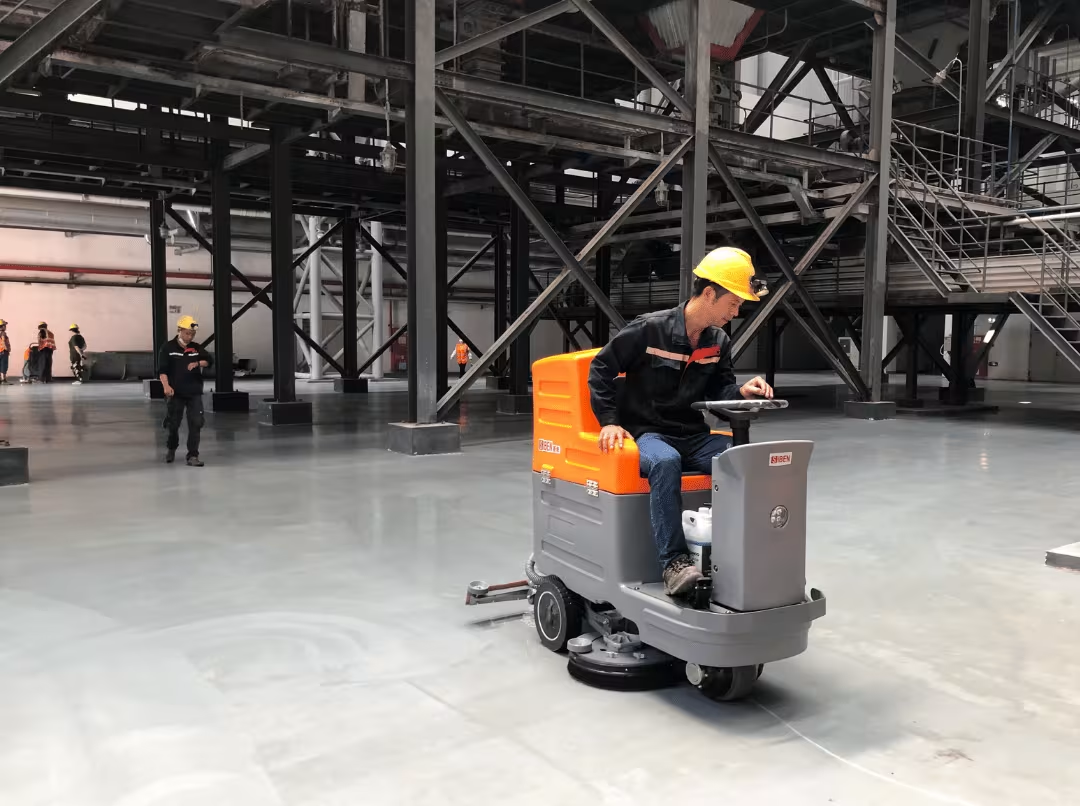
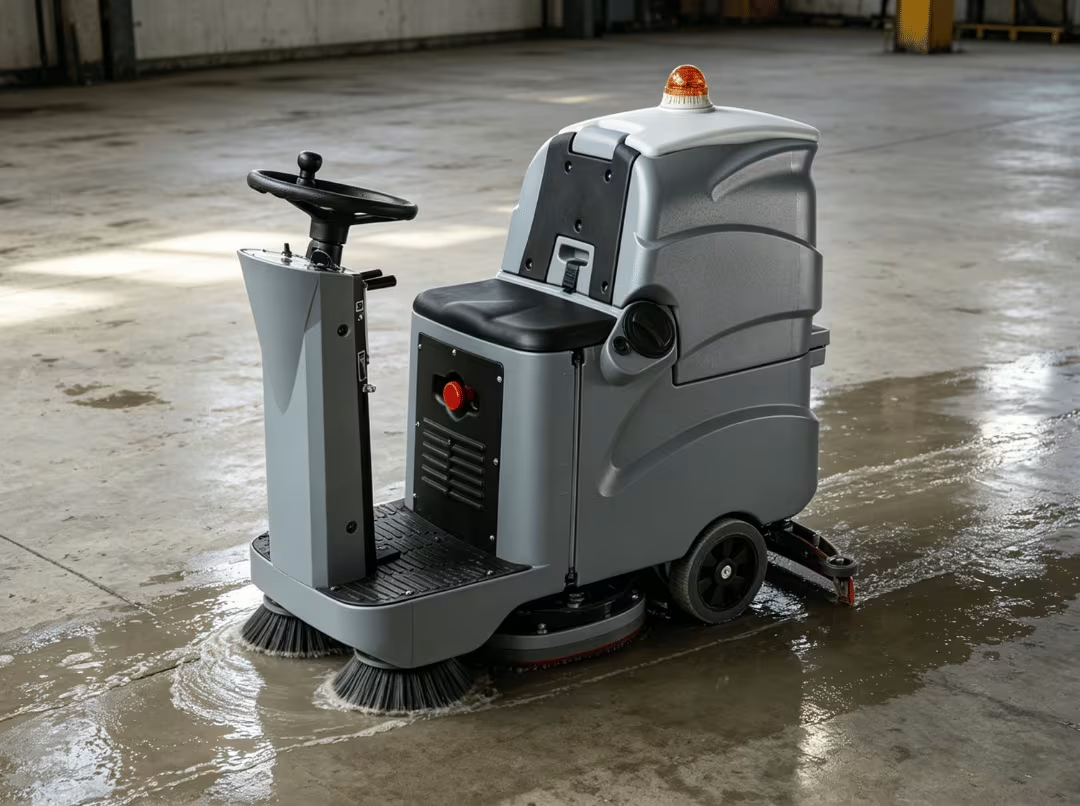
A ride-on floor scrubber is a self-propelled machine the operator drives from a seat. In a single pass, it lays down solution, scrubs the floor, and vacuums the dirty water back up. For a large facility, it does in an hour what a mop-and-bucket crew can’t finish in a shift. But the only machine worth buying is the one that matches your actual building, your shift schedule, and your floor conditions — not the one with the most impressive brochure.
This guide walks through the decision the way an experienced buyer would: first confirming whether a ride-on is even the right category, then auditing your facility, then comparing the specs and power options that actually move the needle, and finally verifying your shortlist before you commit.
Is a Ride-On Floor Scrubber the Right Choice?
Before you compare models, confirm you’re shopping in the right category. A walk-behind scrubber covers some of the same ground at a fraction of the price, and for plenty of facilities, it’s the smarter call.
A ride-on earns its cost when you’re cleaning large, mostly open areas on a fixed, repeating schedule — warehouses, distribution centers, manufacturing plants, big-box retail floors, airports, convention halls. The math tips decisively toward ride-on when your crew covers tens of thousands of square feet per shift, cleans daily or multiple times a day, and your labor costs are high enough that a faster machine genuinely pays for itself.
A ride-on is a poor fit when the space fights back. Narrow aisles, frequent turns, cluttered layouts, multi-level facilities, and zones broken up by equipment or racking all blunt the productivity advantage. If an operator spends more time maneuvering and repositioning than actually scrubbing, a smaller, more agile machine will outclean a wider ride-on every shift.
Use this quick check before you go further:
- Area: Are you cleaning more than 10,000 square feet per shift?
- Frequency: Is this daily or multi-shift work, not an occasional deep clean?
- Layout: Do you have open, connected runs the machine can move through without constant stops?
- Labor cost: Is walk-behind or manual cleaning eating enough hours to justify the upgrade?
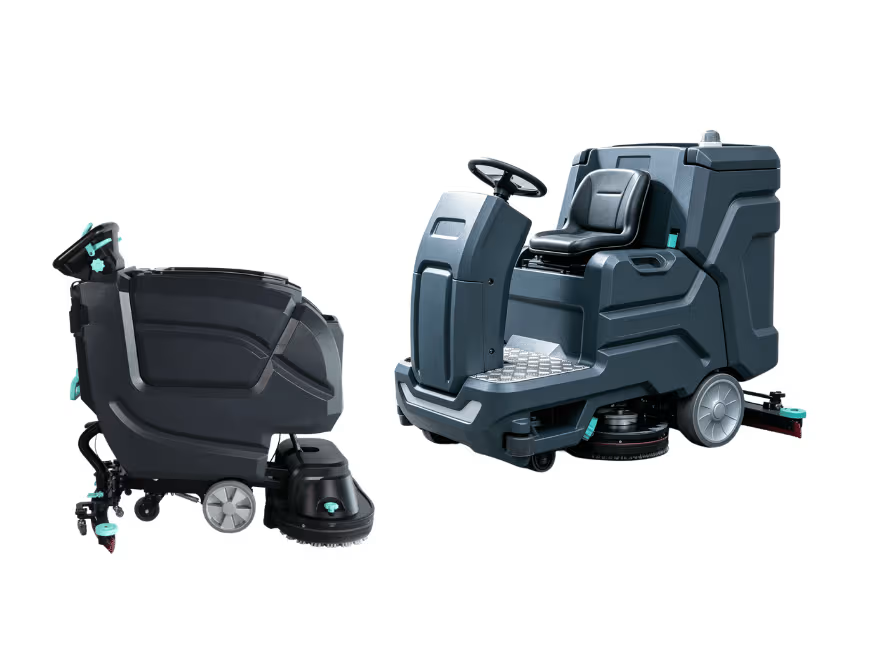
If most of those answers are yes, a ride-on is worth a serious look. If you’re on the fence, the comparison section further down will help you settle it.
Audit the Facility Before You Compare Machines
The most expensive mistake in purchasing a floor scrubber isn’t picking the wrong brand — it’s choosing a machine before you understand the space it has to clean. Do this audit first, before you talk to a single dealer.
Cleaning area and schedule
Measure the square footage your crew actually cleans per shift, not the building’s total footprint. Unused areas, storage zones, and closed sections don’t count. Then note how often you clean and whether you’re locked into a time window — a two-hour gap between shifts, a pre-opening window in retail, a maintenance break in a plant. A machine that can technically clean your space but can’t finish inside your time window isn’t productive enough, regardless of what the spec sheet says.
Floor type and soil conditions
Concrete, epoxy, sealed tile, and polished floors all respond differently to brush type, pad pressure, and detergent concentration. A lightly maintained polished concrete floor and a raw warehouse slab caked with tire marks and industrial grime need completely different setups. Beyond surface type, note what’s actually on your floors: fine dust, food residue, packaging debris, oil, or heavy ground-in contamination. That soil profile will drive your brush selection more than almost any other factor.
Layout, aisles, doors, and turns
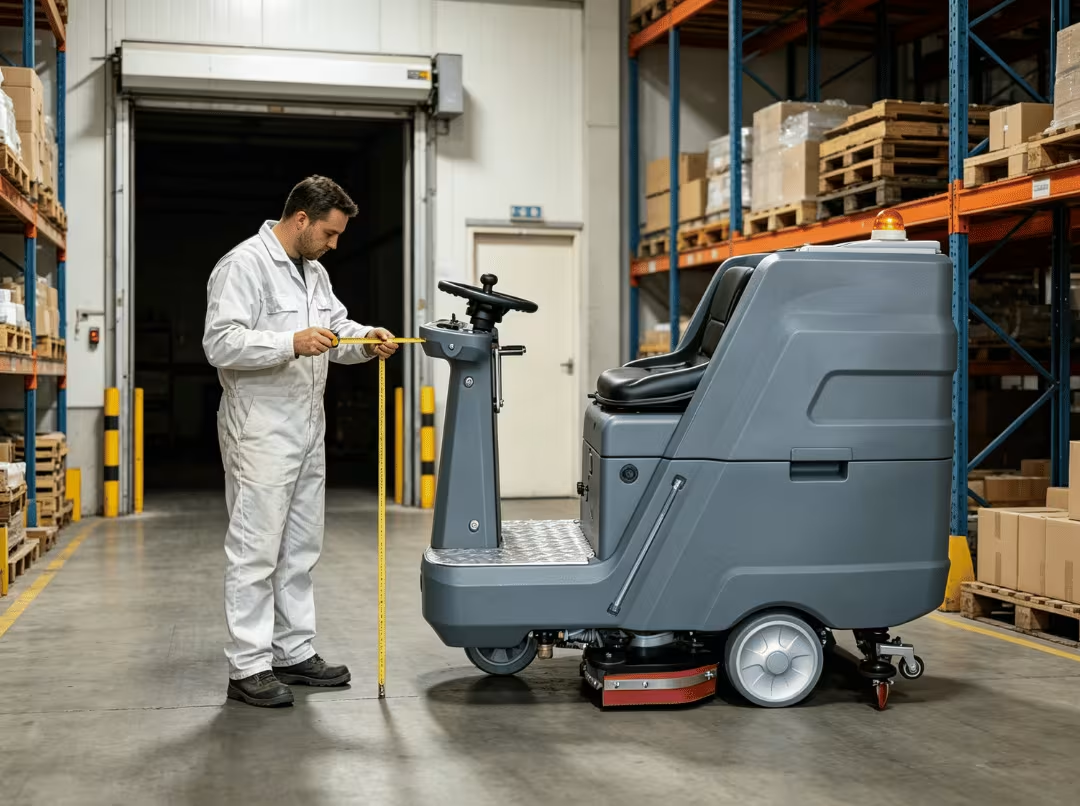
Grab a tape measure before you look at a single spec sheet. Record your tightest aisle width, your narrowest doorway, rack spacing, and every 90-degree turn in your cleaning route. Map fixed obstacles: columns, parked equipment, loading dock edges, floor drains, and ramps. These dimensions set a hard upper limit on the machine’s maximum width and turning radius. A scrubber that can’t clear a doorway or swing around a rack bay won’t just underperform — it will create dirty strips, slow your operators down, and frustrate your team every single shift.
Traffic, noise, slopes, and shift pattern
Note whether the machine will share floor space with forklifts or foot traffic, which affects the visibility and safety features you’ll need. Flag any noise limits — hospitals, schools, and retail environments often require quieter machines during operating hours. Check for ramps and grade changes, since machine weight and drive power determine what slopes a scrubber can safely handle. Finally, decide whether this machine runs one shift or several. That single answer shapes your power-system decision more than anything else on the spec sheet.
If you can’t answer these four areas clearly, you’re not ready to compare models yet.
The 5 Factors That Matter Most
Spec sheets list dozens of figures. Most of them don’t change your buying decision. These five do. Understand what each one actually means in a real building, and you’ll narrow a long list down to two or three machines quickly.
1. Productivity: can it finish inside your cleaning window?
Look at scrub width, tank capacity, and runtime together — and then cut the headline coverage number down to size.
Manufacturers publish theoretical coverage rates based on the machine running in a straight line at full speed with no stops. Your real number is always lower. Every turn, obstacle, tank refill, and dirty-water dump eats into it. In a typical warehouse or plant environment with racking, pillars, and traffic, actual coverage often runs 30 to 40 percent below the rated figure. Buyers who don’t account for this consistently underestimate cleaning time and overestimate how much floor a given machine can handle in a shift.
Tank size is often more decisive than scrub width. A machine with a small solution tank stops frequently to refill; a small recovery tank means frequent dirty-water dumps. Each stop is dead time on the floor. A machine with generous tanks can out-clean a nominally “faster” machine simply by stopping less. Match runtime to your shift length so the operator isn’t waiting on a charger in the middle of a run.
2. Maneuverability: Will it actually fit your building?
Check overall machine width and turning radius against the numbers from your facility audit — not against a generic aisle-width recommendation.
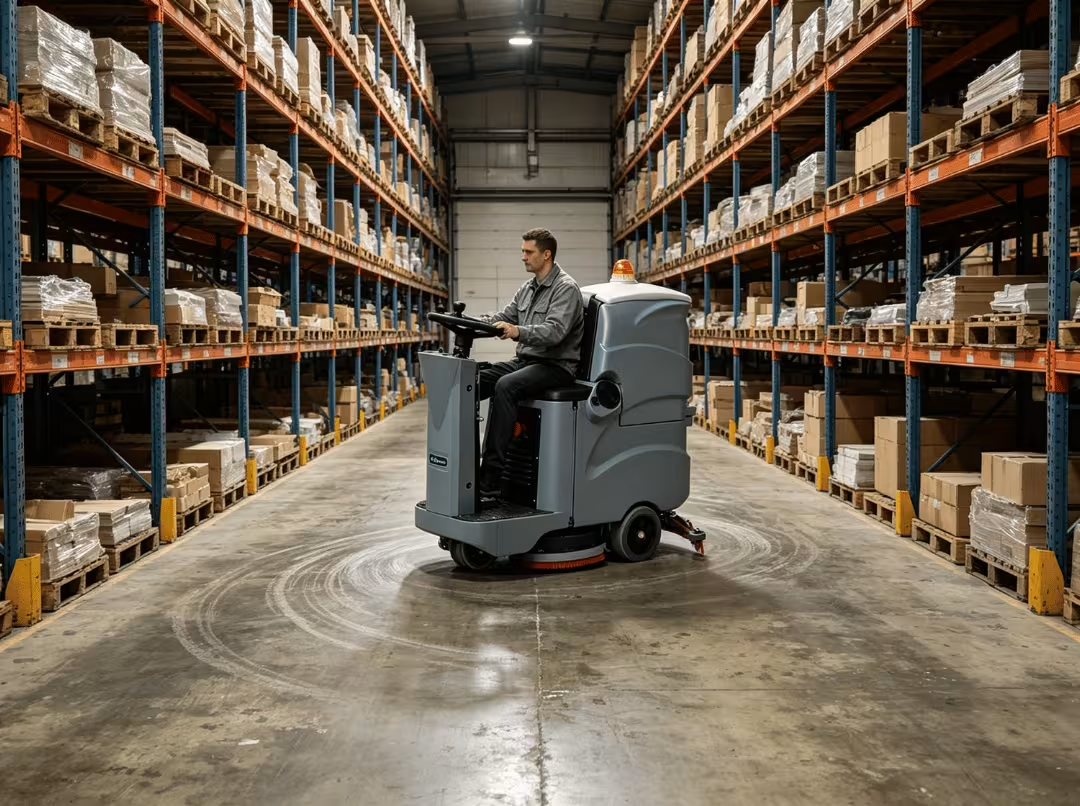
A wider scrub deck covers more floor per pass, which sounds like a clear win until it can’t turn around at the end of a rack aisle or can’t fit through a doorway. In congested spaces, a narrower machine with a tighter turning radius will consistently outperform a wider one that has to back up, reposition, and make multiple attempts at corners. If a machine can’t handle your tightest turn comfortably, its rated coverage figure is meaningless.
Think through the machine’s complete daily route. For open warehouse and industrial environments, a wider deck with a longer wheelbase makes sense. For retail back rooms, food service areas, or plant floors packed with equipment, a tighter footprint and smaller turning radius will win every shift. The machine that looks slower on paper often finishes faster on a real floor.
3. Cleaning performance: does the scrub system suit your floor and soil?
This is where brush type, pad pressure, and recovery performance determine whether the floor is actually clean — or just looks clean until it dries and you see the streaks.
Disc brushes handle smooth surfaces well and are easy to swap for pads when the job calls for lighter maintenance or polishing. Cylindrical brushes sweep and scrub simultaneously, making them effective for floors that collect grit, dust, or small debris that would otherwise require a separate sweeping pass. If your floors take on packaging waste, sawdust, or fine particles between cleanings, cylindrical brushes save real time.
Pad pressure controls how hard the machine works against stubborn soil. Light pressure suits routine daily maintenance on clean surfaces; higher pressure is needed for oil contamination or heavily ground-in grime, though it accelerates pad wear. Match the pressure setting and brush type to your actual soil load — not to the floor surface alone.
Don’t underestimate the recovery system. Scrubbing the floor is only half the equation. The squeegee and vacuum have to pull the dirty water back up cleanly and consistently. A machine that scrubs well but leaves a wet floor creates slip hazards, forces a second pass, and adds time to every shift. Evaluate drying performance as seriously as cleaning performance, and always check it during a real demo — not in a showroom.
4. Power system: which battery fits your shift pattern?
The power system has more impact on your day-to-day operations — and your long-term costs — than almost any other specification. The right question isn’t which battery is best in the abstract; it’s which battery fits how your facility runs.
Lead-acid batteries cost less upfront but require regular watering, long charge times, and careful charging discipline. They’re a reasonable fit for single-shift operations where the machine charges overnight, and no one is waiting on it to be ready. Miss the maintenance window, and battery life shortens fast.
Lithium-ion batteries carry a higher purchase price but charge significantly faster, require no watering, handle many more charge cycles, and can accept opportunity charging during breaks. For multi-shift facilities — or anywhere that downtime between uses is short and machine availability is critical — lithium-ion pays for the price difference within a few years of reduced maintenance and fewer battery replacements.
Before you decide, check what charging infrastructure you actually have: available voltage, whether a dedicated circuit is needed, ventilation requirements for a lead-acid charging room, and how charging windows fit your shift schedule. In multi-shift operations, battery downtime frequently costs more over three years than the upfront price gap between chemistries.
5. Ownership cost: what does it really cost after you buy?
Purchase price is one entry in a much longer ledger. What separates a sound investment from an expensive regret is everything that comes after delivery.
Plan for the ongoing costs:
- Consumables: brushes, pads, squeegee blades, and detergent wear on a predictable cycle tied to your hours of use and floor conditions.
- Battery replacement: a high cost that arrives sooner with lead-acid than lithium-ion, and one buyers routinely underestimate when comparing upfront prices.
- Maintenance and downtime: scheduled service is predictable; unplanned repairs are not. A machine sitting idle, waiting on parts, is a hidden cost that shows up as labor overruns and delayed cleaning.
- Labor savings: the figure that justifies the purchase. Calculate it honestly.
Before you finalize any purchase, run a simple check: total purchase price plus battery system cost, plus estimated annual consumables and maintenance, minus the labor hours saved each shift multiplied by your hourly labor cost. See how many months of savings it takes to recover the investment. That calculation affects more purchase decisions than any spec comparison — and it’s the number most buyers skip.
Ride-On vs. Walk-Behind: Settling the Borderline Cases
Most buyers have already made this call before they start researching. This section is for those stuck in the middle — facilities with real square footage but complicated layouts that don’t fit neatly into the obvious choice.
A ride-on is clearly the right call when you have large, open, connected areas that need frequent cleaning, operator fatigue is a real factor over long shifts, and labor cost is the number you most need to bring down. Bigger tanks mean fewer stops; a seated operator covers more ground without the physical wear of pushing a machine for hours.
A walk-behind scrubber makes more sense when the space works against a larger machine: tight aisles, frequent direction changes, multi-level facilities where moving equipment between floors is a daily reality, or lower-frequency cleaning where the volume doesn’t justify the jump in cost.
For true borderline cases, the most useful question is: how much of your floor is genuinely open versus obstructed? If the majority of your area is open but a few sections are tight, a ride-on for the open zones plus a compact walk-behind for the constrained areas often outperforms forcing one machine to do everything. Don’t let the assumption that bigger is better override what your building’s dimensions actually require.
New vs. Used: When Saving Upfront Costs Becomes More Expensive Later
Both options can work. Which one is right depends on your budget, your risk tolerance, and the quality of support available in your area.
Buying new means a full manufacturer warranty, current technology, a known machine history, and predictable performance over the first several years. You pay more at acquisition, and the machine begins to depreciate the moment it leaves the dock. New makes the most sense when the machine runs hard in daily operation, you can’t afford unplanned downtime, and you need the longest possible service life.
Buying used reduces entry cost, which is attractive for lighter-duty use, backup capacity, or operations with tight capital budgets. The risk is real: the battery condition and internal wear are unknown until someone carefully inspects the machine. A used scrubber priced at a steep discount with a battery pack near the end of its cycle isn’t a bargain — it’s a deferred replacement cost that hits within a year or two. Buying used doesn’t save money if it just relocates the expense.
If you go used, inspect these before you commit:
- Battery age and remaining charge capacity — the single most important item, and the most expensive to replace.
- Solution and recovery tanks — look for cracks, staining, and signs of leaks.
- Squeegee blades and brushes — wear patterns tell you how the machine was used and maintained.
- Hoses and connections — check for cracks, kinks, deteriorated fittings, and blockages.
- Service records — a documented maintenance history is worth paying extra for. A machine with no records is a machine with unknown history.
Certified pre-owned machines from established dealers cost more than private sales but come with inspection, reconditioning, and some degree of warranty coverage. For most businesses, that’s a better risk profile than buying privately and discovering problems after delivery.
Don’t Buy Until You Demo It on Your Floor
A showroom demo on a clean, empty floor tells you almost nothing about how a machine will perform in your building. Insist on an on-site trial — the machine running through your actual cleaning route, on your floors, against your typical soil load.
During the demo, watch for what spec sheets can’t capture:
- Real cleaning speed through your aisles and turns, not a straight-line run with no obstacles.
- Drying performance — is the floor genuinely dry and safe to walk on immediately behind the machine?
- Noise level at the operator’s position, especially if cleaning happens during business hours.
- Tank servicing ease — how long does it take to refill and dump, and can the operator do it without assistance?
- Edge and corner coverage — where does the machine leave dirty strips, and how much hand work does that create?
- Operator learnability — can your staff get comfortable with the controls quickly, or does it require extended training?
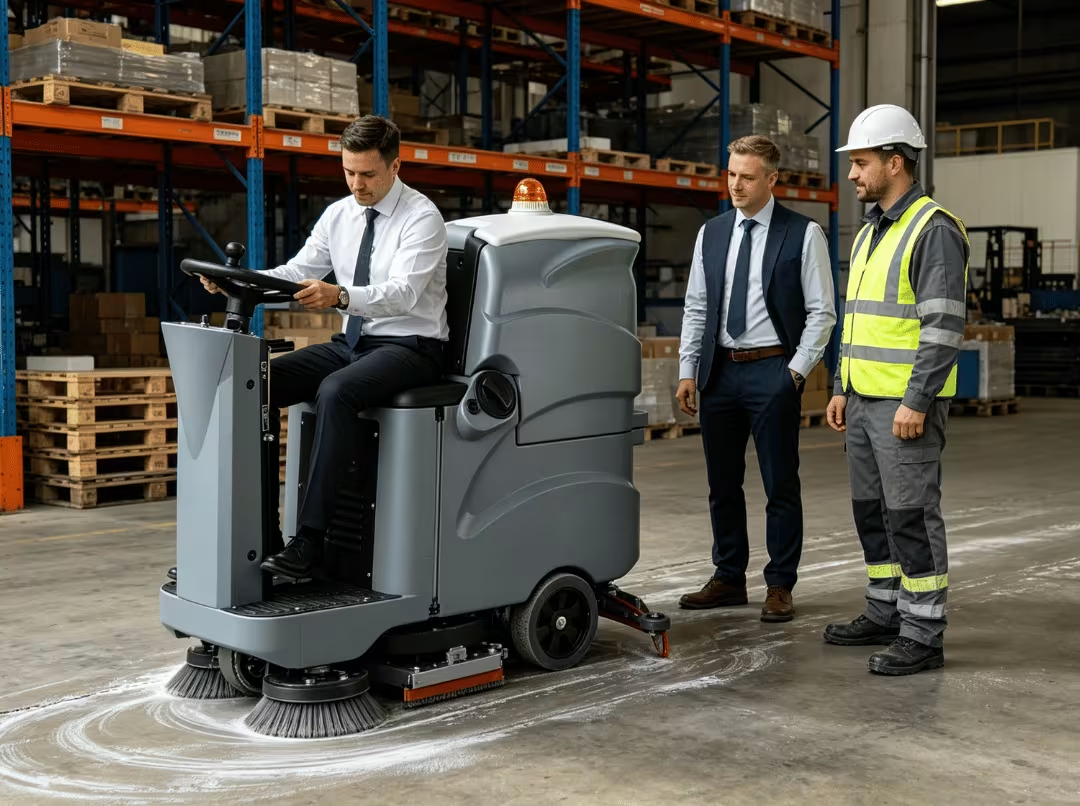
Use the demo visit to get clear answers from the dealer on the questions that matter after delivery: lead time, installation, operator training, financing terms, local service response time, and parts availability. A scrubber on a tight cleaning schedule can last a decade or more — but only if the supporting infrastructure keeps it running. A machine backed by a responsive local dealer with parts in stock will outperform a better-specced machine sitting idle waiting on a two-week parts shipment.
Common Mistakes Buyers Make
These patterns show up consistently. Knowing them in advance puts you ahead of most buyers before you’ve compared a single model.
- Buying on price alone. The cheapest machine at acquisition almost never has the lowest cost over five years. Battery replacement, consumable cycles, and unplanned downtime add up quickly.
- Taking the rated coverage figure at face value. Theoretical square-feet-per-hour is measured on an empty floor with no turns. Your actual building is not that floor.
- Oversizing the machine. A wide scrub deck that can’t clear your aisle turns or doorways is, in practice, slower than a smaller machine that fits. Machine width matters less than how the machine navigates your real layout.
- Mismatching the battery to the operation. A lead-acid machine in a multi-shift facility, or a lithium-ion machine in a single-shift operation where cost was the priority, both create ongoing friction. Match the chemistry to how the machine actually runs.
- Skipping the on-site demo or the maintenance arrangement. Buying without seeing the machine on your floor — or without confirming service support — turns manageable problems into extended, expensive ones.
Final Checklist for Shortlisting the Right Machine
Work through these steps before you make a final decision, and you’ll choose a machine that actually fits — not just one that looked good in the catalog.
- Measure the square footage cleaned per shift and how often it’s cleaned.
- Record your tightest aisle widths, doorway openings, and turning clearances.
- Identify floor types and the soil conditions your crew deals with each day.
- Confirm whether you run one shift or several — this determines your power system.
- Compare two or three machines across the five factors that matter: productivity, maneuverability, cleaning performance, power system, and ownership cost.
- Calculate total cost of ownership and rough payback period — not just the purchase price.
- Arrange an on-site demo of your top choices on your own floor before you commit.
- Decide between new and used, confirm dealer support and parts availability, then buy.
FAQs
How much does a ride-on floor scrubber cost?
New ride-on scrubbers generally range from around $10,000 for compact models to $40,000 or more for large-capacity machines with lithium-ion power systems. Price varies by scrub width, tank size, battery type, and included accessories. The purchase price is only the starting point — factor in battery replacement, consumables, and maintenance over the machine’s operating life before comparing options.
How much area can a ride-on scrubber clean per hour?
Rated coverage typically ranges from 20,000 to over 100,000 square feet per hour, depending on scrub width. Your real-world number will run 30 to 40 percent lower once you account for turns, obstacles, tank servicing, and normal operating pace. Plan your cleaning schedule around the realistic figure, not the brochure rating.
How do I choose between a ride-on and a walk-behind scrubber?
Base the decision on area, layout, and labor cost. A ride-on makes sense for large, open, frequently cleaned spaces where faster cleaning saves meaningful labor time. A walk-behind is better suited to tighter, multi-level, or lower-frequency applications where maneuverability and lower cost outweigh productivity gains. For mixed environments, a combination of both is often the most practical solution.
How long do ride-on scrubber batteries last?
Lead-acid batteries typically last two to four years with consistent watering and proper charging. Lithium-ion batteries commonly last five years or more and handle significantly more charge cycles. Actual service life depends on how hard the machine runs, how closely charging discipline is followed, and how well the batteries are maintained.
Can one machine handle different floor types?
Yes, in most cases. Ride-on scrubbers can handle concrete, tile, epoxy, and polished floors when you match the brush or pad and adjust pad pressure and detergent to each surface. The key is to select a machine with the right brush options and settings for your specific floor mix — not to assume a single default setup works everywhere.
Is a used ride-on floor scrubber worth buying?
It can be, if you inspect it thoroughly before purchase. Start with battery health — it’s the most expensive component and the most common source of post-purchase regret. Then check tanks, squeegee blades, brushes, hoses, and service records. A certified pre-owned machine from a reputable dealer offers more protection than a private sale. A machine priced attractively because the battery is nearly dead is not a bargain.
Conclusion
The buying process follows one clear sequence: start with your facility, not a catalog. Measure your cleaning area, aisles, floors, and shift pattern. Then compare machines on the five factors that actually change the outcome — productivity, maneuverability, cleaning performance, power system, and ownership cost. Calculate what the machine truly costs over its operating life. Weigh new against used honestly. And prove your top choices with a real demo on your own floor before you sign anything.
The best ride-on scrubber isn’t the one with the largest numbers. It’s the one that fits your building, matches your shift schedule, stays within budget, and keeps running with the right support. Follow the checklist before you finalize your decision, and you’ll buy a machine that earns its keep — not one that creates problems the day after delivery.