



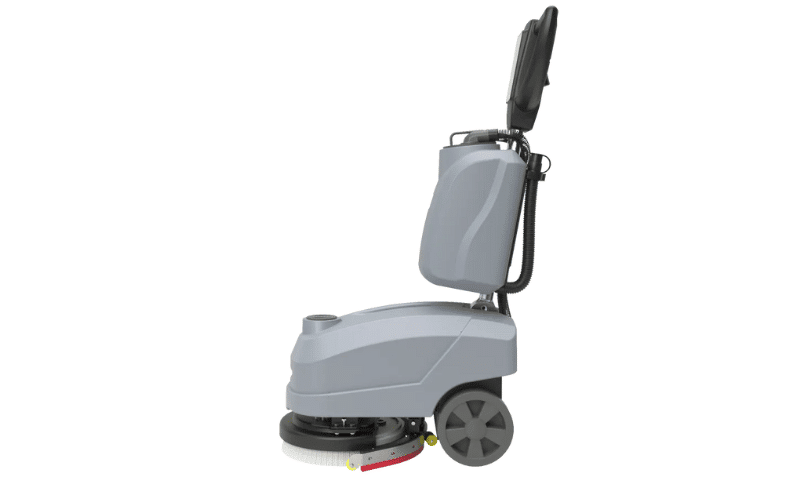




I’ve spent years around battery-powered floor scrubbers, and I’ll tell you the number one reason machines die early: nobody waters the batteries. People run them hard, charge them every night, and never pop the caps to check the water. Six months later, they’re shopping for a new battery pack that costs more than a year of maintenance ever would.
Here’s the good news. Watering a lead-acid battery is simple, fast, and one of the cheapest ways to protect your investment. Get it right, and you’ll add years to your batteries’ life.
This guide walks you through the whole process, the way I’d teach a new tech on day one:
- Why do these batteries need water in the first place
- When to add it and when to wait
- What kind of water to use
- The exact step-by-step routine
- Tools and schedules that make it painless
Let’s get into it.
Why Lead Acid Batteries Need Water
A flooded lead-acid battery consists of lead plates immersed in an electrolyte bath, a mix of water and sulfuric acid. That liquid is what carries the charge. When the water level drops too low, the battery starts to fail.
So where does the water go? It boils off, in a sense.
Every time you charge the battery, a chemical process called electrolysis kicks in. Some of the water splits into hydrogen and oxygen gas, which vents out of the cells. That’s normal. But it means your water level drops slightly with each charge cycle.
Heat speeds this up. The hotter the battery and the harder you charge it, the faster the water evaporates. A floor scrubber running daily in a warm warehouse loses water faster than one used twice a week in a cool building.
Here’s why you can’t ignore it. When the water drops below the top of the plates, those exposed plates dry out and get damaged. That damage is permanent. You lose capacity, the battery holds less charge, and eventually it won’t run a full shift.
The takeaway: regular watering is the single most effective way to prevent early battery failure. Skip it, and you’re throwing money away.
The Best Time to Add Water
Timing matters more than people think. The rule is simple: water your batteries after a full charge, not before.
Here’s why. As a battery charges, the electrolyte heats up and expands, raising the fluid level. If you top off the water when the battery is discharged and then charge it, the expanding fluid has nowhere to go. It bubbles up and overflows out of the vent caps.
That overflow is bad news. You lose acid (not just water), you make a corrosive mess on top of the battery, and you weaken the electrolyte mix. Now you’ve created a problem instead of solving one.
So always finish the charge cycle first, then water. The level will be at its highest, and you’ll fill it to the mark.
The One Exception: Dry Plates
There’s a single time you water before charging. If you open a cell and the plates are exposed to air and dry, you need to act.
In that case, add just enough distilled water to cover the tops of the plates. Don’t fill it all the way. Just get the plates submerged, then charge the battery, and finish topping off after the charge completes.
Choosing the Right Water Quality
This part trips up a lot of people, and it’s an easy mistake to avoid. Never use tap water.
Tap water is full of minerals like calcium, magnesium, and iron, plus chlorine and other dissolved solids. Those minerals don’t belong inside a battery.
Once they’re in the cells, those minerals settle on the plates, creating internal shorts and buildup. That buildup interferes with the chemical reaction the battery relies on, shortening the battery’s life. The more dissolved solids you add over time, the worse it gets.
Distilled water solves this. It’s been purified so there’s nothing in it but water, no minerals, no contaminants. Deionized water works too.
The rule: use only distilled or deionized water, every single time. A jug of distilled water costs a few dollars and protects a battery pack worth hundreds or thousands. That’s the easiest math in the building.
Step-by-Step Watering Instructions
Here’s the routine. Follow it the same way every time, and you’ll never have a problem.
- Clean the battery top first. Wipe off any dirt, dust, or debris around the vent caps. You don’t want grime falling into the cells when you open them.
- Put on your safety gear. You’re working around sulfuric acid, so wear chemical-resistant gloves and eye protection. No exceptions. Acid burns are no joke.
- Open the vent caps and check each cell. Pop the caps and look inside. Check the fluid level in each cell, since it doesn’t always drain evenly.
- Fill to the bottom of the vent well. Add distilled water until the level reaches the bottom of the plastic fill tube (the vent well) inside each cell. That’s the correct level, and it gives the electrolyte room to expand.
- Don’t overfill. Stop at the vent well. Overfilling dilutes the electrolyte, weakens the battery, and causes overflow that corrodes the battery tray and connections.
- Wipe down and close up. Replace the caps snugly and wipe the top clean.
A quick checkpoint before you start: confirm the battery is fully charged. If it isn’t, charge it first, then water (unless the plates are dry, as covered above).

Tools to Simplify Battery Maintenance
If you’re watering one small battery, a jug and a steady hand work fine. But once you’re maintaining a fleet of floor scrubbers, the right tools save real time and prevent overfills.
- Manual watering gun. This is the basic upgrade. A watering gun gives you better flow control and many shut off automatically when a cell hits the right level. Less mess, fewer spills.
- Automatic battery watering systems. These are a game-changer for fleets. A network of connected caps replaces the standard ones, and you fill every cell at once to a precise, uniform level through a single connection. No popping individual caps, no guessing.
- Gravity-feed tanks and pressurized carts. For industrial users with lots of batteries, these speed things up even more. You roll the cart over, hook up, and water a whole pack in minutes.
Why this matters for floor scrubber fleets: when you’ve got a dozen machines to maintain, an automatic watering system turns a tedious half-hour job into a quick, consistent task. It also eliminates human error, resulting in fewer dry plates and fewer overfills.
Maintenance Schedules for Different Applications
How often you water depends on how hard the batteries work. Use this as a starting point and adjust to what you see.
- Heavy-use equipment (floor scrubbers, forklifts): inspect water levels weekly. These machines cycle daily and lose water fast. A weekly check keeps you ahead of trouble.
- Backup power systems and seasonal vehicles: monthly checks are usually enough. They charge less often, so they lose water more slowly.
A couple of habits that pay off:
- Keep a water log. Write down how much water each pack takes. If one battery suddenly drinks way more than the others, that’s a warning sign. It often means a charger problem or an old battery that’s gassing too much.
- Adjust for heat. Hot environments speed up evaporation. If your facility runs warm, check more often than the schedule suggests. A scrubber working in a hot warehouse may need more frequent attention than the calendar implies.
Signs of Overwatering or Underwatering
Your batteries will tell you when something’s off. Learn to read the signals.
Signs of overwatering or acid overflow:
- White, crusty buildup on the terminals and battery top. That’s acid that bubbled out and dried. It corrodes connections and bleeds off charge.
Signs of underwatering or low water:
- Warped or swollen battery cases
- Excessive heat during charging
- A battery that won’t hold a full shift’s charge
Spotting a single bad cell: check performance across all the cells. If most run fine but one consistently reads low or struggles, you’ve likely got one failing jar dragging down the whole pack.
Cleaning Up Acid Spills and Buildup
When you find that white corrosion, clean it safely. Mix baking soda with water to form a paste or solution, then apply it to the buildup. The baking soda neutralizes the acid. Wipe it clean, then rinse with a little plain water and dry the top.
Wear your gloves and eye protection for this, too. And keep that baking soda solution away from the inside of the cells, since you only want it neutralizing acid on the outside surfaces.
FAQs
Can I use bottled drinking water in my battery?
No. Bottled drinking water still contains minerals and dissolved solids, often added for taste. Those minerals damage the battery just like tap water does. Stick to distilled or deionized water only.
How often should I check the water level in my floor scrubber?
Weekly is the standard for daily-use floor scrubbers. They cycle hard and lose water fast. If your facility runs hot or you use the machine heavily, check more often. Let your water log guide you.
What happens if I accidentally overfill a battery cell?
Overfilling dilutes the electrolyte and causes overflow during charging. That overflow corrodes the battery top, tray, and connections, and weakens performance. If it happens, neutralize and clean the spill with a baking soda solution right away.
Should the plates be visible when I open the cap?
No, the plates should always be covered by electrolyte. If you see exposed, dry plates, that’s a problem. Add just enough distilled water to cover them, charge the battery, then top off to the vent well afterward.
Does a maintenance-free battery ever need water?
Sealed “maintenance-free” batteries (like AGM or gel types) are designed not to be watered, and you usually can’t open them anyway. But flooded batteries labeled “maintenance-free” can still lose water over time. Check the manufacturer’s guidance and don’t assume the label means zero upkeep.
Summary of Best Practices
Watering lead-acid batteries isn’t complicated, and it’s one of the best returns on your time in the whole facility. Here’s what to remember.
Water only after a full charge, so the expanding electrolyte doesn’t overflow. Use distilled or deionized water every time to keep minerals out and prevent internal damage. Stick to a consistent schedule, weekly for hard-working floor scrubbers, and log your water use to catch problems early.
A few dollars of distilled water and ten minutes a week can save you from replacing an entire battery pack. That’s the difference between batteries that last a year and batteries that last five.
Your next step: grab a jug of distilled water, a pair of gloves, and eye protection, and set a weekly reminder to check every machine. Build the habit now, and your batteries will pay you back for years.