




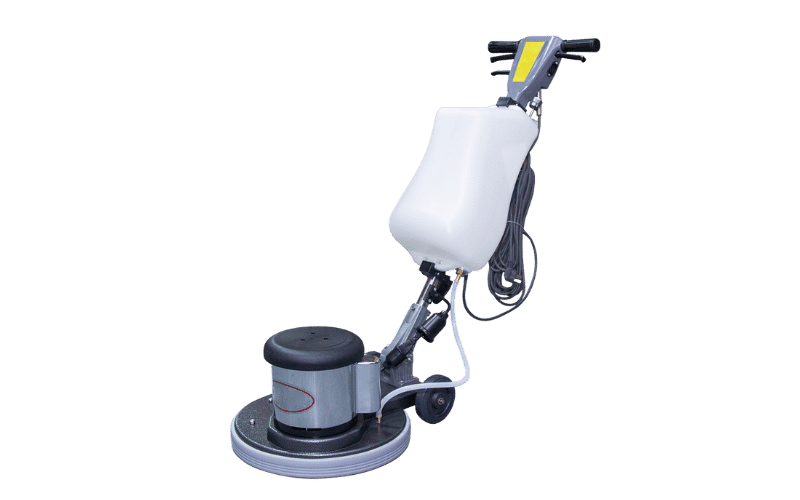



Buying a floor scrubber for a school district is a bigger decision than most people expect. You’re spending thousands of dollars on a machine that has to clean classrooms, cafeterias, gyms, and long stretches of hallway, day after day, on a budget that never has room to spare. Pick the wrong one, and you end up with a machine that’s too big for your corridors, too slow for your gym, or sitting broken while your floors go back to mops and buckets.
I’ve helped facility teams work through this choice for years, and the districts that get it right all do the same thing. They start with their buildings and their people, not with a spec sheet. This guide walks you through that process: how to size up your real needs, how to compare machine types honestly, which performance features actually matter, what the machine truly costs over its life, and how to buy smart. By the end, you’ll know exactly how to select the best floor scrubber for your school district.
For K-12 districts, this decision also connects to broader compliance concerns such as student safety, chemical handling, indoor air quality, and low-noise cleaning during occupied hours. In states like California, where many districts place added emphasis on green cleaning and risk reduction, these factors can matter just as much as price and cleaning speed.
Start With Your District’s Real Needs
Before you look at a single machine, map out what you’re actually cleaning. This step decides almost everything that follows, and skipping it is the most common reason districts buy the wrong equipment.

Measure Square Footage and Floor Types
Add up the floor area you scrub daily for each building. An elementary school with 30,000 square feet of hard floor has very different needs than a high school with a 40,000-square-foot footprint spread across gyms, cafeterias, and science wings.
Then note what those floors are made of. Most schools run a mix:
- VCT (vinyl composition tile) in classrooms and hallways, which needs regular scrubbing and often burnishing to hold its shine.
- Terrazzo in older entryways and corridors, durable but sensitive to harsh chemicals.
- Sealed concrete or epoxy in gyms, shops, and mechanical areas.
- Rubber and linoleum in newer buildings and specialty rooms.
Your floor mix shapes your brush choice and chemical needs. Smooth VCT cleans well with disk brushes, while textured or grouted surfaces call for cylindrical brushes that dig into low spots.
Study Traffic and Scheduling
Schools generate messes in predictable waves. Hallways flood between periods, cafeterias take three hard hits a day, and gyms host games and events long after the last bell. Map those peaks for each zone.
The bigger question is when you clean. If your team works only after hours, machine speed matters most because you’re racing a clock.
If you need to clean during school hours, noise level jumps to the top of the list, and a quiet machine becomes worth paying for. In K-12 environments, lower noise can also support indoor environmental quality goals and reduce disruption for students, teachers, and staff.
Don’t forget seasonal grit either: winter salt and sand chew through floors and demand more aggressive scrubbing.
Match the Machine to Your Staff
A capable machine is useless if your custodians can’t run it comfortably. Count your custodial staff by building, review shift schedules, and be honest about training time and turnover. A district with high turnover benefits from simple, forgiving machines rather than complex ones that require a week of training to operate well. Ask your team, too. The people pushing these machines every night usually know whether a walk-behind or a ride-on fits their building better than any brochure can.
Compare the Main Machine Types
Once you know your buildings, machine categories start sorting themselves out. Here’s how the three practical options stack up for schools.
Walk-Behind Scrubbers
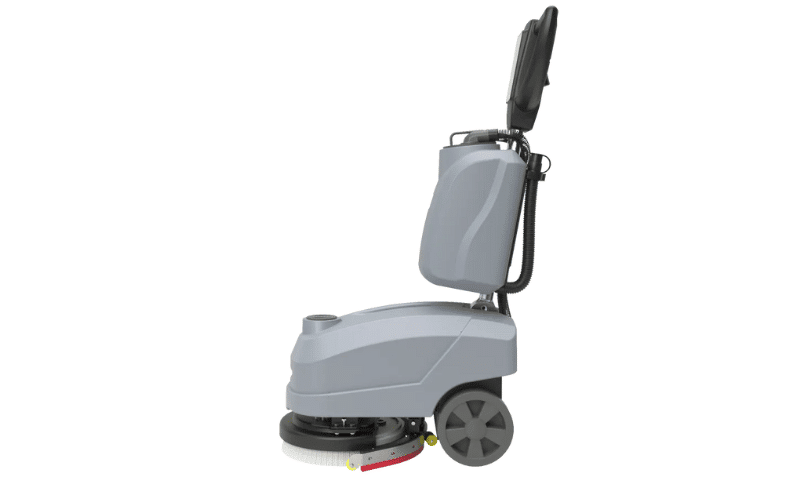
Walk-behind units are the workhorse choice for most schools, especially those with mid-sized buildings and tighter budgets. They handle classrooms, restrooms, and narrow corridors with ease, and they’re simple to move between buildings in a van or trailer.
These machines fit spaces under roughly 25,000 square feet of connected floor, and they come in scrub widths from about 17 to 34 inches. The upside is a lower purchase price, straightforward maintenance, and a short learning curve. For a typical elementary or middle school, a well-chosen walk-behind floor scrubber handles most daily cleaning without fuss.

Ride-On Scrubbers
When you’re cleaning large, open, connected floors, a ride-on machine changes the math. Picture a 40,000-square-foot high school with a big gym and a wide cafeteria. A walk-behind would take a custodian hours to cover that ground; a ride-on does it in a fraction of the time and spares the operator serious fatigue.
Ride-on units clean three to five times as much floor per hour as walk-behinds. That productivity comes at a cost: a higher purchase price, more storage space, and a ramp for transport between sites. But when the labor math works, it works decisively. If your district has large, continuous floors over 40,000 square feet, a ride-on floor scrubber usually pays for itself in labor hours saved within a few years.

Compact and Micro Scrubbers
Small scrubbers solve the problem big machines can’t reach. Restrooms, small offices, stairwell landings, and cramped classrooms all defeat the purpose of a large deck. A compact machine cleans those spaces far better than a mop and bucket, and it does so quietly enough to run during school hours.
Many districts pair a larger machine with one or two small floor scrubbers for exactly this reason. The big machine handles open floors after hours; the compact unit tackles daytime spot cleaning and tight areas. It’s a combination that keeps floors consistent without forcing one machine to do everything.
A quick word on robotic scrubbers: they’re gaining ground in districts with staffing shortages and large, predictable hallways. If that’s your situation, they’re worth a look. For most districts, though, the decision still comes down to the three types above.
Evaluate the Features That Actually Matter
Spec sheets list dozens of numbers. Only a handful genuinely affect your daily cleaning. Focus your attention here.
Deck Width and Brush Type
Scrub deck width sets your trade-off between coverage and control. Wider decks clean more floor per pass but struggle in tight spaces, so a 34-inch deck that flies through a gym will fight you in a restroom. Match the width to your most common cleaning task, not your biggest room.
Brush type matters just as much. Disk brushes suit smooth VCT and sealed floors, while cylindrical brushes handle grout lines and textured surfaces better and can sweep up light debris as they go. Adjustable brush pressure lets one machine switch between light daily scrubbing and aggressive deep cleaning.
Battery Type and Runtime
This is where many districts overspend or underspend, so it’s worth understanding clearly. Your two main options are lead-acid and lithium-ion, and they behave very differently.
- Lead-acid batteries cost less upfront and run about 2 to 4 hours per charge. The catch is charge time: they need roughly 8 hours to fully recharge, which usually means charging overnight. They also require watering and maintenance to reach their full lifespan.
- Lithium-ion batteries cost more at purchase but run for 4 to 6 hours, recharge in 2 to 4 hours, and last 2 to 3 times longer. They also support opportunity charging, so an operator can top off during a lunch break without harming the battery.

For a single-shift school that charges overnight, lead-acid often makes financial sense. For a district running multiple shifts or cleaning large areas back-to-back, lithium-ion’s fast charging and longer life usually win over the life of the machine. Also confirm whether the charger is included, since it’s sometimes sold separately.
Water Management and Maneuverability
Tank capacity decides how often your operator stops to dump and refill. Bigger tanks mean fewer interruptions on large floors, but they add weight and bulk. Look at both the solution tank and the recovery tank, and check the squeegee design, because a good squeegee leaves floors dry enough to walk on safely right away.
In a school district, wet floors are a slip-and-fall risk and a potential liability issue, so drying performance is not just a convenience feature but an important part of safety and compliance.
Maneuverability rounds it out. Test the turning radius around restroom entrances and tight corners, check the operator’s sightlines, and pay attention to noise if you clean during the day. These small ergonomic details decide whether your staff actually enjoys using the machine or quietly avoids it.
Look Past the Sticker Price
The purchase price is only the opening number. A scrubber lasts 5 to 7 years, and what you spend to run it over that span often dwarfs the initial cost. Districts that budget only for the purchase get surprised every year after.
Build your real cost picture from these pieces:
- Consumables: brushes, pads, squeegee blades, and cleaning chemicals, replaced on a regular cycle.
- Energy: the cost of charging batteries, night after night.
- Scheduled maintenance: belts, hoses, tires, and eventual battery replacement, which is a major line item for lead-acid.
- Labor: the highest cost of all. A faster machine that saves an hour a night saves hundreds of labor hours a year.
- Downtime: every hour a machine sits broken sends your team back to mops and drags cleaning quality down.
Chemicals deserve a closer look too. Across a whole district, detergent spending adds up fast.
Some machines offer chemical-free or on-demand water systems that cut supply costs and support green cleaning mandates, which many K-12 districts now prioritize. This can be especially relevant in California school systems where sustainability, chemical exposure, and facility safety often receive closer scrutiny.
Confirm how any chemical-free system affects slip resistance and floor-finish life before you commit.
K-12 Compliance and Safety Considerations
For K-12 school districts, selecting a floor scrubber is not only about cleaning performance. It also involves compliance, safety, and risk management. District buyers should consider how a machine supports safer floors, lower chemical exposure, quieter daytime cleaning, and easier custodial standardization across multiple buildings.
In California especially, school facilities teams often pay closer attention to green cleaning practices, indoor air quality, water efficiency, noise levels, and slip-resistance outcomes after cleaning. A scrubber that leaves floors dry quickly, uses chemicals efficiently, and operates quietly during class hours can better support district compliance goals while reducing disruption for students and staff.
When comparing models, ask vendors for documentation on noise output, battery safety, chemical dilution controls, and recommended cleaning methods for VCT, terrazzo, rubber, and sealed concrete. If your district has sustainability targets or health-focused purchasing standards, these details may matter just as much as scrub width, runtime, or tank size.
Buy Smart: Demo, Cooperative Contracts, and Financing
Even the right machine on paper can disappoint on your actual floors. Smart procurement protects you from that gap.
Always demo before you buy. Request a 3- to 5-day trial in your most challenging building, not your easiest. Have the vendor train your custodians, then let your team run the machine on real messes: sticky cafeteria floors, gritty locker rooms, and tracked-in entryways after a rainy day. Measure the actual battery runtime against the vendor’s claim, and listen to the noise level during a normal school day. A week on your floors tells you more than any brochure.

Use cooperative purchasing. School districts can buy through cooperative contracts like Sourcewell that leverage collective buying power and skip much of the formal bidding process. Compare that cooperative pricing against quotes from local distributors, and check whether the contract includes training and service or just the machine.
Weigh lease versus buy. Buying costs more upfront but avoids interest and builds equity in the equipment. Leasing spreads the cost over several years and often bundles in maintenance, which helps districts with tight annual budgets. If you have grant money, such as ESSER funds, factor in any spending deadlines that might dictate your timing.
One more piece that’s easy to overlook: local service and support. A machine backed by a nearby technician and in-stock parts will outperform a cheaper machine that sits dead for three weeks waiting on a part from across the country. Ask every vendor about response times, loaner machines, and parts availability before you sign.
Frequently Asked Questions
How much does a floor scrubber for a school cost?
It varies widely by type and size. Compact and small walk-behind scrubbers generally fall in the lower range, mid-sized walk-behinds sit in the middle, and ride-on machines command the highest prices because of their size and productivity. Rather than chasing the lowest sticker price, compare the total cost of ownership over the machine’s 5- to 7-year life, including batteries, consumables, and labor savings. A pricier machine that cleans faster and lasts longer often costs less in the long run.
Should we buy walk-behind or ride-on scrubbers?
It comes down to your floor size and layout. Walk-behind units fit most schools with buildings under roughly 25,000 square feet of connected floor, and they handle classrooms and corridors well. Ride-on machines earn their higher cost on large, open floors above 40,000 square feet, where they clean three to five times faster and save serious labor. Many districts run both: walk-behinds for typical buildings and a ride-on for the high school gym and cafeteria.
How long do floor scrubber batteries last?
On a single charge, lead-acid batteries last about 2 to 4 hours, and lithium-ion batteries last 4 to 6 hours. Over the machine’s life, lithium-ion lasts two to three times longer than lead-acid and recharges far faster, in 2 to 4 hours versus about 8. Lead-acid costs less upfront but needs regular watering and maintenance to reach its full lifespan. For a single overnight-charging shift, lead-acid can be fine; for heavy multi-shift use, lithium-ion usually wins.
What’s the best way to clean VCT floors in schools?
VCT responds best to regular scrubbing with a disk brush or pad, followed by periodic burnishing to restore gloss. Use a neutral cleaner for daily work to protect the finish, and save aggressive stripping for scheduled deep cleans. Keeping up with routine scrubbing prevents dirt from grinding into the finish, which is what dulls VCT and forces expensive refinishing sooner than necessary.
Can chemical-free scrubbers handle school cleaning?
For most general floor cleaning, yes. On-demand, water- and chemical-free systems clean soil daily and reduce chemical costs across a district, helping meet green cleaning mandates. For heavy grease in kitchens or serious buildup, you may still need a detergent for those specific zones. Before switching fully, confirm how the system affects slip resistance and how it holds up on your particular floor types.
How do we maintain a floor scrubber so it lasts?
Daily upkeep matters more than any single repair. After each use, empty and rinse the recovery tanks to prevent odors and clogs, clear debris from the squeegee and brushes, and leave the tanks open to dry. Charge batteries on schedule, and for lead-acid, keep the water topped off with distilled water. Follow the manufacturer’s maintenance intervals for belts, hoses, and blades, and line up a local service technician before you need one.
What compliance issues should California school districts consider when buying a floor scrubber?
California school districts should evaluate more than cleaning speed alone. Common considerations include slip resistance after cleaning, chemical handling, indoor air quality, daytime noise levels, battery safety, and alignment with district green cleaning policies. Buyers should also ask vendors for documentation on operating noise, detergent controls, and maintenance procedures to support facility compliance and risk management.
Are chemical-free floor scrubbers a good fit for K-12 districts?
They can be a strong fit for many K-12 districts, especially where green cleaning goals, reduced chemical exposure, and simpler staff training are priorities. For routine maintenance in hallways, classrooms, and common areas, chemical-free or low-chemical systems may work well. For kitchens, greasy areas, or heavy buildup, districts may still need targeted detergent use. The best approach is to test the machine on your actual school floors before standardizing across the district.
Choosing With Confidence
The best floor scrubber for your school district isn’t the most expensive or the most popular. It’s the machine that fits your buildings, your floors, and the people who run it every night. Start with a real needs assessment, compare machine types by how well they suit your spaces, focus on the features that actually affect daily cleaning, and count the full cost over the machine’s lifetime rather than just the price tag.
Your next step is simple: measure your square footage, list your floor types, and line up a few demos in your toughest building. Put the machines to work on your worst floors, let your custodians weigh in, and buy the one that proves itself. Do that homework up front, and you’ll have floors that stay safe and presentable, and a machine that keeps earning its keep every single cleaning day.