








Rubber gym floors rarely wear out from heavy lifting. Bad cleaning habits wear them out: grit ground in by foot traffic, water pushed into seams, and harsh chemicals that leave the surface dull, sticky, or slick. Get the routine right and rubber flooring lasts for decades. Get it wrong, and it looks tired within a couple of years.
What Actually Damages Rubber Gym Flooring
Rubber handles impact well. Chemicals and moisture are different. Most gym damage comes from four sources.
- Grit. Sand, dirt, and dried chalk act like sandpaper under shoes and equipment. Mopping over loose grit doesn’t remove it. It drags across surfaces, wears down texture, and dulls color.
- Over-wetting. Rubber absorbs very little water. Seams, tile edges, and the subfloor absorb plenty. Standing water creeps into joints, weakens adhesives, and feeds mildew under mats. You won’t see the damage until the floor lifts or starts to smell.
- Wrong chemicals. Solvents, oil-based products, and harsh degreasers can soften or swell rubber. Strong alkaline or acidic cleaners dry it out and fade the color, especially colored EPDM flecks.
- Residue buildup. This is the most underrated problem. Leftover detergent turns tacky, traps dirt, and makes the surface sticky or slippery. Many “dirty” rubber floors are actually over-cleaned floors carrying layers of old cleaner.
Control these four things, and you prevent most rubber floor problems before they start.
How to Tell What Kind of Cleaning Your Floor Needs
One routine doesn’t fit every floor. Choose your method based on what you see and how hard the space gets used.
Daily cleaning is enough when:
- The floor looks dusty, not grimy
- Chalk or sweat shows up in only a few zones
- Shoes don’t stick or squeak
A deep clean is due when:
- The floor looks gray or hazy after sweeping
- Shoes feel tacky in high-use areas
- Sweat odor lingers after the room airs out
- Dark traffic lanes appear around racks, benches, and entrances
Match the routine to the facility
Home gym. One or two users, low soil load. A quick sweep after workouts and a monthly deep clean covers it. The common mistake here is over-cleaning with household products.
Commercial gym or CrossFit box. Hundreds of users, heavy chalk, constant sweat. These floors need a daily dry clean, damp cleaning in high-use zones, and a scheduled weekly deep clean.
School weight room. The heaviest grit load of any gym type, because athletes walk in straight from fields and parking lots. Entrance control and a strict dry-cleaning routine matter more here than cleaner choice.
Use the tacky test. If the floor feels sticky right after cleaning, you don’t need more scrubbing. You need less product and a rinse.
What Cleaner Is Safe for Rubber Gym Floors
Cleaner choice matters more than anything else in this guide. The goal is surface-safe soil removal with minimal residue, not maximum chemical power. The strongest product on the shelf is rarely the right one for rubber.
Neutral pH cleaners: the default choice
Use a neutral pH cleaner (roughly pH 7 to 8) labeled safe for rubber or resilient flooring. It lifts sweat, body oils, and everyday soil without drying out the rubber or attacking its binders.
Two rules matter as much as the product:
- Measure the dilution. Don’t eyeball it. More concentrate doesn’t clean better. It leaves more residue.
- Pick a no-rinse or low-residue formula for daily use. It saves labor and prevents film buildup.
Vinegar: occasional use only
Diluted vinegar (about 1 part white vinegar to 4 parts water) handles odor and light grime in home gyms. But vinegar is acidic. Used daily, it dries out rubber and dulls the surface. Treat it as an occasional fix, not a maintenance program.
Bleach and disinfectants
Bleach is the most common mistake in gyms that want to “really disinfect.” It fades color, dries the surface, and speeds up cracking. Use it only if your flooring manufacturer approves it and specifies the exact dilution.
If you need to disinfect, choose an EPA-registered disinfectant listed as compatible with rubber flooring. Follow the label’s contact time, then rinse high-traffic areas to prevent buildup.
Never use these on rubber gym flooring
- Oil- or solvent-based cleaners (including mineral spirits and turpentine): soften and swell rubber
- Heavy-duty degreasers: too alkaline for routine use, and hard to rinse
- Ammonia-based cleaners: dry and discolor the surface
- Wax, polish, or shine products: rubber gym floors aren’t meant to be finished, and a coated floor turns dangerous under sweat
- Citrus or d-limonene cleaners: many act like solvents on rubber
If a product promises a high shine, keep it off your gym floor.
How to Clean Rubber Gym Floors Step by Step
Daily cleaning
- Clear loose plates, bands, and small equipment.
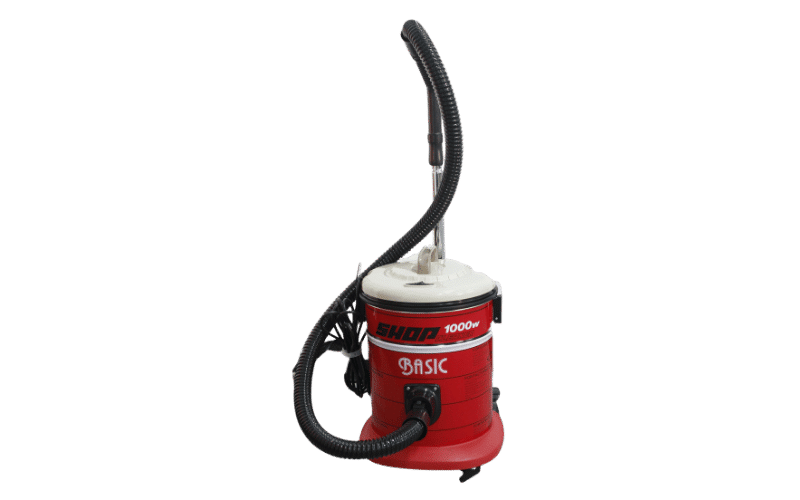
- Dust mop, sweep, or vacuum the entire floor. Vacuums work best on textured rubber because they pull grit out of the surface.
- Remove chalk dry. Wet chalk turns into paste and smears into the texture.
- Damp mop high-use zones with diluted neutral cleaner. Use a wrung-out mop, not a soaked one.
Daily cleaning isn’t about making the floor spotless. It’s about removing grit and preventing residue buildup.
Spot cleaning
Handle sweat, spilled drinks, and chalk patches as they happen. Spray a small amount of neutral cleaner, wipe with a microfiber cloth, and dry the spot. For gum or tape residue, use a plastic scraper instead of a solvent.
Deep cleaning
- Dry clean the entire floor first. Never skip this.
- Apply diluted neutral cleaner in sections small enough to finish before the solution dries.
- Let it dwell for a few minutes to loosen soil.
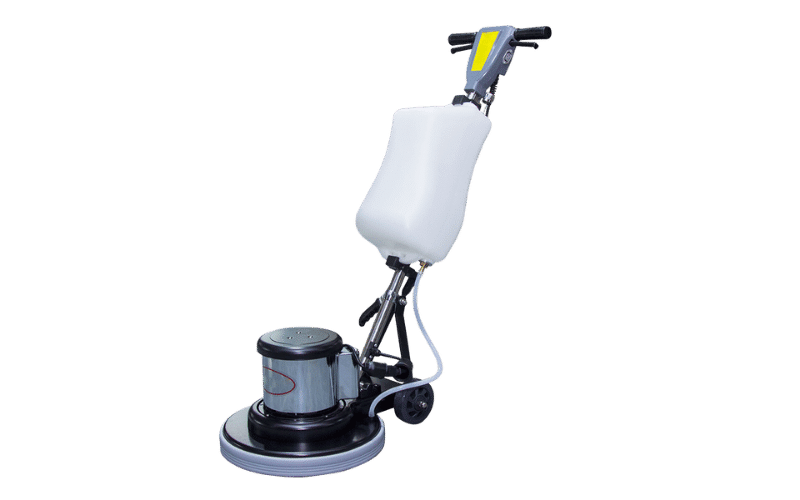
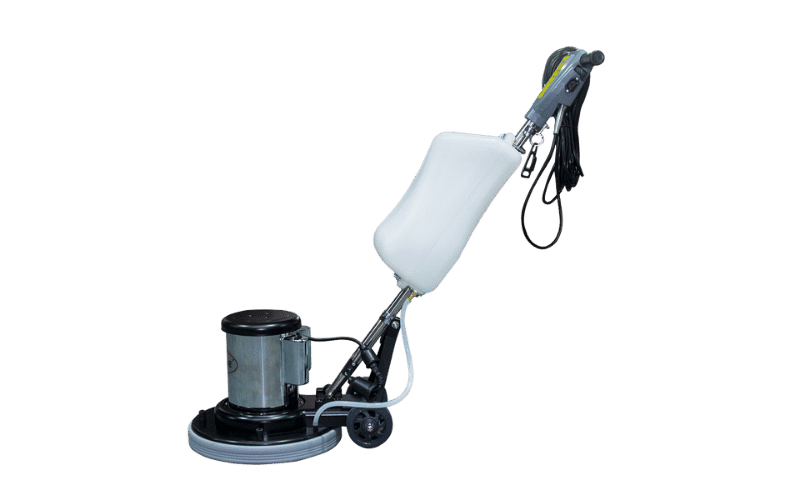
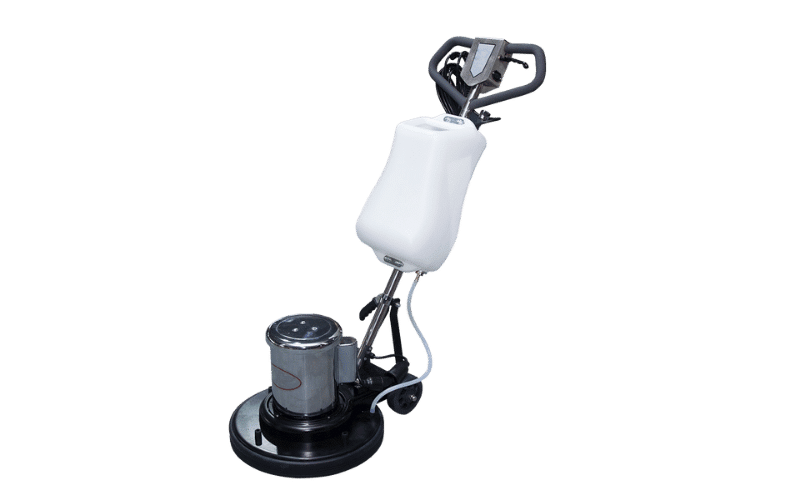
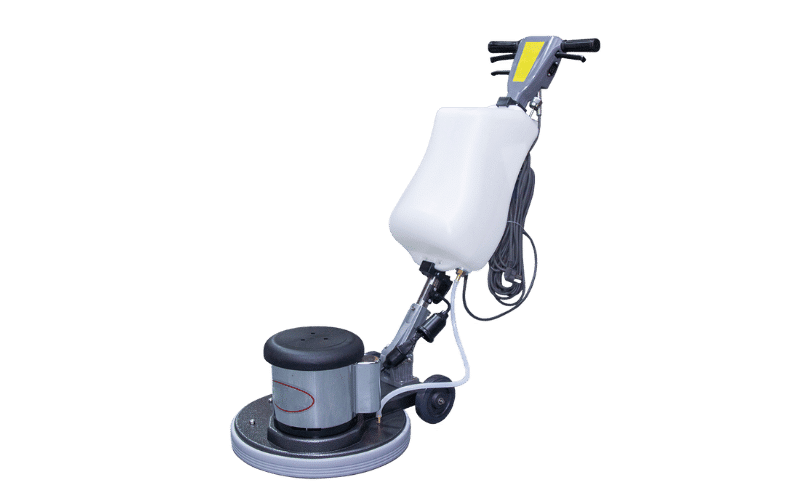
- Agitate with a soft-bristled deck brush, floor machine, or auto scrubber with the right brush or pad.
- Recover the dirty solution with a wet vacuum, squeegee, or auto scrubber. Never let it air dry on the floor.
- Rinse with clean water if the floor feels tacky or you used a stronger mix.
Drying
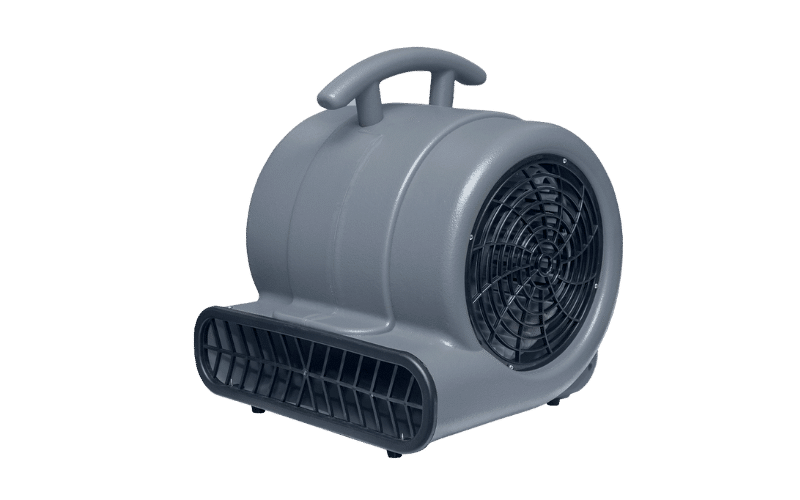
Drying isn’t optional. Run fans, open doors, or let the scrubber’s squeegee leave the floor nearly dry. Keep traffic off until the surface is fully dry. Lift loose mats periodically and check underneath, because trapped moisture is where mildew and odor start.
A properly cleaned rubber floor should feel like nothing underfoot: not slick, not tacky.
When to Mop by Hand vs. Use an Auto Scrubber
This is where commercial facilities either save serious labor or create new problems.
Hand mopping makes sense when:
- The space is a home gym, small studio, or under roughly 2,000 sq. ft.
- The floor is loose-lay mats that can shift
- You’re mostly doing light damp cleaning
A flat microfiber mop with a measured cleaner mix handles most small spaces. The risk is using too much water and spreading soil with dirty mop water, so change your solution often.
An auto scrubber makes sense when:
- You clean thousands of square feet on a regular schedule
- The floor is glued-down rolled rubber or heavy, well-fitted interlocking tile
- You need the floor dry and reopened fast
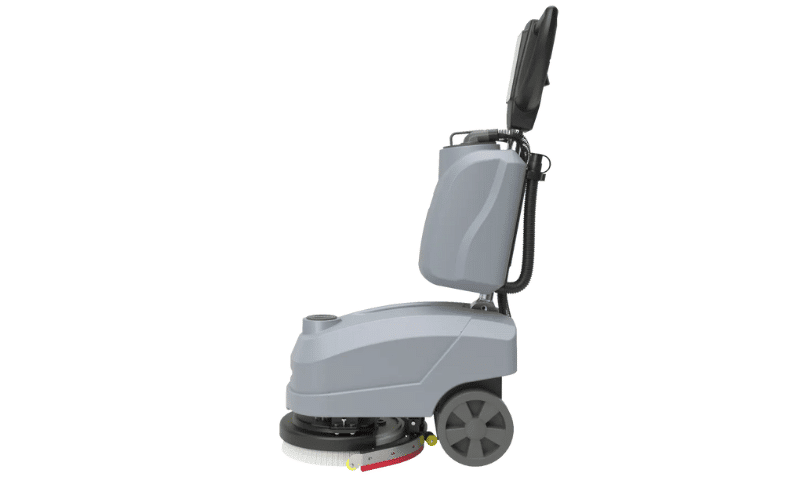
An auto scrubber agitates and recovers dirty water in a single pass. On textured rubber, recovery is the real advantage. Soil goes into the tank instead of drying back onto the surface.
Set it up correctly for rubber
- Brush or pad: soft nylon brush or light-duty pad, such as white or red. No stripping pads, grit brushes, or heavy-scrub pads.
- Down pressure: start at the lowest setting. Too much pressure can polish or scuff rubber texture.
- Solution flow: keep it low. Extra water ends up in seams.
- Speed: slow enough for full squeegee pickup. Textured rubber holds water, and a fast pass leaves wet trails.
- Test first: run one pass in a corner. Check for scuffing, color change, or poor pickup before doing the whole floor.
How scrubbers get misused on rubber
The biggest risks are aggressive pads, excess solution, and running over loose mats or lifted tile edges. A spinning brush can catch a tile edge and lift it, or shove loose mats out of place. If the floor moves or has gaps, fix it or clean that section by hand.
For most large commercial gyms, a compact walk-behind scrubber with a soft brush offers the best balance of speed, control, and surface safety.
How the Method Changes by Floor Type and Facility
|
Floor / Facility |
Daily Routine |
Deep Clean |
Best Tool |
Watch Out For |
|---|---|---|---|---|
|
Rubber rolls (glued down) |
Vacuum or dust mop; damp mop traffic zones |
Weekly to biweekly |
Auto scrubber with soft brush for large areas |
Excess water at roll seams |
|
Interlocking tiles |
Vacuum, spot clean |
Biweekly |
Damp mop or scrubber on low settings |
Grit and water in seams, lifted edges |
|
Loose-lay mats |
Sweep or vacuum |
Monthly, or when odor builds |
Hand mop; lift mats to dry underneath |
Mildew and trapped moisture |
|
Home gym |
Quick sweep after sessions |
Monthly |
Microfiber mop |
Overusing vinegar or household cleaners |
|
Commercial gym |
Vacuum or dust mop daily; damp clean high-use zones |
Weekly |
Walk-behind auto scrubber |
Chalk paste, residue, slow drying |
|
School weight room |
Sweep or vacuum daily, especially entrances |
Weekly; more often in sports season |
Auto scrubber plus entrance matting |
Outdoor grit, inconsistent cleaning habits |
School weight rooms deserve extra attention. Good entrance matting and a strict dry-cleaning routine will protect that floor better than any cleaner.
The Mistakes That Shorten Floor Life
Floors aren’t ruined by one bad cleaning. They’re ruined by small habits repeated every day.
- Treating the mop as a dirt remover. Mopping without sweeping or vacuuming first grinds grit into the surface. Dry clean first, every time.
- Assuming more cleaner means cleaner floors. When a floor looks dirty, crews add concentrate. That creates residue, which attracts dirt, which leads to more concentrate. Break the cycle: measure dilution and do one rinse to strip old buildup.
- Using household products in a commercial space. Kitchen and bathroom cleaners often contain solvents, fragrances, or shine agents. They leave rubber slick and shorten its life.
- Flooding seams. Interlocking tiles and seamed rolls fail at the joints first. Excess water often causes edges to curl and the adhesive to let go.
- Running the wrong scrubber setup. An aggressive pad at high pressure can change rubber texture in a few passes. Use a soft brush, low pressure, and low flow. That’s the rule.
- Reopening a damp floor. Wet rubber creates slip risk and picks up fresh dirt. Fifteen extra minutes of airflow costs far less than a fall or a stained floor.
- Cleaning inconsistently. A floor cleaned hard once a month always looks worse than one cleaned lightly every day. Consistency protects rubber better than intensity ever will.
FAQ
Can you use bleach on rubber gym floors?
Usually not. Bleach fades and dries out rubber over time. Use it only if your flooring manufacturer approves it, at their exact dilution.
Can you use vinegar on rubber gym floors?
Occasionally. A 1:4 vinegar-to-water mix handles odor and light grime, but daily use dries out rubber. Use a neutral pH cleaner for routine cleaning.
Can you use a steam mop on rubber gym flooring?
It’s not recommended. High heat and moisture can weaken adhesives, damage seams, and stress the rubber. A damp mop with neutral cleaner is safer and works just as well.
What is the best cleaner for rubber gym floors?
A neutral pH, low-residue cleaner made for rubber or resilient flooring. Measure the dilution every time. The right product at the wrong concentration still leaves residue.
Can you use an auto scrubber on rubber gym floors?
Yes, on glued-down rolls and well-fitted tiles. Use a soft nylon brush or light-duty pad, low pressure, and low solution flow. Skip the scrubber on loose mats or tiles with lifted edges.
How often should rubber gym floors be cleaned?
Commercial gyms should dry-clean daily and deep-clean weekly. Home gyms can sweep after workouts and deep clean monthly. School weight rooms may need more frequent deep cleans during sports seasons.
Clean Lighter, Clean More Often
Rubber gym floors last when you remove grit daily, use a measured neutral cleaner, keep water out of seams, and let the floor dry before reopening. Most rubber floors don’t need a stronger cleaner. They need a better routine.
Start by auditing your current routine. Check your cleaner’s pH, measure your dilution, and look at the pad or brush on your machine. If you run a large facility and mopping can’t keep up, talk to our team. We’ll match an auto scrubber, brush, and cleaning setup to your floor type and square footage.