



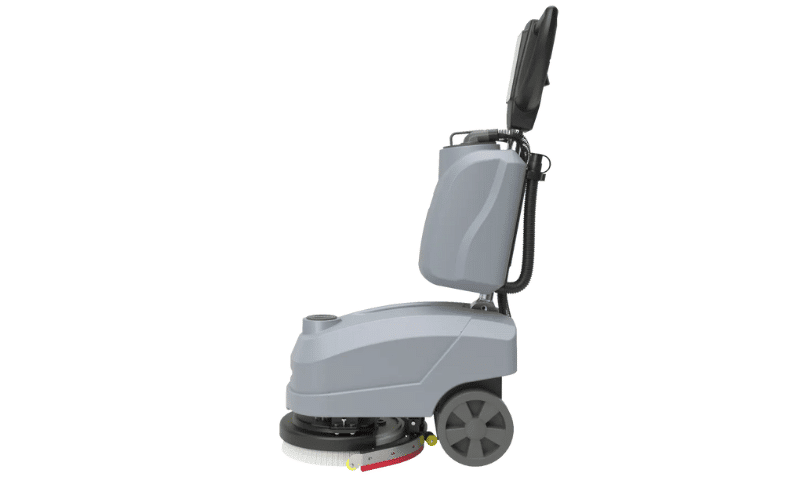

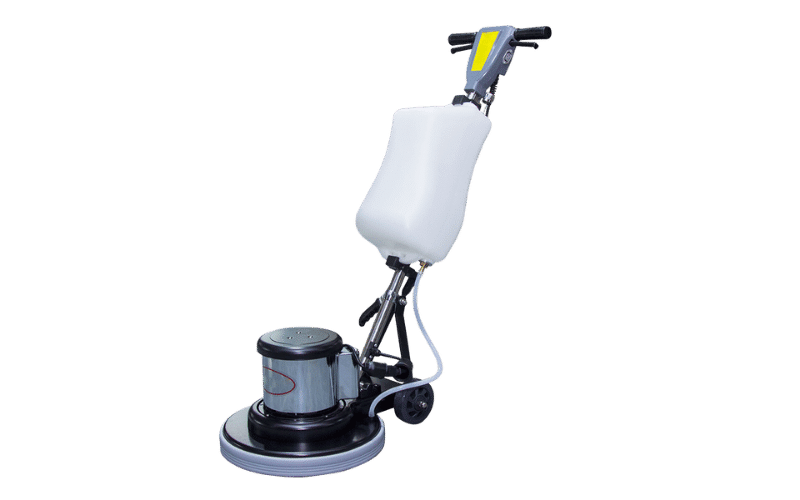
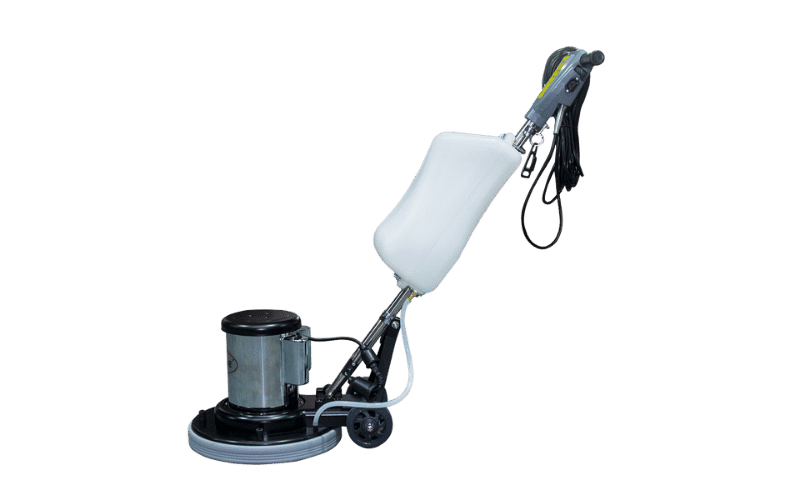
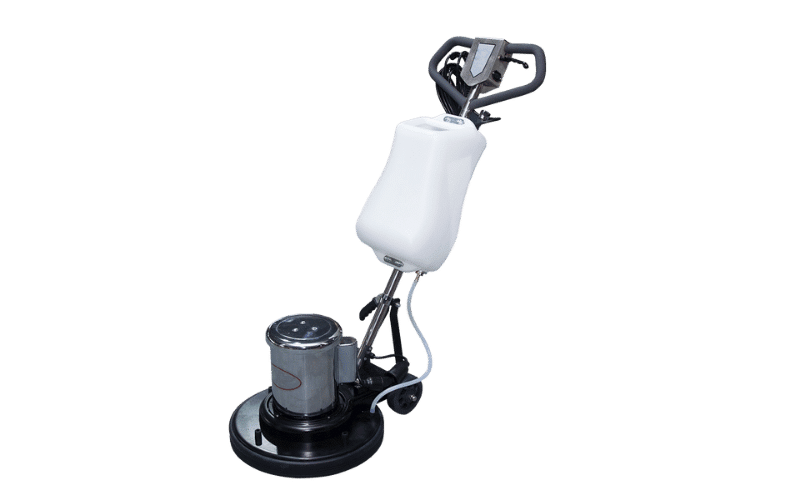



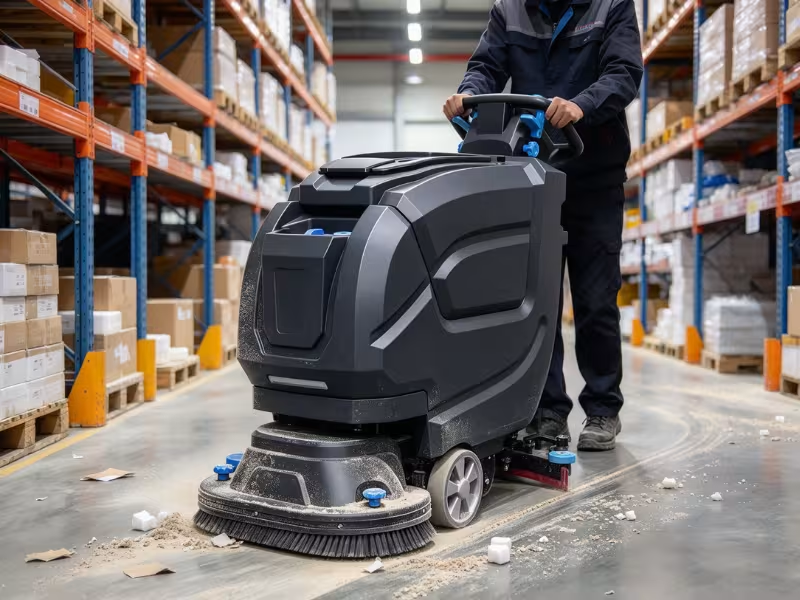
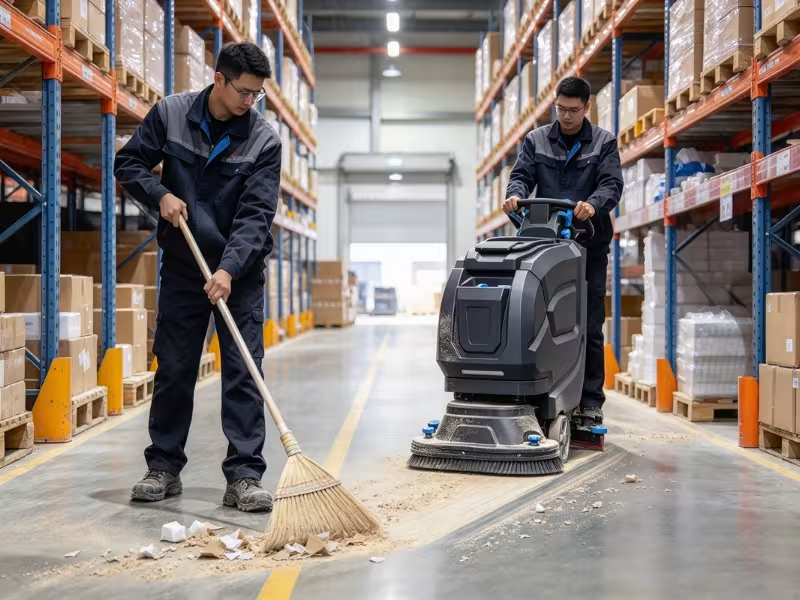
Your crew sweeps the same aisles every shift. By lunch, dust settles back on the floor. Push brooms move dirt around more than they remove it, and those labor hours add up fast.
A commercial walk-behind floor sweeper can fix that. But only if you pick the right one.
Our team has helped facility managers, contractors, and retail teams choose sweepers for years. Many buy on width or price alone, then regret it.
This guide shows you whether you need a sweeper, which type fits your site, and how to avoid buying the wrong machine.
When a Walk-Behind Floor Sweeper Is the Right Choice
A walk-behind sweeper does one job very well: it picks up dry debris fast. Before you compare models, make sure that job matches what your floors actually need.
These machines handle loose, dry mess best. Think fine dust, sand, paper scraps, cardboard bits, packaging waste, and the gravel that rides in on forklift tires. The side brush pulls debris out of corners and along racking. The main brush then flicks it into the hopper, while the vacuum and filter keep dust down.
Sweepers fall short on wet or sticky work. They won’t lift dried soda, oil stains, or grease. They can’t wash or degrease a floor either. Run one through a puddle, and you’ll soak the filter and smear grime down the aisle. A simple rule works well: if you’d normally mop it, keep the sweeper away.
The gain over a push broom is easy to see. One worker with a broom might cover 2,000 to 3,000 square feet an hour. A walk-behind sweeper often handles 15,000 or more in the same time. It also traps dust instead of tossing it into the air, so you won’t find a fresh gray film on shelves an hour later. Your crew finishes the shift less worn out, too.
If your floors need washing as well as sweeping, choose a scrubber instead. If you clean wide, open areas well beyond 50,000 square feet a day, a ride-on machine will usually pay for itself sooner.
Walk-Behind Sweeper vs. Scrubber vs. Ride-On: Which One Do You Actually Need?
Many buyers call a dealer asking for “a floor cleaner.” That vague request is where wrong purchases start. Each machine solves a different problem, so name your problem first.
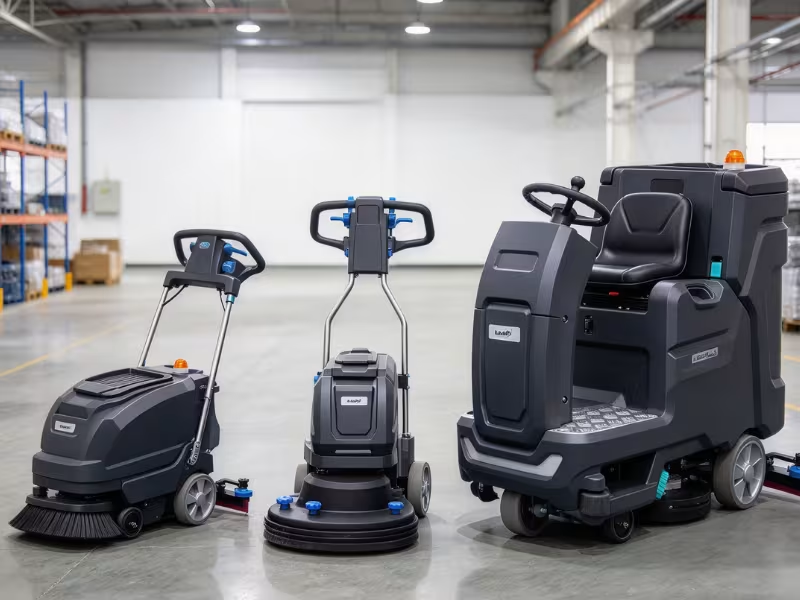
Walk-behind sweepers pick up dry debris. They fit small to mid-size areas with tight aisles. They also cost the least to buy and run. Since they use no water, you can sweep right after a delivery without closing the aisle.
Scrubbers wash, scrub, and dry in one pass. They lay down solution, scrub the surface, and vacuum the dirty water back up. Choose one, such as a compact walk-behind floor scrubber, when grime sticks to the floor, not when it just sits on top.
Ride-on sweepers cover big, open floors fast. The operator sits, the cleaning path runs wider, and the hopper holds far more. They need room to turn, though, and they cost much more up front.
Here’s how the three compare on the most common jobs:
|
Equipment Type |
Best For |
Not Ideal For |
Typical Environment |
|---|---|---|---|
|
Walk-behind sweeper |
Dust, sand, paper, packaging scraps |
Spills, grease, sticky residue |
Small warehouses, retail backrooms, parking garages |
|
Scrubber |
Washing, degreasing, drying hard floors |
Bulky debris like shrink wrap or wood chips |
Supermarkets, schools, food plants, hospitals |
|
Ride-on sweeper |
Large, open areas with heavy debris |
Narrow aisles, crowded stores, small rooms |
Distribution centers, factories, large parking lots |
Many sites end up running two machines. A warehouse might sweep daily and scrub once or twice a week. Sweeping first also helps the scrubber. Its pads and squeegee last longer because grit doesn’t grind into them.
Start with the task you face every day, and buy for that job first.
The 6 Buying Factors That Matter Most
Spec sheets list dozens of numbers, but only six decide whether a sweeper earns its keep. Check them in order before you book any demo.
1. Cleaning Path and Layout Fit
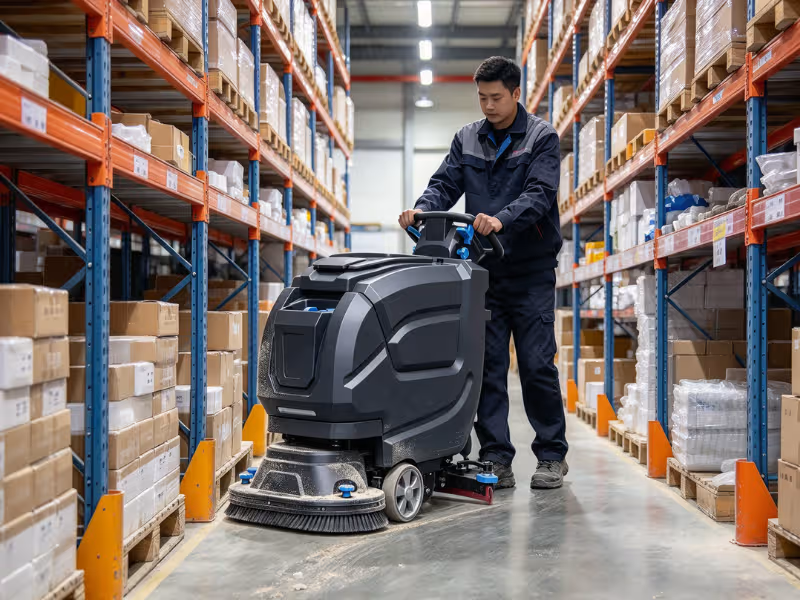
Cleaning path is the width a sweeper covers in one pass, usually from the main brush to the side brush tip. Wider paths clean faster on open floors. But width alone misleads buyers.
A 36-inch machine looks great on paper. Then it meets a 40-inch aisle with racking on both sides. The operator slows down, makes extra passes, and scrapes uprights on every turn.
Measure three things before you shop:
- Your narrowest aisle, leaving at least 6 inches of clearance per side
- Every doorway and elevator the machine must pass through
- The turning space at aisle ends
For most retail backrooms and small warehouses, a 26- to 32-inch path hits the sweet spot. Match the machine to your tightest spot, not your widest.
2. Hopper Capacity and Debris Type
The hopper is the bin that collects what the brush sweeps up. Debris type matters just as much as hopper size.
Fine dust and sand pack down tight, so a small hopper lasts a while. Bulky trash fills it fast. Shrink wrap, paper cups, cardboard strips, and wood chips from broken pallets take up space quickly. A hopper that looks big enough can fill in 15 minutes.
Every full hopper means a stop. The operator walks to the dumpster, empties the bin, and walks back. Five stops a shift can eat 30 to 40 minutes of paid time.
List what your crew actually picks up each day. For packaging-heavy sites, choose a larger hopper and a brush that won’t wrap long debris. Also make sure the hopper lifts out easily.
3. Dust Control and Filtration
Good dust control does more than make floors look clean. It keeps fine particles out of the air your team breathes. It also stops secondary dust, the gray film that drifts onto shelves, stock, and displays an hour after sweeping.
Most sweepers pull air through a filter with a small vacuum fan. The filter type decides how well that works.
- Panel filters suit most warehouses, garages, and backrooms. They trap everyday dust and cost little to replace.
- HEPA filters capture much finer particles. Choose one for food plants, healthcare-adjacent spaces, and sites with silica or flour dust.
Don’t pay extra for HEPA if you only sweep a loading dock. But don’t skimp in a bakery or clinic.
Look for a filter shaker, too. A clogged filter cuts suction and blows dust out the back. A shaker clears it in seconds.
4. Battery Runtime and Charging Practicality
Rated runtime comes from ideal tests: smooth floors, light debris, and fresh batteries. Real runtime usually lands 20 to 30 percent lower. Rough concrete, side brush use, and aging cells all drain power faster.
Plan around your longest shift, not the brochure. If a crew sweeps for three hours, look for a machine rated at four or more.
Shift patterns change the math:
- Single shift: One battery set and an overnight charge work fine.
- Multiple shifts: You need quick charging or a spare battery pack.
- Continuous use: Consider swappable packs so the machine never sits.
An onboard charger lets you plug into any wall outlet. An external charger cuts weight but ties the machine to one charging spot.
Lithium batteries cost more up front. They charge faster, need no watering, and handle quick top-ups during breaks. For multi-shift sites, they often pay back the difference.
5. Maneuverability and Operator Effort
A sweeper only helps if your crew wants to use it. If it feels heavy or clumsy, it ends up parked in a corner while the brooms come back out.
Self-propelled drive matters more than many buyers think. Push-type machines work for small, flat areas under about 10,000 square feet. Beyond that, or on any ramp, powered drive saves your operator real fatigue. A loaded battery sweeper often weighs 200 to 400 pounds.
Test the turning radius in your tightest spot. Retail display aisles, end caps, and shelving runs punish wide-turning machines. Check the handle height and control layout. Can a new hire learn it in ten minutes?
Usability decides how often the machine runs. Easy machines get used every day. Awkward ones collect dust.
6. Maintenance Access, Parts, and Service Support
Buyers often treat service as an afterthought. Then a $15 brush belt breaks, and the machine sits for three weeks waiting on a part.
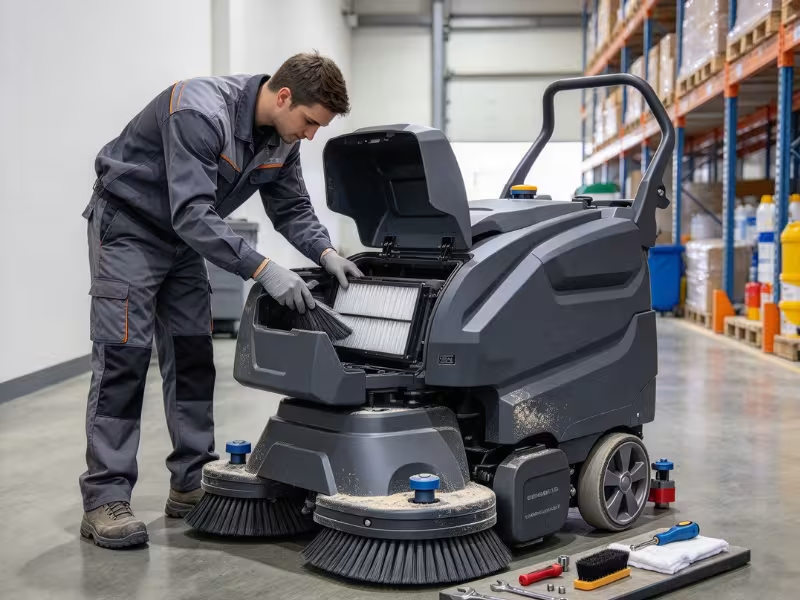
Start with daily access. Your operator should reach the filter and main brush without tools, or with one basic tool. If changing a brush means removing six bolts, it won’t happen on schedule. Worn brushes then leave debris behind, and the crew blames the machine.
Next, ask the dealer some hard questions:
- Do you stock brushes, filters, and belts locally?
- How fast can a technician reach my site?
- Will you carry parts for this model in five years?
Parts availability decides how long the machine stays useful. A cheap sweeper with no parts support can cost more in downtime than you saved on price.
Match the Sweeper to Your Facility, Not Just the Spec Sheet
Two sites can buy the same sweeper and get very different results. The six factors above tell you what to check. Your building tells you which ones deserve the most weight.
Here’s how to sort your priorities in the four settings that come up most often.
Warehouses and Distribution Centers
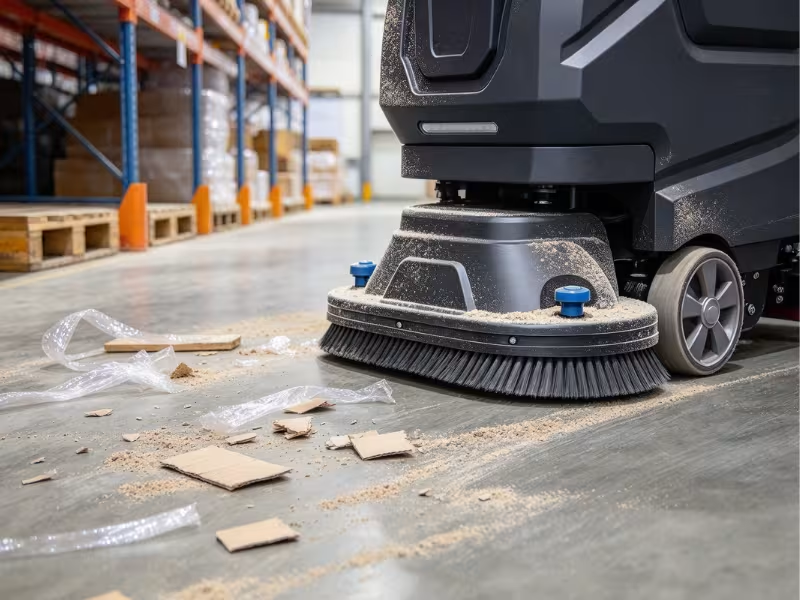
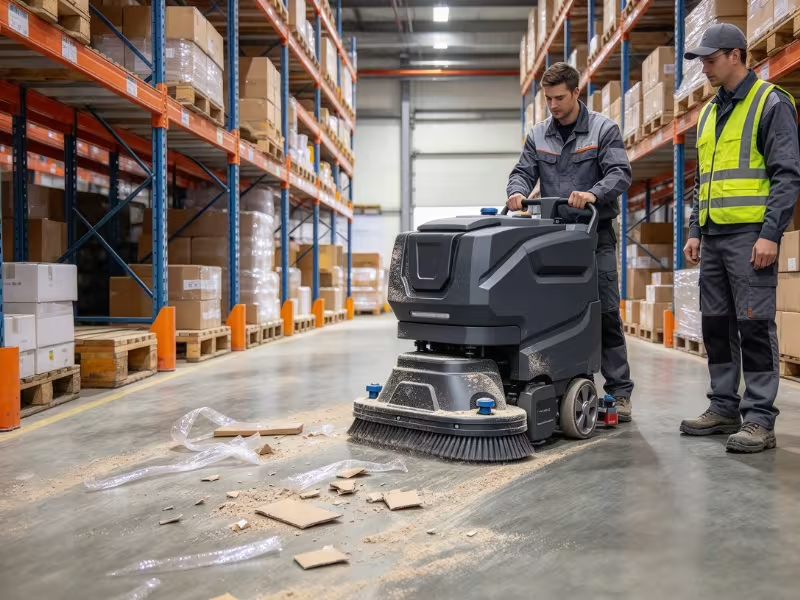
Warehouses give a sweeper its hardest workout. Across warehouses and industrial facilities, forklifts track grit in all day. Broken pallets shed splinters and staples. Shrink wrap causes the most trouble because it wraps around brushes and jams the hopper flap.
In these buildings, four factors outrank the rest:
- Cleaning path: A 32- to 40-inch path cuts passes on long, open aisles.
- Hopper: Pick a large bin that lifts out fast, because bulky debris fills it quickly.
- Runtime: Plan for a full shift plus a 25 percent buffer.
- Dust control: Forklift traffic stirs up fine dust that settles on stock.
Ask the dealer if the main brush resists wrapping. A brush that tangles every 20 minutes will frustrate your crew fast.
If your daily floor area climbs well past 50,000 square feet, run the numbers on a ride-on before you commit.
Retail Stores and Commercial Spaces
Retail floors put your sweeper in front of customers. A loud, bulky machine blocks aisles and annoys shoppers. That pushes cleaning into tight early-morning windows.
Size comes first here. A 20- to 26-inch cleaning path slips past end caps, display tables, and checkout lanes without much backing up. Test the turning radius in your narrowest aisle, not in the dealer’s showroom.
Noise comes next. Ask for the decibel rating and aim low. A machine under about 70 dBA lets you sweep during open hours without drowning out conversations.
Edge cleaning matters more than most retail buyers expect. Receipts, price tags, and entry grit collect along shelf kick plates and walls. A strong side brush pulls that debris out so nobody has to follow behind with a broom.
A quiet, compact machine gets used more often, and that keeps your floors looking sharp all day.
Schools, Campuses, and Public Buildings
Schools ask one sweeper to handle many jobs. Custodians move from tile hallways to concrete entries to gym floors in a single shift. Many work during the day, so they clean in short bursts between classes.
Easy controls come first here. Staff turnover runs high, and a new custodian should learn the machine in one walkthrough. Simple on/off and brush controls beat a crowded dashboard.
Low maintenance comes next. Pick tool-free access to the filter and brushes, because busy teams skip anything that takes too long.
Look for moderate versatility, too. Adjustable brush height and non-marking tires protect gym floors and polished entries.
Dust-Sensitive or Hygiene-Critical Environments
Food plants, pharmacy warehouses, labs, and clinic storage areas can’t tolerate dust that escapes back into the air. Flour, powders, and fine particles drift onto product, packaging, and sensitive surfaces.
Filtration leads every decision here. Choose a HEPA filter, and ask the dealer for its tested efficiency rating.
A sealed system matters just as much. Dust often escapes during emptying, not during sweeping. Look for a sealed hopper and filter housing, so your operator can empty the bin without releasing a cloud.
Cleanability rounds out the list. Smooth panels and few crevices let your team wipe the machine down between zones. Check your site’s hygiene rules before the demo, so the machine fits your protocols from day one.
Facility Fit at a Glance
|
Facility Type |
What Matters Most |
What to Avoid |
|---|---|---|
|
Warehouses and distribution centers |
Wide cleaning path, large hopper, full-shift runtime, solid dust control |
Small hoppers and brushes that tangle on shrink wrap |
|
Retail stores and commercial spaces |
Compact size, quiet operation, strong edge cleaning |
Wide, loud machines that block aisles during open hours |
|
Schools, campuses, and public buildings |
Simple controls, tool-free maintenance, adjustable brushes |
Complex dashboards and tires that mark gym floors |
|
Dust-sensitive or hygiene-critical sites |
HEPA filtration, sealed hopper, easy-to-wipe surfaces |
Open filter housings and hard-to-clean crevices |
Use this table as a starting point. Then confirm every choice with a demo on your own floors.
Common Buying Mistakes That Lead to the Wrong Machine
Most sweeper regrets don’t come from bad machines. They come from good machines bought for the wrong site. These five mistakes show up again and again.
Buying for width alone. A wider path sounds like faster cleaning. But a 36-inch sweeper in a store with 42-inch aisles crawls, bumps shelving, and needs extra passes. You end up slower than you’d be with a smaller unit. Pick the width your layout can actually use.
Ignoring hopper size and runtime. One packaging distributor we worked with bought a compact unit with a small hopper. Their crew emptied it eight times a shift. The battery also died before the last zone. Size both for your heaviest day, not your average one.
Forgetting doors, elevators, and turning space. We’ve seen a brand-new sweeper roll off the truck and fail to fit through a 30-inch storeroom door. Measure every doorway, elevator car, and ramp on the route. Check the space at aisle ends, too. A machine that needs a three-point turn slows down every single pass.
Skipping the on-site demo. A showroom floor is smooth, empty, and clean. Your floor isn’t. Ask the dealer to bring the machine to your site. Run it through your tightest aisle and over your real debris. Then let your actual operator drive it. Thirty minutes of testing tells you more than any brochure.
Ignoring service and parts support. A low price looks great until a drive belt snaps and the nearest replacement sits overseas. Ask who stocks brushes and filters locally. Ask how fast a technician can reach you, and whether operator training comes with the purchase. A machine waiting on parts cleans nothing.
Avoid these five traps, and you’ll end up with a sweeper your crew actually uses every day.
New, Used, or Rental: Which Makes Sense?
How you buy matters almost as much as what you buy. The right choice depends on how often the machine runs and how long you need it.
Buy new for daily, long-term work. New usually wins if your crew sweeps every shift or you hold a multi-year cleaning contract. You get a full warranty, fresh batteries, and a clear service schedule from day one. That makes budgeting easier, and you don’t inherit someone else’s shortcuts.
Buy used only after a hands-on inspection. A used sweeper can cost 30 to 50 percent less than a new one. But a tired battery or worn brush can wipe out those savings fast. Before you pay, check these four things:
- Battery condition: Ask how old the battery is, then run the machine for 20 minutes under load. Lead-acid packs older than three years may need replacing soon.
- Brush wear: Short, splayed bristles leave debris behind. Price a new main brush and side brush into your offer.
- Filters: A torn or caked filter usually means the last owner skipped routine care.
- Service history: If the seller has no records, assume the worst and negotiate.
Rent or lease for short or uncertain needs. Rentals suit seasonal peaks, like holiday retail rushes or spring cleanup after winter grit. They also fit temporary sites and construction handovers. A one-month rental before a purchase often makes good sense. Your team runs the machine on real floors, and you learn what you actually need.
Once you know how you’ll buy, look past the sticker price to what the machine costs over its life.
How to Evaluate Total Cost of Ownership
The sticker price only covers day one. Over five years, wear parts, batteries, and downtime can cost more than the sweeper itself. Price the machine’s whole working life before you compare quotes.
Wear parts add up. With daily use, a main brush usually lasts 6 to 12 months. On dusty sites, filters may need replacing every few months. Ask for parts prices up front, because some brands charge double for the same brush.
Batteries are the big bill. A lead-acid set often needs replacing after three to five years. Plan for that cost now.
Downtime erases savings. If a sweeper sits for two weeks waiting on a belt, your crew picks up brooms again. You pay for those labor hours twice.
Labor savings work for you. Say a sweeper cuts two hours of manual sweeping per shift. At $20 an hour, that saves about $10,000 a year on a five-day schedule.
Some buyers save $800 on a budget unit. Then they wait six weeks for imported filters. They lose that $800 in the first month the machine sits idle.
|
Cost Item |
What to Ask |
|---|---|
|
Brushes and filters |
What do they cost, and how long do they last? |
|
Batteries |
When will I need a replacement, and what will it cost? |
|
Service |
How fast can a technician reach my site? |
|
Downtime |
Do you stock parts locally? |
|
Labor savings |
How many broom hours will this machine replace? |
The cheapest sweeper rarely costs the least to own. A short demo on your own floors helps you check these numbers.
How to Test a Sweeper Before You Buy
A demo only helps if it looks like a normal shift. Dealers love smooth, empty showroom floors. Your job is to make the machine work as hard as it will on a busy Tuesday night.
Bring your own debris. Fill a bucket with what your crew actually sweeps. Include shrink wrap scraps, pallet splinters, sand, paper cups, and fine dust. Spread it across the test area. Then watch two things: does the side brush pull debris out of corners, and do long strips wrap around the main brush?
Test on your real route. Run the sweeper through your narrowest aisle, around rack ends, and through every doorway it must pass. Try your ramps, too. Let your regular operator drive, not the sales rep. Your operator will spot problems the rep knows how to hide.
Watch the small details. Stand near an office or customer area and listen to the noise level. Empty the hopper yourself and time it. Open the filter housing and check for dust spills. Then adjust the brush height. If any of these tasks needs tools or takes more than two minutes, your crew will start skipping it.
Ask three hard questions before you sign:
- Service: How fast can a technician reach my site?
- Parts: Do you stock brushes, filters, and belts locally?
- Training: Will you train my operators on site, and does the price include it?
Write down every answer, and compare them across two or three dealers. A clear, confident answer usually matters more than a lower price.
Maintenance Basics That Protect Your Investment
A sweeper that passes every demo test can still let you down within a year if nobody looks after it. Most early breakdowns come from skipped five-minute tasks, not from bad machines.
|
Daily |
Weekly |
Monthly |
|---|---|---|
|
Empty the hopper. A full bin spills debris back onto the floor and strains the brush motor. |
Inspect the vacuum hose. Look for clogs, cracks, and loose clamps that leak suction. |
Lubricate pivots and casters. Grease the points listed in your manual. |
|
Shake or clean the filter. A dusty filter cuts suction and blows fine dust out the back. |
Check brush height and wear. Adjust the sweep pattern and note how short the bristles are getting. |
Inspect battery terminals. Scrub off corrosion and tighten any loose cables. |
|
Clear both brushes. Cut shrink wrap, string, and strapping off the main and side brushes. |
Clean the filter thoroughly. Tap or vacuum it out. Only wash it if the manual allows it. |
Check fasteners and brush mounts. Vibration loosens bolts over time. |
|
Charge the battery fully. Let each charge cycle finish instead of topping off. |
Check the wheels. Remove debris from axles and look for flat spots. |
Review the maintenance log. Spot repeat problems before they cause downtime. |
The daily jobs take about ten minutes at the end of a shift. Assign them to one operator by name, and tape this table near the charger.
Consistency pays off here. A sweeper that gets this routine every week can run years longer and needs fewer emergency service calls.
Frequently Asked Questions
What is the difference between a walk-behind floor sweeper and an autoscrubber?
A walk-behind floor sweeper picks up dry debris like dust, sand, and packaging scraps. It uses brushes, a hopper, and a dust filter, but no water. An autoscrubber lays down cleaning solution, scrubs the floor, and vacuums the dirty water back up. Choose a sweeper for loose debris and a scrubber for grime stuck to the floor. Many sites run both.
Can a walk-behind sweeper be used on wet floors or spills?
No. Keep your sweeper off wet floors and spills. Water soaks the filter, clumps debris in the hopper, and smears grime down the aisle. The machine also leaves sticky messes like dried soda or oil behind. Clean spills with a mop or an autoscrubber first. Let the floor dry, and then sweep.
How much does a commercial walk-behind floor sweeper cost?
Price depends on drive type, battery, and filtration. Manual push sweepers often cost $300 to $1,500. Battery-powered walk-behind models usually run about $3,000 to $10,000. Self-propelled units with lithium batteries or HEPA filters can cost more. Add brushes, filters, and future battery replacements to your budget, because those costs often matter more than a few hundred dollars on the quote.
What size sweeper do I need for a warehouse?
Start with your narrowest aisle, not your total square footage. Leave at least 6 inches of clearance on each side. Most small warehouses do well with a 26- to 32-inch cleaning path. Long, open aisles can use 32 to 40 inches. Pick a large hopper for shrink wrap and pallet debris. If you sweep well past 50,000 square feet a day, price a ride-on.
Are lithium-ion sweepers worth the higher price?
For many sites, yes. Lithium-ion batteries cost more up front, but they charge faster, need no watering, and handle quick top-ups during breaks. They also tend to outlast lead-acid sets, which often need replacing after three to five years. Multi-shift operations get the biggest payback. If you sweep for one short shift a day, lead-acid may still make sense.
How often should sweeper brushes and filters be replaced?
With daily use, a main brush usually lasts 6 to 12 months. Replace it when the bristles look short and splayed, or when the brush starts leaving debris behind. Side brushes often wear out sooner. Shake the filter every day and clean it weekly. On dusty sites, plan to replace panel filters every few months. Swap out any filter that tears or stays caked after cleaning.
Buy for Your Floors, Not the Brochure
The right walk-behind floor sweeper comes from asking questions in the right order.
First, confirm the job. Pick a sweeper for dry debris, a scrubber for grime stuck to the floor, or a ride-on for big open areas. Next, match the machine to your facility. A warehouse, a store, and a school each make different demands. Then compare the key specs: cleaning path, hopper, filtration, runtime, and service support.
Spec sheets help you build a shortlist. A demo on your own floors makes the decision. It shows you what a brochure never will.
Start this week. Measure your narrowest aisles and doorways. List the debris your crew sweeps every day. Then call two or three dealers and book on-site demos. Let your own operator drive.