







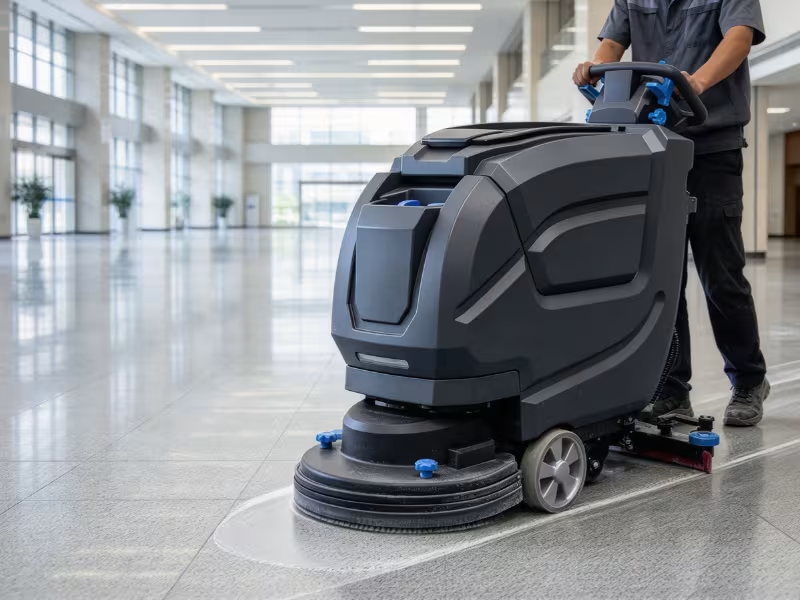
Most commercial floor scrubbers last 5 to 10 years. A well-maintained machine with a reasonable workload typically lasts about seven years. But that range isn’t random—where your scrubber falls depends on how hard it runs, how well you care for it, and how it was built.
That lifespan matters beyond the sticker price. It shapes your maintenance budget, your downtime exposure, and when you’ll need to write a check for a replacement. This guide breaks down realistic lifespan expectations, the factors that move the needle in either direction, the maintenance habits that buy you more years, and a practical framework for deciding when to repair versus when to walk away.
Floor Scrubber Lifespan: Average, Ideal, and Shortened Ranges
Not all scrubbers age the same way. A cleaner picture emerges when you think in three tiers:
- Average lifespan: 5–7 years with normal use and routine upkeep
- Ideal lifespan: 8–10+ years with consistent maintenance and a workload matched to the machine’s design
- Shortened lifespan: 2–4 years under heavy use, neglected maintenance, or harsh operating conditions
The spread between best-case and worst-case can be five years or more. Over a ten-year horizon, that’s the difference between buying one machine and buying three.
Two identical scrubbers can age at completely different rates depending on how they’re used. Put one in a school cleaning hallways for an hour after dismissal. Put the same model in a warehouse running back-to-back shifts. The second machine accumulates hours at a fraction of the time, and differences in battery type and service frequency pull the outcomes even further apart.
Remember, lifespan isn’t just a calendar number. A machine can still power on and still be at the end of its useful life. What matters is whether it cleans reliably and whether keeping it running makes financial sense.
What Counts as “End of Life” for a Floor Scrubber
End of life rarely looks like a machine that won’t turn on. More often, it’s a battery that can’t hold enough charge to get through a full shift, a recovery tank or frame that’s cracked beyond economical repair, or the same motor failing for the third time in twelve months. A scrubber that runs but can’t finish the job has, for all practical purposes, reached the end of its working life.
Economics usually calls it first. When parts are discontinued or backordered for weeks, the machine sits idle whether it’s mechanically intact or not. When a single repair quote climbs past 40–50% of replacement cost, keeping the old machine rarely makes business sense. Repeated downtime also carries hidden costs—missed cleaning schedules, overtime for manual cleanup, and disruption to daily operations.
Key Factors That Determine How Long a Floor Scrubber Lasts
Eight factors shape a scrubber’s lifespan. Some you control directly, like how you maintain the machine and how you train your team. Others — floor surface, ambient temperature, parts availability — are harder to influence. Understanding all eight helps you identify what’s cutting your machine’s life short and what’s helping it go the distance.
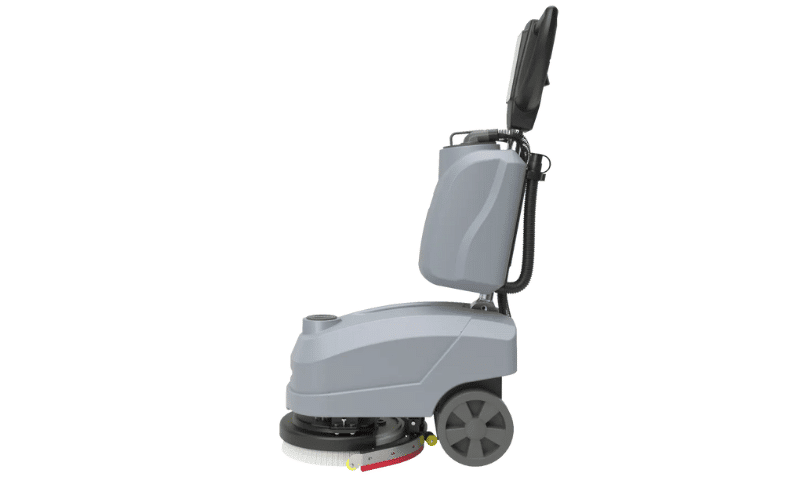
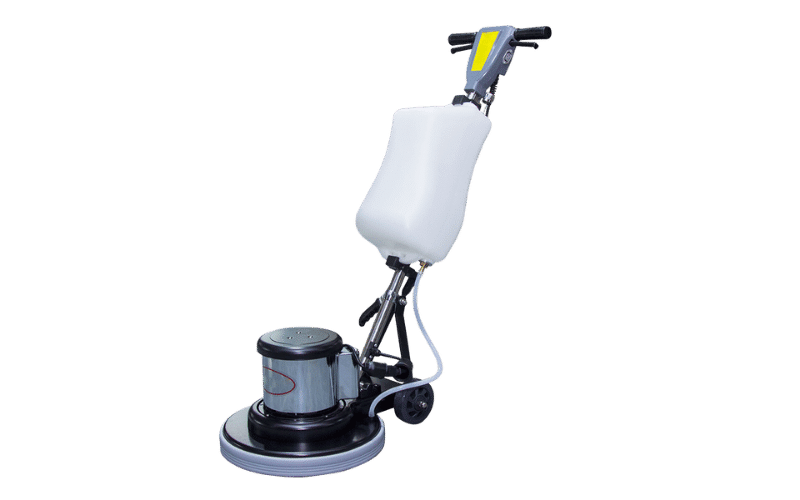
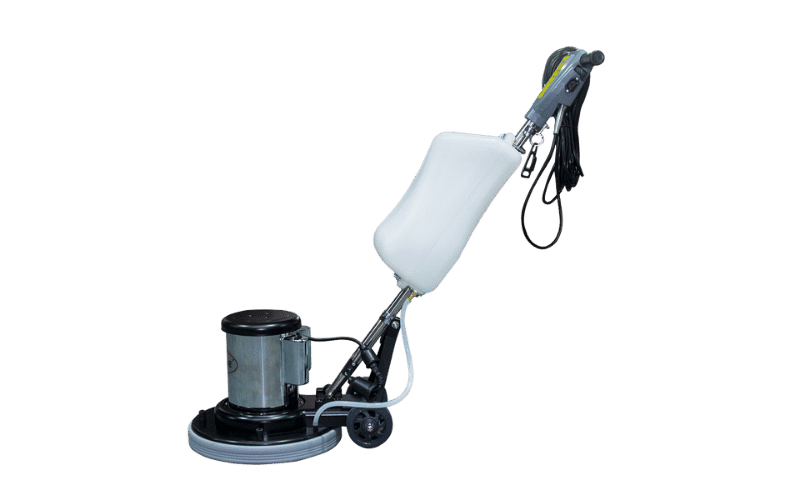
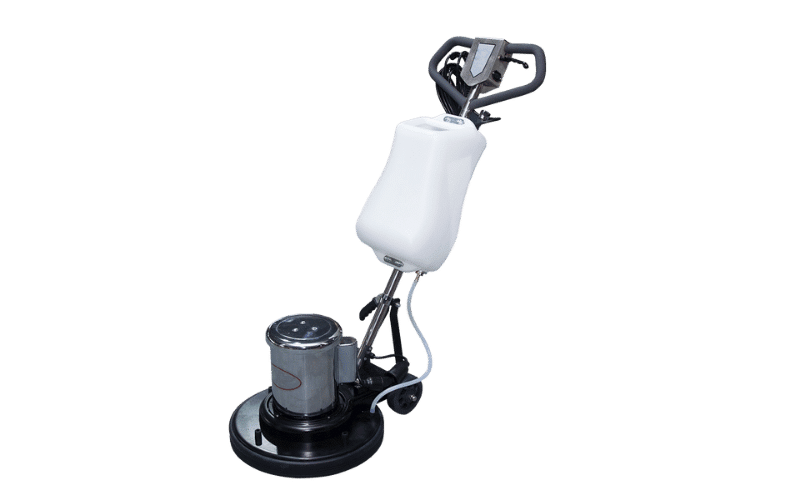
Machine type. Compact, walk-behind, and ride-on scrubbers are engineered for different jobs. Ride-on and heavy-duty models typically feature heavier frames, larger motors, and drive systems built for sustained daily use. Running a compact unit across a large warehouse every day pushes it well past its design limits, even if it’s a quality machine for the right application.
Duty cycle. Duty cycle is simply how long and how often the machine runs. A scrubber used a few hours a week ages slowly and gently. One running every shift puts continuous stress on its motors, brushes, squeegee blades, wheels, and battery. For condition assessments, daily runtime often tells more than the purchase date.
Battery system. The battery is frequently the first major component to limit a scrubber’s useful life. Lead-acid batteries are cheaper upfront but support fewer charge cycles, require regular watering, and need careful charging habits. Lithium-ion batteries cost more upfront but typically last longer and require far less maintenance. On older machines, the cost of a full battery replacement often triggers the decision to replace the unit entirely.
Maintenance quality. Maintenance isn’t an abstract commitment — it’s a specific set of tasks. Dirty tanks breed odors and clog hoses. Worn squeegees leave water on the floor. Worn brushes force the motor to work harder than it should. Skip scheduled service long enough and small, fixable issues cascade into component failures that take other parts down with them.
Operator habits. The same machine can last years longer under careful operators. Aggressive turns, collisions with racks or walls, running the battery flat, ignoring warning indicators, or leaving full tanks parked overnight all accelerate wear. Proper operator training protects your equipment as much as build quality does.
Floor conditions. Rough concrete, deep grout lines, and debris-heavy floors put outsized strain on brushes, pads, and drive motors. Grit and debris also tear squeegee blades and clog vacuum systems. Smooth, well-swept floors are simply easier on the machine per pass, and that adds up over thousands of hours.
Environment. Electronics and batteries take the hardest hit from temperature extremes and humidity. Heat speeds up battery degradation; cold cuts runtime and slows charging. Where and how you store the machine matters as much as how you operate it. A scrubber left on an unheated loading dock or in a damp utility room will age faster than one stored properly indoors.
Spare parts availability. Some scrubbers don’t break down — they just become impossible to fix. When a manufacturer discontinues parts for a model or local service networks disappear, even a minor failure can bench the machine for weeks. Practical lifespan ends when support ends, regardless of how solid the frame still looks.
These factors compound on each other. A ride-on scrubber with a lithium battery, trained operators, and a consistent service schedule is set up to hit the ideal tier. A compact machine running double shifts on rough floors with deferred maintenance is set up to fall short. Often, one weak link is enough to drag the rest of the picture down.
How Duty Cycle Specifically Shortens or Extends Lifespan
Picture two identical walk-behind scrubbers purchased the same week. One serves a small retail store and runs about 2 hours a day. The other works in a distribution center for 8-plus hours every shift. Three years later, the retail machine has logged roughly 2,200 hours. The warehouse machine is closing in on 8,800. That’s four times the wear on every moving part — same machine, same age, completely different story.
That’s why age alone is a poor indicator of condition. A three-year-old machine can be nearly spent. A six-year-old one might have plenty of life left. When you’re evaluating your fleet or comparing options for a new purchase, check the hour meter and understand the duty cycle before you draw any conclusions.
Extending Lifespan, Repair vs. Replace, and Ownership Costs
Knowing what shortens a scrubber’s life is useful. Acting on that knowledge is what actually protects your investment. That means building better maintenance habits, making smart repair decisions, and thinking about long-term value when you buy.
Practical Steps to Extend Floor Scrubber Lifespan
The highest-return habits are the simplest ones. Drain and rinse both the solution and recovery tanks after every use. Inspect squeegee blades for nicks and tears, and clear hair and debris from brushes and pads before they build up. These five-minute end-of-shift routines stop minor issues from quietly becoming expensive ones.
Battery care deserves its own attention. For lead-acid batteries, charge fully after each use, avoid draining them completely, and check water levels weekly on flooded models. For lithium-ion packs, follow the manufacturer’s charging protocol and avoid storing the machine in temperature extremes.
Round out the routine with scheduled professional service — quarterly is a reasonable target for machines in heavy use. A technician can spot worn bearings, loose wiring, and failing seals before they escalate. Storing the scrubber indoors in a clean, dry space completes a solid floor scrubber maintenance program and directly extends uptime and machine life.
When to Repair vs. When to Replace
Repair makes sense when the machine is still within its expected lifespan, and the issue is isolated. A widely used rule of thumb: if the repair costs less than 30–50% of what a replacement would run, it’s usually worth fixing. The key distinction, though, is between a single failure and a pattern. One worn-out motor is a repair call. Three breakdowns in a year is a red flag.
Replacement moves to the front of the conversation when certain signals stack up: a battery replacement needed on a machine near the end of its range, discontinued or hard-to-source parts, recurring downtime, cracked tanks or structural damage, or a noticeable drop in cleaning performance despite maintenance.
Here’s a real-world example: a seven-year-old scrubber that needed three repairs last year, totaling 35% of a new unit’s cost. Each breakdown meant two days off the floor. Now it needs a full battery replacement. When you add that cost to the accumulated downtime, the math clearly shifts toward replacement—even if the machine still turns on.
Buying and Ownership Implications
Lifespan reframes how you evaluate price. A durable scrubber that costs more upfront but lasts ten years will almost always cost less per year than a cheaper unit you replace in four. Build quality matters, but so do serviceability and access to parts when something goes wrong.
For operations running machines hard every day, downtime isn’t just an inconvenience — it has a real dollar cost. Factor in support infrastructure and maintenance burden alongside the purchase price. When you’re comparing options, ask suppliers like leadvclean directly about expected service life, parts lead times, and recommended maintenance intervals. Those questions reveal more about long-term value than the spec sheet does.
Conclusion: Get the Most Out of Your Floor Scrubber
Most commercial floor scrubbers last 5–10 years. The eight factors covered above determine where yours lands in that range. Of those, you have the most control over consistent maintenance and matching the machine to its actual workload. Get those right, and you’re set up to hit the high end.
Start by taking a hard look at your current maintenance routine and pulling hour meter readings on each machine. If a scrubber is being pushed past its design limits or showing the warning signs above, make the replacement decision before it becomes an emergency. A little proactive attention goes a long way toward protecting both your uptime and your bottom line.