



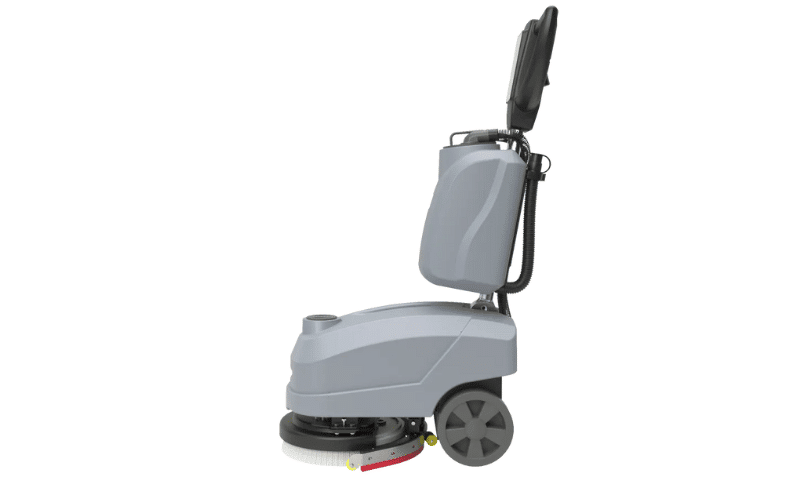

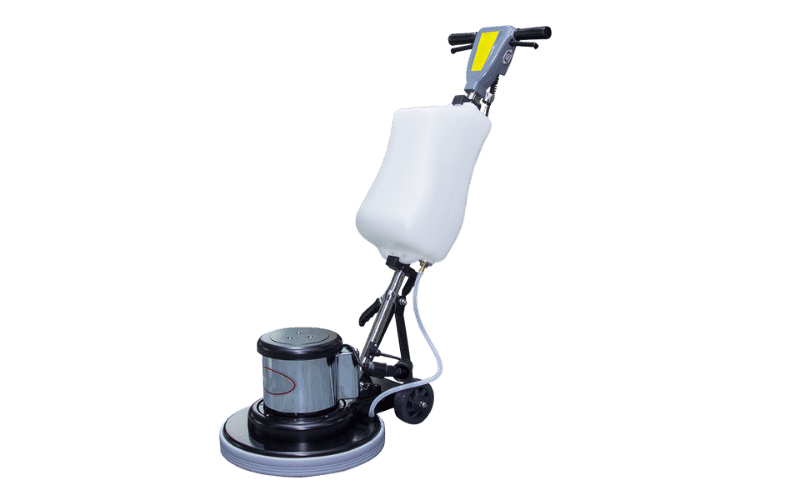
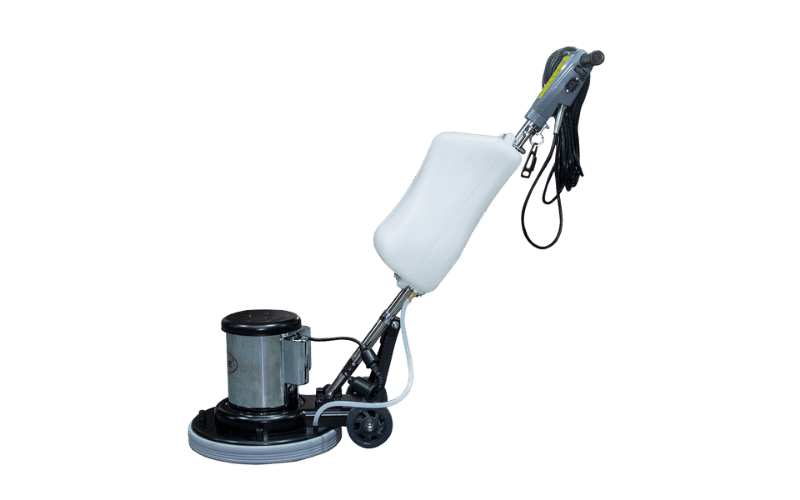
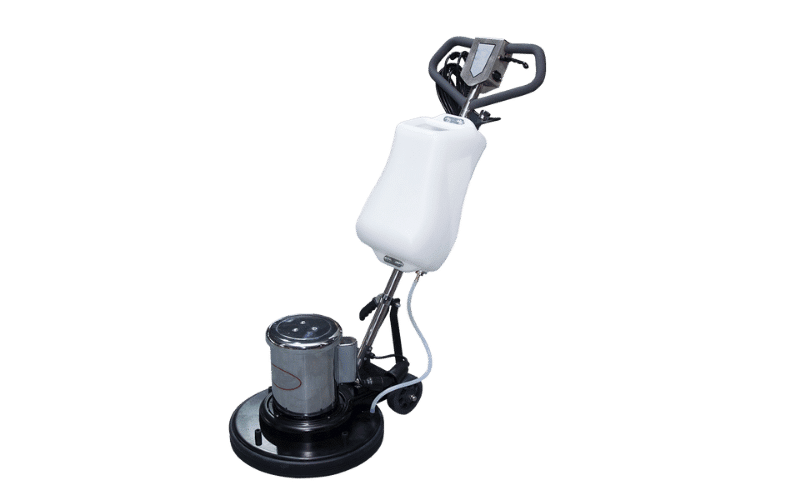



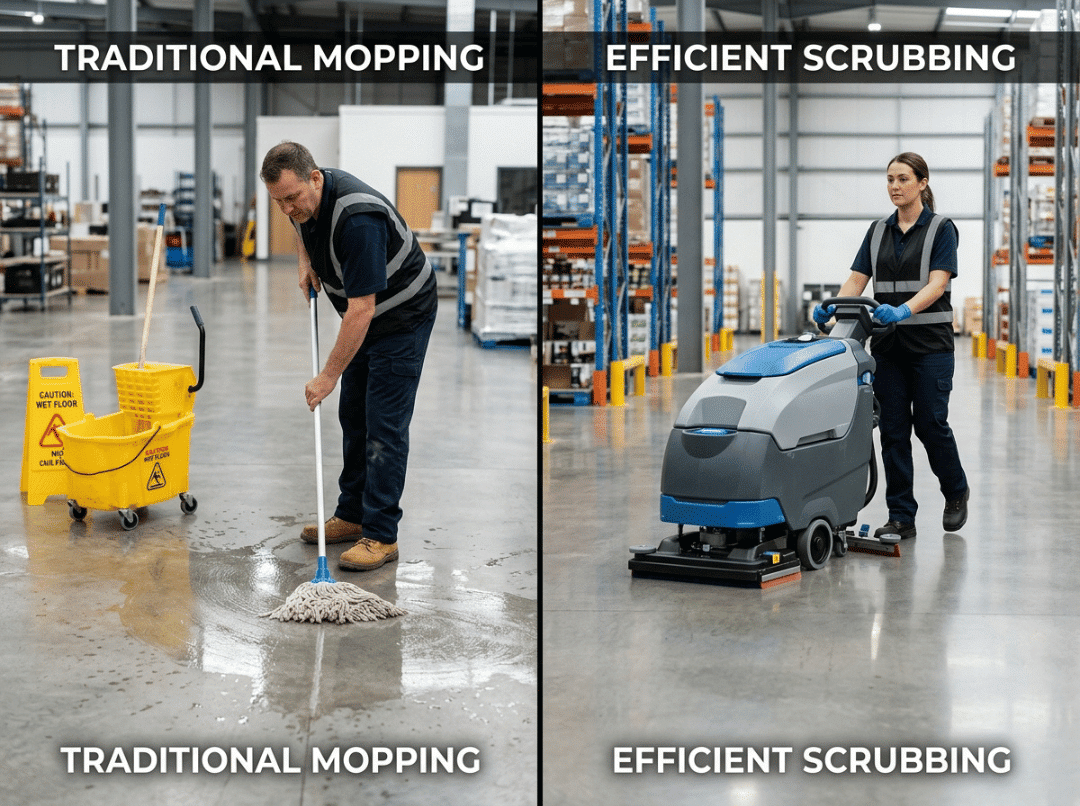
If you manage a commercial facility, here’s the short answer: a floor scrubber almost always outperforms a mop for medium to large spaces cleaned on a regular schedule. The reason comes down to how each method works. A scrubber lays down fresh cleaning solution, mechanically agitates the floor, and vacuums up all the dirty water in a single pass. A mop pushes that same dirty water around, spreading contaminants with every stroke.
But mopping isn’t obsolete. For tight corners, very small rooms, or quick spill response, a mop and bucket is still the faster, simpler choice.
This guide is built for facility managers, operations supervisors, and cleaning contractors who need a clear answer to a practical question: should you invest in a floor scrubber, or does mopping still work for your situation?
You’ll find a focused comparison of both methods, deeper coverage of the decision factors that matter most—cleaning quality, drying time, labor cost, cross-contamination risk, and long-term ROI—along with honest guidance on when mopping still wins, how to match a machine to your building, and what to ask before you buy or rent.
Floor Scrubber vs Mop: How They Actually Compare
Before diving into facility-specific guidance, here’s how the two methods stack up across the factors that drive real decisions.
|
Decision Factor |
Floor Scrubber |
Mop & Bucket |
|---|---|---|
|
Cleaning quality |
Fresh solution every pass; grime removed, not redistributed |
Dirty water reused; contaminants spread across floor |
|
Drying time |
Near-dry immediately; water vacuumed up in one pass |
Wet for several minutes; active slip hazard |
|
Cleaning speed |
Up to 50% faster on large floors |
Slow; frequent wringing, bucket changes, rework |
|
Cross-contamination |
Grime captured and contained |
Moved from zone to zone via mop water |
|
Result consistency |
Machine-driven; same result every pass |
Varies by operator, fatigue, and technique |
|
Labor cost over time |
Lower; fewer hours per sq ft |
Higher; labor-intensive and prone to rework |
|
Best floor size |
Medium to large (2,000+ sq ft) |
Very small areas or spot cleaning |
|
Upfront investment |
Higher; machine purchase or rental |
Low; minimal equipment cost |
|
Long-term total cost |
Lower when cleaning regularly |
Higher once labor compounds over time |
The table tells a clear story for most commercial settings: the scrubber wins on the factors that affect safety, cost, and cleanliness the most. But the right answer depends on your facility. Read on before drawing conclusions.
Why a Floor Scrubber Cleans Better: The 5 Factors That Matter Most
Rather than listing every possible advantage of a scrubber, this section focuses on the five factors that actually drive commercial purchasing decisions. These are the points where the difference between mopping and scrubbing is biggest—and where getting it wrong costs you the most.
1. Cleaning Quality: Fresh Solution vs. Recycled Dirty Water
This is the most fundamental difference, and it’s worth understanding clearly.
A mop starts clean and gets dirtier with every pass. Even if you wring it thoroughly, the mop head reabsorbs contaminated water and deposits it back onto the floor. By the time you’re halfway across a large floor, you’re mopping with visibly dirty water. Change the bucket more often, and you add time and labor. Don’t change it, and you’re spreading the problem.
A floor scrubber works differently. It carries two separate tanks: one for clean solution, one for dirty water recovery. Each pass lays down fresh detergent, scrubs with rotating brushes or pads, and immediately vacuums up the soiled water. The floor never sees recycled contamination.
This matters most in: food service, healthcare, and any facility where floor hygiene directly affects compliance or customer perception. In a grocery store or hospital, the difference between “mopped” and “scrubbed” is often visible—and auditable.
Real scenario: A regional grocery chain with six locations switched from nightly mopping to automated scrubbing. Produce section floors, previously showing grime buildup within 24 hours, stayed cleaner for longer. Customer complaints about sticky floors dropped within the first month.
2. Drying Time and Slip Risk: The Safety Argument
Wet floors are a liability. Slip-and-fall incidents are consistently among the most common causes of workplace injury in commercial and retail environments, and wet mopped floors are a direct contributor.
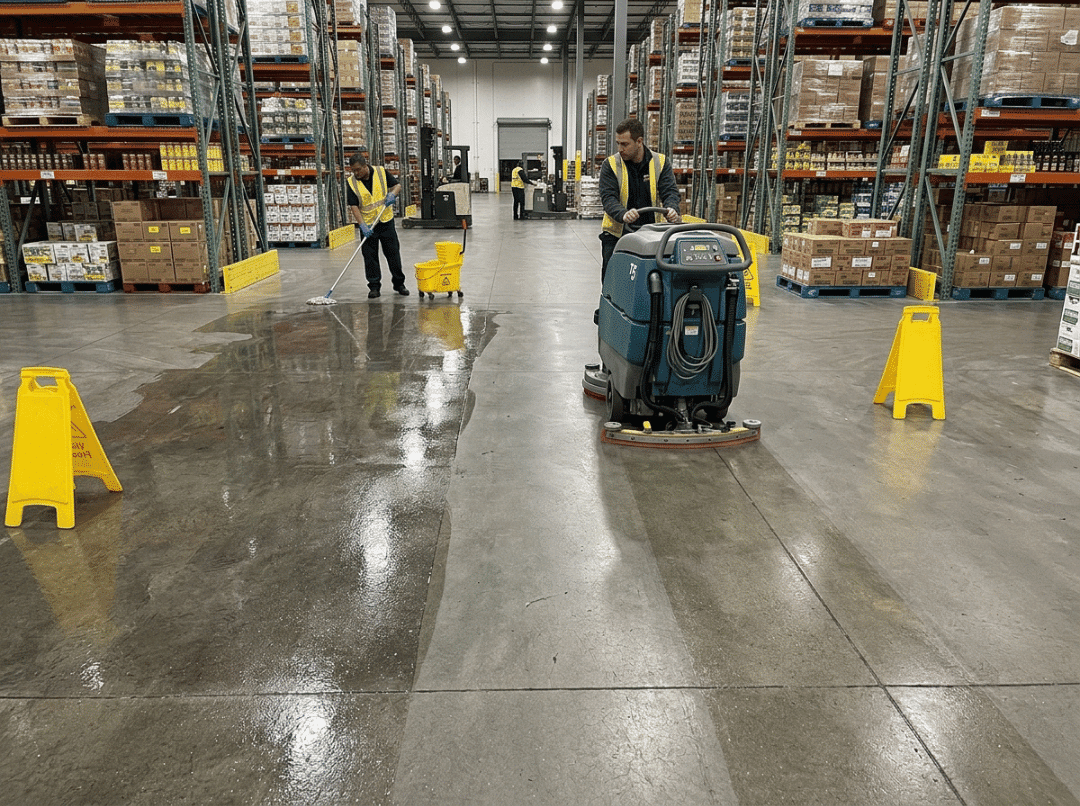
When you mop a floor, it stays wet. In a busy environment—a grocery store aisle, a warehouse walkway, a hospital corridor—that wet period is a real hazard. You can put out wet floor signs, but you can’t eliminate the risk while the floor is wet.
A floor scrubber changes this fundamentally. Because the squeegee and vacuum recover the water immediately behind the cleaning head, the floor is nearly dry within seconds of the machine passing. In most cases, foot traffic can resume almost immediately.
What this means financially: Slip-and-fall liability claims can run into tens of thousands of dollars per incident—and that’s before litigation. For facilities with high foot traffic or vulnerable populations (healthcare, senior living, schools), reduced floor wetness is not a convenience; it’s a risk management decision.
Real scenario: A mid-size distribution center with a history of near-miss incidents during morning cleaning switched to walk-behind scrubbers. The safety team reported zero wet-floor incident reports in the following quarter—compared to three in the same period the year before.
3. Labor Efficiency: Where the Real Money Goes
Mopping costs less to start. The equipment is cheap. But labor is the biggest ongoing expense in commercial floor care—and mopping is labor-intensive in ways that compound over time.
Consider what mopping actually requires: filling and emptying buckets, wringing the mop head repeatedly, going back over sections that didn’t come clean, replacing mop heads regularly, and spending significantly more time per square foot than a machine.
A floor scrubber, by contrast, requires one operator to make one pass. On a 15,000 sq ft warehouse floor, the difference often looks like this:
- Mopping: 2.5–3 hours of labor
- Scrubbing: 1–1.5 hours of labor
That gap doesn’t just save time on any given night. It compounds across every cleaning shift, all year. For a facility that cleans five nights a week at a $17/hour labor rate, the difference can exceed $7,000–$9,000 annually in labor alone—enough to cover the cost of a mid-range scrubber within 12–18 months.
Also worth noting: Scrubber operators finish their routes faster and report less physical fatigue. That matters for retention, especially in tight labor markets where custodial staff turnover is a real operational cost.
4. Cross-Contamination: The Hidden Hygiene Risk of Mopping
In facilities with distinct cleanliness zones—production areas, restrooms, break rooms, corridors—mopping creates a cross-contamination path that most managers don’t fully account for.
A mop head used in a restroom carries residual bacteria even after rinsing. Use that same mop in a break room, and you’ve transferred contamination. The same applies to allergens, food waste, industrial fluids, or any other substance that ends up on a floor in Zone A before you clean Zone B.
A floor scrubber eliminates this risk by capturing grime into the recovery tank. The floor isn’t re-contacted by contaminated material. If you follow a logical cleaning sequence—starting in the cleanest area and moving toward the dirtiest—the machine’s closed-loop system ensures nothing moves backward.
This matters most in: hospitals, food processing facilities, commercial kitchens, and schools where hygiene standards are either regulated or directly tied to public health.
5. Consistency: The Scrubber Doesn’t Have Bad Days
Mopping results vary. They vary by operator, by shift, by how tired someone is, by how recently the mop head was replaced, and by how diligently someone changes the bucket water. Over a week with rotating staff, you can end up with significant variation in floor cleanliness—and no easy way to detect it until a manager walks the floor.
A scrubber delivers the same result every time it runs. The brush pressure, water flow, and recovery rate are set by the machine. The result is consistent regardless of who’s operating it.
For facilities that undergo regular inspections—food service audits, healthcare accreditation reviews, client walkthroughs—this consistency isn’t just nice to have. It’s operationally important.
When Mopping Is Still the Right Choice
A floor scrubber is not the answer for every cleaning task. Knowing when mopping makes more sense is part of making a smart decision.
Use a mop when:
- The area is very small. Rooms under 500–800 sq ft rarely justify the setup, operation, and cleaning time of a scrubber. A mop and bucket is faster at that scale.
- You need to clean tight corners and edges. Even the most maneuverable scrubbers can’t reach every corner. Mops handle baseboards, corners, and narrow gaps that machines miss.
- You’re spot-cleaning a spill. For a single spill on an otherwise clean floor, pulling out and setting up a scrubber isn’t practical. A mop or absorbent towel is the right tool.
- Cleaning is infrequent. If a space is only cleaned every few weeks or months, the ROI case for a scrubber weakens. The equipment cost and maintenance needs may not be justified.
- The floor surface isn’t suited for machine scrubbing. Some surfaces—uneven stone, heavily grouted tile, certain treated wood floors—require more delicate handling than a scrubber’s brush deck provides.
The honest bottom line: Most facilities benefit from having both. A scrubber for routine scheduled cleaning of main floor areas, and mops for follow-up in corners, restroom stalls, and spot-cleaning between scheduled scrubs.
Which Facilities Benefit Most from Floor Scrubbers?
The case for switching from mops to scrubbers varies by facility type. Here’s a more specific breakdown of where scrubbers deliver the clearest return—and what you should prioritize in each setting.
Warehouses and Distribution Centers
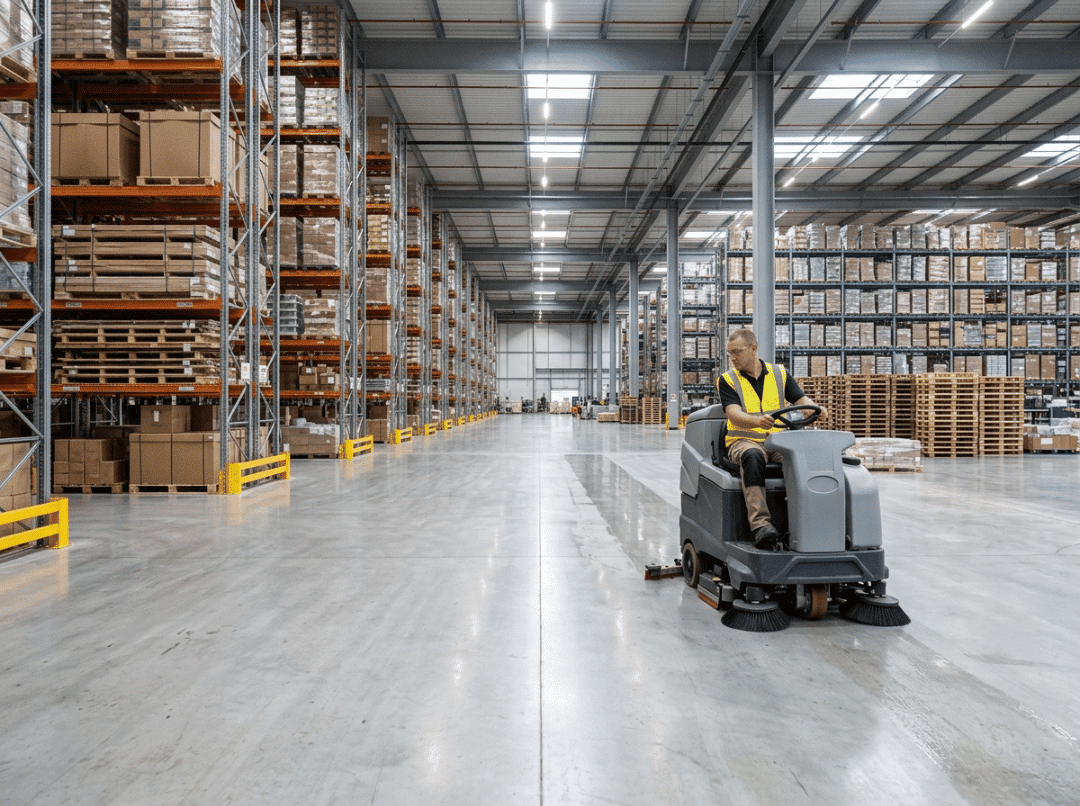
Warehouses are the highest-ROI environment for floor scrubbers. The floors are large, often concrete, and subject to dust, dirt, pallet debris, and forklift traffic that compounds quickly. Mopping a 50,000 sq ft warehouse is not practical—it’s too slow, too labor-intensive, and won’t deliver the level of cleanliness the floor needs.
For warehouses, a ride-on scrubber is typically the right choice. It covers ground faster, requires less physical effort, and handles the heavy-duty grime typical of industrial floors. Battery run time and tank capacity matter here—look for machines that can complete a full floor in a single charge without refilling.
Key priority: Floor cleanliness and speed. Secondary benefit: reduced dust on product and equipment.
Retail Stores
In retail, the floor is part of the customer experience. Dull, gray-tinged tile is a subconscious signal that the store isn’t well-maintained. Bright, clean floors support the brand and reduce the perception of a dirty environment—even when the rest of the store is well-organized.
Walk-behind scrubbers work well in most retail formats. For stores with wide main aisles and a consistent floor plan, a scrubber reduces nightly cleaning time significantly while delivering a consistently brighter result than mopping.
Key priority: Appearance and customer perception. Secondary benefit: slip risk reduction during store hours.
Healthcare Facilities: Hospitals, Clinics, Senior Living
Healthcare environments have the most to lose from inadequate floor cleaning. Cross-contamination risk is real and regulated. Floors in patient areas, procedure rooms, and corridors need to be genuinely clean, not just visually clean.
Scrubbers are strongly preferred in healthcare for two reasons: they eliminate cross-contamination between zones, and they leave floors dry quickly, which matters in environments where patients or residents may be walking or using assistive devices on wet floors.
Key priority: Infection control and cross-contamination prevention. Secondary benefit: reduced fall risk for patients and residents.
Schools and Educational Facilities
Schools combine high foot traffic, tight cleaning windows (usually overnight), and wide variation in what gets tracked across floors—mud, food, art materials, gym residue. Mopping this volume consistently is difficult and slow.
Walk-behind scrubbers handle school hallways, cafeterias, and gymnasiums efficiently. The consistency benefit is significant in schools: the floor quality shouldn’t depend on which custodian is working that night.
Key priority: Speed and coverage during compressed cleaning windows. Secondary benefit: consistent results across rotating staff.
Grocery Stores and Food Service
Grocery and food service environments combine two of the strongest arguments for scrubbers: food contamination risk and constant floor re-soiling from spills, produce residue, and heavy foot traffic. A mopped grocery floor is often already re-soiled before the mop bucket is empty.
Daily scrubbing—especially in high-turnover zones like produce, deli, and checkout—keeps floors safer and cleaner with less labor than daily mopping would require.
Key priority: Hygiene and slip prevention. Secondary benefit: labor reduction across multiple cleaning cycles per week.
Manufacturing and Industrial Facilities
Manufacturing floors deal with oils, metal shavings, chemicals, and heavy particulates that mops simply can’t handle effectively. Beyond ineffectiveness, mopping industrial contaminants can create slip hazards worse than the original mess.
Industrial-grade ride-on scrubbers with appropriate brush types and cleaning solutions are built for this environment. They’re the only practical choice for regular maintenance of production floor areas.
Key priority: Safety and effective removal of industrial contaminants. Secondary benefit: compliance with workplace cleanliness standards.
The Real ROI Calculation: How Long Until a Scrubber Pays for Itself?
The most common objection to buying a floor scrubber is upfront cost. It’s a fair concern. But the math usually resolves it quickly for facilities that clean regularly.
Here’s a realistic example for a 20,000 sq ft retail warehouse cleaned five nights per week:
|
Cost Factor |
Mopping |
Scrubbing |
|---|---|---|
|
Labor hours per session |
3.5 hours |
1.75 hours |
|
Labor rate |
$17/hour |
$17/hour |
|
Cost per session |
$59.50 |
$29.75 |
|
Weekly cost (5 sessions) |
$297.50 |
$148.75 |
|
Annual labor cost (50 weeks) |
$14,875 |
$7,438 |
|
Annual labor savings |
~$7,437 |
A quality mid-range walk-behind scrubber costs $3,000–$8,000 new, or $1,500–$4,000 refurbished. At $7,400+ in annual labor savings, payback on a refurbished machine can happen in under six months. Even a new machine pays back within 12–18 months.
Add the hidden costs of mopping that don’t show up in labor alone:
- Slip-and-fall claims (a single incident can cost $20,000–$50,000+ in direct costs)
- Rework when floors don’t pass inspection
- Mop head replacement and bucket maintenance
- Reduced floor finish life due to dirty water spreading contaminants into the floor surface
When you account for all of these, the case for a scrubber strengthens significantly for any facility with regular cleaning needs.
How to Choose the Right Floor Scrubber for Your Facility
Picking the right machine is not complicated, but it does require matching the equipment to your actual conditions—not just your floor size.
Step 1: Start With Square Footage
This is the primary filter.
|
Floor Size |
Recommended Machine |
|---|---|
|
Under 3,000 sq ft |
Compact walk-behind (14″–17″ path) |
|
3,000–15,000 sq ft |
Mid-size walk-behind (20″–24″ path) |
|
15,000–40,000 sq ft |
Large walk-behind or small ride-on |
|
Over 40,000 sq ft |
Ride-on scrubber |
Step 2: Consider Your Floor Layout
Square footage matters, but so does the shape of your space. A 20,000 sq ft floor with wide open aisles can be handled with a smaller machine faster than the same area broken into many small rooms and corridors. Consider:
- Aisle width and turning radius: Tighter spaces need more maneuverable machines with tighter turn radii.
- Obstacles: Racking, equipment, and furniture affect which path width is practical.
- Surface type: Smooth concrete, tile, and epoxy respond differently to brush type and pressure. Match the pad or brush to your surface.
Step 3: Battery Life and Tank Capacity
For larger facilities, these are critical. If your cleaning route takes 90 minutes, your machine needs to run 90 minutes on a charge with enough tank capacity to complete the floor without refilling mid-run. Undersizing either spec forces interruptions that eliminate your efficiency gains.
Step 4: New, Rental, or Refurbished?
- Rent first if you’re evaluating a scrubber for the first time. A one- or two-week rental lets you measure real labor savings in your actual facility before committing to a purchase.
- Buy refurbished if you’ve confirmed the ROI and want to minimize upfront cost. Quality refurbished machines from reputable dealers perform comparably to new ones for most commercial applications at 40–60% of the new price.
- Buy new when you need full warranty coverage, the latest battery technology, or you’re equipping multiple sites where parts standardization matters.
Frequently Asked Questions
Is a floor scrubber worth it for a small business?
It depends on your floor size and cleaning frequency. If you’re cleaning more than 2,000–3,000 sq ft on a regular schedule, the labor savings typically justify a compact scrubber—especially if you consider a refurbished machine. Below that size, or for very infrequent cleaning, mopping is usually more cost-effective.
Can a floor scrubber replace mopping entirely?
For scheduled maintenance cleaning of main floor areas, yes. But most facilities keep a mop on hand for corners, restroom stalls, narrow spaces, and quick spill response. Think of the scrubber as your primary tool and the mop as your backup—not the other way around.
Do floor scrubbers actually reduce slip-and-fall risk?
Significantly. Because the squeegee and vacuum recover water immediately behind the scrub head, floors are near-dry within seconds. That’s a fundamental safety improvement over mopping, which leaves floors wet for several minutes. In high-traffic facilities, this matters every time you clean.
What’s the difference between a walk-behind and a ride-on scrubber?
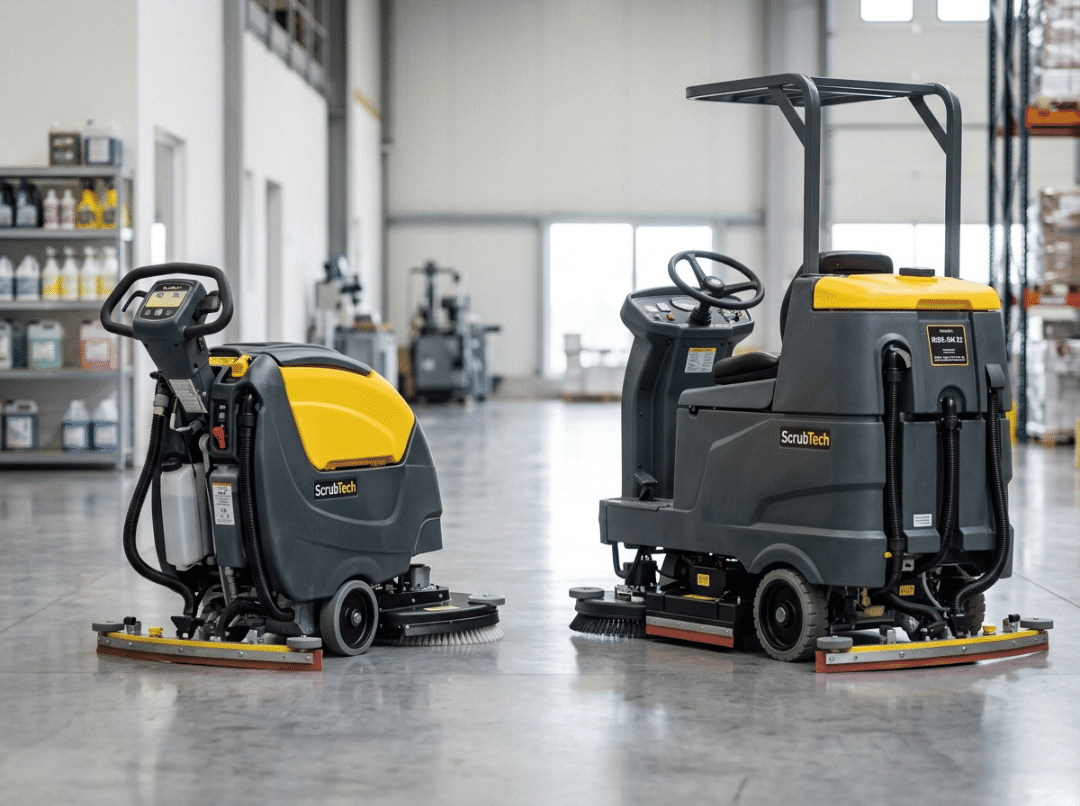
Walk-behind scrubbers are operator-pushed machines suited for small to mid-size facilities (roughly 2,000–40,000 sq ft). Ride-on scrubbers are larger, battery-powered machines the operator sits on, suited for large open floors above 40,000 sq ft. The decision comes down to floor size, layout, and how much time an operator spends walking the route.
How often should commercial floors be scrubbed?
High-traffic environments like grocery stores, hospitals, and schools typically benefit from daily scrubbing. Lower-traffic spaces like offices or light industrial areas may only need it two to three times per week. The right frequency is whatever keeps the floor clean between sessions—not an arbitrary schedule.
Should I buy a new or refurbished floor scrubber?
For most small to mid-size facilities, a quality refurbished machine delivers comparable performance to new at significantly lower cost. If you’re just starting out or want to validate the ROI before a larger investment, refurbished is often the smarter entry point. Buy new when long-term warranty coverage, multi-site parts standardization, or the latest technology is a priority.
Ready to Make the Switch?
For any commercial facility cleaning more than a few thousand square feet on a regular schedule, a floor scrubber is a practical upgrade—not a luxury. It cleans better, dries faster, costs less over time, and reduces the safety and liability risks that come with wet mopped floors.
The clearest path forward:
- Estimate your labor savings. Use your actual floor size, cleaning frequency, and wage rate. The math is usually compelling within the first calculation.
- Rent before you buy. A short-term rental lets you confirm the efficiency gains on your actual floor with your actual staff before committing to a purchase.
- Start with refurbished if cost is a barrier. A quality refurbished walk-behind scrubber from a reputable dealer is often the lowest-risk way to make the switch.
- Match the machine to your floor, not just your budget. You and an underspec’d machine won’t see the full labor benefit. Match it correctly, and the ROI follows naturally.
Browse our selection of floor scrubbers—new, refurbished, and available for short-term rental—and find the right fit for your facility.