







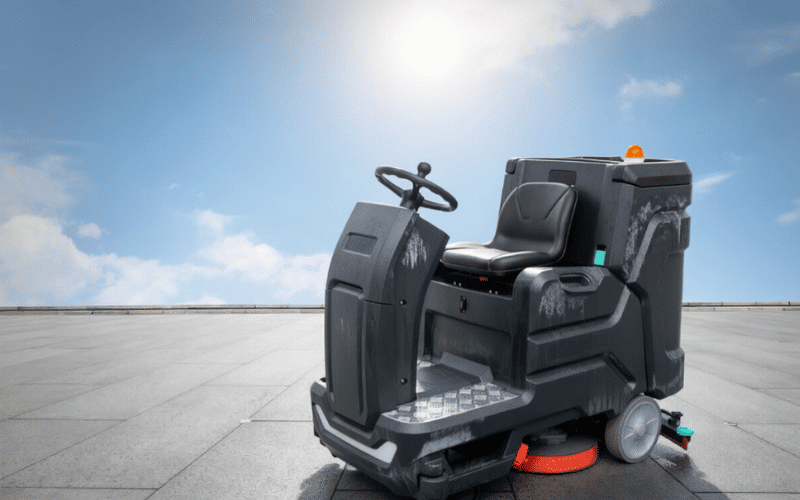
A floor scrubber takes a beating every shift. Skip a tank rinse here, ignore a worn squeegee there, and it won’t be long before you’re dealing with streaks, odors, and unplanned downtime. Most of these problems are preventable with a consistent routine that takes minutes, not hours.
This guide gives facility managers, custodial supervisors, and operators a practical maintenance plan grounded in how these machines actually work. You’ll find a clear schedule organized by frequency, guidance on which tasks your crew can handle, and which belong to a trained technician.
What this guide covers:
- A maintenance schedule organized by frequency
- Care for tanks, squeegees, brushes, hoses, batteries, and chargers
- The difference between operator tasks and technician-only work
- Common mistakes that shorten machine life
- Troubleshooting tips, cost guidance, and a detailed FAQ
Why Floor Scrubber Maintenance Matters
Regular maintenance protects three things: cleaning quality, machine lifespan, and operator safety. A well-kept scrubber lays down solution evenly, scrubs at full pressure, and recovers water cleanly, leaving floors dry and safe. A neglected one leaves streaks, standing water, and slip hazards.
There’s a financial case too. Catching a worn squeegee or a clogged filter early costs a few minutes. Letting it go can stress the vacuum motor, drive system, or control board — components that cost far more to repair or replace.
One practical note: keeping service records supports warranty coverage and can improve resale value. A documented maintenance history tells the next owner — or the next auditor — that the machine was properly cared for.
Maintenance by Frequency
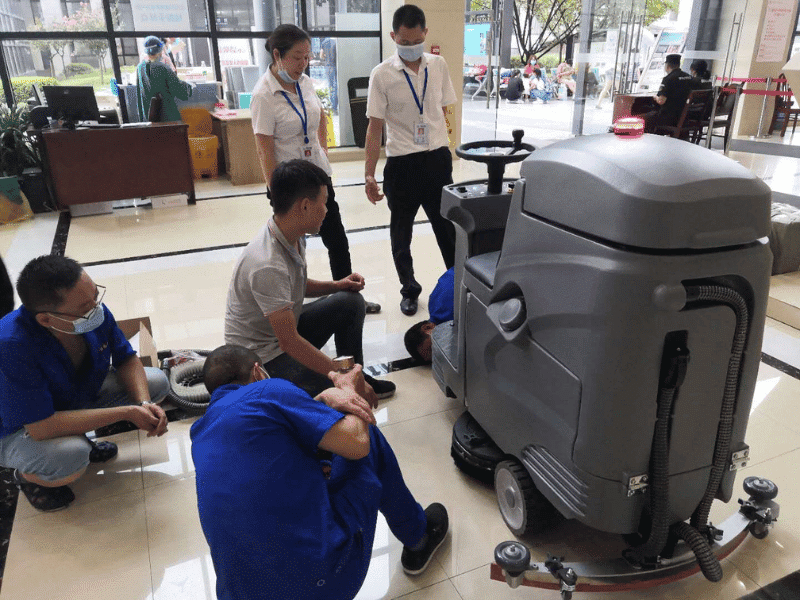
The most practical way to stay on track is to organize tasks by how often they’re needed. Adjust the timing to your workload. A machine running two or three shifts a day needs more attention than one used for a few hours a week.
After Every Use
These quick tasks prevent the odor, clogging, and streaking problems behind most service calls. They take only a few minutes and belong to the operator.
- Empty and rinse the recovery tank to remove dirty water and debris.
- Drain any leftover solution from the solution tank.
- Wipe the squeegee blades and check for nicks, debris, or wear.
- Remove and rinse the brushes or pads.
- Leave tank lids open so the interior can air-dry overnight.
Skipping these steps is the single most common cause of persistent odors and weakening suction.
Daily Tasks
In addition to the after-use routine, run through a few quick checks each working day.
- Inspect the squeegee assembly for even contact with the floor.
- Clear the recovery tank’s debris basket or filter screen.
- Check brushes or pads for uneven wear and lodged debris.
- Wipe down the machine exterior and controls.
Weekly Tasks
Set aside time each week for slightly deeper checks that catch problems before they show up on the floor.
- Inspect vacuum hoses for cracks, kinks, or blockages.
- Clean the solution line filter to maintain even water flow.
- Check brush and pad wear against the manufacturer’s replacement guidance.
- Clean squeegee blades thoroughly and flip or rotate them if your model supports it.
- For flooded lead-acid batteries, check fluid levels and top off with distilled water after charging — trained staff only.
Monthly Tasks
Monthly maintenance covers components that wear gradually but still need regular attention.
- Inspect battery terminals for corrosion and clean as needed.
- Check drive belts (where applicable) for fraying or slack.
- Lubricate the squeegee assembly’s pivot points per the manual.
- Inspect wheels and casters for wear or debris buildup.
- Check the charger and cable for signs of damage.
Annual Tasks
Once a year, schedule a deeper service. Most of this work belongs to a technician.
- Replace heavily worn brushes, pads, and squeegee blades.
- Flush and deep-clean both the solution and recovery tanks.
- Have a technician run electrical diagnostics on the control board and motors.
- Have battery health tested under load.
- Confirm all safety features and automatic shut-offs work correctly.
Operator Tasks vs. Technician-Only Tasks
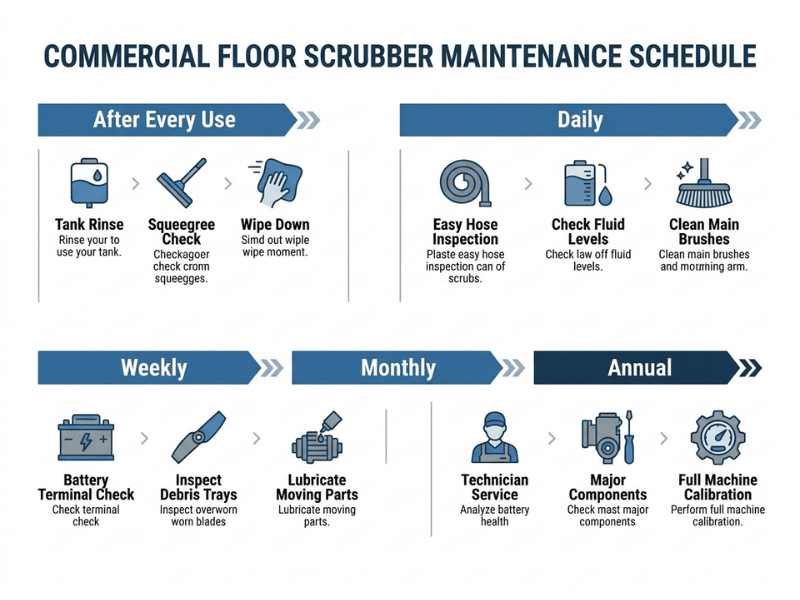
Not every maintenance job belongs to the daily operator. Drawing this line protects your crew and prevents small issues from becoming expensive ones.
- Operator tasks include emptying and rinsing tanks, wiping and inspecting squeegees, swapping brushes and pads, checking hoses for obvious clogs, and keeping the machine clean. These are low-risk tasks that require no special tools.
- Trained maintenance staff should handle battery watering on flooded lead-acid packs, terminal cleaning, belt inspection, and lubrication. These involve moderate risk and benefit from familiarity with the machine.
- Technician-only tasks include internal electrical diagnostics, motor and control-board repair, battery load testing, and any work requiring access to sealed assemblies. These require proper tools and training — an incorrect repair attempt can turn a minor issue into a costly one.
When in doubt, stop and consult rather than push through.
Caring for Key Components
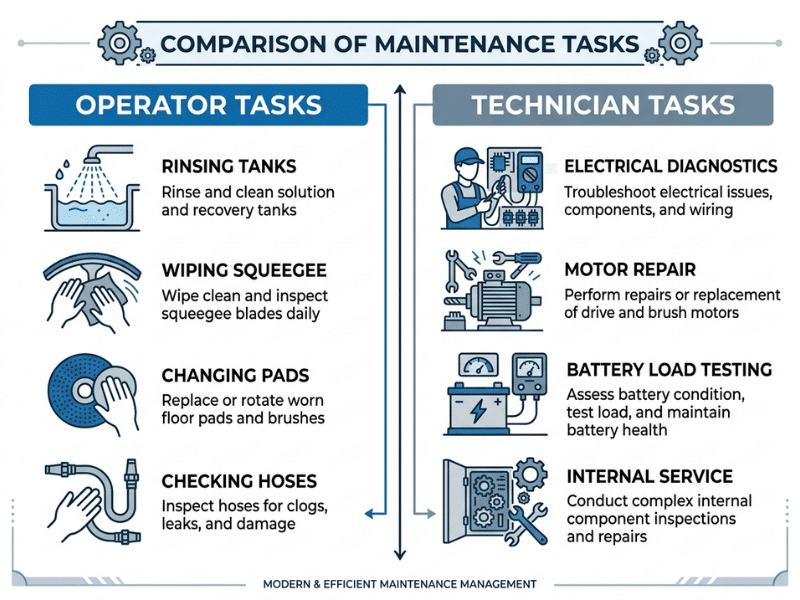
Each major system has slightly different care requirements. Here’s what to watch for.
Solution and Recovery Tanks
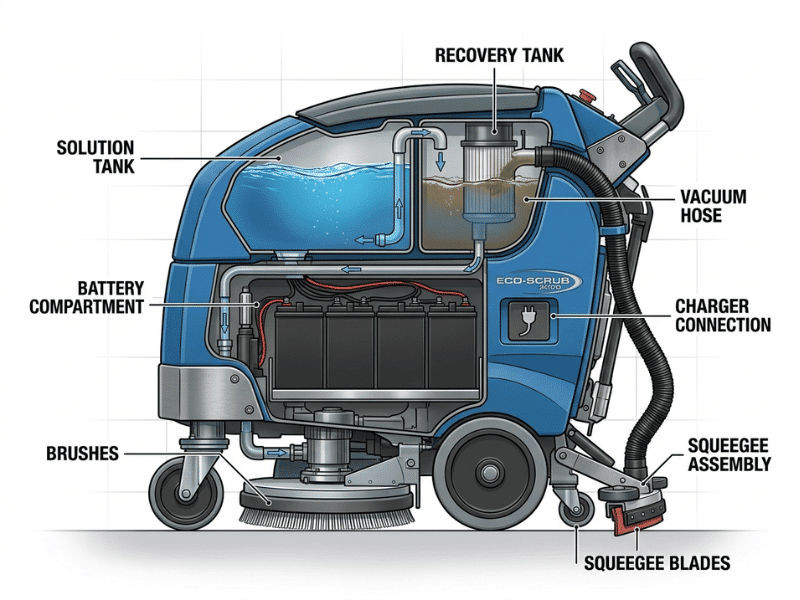
The recovery tank collects dirty water, so it quickly develops odors and bacterial buildup if left wet. Rinse it after every shift and leave the lid open overnight to dry. Clean the solution tank periodically to prevent detergent residue from clogging the lines.
Squeegee Blades
The squeegee is what leaves your floor dry. A worn or nicked blade causes streaks and water trails. Wipe it after each use, inspect for damage, and flip or rotate to extend its life. Replace it once no edge wipes cleanly.
Brushes and Pads
Brushes and pads do the scrubbing, and worn ones clean poorly. Uneven wear often points to a misaligned deck. Match the pad or brush to your floor surface and replace when the bristles splay out or the pads thin below the effective thickness.
Vacuum Hoses and Filters
A clog or crack in the vacuum path kills suction fast. Inspect hoses weekly for blockages and damage. Keep filters and debris screens clean so air and water move freely.
Batteries: Lead-Acid vs. Lithium-Ion
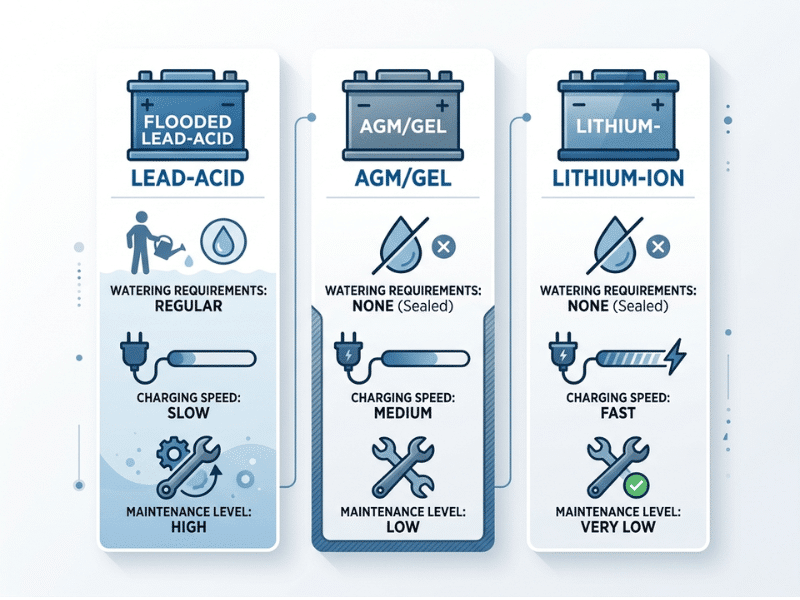
Battery care depends on chemistry, and mixing up routines is a common source of premature failure.
- Flooded lead-acid requires regular watering with distilled water, clean terminals, and full charge cycles. Never leave them sitting discharged — this causes sulfation, which permanently reduces capacity.
- AGM and gel types are sealed and need no watering, but still benefit from clean terminals and a matched charger.
- Lithium-ion is largely maintenance-free. It charges faster, tolerates opportunity charging, and needs no watering. Rely on the built-in battery management system for health data, and follow the manufacturer’s guidance for charging.
For all types, the charger must match the battery chemistry. The wrong charger can damage the pack and create a safety hazard — confirm compatibility before plugging in.
Chargers
Inspect the charger body and cable for fraying or damage before each use. Keep the unit well-ventilated during charging and address fault codes promptly. A failing charger can produce symptoms that look exactly like a dying battery, so rule it out before investing in a new pack.
Common Maintenance Mistakes to Avoid
A handful of habits account for most premature failures. These are worth reviewing with your operators:
- Leaving dirty water in the recovery tank overnight. Odor and buildup develop quickly.
- Storing the squeegee under pressure. This deforms the blade and ruins the seal.
- Ignoring detergent residue in the solution tank. Buildup gradually clogs lines and reduces water flow.
- Deep-discharging batteries regularly. Running a pack to empty puts unnecessary strain on the cells.
- Using the wrong pad or brush for the floor type. This cleans poorly and can wear the deck unevenly.
- Pushing through streaks or weak suction. These are signals, not quirks — they typically get worse if left unaddressed.
Most of these cost nothing to avoid. They’re habits, not expenses.
Troubleshooting Common Problems
Most performance issues trace back to a maintenance miss. Before calling a technician, run through these checks.
- Streaks or water left behind: Start with the squeegee. Check for a worn or nicked blade, confirm the squeegee hose is securely connected, and clear any filter blockage that may restrict suction. Most streaking issues resolve once one of these three is addressed.
- Weak water flow to the brushes: A clogged solution filter is the most common cause. Pull it, rinse it, and reinstall. In hard-water areas, mineral buildup in the lines may be the underlying issue if descaling hasn’t been done recently.
- Brushes not spinning: Check whether the brush motor breaker has tripped, often from debris jamming the brush mid-cycle. Clear the obstruction, reset the breaker, and confirm the pad driver is properly seated.
- Foam triggering the vacuum shutoff early: Excess detergent creates foam that trips the automatic shutoff before the tank is full. Review your dilution ratio and reduce it if needed. More soap does not mean cleaner floors.
Warning Signs Your Scrubber Needs Service
Your machine usually signals trouble before it fails. Act on these rather than waiting for a breakdown:
- Streaking or leftover water, which often points to a worn squeegee or weak suction
- Reduced cleaning performance or a solution that won’t dispense at the right rate
- Unusual noises or vibration, which can indicate a deck, bearing, or drive issue
- A battery that drains faster than normal or won’t reach a full charge
- Error codes or warning lights on the display panel
- Unusual smells from the tanks or battery compartment
If a problem persists after basic checks, bring in a technician rather than continue operating the machine.
Maintenance Cost Guidance
Costs vary by machine type, brand, usage intensity, and location. Treat any figures here as rough reference points rather than firm budgets.
Routine wear items — brushes, pads, and squeegee blades — are your most predictable spend. Larger ride-on machines require pricier parts and more labor than compact walk-behind models. Battery replacement, when it arrives, is typically the highest single cost.
The most practical approach is to handle daily and weekly care in-house and budget for an annual professional service. When comparing repair options, independent shops often charge less per hour and use aftermarket parts, while manufacturer service centers use original parts that may carry a warranty. Weigh part quality against your machine’s remaining value when deciding.
Frequently Asked Questions
How often should I replace squeegee blades?
There’s no fixed interval — it depends on your floors and runtime. Inspect blades daily, flip or rotate them to extend their life, and replace them when no edge wipes cleanly or visible nicks appear. Streaking is usually the first sign a blade is past its useful life.
How often should I check floor scrubber batteries?
Check flooded lead-acid water levels weekly and top off with distilled water after charging, not before. Inspect terminals monthly for corrosion. Sealed AGM, gel, and lithium-ion packs need no watering but still benefit from clean connections and a properly matched charger.
Can I pressure-wash my floor scrubber?
Generally, no. High-pressure water can force moisture into electrical components, motors, and the control board. Wipe the exterior with a damp cloth and rinse only the tanks and removable parts designed for it.
Why does my scrubber leave water behind?
The most common causes are a worn or misadjusted squeegee, a clogged vacuum hose, or a recovery tank that’s full or not properly sealed. Check the squeegee and vacuum path first.
What maintenance should only a technician perform?
Internal electrical diagnostics, motor and control-board repairs, battery load testing, and any work involving sealed assemblies. These tasks require specific tools and training — errors can be costly or unsafe.
How long should a floor scrubber last with good maintenance?
With consistent care, most commercial scrubbers run reliably for many years. Lifespan depends on build quality, usage intensity, and how closely the maintenance schedule is followed. A well-maintained machine consistently outlasts a neglected one of the same model.
Do lithium-ion batteries really need less maintenance?
Yes. They don’t require watering, charge faster, and handle opportunity charging without damage. They still need a compatible charger and clean connections, but day-to-day upkeep is minimal compared to flooded lead-acid batteries.
How do I know if a problem is the battery or the charger?
Test the suspect charger on a machine you know is healthy, or charge the problem machine with a trusted charger. If the fault is with the charger, address it before replacing the battery pack.
Can I use regular dish soap or floor cleaner in my scrubber?
No. Use a low-foaming detergent formulated for automatic scrubbers and follow the recommended dilution. High-foaming soaps generate excess foam that trips the vacuum shutoff and can damage the recovery system over time.
What’s the best way to extend battery life?
For lead-acid, complete full charge cycles rather than frequent short top-offs, keep terminals clean, and avoid running the pack to empty. For lithium-ion, opportunity charging is fine — just use the correct charger and store in a stable temperature environment.
The Bottom Line
Good scrubber maintenance comes down to a repeatable routine: care for tanks, squeegees, brushes, hoses, and batteries on a consistent schedule, and know when a problem calls for a technician.
Start by putting the after-use and daily tasks on a short printed checklist, posting it near the charging station, and walking your operators through it once. A few minutes of attention at the end of each shift prevents the kind of buildup that sidelines equipment for days. Crews that stay consistent spend less on repairs, get better cleaning results, and rarely face the kind of breakdown that nobody planned for.