



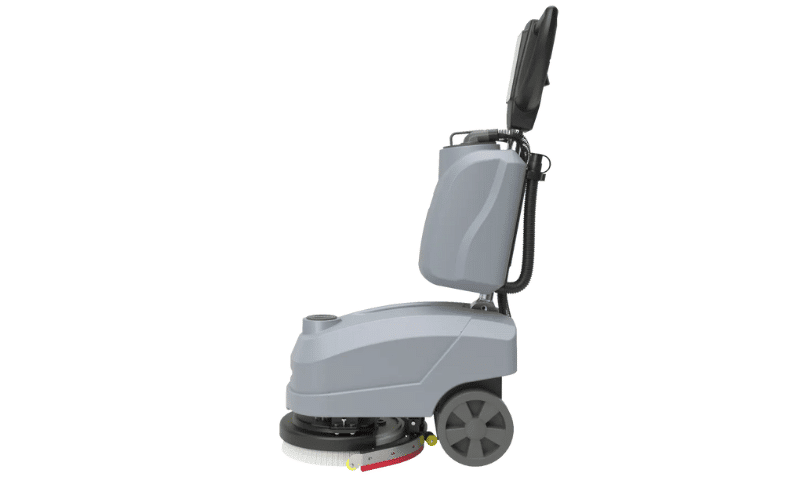

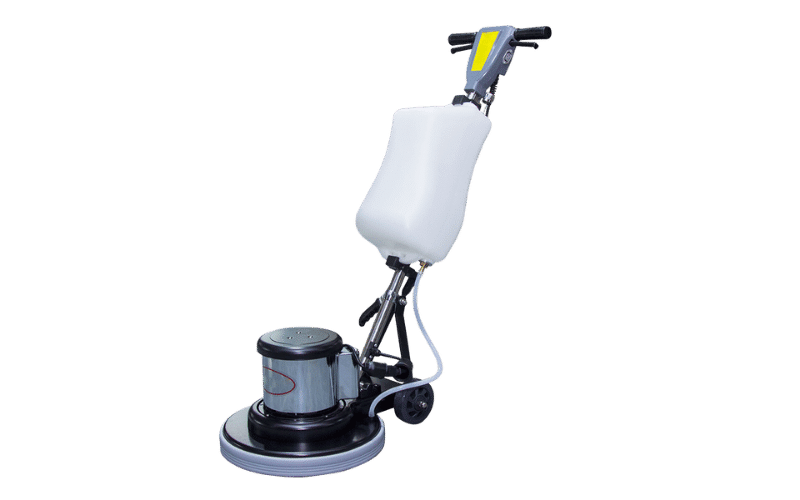
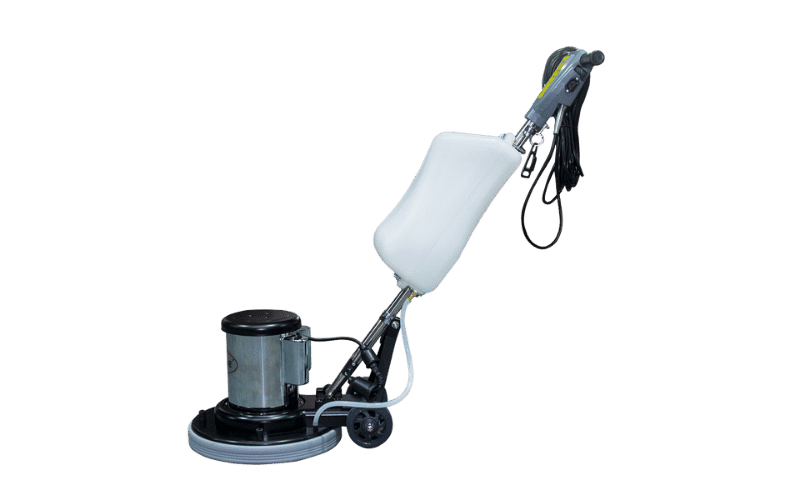
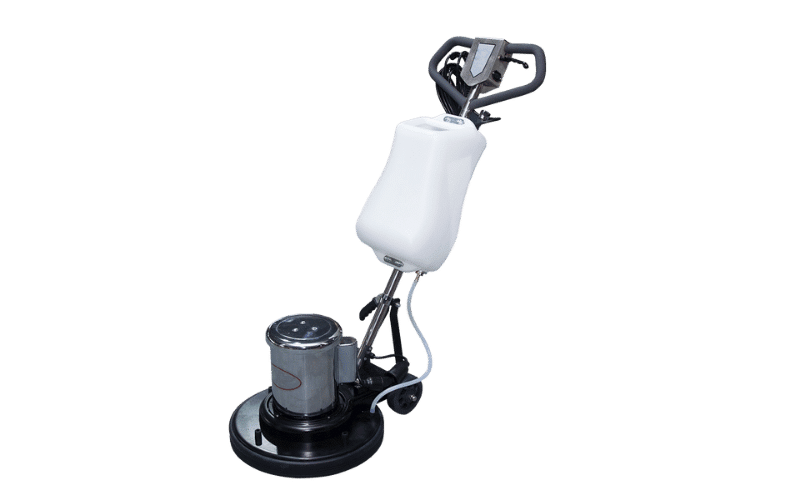



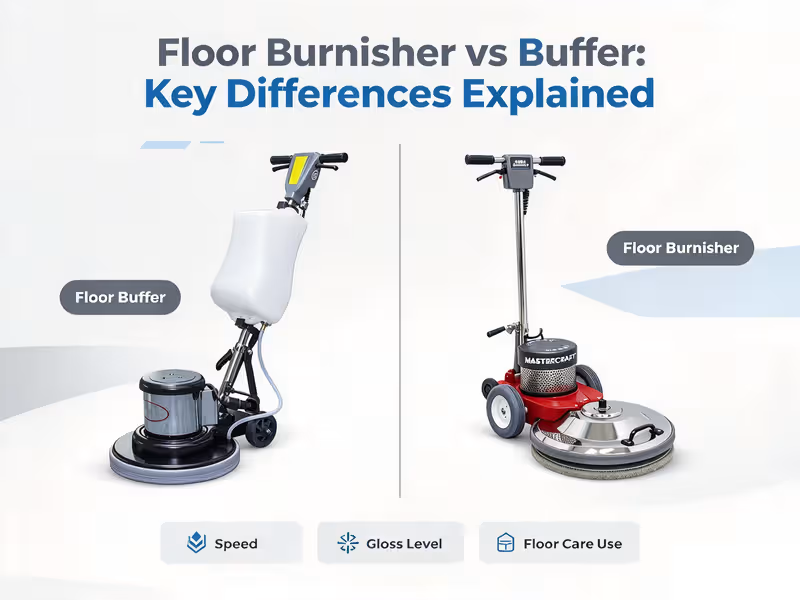
Despite looking similar on the showroom floor, a floor buffer and a floor burnisher do completely different jobs. When it comes to the floor burnisher vs buffer debate, it all comes down to speed and purpose. Buffers run at low speeds to clean, scrub, and strip. Burnishers spin much faster to bring finished floors up to a high-gloss shine.
Getting them mixed up is a costly mistake. Run a burnisher over a dirty floor and you’ll grind debris right into the finish—undoing work you already paid for. Here’s a clear breakdown of what each machine does, how they compare, when to use each, and what to watch out for.
What Is a Floor Buffer?
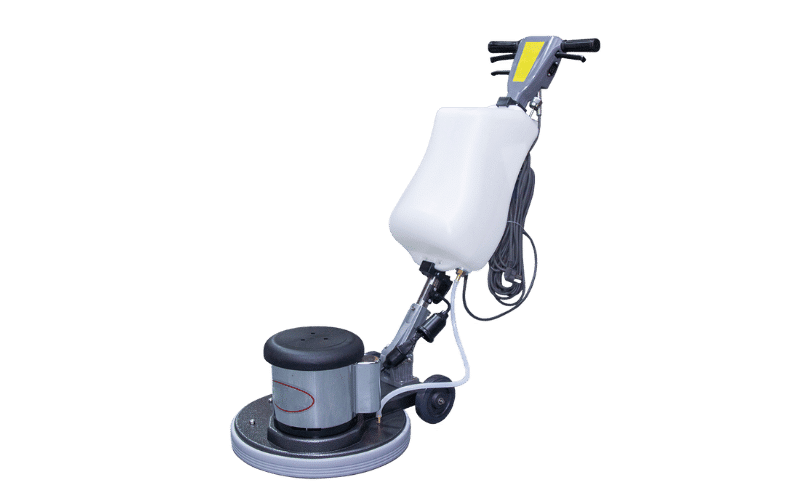
A floor buffer is a low-speed rotary machine, typically running at 175–300 RPM. You’ll also hear it called a floor machine or swing machine. Most standard models operate closer to 175 RPM, and that low speed delivers serious torque—giving the pad the grip it needs to tackle heavy-duty floor work.
Buffers handle three core tasks: scrubbing floors with a cleaning solution, stripping old finish with a chemical stripper, and spray buffing for a light shine. Pad color is your quickest guide—black or brown for stripping, green or blue for scrubbing, and red for buffing.
What Is a Floor Burnisher?
A floor burnisher operates at 1,000–3,000+ RPM—a big step up from a buffer. At those speeds, the pad generates friction heat that smooths and hardens the top layer of finish, creating a deep, glossy shine. Burnishers are available in corded electric, battery, and propane versions, with propane models being the go-to choice for large commercial spaces.
One important thing to understand: a burnisher only works on floors that already have a finish applied, whether that’s wax or a polymer coating. It runs completely dry using white, natural hair, or blended pads. It is not built for cleaning dirty floors or stripping old product—the surface needs to be clean before you ever bring a burnisher out.
Key Differences: Speed, Finish, and Floor Condition
The core difference between a floor buffer and a burnisher is speed—and speed determines everything about what the machine can do.
|
Factor |
Floor Buffer |
Floor Burnisher |
|---|---|---|
|
Speed |
Low speed, high torque |
High speed |
|
Main job |
Scrub, strip, spray buff |
Polish to a high gloss |
|
Floor condition |
Soiled, worn, or bare |
Clean and already finished |
|
Finish result |
Clean, satin appearance |
Glossy “wet look” |
|
Liquids |
Uses solution or stripper |
Runs dry |
|
Handling |
Side-to-side swing; takes practice |
Tracks forward; faster coverage |
|
Pads |
Strip, scrub, and buff pads |
Burnishing pads that wear faster |
Here’s a rule worth remembering: buffers prepare the floor; burnishers perfect the finish.
Use Cases: When to Use Each Machine
Reach for a buffer when the floor needs work before a new finish goes down. Schools commonly use them to strip hallway wax over summer break before recoating. Restaurants and warehouses rely on buffers to cut through grease and heavy grime. In smaller offices where a mirror shine isn’t a priority, spray buffing is a quick, practical option.
A burnisher is the right call when maintaining gloss is part of the routine. Grocery stores and retail chains often burnish their aisles nightly or weekly to keep that showroom look. Hospitals and airports use them to stay on top of scuffs in high-traffic corridors. On top of that, regular burnishing extends the time between full strip-and-recoat jobs—which saves money.
In a complete floor care program, the two machines work together in order. Strip or scrub with a buffer, apply fresh finish, let it fully cure, then bring in the burnisher for ongoing upkeep.
How to Choose the Right Machine
Start by looking at your floor’s current condition, then factor in three more things: facility size, foot traffic, and operator experience.
- Floor condition: Dirty, worn, or ready for stripping? Go with a buffer. Clean floor with an intact finish? A burnisher is what you need.
- Facility size: A buffer can handle routine needs in smaller spaces. For large areas, a burnisher covers ground faster—and battery or propane models are ideal for very large facilities.
- Foot traffic: High-traffic areas that need to stay polished are a natural fit for regular burnishing.
- Operator experience: Buffers require training to manage the swing motion correctly. Burnishers demand attention to speed, heat buildup, and pad wear.
If your team handles stripping, recoating, and gloss maintenance all in-house, having both machines on hand is a smart investment.
Common Mistakes When Choosing Between Them
The biggest mistake people make is running a burnisher on a floor that isn’t ready. On a dirty surface, the pad grinds particles into the finish and leaves behind scratches and swirl marks. On bare floors or freshly applied, uncured finish, it can scuff or even burn the coating. Always dust mop or scrub first—and give new finish time to cure completely before burnishing.
The other common misstep is expecting a buffer to produce high gloss. Spray buffing adds a bit of sheen, but it can’t match the wet look that a burnisher delivers. Relying on a buffer for gloss maintenance means more labor hours, more frequent recoats, and floors that consistently fall short in areas where appearance matters.
Conclusion: Matching the Machine to the Job
The floor burnisher vs buffer decision doesn’t have to be complicated. Buffers clean and strip; burnishers polish and shine. Start with your floor’s condition, and the right choice usually becomes obvious.
Need help narrowing it down? Browse leadvclean’s lineup of floor buffers and burnishers, or reach out to our team—we’re happy to help you match the right machine to your floors.