







If you manage floors across a large facility, you already know the job has quietly changed shape. The machines are smarter, the chemicals are milder, and the people you hire to run everything stay for less time than they used to. What worked five years ago—buy a scrubber, train a crew over a week, refill the same detergent drum every month—no longer holds up against the pressure most operations are under today.
This piece walks through what’s actually driving those changes, which trends deserve budget and which are mostly marketing, and how the smart choices differ depending on whether you run a warehouse, a hospital, or a retail floor. I’ve kept the floor-cleaner recommendations tight and practical, because the products matter less than knowing how to match them to your surfaces and your traffic.
Why Floor Cleaning Is Changing in 2026
Three pressures are reshaping cleaning industry trends in 2026, and they reinforce each other in ways that make the old approach expensive to keep.
The first is labor. Custodial turnover remains brutal—many facilities cycle through their entire cleaning staff more than once a year. When you can’t count on keeping people, you can’t count on institutional knowledge either. That single fact pushes managers toward equipment anyone can run and processes that don’t fall apart when the experienced person quits. It’s the quiet reason behind half the technology adoption I see.
The second is cost, and not just the headline price of a machine. Water, chemicals, energy, downtime, and repair labor all stack up, and finance teams now want those numbers itemized. “It cleans well” doesn’t win budget approval anymore. “It cuts water use by 60 percent per shift and eliminated two emergency repairs last quarter” does.
The third is proof of hygiene. Clients in food handling, healthcare, and logistics increasingly want documentation, not assurances. A clean-looking floor isn’t enough when a contract requires a timestamped record of every pass. This shift shows up throughout janitorial industry news 2026: large clients are writing verification requirements directly into their service agreements, and contractors who can’t produce the data lose the bid.
Put those together and the direction is obvious. Facilities are moving toward equipment that needs fewer people, proves its own efficiency, and generates a record while it works.
The Floor Cleaning Trends That Actually Matter in 2026
Plenty of trends get airtime. These are the ones worth your attention, along with the honest trade-offs each one carries.
Autonomous Scrubbers Working as Cobots
The fear that robots would replace cleaning crews turned out to be wrong. What’s actually happening is more useful: autonomous scrubbers handle the long, dull runs—warehouse aisles, big-box retail floors, airport concourses—while your people handle edges, restrooms, and everything a machine can’t reason about.
The real operational win isn’t headcount reduction. It’s coverage consistency. A robot scrubs the same route the same way at 2 a.m. whether or not your best operator called in sick. For facilities fighting turnover, that predictability is worth more than the labor savings on paper.
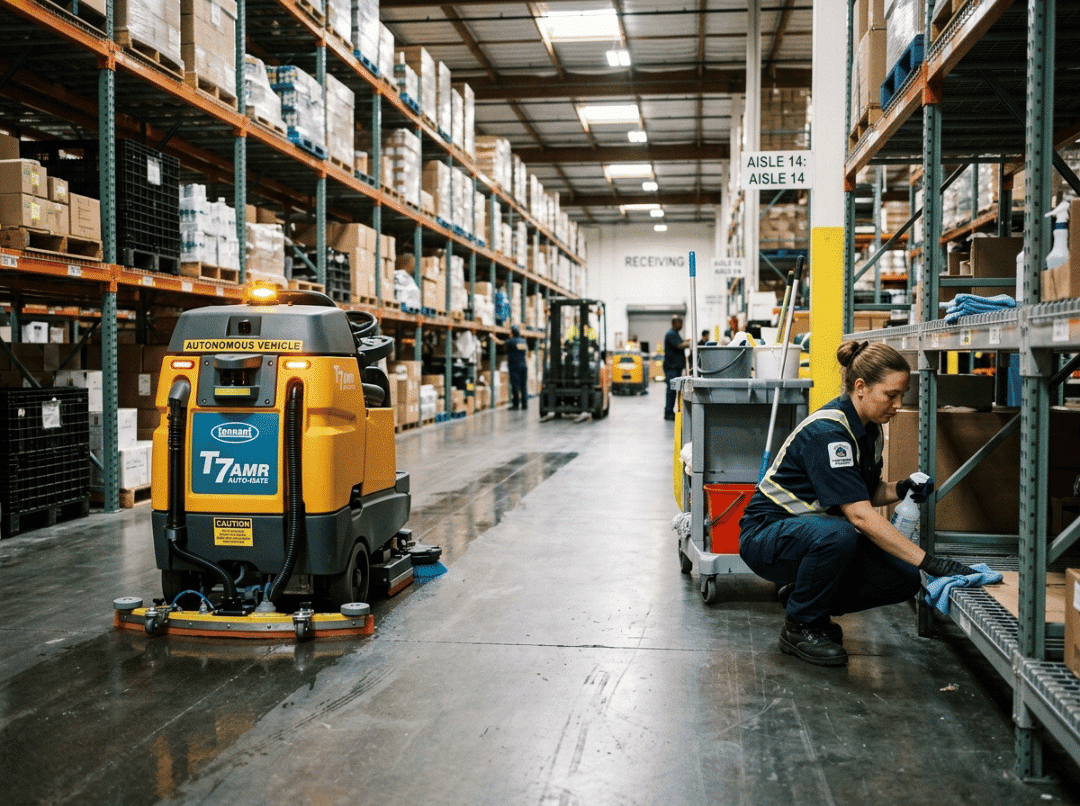
The trade-off is honest and worth stating: these machines need clear, reasonably predictable floor space to earn their keep. A cluttered facility with constantly shifting pallets and tight corners will frustrate an autonomous unit and your team. Before you buy, walk the actual routes. If more than a third of your square footage is congested or irregular, the payback stretches out fast.
Lithium Power Becoming the Default
Lead-acid batteries are on their way out, and for multi-shift operations the case is close to settled. Lithium charges fast enough to top off during a break, needs no watering or acid checks, and lasts noticeably longer. For a facility running two or three shifts, the downtime you avoid usually justifies the higher sticker price within the first couple of years.
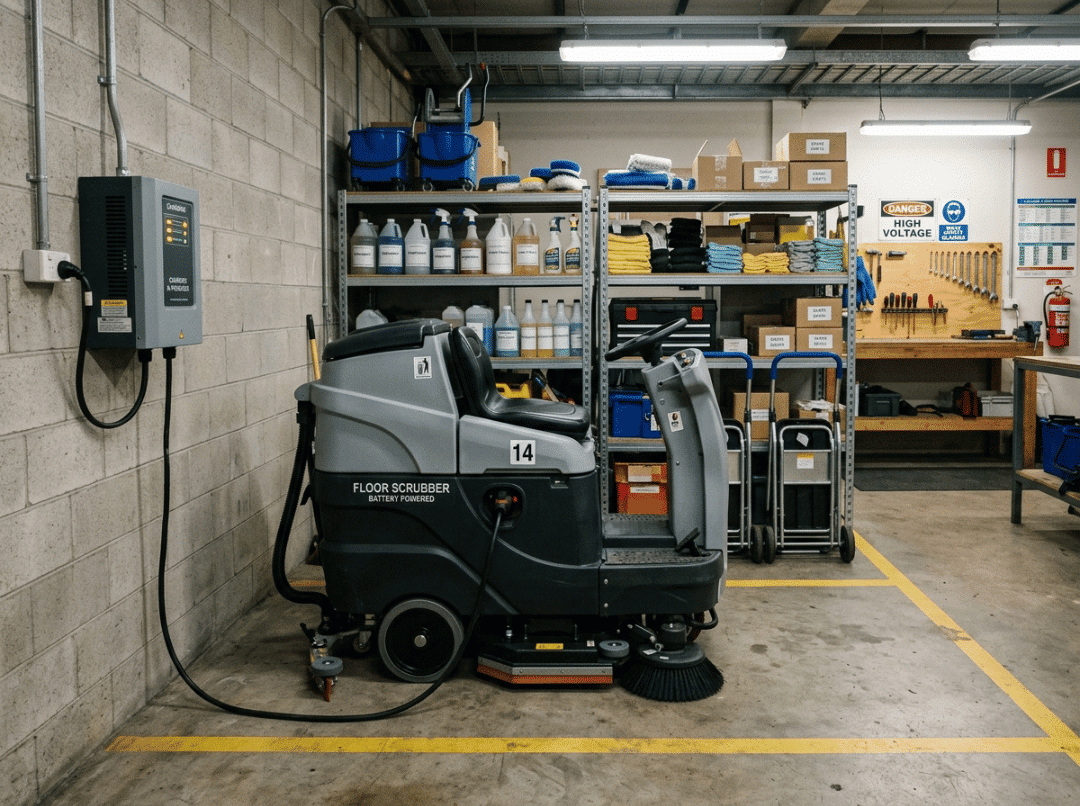
Where the math gets murkier is single-shift operations with light use. If a machine runs a few hours a day and sits charging the rest, a well-maintained lead-acid battery may still make sense on pure cost. Don’t let a sales rep talk you into lithium as an automatic upgrade—run it against your actual runtime.
Predictive Maintenance Built Into the Machine
Newer scrubbers watch their own vitals. Sensors track motor strain, brush wear, and water-system health, then flag a problem before it becomes a breakdown mid-shift. Done right, this moves you from reactive repairs—which always seem to happen the night before an inspection—to scheduled service you control.
The value here scales with how much a breakdown actually costs you. A hospital or a food plant that can’t afford an unscrubbed floor gets enormous benefit. A low-stakes warehouse might see the alerts as noise. Match the feature to your risk, not to the brochure.
Water Recovery and Recycling
Advanced scrubbers now filter and reuse their solution during a run. The better systems cut water use dramatically—some by well over half—which means fewer tank refills, less trips to the drain, and lower utility bills. In regions with water restrictions or high sewer surcharges, this alone can shift the buying decision.
The catch is maintenance. Recovery systems have filters and components that need attention, and if your crew skips that upkeep, performance drops and odors creep in. This is a great feature for a facility with a disciplined maintenance routine and a frustrating one for a facility without.
Low-Residue and Chemical-Free Cleaning
More facilities are moving away from heavy detergents, either toward engineered water systems that charge tap water into a cleaning agent or toward low-residue neutral formulas. The appeal is real: no sticky film that re-attracts dirt, safer conditions for operators, less chemical storage, and easier compliance with sustainability requirements that corporate clients now build into contracts.
Be realistic about the limits. Chemical-free systems handle routine soil and light grease well. For heavy grease in a commercial kitchen or serious industrial grime, you’ll still need a dedicated degreaser. Treat chemical-free as your daily default, not a universal answer.
Simplified, Touchscreen Controls
This one gets dismissed as cosmetic, and that’s a mistake. When your average new hire lasts a few months, a machine that takes minutes to learn instead of hours changes your whole training economics. Fewer operator errors mean less equipment damage and fewer ruined floors. In a high-turnover trade, an interface a new person understands on day one is a genuine competitive edge, not a nice-to-have.
What These Trends Mean for Your Type of Facility
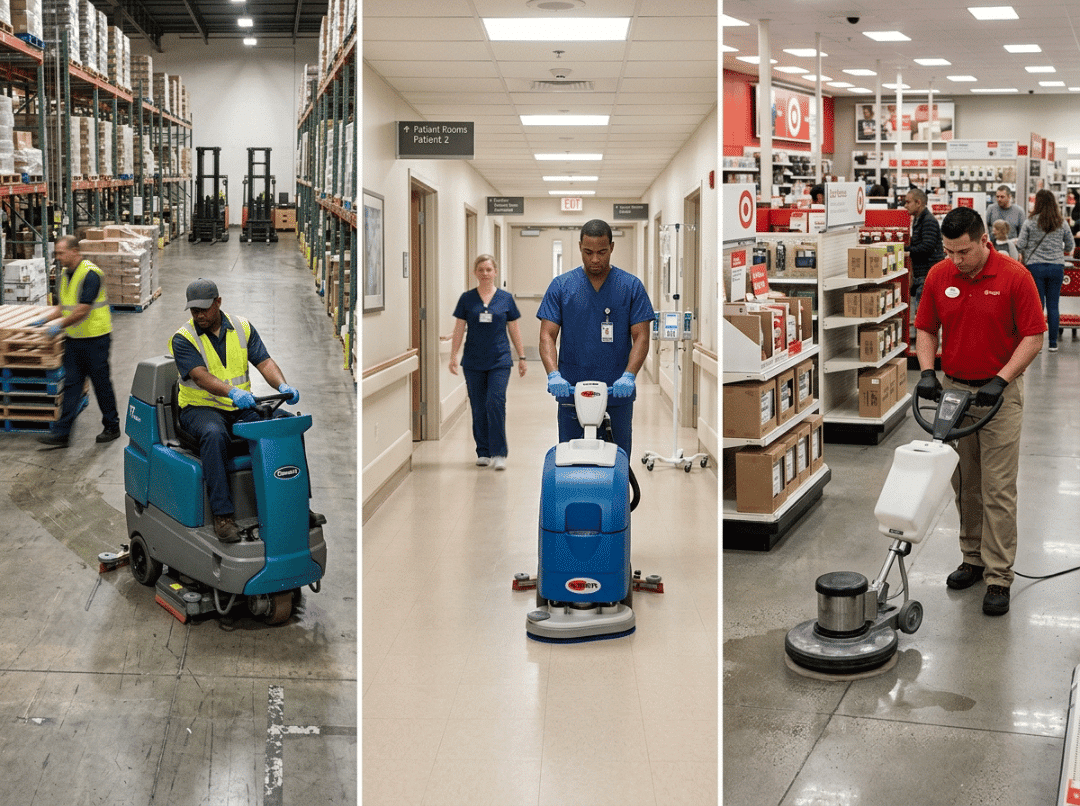
The same trend pays off differently depending on what you run. This is where generic advice falls apart.
- Warehouses and distribution centers. Autonomous scrubbers and lithium power are the obvious wins here—long straight runs and multi-shift schedules are exactly what these machines are built for. Your main obstacle is layout. If your racking and staging shift constantly, invest in route mapping before you invest in robots.
- Healthcare facilities. Documentation and hygiene verification matter more than raw efficiency. The predictive-maintenance and cleaning-record features that feel optional elsewhere are close to mandatory here. You’re cleaning to a standard someone will audit, so pick equipment that produces the proof.
- Schools and universities. Tight budgets and thin custodial staff make simplified controls and low-maintenance equipment the priority. A machine a substitute worker can run without a full training cycle is worth more than a marginally faster one nobody can operate.
- Retail and mixed-use buildings. Appearance drives everything, because a dull or streaky floor shapes how customers judge the whole space. Low-residue cleaning and finish protection matter most, and quiet, low-emission equipment lets you clean during business hours without disrupting shoppers.
Choosing the Right Cleaner by Floor Type
Product choice is simpler than most vendors make it sound. The principle underneath nearly every surface is the same: neutral pH, low residue, and a method matched to the floor. Here’s the practical version by surface.
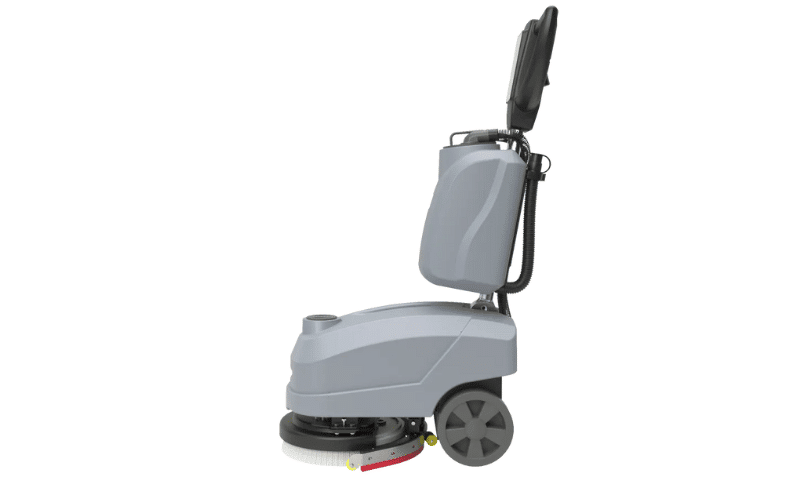
- Ceramic and porcelain. The tile itself is tough; the grout is the weak point. For the best cleaner for ceramic and porcelain floors 2026, use a pH-neutral formula made for tile and stone. Avoid acids like vinegar and citrus, which erode grout, and skip repeated bleach, which discolors it. Machine-clean when you’re covering large areas with textured porcelain—an auto-scrubber with soft brushes pulls grime out of the texture far better than a mop. For daily upkeep, a light neutral solution is plenty.
- Mixed tile floors. When you’re managing several tile types at once, a versatile concentrate saves time and storage. The best multipurpose cleaner for tile floors 2026 is a neutral-pH product safe across ceramic, porcelain, and coated surfaces, dilutable so you can run it light for daily mopping and stronger for periodic deep cleans. Steer clear of strong acids, heavy alkalines, and ammonia on anything coated or waxed. Machine-clean high-traffic zones; mop the rest.
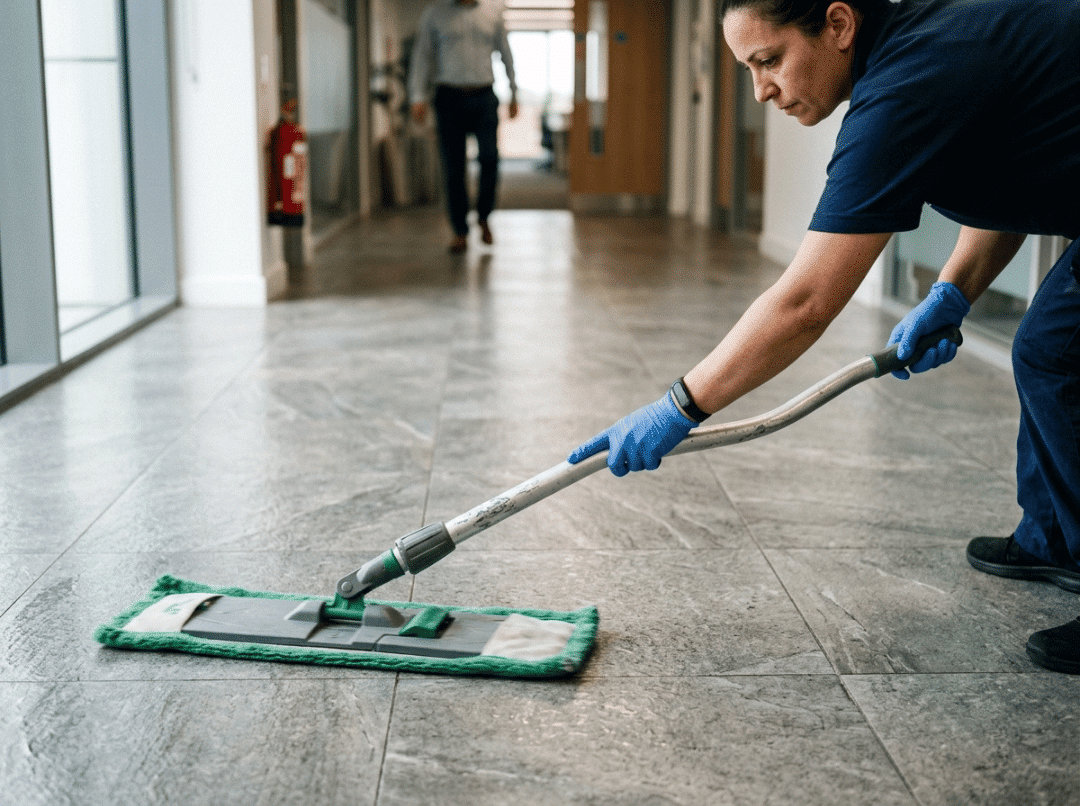
- Hardwood. Water and harsh chemistry are the enemies. The best hardwood floor cleaners 2026 are neutral, quick-drying, and made specifically for sealed wood. Skip vinegar, oil soaps, wax, and anything involving steam or standing water—they dull the finish or warp the boards. Dust-mop daily to clear grit before it scratches, and clean with a lightly damp microfiber flat mop, working in sections. Heavy machines rarely belong on wood; reserve them for the rare large commercial wood floor and even then keep moisture minimal.
How to Evaluate Floor Cleaning Equipment in 2026
Once you know your surfaces and your traffic, equipment selection comes down to matching the machine to real conditions rather than chasing spec sheets. A few questions cut through most of the noise.
Start with runtime and layout. How many hours a day will this run, and how much of your space is genuinely open? Those two answers decide whether autonomous units and lithium power pay off or just add cost. Then weigh what a breakdown costs you—that tells you how much predictive maintenance and service support is worth. Finally, factor water: if you’re paying steep utility or sewer rates, recovery systems move up the list quickly.
Outdoor spaces deserve their own look, and they’re often an afterthought until a client complains about the entryway. Courtyard cleaning equipment trends 2026 mirror what’s happening indoors—battery-powered sweepers and pressure systems are replacing gas units to cut noise and emissions, which matters when you’re cleaning a plaza during business hours or in a noise-restricted zone. Ride-on and compact sweepers now handle large hardscapes without heavy labor, and outdoor pressure-washing rigs increasingly capture and filter runoff to meet stormwater rules. If you maintain courtyards, entry walkways, or parking areas, look for equipment that transitions across paver, concrete, and entry-mat surfaces so you aren’t buying a separate machine for every zone.
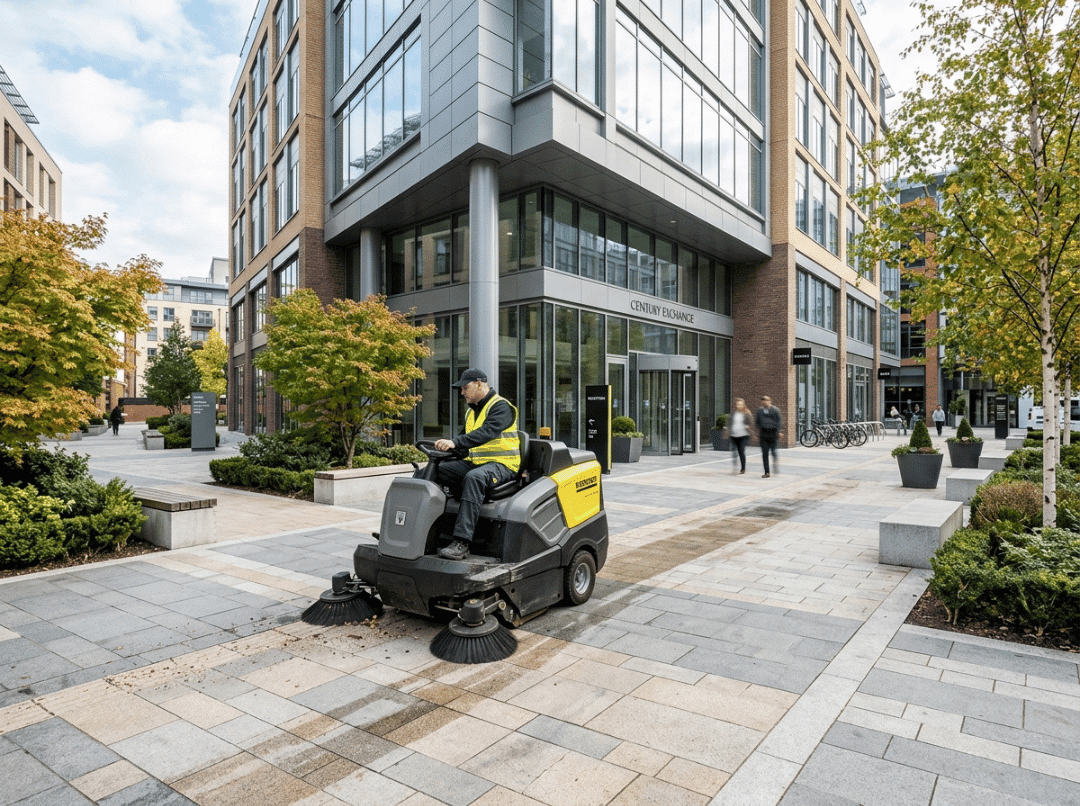
The through-line, indoors and out, is the same: cleaner power sources, less water waste, and machines that prove their efficiency instead of asking you to take it on faith.
Frequently Asked Questions
Are autonomous scrubbers actually replacing cleaning staff?
No. In practice they take over long repetitive routes so your crew can focus on detail work and problem areas. The bigger benefit is consistent coverage despite turnover, not headcount cuts. They only pay off in facilities with enough open, predictable floor space to run efficiently.
Is lithium worth it for every facility?
Not automatically. For multi-shift operations the reduced downtime and zero maintenance usually justify the higher cost within a couple of years. For light single-shift use, a well-maintained lead-acid battery can still be the cheaper choice. Run it against your actual runtime before deciding.
What should I use on ceramic and porcelain floors?
A pH-neutral cleaner made for tile and stone. Avoid acidic products and repeated bleach, both of which damage grout over time. For large textured-porcelain areas, pair a neutral cleaner with an auto-scrubber and soft brushes rather than relying on a mop.
Can one cleaner cover all my tile types?
Often, yes. A neutral-pH concentrate that’s safe across ceramic, porcelain, and coated tile handles most mixed-floor facilities. Dilute it light for daily mopping and stronger for deep cleans, and keep acids and ammonia away from coated or waxed surfaces.
How do I clean commercial hardwood without wrecking it?
Dust-mop daily, then clean with a neutral wood-specific formula on a lightly damp microfiber mop. Never flood the floor or use steam, vinegar, or wax. Work in sections and let each dry as you go.
Do chemical-free systems really work?
For routine soil and light grease, they work well and cut chemical costs and residue. For heavy kitchen grease or serious industrial grime, you’ll still need a dedicated degreaser. Use chemical-free as your daily default, not a catch-all.
Where to Go From Here
Floor care in 2026 rewards facilities that match the right technology to real conditions rather than buying the newest thing on the market. Automation eases turnover pressure, lithium and predictive maintenance protect uptime, water recovery and low-residue chemistry cut cost while raising hygiene standards—but every one of those choices depends on your layout, your traffic, and what a lapse actually costs you.
If you’d like help sorting which of these trends fit your facility—and which are worth skipping—the team at LeadV Clean can match equipment and cleaning solutions to your specific surfaces, schedule, and budget. Reach out for a walkthrough of your operation and a straightforward recommendation.