







A washing machine hose lets go overnight. By morning, the laundry room floor is a shallow pond, and the water has crept under the baseboards into the hallway carpet. You mop up what you can, prop open a window, and aim a box fan at the mess. Two days later, the carpet still feels damp underfoot — and now there’s a faint musty smell that wasn’t there before.
That gap, between “I dried it” and “it’s actually dry,” is exactly where air movers earn their keep.
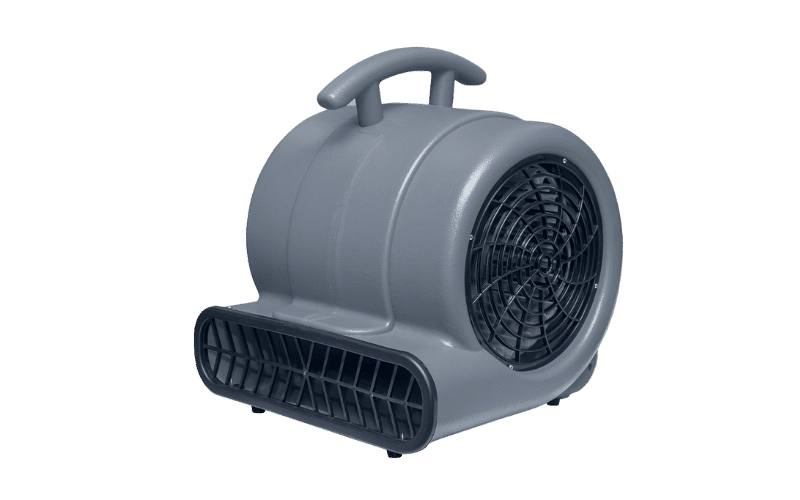
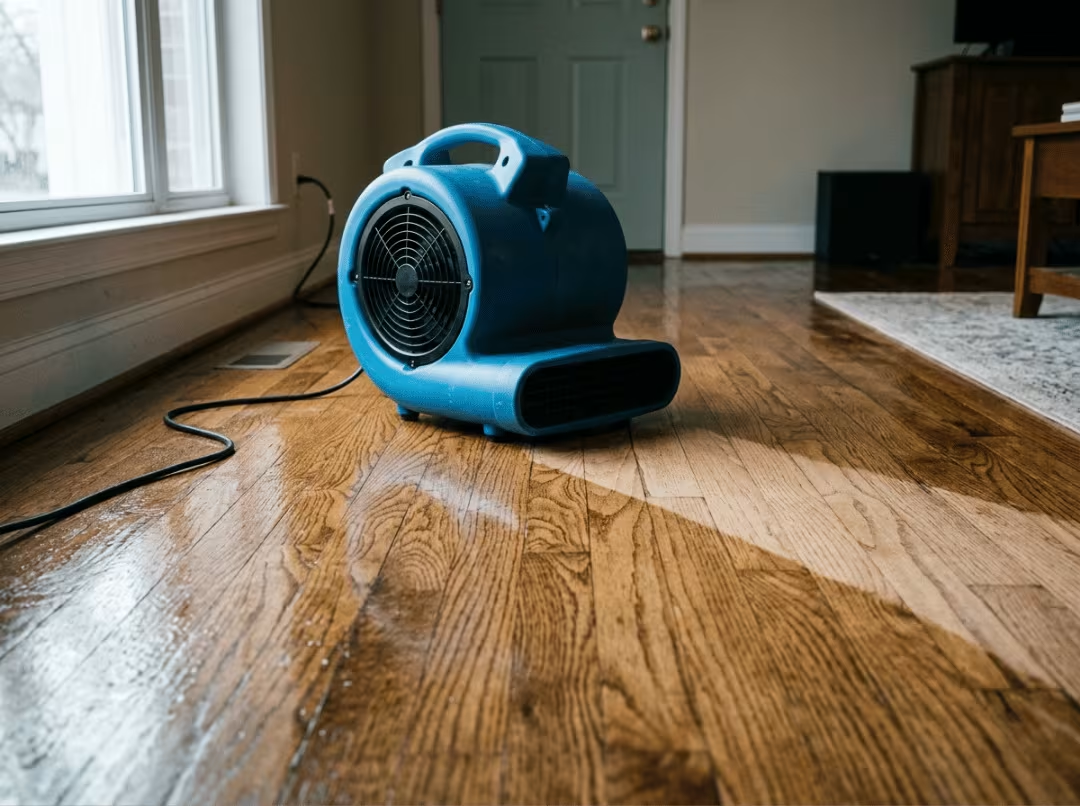
An air mover is a portable, high-volume blower designed to push large volumes of air across wet surfaces to help them evaporate quickly. People also call them carpet dryers or blowers, and once you’ve watched one dry a floor in hours instead of days, the name barely matters. Below are four reasons we’re fans, walking through what they actually do, how to run them well, and how to decide whether to rent or own one.
Reason 1: It cuts the hours that mold and odor need
Speed isn’t the point. The point is what fast drying prevents.
Every damp hour after a leak is an hour mold, mildew, and that musty smell have to take hold. Spores need moisture and time — and time is the part you can actually control. An air mover strips the saturated layer of air off wet surfaces and replaces it with dry air, again and again, so evaporation never stalls.
The result is a shorter danger window. A carpet flood that takes three or four days to dry with box fans often dries in under 24 hours with two well-placed air movers. That gap isn’t just convenience — it’s the line between a floor you save and a floor that starts to rot from underneath.
Reason 2: It dries the spots people usually miss
“Looks dry” is where most drying jobs fail.
The surface feels dry to the touch, so people pack up — while the water that matters is still hiding. It sits under carpet padding, in grout lines, behind baseboards, and along the toe-kicks where a mop and an open window never reach. Those trapped pockets are exactly where odor and warping start.
An air mover pushes a directed stream along the surface, not down onto it, so airflow reaches the edges and seams that passive ventilation ignores. Rotate the direction every few hours, and you keep reaching new dead zones. You’re not just drying the room — you’re drying the parts the room won’t show you.
Reason 3: It works with dehumidifiers, not instead of them
An air mover doesn’t remove a single drop of water from your building. That’s not a flaw — it’s the job.
Its role is to lift moisture off surfaces and into the air fast. The dehumidifier’s role is to remove moisture from the air and drain it away. Run the air mover alone, and you just relocate the water — it evaporates off the floor and settles on the next cold wall across the room.
Together they form a drying system: the air mover moves it, the dehumidifier removes it. Any tool that promises to do both at once is overselling. Understanding that split is what separates a real recovery from a cleanup that quietly fails a week later.
Reason 4: It’s cheaper than one bad drying decision
The real cost of water damage isn’t the water. It’s the waiting.
Rent an air mover for a single flood, and you’ll pay a daily rate — plus a pickup and return on the worst possible day. Stack up a few of those rentals and you’ve already spent enough to own a mid-range unit outright. But the money math misses the sharper point: what you’re really buying is reaction time.
When a pipe lets go at 2 a.m., the machine in your closet beats the one you have to go rent tomorrow. Owning one isn’t about airflow specs or long-term ROI. It’s about being able to act in the first few hours — before “I dried it” turns into a mold claim you didn’t see coming.
How to Choose the Right Air Mover for Your Situation
Three questions get you to the right unit:
- What are you drying? Big open floors call for higher CFM. Small rooms and spot jobs don’t need a pro-grade machine.
- How often? Occasional home use points to a solid mid-range unit. Regular or professional use justifies a rugged, higher-capacity model built for constant running.
- What’s your outlet situation? Check your circuit before you plan on running several units at once, and note whether you’ll need long cords or the ability to daisy-chain.
Your next step is concrete: measure the room you’re most likely to dry, check what your breaker can handle, and pick a unit whose CFM and cord length fit both. Match the machine to your actual space instead of buying on impulse.
Frequently Asked Questions
How many air movers do I need to dry a standard bedroom?
For an average bedroom, one to two units usually do it. The key is placement — position them to sweep air across the whole floor and rotate direction every few hours rather than leaving them pointed at one spot.
Can air movers damage hardwood floors?
Used correctly, no — they help by drying quickly before water can warp the boards. For a serious hardwood flood, pair air movers with a dehumidifier and monitor with a moisture meter, since drying too aggressively without controlling humidity can cause problems of its own.
Is it safe to run an air mover overnight?
Yes, they’re designed for continuous running. The bigger issue is noise in an occupied home. On a vacant job site, let them run; in a lived-in space, day use is usually more comfortable.
What CFM rating is enough for home use?
For most household jobs, an 800–2,000 CFM unit handles bathrooms, bedrooms, and soaked rugs well. Step up toward 2,500+ CFM if you’re regularly drying large open areas.
Do air movers actually remove moisture, or just move air around?
They speed evaporation by sweeping saturated air off wet surfaces, but they don’t remove moisture from the room. That’s the dehumidifier’s job — which is why the two work best together.
How long should I leave air movers running after a leak?
Until the surface reads dry on a moisture meter, not until it feels dry to the touch. A minor spill might take a few hours; a real flood can run a day or more with air movers and a dehumidifier working together.
The Bottom Line
Air movers earn their space for four reasons: they dry surfaces dramatically faster than fans, they handle a wide range of jobs from floods to renovations, they’re built to survive rough real-world use, and they pay for themselves after just a few uses. Behind all four is one payoff that matters most — drying fast enough to stop mold before it starts.
If you’re on the fence, start with one solid mid-range unit and learn to place it on a small job, like a mopped floor or a damp bathroom, before you need it in an emergency. Then compare your local rental rate against the cost of owning that unit. For most people who deal with water more than once, the math tips toward owning — and the first time you dry a flooded room overnight, you’ll be glad it’s already in the closet.