







A clean floor is one of the first things people notice when they walk into a building. It signals whether a space is cared for or neglected. But the machine that keeps that floor clean depends on three things: the surface, the type of mess, and the job you actually need done. Buy the wrong machine, and you’ll waste money, labor hours, and floor life. Match the right machine to the task, and cleaning gets faster, cheaper, and far more consistent.
I’ve spent years helping facilities pick and run floor equipment, and the same confusion keeps coming up. People lump every machine into one mental bucket called “floor cleaner,” then wonder why a vacuum won’t lift baked-on grease or why a burnisher scratches a dirty floor. Each machine has a specific job. This guide breaks down the five main categories, what each one does well, where each one falls short, and how to choose the right combination for your space.
What Separates One Floor Machine From Another
Before we get into individual machines, it helps to sort them by cleaning action. That single idea explains almost everything about which tool fits which job.
- Vacuums use suction and filters to pull loose dust and debris off the floor.
- Sweepers use rotating brooms to push dry debris into a hopper, covering large areas fast.
- Scrubbers apply water and cleaning solution, scrub the floor, then vacuum the dirty water back up.
- Steam cleaners use heat and pressurized vapor to loosen grime and sanitize hard surfaces without chemicals.
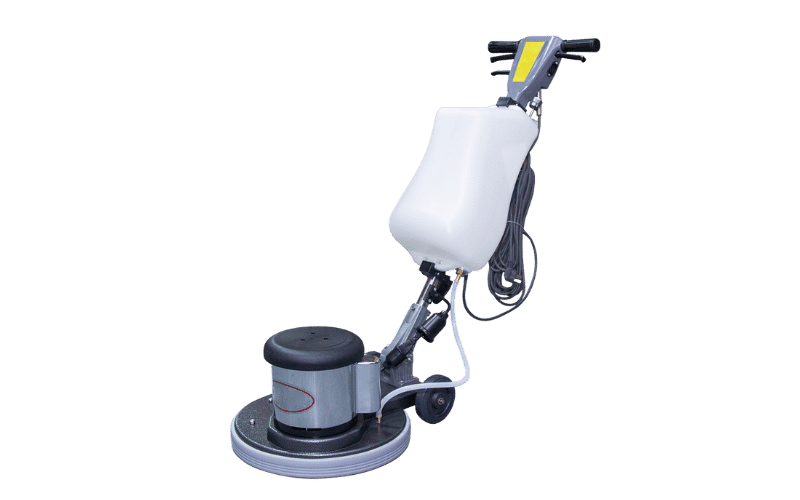
- Burnishers and buffers spin a pad against the floor to polish and restore the finish, not to clean off dirt.
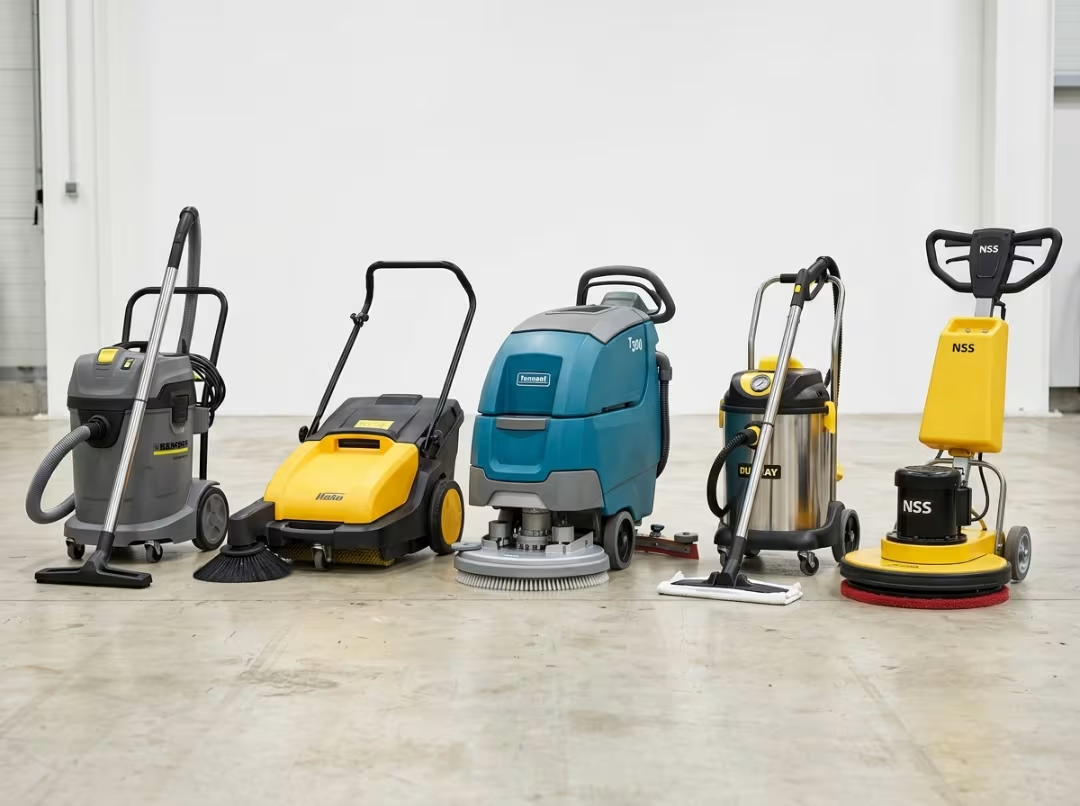
No single machine does everything. The faster you can name the problem you’re solving, whether that’s dust, standing grime, sanitizing, or shine, the faster the right machine becomes obvious. Most facilities end up using two or three of these together in a routine, not just one.
1. Vacuum Cleaners: Loose Dust and Dry Debris
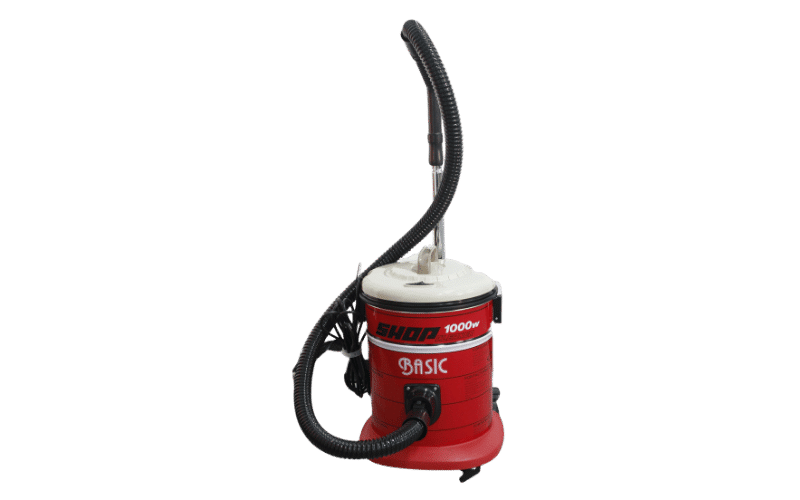
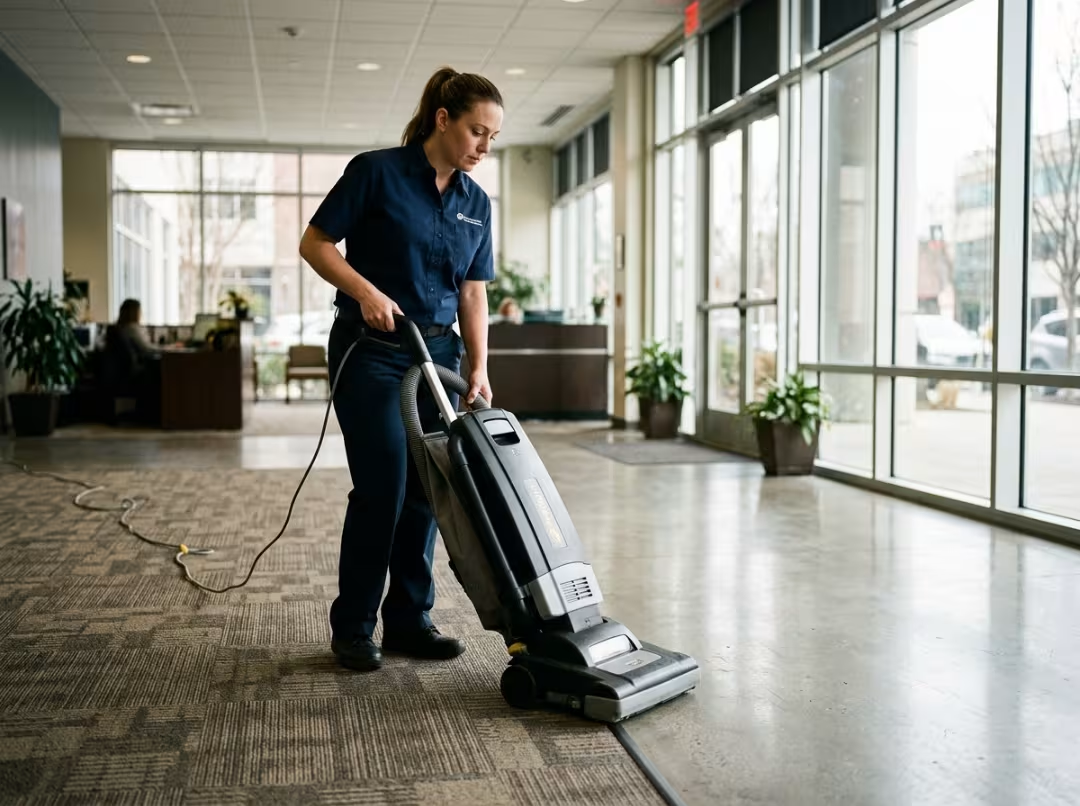
Vacuum cleaners are the most familiar machine on this list, and for good reason. They handle the first layer of any cleaning routine: loose dirt, dust, crumbs, and fine particles. A suction motor pulls air through a nozzle, traps debris in a bag or canister, and pushes clean air back out through a filter.
Commercial vacuum cleaners come in a few forms, and each fits a different job:
- Upright vacuums work best on carpet and rugs in offices, hotels, and lobbies.
- Canister vacuums clean bare floors and tight spots under furniture with a flexible wand.
- Backpack vacuums allow one operator to move quickly across large hard-floor areas, stairs, and edges.
- Wet/dry shop vacuums pick up both debris and liquid spills, making them well-suited for workshops and construction sites.
Where Vacuums Fall Short
A vacuum only picks up what’s loose. It won’t touch sticky spills, dried grease, scuff marks, or hard water stains. On a warehouse or kitchen floor, a vacuum is a prep step, not the finish. You run it first to clear debris so your wet machine doesn’t just smear dirt around. Think of vacuuming as clearing the table before you wash it.
2. Floor Sweepers: Speed and Coverage on Big Areas
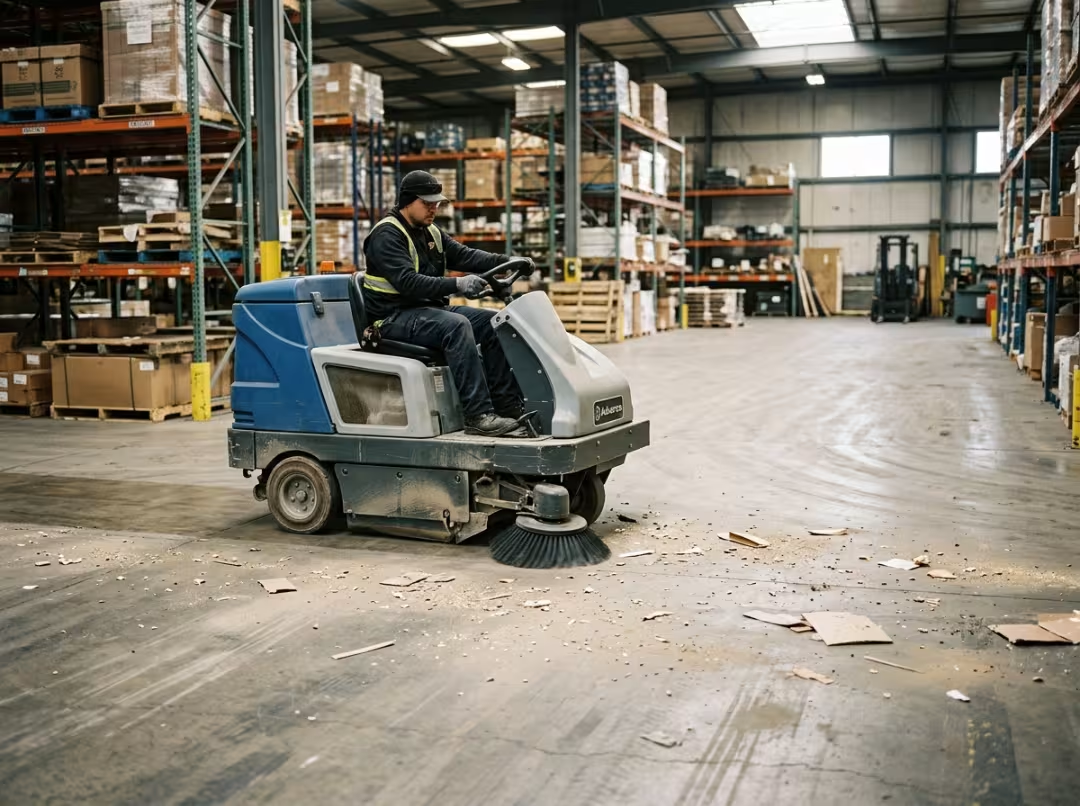
When you need to quickly clear dry debris from a large space, a sweeper beats a vacuum every time. A rotating main broom flicks dirt, litter, sand, and dust into a hopper, while a filter traps the fine dust the broom kicks up. Because sweepers rely on mechanical brushing instead of pure suction, they cover far more ground per hour.
Sweepers scale to the space:
- Walk-behind sweepers are well-suited to smaller retail floors, auto shops, and sidewalks.
- Ride-on sweepers clear parking lots, warehouses, and large industrial floors where an operator would otherwise walk miles.
Battery-powered models run quietly enough for daytime use in occupied buildings, which matters in retail and public spaces.
Where Sweepers Fall Short
A sweeper handles dry mess only. It won’t wash the floor, remove stains, or sanitize anything. Its whole purpose is speed on debris, so pairing it with a scrubber makes sense: sweep first to clear the bulk, then scrub to wash what’s left. Running a scrubber over an unswept floor clogged with debris just fouls the water and dulls the brushes faster.
3. Floor Scrubbers: The Real Deep Clean
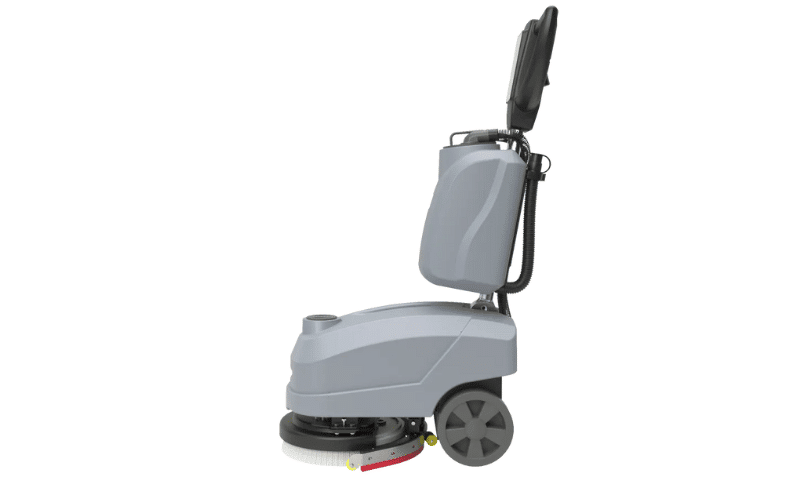
Floor scrubbers are what most people picture when they hear “floor cleaning machine,” and they do the heavy lifting. A scrubber lays down water and cleaning solution, works it into the floor with rotating brushes or pads, then a squeegee and vacuum lift the dirty water back up in one pass. The floor comes out clean and nearly dry, which keeps the space safe to walk on right away.
Scrubbers are the right tool for oily residue, food spills, chewing gum, scuff marks, and ground-in grime that a vacuum or sweeper can’t touch. They shine in supermarkets, warehouses, hospitals, schools, and manufacturing plants where floors take a daily beating.
Two main formats cover most needs:
- Walk-behind floor scrubbers are ideal for offices, retail aisles, corridors, and medium-sized spaces where you need control around obstacles.
- Ride-on floor scrubbers cover large, open floors quickly, so they pay off in big-box stores, distribution centers, and airports where time and square footage are the real costs.
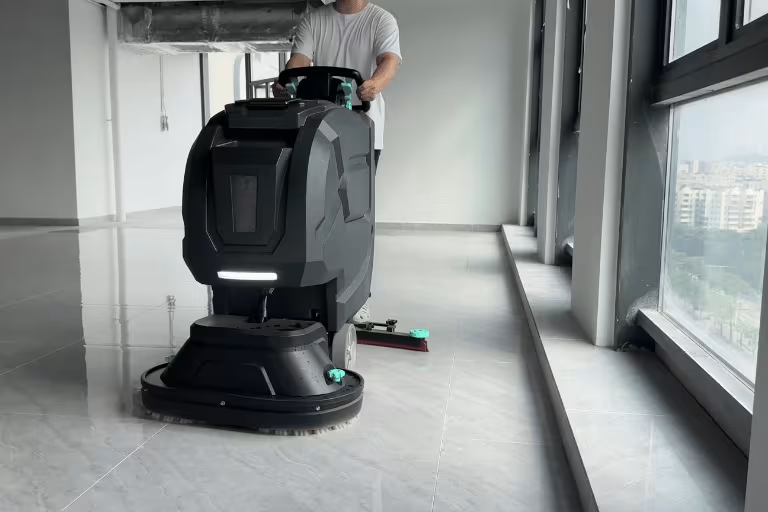
A skilled operator on a walk-behind can clean roughly 10,000 to 20,000 square feet per hour, depending on deck width, and a ride-on pushes that number even higher. That productivity is exactly why facilities invest in them.
Where Scrubbers Fall Short
Scrubbers need a swept or vacuumed floor to work well, since loose debris clogs the recovery system. They also produce dirty water you have to dump and refill, which takes time and uses a drain. In very small or cluttered spaces, a mop can be more practical than hauling out a machine.
4. Steam Cleaners: Sanitizing Without Chemicals
Steam cleaners take a different approach. They heat water past the boiling point and release it as pressurized vapor. That hot steam loosens grease, dissolves soap film, and kills bacteria on contact, all without detergent. A cloth pad or squeegee head then wipes away the loosened grime.
Steam earns its place in specific jobs:
- Kitchens with cooked-on grease and food film that resist ordinary cleaning.
- Restrooms and clinical spaces where you want sanitation without chemical residue on surfaces.
- Tile and grout where steam slips into porous grout lines and lifts out trapped dirt.
- Sealed stone and hard floors that need periodic deep sanitizing.
Where Steam Cleaners Fall Short
Steam is slow and detail-focused, so it can’t cover large areas the way a scrubber or sweeper does. It adds moisture rather than removing debris, meaning it won’t clear a floor of dust or dry mess on its own. Hard water also causes mineral scale to build up inside the machine unless you use filtered or distilled water. Reach for steam when sanitizing matters more than speed.
5. Floor Buffers and Burnishers: The Finishing Shine
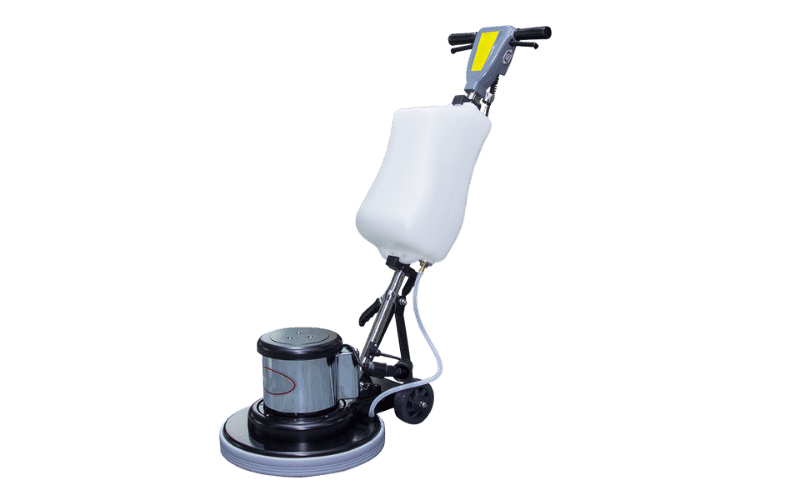
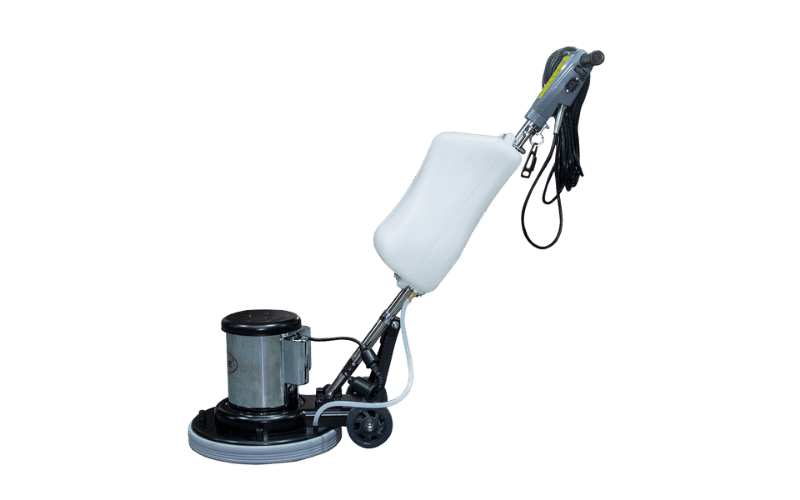
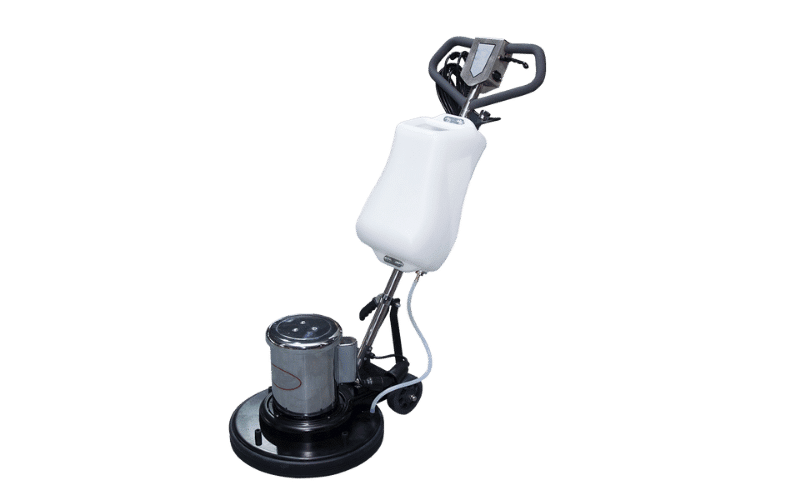
Buffers and burnishers work on the floor’s finish, not the dirt. A weighted pad spins against the surface, and depending on speed, it either scrubs and buffs at lower RPM or polishes to a high gloss at higher RPM. Burnishers run fastest, often 1,000 to 3,000 RPM, and produce that mirror shine you see in polished retail aisles and showroom floors.
These machines matter for appearance and finish protection:
- They smooth out hairline scratches and restore gloss to vinyl, VCT, terrazzo, marble, and sealed concrete.
- They harden and even out a fresh floor finish after it’s applied.
- They keep high-traffic sales floors looking sharp, which directly shapes how customers judge a space.
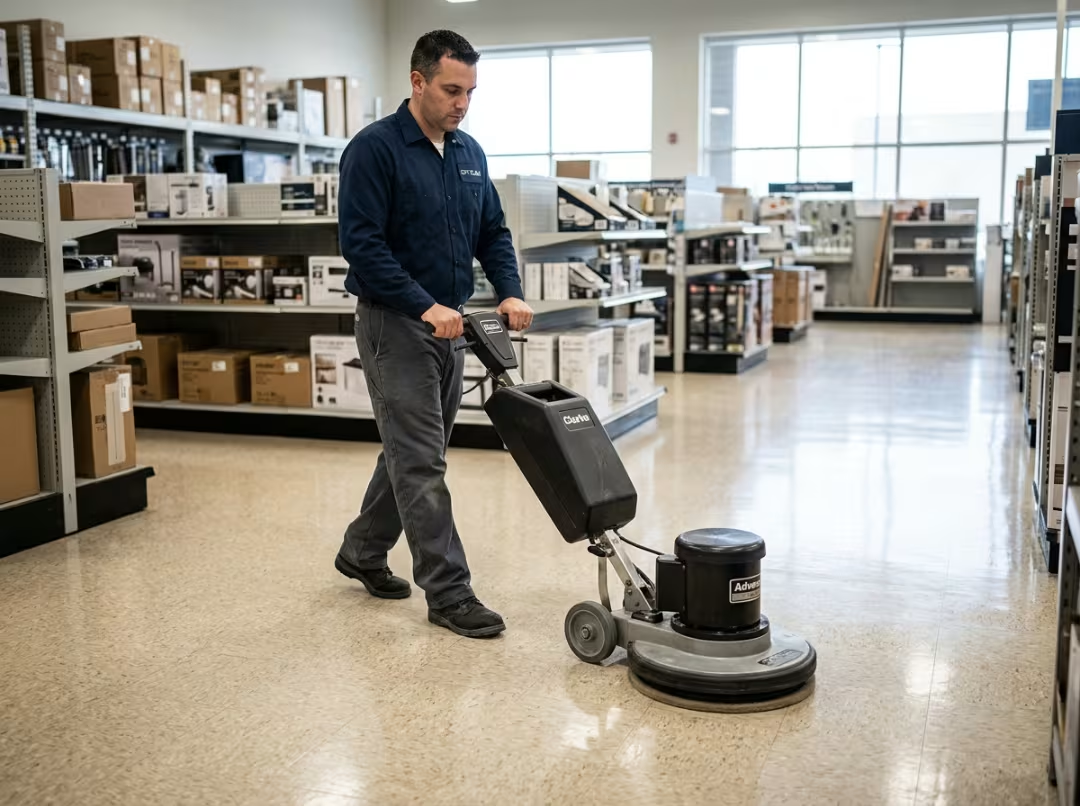
Explore the range of floor buffers to match pad speed and size to your flooring type.
Where Buffers and Burnishers Fall Short
This is the most misunderstood machine on the list, so the limitation is worth stating plainly. A burnisher does not clean the floor. Run it over a dirty surface, and it grinds that grit into the finish, leaving swirl marks and scratches. You always clean and dry the floor first, then buff. Using the wrong pad or too much speed on a delicate finish can also burn or haze it, so match the pad and RPM to the flooring every time.
Quick Comparison of the Five Machines
Here’s how the five categories stack up at a glance.
|
Machine |
Cleaning Action |
Wet or Dry |
Best For |
Main Limitation |
|---|---|---|---|---|
|
Vacuum cleaner |
Suction removes loose debris |
Dry (wet/dry models exist) |
Carpets, daily dust and debris pickup |
Won’t remove stains, grease, or sanitize |
|
Floor sweeper |
Rotating broom sweeps into hopper |
Dry |
Large areas with litter, sand, dust |
No washing or sanitizing |
|
Floor scrubber |
Water plus brushes, then vacuum recovery |
Wet |
Deep cleaning grime, spills, high-traffic hard floors |
Needs debris cleared first, produces wastewater |
|
Steam cleaner |
Hot pressurized vapor |
Wet (vapor) |
Sanitizing, grease, grout, chemical-free jobs |
Slow, small coverage, no debris removal |
|
Buffer / burnisher |
Spinning pad polishes finish |
Dry |
Restoring gloss and protecting floor finish |
Cleans nothing, needs a clean floor first |
How to Choose the Right Floor Cleaning Machine
The right machine, or more often the right combination, comes down to five practical questions. Work through them in order, and the answer usually settles itself.
What’s your floor made of? Surface drives everything. Carpet points you toward a vacuum. Sealed concrete, VCT, tile, and epoxy handle scrubbers well. Delicate finishes like marble or freshly sealed vinyl require careful pad and RPM choices when using a buffer. Match the machine to the surface before anything else, because the wrong pairing damages the floor.
What kind of mess are you fighting? Loose dust and crumbs call for a vacuum or sweeper. Ground-in grime, spills, and scuffs call for a scrubber. Grease and sanitizing needs point to steam. Dull, scratched finish means it’s time to buff. Name the dominant problem, and the category follows.
How big is the area? Square footage decides format and often decides between machines entirely. A small office runs fine on a compact walk-behind or a canister vacuum. A warehouse or big-box store justifies a ride-on scrubber or sweeper, where the time savings quickly cover the higher cost.
How much labor do you have? Faster machines reduce labor hours, and labor is usually the largest line item in a cleaning budget. A ride-on unit that lets one person clean what used to take three is often worth the investment even when the sticker price stings. Factor in training and the ease of emptying, refilling, and maintaining each machine.
What’s your budget, and do you own or rent? For occasional or seasonal jobs, renting a scrubber or burnisher makes sense. For daily cleaning, owning nearly always costs less over time. Look past the purchase price to consumables, water and power use, maintenance, and downtime when a machine sits waiting to charge.
Most facilities settle into a routine that stacks these machines: sweep or vacuum to clear debris, scrub to deep-clean, then buff to protect and shine. Each machine handles the step it does best.
Frequently Asked Questions
What’s the real difference between a floor scrubber and a floor buffer?
A floor scrubber cleans the floor. It uses water, cleaning solution, brushes, and a recovery system to remove dirt, grime, and spills from hard surfaces. A floor buffer, or burnisher, does something different. It works on the floor finish after the floor is already clean and dry, helping restore gloss and smooth out light surface wear.
If the problem is soil, residue, or daily traffic grime, use a scrubber. If the floor looks dull even after cleaning, use a buffer or burnisher.
Can I use one machine to both clean and polish my floors?
Usually, no. Most machines are built for one main job, and the results are better when you use them that way. A scrubber is designed to wash the floor. A buffer or burnisher is designed to improve appearance after cleaning. Trying to make one machine do both often gives you a floor that is neither fully clean nor properly polished.
In smaller spaces, some low-speed floor machines can handle light scrubbing and light buffing with different pads. Even then, they do not fully replace a dedicated scrubber and a dedicated burnisher in commercial settings.
Do I need to sweep or vacuum before running a floor scrubber?
In most cases, yes. Loose dust, grit, and debris should be removed first. If you skip that step, the scrubber can end up pushing debris around, clogging the recovery system, and wearing down brushes or pads faster than it should.
For lightly soiled smooth floors, a scrubber may still do an acceptable job on its own. But on warehouse floors, retail entrances, workshops, or any area with visible debris, sweeping or vacuuming first is the safer and more efficient approach.
Is a steam cleaner enough to sanitize floors in a kitchen or clinic?
A steam cleaner can be very effective for sanitizing certain hard surfaces because heat helps kill bacteria and loosen grease without chemicals. That said, steam is not always enough for every cleaning program. In kitchens and clinics, sanitation standards often depend on the surface type, the soil level, and the facility’s own hygiene requirements.
Steam works best as a targeted tool for grout lines, restrooms, food-prep areas, and detail cleaning. For large floor areas, daily traffic grime, or settings with strict cleaning protocols, it usually works better as part of a broader routine rather than as the only machine.
Should I rent or buy a floor cleaning machine for a mid-sized facility?
That depends on how often you need it. If the machine will be used every day or several times a week, buying usually makes more sense over time. Ownership gives you immediate access, more consistent cleaning routines, and better long-term value. If the need is occasional, seasonal, or tied to one-off deep cleaning jobs, renting can be the smarter choice.
For a mid-sized facility, the break point often comes down to frequency and labor. If your team is regularly cleaning the same floors and losing time with manual methods, owning the right machine usually pays back faster than people expect.
Why does my burnisher leave swirl marks or scratches on the floor?
Swirl marks and scratches usually come from one of four causes: the floor was not cleaned before burnishing, the wrong pad was used, the machine speed was too aggressive for the finish, or debris was trapped under the pad during operation.
A burnisher should only be used on a clean, dry floor. Even small grit particles can get dragged in circles and mark the finish. The fix is usually straightforward: clean the floor first, inspect the pad, replace any worn or contaminated pads, and ensure the machine and pad are compatible with the floor type.
The Bottom Line
Floor cleaning equipment is never one-size-fits-all, and the biggest mistake is expecting a single machine to do every job. Vacuums and sweepers clear the loose debris. Scrubbers do the real washing on hard floors that take heavy traffic. Steam cleaners sanitize where chemicals don’t belong. Buffers and burnishers restore the floor’s shine once it is clean.
Start with the surface you’re cleaning, the mess you’re actually fighting, the size of the space, and the labor you have to spend. Write down a typical week of cleaning tasks and note which ones give you the most trouble. That short list points straight at the machine, or the handful of machines, that will keep your floors clean, safe, and looking sharp without wasting money on the wrong gear. Get the match right, and the equipment pays you back shift after shift.